

Best Pants for Horse Riding: A Complete Guide
Feb 16, 2026
Finding the best pants for horse riding isn't about fashion alone. It's about performance, durability, and feeling confident in the saddle. The right riding pants support your position, move with you, and stand up to hours of training without restricting your mobility. Whether you're schooling young horses, competing at shows, or spending long days working with your string, your pants should enhance your riding, not hinder it. This guide covers what makes riding pants work, the types available, and how to choose the pair that fits your discipline and riding style.
Understanding What Makes Great Riding Pants
The best pants for horse riding share several core qualities regardless of style or brand. They need to handle friction without wearing through, maintain flexibility through your full range of motion, and provide grip where you need it most. Traditional denim and casual pants simply can't deliver these features.
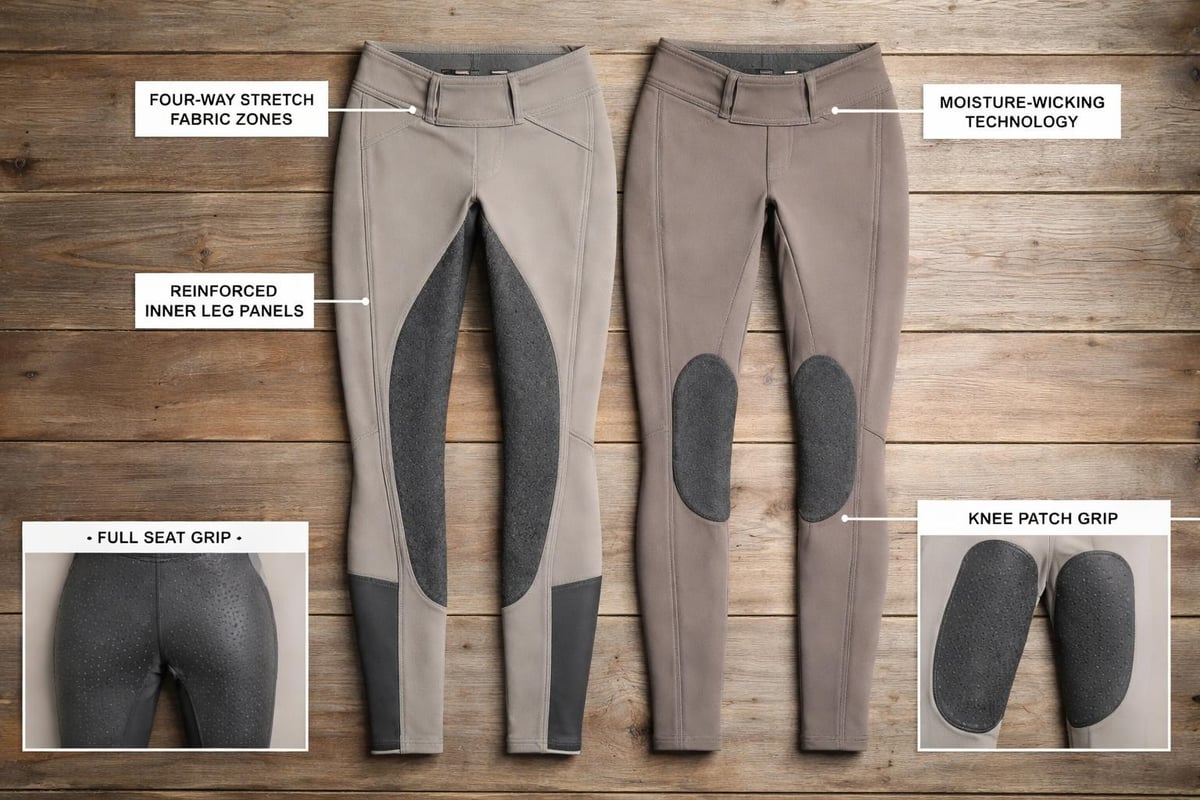
Riding-specific pants use technical fabrics that blend stretch with durability. Four-way stretch allows the material to move in all directions, adapting to your position whether you're sitting deep in the saddle or posting at the trot. Reinforced areas at the inner leg and seat prevent wear from constant contact with leather.
Breathability matters more than many riders realize. Hours in the saddle generate heat, and fabrics that trap moisture become uncomfortable quickly. Modern riding pants incorporate moisture-wicking technology that pulls sweat away from your skin, keeping you dry during intensive sessions.
The fit should feel like a second skin without binding. A proper riding pant sits close to your leg, eliminating bulk that could interfere with leg aids or create pressure points under tall boots. Yet it needs enough room through the seat and thigh to allow free movement when mounting, dismounting, or adjusting your position.
Types of Riding Pants and Their Uses
Traditional Breeches
Breeches remain the gold standard for serious riding across most disciplines. These close-fitting pants extend to just below the knee, designed to slip smoothly into tall boots without bunching. Classic jodhpurs evolved from similar origins but feature different styling for paddock boot combinations.
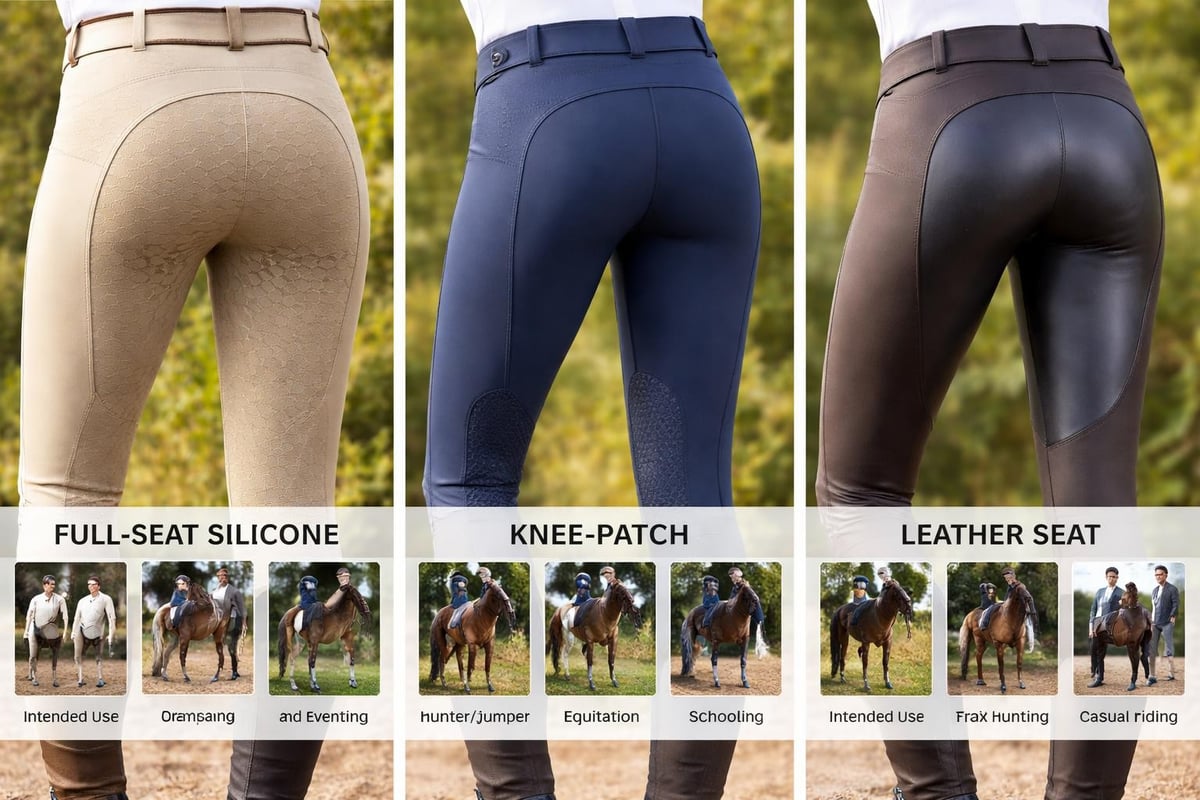
Modern breeches feature either knee-patch or full-seat grip configurations. Knee-patch designs offer grip only at the inner knee, allowing more freedom through the seat for riders who prefer minimal interference. Full-seat breeches provide silicone or leather grip across the entire seat and inner thigh, maximizing security for jumping or working with unpredictable horses.
The Gallant Equestrian breeches collection showcases both options, engineered for men who demand performance without sacrificing style. Competition-level breeches emphasize clean lines and refined details, while training breeches prioritize durability for daily work.
Riding Jeans and Casual Options
Riding jeans bridge the gap between stable and street. These pants look like regular denim but incorporate stretch fabric and reinforced construction suitable for riding. They're ideal for Western disciplines, casual trail rides, or barn work where traditional breeches feel too formal.
Quality riding jeans include subtle features like strategically placed seams that won't rub, gusseted crotches for better range of motion, and slightly higher rises that prevent gaps when you're in the saddle. Some incorporate discreet grip panels that don't show when you're off the horse.
The versatility makes riding jeans attractive for riders who transition between barn activities and everyday life. You can school your horse, handle ground work, then head into town without changing clothes. Understanding what makes pants suitable for horseback riding helps you distinguish true riding jeans from regular denim.
Technical Riding Tights
Technical riding tights represent the newest evolution in riding pants. These compression-style garments fit like athletic leggings but deliver riding-specific performance. They typically feature full-seat silicone grip, phone pockets, and fabrics engineered for extreme flexibility.
Riding tights excel in warm weather when traditional breeches feel too heavy. The lightweight construction and superior breathability keep you comfortable during summer sessions. Many riders appreciate how tights eliminate the bulk around the lower leg, creating an exceptionally close contact feel.
These pants work best for schooling and training rather than formal competition in traditional disciplines. However, their practicality and comfort make them popular choices for daily riding, especially among riders focused on dressage or flatwork.
Materials and Fabric Technology
Performance Fabrics
The best pants for horse riding utilize technical fabrics far removed from traditional cotton twill. Polyester and nylon blends dominate modern riding pants, offering superior stretch recovery and durability. These synthetics maintain their shape ride after ride, never sagging or bagging like natural fibers.
Spandex or elastane content typically ranges from 5% to 20%, providing the stretch necessary for riding movements. Higher percentages offer more flexibility but may sacrifice some durability. Finding the right balance depends on your riding style and how aggressively you school.
Many premium riding pants incorporate specialized weaves that enhance specific properties. Honeycomb structures improve breathability, while tight weaves increase wind resistance for cold-weather riding. Some fabrics feature built-in UV protection, valuable for riders spending hours outdoors.
Grip Technologies
Grip technology separates riding pants from regular athletic wear. Full-seat silicone grip creates a tacky surface across the entire seat and inner thigh, anchoring you in the saddle during intense work. The pattern and thickness of silicone application affects both grip level and breathability.
Leather or suede patches offer traditional grip with a classic aesthetic. These natural materials break in over time, conforming to your individual position. They require more maintenance than silicone but many riders prefer their feel and appearance, especially for competition.
Knee-patch configurations place grip only where your leg contacts the saddle's knee roll. This focused approach suits riders who don't want full-seat security, preferring to develop independent position through muscle memory rather than relying on grip.
Selecting Pants for Your Discipline
Dressage and Flatwork
Dressage demands pants that support precise position and subtle aids. Full-seat breeches work well here, helping maintain deep connection through complex movements. The grip assists during extended sessions working on collection and engagement.
White or light-colored breeches remain standard for dressage competition, requiring fabrics that resist staining and maintain their appearance through multiple washes. Technical materials that wick moisture prevent show breeches from becoming transparent when wet.
Many dressage riders prefer mid-rise or high-rise breeches that stay in place without constant adjustment. The waistband shouldn't dig in when you're sitting deep, and there should be no excess fabric to bunch under your jacket.
Jumping and Eventing
Jumpers need maximum security combined with total freedom of movement. Full-seat grip breeches provide confidence over fences, while four-way stretch allows your legs to move independently when adjusting position in the air.
Reinforcement at the inner leg and knee matters significantly for jumping disciplines. Constant contact with the saddle during courses creates friction that will wear through inferior materials. Double-layered construction or advanced synthetic blends extend the lifespan considerably.
Neutral colors work across most jumping venues, though schooling breeches can embrace more variety. Focus on function over fashion for training pants, saving your best competition breeches for shows.
Western and Ranch Work
Western riders traditionally favor riding jeans or specialized Western breeches. These pants need extra durability for long days working cattle or riding in varied terrain. Heavier-weight fabrics that resist brush and wire prove more practical than lightweight breeches.
Higher rises suit Western saddles better, preventing gaps at the lower back. Some Western riders prefer full-length pants that cover their entire leg, working with both cowboy boots and shorter riding boots.
The best pants for horse riding in Western disciplines balance traditional Western aesthetics with modern performance features. You want the classic look without sacrificing the stretch and comfort that make all-day riding possible.
Fit Considerations and Sizing
Getting the Right Fit
Riding pants should fit snugly without feeling restrictive. When you sit in riding position, there shouldn't be excess fabric bunching at the knees or seat. Stand in front of a mirror and raise your knee as if mounting, the fabric should move with you smoothly.
The waistband should sit comfortably at your natural waist or slightly below, depending on the rise. Many men find mid-rise pants most comfortable for riding, offering coverage without riding up. Test the waistband by sitting and standing, it shouldn't dig in or slip down.
Check the length carefully. Breeches should end just below your knee, allowing smooth entry into tall boots. Too long and they bunch uncomfortably. Too short and they ride up during mounted work, creating gaps between pant and boot.
Trying on riding pants while mimicking riding positions gives the best sense of fit. Squat down, raise your knees, and twist your torso. The pants should accommodate these movements without pulling or binding anywhere.
Sizing Between Brands
Sizing varies significantly between manufacturers. European brands often run smaller than American or New Zealand sizing, while athletic-cut brands may fit differently than traditional equestrian brands. Always check specific size charts rather than assuming your usual size will work.
Many quality riding pants use numeric sizing based on waist and inseam measurements rather than S/M/L categories. This provides better precision but requires accurate measurements. Measure yourself while wearing the underwear you'll ride in, as even small differences affect the final fit.
Some riders find they need different sizes for different styles of pants. Tights typically run more true to size given their stretch, while traditional breeches may require sizing up for adequate comfort through the seat and thigh.
Different types of riding pants each have unique fit characteristics worth understanding before purchasing.
Maintenance and Longevity
Washing and Care
Proper care extends the life of quality riding pants significantly. Always wash riding pants inside out to protect grip surfaces and reduce pilling. Use cold water and gentle cycles, avoiding harsh detergents that can break down technical fabrics or silicone grip.
Never use fabric softener on riding pants. It coats the fibers and reduces moisture-wicking properties while potentially degrading grip technology. If you want softer feeling pants, add a half cup of white vinegar to the rinse cycle instead.
Air drying preserves elastic fibers and prevents shrinkage. High heat from dryers gradually degrades spandex content, reducing stretch and causing pants to lose their shape. Hang pants by the waistband or lay flat, keeping them away from direct sunlight which can fade colors.
Remove stains promptly using appropriate treatments for the specific material. Leather or suede patches require different care than synthetic grip surfaces. Check manufacturer guidelines before applying any cleaning products.
Maximizing Lifespan
Rotating between multiple pairs of riding pants prevents any single pair from wearing out prematurely. Having three or four pairs in your rotation means each pair gets adequate rest between rides, allowing fabrics to fully recover their shape.
Store riding pants properly between uses. Folding rather than hanging prevents stretching at the waistband. Keep them in a cool, dry place away from direct sunlight or heat sources that could affect elastic fibers.
Repair small issues immediately rather than waiting for them to worsen. A loose seam or small hole can be quickly fixed, but neglecting it often leads to complete failure requiring replacement. Many riding stores offer repair services for quality breeches.
Consider having designated schooling pants and show pants. Reserve your best pairs for competition while using more worn pants for daily training. This approach ensures you always have pristine pants for important rides while getting maximum utility from your entire collection.
Price Points and Value
Understanding Cost Differences
Riding pant prices span a wide range, from basic options around $50 to premium competition breeches exceeding $300. Understanding what drives these differences helps you invest wisely based on your needs and riding frequency.
Entry-level riding pants use simpler construction and less expensive fabrics. They'll serve occasional riders adequately but may not withstand daily training. Seams might be single-stitched rather than reinforced, and grip technology may be basic heat-transfer rather than precision-applied silicone.
Mid-range pants ($100-200) typically offer the best value for serious amateur riders. These pants incorporate quality technical fabrics, proper grip systems, and construction details that extend lifespan. Brands at this level understand rider needs and deliver genuine performance without luxury pricing.
Premium riding pants justify their cost through superior materials, refined fit, and competition-level aesthetics. If you're showing regularly or riding professionally, these pants make sense. The difference in comfort and appearance becomes noticeable during long competition days.
Investment Recommendations
For riders training multiple times weekly, investing in quality pants pays dividends. Three pairs of well-made breeches will outlast six pairs of budget options while providing better comfort and performance throughout their lifespan. Calculate cost per ride rather than upfront price alone.
New riders should start with one or two quality pairs rather than buying multiple cheap options. As your position develops and you understand your preferences, you can expand your collection strategically. Starting with Gallant Equestrian's essentials collection provides a solid foundation.
Sales and seasonal discounts offer opportunities to acquire premium pants at mid-range prices. Many brands clear previous season's colors each spring and fall. If you're flexible about color, these sales deliver excellent value.
Consider your complete riding wardrobe when budgeting. Pants represent just one component alongside boots, jackets, and shirts. Allocating your budget proportionally across all necessary gear ensures you're well-equipped without overextending financially.
Special Considerations for Men
Fit Differences That Matter
Men's riding pants address anatomical differences that affect comfort and performance. Proper construction includes more room through the seat and thigh while maintaining the close fit necessary for effective riding. The rise should accommodate male proportions without creating uncomfortable pressure points.
Generic or women's riding pants adapted for men often fail in critical areas. The crotch may sit too low or too high, leg length proportions may be wrong, and waistbands might not align properly. Purpose-built men's riding pants solve these issues through gender-specific patterning.
Many male riders appreciate features like deeper pockets that actually hold phones and tools securely. Reinforced belt loops that handle heavier leather belts also prove practical for barn work beyond pure riding.
Gallant Equestrian focuses exclusively on men's riding wear, ensuring every design decision serves male riders specifically. This specialization shows in details other brands overlook.
Style Considerations
Men's riding pants should look sharp without appearing overly styled or feminine. Clean lines, classic colors, and subtle details create professional appearance suitable for any riding environment. Navy, black, tan, and olive provide versatile options that coordinate easily with other riding gear.
Fit through the leg should be trim without being skin-tight. The goal is eliminating bulk rather than creating athletic wear aesthetics. This balance allows riding pants to look appropriate both in the saddle and around the barn.
Quality finishing details like proper zippers, reinforced stitching, and thoughtful pocket placement distinguish well-designed men's riding pants from generic options. These elements contribute to both function and refined appearance.
Where to Buy and What to Try
Shopping Smart
Buying riding pants online offers convenience and selection, but sizing uncertainties create risk. Start by purchasing from retailers with generous return policies that allow you to try multiple sizes at home. Wear them around the house, test the fit in riding positions, and return anything that doesn't work perfectly.
Local tack shops provide valuable try-on opportunities despite smaller selections. Building relationships with knowledgeable staff gives you access to expertise about which brands fit how and what might work for your specific needs. Don't hesitate to ask questions and try multiple options.
Reading detailed reviews helps identify common fit issues or quality concerns before purchasing. Look for reviews from riders in your discipline with similar body types. Pay attention to comments about sizing accuracy, durability, and how pants perform after multiple washes.
Some brands offer virtual fitting guides or chat support to help you select the right size. Take advantage of these resources, especially when buying from a new brand. Providing accurate measurements and answering questions about your preferences usually results in better recommendations.
Building Your Collection
Start with two pairs of versatile breeches in neutral colors suitable for both training and showing. This foundation ensures you always have clean pants available while allowing rotation that extends their lifespan. Add specialized options as your needs clarify.
Consider your climate when selecting pants. Riders in warm areas benefit from lightweight, breathable options year-round. Those in variable climates need both summer-weight and winter-weight pants to stay comfortable across seasons.
As your collection grows, organize by purpose: schooling pants, show pants, casual riding jeans. This system makes it easy to grab appropriate pants quickly while preventing accidental wear of show breeches during dirty barn work.
Quality matters more than quantity. Two pairs of excellent breeches will serve you better than five pairs of mediocre ones. Focus on acquiring pieces that genuinely enhance your riding rather than simply expanding your wardrobe.
Trends and Innovations
Modern riding pants continue evolving through technological advances and changing rider preferences. Seamless construction eliminates chafing points that plagued earlier designs. Laser-cut details provide ventilation without compromising structure. These innovations improve comfort substantially.
Sustainability concerns are influencing fabric choices across the industry. Recycled polyester, organic cotton blends, and responsibly sourced materials appear increasingly in premium riding pants. Performance doesn't suffer, and environmental impact decreases.
Color options have expanded beyond traditional neutrals, though classic shades still dominate competitive environments. Training pants now come in wider palettes including earth tones and subtle patterns that add personality without crossing into unprofessional territory.
Customization options let some riders specify details like grip configuration, pocket placement, and even embroidered initials. While not necessary, these personalized touches appeal to riders who want their gear to reflect individual preferences precisely.
Making Your Final Decision
Choosing the best pants for horse riding ultimately comes down to matching features with your specific needs. Consider how often you ride, what disciplines you pursue, and what level you're competing at. Be honest about your priorities regarding comfort versus aesthetics, durability versus lightweight construction.
Don't rush the decision. Riding in uncomfortable pants affects your position and your horse's way of going. Taking time to find pants that fit properly and support your riding pays off every time you swing into the saddle.
Test new pants during regular schooling sessions before trusting them at shows. Break them in, wash them once or twice, and make sure they maintain their fit and function through real-world use. This approach prevents unpleasant surprises when it matters most.
Remember that preferences change as your riding evolves. What worked perfectly as a beginner might not suit you once you're schooling upper-level movements or jumping bigger courses. Reassess your needs periodically and update your riding pants accordingly.
Finding the best pants for horse riding transforms your time in the saddle from merely adequate to genuinely enjoyable. The right pants support your position, enhance communication with your horse, and keep you comfortable through long training sessions. Gallant Equestrian designs performance-driven riding wear specifically for men who demand both function and style. From technical breeches engineered for competition to versatile pieces that transition seamlessly from stable to street, every item combines New Zealand craftsmanship with rider-focused innovation. Look the Part. Enjoy the Ride.

