

Competition Tie: The Essential Guide for Dressage Riders
Oct 23, 2026
The competition tie remains one of the most recognizable elements of dressage attire, yet it's often misunderstood by riders preparing for their first rated show. Whether you're aiming for a local qualifier or an FEI-level championship, understanding the regulations, history, and practical considerations around this essential piece of neckwear will help you present yourself with confidence and professionalism. Getting your competition tie right isn't about rigid formality-it's about respecting tradition whilst ensuring you meet the standards that matter when you enter the arena.
The Historical Evolution of Equestrian Neckwear
The competition tie traces its lineage directly to military cavalry and foxhunting traditions of the 18th and 19th centuries. Originally known as the stock or cravat, this piece of neckwear served practical purposes: protecting the throat during rough riding and providing an emergency bandage or sling if needed. The evolution from military necessity to sporting tradition reflects how equestrian sport has preserved its ceremonial roots whilst adapting to modern performance standards.
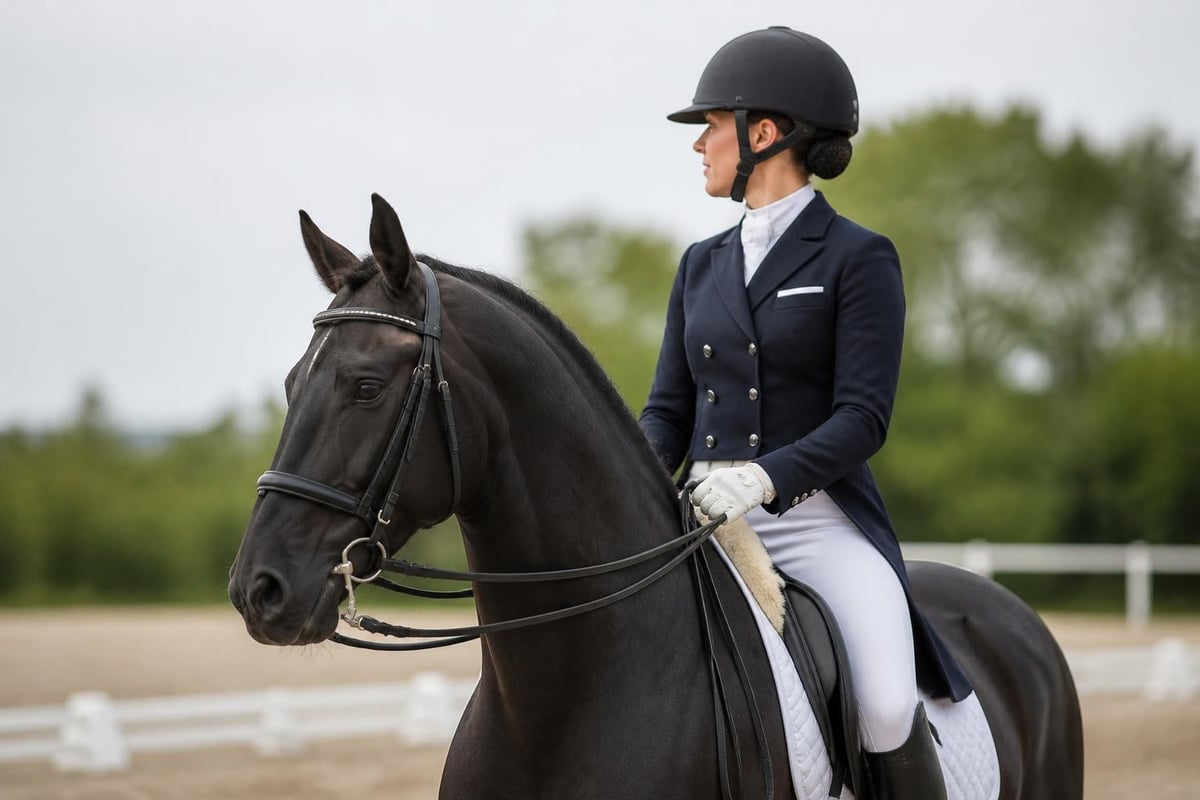
By the early 20th century, as dressage emerged as a distinct competitive discipline, the stock tie became standardized as formal competition wear. What began as a functional piece of kit transformed into a symbol of respect for the sport's heritage. Today's competition tie maintains that connection to tradition whilst meeting contemporary safety and presentation standards. The piece you wear in 2026 carries echoes of riders who competed decades ago, yet it's built with modern materials and designed to perform under pressure.
Understanding Current Competition Tie Regulations
Navigating the rulebook can feel overwhelming, but competition tie requirements are actually quite straightforward once you understand the governing body structure. The FEI Dressage rules establish the international standard: riders must wear a stock or tie with appropriate fastening, typically secured with a pin or stock pin at throat level. This regulation applies across FEI-sanctioned events worldwide, ensuring consistency from local CDIs to World Cup finals.
National governing bodies often mirror these requirements with minor variations. The USEF rulebook specifies that dressage competitors must wear a stock tie or choker secured with a tie pin or plain collar and tie at certain levels, with detailed guidance on acceptable colours and presentation standards. British Dressage follows similar protocols through their Members' Handbook, whilst Equestrian Australia's National Dressage Rules provide clear direction for riders competing Down Under.
Level-Specific Requirements
Different competition levels may have varying degrees of formality when it comes to neckwear. At introductory and training levels, some organizations permit greater flexibility-a neat collar and tie may suffice. As you progress to First Level and beyond, the traditional competition tie becomes standard. FEI-level competition almost universally requires the formal stock tie presentation, properly pinned and presented with impeccable attention to detail.
Understanding these distinctions matters because arriving at a show with inappropriate attire can result in elimination or penalties before you've even entered the arena. The USDF Visual Guide to Dressage Attire Rules offers practical, pictorial examples that remove any guesswork about what's acceptable at various levels. When in doubt, defaulting to the traditional white stock tie with a conservative pin ensures you'll meet requirements at any recognized competition.
Choosing the Right Competition Tie
Material quality separates a competition tie that performs all day from one that wilts by your second test. Premium cotton and cotton-blend fabrics offer the best combination of crisp appearance and breathability. Avoid purely synthetic materials that don't breathe-you'll be warm enough in your coat without adding a moisture-trapping layer at your neck. The fabric should hold its shape after tying but shouldn't be so stiff that it's uncomfortable or restricts movement.
Width and length matter more than most riders realize. A competition tie that's too narrow looks insubstantial and fails to create the proper visual line. Too wide, and you'll struggle to achieve a neat knot that sits properly. Standard widths run between 10 and 15 centimeters, with 12cm being the sweet spot for most riders. Length should be sufficient to wrap around your neck, create your chosen knot style, and secure with a pin whilst leaving enough fabric to tuck neatly without bulk.

| Feature | Premium Quality | Budget Option | Performance Impact |
|---|---|---|---|
| Material | Egyptian cotton blend | Polyester | Breathability, appearance retention |
| Width | 12cm standard | 8-10cm | Visual proportion, ease of tying |
| Length | 160-180cm | 140-150cm | Knot options, secure pinning |
| Edge finish | Hand-rolled | Machine-cut | Professional appearance, durability |
Colour remains non-negotiable in most competitive contexts: white or cream. Some lower-level competitions may permit conservative colours, but white ensures universal acceptance. The shade of white matters too-opt for pure white rather than cream unless you're deliberately matching a specific period style. Your competition tie should coordinate seamlessly with your show shirt and create a clean, unbroken line from collar to coat.
Mastering the Competition Tie Knot
The traditional stock tie knot differs from a conventional necktie knot. You're creating a wrapped, layered effect that sits flat against the throat and presents a symmetrical, professional appearance. Start by draping the competition tie around your neck with one end slightly longer than the other. The longer end becomes your working end-this is what you'll manipulate to create the knot.
Wrap the longer end around your neck, keeping the fabric smooth and flat against your skin. Cross over at the front, bringing the working end across the shorter tail. The key is maintaining even tension throughout-not so tight you're uncomfortable, but firm enough that everything stays in place. Pass the working end through the neck loop you've created, then adjust both tails to create a balanced, symmetrical knot at your throat.
Securing with a Pin
A proper stock pin isn't decorative-it's functional. Position your pin horizontally through all layers of the knot, ensuring it catches both tails securely. The pin should sit at the natural hollow of your throat, creating a focal point that's both elegant and practical. Traditional pins feature a simple bar or subtle design; save the elaborate horseshoe or hunt motif pins for specific contexts where they're appropriate to the discipline or club.
Safety matters here. The pin should have a proper clasp or locking mechanism. Riding with an unsecured pin creates an unnecessary hazard. Check that your pin sits flat against your neck without gaping or pulling the fabric. If you can fit more than one finger between the pin and your throat, you've likely tied the knot too loosely or positioned the pin incorrectly.
Competition Tie Care and Maintenance
A competition tie that looks crisp in the morning but wilted by your afternoon test undermines your entire presentation. Proper preparation starts the night before. Press your tie with a steam iron on appropriate heat settings for the fabric-high for cotton, lower for blends. Pay special attention to the ends and edges where wrinkles are most visible. Store it flat or loosely rolled to prevent creasing.
Competition day care requires attention to detail. If you're competing in multiple tests, bring a backup tie. Sweat, dust, and the general chaos of show day can compromise even the best-maintained neckwear. Between tests, inspect your tie for any marks or dishevelment. A quick touch-up with a portable steamer can refresh the fabric and restore its crisp appearance. Keep your spare in a protective garment bag to maintain its pristine condition until needed.
Washing and Long-Term Storage
Hand washing in cool water with a gentle detergent preserves the fabric and shape better than machine washing. Avoid wringing or twisting-gently squeeze excess water and lay flat to dry. Machine washing on a delicate cycle is acceptable for some competition ties, but always check the care label first. Never tumble dry, as heat can damage the fibres and cause shrinkage that affects how the tie fits and drapes.
Long-term storage between competition seasons requires protection from dust, moisture, and pests. Store your competition tie flat in a breathable garment bag or acid-free tissue paper. Avoid plastic bags that trap moisture and can cause yellowing. Cedar blocks or lavender sachets deter moths whilst maintaining freshness. Check stored ties periodically-environmental changes can affect fabric over time, and catching issues early prevents permanent damage.
Styling Beyond Basic Compliance
Meeting regulation standards is non-negotiable, but there's room for personal expression within those boundaries. Your competition tie knot style can reflect your approach to the sport-a crisp, precise knot suggests attention to detail and classical discipline. The way you position your pin, whilst staying within regulation placement, adds a subtle personal touch. Choose a pin with meaning: perhaps a family heirloom, a gift from a mentor, or a simple, elegant design that reflects your aesthetic.
Coordination with your overall turnout elevates your presentation from merely compliant to genuinely polished. Your competition tie should harmonize with your show shirt, coat, and breeches to create a cohesive appearance. Consider the complete picture: collar style, coat fit, and how your neckwear complements rather than competes with other elements. The goal is a unified, professional presentation where no single element dominates.
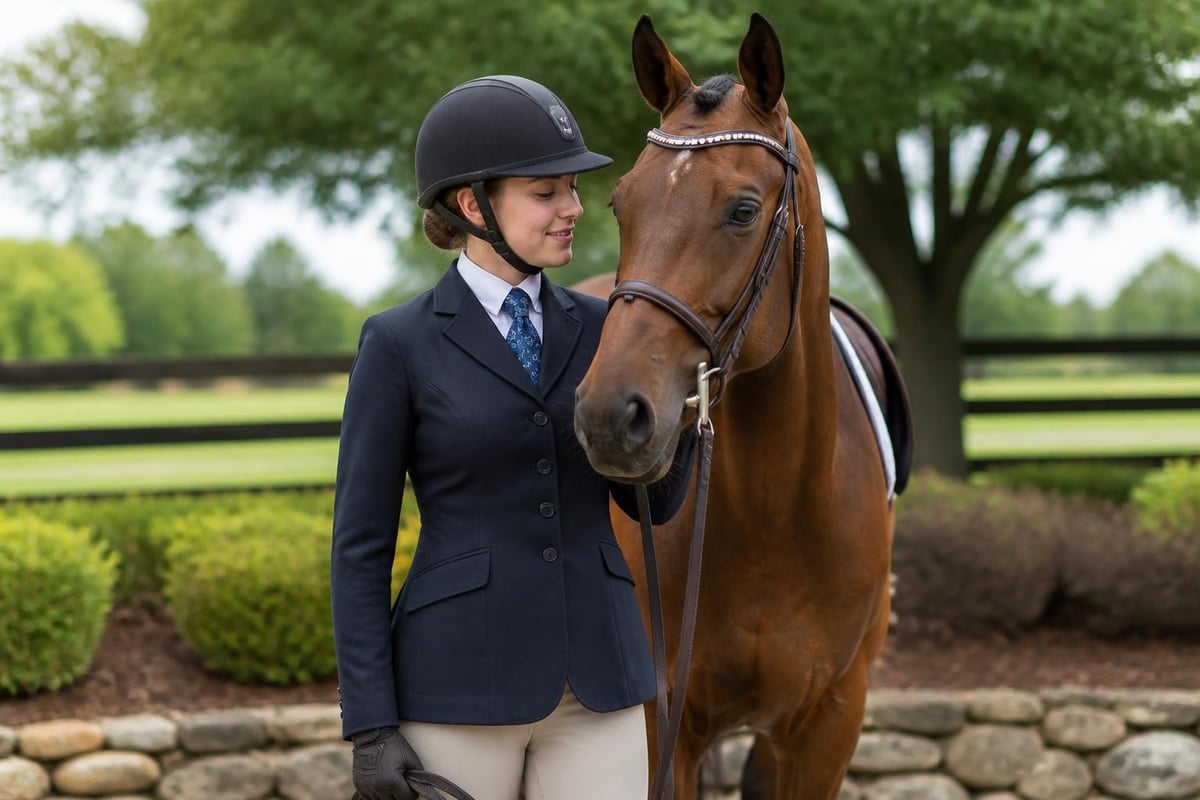
Transitioning from stables to competition requires understanding context. Your everyday riding attire serves different purposes than your competition kit. Whilst you might favor performance polo shirts and technical breeches for training sessions, competition day demands the traditional formality that includes your properly tied and pinned competition tie. This distinction honors the sport's heritage whilst recognizing that modern riding encompasses both performance and presentation.
Common Competition Tie Mistakes to Avoid
Rushing your tie preparation on competition morning sets you up for problems. A hastily tied knot often loosens during warm-up, requiring emergency adjustments just before you enter the arena. Arrive early enough to tie your stock carefully, check the pin placement, and ensure everything sits comfortably before you mount. If something feels off-the knot is too tight, the pin digs into your throat, or the tails are uneven-take the time to start over. Those extra minutes invested in proper preparation prevent distraction and discomfort when you need to focus entirely on your test.
Incorrect pin placement represents one of the most common errors. Too high, and the pin pulls the knot upward, creating an unbalanced appearance. Too low, and it fails to secure the layers properly, allowing movement and potential loosening during your ride. The pin should sit at the natural hollow where your collarbones meet, securing all layers whilst remaining comfortable through full range of neck motion. Test this during your warm-up-look down, turn your head, and ensure the pin doesn't shift or cause discomfort.
Fit and Proportion Issues
A competition tie that's too short forces you to choose between a proper knot and adequate tail length for pinning. Too long, and you're left with excessive fabric that creates bulk under your coat or hangs awkwardly below the pin point. Standard lengths accommodate most riders, but taller riders or those with larger neck measurements should specifically look for extended-length options. The fabric should wrap completely around your neck once with sufficient working length remaining-generally 160 to 180 centimeters total.
Fabric that's too lightweight won't hold its shape throughout your test, leading to a limp, unprofessional appearance. Conversely, excessively heavy or stiff fabric can be uncomfortable and restrictive, particularly in warm weather. The ideal competition tie offers enough body to maintain its crisp appearance whilst remaining comfortable against your skin for extended periods. When selecting your tie, consider both immediate feel and how the fabric performs after hours of wear.
Advanced Considerations for Serious Competitors
As you progress through the levels, attention to detail becomes increasingly important. Judges notice everything, and whilst your competition tie won't win you marks directly, a sloppy or non-compliant presentation can create a negative first impression that colors their perception of your entire ride. FEI eventing and dressage regulations specify exact requirements for upper-level competition, including neckwear standards that must be met to avoid penalties or elimination.
Understanding how different organizations approach tie-breaking procedures can inform your competitive strategy, though this aspect of "competition tie" refers to score resolution rather than neckwear. Formal tie-breaking methods used across various sports demonstrate the precision required at elite levels-a reminder that attention to every detail, including your personal presentation, reflects your overall commitment to excellence.
Practical Competition Day Protocol
Develop a systematic routine for your competition tie preparation. Lay out your entire outfit the night before, checking that your tie is pressed and your pin is functional. On competition morning, allow yourself unhurried time to dress properly. If you're competing in multiple tests, consider whether you'll change your entire outfit between rides or simply refresh your neckwear. Having a complete backup set eliminates stress if something goes wrong-a torn tie, lost pin, or unexpected stain can't derail your day if you're prepared.
Weather considerations matter more than many riders anticipate. High temperatures and humidity can affect how your competition tie feels and performs. Ensure adequate breathability in your fabric choice, and consider using absorbent collar protectors if you tend to perspire heavily. In cold weather, the additional layer provides welcome warmth, but make sure your coat still fits properly over the bulk of a tied stock. Test your complete outfit in conditions similar to what you'll face on competition day-discovering fit issues in your stable yard is far better than learning about them in the warm-up arena.
Building Your Complete Competition Wardrobe
Your competition tie functions as part of an integrated system. Investing in quality show attire that works together ensures you present yourself professionally whilst feeling comfortable and confident. Competition breeches should coordinate with your coat and boots, creating clean lines that complement your carefully tied stock. Layer your show shirt to provide a smooth foundation for your neckwear, ensuring collars sit properly and don't gape or bunch.
Consider your entire competitive journey when building your wardrobe. Starting out, you might manage with a single high-quality competition tie and pin. As you compete more frequently, having multiple ties becomes practical-one in use, one as backup, and perhaps another being laundered or refreshed. The same principle applies to your broader competition kit: build thoughtfully, prioritizing quality and versatility over quantity. Well-chosen pieces that coordinate seamlessly will serve you better than a larger collection of mismatched items.
Training versus Competition Attire
Understanding when traditional competition attire is required versus when performance-focused training wear is appropriate helps you allocate your budget effectively whilst building a complete equestrian wardrobe. Your everyday training sessions demand comfort, durability, and freedom of movement-qualities found in technical riding breeches and breathable shirts designed for performance. Save your competition tie and formal turnout for rated shows, official tests, and occasions where traditional presentation matters.
Best practices from experienced competitors emphasize the importance of trying your complete outfit, including your competition tie, well before show day. Schedule a dress rehearsal during a training session, riding through a test whilst wearing your full competition kit. This reveals any fit issues, comfort problems, or presentation details that need adjustment. You'll learn how your tie feels after 15 minutes of riding, whether your pin stays secure through transitions, and if any elements of your turnout require modification before they matter.
The Practical Path Forward
Mastering the competition tie doesn't require obsessive perfectionism-just attention to detail and respect for the standards that define our sport. Choose quality materials that perform reliably, learn to tie a proper knot that stays secure, and maintain your neckwear so it looks crisp every time you compete. These fundamentals ensure you meet regulation requirements whilst presenting yourself with quiet confidence.
Your competition tie represents more than compliance with a dress code. It connects you to generations of riders who've entered dressage arenas before you, carrying forward traditions that give our sport its distinctive character. Wear it with pride, understanding that this simple piece of fabric symbolizes your commitment to excellence and respect for equestrian heritage. When you've prepared properly, checked every detail, and entered the arena knowing your presentation meets the highest standards, you're free to focus entirely on the ride itself-which is precisely where your attention belongs.
A properly selected and tied competition tie completes your presentation, allowing you to compete with confidence knowing you meet every standard. When you're ready to build a complete competition wardrobe that combines traditional elements with modern performance, Gallant Equestrian offers essential pieces designed specifically for men who ride seriously-functional, refined, and built to last through countless competitions.

