

Dressage Clothing: A Modern Guide for Men | 2026
Aug 11, 2026
Dressage has long been considered the most elegant of equestrian disciplines, and nowhere is that refinement more evident than in the attire riders wear. For men entering this sport in 2026, understanding dressage clothing means balancing centuries-old traditions with modern performance demands. The white breeches, tailored jackets, and polished boots might look purely ceremonial, but every piece serves a purpose. Whether you're preparing for your first schooling show or refining your kit for FEI competition, knowing what to wear and why makes all the difference between looking the part and simply wearing a costume.
The Foundation of Dressage Attire
Dressage clothing exists at the intersection of military precision and athletic functionality. The history of dressage attire reveals how cavalry officers shaped what we wear today, from the stock tie's practical origins to the tailcoat's structured elegance. Understanding this background helps explain why certain standards persist, even as fabrics and fits have evolved dramatically.
Modern dressage clothing for men prioritises movement and comfort without sacrificing the discipline's formal aesthetic. The key pieces remain consistent across competition levels: breeches, boots, shirt, jacket, stock tie, gloves, and helmet. Each component works together to create a cohesive appearance that judges expect to see in the arena.
Breeches That Perform
Your breeches are arguably the most important element of your kit. Traditional white or light-coloured equine breeches remain the competition standard, but the technology inside has transformed completely. Modern technical fabrics offer four-way stretch, moisture management, and targeted grip panels that weren't available even five years ago.
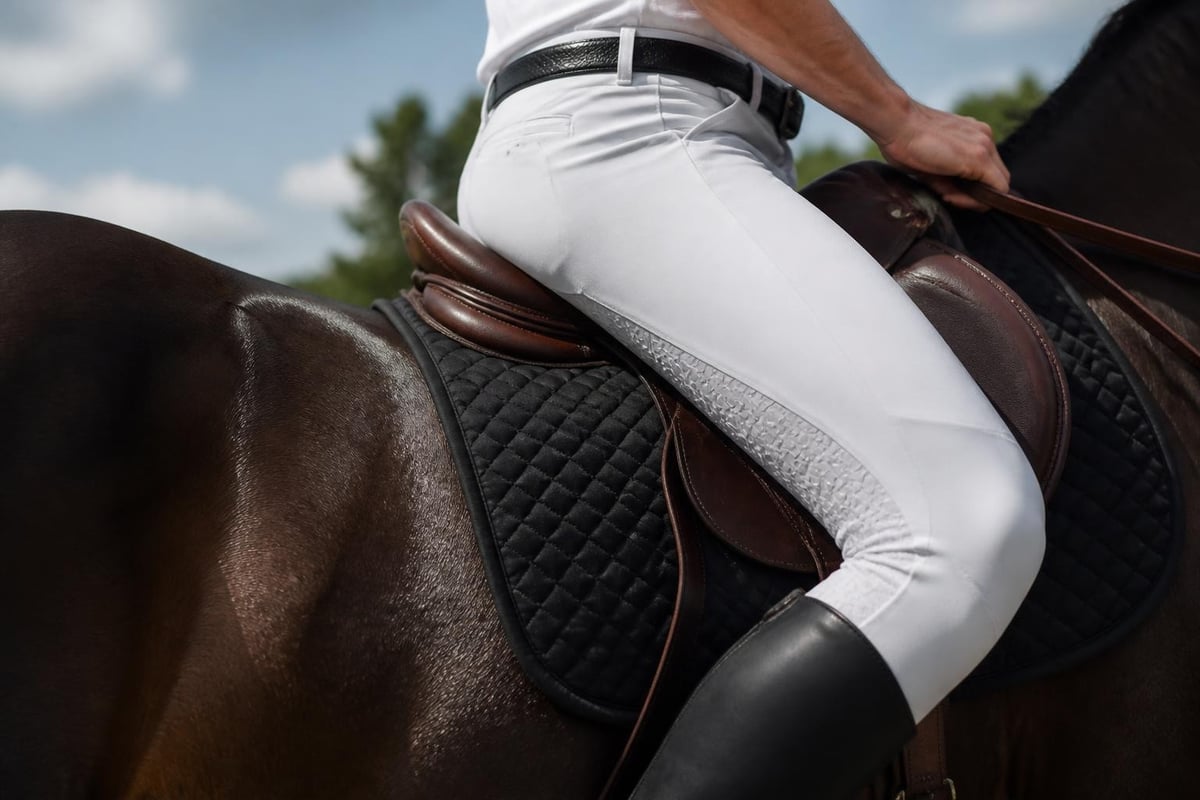
Look for breeches with Euro seat construction, which eliminates inseam bulk and creates a cleaner leg line. The rise should sit comfortably at your natural waist without gapping at the back when you're in riding position. Quality construction means flat-lock seams that won't chafe during long training sessions or multiple classes at a show.
Consider having at least two pairs in rotation. Competition breeches take considerable wear, and having a backup means you're never caught short before an important class. Many riders keep one pair exclusively for shows, preserving that crisp appearance when it matters most.
Competition Jackets and Shadbellies
The jacket you wear signals your competition level and adds the final polish to your turnout. For lower-level dressage, a traditional show jacket in black or navy serves well. These jackets feature three buttons, conservative styling, and enough room through the shoulders for full range of motion. Equestrian show attire standards dictate that fit is paramount, with sleeves hitting precisely at your wrist bone and the hem sitting just below your seat.
Upper-level riders transition to the shadbelly, or tailcoat, typically introduced at Prix St. Georges and above. This distinctive garment with its cutaway front and long tails creates an elegant silhouette that emphasises the rider's position. The shadbelly originated in formal military dress, and it remains one of dressage's most recognisable elements.
Choosing Your Competition Jacket
| Jacket Type | Competition Level | Key Features | Price Range |
|---|---|---|---|
| Show Jacket | Intro through Third Level | Three-button, conventional styling | £200-500 |
| Shadbelly | Third Level and above | Cutaway front, tails, more formal | £400-900 |
| Custom Tailored | All levels (optional) | Perfect fit, personalised details | £800-2000+ |
Proper jacket fit requires attention to several critical measurements. The collar should sit flat against your shirt collar without gapping. Shoulder seams should align with your natural shoulder point, not slide down your arm. Button closure should be comfortable when mounted, allowing full breathing capacity without strain. Many riders size up slightly from their street wear to accommodate the layering required underneath.
Shirts and Stock Ties
The shirt and stock tie combination represents one of dressage's most traditional elements. While dressage fashion has evolved considerably in recent decades, the stock tie persists as a formal requirement at most competition levels. This wide neckcloth, secured with a plain stock pin, dates back to when cavalry officers needed something practical that could double as a bandage or sling in emergencies.
Your show shirt should be long-sleeved, light-coloured (typically white or cream), and designed specifically for wearing with a stock tie. The collar differs from a standard dress shirt, with a mandarin or banded style that sits higher and provides the structure needed to support the tied stock. Quality shirts incorporate stretch panels under the arms and across the back, preventing restriction during riding.
Tying your stock requires practice. The traditional method creates a flat, symmetrical knot that sits neatly at your throat without bulk. Your stock pin should be plain gold or silver, positioned horizontally through the knot. Some competitions permit ready-tied stocks with Velcro closures, though traditional riders often prefer the authenticity of tying their own.
Technical Shirt Innovations
Modern performance fabrics have revolutionised the humble show shirt. Moisture-wicking technology keeps you cooler during summer competitions, while anti-microbial treatments prevent odour during long show days. Some manufacturers now incorporate UV protection directly into the fabric, addressing a practical concern for outdoor arenas in bright conditions.
The best shirts wash easily and maintain their crisp appearance without constant ironing. Wrinkle-resistant blends save considerable time during multi-day shows when you're managing several outfit changes. Look for reinforced stitching at stress points and buttons that won't pop during mounting or dismounting.
Boots and Spurs
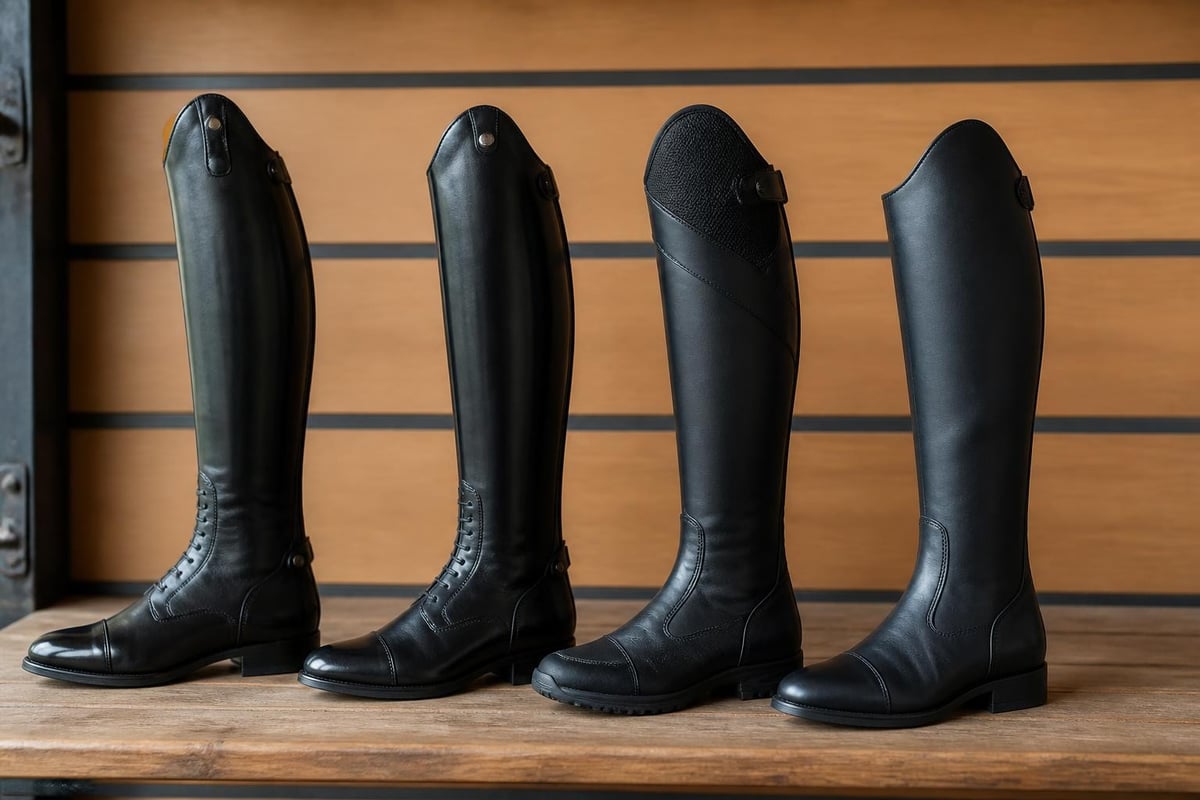
Footwear completes your dressage clothing ensemble and directly affects your riding effectiveness. Traditional tall boots in black leather remain the gold standard, offering a clean leg line and classical appearance. These boots should fit snugly through the calf without cutting off circulation, with enough room in the foot box for comfort during hours in the saddle.
Breaking in leather boots requires patience and dedication. Many riders invest in boot stretchers and conditioning treatments to accelerate the process. Quality leather moulds to your leg over time, creating a custom fit that off-the-rack boots approximate but rarely match perfectly. Consider professional fitting services that measure your calf circumference, ankle width, and height for optimal results.
Synthetic alternatives have improved dramatically, offering water resistance, easier care, and lower price points. While traditional judges might notice the difference, many riders find modern synthetics perfectly acceptable for schooling and lower-level competition. The key is ensuring whatever boots you choose maintain a polished, professional appearance.
Spur Selection and Placement
Spurs are required equipment at certain competition levels, and understanding proper selection matters for both effectiveness and horse welfare. Dressage spurs are typically shorter and more subtle than those used in other disciplines, with blunt or rounded ends. Current USEF regulations specify maximum spur lengths and acceptable designs that change periodically.
Your spurs should sit on the boot's spur rest, positioned horizontally with the shank pointing slightly downward. The neck should be long enough to make contact when your leg position is correct, but not so long that you risk unintentional contact. Most riders starting out use shorter spurs and progress to longer options as their leg stability improves.
Helmets and Safety Equipment
Safety equipment has become non-negotiable in modern equestrian sport, and dressage has adapted its traditionally conservative aesthetic accordingly. Helmets meeting current safety standards (ASTM F1163 or equivalent) are now required at most competitions, replacing the optional top hat that once defined upper-level dressage attire. This shift reflects broader changes across equestrianism as organisations prioritise rider safety over pure tradition.
Modern dressage helmets come in sleek, low-profile designs that complement formal attire without looking bulky or out of place. Matte black finishes blend seamlessly with shadbellies and show jackets. Ventilation systems help manage heat during summer competitions, while adjustable fit systems ensure security without pressure points during long ride times.
Proper helmet fit requires the same attention as your boots or breeches. The helmet should sit level on your head, covering your forehead without tilting back. Front and rear retention straps should form a V-shape just below your ears. When properly secured, the helmet shouldn't shift when you shake your head vigorously. Replace helmets after any significant impact or according to manufacturer guidelines, typically every five years.
Gloves and Final Details
Gloves complete your dressage clothing ensemble while serving important functional purposes. They improve grip on the reins, protect your hands from blisters, and contribute to the overall polished appearance judges expect. Traditional white or cream gloves remain standard for competition, though some riders prefer black gloves with dark jackets for a coordinated look.
Quality riding gloves balance grip, sensitivity, and durability. Leather palms offer excellent feel on the reins but require more care than synthetic alternatives. Many modern gloves incorporate strategic grip patterns on the fingers and palms, using silicone or textured materials that enhance contact without sacrificing comfort. The best gloves fit snugly without restricting circulation, with fingers that don't bunch or gap when you grip the reins.
| Glove Material | Advantages | Considerations | Best For |
|---|---|---|---|
| Leather | Traditional, excellent feel | Requires conditioning, less durable | Competition, formal events |
| Synthetic | Washable, affordable, durable | Less traditional appearance | Daily training, schooling shows |
| Hybrid | Balance of feel and practicality | Can be expensive | All-purpose use |
Your belt should be subtle and functional, typically in black or brown leather depending on your boot colour. Keep the buckle simple and understated. A leather belt in good condition adds a finished detail that judges appreciate, even if they never consciously register it.
Adapting Dressage Clothing for Daily Riding
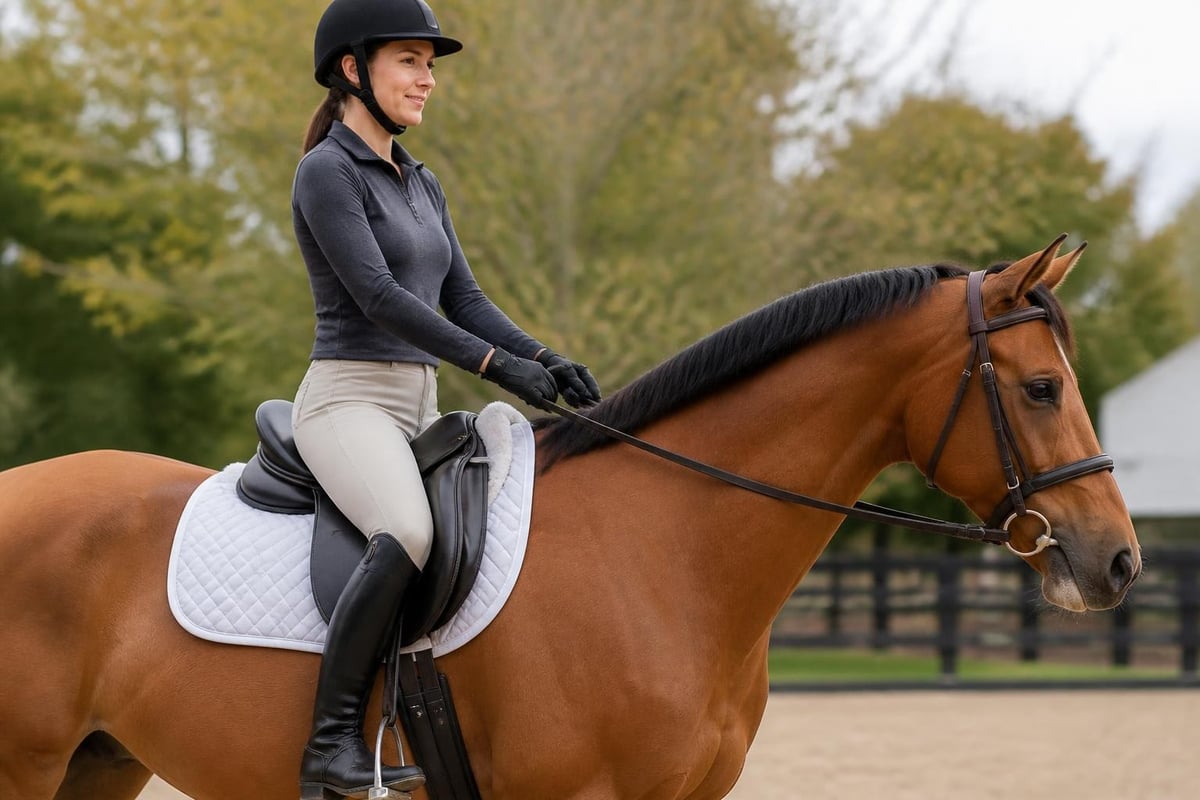
Not every ride requires full competition kit, but maintaining certain standards during training helps prepare you mentally for shows. Many riders invest in schooling breeches in darker colours that hide arena dirt better than white. These training versions often feature the same technical construction as competition breeches but cost less and wear more forgivingly during daily work.
Similarly, a well-fitted polo shirt or technical riding shirt replaces the formal show shirt and stock tie for everyday sessions. The best horse riding pants for training balance durability with comfort, allowing you to focus on riding rather than protecting expensive show clothing. Save your competition whites for actual shows and final dress rehearsals.
This practical approach extends to boots as well. Paddock boots with half chaps or field boots work perfectly for training, saving your tall boots from unnecessary wear. The principles of good fit and quality construction still apply, but you can be more relaxed about scuffs and dirt that accumulate during normal riding activities.
Building Your Dressage Wardrobe Strategically
Starting in dressage doesn't require purchasing everything at once. Begin with essential items that work across contexts: quality breeches, appropriate boots, and a well-fitted helmet. Add your show jacket and formal pieces as you prepare for your first competition. This staged approach spreads costs while ensuring you invest in pieces that truly fit your needs.
Consider the competition levels you're targeting within the next two years. If you're working toward upper-level tests, planning for that shadbelly makes sense. If you're enjoying the process at Training and First Level, focus on perfecting your current kit rather than jumping ahead. Your wardrobe should support your riding goals, not anticipate achievements that may or may not materialise.
Quality matters more than quantity in dressage clothing. One perfectly fitted, well-constructed jacket outperforms three mediocre options. The same principle applies to breeches, boots, and every other component. Buy the best you can afford, take care of it properly, and you'll find it serves you reliably for years.
Investment Timeline
Start with essential safety gear and training basics in your first three months. Add competition whites and your show jacket before your first recognised event. Upper-level riders typically invest in shadbellies and custom pieces as they progress through the levels, often timing purchases to coincide with specific competition goals.
Many riders find it helpful to budget for one major clothing purchase per season. This might mean quality breeches in spring, a new jacket in autumn, or custom boots when your lower-level pair wears out. Spreading investments prevents financial strain while ensuring your kit evolves with your riding.
Caring for Your Kit
Proper maintenance extends the life of your dressage clothing significantly. White breeches require pre-treatment for stains and cold-water washing with sport-specific detergents. Hang them to dry rather than using high heat, which can damage elastic and technical fabrics. Many riders keep a stain-removal stick in their tack trunk for immediate treatment of unexpected marks.
Jackets benefit from professional cleaning, especially shadbellies with their structured construction and delicate details. Between cleanings, brush them regularly to remove arena dust and store them on proper hangers that maintain shoulder shape. Steaming before shows removes wrinkles without the risk of shine marks from direct ironing.
Boots need regular conditioning to prevent cracking and maintain suppleness. Clean them after each use, apply quality leather conditioner monthly, and store them with boot trees to preserve their shape. This routine takes perhaps ten minutes but prevents the expensive replacement that neglected boots eventually require.
Store your stock ties flat or rolled loosely, never folded with sharp creases. Keep stock pins secure in a small box or pin cushion to prevent loss. Gloves should be washed according to manufacturer instructions and dried flat to maintain their shape. These small care habits compound over time, keeping your entire kit competition-ready with minimal last-minute preparation.
The Evolution Continues
Dressage clothing reflects the sport's dynamic balance between tradition and innovation. While the basic elements remain recognisable across decades, the materials and construction techniques advance constantly. Understanding where dressage came from helps appreciate why certain standards persist, even as modern riders demand performance features their predecessors never imagined.
The changes coming in 2026 and beyond will likely focus on sustainability and enhanced performance. Recycled fabrics, low-impact manufacturing, and circular economy principles are already influencing equestrian clothing design. Smart fabrics that regulate temperature or provide biometric feedback remain largely experimental but could reshape what we wear within the next decade.
For now, focus on building a wardrobe that serves your current needs while remaining adaptable to future developments. Classic pieces in traditional styles never go out of fashion in dressage, making them safe investments regardless of temporary trends. Quality construction ensures these items remain functional even as aesthetics evolve around them.
Finding Your Style Within Standards
Dressage's formal requirements leave room for personal expression within established boundaries. The cut of your jacket, the specific shade of your boots, the way you tie your stock all contribute subtle individual touches. Some riders prefer the absolutely traditional approach, while others incorporate modern elements where regulations permit.
Your dressage clothing should feel like an authentic expression of your riding identity, not a costume you reluctantly wear. This authenticity comes from choosing pieces that fit properly, function reliably, and align with your aesthetic preferences within the discipline's framework. When you're comfortable in your kit, that confidence translates to better riding and stronger test performances.
Pay attention to details that matter to you personally. If you appreciate craftsmanship, invest in hand-finished pieces from established makers. If cutting-edge performance technology appeals to your analytical side, seek out brands pushing fabric innovation. The intersection of your values and the sport's requirements is where you'll find clothing that genuinely enhances your riding experience.
Dressage clothing combines centuries of tradition with modern performance requirements, creating a unique challenge for riders building their competition wardrobes. The key lies in understanding what each piece contributes both functionally and aesthetically, then investing strategically in quality items that support your riding goals. Whether you're just starting out or refining your upper-level kit, the right clothing makes every ride better. Gallant Equestrian designs performance-driven pieces that meet dressage standards while delivering the comfort and durability modern riders demand. Look the Part. Enjoy the Ride.

