

Equestrian Attire for Men: Essential Guide 2026
Aug 21, 2026
Riding well demands more than skill in the saddle. What you wear matters-not just for appearance, but for performance, safety, and comfort. Equestrian attire for men has evolved significantly, blending tradition with modern fabrics and fit. Whether you're schooling at home, competing at affiliated level, or hacking through countryside, understanding what to wear and why makes every ride better. This guide covers the essentials, from foundational pieces to discipline-specific requirements, helping you build a wardrobe that works as hard as you do.
The Foundation: Core Pieces Every Rider Needs
Starting with the basics ensures you're prepared for any riding situation. Breeches form the cornerstone of equestrian attire for men-they're designed to move with you, reduce friction, and provide grip where it matters. Traditional full-seat breeches offer maximum stability in the saddle, while knee-patch versions deliver freedom of movement for jumping disciplines.
Quality makes the difference here. Performance fabrics should offer four-way stretch, moisture-wicking properties, and durability through countless washes. Modern designs incorporate flatlock seams to prevent chafing, and many feature compression panels that support muscle groups during long sessions.
Riding boots come next. Tall boots remain the standard for dressage and showing, whilst short boots paired with half chaps work brilliantly for everyday schooling. The choice depends on your primary discipline and personal preference-both offer adequate support and protection when properly fitted.
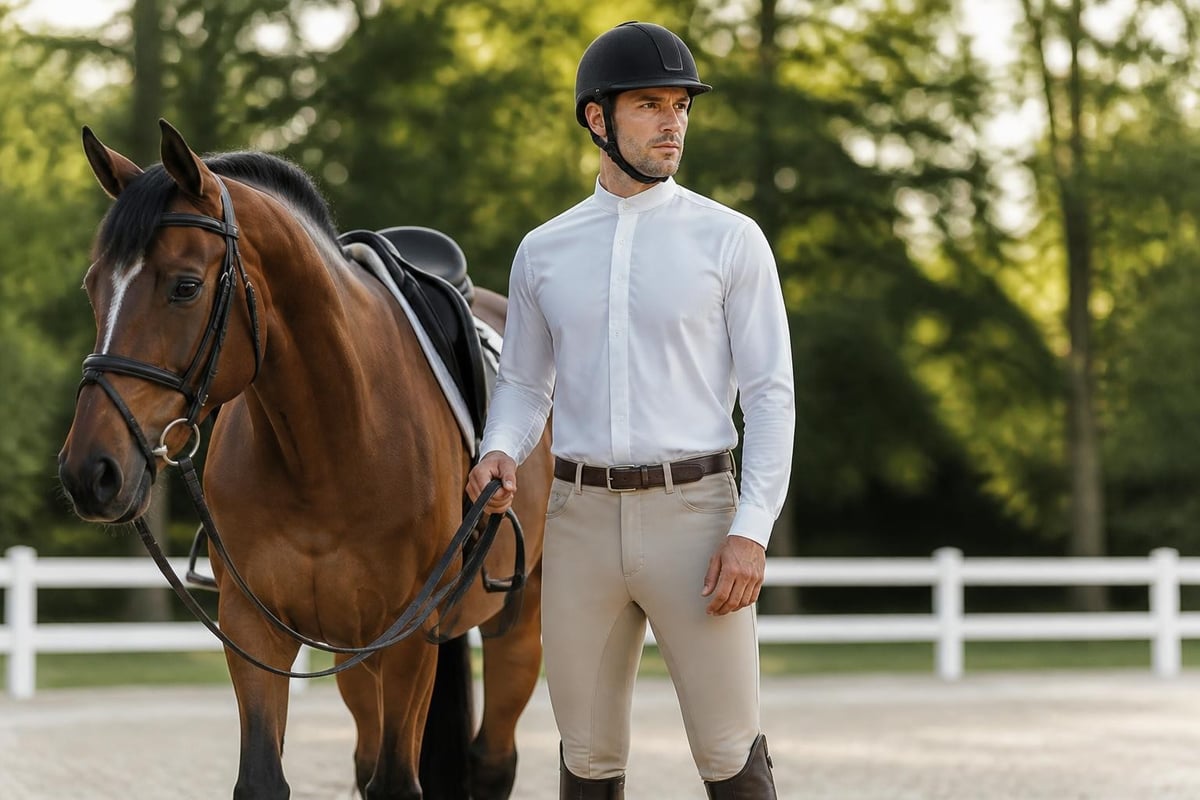
Shirts and Tops for Training Days
Daily schooling calls for practical, breathable tops. Technical polo shirts in performance fabrics keep you comfortable whether the mercury climbs or drops. Long-sleeved base layers work beneath jackets during colder months, providing warmth without bulk.
Look for moisture-wicking materials that pull sweat away from skin. Flattering fits that allow shoulder movement matter more than fashion trends. Collars should stay neat throughout your ride-essential if you're working with a trainer or photographing your sessions.
Quarter-zips and lightweight pullovers bridge the gap between shirts and jackets. They're ideal for unpredictable weather, easily layered or removed as temperatures shift. Choose darker colours for practicality-they hide the inevitable dust and hair that comes with stable life.
Competition Standards: What the Rules Actually Require
Competition attire follows specific regulations that vary by discipline and level. Understanding these requirements prevents last-minute panic before a class. The FEI Dressage Rules outline international standards, whilst national federations like the USEF provide detailed domestic guidelines.
Show jackets represent the most visible element of competition wear. Dark colours-black, navy, or dark grey-remain standard for dressage, with shadbellies permitted at higher levels. Show jumping allows slightly more flexibility, though conservative colours still dominate.
Proper fit cannot be overstated. Jackets should allow full arm extension whilst maintaining a tailored appearance. Shoulder seams should sit precisely where shoulder meets arm, and sleeve length must permit wrist visibility when arms are extended.
| Discipline | Jacket Style | Colour Options | Formality Level |
|---|---|---|---|
| Dressage (prelim-medium) | Short coat | Black, navy, dark grey | Formal |
| Dressage (advanced) | Shadbelly option | Black, navy | Very formal |
| Show jumping | Short coat | Black, navy, tweed | Semi-formal |
| Eventing (dressage phase) | Short coat | Black, navy | Formal |
Shirts, Stocks, and Neckwear Requirements
Competition shirts demand attention to detail. White remains the safest choice across all disciplines, though pale blue and cream gain acceptance in some classes. Ratcatcher-style shirts with integrated stocks simplify pre-class preparation, whilst traditional stock ties offer timeless elegance.
Stock pins must be plain and unobtrusive-no decorative elements that catch light or distract judges. Position them horizontally through the knot, securing everything neatly. Practice tying stocks well before show day; mastering the technique under pressure rarely ends well.
For detailed guidance on current attire rules, the USDF visual guide clarifies recent changes and acceptable variations. These resources prove invaluable when preparing for affiliated competitions.
Discipline-Specific Considerations
Each equestrian discipline carries its own expectations regarding appropriate attire. Understanding these nuances ensures you appear professional and prepared.
Dressage Attire Standards
Dressage demands formality and precision in dress. Tall boots should be black, well-polished, and properly fitted. Spurs, when required, must be appropriate to your level-unadorned for lower grades, potentially more refined for FEI-level competition.
Gloves in white, cream, or black complete the look. They should fit snugly without restricting finger movement-you need full tactile connection with the reins. Quality leather gloves break in beautifully, whilst technical fabrics offer superior grip in wet conditions.
BHS guidelines detail British competition standards, including specific requirements for protective headgear and body protectors. Safety equipment has evolved considerably, with modern helmets offering superior protection without compromising appearance.
Show Jumping and Eventing Requirements
Show jumping allows slightly more personal expression whilst maintaining professional standards. Tweed jackets appear at unaffiliated shows, and colour variations in shirts and breeches gain acceptance at lower levels.
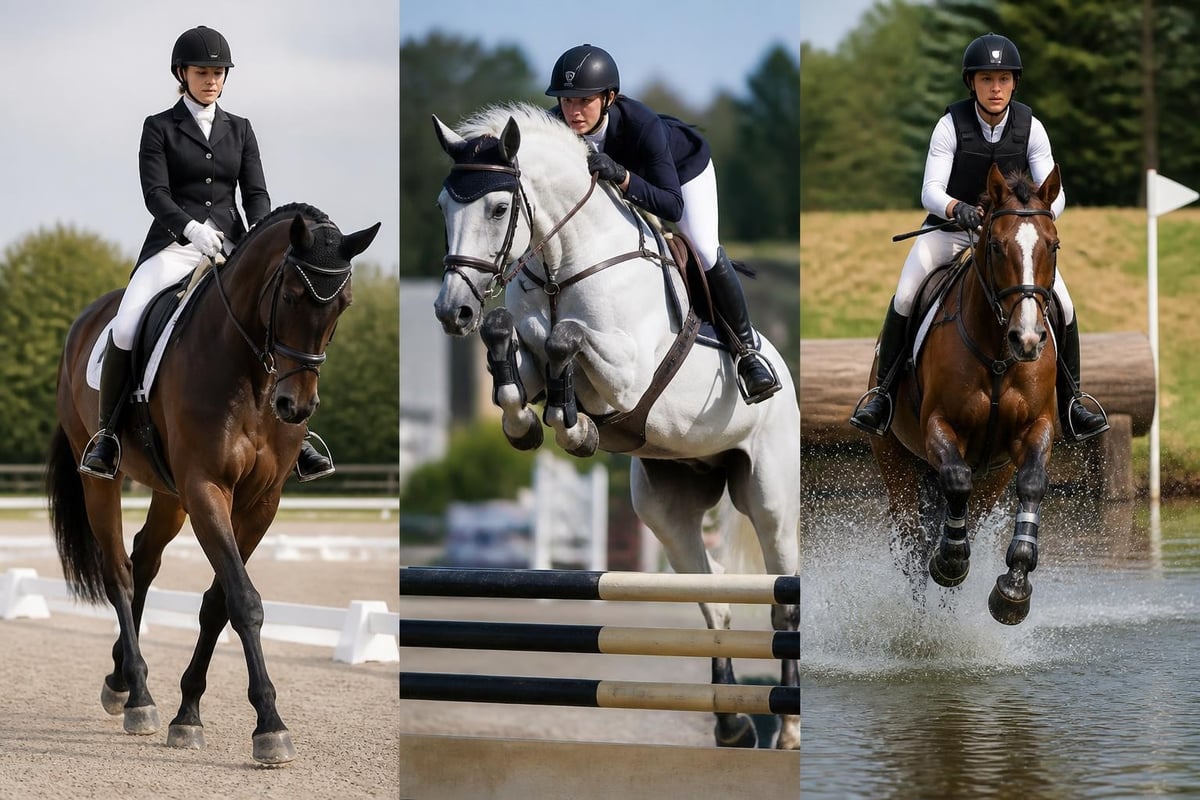
Eventing presents unique challenges-you need appropriate attire for three distinct phases. Dressage phase follows standard dressage requirements. Cross-country demands body protectors, medical armbands, and practical boots. Show jumping reverts to more formal standards, though less strict than pure dressage.
Investing in versatile pieces that work across multiple phases saves money and luggage space. Quality show jackets transition seamlessly between dressage and show jumping, whilst well-fitted breeches serve throughout.
Western Dressage Differences
Western dressage presents an entirely different aesthetic. The WDAA equipment guide outlines acceptable attire-long-sleeved shirts, western hats, dress trousers, and western boots replace traditional English kit.
This discipline blends western tradition with dressage principles, and attire reflects that fusion. Acceptable colours and styles differ markedly from English disciplines, offering riders alternative avenues for competition whilst maintaining professional presentation.
Building a Versatile Riding Wardrobe
Smart wardrobe planning ensures you're prepared for any situation without excessive investment. Start with foundational pieces that work across multiple contexts, then add discipline-specific items as needed.
Training Essentials
Three to four pairs of quality breeches cover weekly training schedules. Mix full-seat and knee-patch styles based on your riding focus. Neutral colours-navy, black, grey-prove most versatile, whilst beige or tan options suit summer showing.
Half a dozen technical shirts provide rotation through the week. Include both short and long-sleeved options, plus several base layers for winter riding. Gallant Equestrian's essentials collection offers performance-driven pieces designed for New Zealand conditions-equally suited to variable British weather.
One quality schooling jacket suffices for most riders. Choose water-resistant, breathable fabric in a dark colour. Packable designs work brilliantly-they stuff into lorry compartments or stable bags without creasing.
Competition Additions
Competition wardrobe builds on training basics. One excellent show jacket matters more than three mediocre ones. Have it professionally fitted if needed-alterations ensure perfect presentation and last for years.
Two competition shirts provide backup if one gets soiled during a long show day. Stock ties need spares too-pins occasionally vanish, and extra ties prevent panic.
Show boots demand proper care. Polish them after every competition, store them with boot trees, and address scuffs immediately. Well-maintained leather boots last decades, making initial investment worthwhile.
| Wardrobe Category | Essential Items | Nice-to-Have Items | Priority |
|---|---|---|---|
| Daily training | 3-4 breeches, 6 shirts, 1 jacket | Extra base layers, gilet | High |
| Competition basics | 1 show jacket, 2 shirts, show boots | Backup jacket, shadbelly | High |
| Weather-specific | Waterproof jacket, thermal layers | Summer-weight show jacket | Medium |
| Accessories | Gloves, helmet, belt | Spare gloves, stock pins | Medium |
Fabric Technology and Performance Features
Modern equestrian attire for men incorporates advanced fabric technologies that dramatically improve riding experience. Understanding these features helps you choose pieces that genuinely enhance performance.
Four-way stretch fabrics move with your body in all directions-critical for maintaining classical position without restriction. Early riding trousers offered limited give, forcing compromise between fit and movement. Contemporary fabrics eliminate that trade-off.
Moisture management keeps you comfortable during intensive schooling. Technical weaves pull perspiration away from skin, allowing rapid evaporation. This matters enormously during summer competitions or when working horses through demanding exercises.
Durability Considerations
Equestrian clothing endures considerable stress-repeated stretching, contact with horses and tack, frequent washing. Quality construction using resilient fabrics justifies higher initial costs through extended lifespan.
Flatlock seaming prevents the irritation that develops during long rides. Standard seams create pressure points that become uncomfortable after an hour in the saddle. Flatlock construction eliminates this issue whilst enhancing durability.
Reinforced areas receive extra fabric or double-stitching where stress concentrates. Knee patches, seat areas, and inner-leg panels benefit from these thoughtful details. Examine construction quality before purchasing-these elements separate adequate from excellent.
Transitional Pieces: Stable to Street
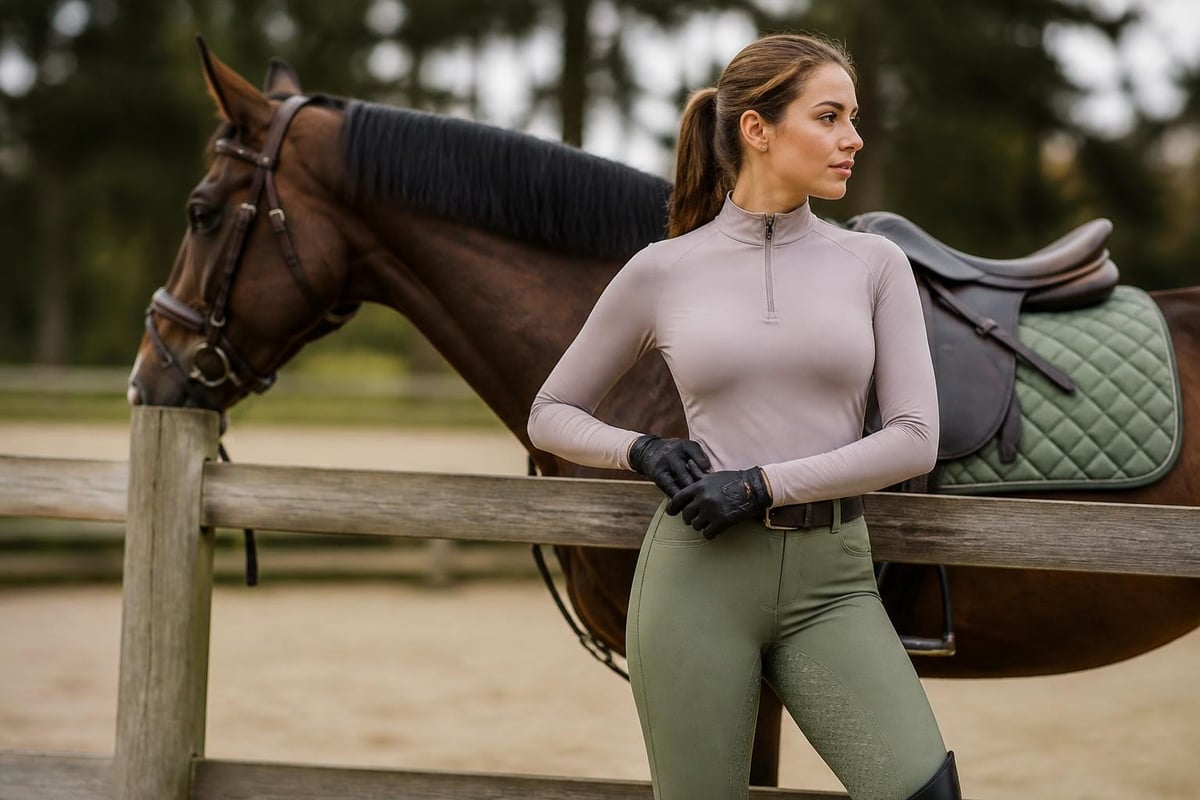
The best equestrian attire for men functions beyond the arena. Pieces that transition seamlessly from stable to daily life offer excellent value and reduce wardrobe complexity.
Quality riding shirts work brilliantly for casual wear. Polo styles suit weekend errands, whilst technical fabrics handle active lifestyles. Choose classic designs over trendy details-they remain wearable for years.
Modern breeches increasingly resemble technical trousers, making them viable for casual contexts. Darker colours without obvious knee patches blur the line between riding gear and athleisure. Pair them with boots or trainers depending on destination.
Riding jackets designed with cleaner lines work for country pursuits beyond horses. Look for styles without excessive branding or obviously equestrian details. Performance fabrics that resist weather suit dog-walking, shooting, or countryside rambling.
Style Beyond the Arena
Understanding how riding clothes fit into broader wardrobe creates cohesive style. Equestrian heritage influences menswear broadly-tailored fits, quality fabrics, attention to detail all stem from riding tradition.
Building wardrobe around these principles ensures consistency whether you're at the stable or in town. Investment pieces that serve multiple purposes deliver better value than single-purpose items gathering dust between shows.
For guidance on selecting versatile competition pieces, explore equestrian show attire considerations that balance regulation compliance with personal style.
Practical Care and Maintenance
Proper care extends the life of equestrian clothing significantly. These pieces represent considerable investment-protecting them makes financial sense.
Wash breeches after every ride to remove sweat, dirt, and horse hair. Use gentle cycles with cool water, avoiding fabric softeners that reduce technical fabric performance. Air-dry when possible-heat damages elastic fibres and causes premature wear.
Show jackets require different treatment. Spot-clean minor marks immediately, and have jackets professionally cleaned once or twice yearly. Store them properly-hanging with adequate space prevents creasing and maintains shape.
Boot Care Essentials
Leather boots need regular conditioning to prevent cracking and maintain suppleness. Clean them after every use, removing mud and sweat before they dry and damage leather. Apply conditioner monthly during regular use, more frequently if riding daily.
Store boots with trees to maintain shape and prevent creasing. Stuff them with newspaper if proper trees aren't available. Keep them away from direct heat sources-radiators and strong sunlight dry leather excessively.
Polish boots before competitions, building layers gradually for deep shine. Quality boot care products make this process easier and produce superior results. The effort shows in the arena-judges notice well-maintained turnout.
Safety Equipment: Non-Negotiable Elements
Safety gear forms the most critical component of equestrian attire for men. Modern helmets offer protection that earlier generations couldn't imagine-use it.
Riding helmets must meet current safety standards and fit properly. Replace them after any impact, even if damage isn't visible-internal structures compromise easily. Standards evolve regularly, so verify your helmet meets current requirements for your discipline.
The British Horse Society provides comprehensive guidance on safety equipment for various riding contexts. Their recommendations reflect current research on injury prevention and equipment effectiveness.
Body protectors become mandatory for certain disciplines and levels. Cross-country riding, especially at higher levels, requires them regardless of rider experience. They've evolved considerably-modern designs offer excellent protection without restricting movement significantly.
Fitting Safety Equipment Properly
Incorrect fit compromises safety equipment effectiveness. Helmets should sit level on your head, not tilted back. The harness should allow two fingers between strap and chin when buckled-tighter restricts breathing, looser permits excessive movement during impact.
Body protectors require professional fitting. They should cover appropriate areas without gaps, remain stable during movement, and allow full range of motion. Different styles suit different body types-try several before purchasing.
Don't economise on safety equipment. These pieces protect you from serious injury or death. Invest in quality items, maintain them properly, and replace them according to manufacturer guidelines.
Seasonal Adjustments and Layering Strategies
British weather demands adaptable wardrobe strategies. Effective layering keeps you comfortable through temperature swings and unexpected changes.
Base layers provide foundation for winter riding. Merino wool offers excellent temperature regulation and odour resistance, whilst technical synthetics dry faster after washing. Long-sleeved crew-necks work under shirts or standalone during very cold sessions.
Mid-layers add warmth without bulk. Lightweight fleeces or insulated gilets provide core warmth whilst allowing arm mobility. Quarter-zip styles offer ventilation control-useful when warming up horses generates heat quickly.
Outer layers protect from wind and precipitation. Waterproof, breathable jackets keep you dry without causing overheating. Look for designs cut specifically for riding-longer backs provide coverage in the saddle, and articulated arms accommodate forward riding positions.
Summer Considerations
Hot weather presents different challenges. Lightweight, breathable fabrics become essential-heavy traditional materials cause discomfort and reduce performance.
Sun protection matters year-round but especially during summer. Long-sleeved shirts with UPF ratings protect skin without requiring sunscreen reapplication. Lighter colours reflect heat better than dark, though they show dirt more readily.
Ventilated helmets improve comfort significantly during hot sessions. Air channels promote circulation, reducing heat buildup. Some designs incorporate removable liners for washing-essential when riding frequently in summer.
Finding Quality: What to Look for When Shopping
Purchasing equestrian attire for men requires discernment. Quality varies enormously, and higher prices don't automatically guarantee better performance.
Examine construction closely before buying. Check seam quality, looking for straight, even stitching without loose threads. Test stretch in multiple directions-fabric should recover immediately when released. Inspect reinforcements at stress points.
Try garments on and move through riding positions. Squat deeply, extend arms forward, twist your torso. Quality pieces accommodate these movements without pulling, binding, or gaping. Poor fits restrict performance regardless of fabric quality.
Read care instructions before purchasing. Pieces requiring complex maintenance or special cleaning add hidden costs. Most riders prefer machine-washable items that handle regular use without degradation.
Understanding Value Beyond Price
True value considers cost per wear over garment lifetime. A £200 jacket worn thrice yearly for five years costs far more per use than a £400 jacket worn weekly for a decade.
Quality fabrics maintain appearance and performance through hundreds of washes. Cheaper alternatives often fade, pill, or lose stretch within months. Calculate realistic lifespan when comparing options.
Brand reputation matters-established companies typically stand behind products. Look for guarantees or warranties that indicate manufacturer confidence. Reviews from fellow riders provide insight into real-world performance and durability.
Equestrian attire for men balances tradition, performance, and personal style-understanding what works for your riding creates confidence in and out of the saddle. From foundational breeches and boots through discipline-specific competition wear, building a versatile wardrobe supports your progression as a rider. Gallant Equestrian creates performance-driven pieces designed to last, offering men's equestrian clothing that transitions seamlessly from stable to street. Explore the collection to find essential riding pieces that combine functionality with refined style. Look the Part. Enjoy the Ride.

