

Equestrian Riding Shirts for Men | Expert Guide 2026
Oct 14, 2026
The right shirt transforms how you ride. Whether you're schooling a young horse on a Tuesday morning or competing at a weekend show, what you wear affects comfort, performance, and confidence. For male riders, finding equestrian riding shirts that combine functionality with refined style has traditionally meant compromising somewhere. Too often, we've settled for women's cuts adapted poorly or outdated designs that ignore modern fabric technology. That landscape has shifted considerably in 2026.
What Makes a Proper Riding Shirt Different
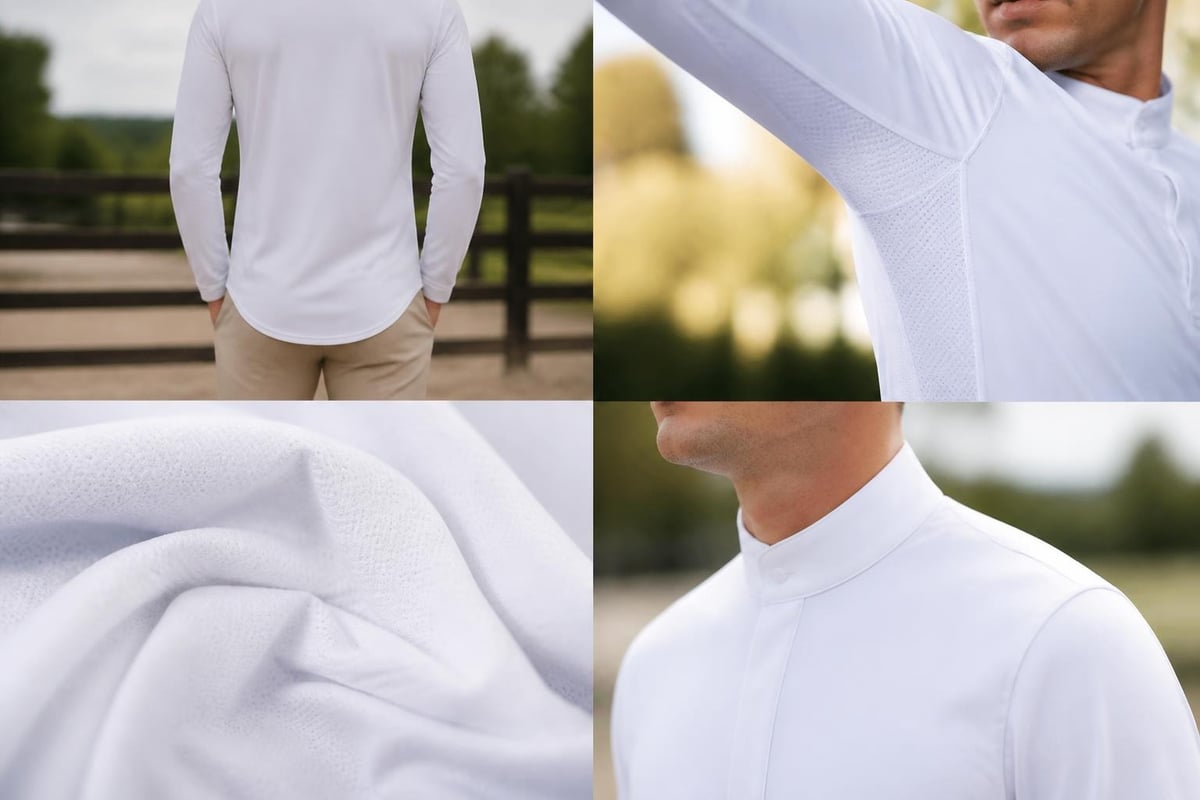
Performance in the saddle demands specific features you won't find in casual menswear. Equestrian riding shirts need extended back length to stay tucked during posting trot. They require articulated sleeves that move freely through shoulder and elbow without riding up. The collar must sit comfortably under a stock tie or function independently without irritation from helmet straps.
Fabric choice separates adequate from excellent. Natural fibres like cotton breathe well but hold moisture against your skin during long rides. Technical blends wick perspiration away, maintaining body temperature regulation whether you're working in summer heat or layering under a jacket in cooler months. Studies on sportswear and sweat management confirm that fabric composition directly impacts odour control and comfort during extended physical activity.
The cut through the torso matters profoundly. A shirt designed for sitting in an office chair doesn't account for the forward lean of riding posture. Proper riding shirts taper through the waist without excess fabric bunching, whilst providing enough room through shoulders and chest for unrestricted movement. This balance between fit and function defines quality.
Competition Standards and Show Ring Requirements
Show attire operates under specific regulations that vary by discipline and level. The US Equestrian rulebook details acceptable competition wear, whilst FEI jumping rules govern international events. Both emphasise conservative, professional presentation.
Traditional Show Shirts
For dressage and formal hunter classes, long-sleeved white shirts with French cuffs remain standard. The collar needs sufficient height and structure to support a stock tie properly. Some competitions permit pale colours, but white offers universal acceptance. Quality show shirts use non-transparent fabric even when wet with perspiration.
Modern Competition Options
Jumper classes and less formal divisions now permit short-sleeved shirts during warm months. Pale colours including blue, yellow, and pink appear regularly at regional shows. Technical fabrics have gained acceptance, provided they maintain traditional aesthetics. The key remains looking polished, not casual.
Competition wear collections now bridge the gap between regulation compliance and modern performance needs. Riders can meet dress codes without sacrificing comfort or temperature regulation.
Everyday Riding: Performance Without Formality
Most riding happens outside competition environments. Daily schooling, lessons, and casual hacking demand different priorities from show attire. Here, equestrian riding shirts lean heavily into function whilst maintaining enough style to look intentional, not sloppy.
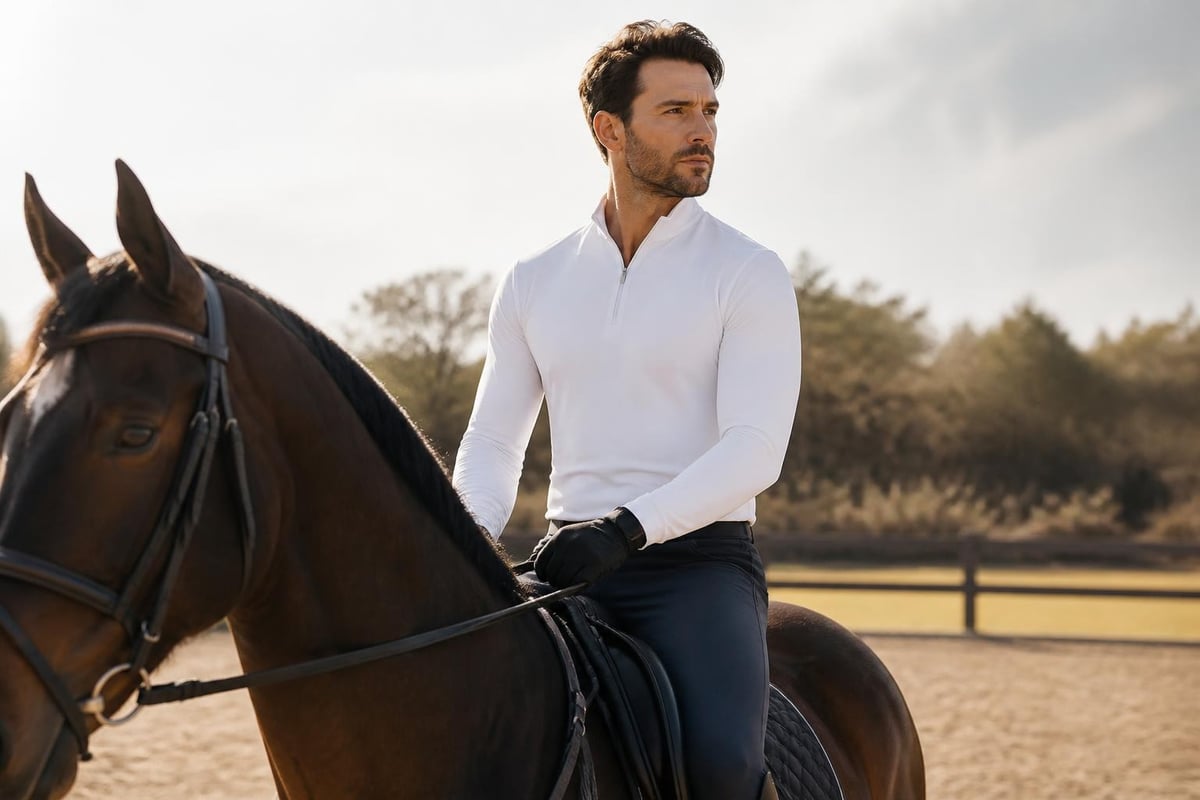
Polo shirts suit many riders for everyday use. The collar provides modest sun protection and looks cleaner than crew necks. Quarter-zip designs offer adjustable ventilation without buttons that might snag on reins or catch on tack. The Pony Club guidance reflects practical dress standards that prioritise safety and comfort for regular riding activities.
Base layers deserve attention as foundational pieces. They sit closest to skin, managing moisture and temperature as primary functions. Quality base layers in merino wool or technical synthetics transform comfort during extended rides. They work invisibly under show shirts or serve as standalone tops for relaxed sessions.
Long-sleeve technical shirts provide year-round utility. They layer easily under jackets during winter yet function independently during mild weather. Thumb loops keep sleeves positioned during tacking up and maintain consistent coverage. These details matter during four-season riding schedules.
Sun Protection and Health Considerations
Riders spend considerable time outdoors, often during peak UV hours. The American Academy of Dermatology recommends UPF-rated clothing as primary sun defence for extended outdoor activity. This medical perspective aligns with practical rider needs.
UPF (Ultraviolet Protection Factor) measures how effectively fabric blocks UV radiation. A UPF 50 shirt blocks 98% of UV rays, significantly reducing skin exposure compared to regular clothing. The Skin Cancer Foundation notes that typical cotton t-shirts provide only UPF 5 to 9, inadequate for prolonged sun exposure.
Testing standards ensure reliable protection. Hohenstein UV STANDARD 801 certifies UPF ratings under stretched and wet conditions, reflecting real-world wear. This matters for riders whose shirts experience both perspiration and mechanical stress during use.
Long-sleeve technical shirts with UPF ratings serve dual purposes throughout riding seasons. They protect against sun damage whilst managing temperature through moisture-wicking and breathability. Light colours reflect heat, whilst darker shades might absorb more but can hide dirt better during barn work.
Practical Application
Select UPF-rated shirts for summer competitions and long riding days. Pair with sunscreen on exposed areas like face and hands. Consumer Reports heat safety guidance emphasises moisture-wicking garments for outdoor activity, confirming that proper riding shirts contribute to overall heat management and safety.
Fabric Technology and Performance Features
Modern equestrian riding shirts incorporate textiles originally developed for other sports, adapted to riding's specific demands. Understanding these technologies helps you choose appropriately for different riding contexts and climate conditions.
Moisture Management Systems
Four-layer moisture systems define quality technical fabrics. The innermost layer pulls perspiration from skin through capillary action. The second layer distributes moisture across a broader surface area. The third layer moves moisture outward through the fabric structure. The outer layer allows evaporation whilst blocking external moisture. This engineering keeps skin dry during intense work.
Polyester blends typically outperform natural fibres for moisture transport, though merino wool offers unique benefits. Merino regulates temperature effectively, resists odour naturally, and remains comfortable against skin without the synthetic feel some riders dislike. Blends combining merino with synthetics balance the advantages of both.
Stretch and Recovery
Two-way and four-way stretch fabrics move with your body through dynamic riding positions. Two-way stretch provides give across or along the grain. Four-way stretch expands in all directions, offering maximum freedom. Elastane or spandex content typically ranges from 3% to 8% in riding shirts, enough for flexibility without excessive cling.
Recovery matters as much as stretch. Quality fabrics return to original shape after stretching, maintaining consistent fit throughout the day. Poor recovery leads to bagging at elbows and sagging through the torso after several hours of wear.
Anti-Odour Treatments
Silver-ion treatments, bamboo charcoal integration, and polygiene technology reduce bacterial growth that causes odour. These treatments extend wearing time between washes, particularly valuable during multi-day competitions or intensive training schedules. Effectiveness varies, with silver-ion showing strong performance across washing cycles.
Fit Considerations for Male Riders
Standard menswear sizing rarely translates directly to riding shirts. Athletic cuts designed for cycling or running often lack the torso length riders need. Traditional equestrian brands historically sized for women, leaving male riders with adapted patterns that compromise fit.
Torso Length and Taper
Measure from the base of your neck to well below your hips when sitting in riding position. Quality equestrian riding shirts extend 2 to 4 inches longer than standard dress shirts through the back. This prevents untucking during posting and keeps your lower back covered whilst mounted.
Waist taper should accommodate breeches without excess fabric bunching. Too much taper restricts movement and creates uncomfortable pressure points. Insufficient taper leaves loose fabric that catches under jacket hems or bunches awkwardly. The balance sits somewhere between slim-fit dress shirts and athletic-cut polo shirts.
Shoulder and Sleeve Construction
Raglan sleeves or set-in sleeves with forward rotation accommodate the shoulder position in riding posture. Standard set-in sleeves can bind through the upper arm during reaching movements common in tacking up or working with reins. Test this by raising your arms forward to shoulder height, as you would when holding reins.
Sleeve length requires attention when ordering. Standard measurements assume arms hanging naturally at sides. Riding positions bring arms forward, effectively lengthening the measurement from shoulder to wrist. Some riders prefer slightly longer sleeves to maintain wrist coverage when mounted.
| Feature | Standard Menswear | Riding Shirt |
|---|---|---|
| Back length | Standard | Extended 2-4" |
| Sleeve construction | Basic set-in | Articulated/raglan |
| Waist taper | Minimal or excessive | Moderate balance |
| Stretch content | 0-2% | 3-8% |
| Moisture wicking | Rarely | Standard feature |
Seasonal Variations and Layering Strategy
Year-round riding demands wardrobe depth beyond a single shirt style. Building a rotation that handles climate variations without requiring excessive purchases requires strategic selection.
Summer and Hot Weather
Lightweight technical fabrics with maximum breathability suit warm conditions. Short-sleeve options work well for schooling, though long sleeves with UPF ratings provide better sun protection during extended sessions. Lighter colours reflect heat and maintain cooler temperatures against skin.
Mesh panels under arms or across the back increase airflow in areas prone to heat retention. These details appear more commonly in casual riding shirts than competition wear, where traditional aesthetics limit visible ventilation features. Proper heat management through activewear becomes crucial during summer training schedules.
Winter and Cold Weather
Base layers form the foundation of cold-weather riding. Merino or synthetic long-sleeve base layers worn under show shirts or casual riding tops provide insulation without bulk. This approach maintains clean lines required for competition whilst adding warmth.
Mid-weight technical shirts serve as standalone pieces during moderate cold. They offer more insulation than summer-weight options whilst maintaining breathability to prevent overheating during physical work. Winter riding jackets layer over these shirts, creating versatile systems adaptable to changing conditions throughout a riding session.
Transition Seasons
Spring and autumn present the greatest wardrobe challenges with temperature swings of 15 to 20 degrees between morning and afternoon. Quarter-zip shirts excel here, allowing quick ventilation adjustment without removing layers. Long sleeves with moisture-wicking properties handle morning chill and afternoon warmth within a single garment.
Care and Maintenance
Quality riding shirts represent meaningful investment. Proper care extends lifespan and maintains performance characteristics that justify the initial cost.
Wash technical fabrics in cold water with sport-specific detergents that don't leave residue. Standard detergents can clog moisture-wicking channels in technical fabrics, reducing performance. Avoid fabric softener entirely, as it coats fibres and blocks moisture transport.
Turn shirts inside out before washing to reduce friction damage to outer surfaces. This simple step significantly extends colour vibrancy and fabric integrity. Zip all zippers and fasten buttons to prevent snagging.
Air drying preserves fabric elasticity and UPF ratings better than machine drying. High heat degrades elastane content and can damage moisture-wicking treatments. If you must use a dryer, select low heat and remove promptly to reduce wrinkling.
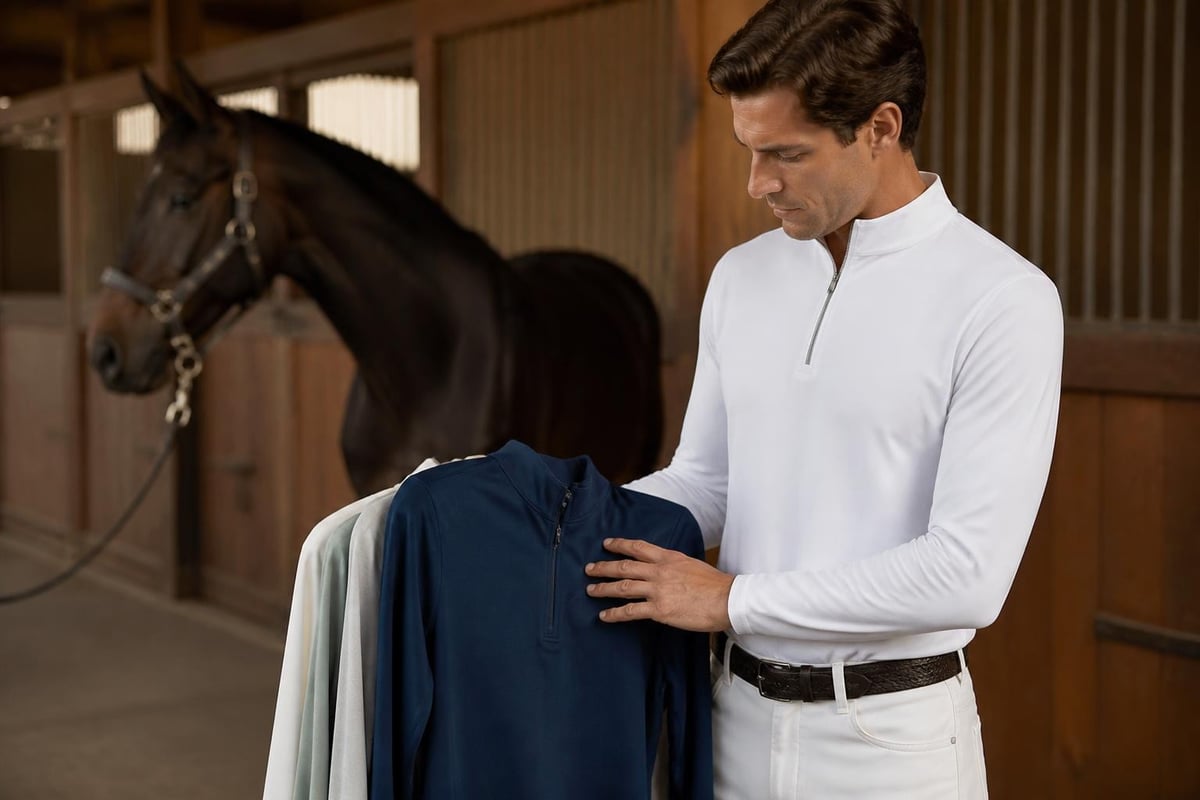
Store shirts on hangers rather than folded to maintain shape through shoulders and collar. This particularly matters for show shirts with structured collars that can develop permanent creases from improper storage.
Extending Performance Life
Rotate multiple shirts rather than wearing the same one repeatedly. This allows fabrics to fully dry and recover between uses, maintaining elasticity and odour resistance. Three to four shirts in regular rotation outlast six shirts worn sequentially with less frequent washing.
Address stains promptly, particularly protein-based stains from sweat or contact with horses. Enzyme-based spot treatments work effectively on technical fabrics without damaging moisture-wicking properties. Test any new treatment on an inconspicuous area first.
Selecting for Your Riding Discipline
Different equestrian disciplines emphasise different aspects of shirt selection. Understanding these variations helps you choose appropriately for your primary riding focus.
Dressage demands the most formal presentation. White long-sleeve shirts with French cuffs remain standard at most levels. The collar must support a stock tie properly without gaping or collapsing. Some riders prefer slightly heavier fabrics that maintain crisp appearance throughout tests, whilst others prioritise technical fabrics that manage perspiration during warm-weather competitions.
Show jumping allows more flexibility in both formal and casual contexts. Men's competition wear for jumping often includes pale-coloured short-sleeve options during summer months, with long sleeves preferred for indoor winter shows. The emphasis shifts toward freedom of movement and comfort during explosive jumping efforts.
Eventing crosses all requirements, from dressage phase formality through cross-country practicality. Many eventers maintain separate shirt wardrobes for each phase, though some technical show shirts now handle both dressage and show jumping adequately. Cross-country typically sees polo shirts or technical base layers that prioritise function over formality.
Western disciplines follow different conventions entirely, with button-front shirts in various colours and patterns standard across most events. These fall outside traditional English riding shirt categories but share some functional requirements around fit, durability, and moisture management.
The Transition from Stable to Street
One defining characteristic of well-designed equestrian riding shirts is their ability to function beyond the arena. The best pieces transition seamlessly from riding to everyday activities without looking costume-like or overly technical.
Subtle branding allows technical riding shirts to pass as standard active wear. Large logos or obvious equestrian imagery limit versatility. Clean designs in solid colours or minimal patterns work equally well for stable visits, casual dinners, or weekend errands.
This versatility matters practically. Most riders don't change clothes between barn and other activities. A shirt that performs well in the saddle whilst looking appropriate for a casual lunch or coffee afterwards reduces wardrobe complexity and travel requirements.
Quality construction shows in these details. Flatlock seams lie smooth against skin without bulk. Collar construction maintains shape without stays or excessive stiffness. Proportions work for both riding posture and standing positions without looking awkward in either context.
Gallant Equestrian's collections exemplify this approach, offering pieces that perform technically whilst maintaining refined aesthetics appropriate for various settings beyond the stable.
Budget Considerations and Value Assessment
Price ranges for equestrian riding shirts span from under £30 for basic options to over £150 for premium technical show shirts. Understanding what drives cost helps you invest appropriately for your riding frequency and needs.
Entry-level shirts typically use basic polyester blends with minimal technical features. They provide moisture-wicking and acceptable fit at accessible prices. These suit riders who compete infrequently or are building initial wardrobes. Durability and advanced features like UPF ratings or anti-odour treatments rarely appear at this price point.
Mid-range options (£50 to £90) offer significantly better fabric technology, improved fit, and greater durability. Features like four-way stretch, polygiene odour control, and UPF 50 protection become standard. Construction quality increases, with better seam work and attention to riding-specific details. This range represents the sweet spot for regular riders who want performance without premium pricing.
Premium shirts above £100 deliver cutting-edge fabrics, exceptional fit refinement, and often incorporate proprietary technologies. They excel for serious competitors or riders who spend extensive time mounted. The incremental performance gains justify cost for some riders but represent diminishing returns for others.
Cost Per Wear Perspective
Calculate value based on wearing frequency rather than initial price alone. A £120 shirt worn twice weekly for three years delivers far better value than a £40 shirt that deteriorates after six months of similar use. Quality pieces worn regularly and cared for properly often cost less per wearing than cheaper alternatives requiring frequent replacement.
Consider your riding schedule, climate demands, and whether you compete when allocating budget. A serious competitor might invest more heavily in show shirts whilst selecting mid-range options for schooling. A recreational rider might reverse those priorities, spending more on everyday comfort pieces worn most frequently.
Emerging Trends in Men's Riding Wear
The landscape of equestrian riding shirts for men continues evolving as brands recognise the distinct requirements of male riders. Several trends define 2026's offerings.
Sustainability influences fabric selection and production methods. Recycled polyester, organic cotton blends, and biodegradable synthetics appear more frequently. These materials perform comparably to traditional options whilst reducing environmental impact. Riders increasingly factor sustainability into purchasing decisions alongside performance characteristics.
Seamless construction technologies reduce chafing points and improve comfort during extended wear. Knitting garments as single pieces rather than cutting and sewing separate panels eliminates traditional seam friction. This technique appears first in base layers but increasingly in complete riding shirts.
Smart fabric integration remains mostly experimental but shows promise. Phase-change materials that actively regulate temperature, fabrics with built-in insect repellent, and textiles incorporating antimicrobial properties beyond traditional treatments all represent areas of development. Practical application in riding contexts continues emerging.
Inclusive sizing expands beyond traditional athletic cuts. Brands now offer extended size ranges and different fit profiles acknowledging that riders' body types vary considerably. This trend benefits all riders seeking better fit options.
Choosing the right equestrian riding shirts comes down to understanding your specific needs, riding discipline, and how you'll use each piece. The best shirts balance competition requirements with everyday functionality, technical performance with refined aesthetics, and immediate comfort with long-term durability. Whether you're building your first riding wardrobe or refining an established collection, Gallant Equestrian offers performance-driven pieces designed specifically for men who ride. Look the Part. Enjoy the Ride.

