

Equine Jumpers: Performance, Training & Competition Guide
Mar 05, 2026
Watching a horse clear a fence with power and precision never gets old. Equine jumpers represent the pinnacle of athletic performance in the horse world, combining strength, agility, and courage in equal measure. Whether you're developing a young prospect or competing at established levels, understanding what makes these athletes tick will transform how you ride and prepare. The relationship between horse and rider in jumping disciplines demands technical skill, patience, and the right approach to both training and competition. Let's explore what sets equine jumpers apart and how to develop them properly.
What Defines Equine Jumpers
The term equine jumpers refers specifically to horses competing in show jumping disciplines where the primary objective is clearing obstacles within a set time. Unlike hunters, which are judged on form and style, jumpers are scored purely on faults and speed.
This distinction shapes everything about how these horses are trained, ridden, and presented. A jumper's value lies in its ability to navigate technical courses without touching rails, regardless of how pretty the jump looks. The focus is purely athletic.
Different breed types excel in jumping disciplines. Warmbloods dominate the upper levels with their scope and power, whilst Thoroughbreds bring speed and heart to the game. Irish Sport Horses combine the best attributes of both bloodlines, offering athleticism with trainability.
Physical Attributes That Matter
Build matters significantly in equine jumpers. A strong hindquarter provides the thrust needed to clear larger obstacles. Good bone structure, particularly in the legs, ensures durability over years of competitive work.
Scope refers to a horse's natural jumping ability and range. Some horses can clear fences well beyond what their training level suggests, whilst others work hard to manage smaller heights. Neither approach is wrong, but understanding your horse's natural scope influences training decisions.
Temperament plays an equally crucial role. The best equine jumpers possess controlled bravery. They need courage to face imposing obstacles without hesitation, yet enough respect to listen to their rider's guidance through technical combinations.
Training Foundations for Jumping Horses
Building a solid foundation starts with flat work. Many riders want to jump immediately, but the best equine jumpers spend significant time developing balance, rhythm, and responsiveness on the flat first.
Grid work forms the backbone of proper jumping education. These gymnastic jumping exercises develop muscle memory, improve technique, and build confidence without overwhelming the horse. A well-designed grid teaches horses to adjust their stride, rock back onto their hindquarters, and use their bodies efficiently.
Progressive training means gradually increasing difficulty. Start with poles on the ground, advance to cross-rails, then verticals, and finally oxers and combinations. Rushing this progression creates gaps in education that surface later as problems.
Building Strength and Flexibility
Strength training methods specifically designed for equine athletes enhance performance significantly. Hill work builds hindquarter strength without the concussive impact of repeated jumping. Trotting uphill engages the muscles needed for powerful takeoffs.
Passive stretches and flexibility exercises improve a horse's bascule over fences. The techniques discussed in equine therapy focus on neck and back flexibility, crucial elements for proper jumping form. A supple horse can round properly over fences, reducing strain and improving clearance.
Pole work at varying heights and distances teaches adjustability. Setting up different configurations challenges horses to think and adjust their stride length without rider interference. This develops independence and confidence.
Competition Categories and Rules
Understanding the structure of jumper competitions helps riders choose appropriate levels. The USHJA's recent rule changes effective from late 2025 have refined equipment regulations and testing protocols, making awareness of current standards essential.
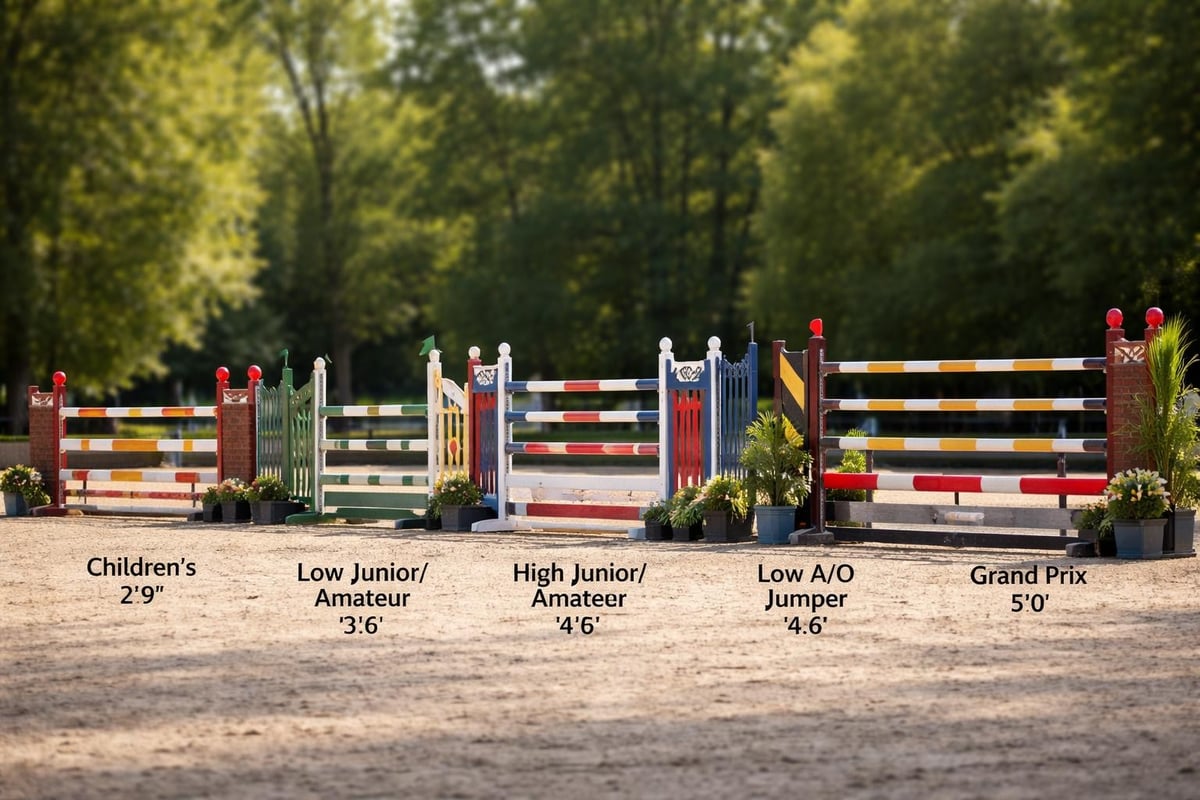
Jumper divisions range from beginner-friendly classes to international Grand Prix. Each level has specific fence height requirements and technical expectations. Children's divisions start around 0.90m, whilst Grand Prix courses reach 1.60m with demanding technical elements.
The Colorado Hunter Jumper Association rulebook provides detailed specifications across divisions, including cross-entry restrictions and class structures. Familiarizing yourself with these details prevents surprises at competitions.
| Division | Approximate Height | Technical Difficulty | Typical Speed Required |
|---|---|---|---|
| Beginner | 0.80m - 0.90m | Simple verticals | Moderate |
| Intermediate | 1.00m - 1.15m | Combinations introduced | Faster pace |
| Advanced | 1.20m - 1.35m | Technical lines, related distances | Quick adjustments |
| Grand Prix | 1.50m+ | Maximum difficulty | Speed essential |
Navigating Show Jumping Rules
Different organizations maintain their own rulebooks. Equine Sports UK provides comprehensive rules covering equipment guidelines, eligibility criteria, and competition protocols for various disciplines.
Riders must understand fault systems. Four faults for a rail down, three faults for the first refusal, elimination after three refusals. Time faults accumulate if you exceed the allowed time, with each second over adding to your score.
Equipment regulations dictate everything from bit choices to whip length. Knowing what's permitted at your chosen venue prevents disqualification. Some venues allow standing martingales, whilst others prohibit them entirely.
Developing Young Jumper Prospects
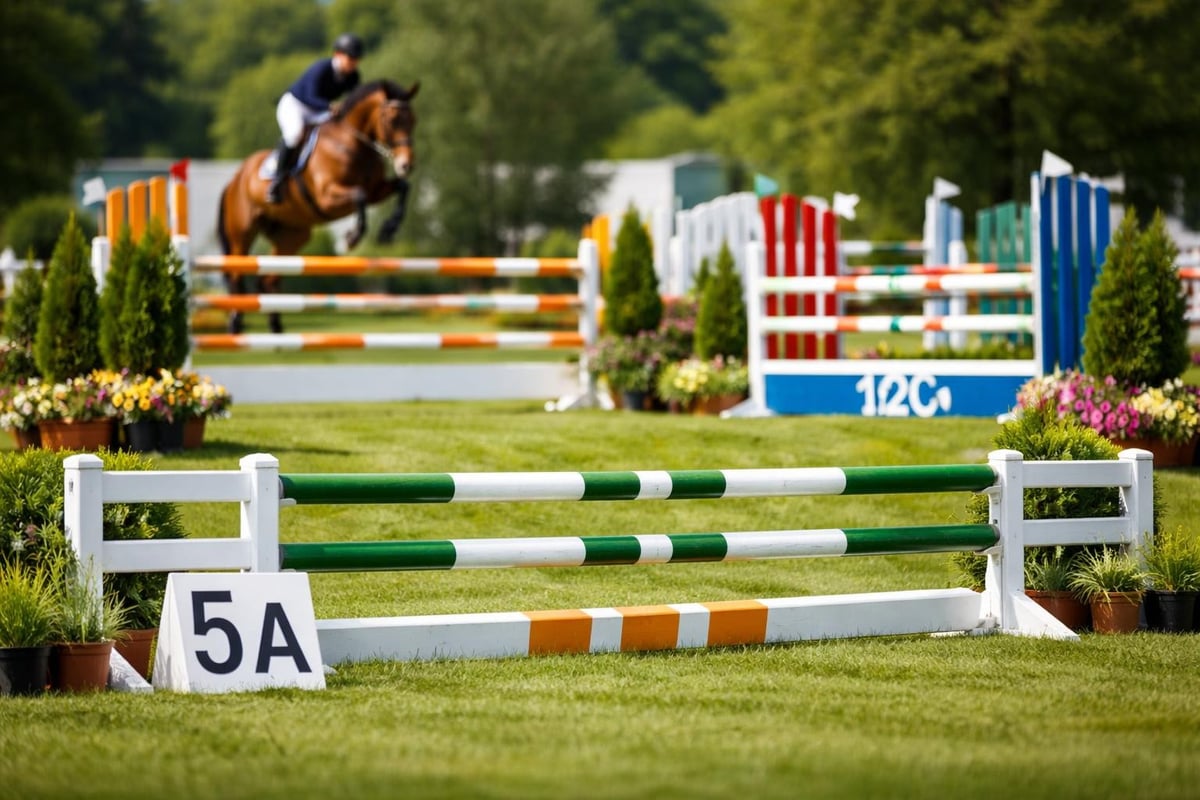
Young horse classes introduce prospects to competition environments without overwhelming them. The Global Equine Sires Cup offers free-jumping competitions specifically designed for developing equine jumpers, allowing judges to assess natural ability before intensive training begins.
Starting young horses correctly prevents bad habits. Free jumping demonstrates natural technique without rider interference. Watching how a horse approaches obstacles, uses its body, and handles pressure reveals valuable information about temperament and ability.
The new pony jumper categories introduced by USEF provide more tailored competition levels for young riders and ponies. These changes recognize that development takes time and different horses progress at individual rates.
Progression Timeline Considerations
Three-year-olds should focus primarily on flat work with occasional pole exercises. Building muscle and balance without jumping strain prevents injury and burnout. Light hacking and cavaletti work develop coordination naturally.
Four-year-olds can begin proper jumping education through grids and small courses. Keep fences low, sessions short, and always end on positive notes. Quality repetitions matter more than quantity at this stage.
Five and six-year-olds progress to competition height fences with increasing technical difficulty. This age range reveals genuine talent. Horses showing scope, bravery, and trainability at five often excel later. Those struggling might be better suited to different disciplines.
What to Wear When Riding Jumpers
Performance clothing matters when you're riding equine jumpers. You need freedom of movement without bulk, durability to handle daily training, and a professional appearance for competition days.
Quality breeches designed for men provide the grip and flexibility jumping demands. Look for knee patches or full-seat silicone that keeps you secure during takeoff and landing without restricting movement.
Layering becomes essential during early morning training sessions. Starting with a breathable tee under a lightweight hoodie allows adjustment as you warm up. You can shed layers as needed whilst maintaining proper presentation.
Competition Day Essentials
Show shirts and jackets must meet specific standards whilst allowing full range of motion. Traditional show shirts paired with properly fitted jackets create the polished look judges expect, even though jumpers aren't judged on rider turnout like hunters.
Weather-appropriate outerwear protects during walk-courses and warm-ups. A quality rain jacket keeps you dry without overheating, important when competitions run regardless of conditions.
Footwear deserves careful consideration. Tall boots provide leg protection and proper stirrup positioning. Break them in thoroughly before competitions to avoid blisters during long days.
Cross-Training Benefits for Jumpers
Eventing combines dressage, cross-country, and show jumping into one discipline. Many successful equine jumpers benefit from cross-country schooling even if they never compete in full events. The eventing rules outlined by ESDCTA include stadium jumping guidelines that parallel pure show jumping protocols.
Cross-country obstacles teach horses to be bold and independent. Jumping solid fences develops confidence that translates to show jumping courses. Horses learn to think for themselves and commit to obstacles without hesitation.
Dressage work improves adjustability and responsiveness. The ability to shorten or lengthen stride on command makes navigating technical jumper courses significantly easier. Lateral work enhances suppleness, helping horses turn tightly between obstacles.
Trail Riding and Mental Freshness
Getting equine jumpers out of the arena prevents mental burnout. Trail riding provides low-stress exercise whilst developing surefootedness across varied terrain. Horses return to arena work refreshed and willing.
Natural obstacles encountered on trails, like ditches and logs, reinforce bravery. These experiences build confidence that carries into competition environments. A horse comfortable navigating unfamiliar terrain approaches new jumps with less anxiety.
Swimming offers non-impact cardiovascular conditioning. Facilities with access to safe swimming areas can give jumping horses excellent fitness work without concussive stress on joints and tendons.
Injury Prevention and Soundness
Maintaining soundness in equine jumpers requires proactive management. Regular veterinary examinations catch small issues before they become career-threatening. Annual lameness evaluations, joint assessments, and back checks form part of responsible horse management.
Warming up properly before jumping prevents muscle strain. A minimum fifteen minutes of walk and trot with progressive increase in intensity prepares the body for athletic demands. Rushing warm-ups increases injury risk significantly.
Cooling down matters equally. Walking until breathing normalizes and muscles relax prevents tying up and stiffness. Hand-walking after intense sessions aids recovery and gives you time to assess how the horse feels.
Surface and Footing Considerations
Arena footing directly impacts soundness. Deep sand increases tendon strain, whilst hard surfaces jar joints. Ideal footing provides cushion with some give whilst remaining consistent and level.
Jumping on varied surfaces builds adaptability. Grass, sand, and synthetic surfaces all ride differently. Horses competing at multiple venues benefit from training across surface types, though always prioritize safety over variety.
Monitoring cumulative impact matters. Horses jumping large courses daily accumulate stress injuries. Quality sessions spaced with adequate recovery time preserve soundness better than daily grinding.
Mental Aspects of Jumping
Confidence makes or breaks equine jumpers. A horse questioning its ability creates dangerous situations. Building confidence through appropriate challenges and positive experiences develops horses willing to try anything asked.
Some horses are naturally careful, tapping rails regularly whilst learning. This carefulness often develops into excellent technique. Other horses are naturally bold, sometimes too bold. Finding the balance through training creates reliable jumpers.
Partnership between horse and rider shows most clearly in jumping. The horse must trust the rider's judgment about distances and approaches. The rider must trust the horse's ability and courage. This mutual trust develops through consistent, fair training.
Reading Your Horse's Mindset
Understanding when to push and when to back off separates good trainers from average ones. A horse showing tension might need easier exercises to rebuild confidence. One getting lazy might need more challenging work to maintain interest.
Body language reveals mental state. Ears forward and relaxed muscles indicate confidence. Tension through the jaw, hollow back, or rushing suggests anxiety. Adjusting training based on these signals prevents problems from escalating.
Routine provides security for many horses. Consistent warm-up patterns, familiar exercises, and predictable schedules help nervous horses relax. Breaking routine occasionally prevents dependency whilst maintaining overall structure.
Choosing the Right Jumper
Buying equine jumpers requires clear goals and honest self-assessment. Match the horse to your current ability, not where you hope to be. Overhorsing creates dangerous situations and prevents enjoyment.
Watching a horse jump without tack reveals natural ability. Free jumping demonstrates technique, scope, and attitude without rider interference. A horse that enjoys jumping and uses itself well will be easier to develop than one fighting every fence.
Professional evaluations prevent costly mistakes. Pre-purchase examinations by qualified vets identify soundness issues. Trying horses multiple times in different situations reveals temperament and consistency better than single rides.
Investment Considerations
Quality equine jumpers represent significant investment. Prices vary enormously based on age, training level, competition record, and breeding. Younger horses cost less but require development time. Made horses command premium prices but compete immediately.
Ongoing costs include training, competition fees, veterinary care, and general maintenance. Budget realistically for the full commitment, not just purchase price. A horse you can afford to maintain and compete properly serves you better than one stretching your budget.
Developing successful equine jumpers combines proper training, appropriate challenges, and partnership built on mutual trust. The journey from green prospect to confident competitor rewards patience and consistency. Whether you're training young horses or competing at established levels, understanding these fundamentals enhances your experience and results. When you're ready to look the part whilst enjoying the ride, Gallant Equestrian offers performance-driven clothing designed for men who ride seriously. From training sessions to competition days, quality kit that moves with you makes every ride better.

