

Equine Polo Shirts: The Essential Riding Layer
Apr 01, 2026
The right shirt makes all the difference. Whether you're schooling in the arena, mucking out stables, or heading to the clubhouse after a ride, equine polo shirts offer the perfect balance of performance and style. They're not just casual wear borrowed from other sports-they're purpose-built layers that understand the demands of riding. From moisture management during summer sessions to layering capability in cooler months, these shirts have earned their place as wardrobe essentials for the modern rider.
Why Polo Shirts Work for Riding
The polo shirt's design addresses specific riding needs. The collar provides sun protection without the restriction of a full button-down, whilst the placket allows for adjustable ventilation. The knit construction moves with you rather than against you, crucial when you're shifting your weight through transitions or posting to the trot.
Traditional equestrian wear often prioritized formality over function, but equine polo shirts bridge that gap naturally. They maintain the polished appearance expected in riding circles whilst delivering genuine performance benefits. The slightly longer back hem stays tucked during mounted work, and quality fabrics resist the inevitable contact with tack, hay, and horses.
Performance Features That Matter
Modern equine polo shirts incorporate technical advances borrowed from various sporting disciplines. Moisture-wicking fabrics pull sweat away from your skin, similar to innovations seen in contemporary golf apparel that prioritize active comfort. Four-way stretch allows full range of motion whether you're mounting, posting, or reaching for reins.
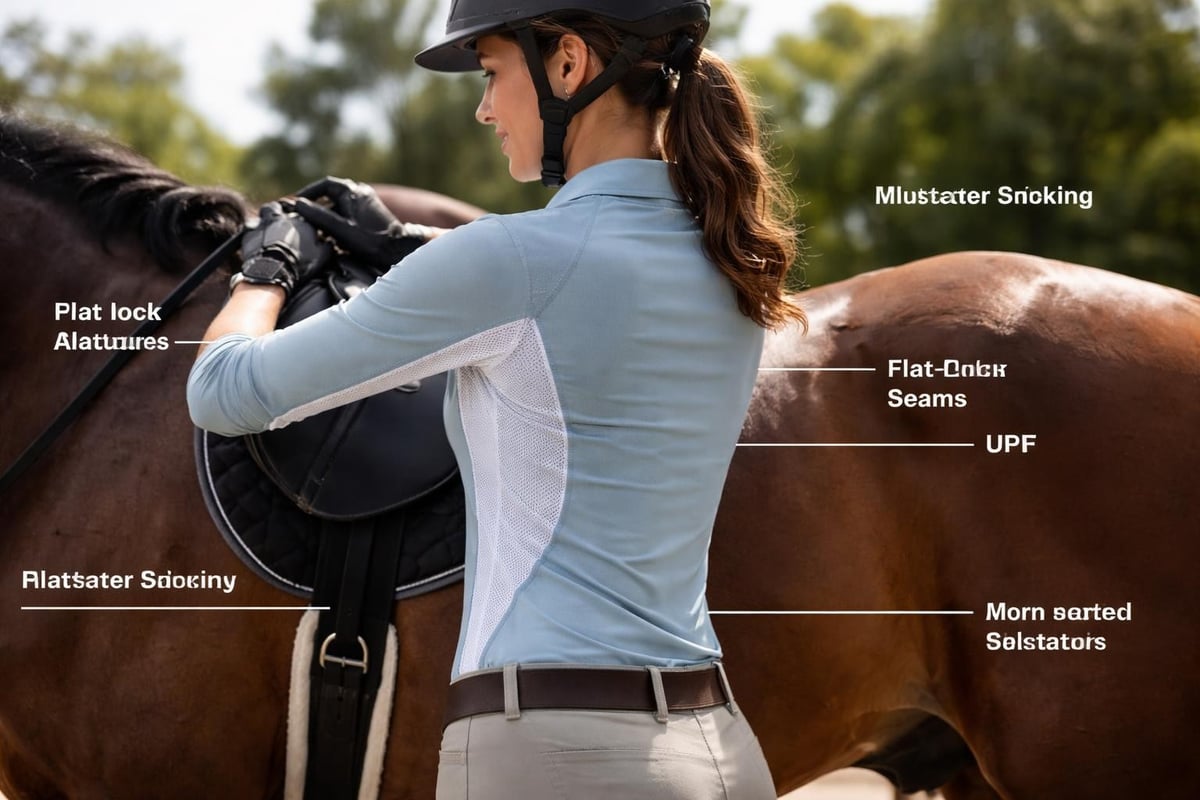
Flat-lock seaming prevents chafing during extended rides. Antimicrobial treatments keep garments fresh between washes, particularly valuable when you're riding multiple horses in a day. UPF sun protection built into the fabric itself offers defence against exposure, essential during long summer training sessions.
Temperature regulation separates quality shirts from basic ones. Look for fabrics that breathe when you're working hard but provide enough weight to layer effectively when conditions demand it. The best equine polo shirts function year-round, not just during peak summer months.
Choosing the Right Fit for Mounted Work
Fit determines whether a shirt enhances or hinders your riding. Too loose and excess fabric bunches under jackets or catches on equipment. Too tight and you're fighting restriction through every movement. The sweet spot allows comfortable arm mobility, doesn't pull across the shoulders when you lean forward, and sits cleanly at the waist without excessive gathering.
Athletic fit works for most riders. It follows the body's lines without clinging, providing enough room through the chest and shoulders for active riding whilst maintaining a tailored appearance. When assessing fit, perform a few basic movements: raise your arms overhead, twist at the waist, lean forward as if in riding position. The shirt should move with you seamlessly.
Sleeve length deserves attention. Quarter-length sleeves suit warm weather riding but can ride up uncomfortably. Full-length sleeves offer sun protection and professional appearance but may feel restrictive in heat. Many riders maintain both options, selecting based on season and activity. Consider how the shirt fits under your favourite riding jacket as well-compatibility with your existing wardrobe matters.
Fabric Selection Beyond Basic Cotton
Pure cotton feels comfortable initially but shows limitations quickly. It absorbs moisture rather than wicking it, becomes heavy when wet, and takes considerable time to dry. For casual stable work, cotton blends perform adequately, but serious riding demands better solutions.
Performance synthetics excel at moisture management. Polyester blends dry rapidly, resist wrinkles, and maintain shape through repeated washing. They often incorporate stretch components like elastane for improved mobility. Some riders initially resist synthetic fabrics, assuming they'll feel artificial or uncomfortable, but modern technical fabrics rival or exceed natural fibres for next-to-skin comfort.
Merino wool deserves consideration for year-round riding. It regulates temperature naturally, wicks moisture effectively, resists odours impressively, and remains comfortable across wide temperature ranges. Higher-quality equine polo shirts increasingly incorporate merino blends, particularly for riders who value natural fibres but need technical performance.
Evaluating Quality Construction
Examine how a shirt is built, not just what it's made from. Double-stitched hems indicate durability. Reinforced shoulder seams withstand the stress of jacket wear and bag carrying. Quality buttons attach securely with properly finished buttonholes that won't fray.
The collar construction reveals overall garment quality. It should maintain shape after washing, neither curling nor flattening excessively. Interlining provides structure without stiffness. Poorly constructed collars look sloppy within weeks; well-made ones maintain appearance for years.
Check fabric weight consistency. Premium shirts use even, uniform knits without thin spots or irregularities. Hold the garment to light-you shouldn't see significant variations in density. This consistency affects both durability and appearance over the garment's lifespan.
Colour and Style Considerations
Classic colours dominate equestrian wear for good reason. Navy, white, black, and burgundy work across contexts from training to competition to casual wear. They pair effortlessly with breeches, coordinate with jackets, and maintain professional appearance. Building your core collection around these staples ensures versatility.
That said, don't overlook thoughtful colour choices that reflect personal style whilst remaining appropriate. Subtle patterns-thin stripes, small checks, tonal designs-add visual interest without crossing into overly casual territory. Understanding equestrian style principles helps you make choices that feel authentic rather than forced.
Seasonal colours refresh your rotation. Lighter shades work well in summer heat, both practically and aesthetically. Deeper tones suit autumn and winter riding, layering effectively under darker jackets and coats. Maintaining a seasonal rotation extends garment life by distributing wear across multiple pieces.
From Stable to Street
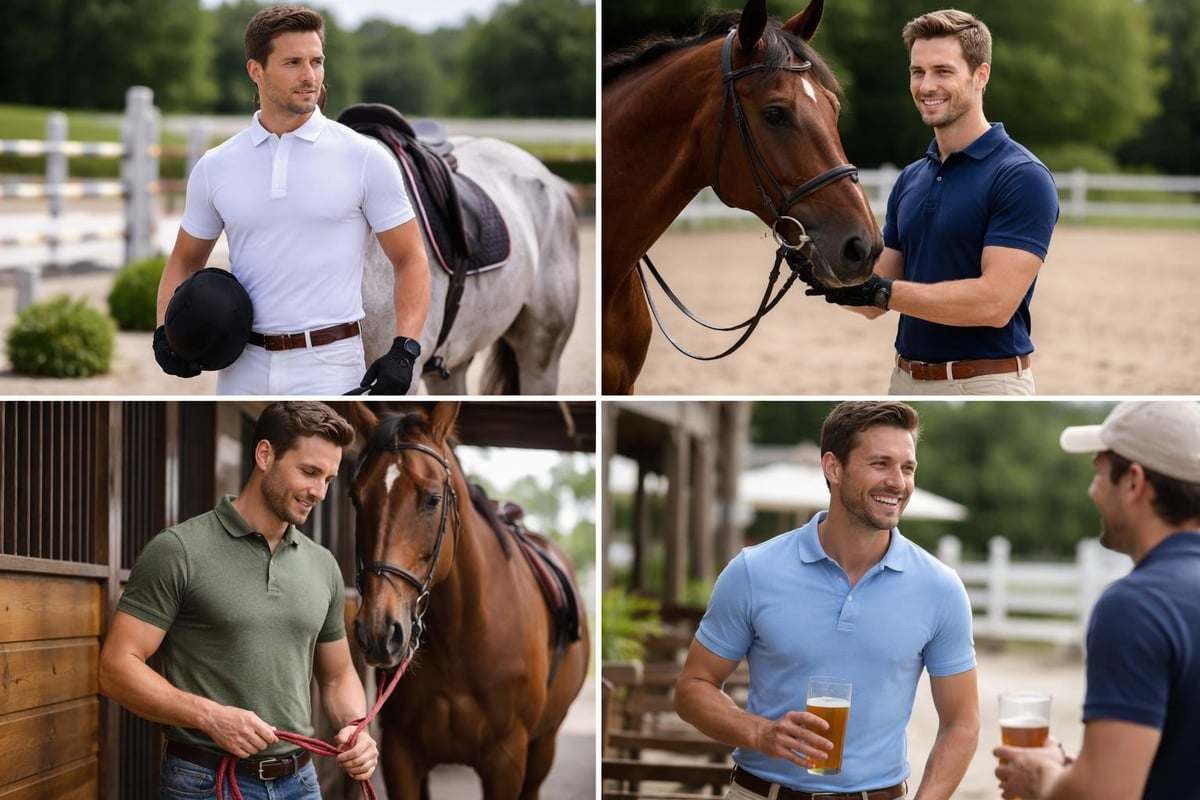
Equine polo shirts excel at transitional wear. The same shirt that performs during morning training looks appropriate for afternoon errands or evening meals. This versatility reduces wardrobe complexity-you're not changing completely between activities, just adapting with simple swaps.
Pair with clean breeches and boots for training sessions. Swap to chinos or dark jeans with casual shoes for non-riding contexts. Add a blazer over your polo for semi-formal occasions. The shirt remains constant; context shifts through accessories and complementary pieces. This approach aligns well with capsule wardrobe thinking that emphasizes versatile, hardworking garments.
Keep a spare shirt in your vehicle or locker. After intensive riding, changing into a fresh polo immediately improves comfort and appearance. It's a simple practice that maintains standards without requiring complete outfit changes. Quality equine polo shirts pack easily, resist wrinkles, and refresh appearance quickly.
Care and Maintenance for Longevity
Proper care extends shirt life significantly. Turn garments inside out before washing to protect exterior surfaces from abrasion. Use cool or warm water rather than hot, which can damage technical fabrics and cause shrinkage. Avoid fabric softeners-they coat moisture-wicking fibres, reducing performance over time.
Air drying preserves fabric integrity better than machine drying. If you must use a dryer, select low heat and remove garments whilst slightly damp. High heat degrades elastic components, sets wrinkles, and can cause pilling on synthetic blends. A few extra minutes hang-drying pays dividends in garment longevity.
Address stains promptly. Horse-related marks-sweat, dirt, grass-respond better to immediate attention than set-in staining. Pre-treat affected areas before washing. For persistent odours, particularly in synthetic fabrics, add white vinegar to the rinse cycle or soak garments in baking soda solution before washing.
Storage Between Seasons
Proper storage prevents damage during off-season months. Clean all garments thoroughly before storing-residual sweat and oils attract insects and cause fabric degradation. Store in breathable garment bags rather than plastic, which traps moisture and promotes mildew growth.
Fold polo shirts rather than hanging them long-term. Hanging can stretch shoulders and distort collar shape over months. If space allows, flat storage in drawers or on shelves maintains shape best. Include cedar blocks or lavender sachets to deter moths whilst avoiding chemical mothballs that impart persistent odours.
Rotate your active collection regularly. Wearing the same three shirts constantly whilst others sit untouched leads to uneven wear. Regular rotation distributes stress across your entire wardrobe, extending collective lifespan. It also helps you identify pieces that no longer serve your needs before they occupy space indefinitely.
Building Your Collection Strategically
Start with three solid-colour shirts in versatile shades. This foundation supports daily riding without constant laundering pressure. Add from there based on actual needs rather than perceived gaps. Many riders accumulate excessive casual wear whilst lacking sufficient performance pieces for serious training.
Consider activity levels when determining quantity. Riding six days weekly requires more shirts than weekend-only riding. Factor in washing frequency and drying time-synthetic blends ready to wear next day require smaller inventories than cotton that takes longer to dry properly.
Quality over quantity delivers better value long-term. Three excellent equine polo shirts outlast and outperform ten mediocre ones. They maintain appearance through repeated wearing and washing, justify their cost through extended service life, and simply feel better during use. When building your collection, invest in fewer, better pieces rather than numerous budget options.
Competition and Formal Contexts
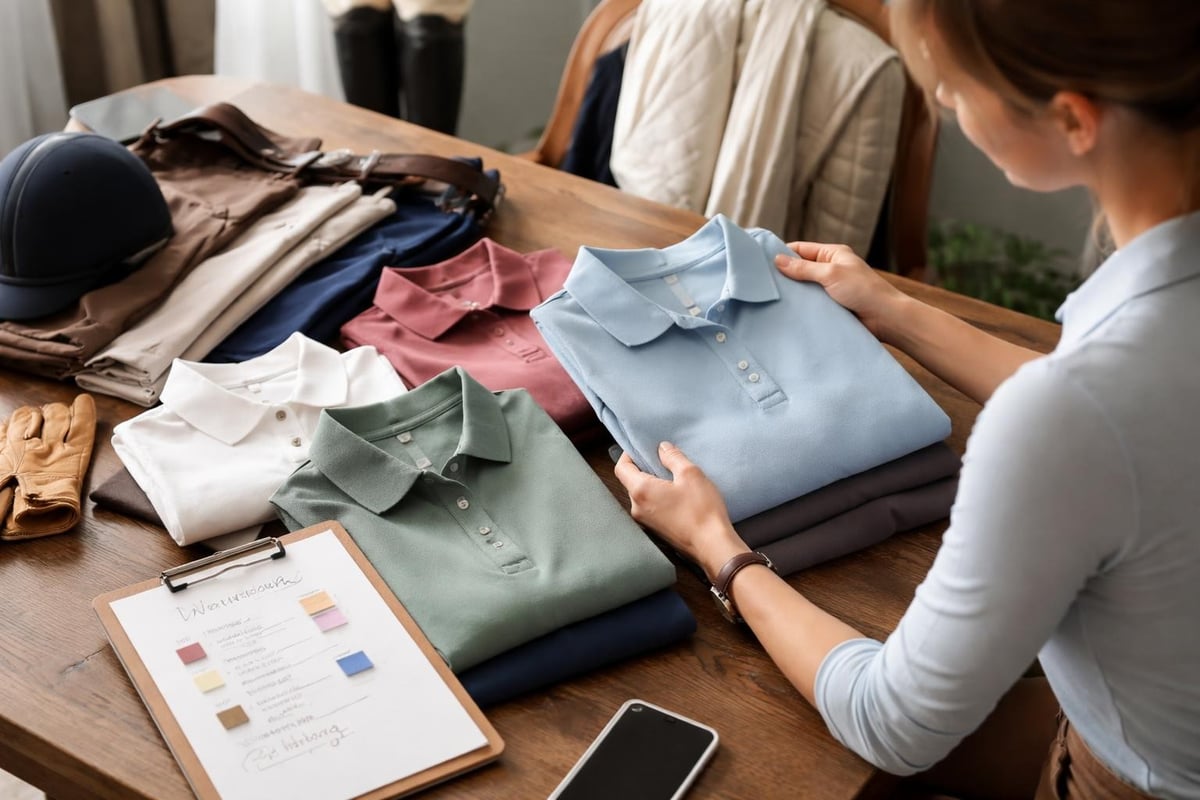
Understanding dress codes prevents awkward situations. Some disciplines and venues specify white or light-coloured shirts for competition. Others permit broader colour ranges but expect conservative styling. Research specific requirements for your discipline and competitive level well before event day.
Competition shirts often require more formal details. Embroidered logos sit at acceptable chest positions without appearing commercial. Collars maintain crisp appearance without requiring constant adjustment. Fabrics resist visible sweat marks-crucial when you're nervous or working hard in warm arenas. Traditional equestrian competition attire for men emphasizes understated elegance over flash.
Keep dedicated competition shirts separate from training wear. The psychological benefit of donning your "show shirt" helps establish proper mindset before entering the arena. Practically, preserving these garments for competition only maintains their pristine appearance longer. You're not fretting about a stain from yesterday's schooling session when you're preparing for important classes.
The Evolution of Riding Shirts
Equine polo shirts represent evolution from traditional riding attire. Decades ago, riders wore formal button-downs or specialized show shirts with limited practical application outside competition. The adoption of polo-style shirts reflected broader athletic wear trends whilst addressing specific equestrian needs.
This evolution continues today with technical fabric advances, improved fit engineering, and style refinements that balance tradition with modern performance expectations. Similar progressions occurred across sporting apparel-golf shirts evolved significantly to meet player demands for comfort and performance whilst maintaining sport-appropriate appearance.
For male riders specifically, quality options were historically limited. The market focused predominantly on women's equestrian wear, leaving men with ill-fitting adaptations or generic athletic wear. That's changing as brands recognize the distinct needs and preferences of male riders who demand both performance and style.
Practical Layering Systems
Equine polo shirts function as foundation layers in cohesive riding systems. In mild weather, they work as standalone outer layers. As temperatures drop, they sit comfortably beneath vests, jackets, or pullovers without excessive bulk. Understanding how pieces work together prevents wardrobe frustration.
Base layer compatibility matters. Technical undershirts worn beneath polos should complement rather than compete-avoid bulky seams or restrictive fits that bunch under your outer layer. In cold conditions, merino or synthetic base layers pair well with polo-style mid-layers before adding insulated outerwear.
Consider your typical riding conditions when evaluating layer systems. Maritime climates demand different solutions than continental extremes. Year-round outdoor riding requires more versatile pieces than primarily indoor arena work. Your equine polo shirts should integrate seamlessly with the jackets, vests, and base layers you actually use rather than theoretical ideals that sit unused.
Personal Style Within Tradition
Equestrian sport maintains certain traditions, but that doesn't mean surrendering personal expression. Your choice of equine polo shirts can reflect individual style whilst respecting sport conventions. Subtle details-contrast trim, tonal patterns, quality buttons-distinguish thoughtful choices from generic options.
Fit represents personal preference within appropriate ranges. Some riders prefer closer-fitting shirts that layer easily; others favour relaxed cuts with more breathing room. Both work provided they maintain clean lines and professional appearance. Developing your equestrian style means understanding yourself as well as sport requirements.
Brand selection says something about priorities. Some riders value heritage names with long equestrian histories. Others prefer emerging brands offering fresh perspectives on riding wear. Still others choose performance-oriented companies whose primary focus lies in athletic functionality. Each approach has merit-choose based on what matters most to you rather than external pressure.
Investment Value Analysis
Quality equine polo shirts represent genuine investment rather than expense. A well-made shirt costing twice as much as a budget alternative that lasts three times longer whilst performing better throughout represents clear value. Calculate cost per wearing rather than purchase price alone.
Better construction means fewer replacements. Quality fabrics maintain appearance and performance through hundreds of wearings and washings. Details like reinforced seams and quality buttons prevent common failure points that retire lesser garments prematurely. The environmental consideration matters too-buying fewer, longer-lasting pieces reduces waste significantly.
Evaluate return policies and guarantees. Companies confident in their products stand behind them with meaningful warranties. This protection matters when investing in premium riding wear. It also indicates overall business ethics and customer service standards you'll appreciate if issues arise.
Equine polo shirts deliver the versatility, performance, and style that modern riders demand-forming the foundation of wardrobes that work as hard as you do. When you're ready to invest in shirts that truly understand riding's demands whilst looking sharp from stable to street, Gallant Equestrian offers performance-driven pieces designed specifically for men who ride. Look the Part. Enjoy the Ride.

