

Horse Equestrian Shop Guide: Where to Buy Riding Gear
Nov 10, 2026
A good horse equestrian shop stocks the safety kit, tack and clothing you actually ride in, and has people on hand who can fit it properly. Whether you buy in person or online, the best shops are the ones that let you match each piece to how and where you ride.
That sounds simple, but a tack shop can be overwhelming. Rugs, bits, boots, grooming kit, feed and clothing all compete for your attention. This guide takes you through what a proper shop sells, which items deserve your money first, how to judge quality, and how to build a wardrobe that works from the yard to the pub afterwards.
What does a horse equestrian shop actually sell?
A horse equestrian shop sells four broad groups of product: rider wear, rider safety equipment, tack and horse care. Most shops lean towards one or two of these, so it helps to know what each covers.
Rider wear includes breeches, jodhpurs, shirts, jackets, boots, gloves and socks. Safety equipment covers riding hats, body protectors and airbag vests. Tack means saddles, bridles, girths, stirrups and numnahs. Horse care takes in rugs, boots and bandages, grooming kit, fly protection, feed, supplements and bedding.
Country stores often mix all four with general outdoor clothing and wellies. Specialist tack shops go deeper on saddlery and fitting. Brand-led online shops, particularly for men's clothing, tend to focus tightly on rider wear and do it well.
If you only ride a few times a week and your horse is on a livery yard or at a riding school, rider wear and safety kit will be most of your spend. Owners add the rest.
Which type of shop suits the way you ride?
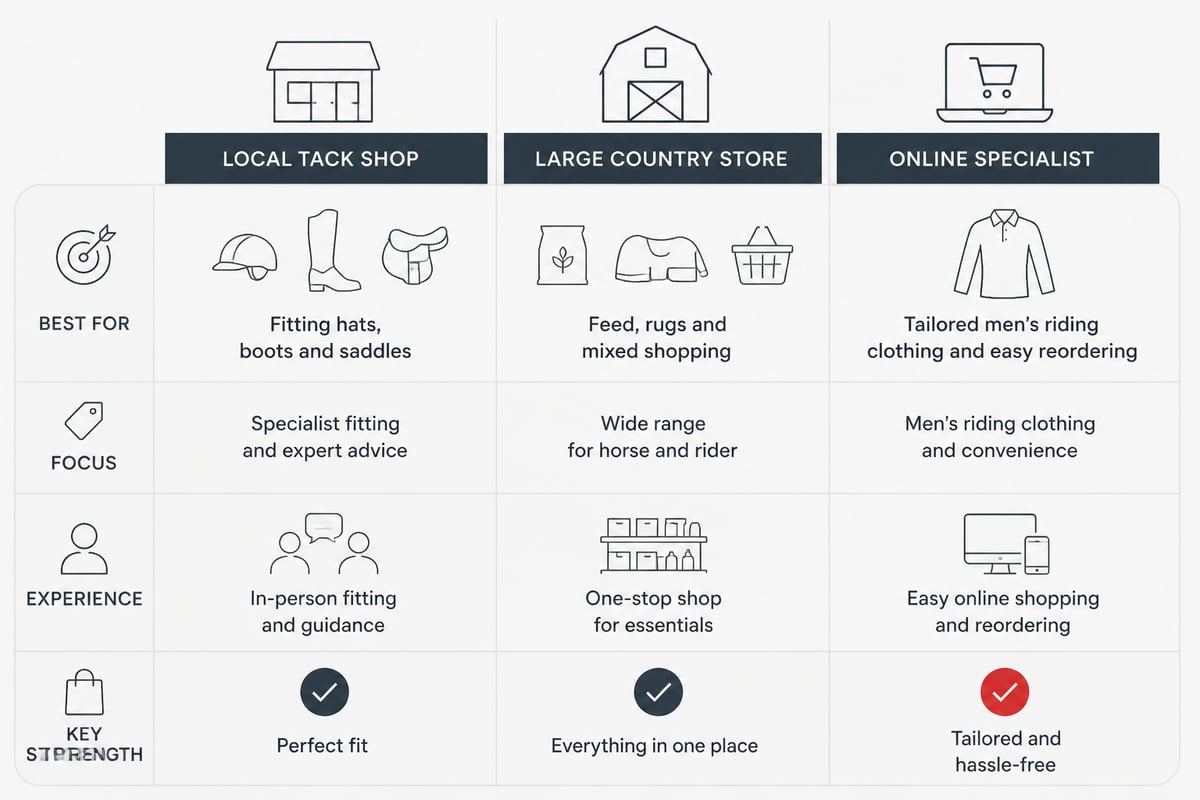
The right shop depends on whether you need hands-on fitting, a wide choice of brands or simply good-quality clothing delivered to your door.
A local tack shop wins when you need something fitted: a hat, a saddle, a pair of long boots. Staff can measure you, let you try several options and spot a poor fit that a size chart would never reveal.
A large country store suits a mixed shopping list. You can pick up feed, a fly rug and a waterproof in one visit, though the clothing range is often broad rather than refined.
An online specialist makes sense when you know your size and your style. You get a tighter, more considered range, usually with clearer product detail, and no need to wade through aisles of kit you don't need. Look for sellers who are open about sizing, fabric and delivery, and who make international orders straightforward.
Many riders use all three. Hats and boots from a fitter, everyday riding clothes from a specialist, feed and bedding from the nearest store.
Which items should you buy first, and which can wait?
Buy your riding hat first, then boots, then breeches, and leave everything else until you know how you ride.
Here is a sensible order for a man starting a kit list or refreshing an old one:
- A properly fitted riding hat. Non-negotiable, and the one item you should not buy second-hand.
- Riding boots with a defined heel. A smooth sole and a heel keep your foot from sliding through the stirrup.
- Breeches or jodhpurs that fit well. They are the garment you will notice most, for better or worse, over a long ride.
- A body protector for jumping, hacking on a green horse or cross-country. Optional for flatwork, sensible beyond it.
- Gloves, base layers and a jacket. Useful, affordable and easily added over time.
- A show shirt and competition jacket. Only once you are entering classes.
Boots deserve particular care. The Your Horse gear-advice piece on protecting your feet when riding explains why boot coverage and a secure heel matter, because a foot that can slip through a stirrup is a genuine hazard.
How do you buy a riding hat that fits?
You buy a riding hat by having it fitted in person by a trained fitter, then checking it carries a recognised safety mark.
The British Horse Society recommends buying a riding hat from a reputable tack shop and having it fitted by a certified hat fitter, and advises looking for a quality-assurance mark such as a BSI Kitemark or SEI mark. The same guidance says riders should wear a properly fitted and fastened hat every time they ride, not just when jumping or on a spirited horse.
A few practical points help at the fitting:
- Try the hat with your hair as it normally is, and with your usual glasses if you wear them.
- It should sit level and snug, without pressure points, and should not rock when you shake your head.
- Fasten the harness and check it holds firm without choking you.
- Replace it after any significant knock, even if it looks undamaged.
Hat shapes vary between brands. A fitter will tell you which suits your head, which saves a lot of returns.
Do you need a body protector, and how do you choose one?
You need a body protector if you jump, ride cross-country or ride horses you don't yet know well, and you should choose one that meets a recognised standard and fits closely.
Standards matter here. ASTM F1937 is the specification that sets minimum performance criteria and test methods for body protectors used in horse sports, covering shock attenuation, penetration and deformation, impact sites, padding separation and closure tests. European and British standards exist as well, and a decent shop will tell you which a given model meets and where it is accepted for competition.
Fit is as important as the label. A protector should sit snugly without restricting your breathing or your ability to rotate and bend. It should not ride up when you are in the saddle. Try it on, sit on a saddle stand if the shop has one, and move as you would when riding.
Rules for competitions change, so check your discipline's current requirements before you buy.
What should men look for in riding clothing?
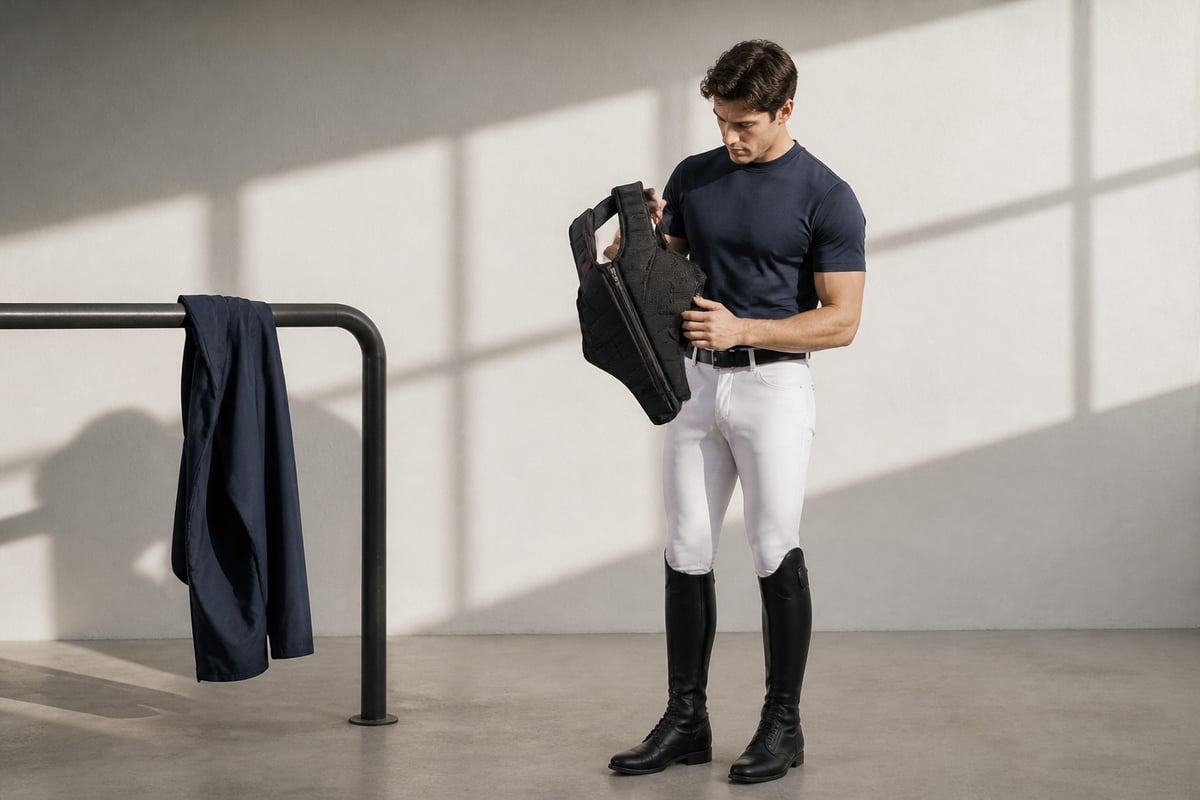
Men should look for a close but unrestrictive fit, breathable fabric and a cut designed for the male rider, rather than a unisex garment adapted to suit.
Breeches deserve the most attention. They need a secure seat, flat seams where the leg meets the saddle, and enough stretch to move freely through a rising trot or a jumping position. A full seat gives extra grip and suits riders who want added security, while a knee patch style is lighter and often preferred for dressage or general schooling.
Shirts should wick moisture and stay tucked or sit neatly untucked, depending on the occasion. Jackets and gilets should allow the arms to reach forward without pulling across the shoulders. It is worth reading about what to wear horse riding if you are putting together a kit from scratch, and men's horse riding clothes if you want a wider overview of how each piece should fit.
Fabric is worth checking too. Lightweight, breathable materials keep you comfortable across a long summer session and still hold their shape after repeated washing.
Where does Gallant Equestrian fit in?
Gallant Equestrian fits in as a specialist for men's riding clothing, designed in New Zealand to be performance-driven and stylish.
The collection includes essential riding pieces such as breeches, jackets and shirts that seamlessly transition from stables to everyday life.
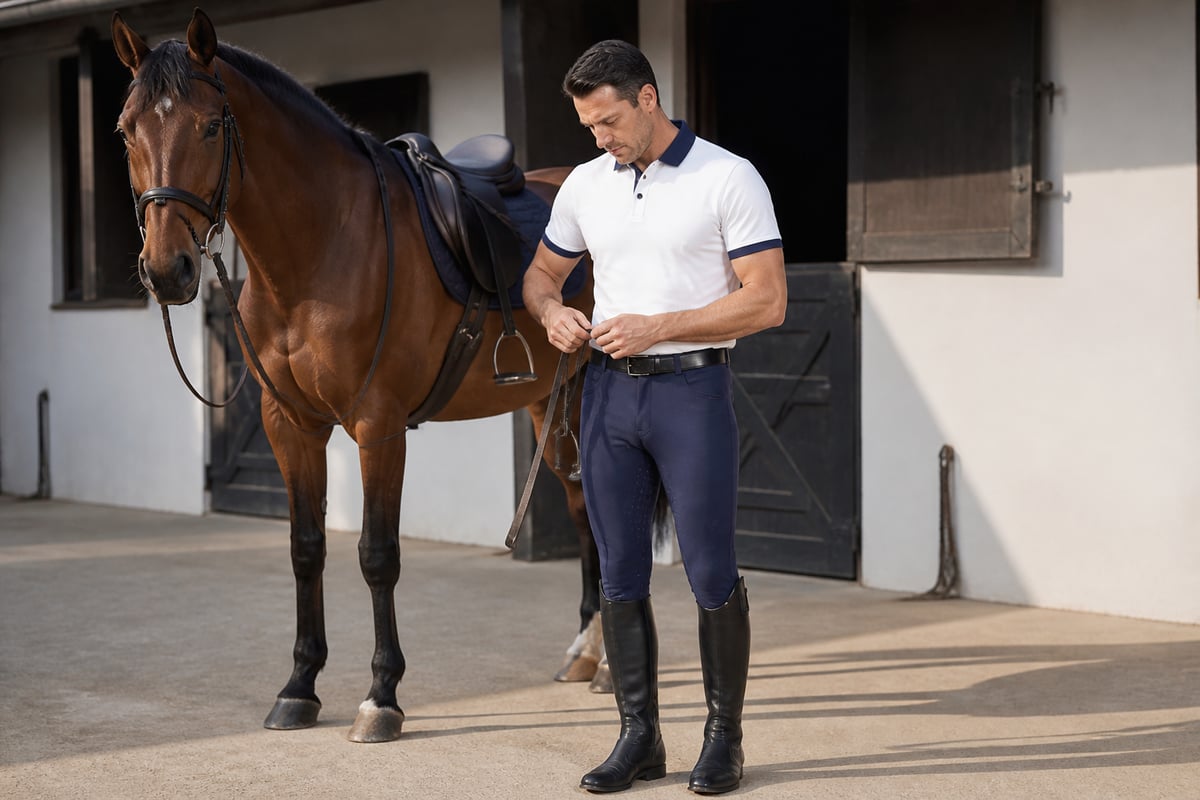
The Mens Breeches Full Seat in Navy are a good example of the thinking. They have a full-seat grip for stability, are designed specifically for male equestrians, and pair easily with a shirt or jacket you already own.
For sizing, fabric details and current availability, the product pages are the best place to check, as those details are the ones that change. For delivery and any costs on international orders, check the shipping details on the product and checkout pages.
How do you judge quality before you buy?
You judge quality by looking at seams, fabric weight, stitching and how a garment behaves when you move in it, not by the price tag or the logo.
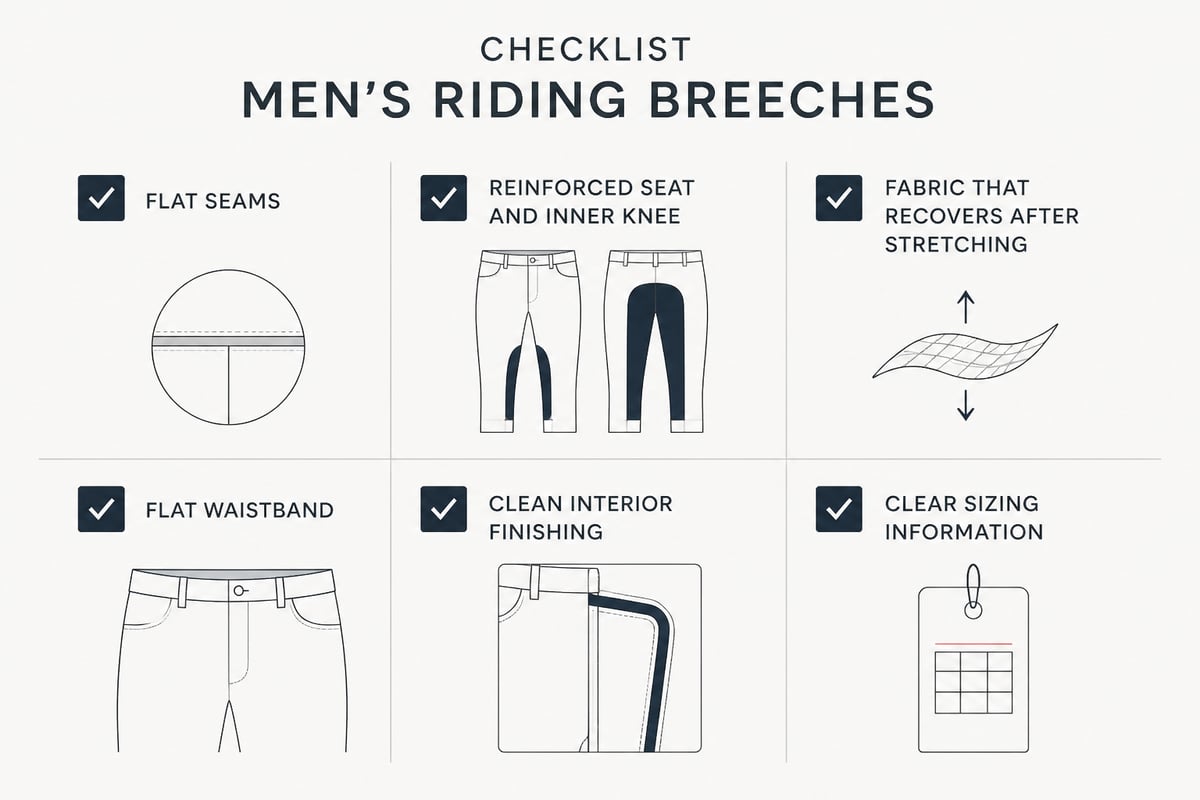
When you can handle the item in a shop, check these things:
- Seams and stitching. Look for flat, even seams and reinforced stress points, especially around the seat and inner knee.
- Fabric recovery. Stretch it gently. It should spring back rather than stay baggy.
- Waistband and closures. They should sit flat and fasten without digging in when you sit.
- Lining and finish. Clean interior finishing usually reflects care elsewhere.
Buying online, you rely more on the seller's detail. Clear photographs, honest fabric descriptions and visible sizing information are good signs. Vague copy and stock photography with no measurements are not.
If you are comparing breeches specifically, this guide to horse riding breeches for men covers what to look for in more detail.
How can you shop smartly and spend sensibly?
You shop smartly by buying fewer, better pieces that work together, and by spending most on the items that protect you or take the heaviest wear.
Safety kit and boots come first, as covered above. After that, put your money into breeches, since you wear them every ride. A good pair outlasts several cheaper ones and looks better after a year of washing.
Build a small, coordinated wardrobe rather than a pile of one-offs. Two pairs of breeches, three or four shirts, a light jacket and a waterproof will cover most riders through the seasons. Neutral colours such as navy, grey and white mix easily and hide yard dust better than you might expect.
Watch for end-of-season sales on rugs and outerwear, but be wary of discounting on hats, which you should always have fitted regardless of price. If you need to travel with your kit, whether to a competition or a riding holiday, a sturdy set of packing cubes from a travel-accessories seller such as Simplify Living keeps boots, breeches and shirts organised in the bag.
Look after your clothing and it will repay you. Wash breeches on the temperature the label suggests, avoid fabric softener on technical fabrics, and air-dry where you can.
What should you ask a shop before you buy?
Ask any shop who will fit you, what standards the safety kit meets, how sizing runs and what happens if something doesn't suit.
A short list of questions is enough:
- Is there a trained hat fitter, and how do I book?
- Which safety standard does this body protector or hat meet?
- Does this garment run true to size, and is it cut for a male rider?
- What are the delivery and returns arrangements?
- Can I try the boots with my usual riding socks?
Good shops answer without fuss. If you are buying online, the same questions apply, and the contact page is where you will find out how responsive the seller is. A reply that is quick, clear and specific is a strong sign you are dealing with people who know the product.
Which common mistakes should you avoid?
The common mistakes are buying a hat without a fitting, choosing boots for looks over grip, buying breeches a size too small and ignoring care instructions.
Hats come first. A hat bought on style or price, never fitted, may not protect you as intended. Boots chosen for fashion can lack the heel or sole that keeps your foot secure. Breeches bought tight in the hope they will stretch usually just restrict you, particularly through the hips and knees.
Another mistake is treating riding clothes as a separate world from everyday wear. Pieces that look sharp enough for lunch after a ride, and perform well in the saddle, give you more for your money. If that appeals, casual horse riding clothes is worth a look for ideas on moving from the yard to the rest of your day.
Finally, don't buy everything at once. Ride in your first few pieces for a few weeks, notice what you reach for and what you don't, and let your habits shape the rest of the list.
Your next step is simple: book a hat fitting with a certified fitter, then work through boots and breeches in that order. Once the safety kit is sorted, Gallant Equestrian can help with the clothing, from breeches such as the Mens Breeches Full Seat in Navy to shirts and jackets designed to work together and move with you. If you want riding clothes that fit well and look the part on and off the yard, Gallant Equestrian is where you can shop now. Look the Part. Enjoy the Ride.

