

Horse Riding Polo Shirts: The Rider's Essential Guide
May 14, 2026
The polo shirt has earned its place as a staple in the modern rider's wardrobe. It bridges the gap between technical riding gear and everyday casual wear, offering the performance you need in the saddle and the style that works beyond the yard. For male equestrians who appreciate quality and versatility, understanding what makes a proper riding polo is essential. Whether you're schooling in the arena, competing at a show, or heading to the pub afterwards, the right shirt makes all the difference.
Why Polo Shirts Work for Riders
The design of a polo shirt naturally aligns with equestrian needs. The collar provides sun protection for your neck during long hours outdoors, whilst the button placket allows for temperature regulation. Unlike crew-neck tees, polos maintain a polished appearance even after hours in the saddle.
The structured yet relaxed fit of quality polo shirts accommodates the range of motion required for riding. Your shoulders need freedom to move with your horse, your arms need to reach forward without restriction, and the torso needs enough room to prevent bunching when you're in riding position. A well-designed polo achieves all this whilst maintaining a sharp silhouette.
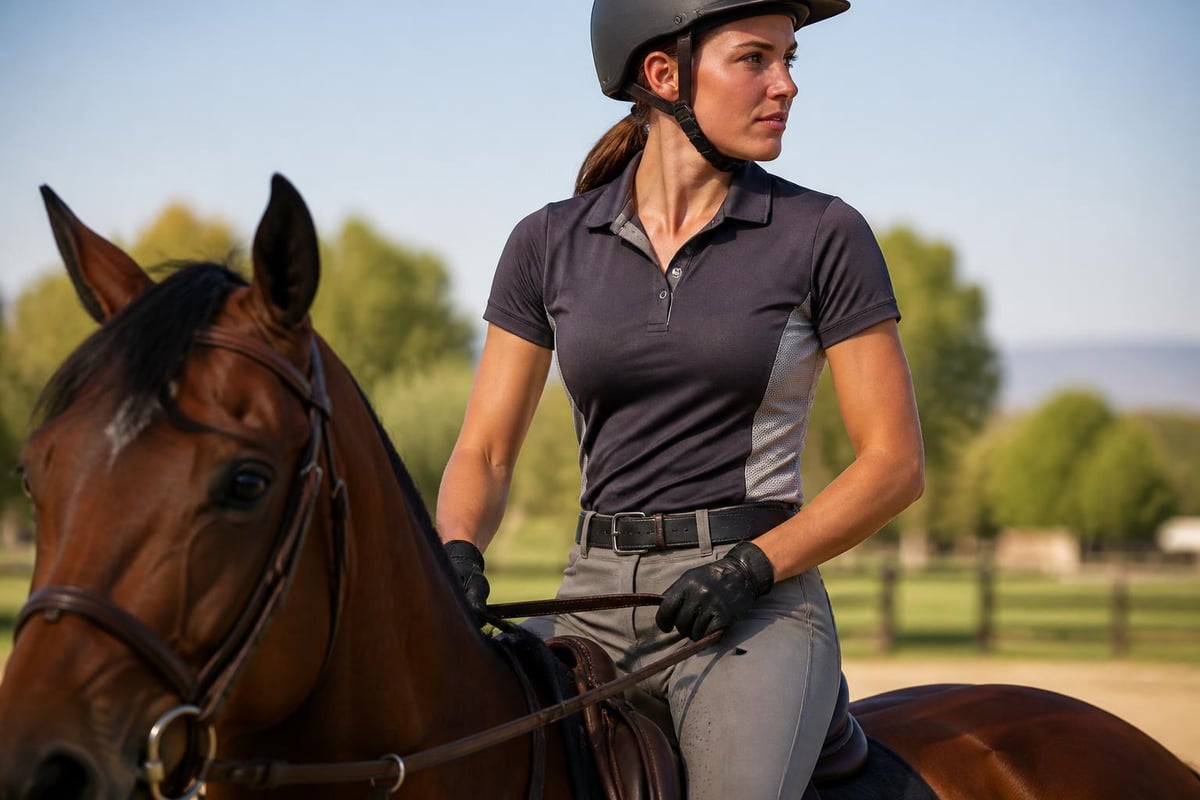
Performance fabrics have transformed what polo shirts can do. Modern horse riding polo shirts incorporate moisture-wicking technology that pulls sweat away from your skin, keeping you comfortable during intensive training sessions. This isn't just about comfort; staying dry helps maintain body temperature and prevents chafing that can develop over hours of riding.
Fabric Selection Matters
The fabric composition of your polo shirt directly impacts your riding experience. Cotton feels natural and breathable, but it absorbs moisture and takes time to dry. Pure cotton polos work well for casual riding or cooler weather, but they're not ideal for intensive work or hot conditions.
Performance blends combine the best characteristics of different materials. Polyester and elastane blends offer excellent moisture management and stretch. These performance polo shirts found in golf apparel share similar requirements to riding shirts, needing durability, stretch, and moisture control.
Merino wool blends deserve consideration for year-round riding. Merino naturally regulates temperature, resists odours, and remains comfortable against skin. These properties make it particularly valuable for riders who spend extended periods in their clothing.
Weight and Construction
Lightweight fabrics suit summer riding and warmer climates. Look for polos in the 150-180 GSM range that provide coverage without bulk. Mid-weight options around 200-220 GSM offer versatility across seasons, working well layered under jackets in winter and worn alone in milder weather.
The construction quality affects longevity. Reinforced seams prevent splitting, whilst quality stitching maintains shape after repeated washing. Check the collar construction particularly; a collar that holds its shape maintains the professional appearance that defines a proper polo.
Fit and Cut Considerations
Athletic cuts suit most riders better than classic or relaxed fits. An athletic cut follows your natural shape without excess fabric that bunches or rides up. The shoulders should sit precisely on your shoulder point, allowing full range of motion without pulling across your back.
Sleeve length impacts both appearance and function. Too short looks awkward; too long restricts movement. The sleeve should end mid-bicep, providing coverage whilst keeping your arms free. Some riders prefer slightly longer sleeves for additional sun protection.
Body length requires attention if you want your shirt to stay tucked. A longer back hem prevents the shirt pulling out when you're mounted. However, if you prefer wearing your polo untucked, ensure the length works when standing; it should cover your belt line without hanging too low.
The range of equestrian polo shirts demonstrates how specialized riding brands understand these fit requirements. Purpose-built options account for riding position and movement patterns that differ from everyday wear.
Colour and Style Choices
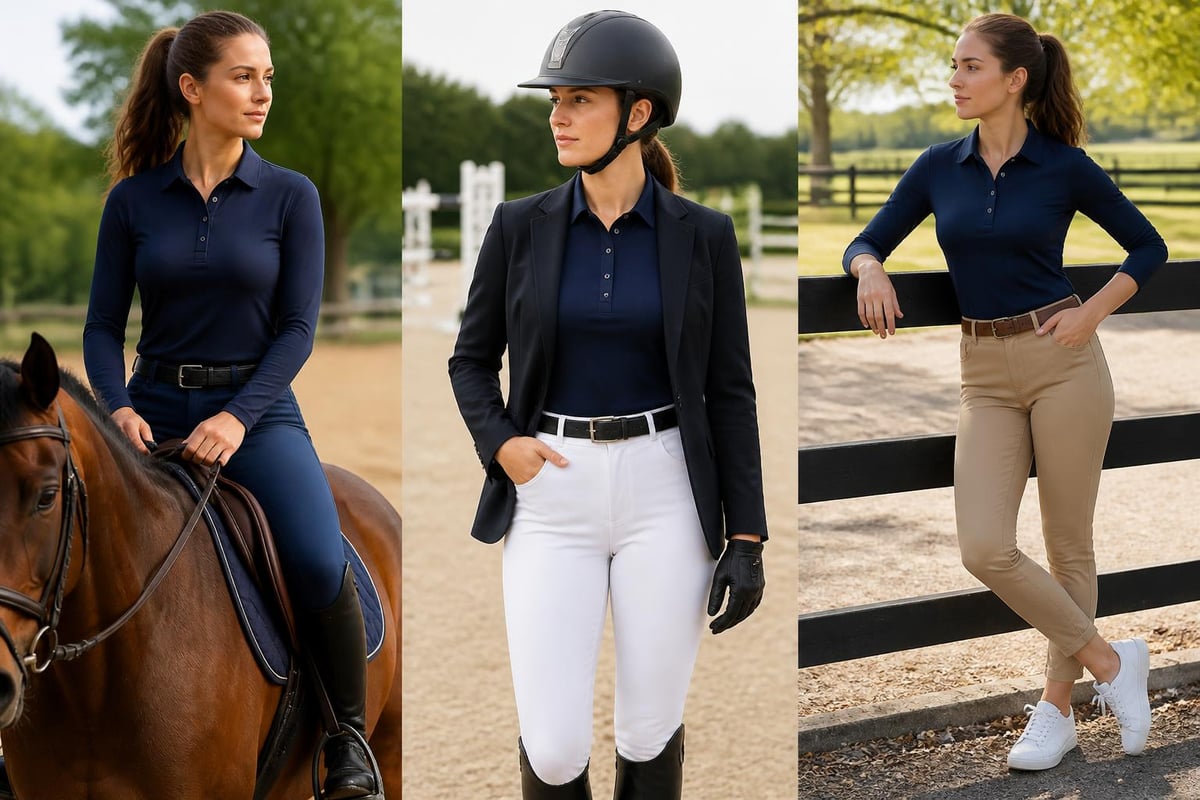
Navy, black, white, and earth tones form the foundation of a functional polo collection. These colours coordinate easily with riding breeches and maintain a professional appearance in any setting. Starting with these basics ensures you're prepared for various occasions.
Subtle patterns add interest without compromising versatility. Thin stripes or small geometric patterns work well, maintaining a refined look whilst offering variation from solid colours. The resurgence of striped polos in contemporary fashion means these options feel current rather than dated.
Brighter colours have their place in casual riding contexts. Olive, burgundy, or darker greens add personality whilst remaining appropriate for the equestrian environment. These work particularly well for weekend riding or informal training sessions.
Branding and Details
Minimal branding maintains a clean aesthetic that transitions well from yard to social settings. Small logos or discrete embroidery look refined; large graphics or prominent branding limit versatility. Quality brands understand that subtle details convey more confidence than obvious logos.
Button colour and finish might seem minor, but these details contribute to overall appearance. Matching buttons create cohesion; contrasting buttons can add visual interest if done thoughtfully. Quality buttons also last longer and resist cracking or fading.
Performance Features Worth Having
Four-way stretch fabric technology allows movement in all directions. This matters when you're posting, adjusting your position, or reaching forward. Stretch doesn't mean the shirt loses its shape; quality stretch fabrics return to original form after movement.
Flatlock seams reduce friction against skin during extended wear. Traditional seams can irritate, particularly in areas where your body contacts the saddle or reins. Flatlock construction creates smoother surfaces that prevent this issue.
UV protection built into fabric helps during long hours outdoors. UPF ratings indicate the level of protection; UPF 30 or higher provides meaningful sun defense. This feature becomes increasingly important as awareness of sun exposure grows.
Anti-odour treatments keep shirts fresher between washes. Some treatments use silver ions, others use chemical processes. Either way, this feature proves valuable when you're wearing the same shirt for extended periods or multiple sessions.
Seasonal Variations
Summer riding demands maximum breathability and moisture management. Look for lightweight horse riding polo shirts with mesh panels or ventilation zones. These targeted areas enhance airflow where heat builds up most.
Winter layers require polos that work under jackets without adding bulk. Thinner profiles layer more effectively whilst maintaining warmth through material choice rather than thickness. A quality merino blend polo can replace heavier options whilst providing better temperature regulation.
Transition seasons benefit from versatile mid-weight options. These work alone on milder days and layer comfortably when temperatures drop. Having polos that adapt across conditions reduces the number of specialized pieces you need.
Care and Maintenance
Proper washing extends the life of performance fabrics. Turn shirts inside out before washing to protect the outer surface. Use cool or warm water rather than hot, which can damage elastic fibres and fade colours faster.
Avoid fabric softeners with technical fabrics. Softeners coat fibres and reduce moisture-wicking capabilities. They also break down elastic content over time. Quality detergent designed for athletic wear maintains performance properties better.
Air drying preserves shape and fabric integrity better than tumble drying. If you must use a dryer, choose low heat settings. High heat degrades elastic content and can set stains that might otherwise wash out.
Storage matters for maintaining collar shape and preventing wrinkles. Hanging polos on proper hangers keeps collars crisp and prevents creasing. Folding works if space requires it, but hanging delivers better results for garments you wear regularly.
Building Your Rotation
Three to five quality polos form a functional foundation. This number allows regular rotation whilst ensuring you always have clean options available. Starting with versatile colours maximizes outfit combinations.
Investing in higher-quality pieces proves more economical long-term than buying numerous cheaper alternatives. Quality shirts maintain appearance and performance through hundreds of wears. Cheap polos fade, stretch out, and lose shape quickly.
The men's polo shirts from Gallant Equestrian demonstrate how purpose-built equestrian pieces incorporate the specific features riders need. Designed for performance with attention to style, these pieces work equally well in the saddle and beyond.
Consider your riding frequency and laundry schedule when determining how many shirts you need. Daily riders require more rotation than weekend riders. Similarly, access to frequent laundry affects ideal wardrobe size.
Versatility Beyond the Yard
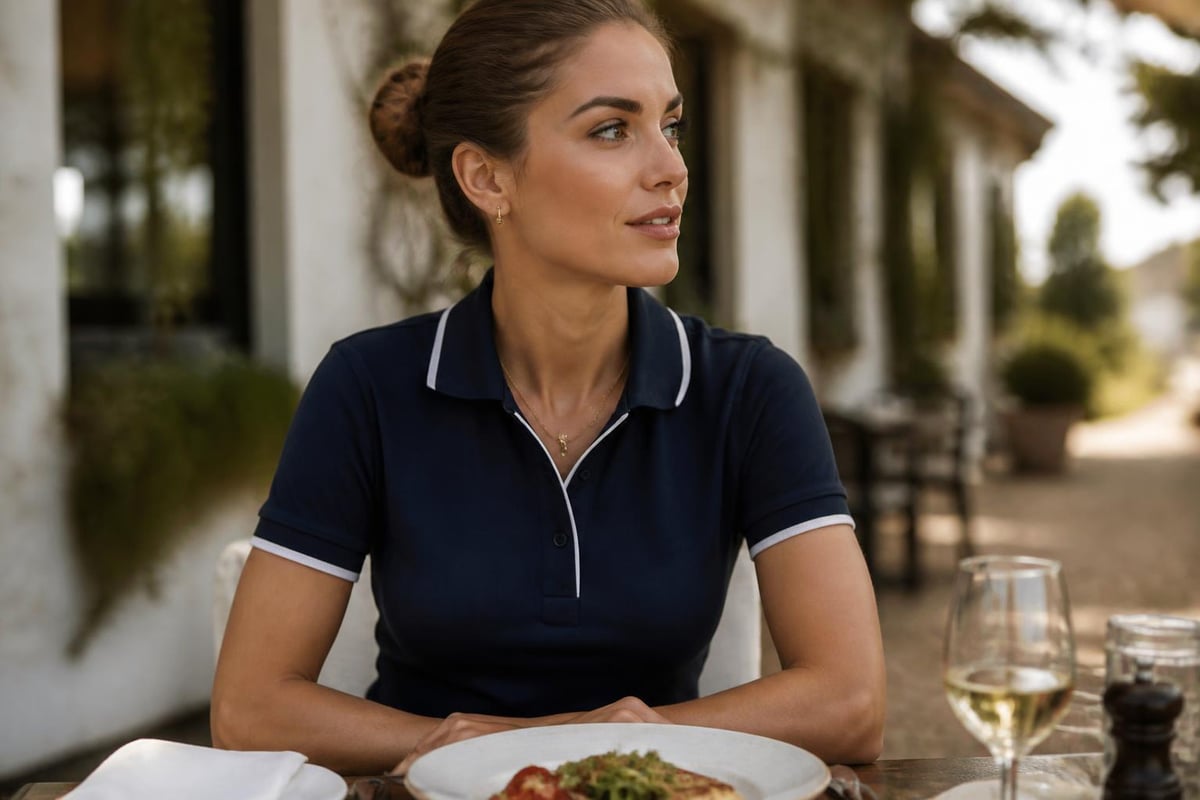
Quality horse riding polo shirts transition seamlessly into everyday wear. The same features that work for riding benefit casual activities. Moisture management helps during active days, stretch allows comfortable movement, and polished appearance suits various social contexts.
Pairing polos with chinos or quality denim creates smart-casual outfits appropriate for most settings. The equestrian aesthetic carries quiet confidence that works well socially. You don't look like you're trying too hard; you simply look put together.
Travel benefits from versatile polo shirts that pack efficiently and maintain appearance. They require minimal care, work for multiple occasions, and layer well. Including quality polos in travel wardrobes reduces luggage whilst ensuring you're prepared for various situations.
Competition Considerations
Show rules vary regarding acceptable attire. Some disciplines require traditional show shirts with chokers or stocks; others permit polos in certain classes. Understanding your discipline's requirements ensures you're appropriately dressed.
When polos are acceptable for competition, choose conservative colours and ensure impeccable presentation. Crisp collars, proper fit, and pristine condition demonstrate respect for the sport and judges. Your appearance shouldn't distract from your riding.
Practice in the same gear you'll compete in whenever possible. This ensures comfort and identifies any potential issues before they matter. Competition nerves compound any discomfort; eliminating preventable problems helps you focus on performance.
Quality Indicators
Examining construction quality separates premium polos from average options. Check stitch density and consistency; quality construction shows even, tight stitching throughout. Inspect seams for reinforcement at stress points like shoulders and side seams.
Fabric hand indicates quality. Premium materials feel substantial without being heavy, smooth without being slippery. They recover quickly from stretching and don't show wrinkles readily.
Collar construction reveals manufacturing standards. Quality collars maintain shape through interfacing or construction techniques that prevent curling or drooping. The collar should feel sturdy without being stiff.
Button attachment matters more than you might think. Quality polos use reinforced attachment methods that prevent buttons pulling loose. Cross-stitch or bar-tack reinforcement indicates attention to detail.
Price Versus Value
Premium horse riding polo shirts command higher prices for valid reasons. Superior materials, better construction, and thoughtful design cost more to produce. These pieces also last significantly longer, making the cost per wear favorable compared to cheaper alternatives.
That said, understanding what you're paying for helps make informed decisions. Some brands charge premium prices primarily for name recognition rather than superior quality. Focus on features and construction rather than logos alone.
The quality riding clothes brands discussion explores how different manufacturers approach equestrian apparel. Understanding brand philosophies helps identify which align with your priorities and budget.
Mid-range options offer excellent value for many riders. You don't always need the most expensive option to get quality that serves you well. Identifying your specific needs helps determine where investment pays off and where mid-range suffices.
Emerging Technologies
Modern fabric technologies continue advancing performance capabilities. Moisture management systems have become more sophisticated, moving beyond simple wicking to active cooling technologies that enhance evaporation.
Sustainable materials increasingly appear in quality polos. Recycled polyester, organic cotton, and innovative plant-based fibres offer performance without environmental compromise. These options appeal to riders who value both quality and responsibility.
Odour-control technologies have improved beyond simple chemical treatments. Some new approaches use fabric structure itself to prevent bacterial growth that causes odours. These methods prove more durable than surface treatments that wash away.
Temperature-regulating fabrics adapt to conditions, providing cooling when you're warm and insulation when temperatures drop. Phase-change materials and specialized fibre blends deliver this functionality in increasingly refined forms.
Choosing the right polo shirts transforms your riding experience and extends your wardrobe versatility. Focus on quality fabrics, proper fit, and construction that lasts, and you'll build a collection that serves you well for years. Gallant Equestrian creates performance-driven polo shirts designed specifically for male riders who demand both function and style. Our pieces transition effortlessly from training sessions to everyday life, built to the standards New Zealand craftsmanship demands. Look the Part. Enjoy the Ride.

