

Horse Show Shirts: The Complete Guide for Male Riders
Apr 26, 2026
Walking into the show ring demands more than talent and preparation. Your presentation matters, and that starts with what you wear. Horse show shirts represent the foundation of proper competition attire, combining strict regulatory requirements with personal expression and performance needs. For male riders navigating the show circuit in 2026, understanding shirt selection goes beyond simply picking something white and button-down. The right shirt enhances your performance, meets official standards, and reflects your approach to riding with confidence and precision.
Understanding Competition Requirements
Every discipline carries specific expectations for competition attire. The United States Equestrian Federation's official rulebook provides comprehensive guidelines that vary by discipline and level. Dressage typically requires long-sleeved white or light-colored shirts with a stock tie or choker for formal competitions. Show jumping permits more flexibility, allowing coloured shirts in certain classes while maintaining conservative standards for championship events. Eventing blends these requirements depending on the phase.
Beyond colour and style, regulations often specify collar types, sleeve length, and how shirts interact with jackets. Understanding these nuances prevents last-minute wardrobe changes at the show grounds. Most sanctioned competitions require shirts to remain tucked throughout your ride, with points potentially deducted for untidy presentation.
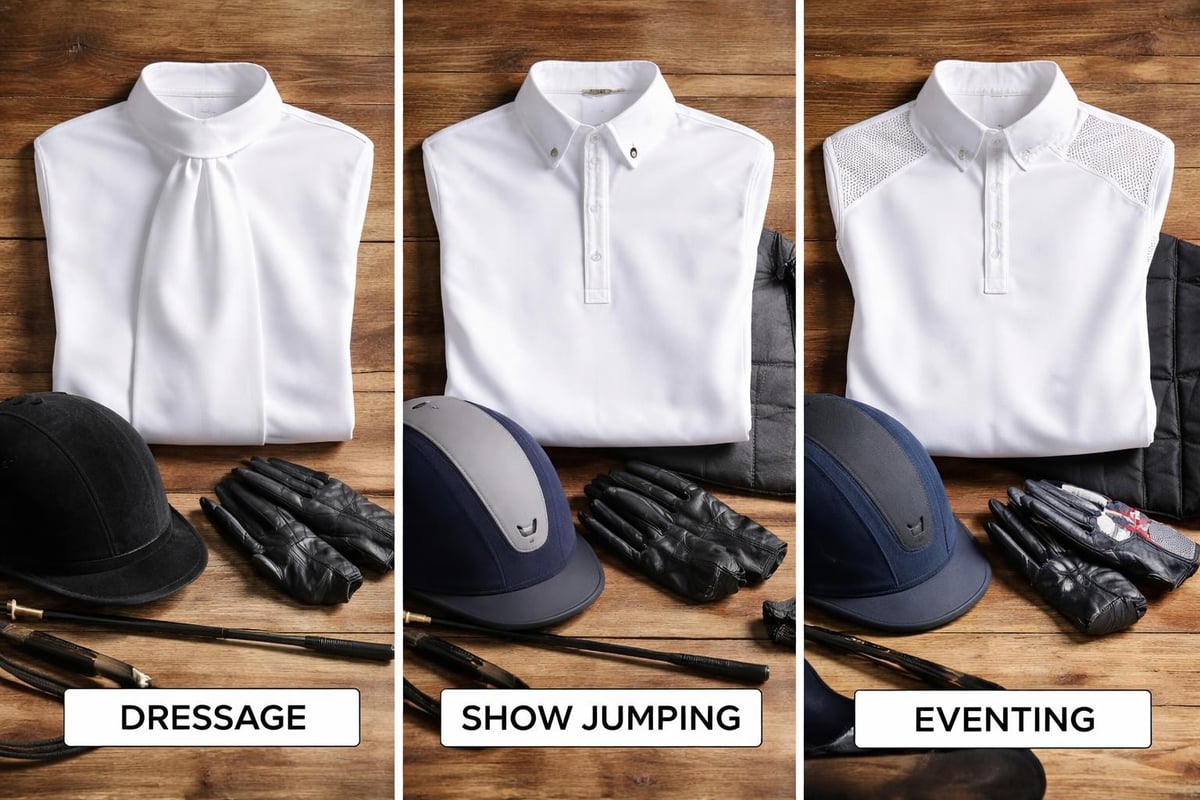
Regional variations also exist. European competitions may enforce stricter traditional standards, whilst some American venues permit greater latitude in lower-level classes. Checking specific show regulations before purchasing ensures your competition wardrobe meets every requirement you'll face throughout the season.
Fabric Technology and Performance Features
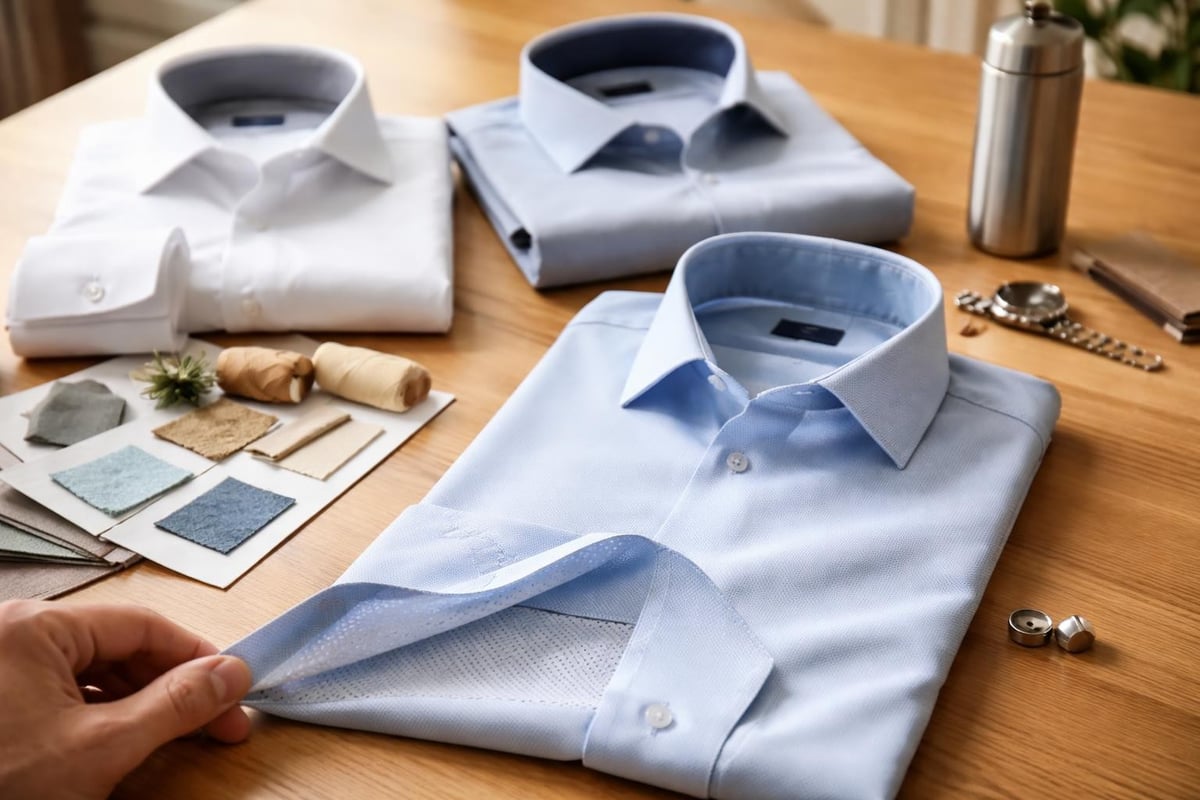
Modern horse show shirts incorporate technical fabrics that traditional cotton simply cannot match. Moisture-wicking materials pull sweat away from your skin, keeping you comfortable during intense rides or hot competition days. Breathability ensures air circulation, preventing the clammy feeling that undermines confidence when presentation matters most. Four-way stretch fabrics move with your body, eliminating restriction through shoulders and arms whilst maintaining a crisp, tailored appearance.
Temperature regulation has advanced significantly in recent years. Phase-change materials respond to body heat, releasing cooling when you warm up and retaining warmth during cool mornings. This adaptability proves invaluable during long competition days where weather shifts unexpectedly. Antimicrobial treatments prevent odour buildup, allowing shirts to maintain freshness through multiple rounds without requiring immediate laundering.
| Feature | Benefit | Best For |
|---|---|---|
| Moisture-wicking | Keeps skin dry | Hot weather shows |
| Four-way stretch | Freedom of movement | Active disciplines |
| Antimicrobial | Odour prevention | Multi-day events |
| UV protection | Sun safety | Outdoor arenas |
| Quick-dry | Rapid recovery | Back-to-back classes |
Durability matters equally. Competition shirts endure frequent washing, intense physical activity, and the rigours of travel. High-quality technical fabrics resist pilling, maintain colour fastness, and retain shape through seasons of use. The initial investment pays dividends when shirts remain presentation-ready year after year.
Fit Considerations for Male Riders
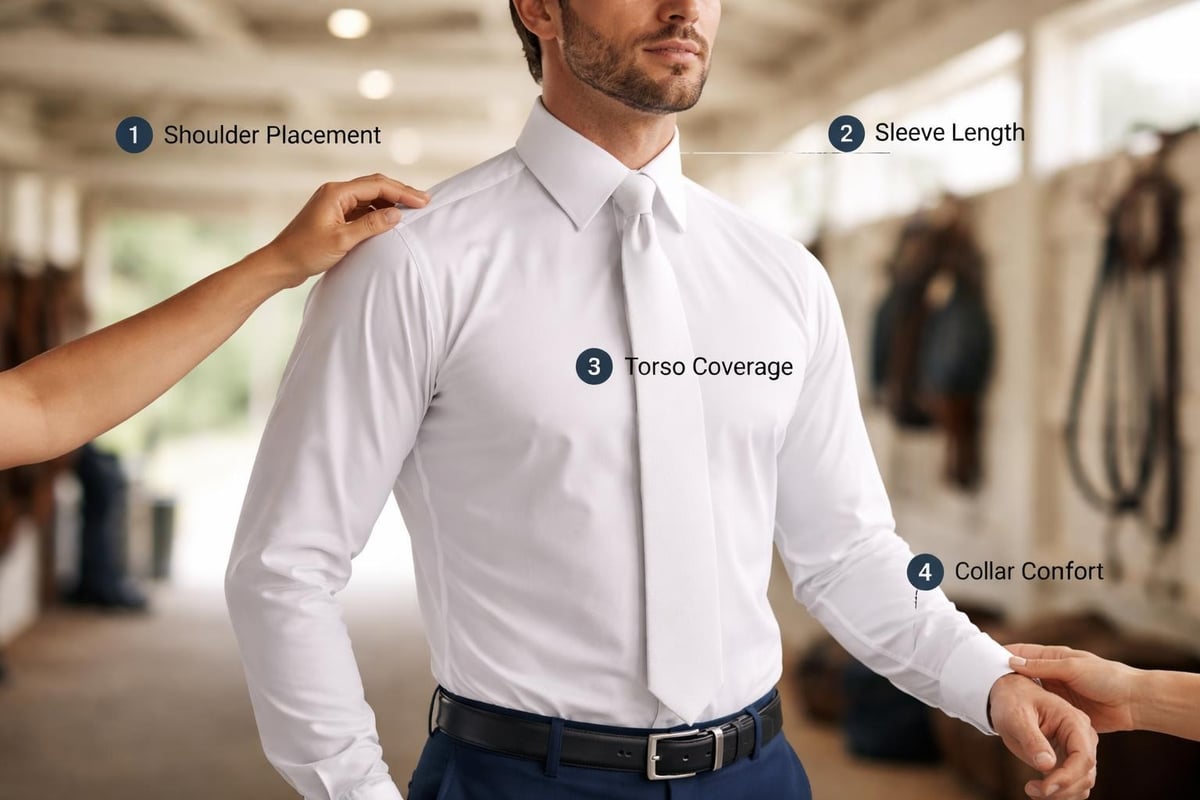
Proper fit transforms a good shirt into exceptional performance wear. Horse show shirts should allow full range of motion through shoulders and arms without excess fabric bunching or pulling. The shoulder seam should sit precisely at your shoulder point, neither dropping toward your arm nor pulling toward your neck. Sleeves require sufficient length to remain at your wrist bone when arms extend forward, maintaining coverage when reaching for reins.
Torso fit balances tailored appearance with riding functionality. The shirt should follow your natural shape without clinging tightly or creating excess fabric around the waist. When tucked into breeches, quality competition wear maintains position throughout your ride, eliminating the distraction of constant adjustments. Back length needs adequate coverage, particularly when posting or working through extended movements.
Collar construction deserves particular attention. Competition collars must accommodate stock ties or chokers without gaping or bunching. The collar should sit comfortably against your neck without choking or standing away awkwardly. Button spacing and reinforcement ensure collars maintain their shape through repeated wear and washing.
Sizing Strategies
Traditional sizing often fails to account for athletic builds common among active riders. Many manufacturers now offer athletic cuts that provide room through chest and shoulders whilst tapering through the waist. Custom or made-to-measure options eliminate fit compromises entirely, though they require advance planning and higher investment.
When ordering online, detailed size charts prove essential. Measure across shoulders, chest, waist, and sleeve length accurately. Compare these measurements against manufacturer specifications rather than relying solely on generic size labels. Different brands cut differently, particularly between European and American manufacturers.
Consider how shirts fit with your competition jacket. The combination should allow layering without bulk whilst maintaining clean lines. Test mobility in full competition attire before your first show, ensuring you can mount, ride, and dismount comfortably without restriction or exposure.
Colour and Style Selection
Whilst white remains the traditional choice for formal competitions, modern shows increasingly permit subtle variations. Light blue, cream, and pale pink appear in show jumping and lower-level dressage classes. Understanding which colours suit your discipline and competition level prevents awkward situations at the in-gate.
Personal colouring influences how different shirt shades enhance your overall presentation. Warm skin tones typically suit cream and soft white better than stark bright white. Cool skin tones handle crisp white and light blue effectively. The goal is creating a polished, cohesive appearance that draws judges' attention to your riding rather than your clothing.
Pattern considerations remain conservative in most disciplines. Solid colours dominate upper-level competition, though some shows permit subtle textures or tonal patterns. Stripes, checks, or novelty patterns generally remain restricted to schooling or casual riding contexts.
Coordinating Your Competition Wardrobe
Your shirt works as part of a complete presentation. It should coordinate with your jacket, breeches, boots, and helmet without creating visual conflicts. When building a competition wardrobe, consider investing in versatile jackets that pair effectively with multiple shirt options, maximizing outfit combinations whilst maintaining presentation standards.
Stock ties, chokers, and other neckwear must harmonize with your shirt choice. Traditional white stocks suit formal dressage, whilst coloured or patterned options add personality in appropriate settings. The complete look should appear intentional rather than haphazard, reflecting your attention to detail and respect for the sport.
Care and Maintenance
Competition shirts require specific care to maintain their performance and appearance through multiple seasons. Pre-treat any stains immediately after riding, particularly in collar and underarm areas where sweat and dirt accumulate. Cold water washing prevents fabric degradation and colour fading, whilst specialized sport detergents protect technical fibres better than standard products.
Avoid fabric softeners with technical materials. They coat fibres, reducing moisture-wicking capability and breathability. Instead, use white vinegar in the rinse cycle to maintain softness without compromising performance features. Air drying extends shirt life significantly compared to machine drying, which breaks down elastic fibres and causes shrinkage.
Proper storage prevents wrinkles and damage between shows. Hang shirts on quality hangers that support shoulders without stretching fabric. Button top buttons to maintain collar shape. Store in breathable garment bags during off-season months, protecting from dust whilst allowing air circulation to prevent musty odours.
Travel and Show Day Preparation
Transporting shirts to competitions requires planning. Garment bags prevent crushing during travel, whilst portable steamers eliminate wrinkles without the harsh heat of irons that can damage technical fabrics. Pack backup shirts for multi-day events, accounting for weather changes or unexpected issues.
Inspect shirts the evening before competition. Check all buttons, examine seams for loose threads, and confirm cleanliness. Having backup options eliminates stress if you discover problems on show morning. The mental confidence from knowing your presentation is sorted allows complete focus on your ride.
Building Your Competition Wardrobe
Strategic purchasing builds a functional competition wardrobe without excessive spending. Start with two high-quality shirts in your discipline's required style. This baseline ensures you always have a clean option available whilst the other awaits laundering. As budget permits, add complementary colours or styles that provide variety whilst meeting competition standards.
| Wardrobe Level | Recommended Shirts | Purpose |
|---|---|---|
| Starter | 2 white long-sleeve | Core competition needs |
| Intermediate | 4 shirts, mixed styles | Weekly showing |
| Advanced | 6+ shirts, varied options | Multi-day events |
Quality outweighs quantity. Two exceptional shirts outlast and outperform six mediocre ones. They maintain appearance longer, perform better during demanding rides, and project the professionalism that judges notice. The Samson Collection exemplifies this philosophy, offering performance-driven design that transitions seamlessly from competition to everyday wear.
Consider versatility beyond the show ring. Horse show shirts that work equally well for training, teaching, or professional settings maximize value. Technical features that enhance competition performance also improve comfort during regular barn work or casual riding.
Investment Timeline
New riders often feel pressure to purchase complete wardrobes immediately. Resist this impulse. Start with essentials, learning your preferences through actual competition experience. As you advance and specialize, refine your wardrobe to match your specific needs and disciplines.
Sales and off-season purchases stretch budgets further. Many retailers discount previous season's stock whilst maintaining quality standards. End-of-season sales in autumn often yield exceptional value on competition attire that remains perfectly suitable for upcoming show seasons.
Emerging Trends in Show Attire
Competition wear evolves alongside broader fashion and technology trends. 2026 sees increasing emphasis on sustainability, with manufacturers incorporating recycled materials and eco-friendly production methods without compromising performance. Male riders increasingly demand options that reflect contemporary style whilst respecting traditional competition standards.
Customization grows more accessible. Digital printing allows personalized details within regulation constraints. Embroidered initials, subtle pattern variations, or unique button selections provide individual expression whilst maintaining appropriate formality. These details distinguish your presentation without violating competition rules.
Inclusive sizing expands availability. Manufacturers recognize male riders span diverse body types, moving beyond limited size ranges that previously forced compromise. Extended sizing and athletic cuts ensure proper fit regardless of build, improving both comfort and appearance.
The line between competition and training wear continues blurring. Technical features once reserved for show shirts now appear in everyday riding apparel, whilst competition designs incorporate casualwear comfort. This convergence benefits riders seeking wardrobes that perform across contexts without requiring complete changes between activities.
Practical Selection Process
Choosing appropriate horse show shirts involves balancing multiple factors. Begin by confirming your discipline's specific requirements. Review rulebooks, consult with trainers, and observe what successful competitors wear at your target level. This research establishes your baseline parameters before considering personal preferences.
Evaluate your primary competition environment. Indoor arenas demand different features than outdoor summer shows. Frequent travel requires easy-care fabrics that resist wrinkling. Back-to-back classes necessitate quick-drying materials. Matching shirt features to your actual riding circumstances ensures practical functionality beyond theoretical performance.
Budget realistically for quality. Cheap shirts rarely survive a full season of regular competition use. Calculate cost-per-wear rather than initial purchase price. A shirt worn fifty times across two seasons at slightly higher initial cost outperforms bargain options requiring replacement after ten shows. The best sellers often achieve that status precisely because they deliver exceptional durability and performance that justifies investment.
Test before committing. Order from retailers with flexible return policies, allowing you to assess fit and comfort in actual riding conditions. Wear new shirts during training sessions before competition debuts, identifying any issues whilst you can still exchange or alter them. Small discomforts during casual wear magnify dramatically under competition pressure.
Horse show shirts represent far more than required competition attire. They're the foundation of presentation, combining regulatory compliance with personal expression and performance enhancement. Understanding fit, fabric technology, care requirements, and discipline-specific standards ensures you enter the ring with complete confidence in your appearance.
Whether you're preparing for your first local show or advancing to championship levels, Gallant Equestrian creates performance-driven clothing designed specifically for male riders. Built in New Zealand to last through seasons of demanding use, each piece transitions seamlessly from competition to everyday riding whilst maintaining the style and functionality serious riders require. Look the Part. Enjoy the Ride.

