

Long Sleeve Riding Shirts: Protection & Style | 2026
Jul 15, 2026
When you're spending hours in the saddle, the gear you wear makes a measurable difference. Long sleeve riding shirts have become essential for serious riders who understand that protection, comfort, and presentation all matter equally. Whether you're training early mornings, competing under the midday sun, or simply maintaining your yard through changing conditions, the right shirt keeps you focused on riding rather than dealing with discomfort. For men who take their equestrian pursuits seriously, investing in quality long sleeve options is as fundamental as choosing the right boots or breeches.
Why Long Sleeves Matter in the Saddle
The shift towards long sleeve riding shirts isn't just fashion. It's a practical response to real challenges riders face throughout the year.
Sun protection stands as the primary reason most riders make the switch. Australia and New Zealand have taught the equestrian world hard lessons about UV exposure, and those lessons apply wherever you ride. A quality long sleeve shirt provides consistent UPF 50+ protection across your arms and torso, eliminating the need for constant sunscreen reapplication during long rides. The differences between long-sleeve and short-sleeve sun shirts become especially apparent during summer competitions or extended trail rides.
Temperature regulation represents another advantage. Modern technical fabrics actually keep you cooler than bare skin or short sleeves in hot conditions. The science is straightforward: long sleeves create a microclimate that allows sweat to evaporate efficiently while blocking direct solar radiation. This principle has been proven in desert climates worldwide, where traditional dress includes long, flowing garments for good reason.
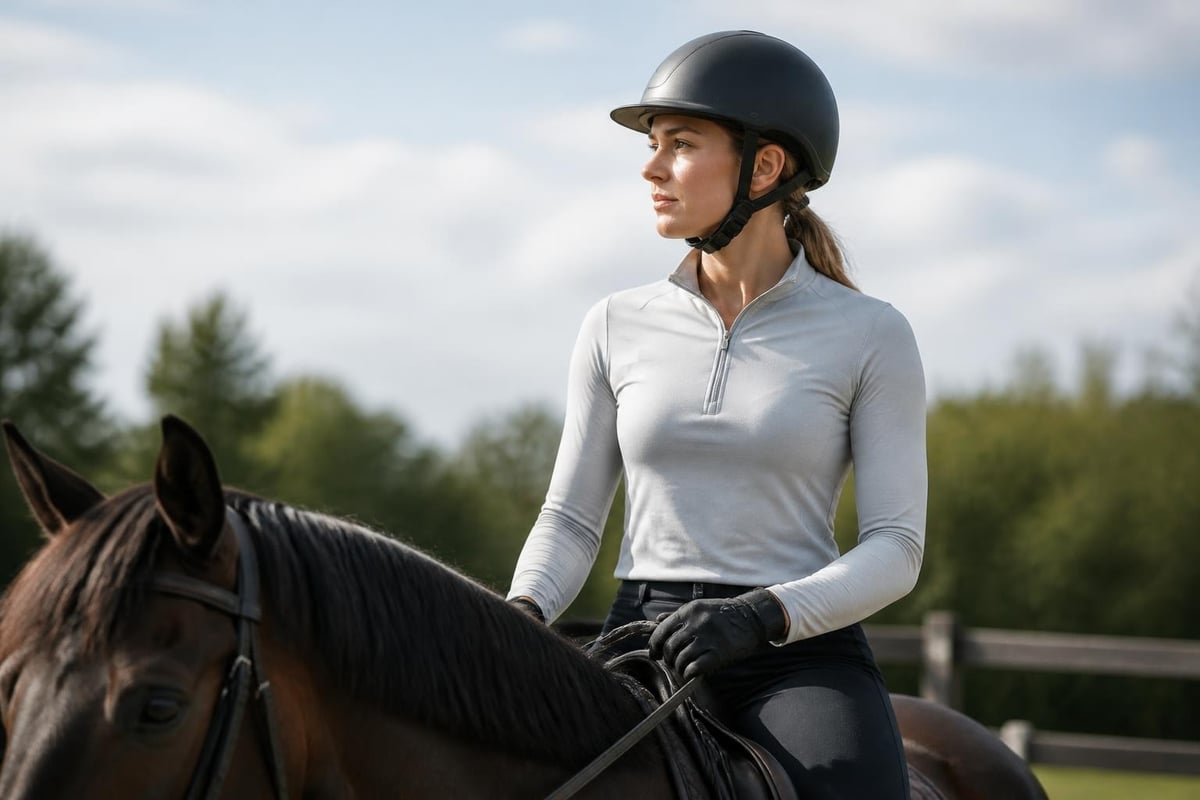
Protection from environmental hazards extends beyond UV rays. Long sleeves shield your skin from branches during trail rides, reduce irritation from dust and arena debris, and provide a barrier against insect bites. If you've ever dealt with stable flies during summer evening rides, you understand the value immediately.
Professional presentation matters in equestrian sport. Long sleeve riding shirts convey polish and seriousness, particularly in disciplines where traditional standards still influence judging. Even in casual riding contexts, a clean long sleeve shirt demonstrates respect for the sport and attention to detail that separates committed riders from casual enthusiasts.
Fabric Technology That Actually Works
The materials used in modern long sleeve riding shirts have evolved significantly from basic cotton or polyester blends. Understanding these technologies helps you make informed decisions.
Moisture-wicking fabrics form the foundation of any serious riding shirt. These engineered textiles pull sweat away from your skin and spread it across the fabric's surface for rapid evaporation. The result keeps you drier, prevents chafing, and maintains body temperature more effectively than natural fibres alone. Key fabric technologies in riding shirts focus specifically on breathability and moisture management because these factors directly impact riding performance.
| Fabric Type | Moisture Management | Breathability | Durability | Best Use Case |
|---|---|---|---|---|
| Merino blend | Excellent | Very good | Good | Cool to moderate conditions |
| Technical polyester | Very good | Excellent | Very good | Hot conditions, intense training |
| Cotton blend | Good | Moderate | Moderate | Casual riding, temperate weather |
| Bamboo blend | Very good | Good | Good | Sensitive skin, eco-conscious riders |
Breathability deserves special attention. A fabric can wick moisture brilliantly, but if it doesn't allow air circulation, you'll still feel clammy and uncomfortable. The best riding shirts combine both properties through engineered weaves or mesh panels strategically placed where heat builds up most: across the back, under arms, and along the sides.
Stretch and recovery ensure your shirt moves with you rather than restricting motion. Four-way stretch fabrics flex in multiple directions, accommodating the forward-leaning position required for jumping or the slight rotation needed for lateral work. Quality fabrics return to their original shape after stretching, maintaining a sharp appearance even after hours of wear.
Anti-odour treatments help shirts stay fresh between washes. Silver ion technology and other antimicrobial finishes prevent bacteria growth that causes smell. This matters when you're riding multiple times weekly or transitioning from stable to social settings without time for a complete change.
Seasonal Versatility Across the Calendar
Long sleeve riding shirts work year-round when you choose appropriately for conditions and layer strategically.
Summer Riding Requirements
Summer demands lightweight, highly breathable fabrics in light colours that reflect rather than absorb heat. Look for shirts with UPF ratings clearly marked and mesh ventilation in key areas. The sleeves should feel nearly weightless, allowing full range of motion without clinging. Endurance riding shirts exemplify summer-appropriate features: quick-drying fabrics, built-in sun protection, and minimal bulk that won't overheat you during extended sessions.
Collar styles matter in summer. A high collar that can be worn up provides neck protection when needed but folds down for cooling when temperatures peak. Some riders prefer zip-neck designs that allow ventilation adjustment on the fly.
Autumn and Spring Transitions
Mid-season riding often presents the trickiest dressing challenges. Mornings start cool, midday warms considerably, then evenings chill again. Long sleeve riding shirts excel here because they provide just enough coverage without requiring a full jacket.
Medium-weight technical fabrics work best during transition seasons. They offer more warmth than summer weights without the bulk of winter base layers. Versatility becomes key: a shirt that layers well under a vest or lightweight jacket gives you options as conditions change.
Winter Base Layer Function
Winter transforms long sleeve riding shirts into essential base layers. Choose shirts with slightly heavier construction and brushed interiors that trap warmth next to your skin. The moisture-wicking properties become even more critical in cold weather, as damp fabric against your skin accelerates heat loss and increases chill.
Fitted styles work better under winter layers than loose cuts. A snug base layer eliminates bulk and air gaps that reduce insulation efficiency. Look for longer back panels that stay tucked during riding and cuffs that fit close to your wrists without restricting circulation.
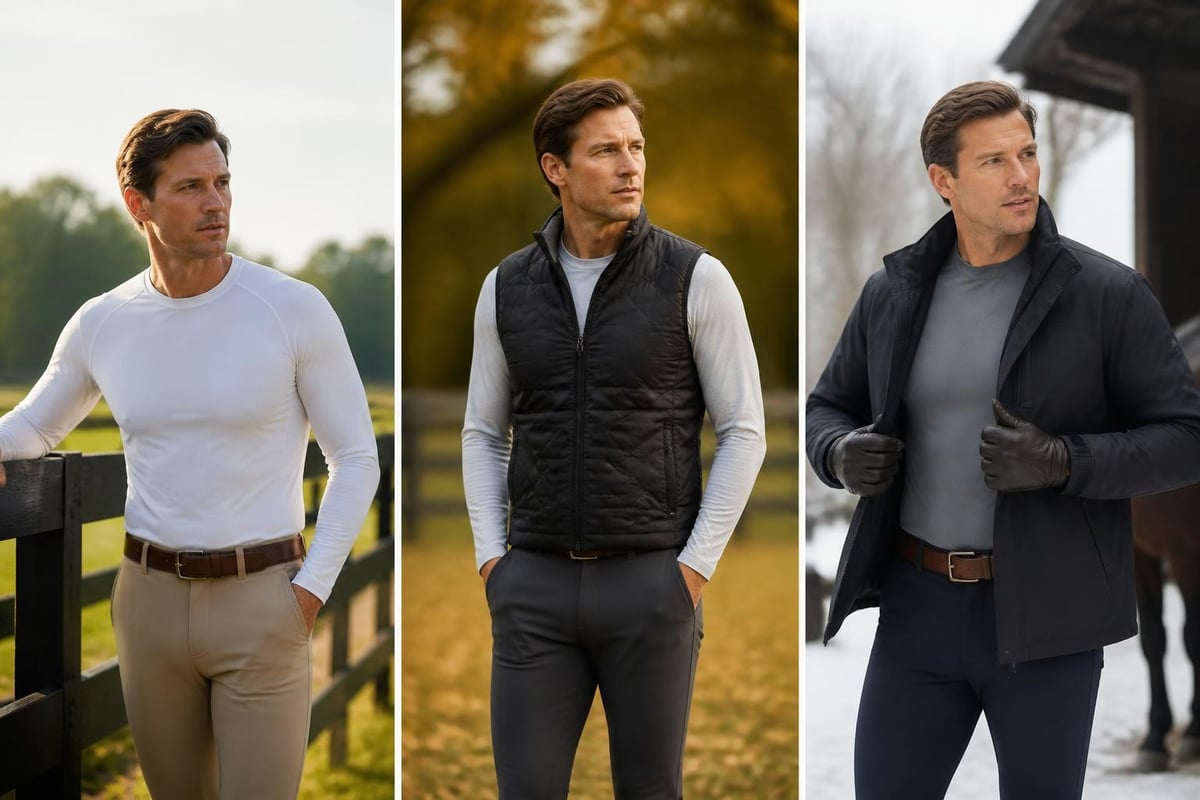
Fit Considerations for Male Riders
Proper fit separates functional riding shirts from frustrating ones. Men's equestrian clothing has specific requirements that differ from general athletic wear.
Shoulder construction needs room for forward arm position without excess fabric bunching. Raglan sleeves or set-in sleeves with gussets provide the necessary mobility. When you extend your arms forward as if holding reins, the shirt should move smoothly without pulling across your back or restricting your shoulders.
Torso length matters more than many riders realise. Shirts that ride up when you're in riding position create discomfort and look sloppy. Quality riding shirts feature longer back panels and curved hems that stay in place. Test this by sitting in a riding position: the shirt should remain tucked without constant adjustment.
Sleeve length should reach your wrist bone when your arms hang naturally. When gripping reins, slight exposure of your wrist is acceptable, but sleeves shouldn't ride halfway up your forearms. Some shirts offer thumb loops that keep sleeves in position during active riding.
Collar height and closure systems vary by preference and discipline. Dressage riders often prefer mandarin collars or button-up styles that maintain a formal appearance. Eventers and show jumpers might choose zip necks or open collars that allow more ventilation. Select based on your primary riding focus and personal comfort priorities.
Style Integration Beyond the Arena
Modern long sleeve riding shirts transition seamlessly from stable to street, making them practical investments for men who value versatile wardrobes.
Neutral colours form the backbone of a versatile riding wardrobe. Navy, white, grey, and black work across contexts and pair easily with different breeches or casual trousers. These colours hide minor dirt better than lighter shades while maintaining a polished appearance. When you're moving from morning training to afternoon meetings, neutral riding shirts require minimal adjustment.
Subtle branding and clean lines distinguish quality pieces from overly technical-looking athletic wear. The best riding shirts incorporate performance features without appearing obviously sporty. Small logo placements, tonal stitching, and understated design details allow the shirt to function in broader contexts. You should be able to wear your riding shirt to a casual lunch without looking like you're headed to the gym.
Performance features that enhance daily wear include wrinkle resistance, quick-drying properties after rain showers, and odour control during long days. These practical benefits justify choosing technical riding shirts even when you're not planning to ride. The investment in quality men's horse riding clothes pays dividends through extended wear across multiple settings.
Care and maintenance remain straightforward with quality shirts. Most technical fabrics machine wash cold and line dry quickly, requiring no special treatment. This ease of care supports regular rotation and ensures your shirts always look fresh.
Competition Standards and Requirements
Different equestrian disciplines maintain specific standards for competition attire, and understanding these requirements helps you select appropriate shirts.
Dressage Protocols
Dressage traditionally requires white or light-coloured shirts for competition, though rules are gradually modernising. Long sleeve white shirts remain the standard at recognized events, particularly at higher levels. The shirt must have a proper collar and be worn with a stock tie or plain tie. Some venues now permit subtle colours at lower levels, but white remains the safest choice.
Fabric should be opaque enough to maintain modesty and professional appearance. Thin, clingy materials that become see-through when wet are inappropriate. Look for substantial fabrics with enough body to maintain their shape throughout a test.
Show Jumping and Eventing
Show jumping and eventing allow more flexibility in colour and style. Long sleeve technical shirts in team colours or subtle patterns are increasingly accepted, especially at lower levels and during schooling shows. The emphasis shifts towards functionality and rider safety.
General Show Standards
Most disciplines require shirts to be neat, clean, and well-fitted. Excessively tight or baggy shirts both create poor impressions. The overall presentation should demonstrate respect for the sport and attention to detail. When in doubt, conservative choices serve you better than fashion-forward risks.
Safety considerations sometimes override style preferences. High-visibility elements may be required for certain events or venues, particularly those held on public land or near roadways. High-visibility long-sleeve shirts meeting specific standards ensure compliance while maintaining comfort and performance.
Making the Investment Count
Quality long sleeve riding shirts represent a meaningful investment, but strategic purchasing ensures maximum value.
Price Versus Performance
Entry-level shirts (£30-50) provide basic moisture-wicking and sun protection. These work well for occasional riders or those building their initial wardrobe. Expect adequate performance but limited durability and fewer advanced features.
Mid-range options (£50-90) offer better fabrics, improved construction, and enhanced features like mesh panels or flatlock seams. This category represents the sweet spot for most serious amateur riders who train regularly but don't need professional-grade gear.
Premium shirts (£90-150+) deliver maximum performance through advanced fabrics, superior construction, and thoughtful design details. Professional riders and dedicated amateurs benefit from the durability and performance advantages these shirts provide.
Consider cost per wear rather than initial price. A £100 shirt worn twice weekly for two years costs roughly £0.96 per wear, making it more economical than a £40 shirt that wears out in six months.
Building a Functional Rotation
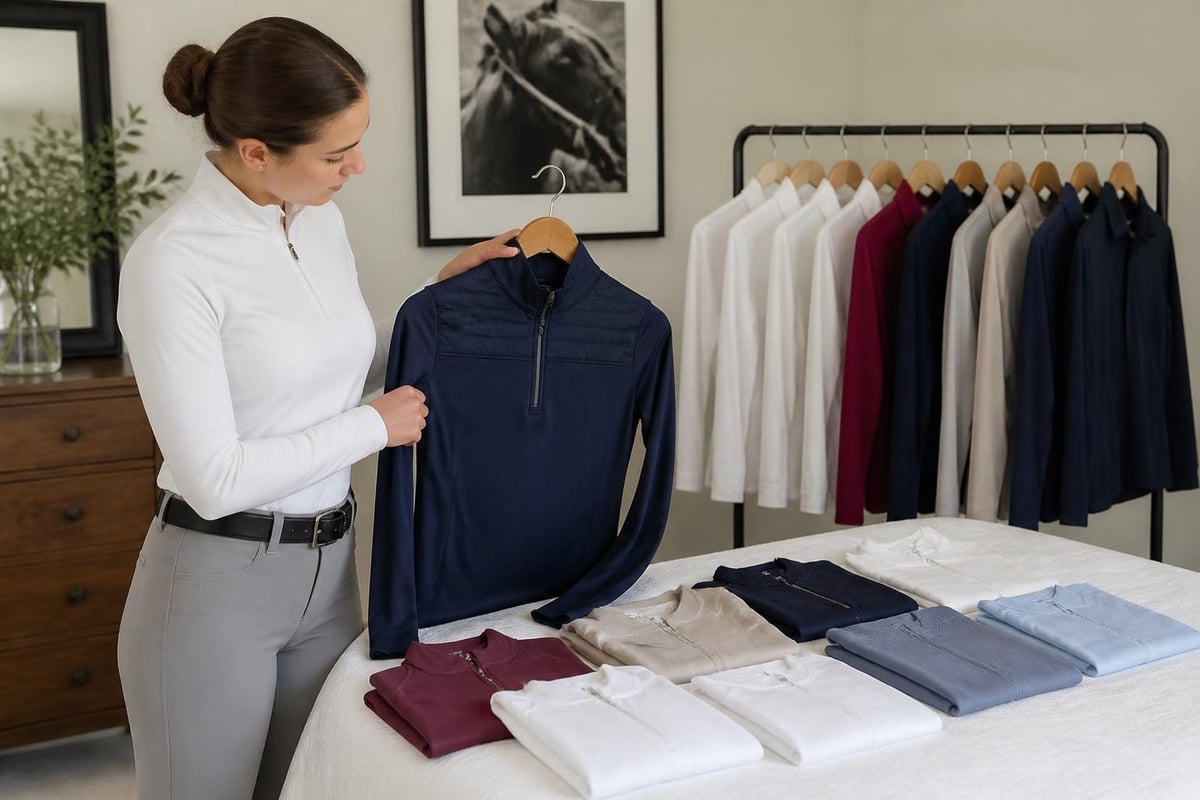
Three to five quality long sleeve riding shirts provide adequate rotation for most riders training three to four times weekly. This allows regular washing without wearing the same shirt multiple days in succession.
Include variety in weights and styles: one or two lightweight summer shirts, one to two medium-weight transition pieces, and one heavier option for winter base layer use. This coverage handles most conditions you'll encounter throughout the year.
Colour selection should start with neutrals that coordinate with your existing breeches and outerwear. Add accent colours once your foundation is established. Matching your shirts to your show jacket ensures cohesive competition turnout.
Care That Extends Lifespan
Proper care significantly extends the functional life of technical riding shirts.
Wash shirts inside out in cold water after each wear. Hot water damages technical fibres and accelerates fabric breakdown. Skip fabric softener, which coats fibres and reduces moisture-wicking effectiveness.
Air drying preserves elasticity and prevents shrinkage better than machine drying. If you must use a dryer, choose low heat and remove shirts while slightly damp to finish air drying.
Store shirts hung or neatly folded rather than crumpled in gym bags. This maintains shape and reduces wrinkles, ensuring you always look put-together.
Future Developments in Riding Shirt Technology
The equestrian apparel industry continues evolving, with several promising developments on the horizon for 2026 and beyond.
Sustainable materials are becoming more prevalent as riders demand environmentally responsible options without sacrificing performance. Recycled polyester, organic cotton blends, and innovative plant-based fibres offer reduced environmental impact while maintaining the technical properties serious riders require.
Integrated sensor technology may soon provide biometric feedback during training. Heart rate monitoring, posture analysis, and heat stress indicators could be woven directly into shirt fabrics, giving riders real-time performance data without additional devices.
Enhanced antimicrobial treatments using natural compounds rather than synthetic chemicals address both performance and environmental concerns. These treatments maintain effectiveness through more wash cycles while reducing chemical exposure.
Adaptive fit systems using strategic stretch zones and adjustable features allow single shirts to accommodate wider body type ranges. This reduces the need for extensive size runs and helps more riders find proper fit off the rack.
The right long sleeve riding shirt transforms your comfort, protection, and confidence in the saddle throughout the year. When you invest in quality pieces that balance performance, style, and durability, you're setting yourself up for better rides in any season. Gallant Equestrian delivers precisely this combination through performance-driven designs built to last, ensuring you look sharp and ride comfortably whether you're training at home or competing at championship level. Look the Part. Enjoy the Ride.

