

Show Jumping Jacket: The Complete Guide for Men (2026)
Aug 02, 2026
The show jumping jacket represents far more than competition attire. It's where tradition meets performance, where regulations intersect with personal style, and where functionality matters as much as appearance. For men entering the show jumping arena in 2026, understanding what makes a proper jacket isn't just about following rules. It's about finding a piece that performs under pressure, fits your riding style, and carries you confidently through every round. Whether you're competing at affiliated events or building your competition wardrobe from scratch, knowing the technical requirements and practical considerations will ensure you're properly equipped when it counts.
Understanding Show Jumping Jacket Requirements
The regulations governing show jumping attire vary significantly between affiliated and unaffiliated competitions. Affiliated events, sanctioned by national federations and the FEI, maintain strict dress codes that dictate specific aspects of your jacket. These standards ensure a professional appearance across all levels of competition whilst allowing room for modern fabric innovation.
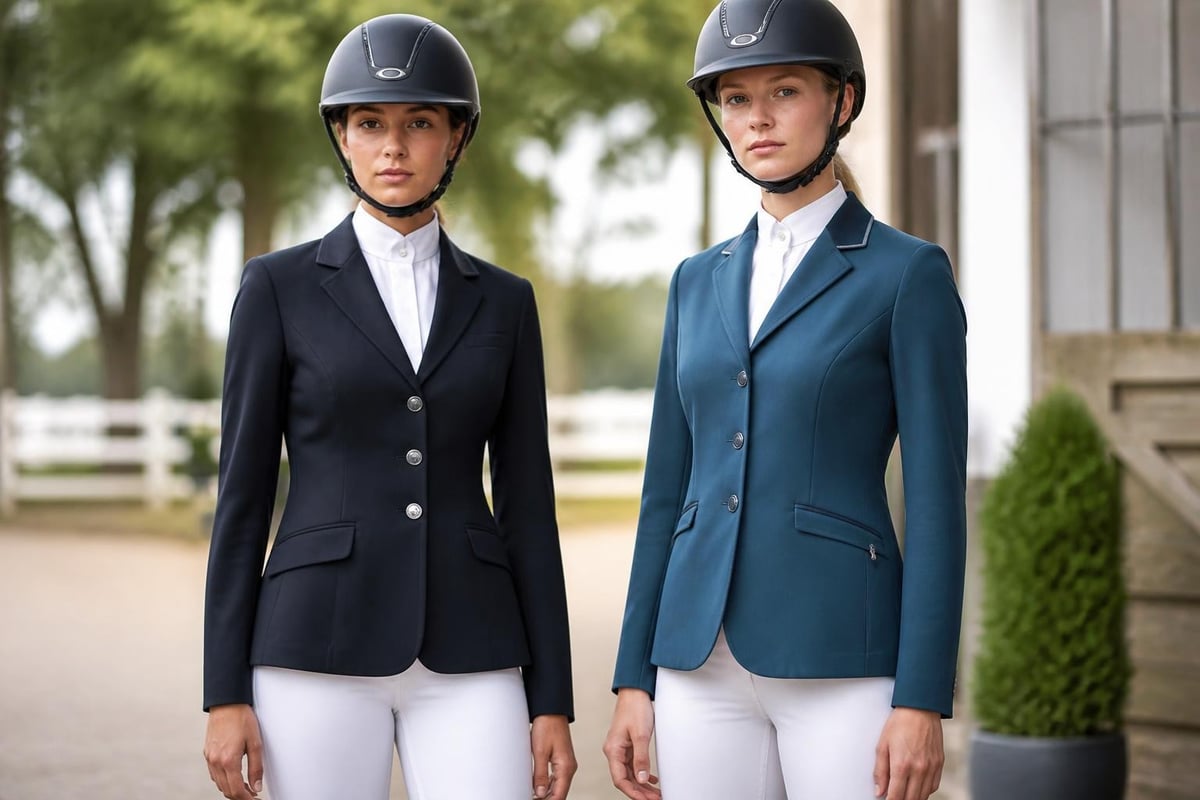
Traditional show jumping jackets in affiliated competitions typically require dark, conservative colours. Navy, black, and dark grey remain the standard choices, though some events permit subtle patterns or checks. The cut must be professional: a well-fitted silhouette that allows full range of motion without appearing baggy or restrictive.
Unaffiliated shows generally offer more flexibility. Many riders use these events to test new gear or opt for slightly less formal options. However, maintaining a professional appearance still matters. Even in relaxed settings, a proper jacket demonstrates respect for the sport and fellow competitors.
Understanding what to wear for show jumping begins with knowing which type of event you're entering. Research your specific competition's dress code well before the day arrives. Nothing undermines confidence quite like discovering your jacket doesn't meet requirements at the mounting area.
The modern show jumping jacket has evolved considerably from its hunting coat origins. Today's versions incorporate technical fabrics that were unimaginable even a decade ago. Four-way stretch materials, moisture-wicking technology, and breathable panels now feature prominently in jackets that still meet traditional appearance standards.
Technical Fabric Innovations in Modern Jackets
The fabric revolution in equestrian wear has transformed how show jumping jackets perform. Traditional wool blends still have their place, particularly in cooler climates and formal settings. However, technical fabrics now dominate the market for good reason. They deliver performance benefits that natural fibres simply cannot match.
Softshell technology represents one of the most significant advances. These softshell show jacket fabrics combine stretch, breathability, and weather resistance in a single garment. Unlike traditional materials that restrict movement at critical moments, softshell jackets move with you through every phase of your round.
Four-way stretch fabrics allow complete freedom of movement. When you need to adjust position over a difficult fence or reach forward in your release, the jacket moves seamlessly. This isn't just about comfort. It's about ensuring your clothing never interferes with your riding.
Moisture management technology has become essential. Show jumping demands physical exertion, often in challenging conditions. Modern fabrics wick sweat away from your body, allowing it to evaporate through the outer layer. You stay drier, more comfortable, and better focused on your round rather than your discomfort.
Temperature regulation features have also advanced. Many jackets now incorporate mesh panels in strategic locations or use fabrics with varying weights in different zones. These innovations help maintain optimal body temperature whether you're warming up in morning cold or competing under afternoon sun.
Comparing Traditional and Technical Materials
| Feature | Traditional Wool Blend | Technical Softshell | Hybrid Construction |
|---|---|---|---|
| Stretch | Limited, primarily across grain | Four-way stretch throughout | Strategic stretch panels |
| Breathability | Moderate, depends on weave | Excellent with membrane technology | Very good in technical zones |
| Weather Resistance | Requires treatment, degrades | Built-in DWR coating | Varies by panel placement |
| Durability | Excellent with care | Very good, resists pilling | Good to excellent |
| Maintenance | Dry clean recommended | Machine washable | Usually machine washable |
| Price Range | £200-£500 | £250-£600 | £300-£700 |
The choice between traditional and technical materials often comes down to personal preference and riding schedule. Riders competing frequently throughout the season typically prefer technical fabrics for their easy-care properties and consistent performance. Those riding occasional events might value the traditional appearance and feel of wool blends.
Climate plays a crucial role in fabric selection. In New Zealand's variable conditions, where morning frost can give way to afternoon heat, technical fabrics with good temperature regulation prove invaluable. Riders in consistently warm or cool climates might prioritize different features.
Fit and Tailoring Considerations for Men
Proper fit separates an adequate show jumping jacket from an exceptional one. Unlike off-the-rack blazers, competition jackets require specific proportions to function correctly in the saddle. The fit must accommodate riding position whilst maintaining a sharp appearance when standing.
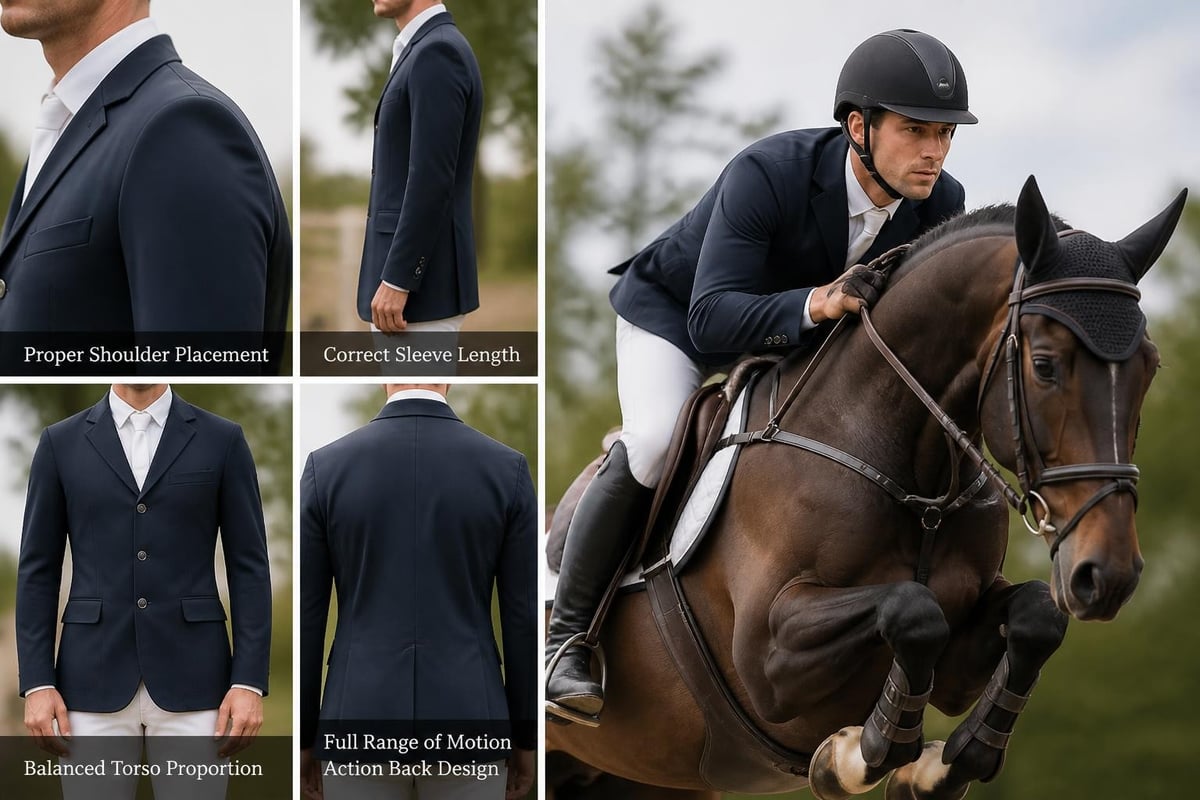
Shoulder width and sleeve length demand particular attention. Your shoulders should fill the jacket without pulling or bunching when you reach forward. Sleeves need adequate length to cover your wrists in riding position, not just when standing straight. Many men find standard lengths too short once mounted and reaching forward.
The jacket length should cover your seat when mounted but not extend excessively. Too short appears improper and fails to provide full coverage. Too long creates bulk and can interfere with saddle contact. Most show jumping jackets fall slightly shorter than traditional suit jackets, typically ending just below the hip bone.
Torso fit requires careful consideration. The jacket should follow your body shape without restriction. When you lift your arms to riding position, the back shouldn't ride up excessively or pull across the shoulders. Quality jackets incorporate action pleats or stretch panels to prevent this common issue.
Key Measurement Points
Shoulder Seam Position: Should sit precisely at your natural shoulder point, not dropping down your arm or pulling toward your neck.
Chest Allowance: Sufficient room to layer a shirt and stock tie comfortably without strain when the jacket closes.
Waist Definition: Modern cuts often feature slight waist suppression for a contemporary silhouette whilst avoiding restriction.
Armhole Depth: Deep enough for movement but not so low that it creates excess fabric under the arm.
Many riders benefit from minor alterations even with premium ready-to-wear jackets. A skilled tailor familiar with equestrian wear can adjust sleeve length, take in or let out seams, and modify button placement. These small changes transform a good fit into a perfect one.
Consider trying jackets whilst wearing your full equestrian attire underneath. The combination of show shirt, stock tie, and any base layers affects how the jacket fits. What feels comfortable in casual clothes might prove restrictive with competition layers.
Colour and Style Options Within Competition Rules
The colour palette for show jumping jackets remains relatively conservative, but nuance exists within those boundaries. Understanding what's acceptable and what makes a statement helps you navigate choices confidently.
Navy stands as the most universally accepted colour across all levels of competition. It photographs well, pairs easily with various breech colours, and conveys professionalism without appearing overly formal. A quality navy show jumping jacket serves most riders for years across numerous events.
Black offers slightly more formality and creates strong visual contrast. Some riders find black more forgiving of minor marks or stains that occur during busy competition days. However, black can appear harsh in certain lighting conditions and shows dust more readily than navy.
Dark grey and charcoal provide sophisticated alternatives. These colours maintain the professional standard whilst offering subtle differentiation. Grey particularly suits riders who prefer a softer look than black provides.
Subtle patterns and checks occasionally appear within affiliated competition rules. Very fine pinstripes or discrete windowpane patterns sometimes receive approval, though always verify specific event requirements. These choices add personality within conservative boundaries.
Acceptable Colour Combinations
| Jacket Colour | Best Breech Pairing | Competition Level | Visual Effect |
|---|---|---|---|
| Navy | White, beige, light grey | All levels | Classic, universally appropriate |
| Black | White, light grey | Formal competitions | Sharp, high contrast |
| Charcoal | White, stone | Mid to high level | Sophisticated, modern |
| Dark Grey | White, tan | All levels | Refined, less severe than black |
Beyond solid colours, fabric texture adds visual interest without violating dress codes. Subtle herringbone weaves, fine twills, or discrete diagonal patterns create depth whilst maintaining the required professional appearance. These details become apparent in person whilst reading as solid from a distance.
Button choice might seem minor but contributes to overall presentation. Traditional metal buttons in silver or brass tones suit most jackets. Some modern designs incorporate tonal buttons that blend with the fabric. Either approach works provided buttons fasten securely and lie flat.
Collar and lapel styles have evolved whilst maintaining traditional roots. Most show jumping jackets feature either notch lapels or standing collars. Notch lapels lean more traditional and formal. Standing collars offer a streamlined, modern appearance that many men prefer. Both remain acceptable in competition.
Understanding show jumping attire etiquette helps avoid common mistakes. Some choices that seem minor, like wearing brown boots with black jackets or mismatched formality levels between jacket and other attire, can appear careless to judges and fellow competitors.
Seasonal Versatility and Weather Adaptation
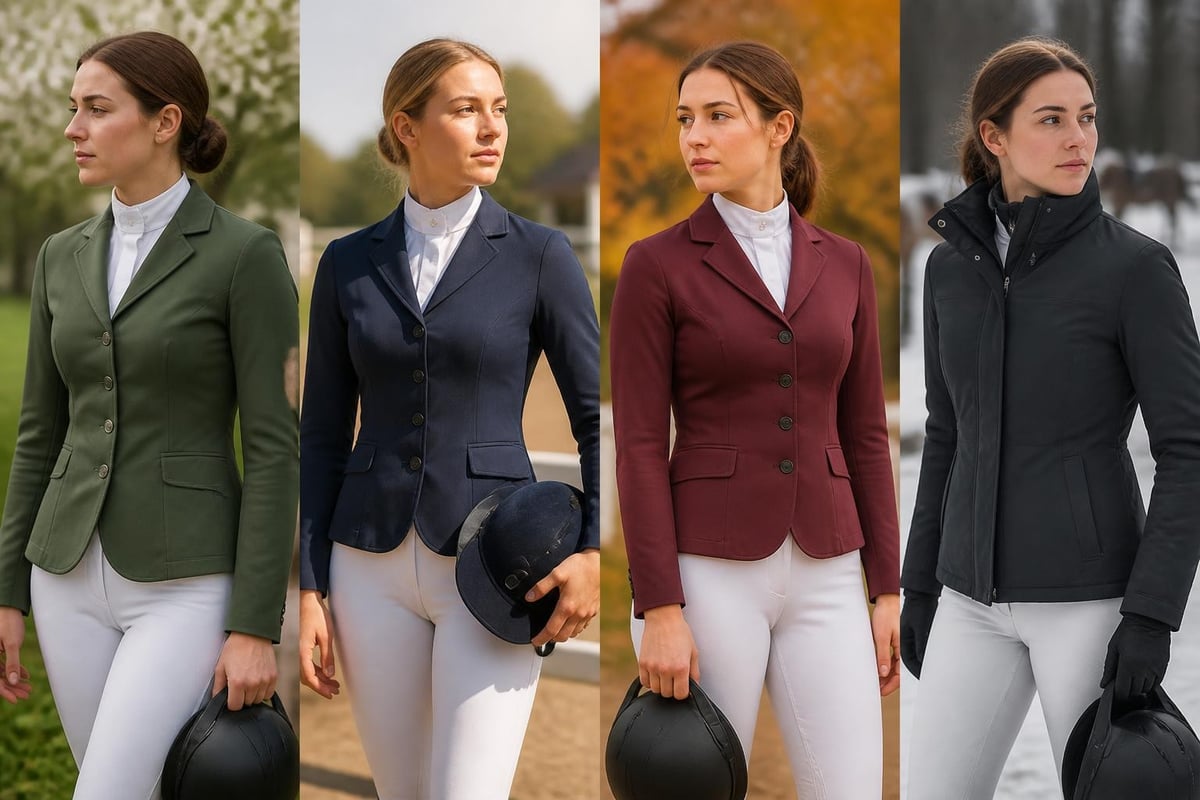
A show jumping jacket must perform across varying conditions. Competition seasons span temperature extremes, and events rarely reschedule for weather. Your jacket needs versatility built in or you need multiple options for different conditions.
Lightweight technical fabrics excel in warmer weather. They provide the required coverage and professional appearance without causing overheating. Look for jackets with moisture-wicking properties and strategic ventilation. Some designs incorporate mesh panels under the arms or across the back that remain invisible from the outside.
Mid-weight options suit the broadest range of conditions. These jackets typically use softshell fabrics or lighter wool blends that insulate moderately whilst maintaining breathability. They work well in spring and autumn, handling morning chill and afternoon warmth adequately.
Cold weather demands either heavier fabrics or layering capability. Some riders prefer a warmer jacket for winter events. Others layer effectively under a consistent jacket weight. The layering approach offers flexibility but requires your jacket to accommodate additional bulk without restriction.
Weather resistance varies significantly between jackets. Treated wool blends repel light rain for limited periods. Technical fabrics often incorporate DWR (Durable Water Repellent) coatings that shed moisture more effectively. Neither replaces proper waterproof riding jacket options for training in poor conditions, but both handle brief exposure during competition.
Seasonal Performance Factors
Summer Considerations: Prioritize breathability and moisture management over insulation. Lighter colours within acceptable ranges may feel cooler. Ensure the jacket remains opaque when wet with perspiration.
Winter Requirements: Adequate insulation without bulk. Consider jackets with removable linings for versatility. Ensure cuffs seal properly against wrists to prevent heat loss.
Transition Seasons: Layering capability becomes crucial. The jacket should accommodate a base layer underneath without appearing oversized or restricting movement.
All-Weather Features: Look for stretch that maintains recovery in cold temperatures. Some fabrics stiffen when cold, reducing their performance benefits precisely when you need them most.
The reality of show jumping means sometimes competing in less-than-ideal weather. A jacket that performs reliably across conditions provides confidence. You're not worrying about discomfort or appearance when you should be focused on your round.
Care and Maintenance for Longevity
Quality show jumping jackets represent significant investment. Proper care extends their lifespan considerably whilst maintaining appearance and performance. Different fabrics require different approaches, but some principles apply universally.
Read and follow care labels precisely. Manufacturers specify cleaning methods based on extensive testing. Deviating from these instructions risks damaging expensive fabrics or compromising technical features. When labels recommend dry cleaning, the additional cost proves worthwhile compared to replacement.
Technical fabrics generally tolerate machine washing better than traditional materials. Use cool water and gentle cycles. Avoid fabric softeners, which can coat technical fabrics and reduce their moisture-wicking properties. Specialized technical wash products clean effectively without damaging treatments.
Drying method matters enormously. Never use high heat on technical fabrics. It can damage stretch properties and degrade DWR coatings. Air drying works best for most jackets. If machine drying, use the lowest heat setting or air-dry cycle.
Storage affects jacket condition between uses. Hang jackets properly on shaped hangers that support shoulders correctly. Avoid wire hangers that create stress points. Store in breathable garment bags that protect from dust whilst allowing air circulation. Plastic bags trap moisture and encourage mildew.
Spot cleaning addresses minor marks without full washing. Keep a quality fabric brush and spot treatment product designed for your jacket's material. Address stains promptly before they set. Most arena dust brushes off easily when fresh but becomes embedded if ignored.
Reapplying DWR treatments maintains weather resistance in technical fabrics. These coatings degrade with washing and wear. Spray-on or wash-in treatments restore water repellency. Follow product instructions carefully and ensure even application.
Check buttons and seams regularly. Loose buttons caught early require simple tightening. Ignored, they stress threads and tear free completely. Small seam separations often need just a few stitches if addressed promptly.
Integration with Complete Show Ring Presentation
Your show jumping jacket forms part of a complete presentation. It must harmonize with other elements whilst meeting its specific requirements. Understanding how pieces work together creates a polished, professional appearance that judges and fellow competitors notice.
Shirt and stock tie combination directly affects jacket appearance. The collar should sit properly beneath the jacket collar, not bunching or gaping. Stock ties need adequate volume to fill the shirt collar properly without creating bulk that strains jacket buttons. Quality show shirts designed specifically for men account for these fit requirements.
Breech selection influences overall silhouette. Light-colored breeches create traditional contrast but show dirt readily. Darker options suit less formal events and hide marks better. The cut matters as well. Modern competition breeches feature technical fabrics and ergonomic design that complement performance jackets effectively. Understanding best pants for horse riding helps ensure proper coordination.
Boot choice completes the lower portion of your outfit. Tall boots remain standard for show jumping, either traditional leather or modern synthetic materials. Ensure boot height proportions suit your leg length. Boots should disappear under breech legs cleanly without creating bulges or gaps.
Helmet selection balances safety requirements with appearance standards. Modern helmets meet or exceed safety certifications whilst offering sleeker profiles than previous generations. Choose colours that coordinate with your jacket. Black helmets suit most combinations. Navy helmets pair specifically with navy jackets.
Complete Outfit Coordination
| Element | Colour | Material | Key Consideration |
|---|---|---|---|
| Jacket | Navy/Black/Grey | Technical or traditional | Primary visual element, sets formality level |
| Shirt | White | Technical or cotton | Collar must fit properly under jacket |
| Stock Tie | White/Cream | Synthetic or silk | Volume without excessive bulk |
| Breeches | White/Beige/Grey | Technical stretch | Match formality to jacket choice |
| Boots | Black/Brown | Leather or synthetic | Height proportional to leg length |
| Helmet | Black/Navy | Advanced safety materials | Current safety certification essential |
The complete presentation extends beyond individual pieces to how they integrate. Transitions between elements should appear seamless. Jacket sleeves should cover shirt cuffs by approximately one centimeter when arms hang naturally. Breech legs should meet boot tops without gaps or excessive overlap.
Accessories remain minimal in show jumping. A simple belt matches boots. Gloves coordinate with the overall colour scheme. Spurs and any other equipment maintain clean, functional appearance. The focus stays on you and your horse, not distracting details.
Understanding equestrian fashion helps navigate the balance between personal style and competition requirements. Modern interpretations allow individual expression within traditional frameworks, particularly in unaffiliated settings.
Investing in Quality Versus Budget Options
Show jumping jackets span enormous price ranges. Understanding what differentiates investment pieces from budget options helps determine appropriate spending for your situation. The most expensive jacket isn't always the best choice, but the cheapest rarely serves well long-term.
Premium jackets incorporate superior materials throughout. Fabrics undergo extensive development and testing. Construction methods ensure durability and maintain shape through repeated wear. Details like lining quality, button attachment, and seam finishing reflect overall craftsmanship.
Mid-range options often provide excellent value. Many use similar fabrics to premium jackets with slightly simplified construction. These jackets serve most riders effectively, particularly those competing regularly but not at top international levels. The performance gap between mid-range and premium has narrowed considerably in recent years.
Budget jackets suit riders beginning in the sport or competing very occasionally. They meet basic requirements but typically lack durability and advanced features. Fabrics may lose shape or performance characteristics more quickly. However, they allow participation without excessive initial investment.
Consider cost per wear when evaluating options. A £500 jacket worn for fifty competitions costs £10 per use. A £150 jacket lasting fifteen shows costs the same per wear but requires replacement much sooner. For frequent competitors, investment pieces often prove more economical long-term.
Quality indicators worth examining include stitching precision, lining attachment, and how fabric recovers after stretching. Pull gently on seams and check stitch evenness. Examine how lining attaches at shoulders and armholes. Stretch fabric sections and observe how quickly they return to original shape.
Brand reputation matters but shouldn't override personal fit and comfort. Well-known manufacturers typically maintain consistent quality, but smaller brands sometimes offer exceptional value. Try multiple options at similar price points before deciding.
Practical Considerations for Competition Day
Competition day brings unique pressures that affect how your show jumping jacket performs. Planning ahead ensures your jacket contributes to confidence rather than stress. Small details managed in advance prevent larger problems when they matter most.
Pack your jacket properly for transport. Use a garment bag that allows it to hang without folding. Arriving with a creased jacket requires emergency pressing that might not be available. If folding is unavoidable, fold along natural seam lines and unpack immediately upon arrival.
Arrive with time to dress properly. Rushing into your jacket moments before competing creates unnecessary stress and increases chances of missing details. Allow time to ensure proper fit, check all buttons, and verify your complete presentation in a mirror.
Have basic repair supplies in your ring bag. An extra button matching your jacket can be sewn quickly if one loosens. Small safety pins temporarily secure minor issues. A lint roller removes last-minute dust or hair. These simple items solve problems that might otherwise require scratching.
Weather watching informs last-minute decisions. If conditions deteriorate unexpectedly, you might need to adjust plans. Having a backup lightweight layer or being prepared to warm up earlier than planned helps manage variable conditions without compromising performance.
Post-round care matters. Remove your jacket promptly after competing to minimize perspiration exposure. Hang it properly rather than tossing it aside. Brush off arena dust before it sets. These simple habits maintain appearance throughout long competition days.
Consider jacket rotation if competing frequently across multiple days. Alternating between two jackets allows each to air and recover between uses. This extends both jackets' lifespan and ensures you always have a fresh, properly maintained option available.
Temperature management during warm-up requires thought. Wear your jacket for familiarity but remove it if overheating during strenuous work. You want to be comfortable and focused entering the ring, not overheated and distracted.
Choosing the right show jumping jacket combines understanding technical requirements, prioritizing quality construction, and ensuring proper fit. The jacket you select should meet competition standards whilst supporting your performance through advanced fabrics and thoughtful design. Whether you're building your first competition wardrobe or upgrading proven pieces, investing in quality gear that balances tradition with innovation pays dividends in the ring. Gallant Equestrian creates performance-driven riding wear designed specifically for men who demand both functionality and style. Our New Zealand-designed pieces deliver the quality and refinement you need to compete confidently and look sharp doing it.

