

Equestrian Brand Guide: Choosing Riding Gear That Lasts
Nov 09, 2026
A good equestrian brand makes riding clothes that fit a man's build properly, use fabrics that survive daily wear, and meet the safety standards your discipline requires. Name recognition matters far less than those three things. This guide shows you how to judge a brand on substance, so you spend once and ride in the same kit for years.
Most men arrive at this decision the same way. A pair of breeches wears through at the knee, a shirt loses its shape after a few washes, and you start asking who actually makes riding clothing worth the money. The answer comes down to a handful of checks you can run in minutes.
What Does an Equestrian Brand Actually Offer?
An equestrian brand sells clothing and equipment designed around the demands of riding: grip, movement, protection and durability. The range usually covers breeches, jackets, shirts, boots, helmets, tack and stable wear, though few brands do everything well.
It helps to sort brands into three broad types:
Heritage houses have decades of tack and saddlery behind them. They are strong on leather goods and traditional tailoring, and often lighter on modern cuts for men.
Retailers and multi-brand stores stock many labels under one roof. They suit riders who want to compare, though the choice can blur quality differences.
Specialist clothing labels focus on apparel and design it with a clear rider in mind. Gallant Equestrian sits here, designing performance-led menswear in New Zealand for men who want riding clothes that also work off the horse.
Knowing which type you are dealing with tells you what to expect before you look at a single product page.
How Do You Judge Quality Before You Buy?
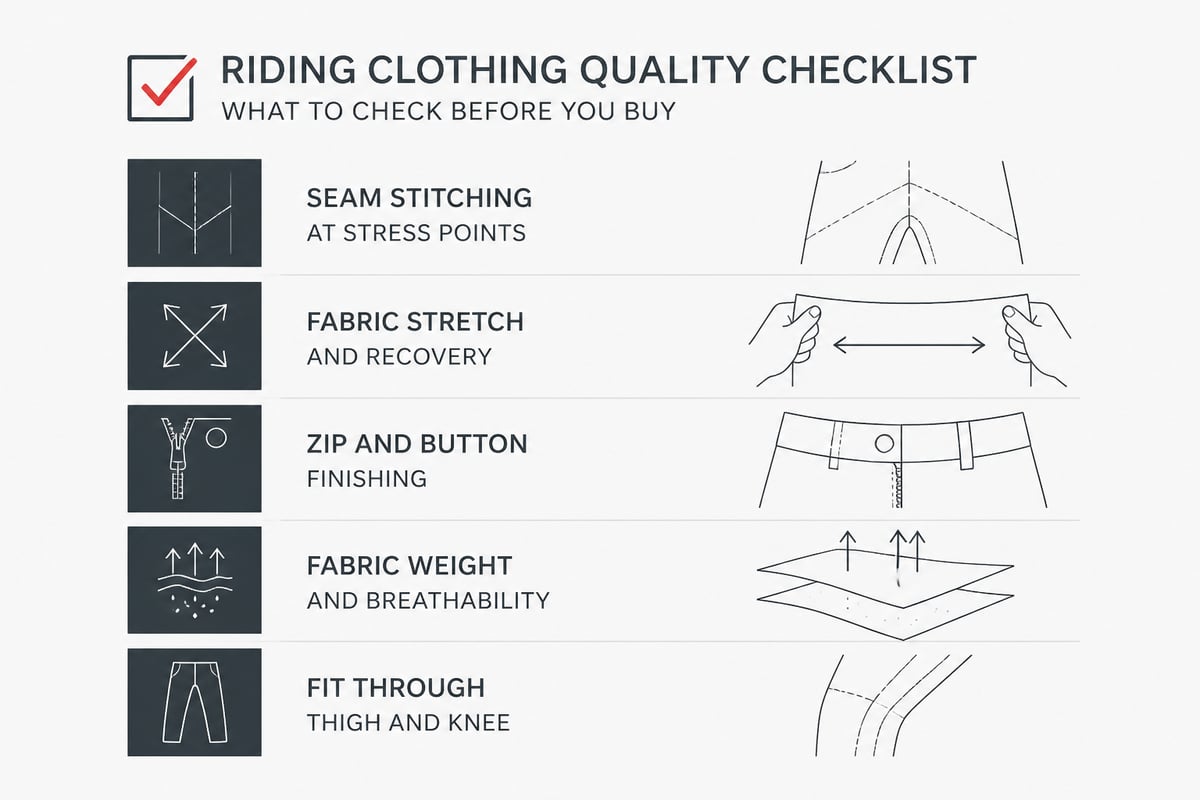
You judge quality by inspecting construction, fabric and fit, because a brand's marketing tells you very little about how a garment will age. Run through the same checks on every piece and the weak ones show themselves quickly.
Start with seams. Look for flat, even stitching at stress points: inner thigh, knee, seat and crotch. Doubled or reinforced seams here are a good sign, and puckering or loose threads are not.
Next, handle the fabric. A decent riding fabric stretches in all directions and returns to shape. If it stays baggy when you pull and release it, it will bag at the knee within weeks.
Then check the finishing. Zips should run smoothly, buttons should sit firmly, and hems should be turned neatly. These small details usually reflect the care taken everywhere else.
Weight matters too. Heavier is not always better. Modern lightweight, breathable fabrics can be tougher than they feel, and they make a real difference through a long summer lesson or a warm ride out.
Why Does Fit Matter More for Men's Riding Clothes?
Fit matters because riding puts your body in positions that ordinary clothing never has to handle, and a poor cut will restrict, rub or ride up. A close, tailored silhouette that still moves with you is the target.
Many riding labels build a women's pattern first and size it up for men. The result is often too much room in the thigh and an awkward rise. A brand designed specifically for men starts from a different set of proportions, with a seat and leg that sit correctly through the saddle.
Well-cut riding pieces are close without being restrictive, and the tailored shapes should allow full movement in and out of the saddle. That balance is the thing to look for in any brand: you should be able to mount, rise, sit deep and dismount without the fabric fighting you.
When trying anything on, move as you would on a horse. Squat, lift a knee high, reach forward. If you feel pulling across the thigh or a tight waistband after thirty seconds in the changing room, it will be worse after an hour in the saddle.
Which Fabrics Hold Up to Regular Riding?
The fabrics that last are stretch blends with good recovery, reinforced in the places that take friction, and finished so they resist pilling and fading. Cotton-rich fabrics can feel natural but may lose shape, while technical blends tend to hold their form better.
Here is what each tends to do:
- Stretch technical blends keep their shape, wick moisture and dry quickly, which suits regular training.
- Cotton-rich twills feel traditional and breathe well, but need a stretch component to avoid sagging.
- Recycled fabrics can match virgin materials for comfort and durability while reducing waste, and many of Gallant Equestrian's fabrics are recycled, lightweight and breathable.
- Waxed or lined outerwear gives weather protection for yard work and winter hacks.
Think about when you actually ride. If you ride year-round, a layered system of breathable base shirts, a mid-layer and a proper jacket will serve you better than one heavy garment. The jackets collection shows how outerwear fits into that approach.
What Do Full Seat Breeches Offer Over Knee Patch?
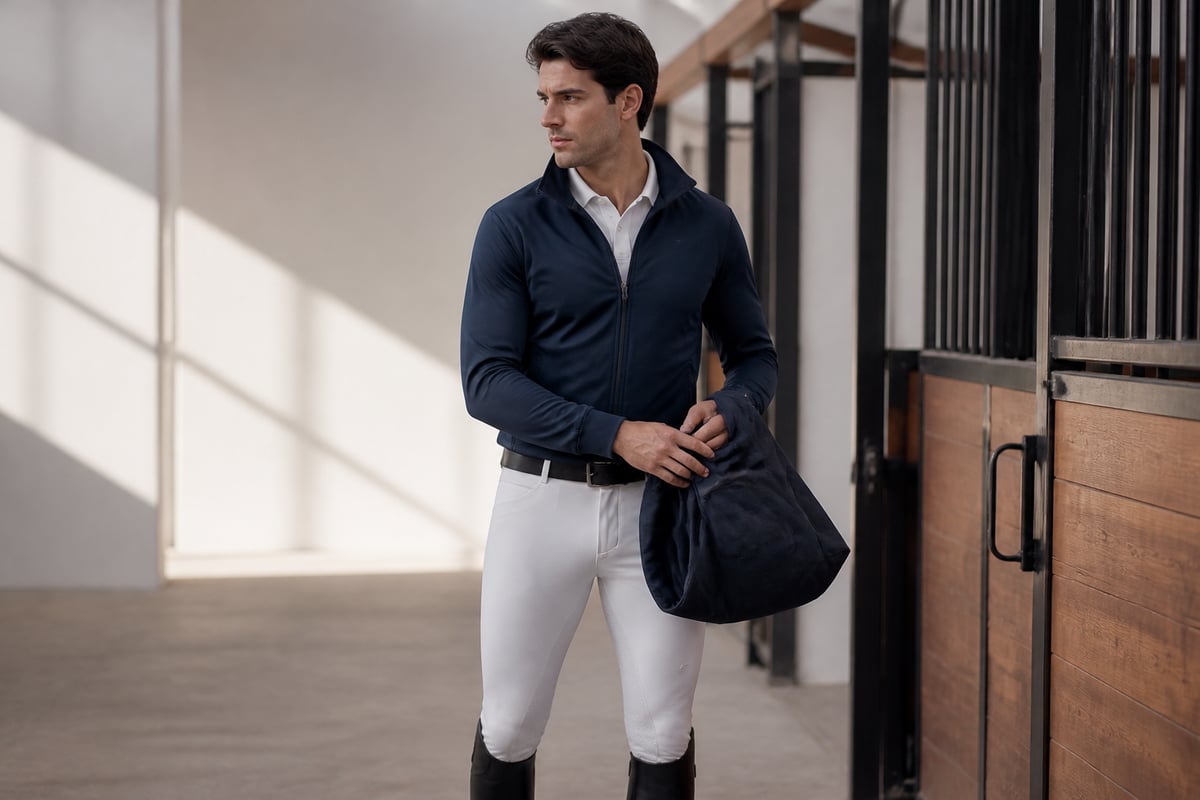
Full seat breeches have grip fabric across the whole seat and inner leg, which holds you more securely in the saddle than knee patches alone. Knee patch styles only add grip at the knee, so they suit riders who want a lighter, more casual feel.
For riders in training, or anyone working on position and balance, full seat grip is a genuine aid. It reduces slipping, especially when riding without much leg pressure, and gives a more planted feel through transitions and jumping.
If you are choosing a first serious pair, the Mens Breeches Full Seat in Navy are a sensible reference point. They are mid-rise and close-fitting, with full-seat grip for stability, and made specifically for male riders. Check the product page for sizing guidance before you order.
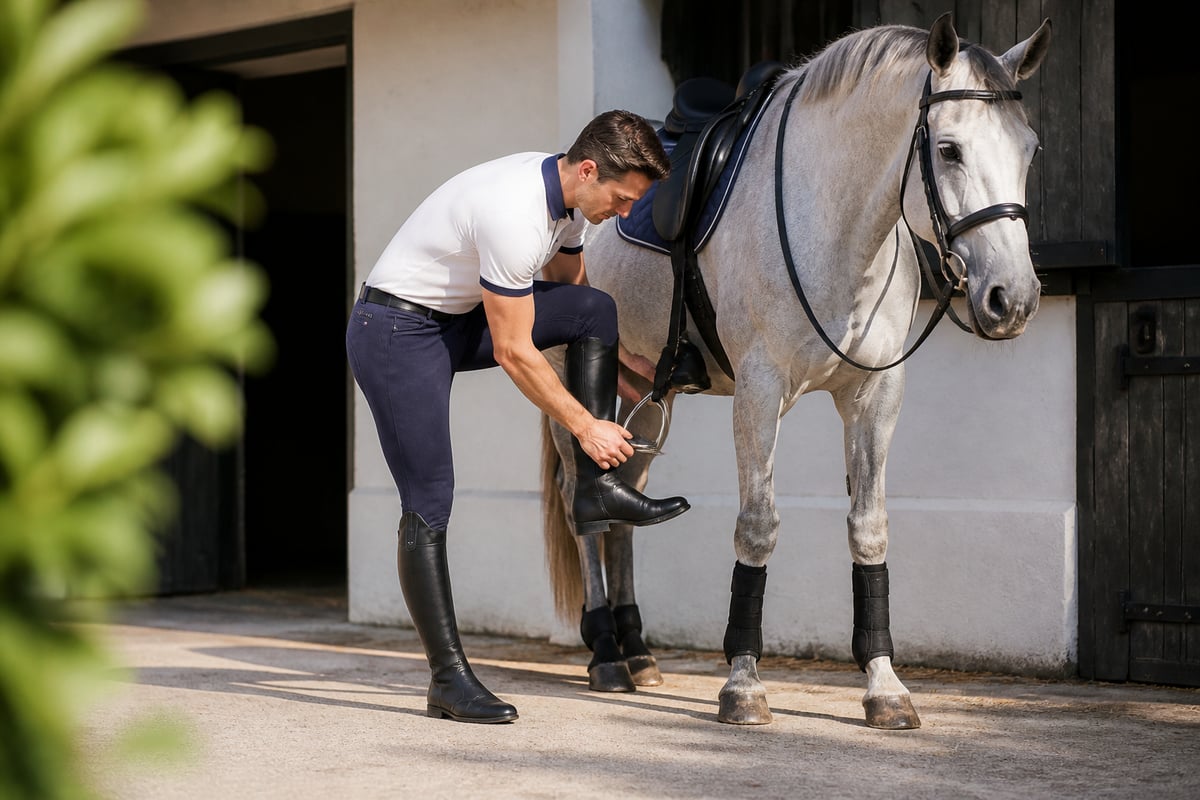
Navy is also a practical colour. It pairs with almost any jacket, hides yard dust better than pale shades, and looks right in the ring, at a clinic or at the pub afterwards. You can compare cuts and styles in the wider breeches collection.
Which Safety Standards Should a Brand Meet?
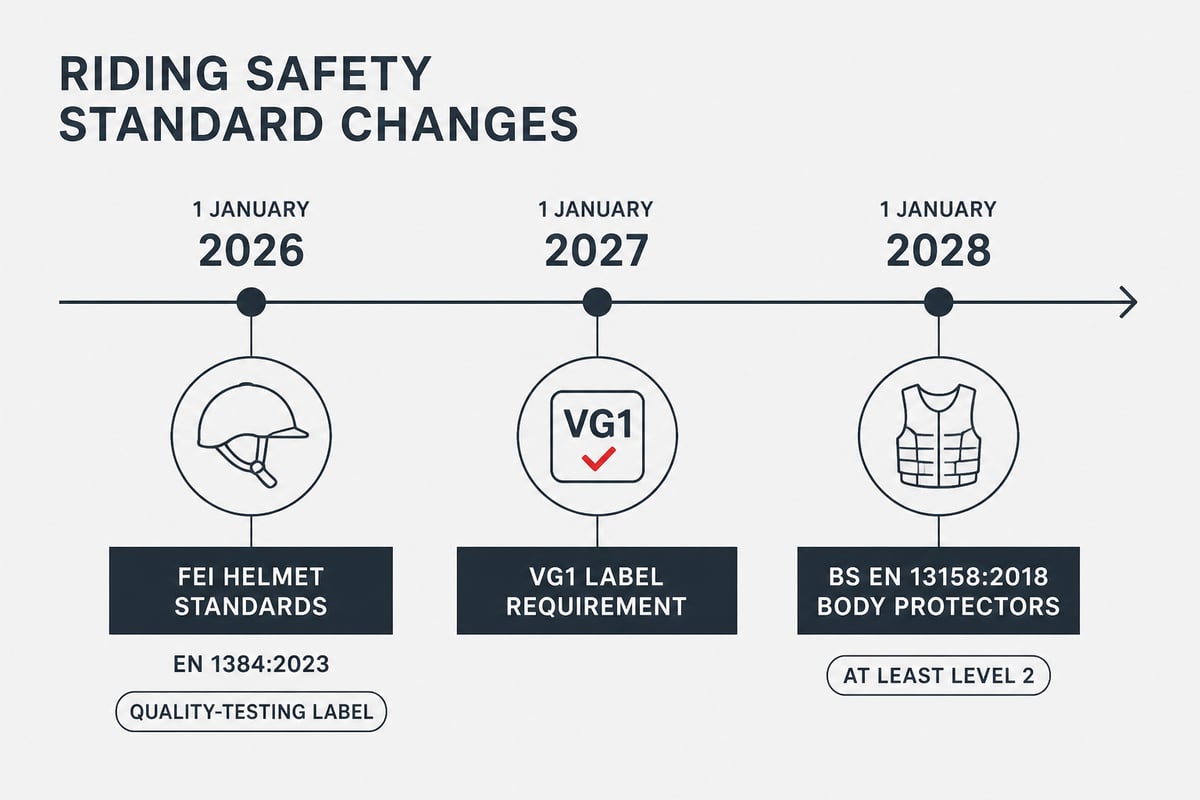
A trustworthy equestrian brand should clearly state which safety standards its protective gear meets, and those standards are changing, so check dates before you buy. This applies to helmets and body protectors above all, where an out-of-date label can leave you ineligible to compete.
For helmets, the FEI's updated standards are scheduled for phased implementation from 1 January 2026 through 1 January 2028, with the previous list valid through 31 December 2025, according to Equestrian Australia. The same body also lists EN 1384:2023 helmets carrying a quality-testing label as approved, and notes that from 1 January 2027, VG1 helmets must also carry a quality-testing label.
Body protectors have moved too. From 17 October 2024 the British Horseracing Authority set its minimum at BS EN 13158:2018, at least Level 2, with evidence of quality testing, taking effect on racecourse property from 1 February 2025 and for riding under a licensed trainer from 1 June 2025, as the BHA announced. BETA says its 2018 standard meets EN 13158, that the 2009 version ceased manufacture at the end of 2018, and that some organisations stopped accepting it from January 2024, per BETA.
The practical lesson is simple. Before buying protective gear second-hand or from old stock, read the label and confirm it matches the rules for the events you ride in. Clothing sits outside these rules, but the habit of checking pays off everywhere.
How Do You Build a Wardrobe That Works Together?
You build a lasting wardrobe by choosing a few well-made pieces in a coordinated palette, so every item pairs with the rest and nothing sits unworn. Fewer, better garments beat a cupboard full of near-misses.
A sound starting set for a man who rides recreationally looks like this:
- One pair of full seat breeches in a neutral such as navy.
- Two or three fitted shirts or polos for lessons and warm days.
- A mid-layer such as a sweatshirt or hoodie for yard work and cool mornings.
- One jacket suited to your climate.
- Boots and a helmet that meet current standards.
Coordination is where a single-label approach helps. A single label's pieces are often designed to work together, which makes mixing and matching easier. The essentials collection is a tidy place to start, and the tees and polo shirts cover the lighter layers.
The other benefit is crossover. Riding clothes that look good in town mean you can go from the stable to lunch without a change. That wears the kit more evenly and gives you better value from every purchase.
What Is Cost Per Ride, and Why Use It?
Cost per ride is the price of a garment divided by the number of times you wear it, and it is the fairest way to compare brands. A cheap pair of breeches that lasts one season often costs more per ride than a better pair that lasts four.
Say you ride three times a week. Over a year that is around 150 rides. A garment that holds its shape and colour for two or three years has earned its price many times over. One that fades or loses grip in months has not.
This way of thinking also steers you away from trend-chasing. Clean lines, sensible colours and honest fabrics stay wearable. Loud branding and novelty cuts date quickly, and you stop reaching for them.
Care extends the figure further. Wash breeches inside out on a cool cycle, skip fabric softener on technical fabrics, and air dry rather than tumble. Small habits like these add months to the life of grip fabric and stretch panels.
How Do You Tell a Strong Brand From a Loud One?
A strong equestrian brand shows its work: clear fabric information, honest sizing, sensible ranges and a consistent point of view. A loud one relies on logos, discounts and sponsorship names to do the persuading.
Ask a few direct questions of any label you are considering:
Does it explain what its garments are made from and why? Does it design for the rider in front of it, or adapt one pattern for everyone? Does it make clear what you will pay on delivery? A brand that is clear about what you will pay on delivery usually treats its customers with the same openness in other areas.
If you want a broader look at how labels compare, Gallant Equestrian's notes on equestrian clothing brands and what goes into building a modern equestrian brand go further into how design and function fit together.
One last test is the simplest. Put the garment on, look in the mirror, and ask whether you would be happy in it at the yard, at a show and at dinner. If the answer is yes to all three, the brand has done its job.
Your next step is easy: check the labels on your current breeches and helmet, note what needs replacing, and write down the fit and fabric you want before you shop. If you would like riding clothes designed in New Zealand for men and built to last, start with the Mens Breeches Full Seat in Navy, then look through the rest of the range at Gallant Equestrian, where you can shop now and build a kit that looks sharp and rides well. Look the Part. Enjoy the Ride.

