

Horse Show Jacket: Fit, Function & Show Ring Style
Feb 23, 2026
The horse show jacket isn't just another piece of kit. It's the cornerstone of your competition wardrobe, the garment that signals you're serious about your craft. Whether you're entering the showjumping arena, presenting in dressage, or competing in eventing, your jacket speaks before you even enter the ring. For men in equestrian sport, finding the right show jacket means balancing tradition with performance, style with function, and personal preference with strict discipline regulations. The right jacket fits impeccably, moves with you in the saddle, and meets competition standards without compromise.
Understanding Show Jacket Fundamentals
The horse show jacket serves multiple purposes beyond mere appearance. It demonstrates respect for tradition, signals professionalism to judges, and creates a unified silhouette that emphasizes your position and communication with your horse. Modern show jackets incorporate technical fabrics that wick moisture, stretch across shoulders, and recover their shape after hours in the saddle.
Traditional wool remains a popular choice for its natural breathability and elegant drape, though contemporary blends incorporating elastane or spandex offer superior freedom of movement. The weight of your jacket matters significantly. Lightweight fabrics suit warm climates and summer competitions, whilst heavier materials provide structure and warmth during cooler months.
Your jacket's construction affects both appearance and durability. Single-vent backs offer classic styling, whilst double vents provide better saddle coverage and prevent bunching. Two-button and three-button closures each create different visual lines, with three-button styles typically offering a more formal appearance. The length of your jacket should cover your seat without excess fabric pooling behind you.
Discipline-Specific Requirements
Different equestrian disciplines maintain distinct dress codes, and understanding these regulations prevents costly mistakes before competition day. Showjumping attire guidelines specify acceptable jacket colours and styles, with navy, black, grey, and dark green typically permitted at affiliated competitions.
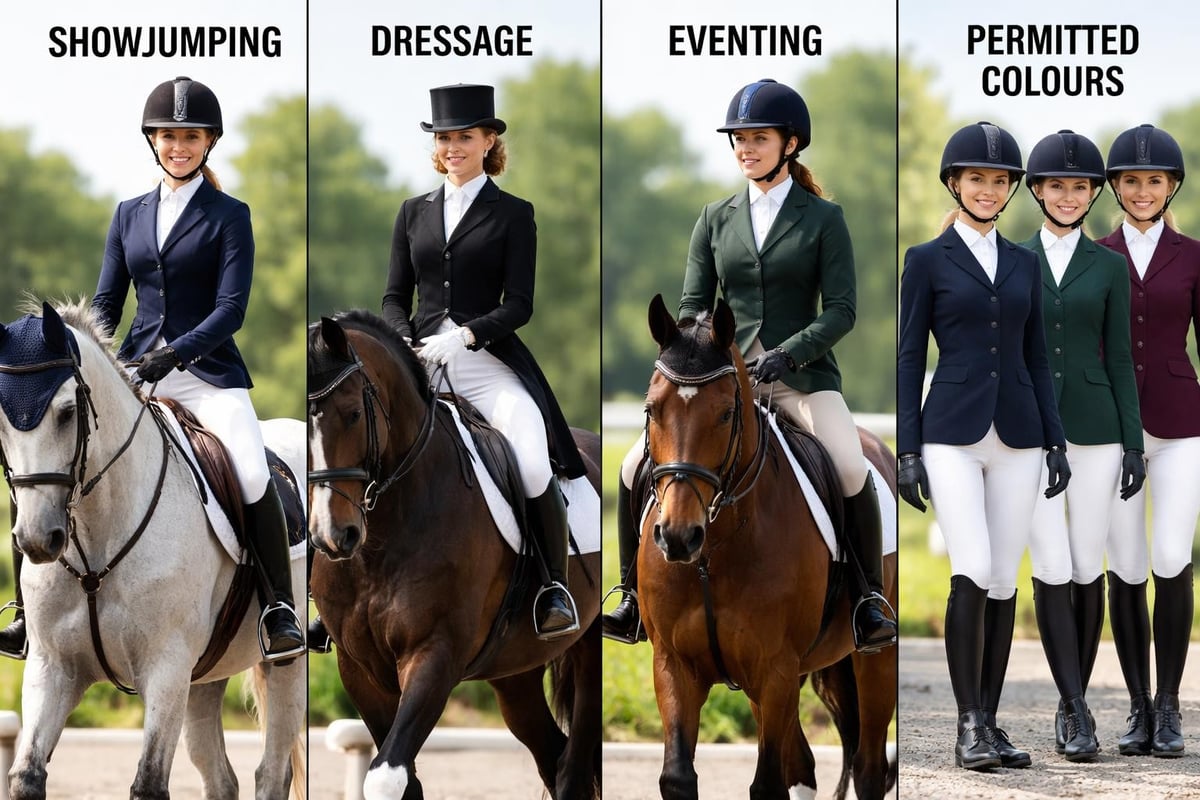
Dressage maintains stricter formality, particularly at higher levels where shadbelly or tailcoat styles become mandatory. At preliminary through second level, a standard dressage coat in black, navy, or dark grey suffices. Third level and above often require tails for optimal presentation, though rules vary by organizing body and specific competition.
Eventing competitors navigate different requirements across phases. Dressage phase typically mirrors pure dressage standards, showjumping allows more flexibility with colour and style, and cross-country permits safety vests worn over your jacket or in place of traditional show attire. The USEF Eventing Rulebook provides comprehensive guidance on acceptable combinations for each phase.
Hunter and showing classes embrace conservative styling with emphasis on tradition. Correct dress for showing typically requires navy, black, or grey jackets paired with tan or buff breeches, demonstrating classical presentation that emphasizes horse rather than rider.
Selecting Your Competition Jacket
Finding the right horse show jacket begins with honest assessment of your build and riding position. Your jacket should fit comfortably across shoulders without pulling when you round forward into riding position. Sleeve length matters tremendously, with cuffs ideally sitting at your wrist bone, showing approximately half an inch of shirt cuff beneath.
The collar should sit flat against your shirt collar without gaping or bunching. When buttoned, your jacket should close smoothly across your chest with enough room to layer a shirt and tie underneath without straining buttons. Remember that you'll be wearing this garment whilst actively riding, so static fitting room comfort doesn't guarantee performance in the saddle.
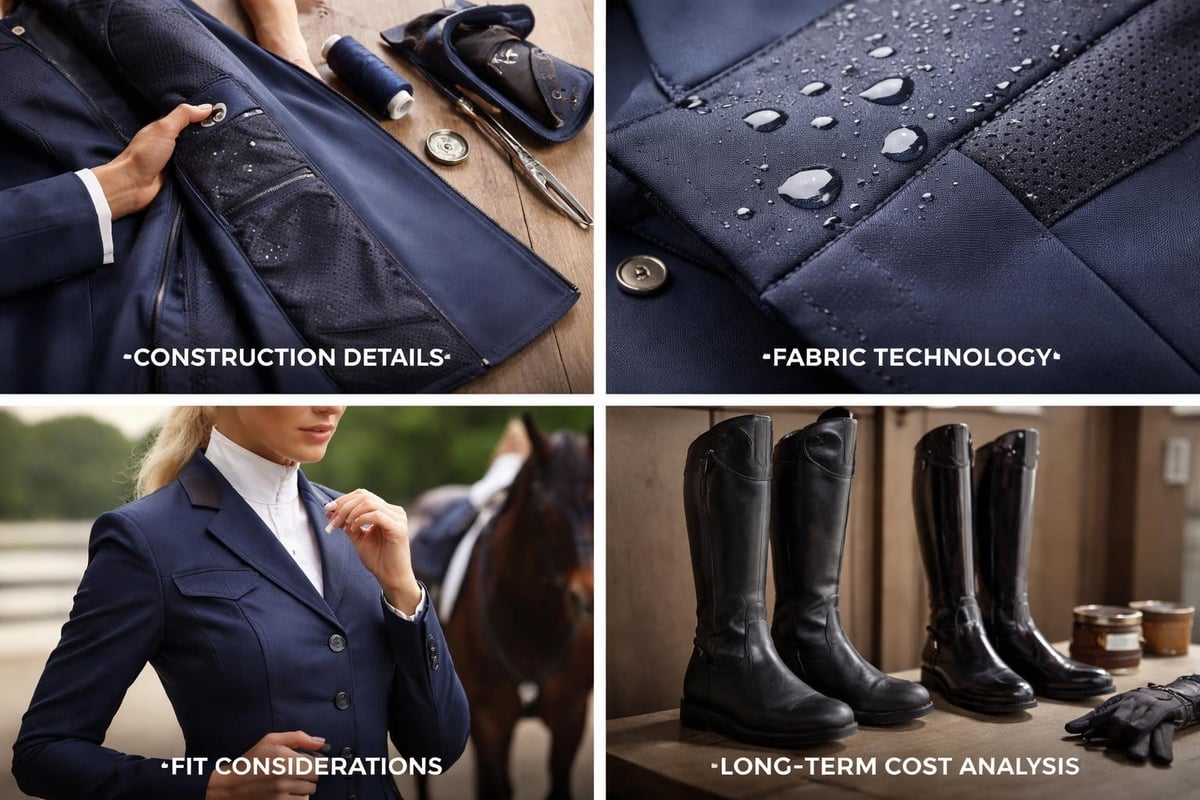
Quality show jackets feature reinforced stress points at shoulders and vents, ensuring durability through multiple seasons. Interior finishing reveals construction quality, with bound seams and clean lining installation indicating careful manufacturing. Pockets should lie flat without adding bulk, and buttons should be securely attached with reinforced stitching.
Fabric Technology and Performance
Modern equestrian apparel incorporates significant technical innovation whilst maintaining traditional appearance. Stretch fabrics transform how a horse show jacket performs under saddle, allowing natural movement across shoulders and back without the restriction of pure wool construction. Four-way stretch proves particularly valuable, accommodating both reaching forward and rotating through your torso.
Moisture management technology embedded in fabric keeps you comfortable during warm weather competitions or high-intensity rounds. These treatments wick perspiration away from your body whilst maintaining the jacket's professional appearance from the outside. Quick-drying properties mean your jacket recovers faster between classes, essential during multi-day competitions.
Temperature regulation extends beyond simple breathability. Modern fabrics often incorporate phase-change materials or specialized weaves that adapt to ambient conditions, keeping you cooler in summer heat and providing insulation during winter competitions. This versatility particularly benefits riders who compete year-round across varying climates.
Colour and Style Considerations
Whilst competition regulations limit colour choices, understanding which shades complement your features and your horse's colour creates a more polished presentation. Navy suits most riders and horses, offering classic elegance that photographs well under any lighting. Black provides the most formal appearance though can appear harsh on some skin tones.
Grey jackets offer sophisticated alternatives, ranging from charcoal to lighter tones depending on discipline regulations. Dark green occasionally appears in showjumping, though remains less common and requires verification against specific competition rules before purchase. Always confirm colour acceptability for your intended disciplines before investing in anything beyond standard navy or black.
Pinstripes add subtle visual interest whilst maintaining professional appearance, with narrow stripes typically accepted where plain colours are permitted. However, always verify with competition organizers before debuting patterned jackets, as interpretations vary. Conservative choices eliminate guesswork and ensure you'll never face questions from stewards or judges.
Fit Details That Matter
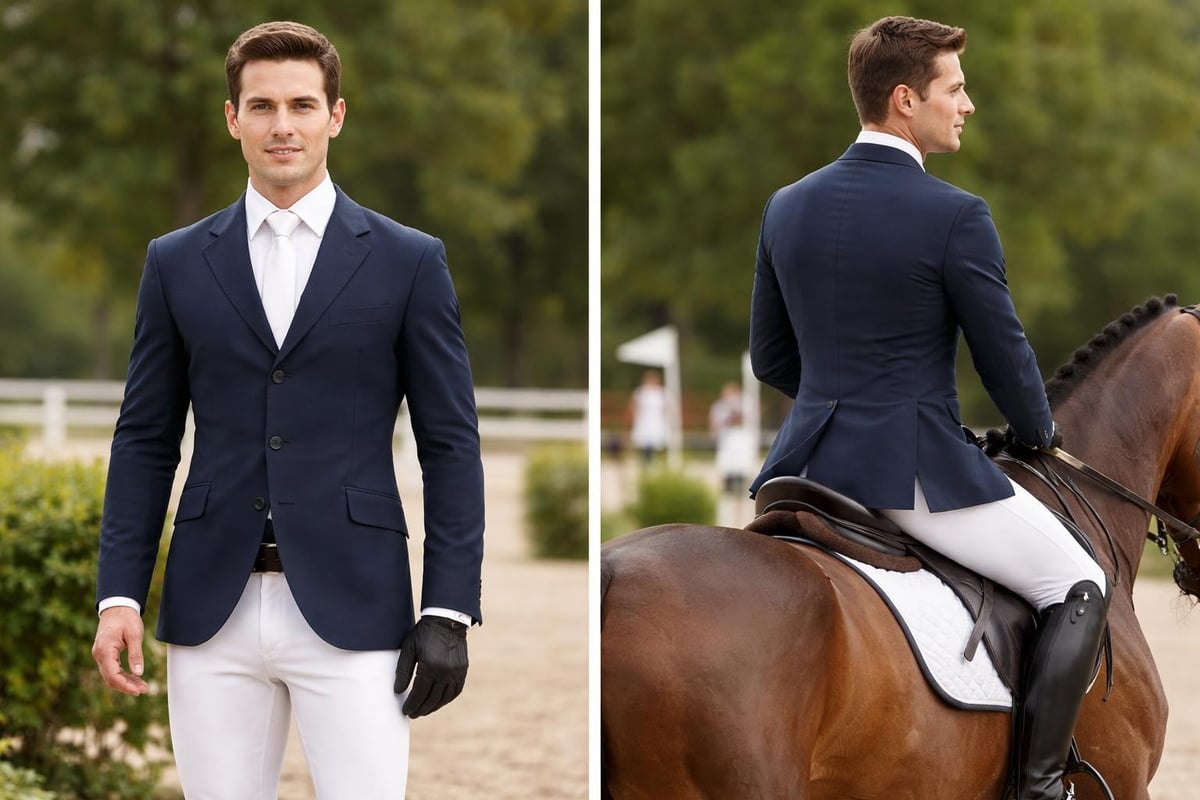
Proper jacket fit transforms your appearance and confidence in the competition ring. Your shoulders bear the foundation of good fit, with seams sitting precisely at your shoulder points rather than dropping down your arms or pulling across your back. This placement ensures proper drape through the body whilst maintaining freedom of movement.
Armholes should allow comfortable arm rotation without excess fabric bunching under your arms. Too-large armholes create visual bulk and restrict precise movement, whilst too-small openings bind uncomfortably and limit your ability to follow your horse's motion. The balance between security and mobility defines quality construction.
Your jacket's length affects both aesthetics and function. The hem should cover your seat when mounted, sitting approximately at mid-hip when standing. Excessively long jackets bunch awkwardly in the saddle and create sloppy appearance, whilst too-short options expose your shirt and compromise the streamlined silhouette judges expect.
Tailoring and Adjustments
Even quality off-the-rack show jackets often benefit from professional tailoring. A skilled tailor familiar with equestrian requirements can refine sleeve length, adjust side seams for better torso fit, and modify vent height to suit your body proportions. These alterations transform an adequate jacket into one that appears custom-made.
Sleeve adjustments prove particularly valuable, ensuring your cuffs sit properly at your wrists without excess fabric gathering at your forearms. This detail affects both appearance and comfort, preventing sleeves from riding up during active riding or bunching uncomfortably inside glove cuffs.
Waist suppression through side seam adjustment creates a tailored appearance without restricting movement. Your tailor should understand how equestrian jackets must accommodate forward-leaning riding position, adjusting fit accordingly rather than treating your show jacket like standard business wear.
Care and Maintenance
Your horse show jacket represents significant investment and deserves proper care to maximize its lifespan and maintain peak appearance. Regular maintenance prevents minor issues becoming major problems whilst keeping your jacket competition-ready between events.
Professional cleaning remains the safest option for quality show jackets, particularly those containing wool or requiring specialized care. Dry cleaners experienced with equestrian apparel understand the unique requirements of competition clothing, using appropriate solvents and pressing techniques that preserve shape and fabric integrity. Establish a relationship with a cleaner you trust, as inconsistent service can damage expensive garments.
Between professional cleanings, spot treatment addresses minor soiling without full processing. Gentle brushing removes surface dust and horse hair, whilst specialized fabric fresheners eliminate odors without water contact. Steam treatment refreshes fabric and releases minor wrinkles, though exercise caution to avoid water marks on sensitive materials.
Storage significantly impacts your jacket's longevity. Wide, padded hangers maintain shoulder shape and prevent stress points from developing. Breathable garment bags protect against dust whilst allowing air circulation, preventing musty odors and fabric degradation. Cedar accessories deter moths in natural fiber jackets without chemical treatments that might affect fabric.
Competition Day Preparation
Proper preparation ensures your horse show jacket presents flawlessly when you enter the ring. Steam or press your jacket the evening before competition, allowing any moisture to fully evaporate overnight. Morning pressing risks leaving dampness that appears as dark patches under arena lighting.
Inspect buttons, ensuring they're secure and testing functionality before you're dressed and pressed for time. Replace any loose buttons immediately, carrying spares in your tack trunk for emergency repairs. Check vents for loose stitching or tears that might worsen under stress, addressing issues before they become obvious.
Pack your jacket properly for transport, using a quality garment bag that hangs in your vehicle rather than folding into luggage. This prevents creasing that's difficult to remove trackside. If you must fold your jacket, place tissue paper at fold lines and smooth carefully to minimize damage.
Consider bringing a backup jacket to multi-day competitions, particularly for outdoor events where weather might affect your primary option. This redundancy prevents wardrobe emergencies from derailing your competition plans, providing peace of mind that you'll present professionally regardless of circumstances.
Building Your Show Wardrobe
Your horse show jacket forms the foundation of a complete competition wardrobe that requires coordination across multiple pieces. A well-considered approach builds versatility whilst maintaining cohesive styling that presents confidently across various competitions.
Start with one impeccably fitted navy or black jacket that meets regulations for your primary discipline. This foundation piece should represent your best fit and highest quality, serving as your go-to option for important competitions. Once this cornerstone is established, additional jackets in different weights or colours can expand your options without compromising core functionality.
Coordinate your jacket with appropriate show shirts, selecting styles that complement rather than compete with your jacket's cut and colour. White remains the standard for most disciplines, though pale blue occasionally appears in less formal contexts. Your shirt should fit properly at the collar without gaping or binding, with sufficient length to remain tucked during active riding.
The right breeches complete your presentation, with colour choices guided by discipline requirements. Tan or buff suit most hunters and showing classes, whilst white proves essential for upper-level dressage. Navy or grey breeches pair appropriately with darker jackets in showjumping, creating versatile combinations that work across multiple classes.
Investment and Value
Quality horse show jackets represent significant financial commitment, though viewing this as investment rather than expense shifts perspective productively. A well-made jacket that fits properly and receives appropriate care will serve you through multiple seasons, making cost-per-wear quite reasonable.
Price ranges vary dramatically, from entry-level options around £200 to premium constructions exceeding £800. Higher prices typically reflect superior fabric quality, more sophisticated construction techniques, and better attention to detail in finishing. However, expensive doesn't automatically mean appropriate for your needs. Focus on fit, function, and compliance with your discipline's requirements before considering brand prestige.
Second-hand markets offer opportunities for budget-conscious riders, particularly when starting out or requiring temporary solutions. Consignment shops specializing in equestrian apparel often stock quality jackets at substantial discounts, though fit becomes more crucial when alteration costs are factored. Ensure any pre-owned jacket shows minimal wear, particularly at stress points like elbows and vents.
Modern Alternatives and Innovation
Traditional show jackets continue evolving as manufacturers incorporate new materials and construction techniques whilst maintaining classical appearance. These innovations address long-standing complaints about comfort and performance without abandoning the aesthetic standards competition requires.
Softshell technology brings weather resistance to show jackets without sacrificing breathability or professional appearance. These hybrid constructions work particularly well for outdoor competitions where weather conditions fluctuate, providing protection against light rain and wind whilst maintaining appropriate formality. Some disciplines accept these alternatives, though always verify before competition.
Air mesh panels strategically placed along the back and under arms enhance ventilation during warm weather competitions. These insertions remain invisible from outside yet significantly improve comfort during summer events. The technology proves particularly valuable in climates where high temperatures create genuine health concerns for riders in traditional wool jackets.
Sustainable fabrics enter the equestrian market as environmental consciousness grows across all industries. Recycled polyester, organic cotton blends, and innovative bio-based materials now appear in quality show jackets, offering eco-friendly options without compromising performance or appearance. These choices particularly resonate with riders seeking to align their purchasing decisions with broader values.
Matching Jackets to Venues
Your show jacket selection should consider typical competition environments alongside regulatory requirements. Indoor arenas with climate control allow lighter weight options that prioritize comfort and freedom of movement. These jackets often incorporate more stretch and breathability since temperature management proves less challenging.
Outdoor competitions demand different considerations, particularly regarding weather unpredictability. Slightly heavier fabrics provide warmth during cool mornings whilst remaining comfortable as temperatures rise. Water-resistant treatments add practical value though shouldn't compromise breathability or create shiny, synthetic appearance that looks out of place.
Championship venues often feature elevated judging standards, making your most refined jacket the appropriate choice regardless of weather or convenience. These occasions justify pulling your best piece from the wardrobe, ensuring you present at your absolute peak when it matters most. Reserve your premium jacket for these moments whilst having serviceable alternatives for regular competitions.
Regional Variations and Traditions
Equestrian dress codes vary globally, with regional traditions influencing acceptable styles and colours beyond standard regulatory frameworks. Understanding these variations prevents awkward situations and demonstrates cultural awareness that judges and fellow competitors appreciate.
British traditions lean heavily toward conservative styling, with navy and black dominating most disciplines. Subtle details like branded buttons or specific collar styles carry significance within particular competitive circles. European competitions often mirror these standards though may prove slightly more flexible regarding colour variations in showjumping contexts.
Australian and New Zealand equestrian communities maintain their own interpretation of correct dress, often blending British traditions with practical adaptations for warmer climates. Australian showing guidelines provide detailed specifications that may differ from Northern Hemisphere standards, making research essential before international competition.
North American competitors encounter somewhat more relaxed attitudes toward colour and style variations, particularly in showjumping where individual expression receives greater acceptance. However, dressage and hunter disciplines maintain conservative standards similar to British traditions. Regional variations within the United States add further complexity, with traditions differing between East Coast, West Coast, and Southern competitions.
Seasonal Considerations
Your horse show jacket requirements shift significantly across seasons, affecting both fabric choice and styling decisions. Winter competitions demand heavier materials that provide genuine warmth without bulk that restricts movement. Wool blends excel in cold conditions, offering natural insulation whilst maintaining professional drape.
Summer heat creates opposite challenges, where lightweight fabrics and strategic ventilation prevent overheating whilst maintaining required formality. Consider jackets specifically designed for warm weather, incorporating modern moisture-wicking technology and mesh panels that enhance air circulation. Some riders maintain separate summer and winter wardrobes, whilst others invest in mid-weight versatile options that serve across most conditions.
Spring and autumn competitions require adaptable solutions, as temperatures fluctuate dramatically throughout competition days. Layering becomes crucial, with appropriate show shirts and base layers providing adjustable warmth beneath your jacket. This approach offers flexibility without requiring multiple jacket weights for transitional seasons.
Indoor versus outdoor considerations extend beyond simple temperature, affecting moisture management and weather protection requirements. Outdoor spring competitions often feature unexpected rain, making water-resistant treatments or backup jackets prudent. Indoor winter events may feature overheated arenas where lighter jackets prevent discomfort despite cold outdoor temperatures.
Your competition schedule should inform jacket purchases, prioritizing weights and features that align with when you most frequently compete. Riders focusing on summer circuits gain little from heavy winter jackets, whilst year-round competitors benefit from building comprehensive options across multiple weights and weather capabilities.
The horse show jacket remains central to competitive success, combining tradition with modern performance in ways that serve riders across all disciplines. Understanding fit fundamentals, respecting discipline requirements, and investing in quality pieces that suit your specific needs creates confidence that translates directly into ring performance.
Your horse show jacket represents more than competition clothing; it's the foundation of your professional presentation and a reflection of your commitment to the sport. Finding pieces that fit impeccably, perform flawlessly, and meet discipline standards without compromise makes every moment in the saddle more confident. Gallant Equestrian designs performance-driven jackets and complete competition wardrobes for men who take their riding seriously, combining New Zealand craftsmanship with technical innovation that works as hard as you do. Look the Part. Enjoy the Ride.

