

Horse Showmanship Outfits: The Essential Guide for Men
Mar 31, 2026
Showmanship is where your presentation matters as much as your horsemanship. Whether you're competing in your first halter class or refining your technique after years in the ring, what you wear speaks volumes before the judge even glances at your horse. Horse showmanship outfits blend tradition with performance, demanding both respect for the discipline and attention to practical detail. For men stepping into the show pen, getting your attire right is about more than following rules. It's about confidence, movement, and presenting yourself as competently as you present your horse.
Understanding Showmanship Attire Standards
Showmanship at halter is judged primarily on the exhibitor's ability to present the horse, making your appearance a critical component of success. Showmanship judging criteria emphasize exhibitor poise, grooming, and pattern execution equally. Your outfit needs to support your performance without distracting from your horse.
Traditional Foundations
Western showmanship follows established guidelines that have evolved over decades. Most associations require long-sleeved shirts, tailored trousers, boots, and a hat. These aren't arbitrary rules. They establish a baseline of professionalism that keeps the focus where it belongs: on your ability to handle and showcase your horse.
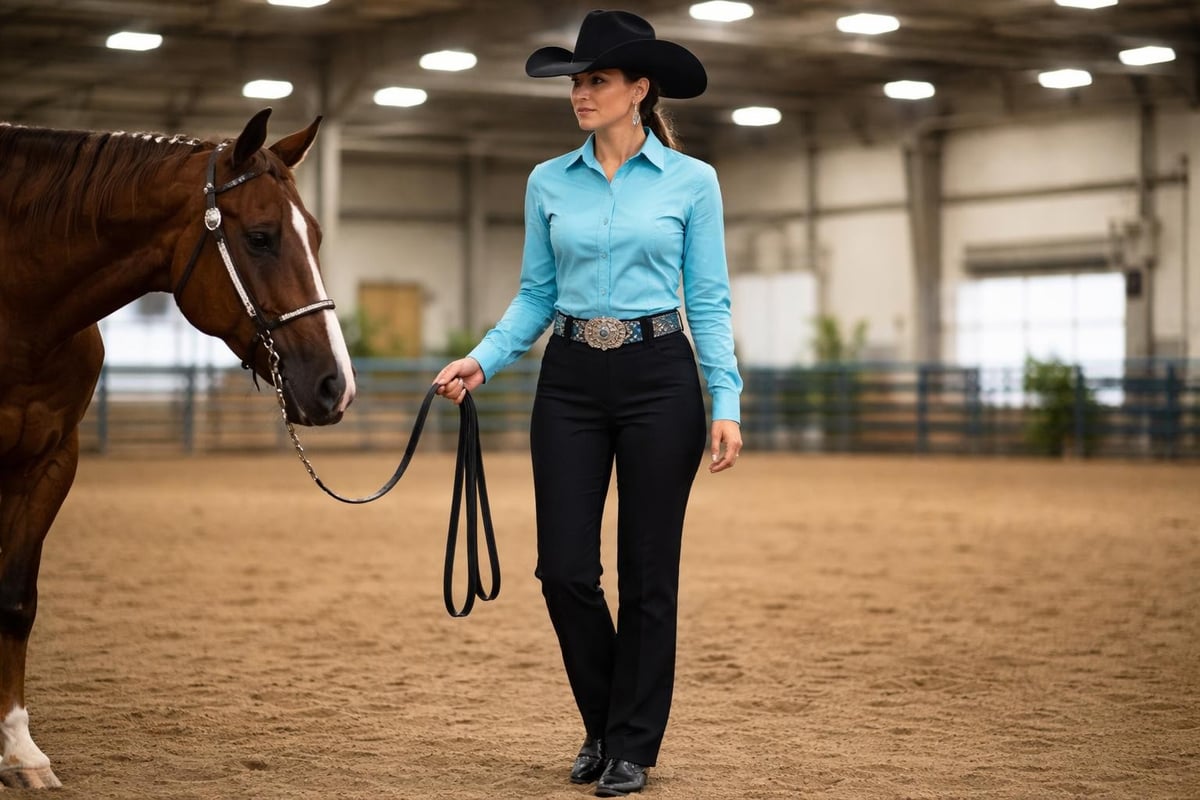
The Montana State University guidelines outline specific grooming and attire standards that ensure exhibitors present their horses effectively. Clean, well-fitted clothing demonstrates the same attention to detail you've invested in your horse's preparation. Judges notice when an exhibitor's turnout matches the horse's conditioning.
Modern Adaptations
While core standards remain constant, horse showmanship outfits for men have evolved in cut, fabric technology, and subtle styling details. Performance fabrics that maintain a traditional appearance while offering stretch and moisture management have become accepted in many circuits. The key is balancing modern function with classic presentation.
Your clothing choices should enhance movement rather than restrict it. You'll be pivoting, backing, and setting up your horse repeatedly. Fabrics that move with you while maintaining a crisp appearance throughout the class give you an edge over stiffer, traditional materials that lose their shape after the first pattern.
Selecting Your Show Shirt
The show shirt forms the foundation of your outfit. Long sleeves are non-negotiable in most showmanship classes, but within that requirement, you have choices that affect both comfort and appearance.
Fabric Considerations
Cotton remains popular for its breathability and traditional look, but blended fabrics offer advantages. Modern performance blends wick moisture while maintaining that pressed appearance through multiple classes. In summer shows, this difference matters significantly. You want to look composed even when the arena temperature rises.
Fit through the shoulders and chest allows unrestricted arm movement when you're cueing your horse or setting up for inspection. Too tight and you'll telegraph tension. Too loose and you'll appear sloppy. The competition wear collection at Gallant Equestrian demonstrates how proper tailoring serves performance without sacrificing style.
Collar and Cuff Details
Collar styles vary by region and preference, but they should stay neat throughout your pattern. Button-down collars prevent flapping, while structured collars maintain their shape. Cuffs should fit close enough to stay in place without bunching over gloves.
Neutral colors dominate showmanship because they don't distract. White, cream, light blue, and subtle patterns work well. Save bold colors for disciplines where flash is rewarded. Showmanship rewards refined presentation.
Choosing Performance Trousers
Your trousers need to walk the line between formal appearance and athletic function. Standard dress pants lack the durability and flexibility required for the physical demands of showing.
Cut and Construction
A straight or slightly tapered leg creates clean lines without excess fabric pooling at your boots. The rise should be comfortable when you're bending to adjust your horse's stance or reaching to set a hoof. Many exhibitors prefer a mid-rise that stays in place during movement.
Western showmanship traditionally calls for dress slacks rather than denim. The breeches collection offers alternatives that bridge riding functionality with show ring presentation. Look for reinforced construction in high-stress areas and fabrics that resist wrinkles.
Color Selection
Navy, black, tan, and grey remain the most popular trouser colors in showmanship. They coordinate easily with most shirt colors and don't show arena dust as readily as lighter shades. Darker colors also create a slimming silhouette that presents well from the judge's perspective.
Consider how your trousers will look against your horse's coat. Contrast helps you stand out as a distinct element of the presentation rather than blending into your horse's body.
Footwear That Performs
Boots serve dual purposes in showmanship. They complete your professional appearance and provide the stable footing you need for precise movements and quick pivots.
Boot Style Options
Western showmanship typically requires cowboy boots, though some circuits permit dress boots with a western heel. The heel height affects your balance and movement. A standard riding heel offers stability without throwing your posture forward.
Fit is critical. Boots that slip at the heel or pinch at the toe will distract you during your pattern. Break them in thoroughly before competition day. You'll be on your feet for extended periods, often on hard arena footing.
Maintenance Matters
Polished boots signal attention to detail. Scuffs and worn heels suggest you haven't prepared as thoroughly as you might claim. Regular conditioning keeps leather supple and prevents cracking. This maintenance also extends boot life, making quality footwear a worthwhile investment.
Essential Accessories
The right accessories complete your outfit without overwhelming it. Showmanship rewards subtlety over statement pieces.
Hats and Head Coverage
A western hat is standard in most showmanship classes. The style should suit your face shape and stay secure during movement. A chin strap, while not traditional, can prevent mishaps in windy conditions. Some exhibitors prefer felt hats for their structure and professional appearance, while others choose straw for breathability in warm weather.
Hat fit affects your entire presentation. Too loose and it becomes a distraction. Too tight and it creates discomfort that shows in your expression. Try multiple styles before settling on your show hat.
Belts and Details
A quality leather belt in a conservative style completes your waistline. Oversized buckles draw attention away from your horse. Save those for other classes. In showmanship, a modest buckle or a simple leather belt without ornate hardware maintains the focus where it belongs.
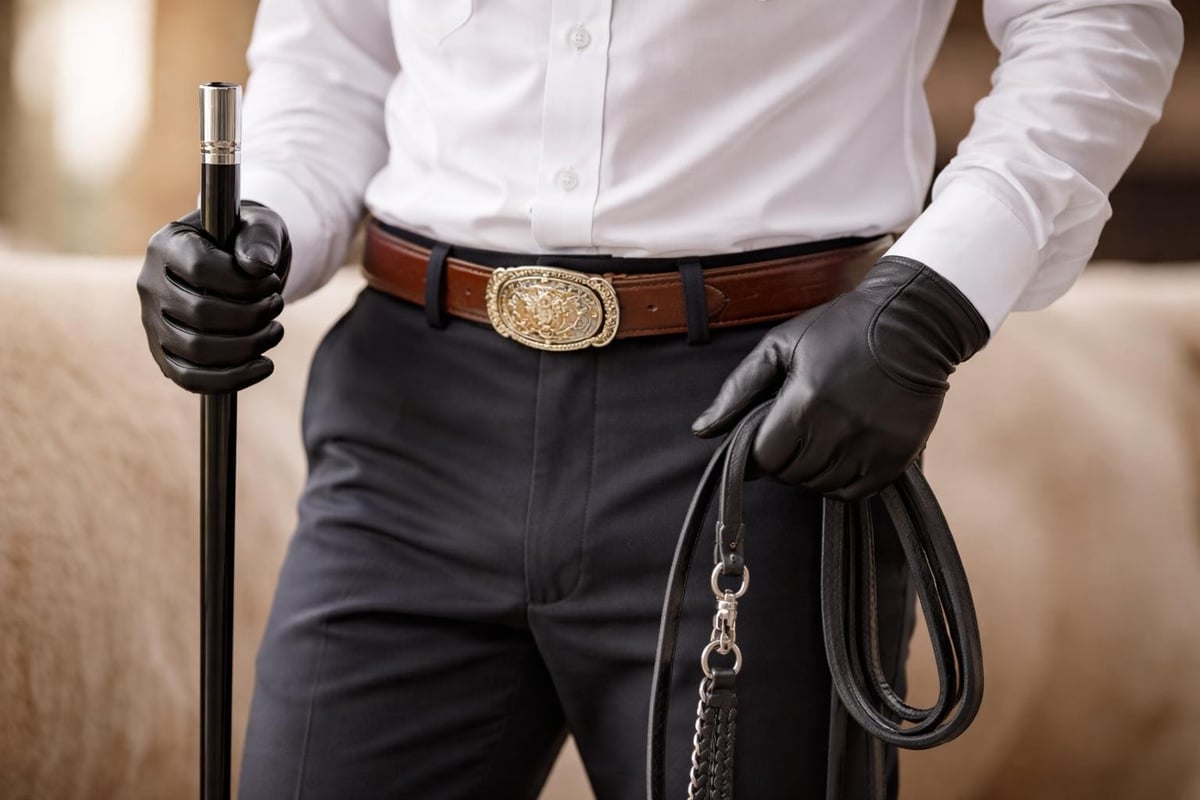
Gloves are optional but recommended. They provide better grip on the lead and create a finished appearance. Choose gloves that match your color scheme and fit snugly without restricting finger movement.
Building a Show Wardrobe
Creating a versatile show wardrobe requires strategic planning. You need enough variety to appear fresh across multiple shows without investing in excessive pieces.
Core Components
Start with two quality shirts in neutral colors that coordinate with multiple trouser options. Three pairs of trousers in complementary shades give you flexibility. One pair of well-maintained boots serves most exhibitors adequately, though having a backup pair prevents last-minute crises.
Understanding proper fit ensures your investment pays dividends. Ill-fitting clothing looks unprofessional regardless of quality. Taking accurate measurements before purchasing eliminates guesswork and reduces returns.
Seasonal Adjustments
Summer shows demand lightweight fabrics and lighter colors that reflect heat. Winter circuits in indoor arenas allow for slightly heavier materials. The jackets collection provides options for varying temperatures that maintain show ring appropriateness.
Layering strategies help manage temperature fluctuations. A quality vest under your shirt provides warmth without bulk. Removable layers let you adapt to changing conditions throughout the day.
Fit and Movement Testing
Your outfit needs to perform under actual showing conditions. Standing still in front of a mirror doesn't reveal how your clothing behaves during a pattern.
Pre-Show Practice
Run through your showmanship pattern in full show attire several times before competition. This identifies potential issues: shirts that come untucked, trousers that restrict your stride, or boots that cause blisters after extended wear.
Showmanship fundamentals include precise footwork and smooth transitions. Your clothing should facilitate these movements, not hinder them. Pay attention to how fabrics respond when you pivot, back, or set up your horse.
Adjustment Opportunities
Minor alterations can transform adequate clothing into excellent show attire. Hemming trousers to the precise length prevents tripping and creates clean lines. Taking in a shirt through the body improves appearance without restricting movement. These adjustments are worth the modest investment.
Maintenance and Care
Horse showmanship outfits require proper care to maintain their appearance through multiple competitions. Arena dust, sweat, and general wear take their toll on even quality garments.
Cleaning Protocols
Follow manufacturer care instructions religiously. Performance fabrics often require specific washing temperatures and gentle cycles. Over-washing degrades fabrics prematurely, but showing in visibly soiled clothing is unacceptable. Balance frequency with necessity.
Steam pressing before each class maintains crisp lines. Pack a portable steamer for multi-day shows. Wrinkles communicate carelessness, undermining your presentation before you enter the ring.
Storage Solutions
Proper storage prevents damage between shows. Hang shirts and trousers rather than folding them. Use boot trees to maintain shape. Store hats in protective boxes to prevent crushing. These simple practices extend the life of your show wardrobe significantly.
Coordinating with Your Horse
Your outfit should complement your horse's appearance without clashing or disappearing. Showmanship and grooming work together to create a cohesive presentation.
Color Harmony
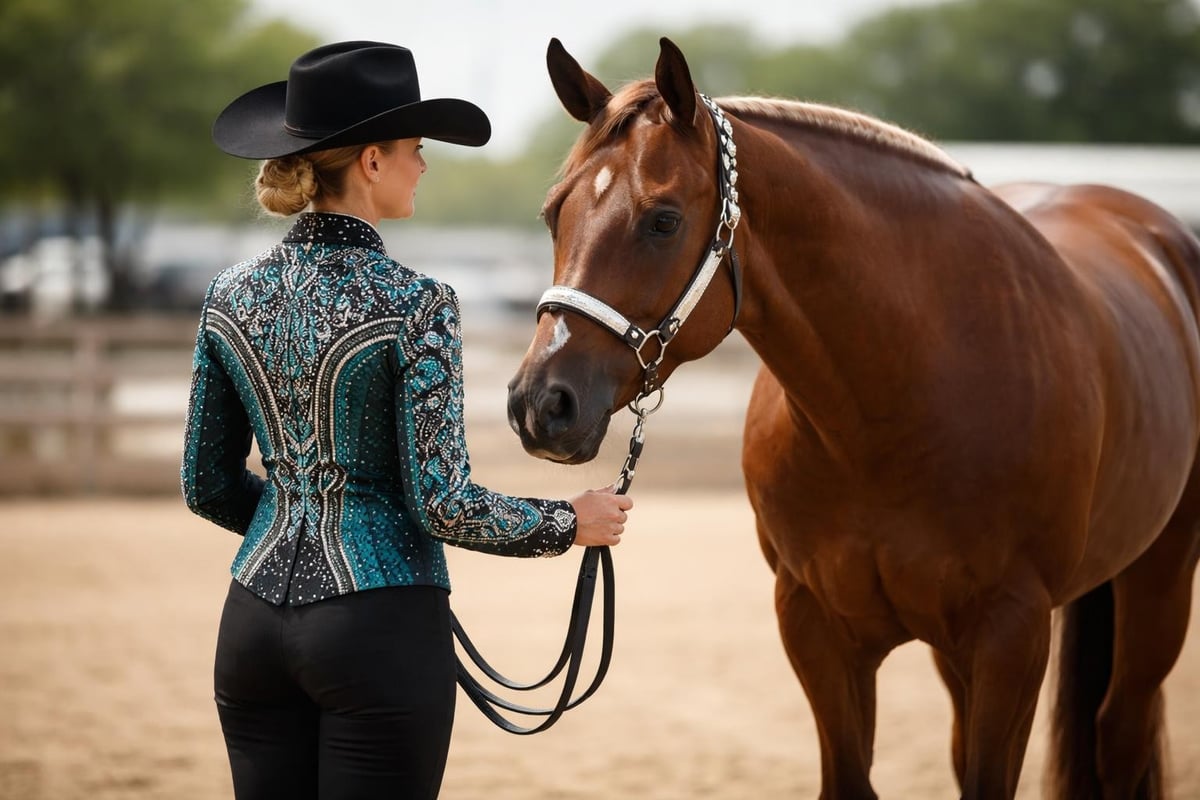
Consider your horse's coat color when selecting your wardrobe. Light shirts pop against dark horses. Darker colors prevent washing out against lighter coats. Avoid wearing the exact color of your horse's coat, as this creates a blended effect that reduces visual impact.
Your halter and lead should coordinate with your outfit and suit your horse. Proper halter fit enhances your horse's head and neck, while the wrong fit detracts from their appearance. Your outfit should support, not compete with, these presentation elements.
Overall Balance
Step back and evaluate your entire presentation as a package. Your horse, tack, and attire should create a unified impression of preparation and professionalism. Mismatched elements, even quality ones, undermine this cohesion.
Regional and Association Variations
Showmanship standards vary slightly across associations and regions. What's expected in one circuit might differ in another.
Research Requirements
Check your specific association's rulebook before purchasing show attire. The Nebraska 4-H guidelines illustrate how youth organizations approach showmanship standards, while open shows may have different expectations. Some organizations specify acceptable colors, while others focus on general professionalism.
When competing in multiple circuits, find overlap in requirements. Building a wardrobe that meets various standards reduces the need for circuit-specific pieces.
Staying Current
Showmanship fashion evolves gradually. Current trends in riding apparel influence show ring aesthetics, though changes happen more conservatively in showmanship than in other disciplines. Stay aware of shifts without chasing every trend.
Classic, well-fitted horse showmanship outfits never look dated. Quality pieces in neutral colors remain appropriate for years. This makes investing in superior construction and materials financially sensible over time.
Weather Considerations
Outdoor shows present weather challenges that affect clothing choices. Your outfit must maintain its professional appearance regardless of conditions.
Rain Strategies
Waterproof jackets designed for equestrian use keep you dry without looking like you're prepared for mountaineering. The key is finding outerwear that fits over your show attire without adding bulk. Some exhibitors carry their show jacket to the ring and put it on just before entering.
Rain changes arena footing, affecting your movement and balance. Choose boots with adequate tread for wet conditions. Slipping during your pattern destroys your presentation faster than any wardrobe malfunction.
Heat Management
Summer shows test your ability to look composed while managing heat. Light-colored, performance fabrics make a measurable difference in comfort. Strategic placement of cooling towels and shade before your class helps you enter the ring looking fresh.
Sweat stains undermine even the best outfit. Undershirts in moisture-wicking fabrics protect your show shirt. Choose neutral colors that won't show through lighter shirts.
Investment and Budget Planning
Quality horse showmanship outfits represent a significant investment. Approaching purchases strategically maximizes value.
Priority Purchases
Start with the foundations: trousers and shirts that fit properly and perform well. Boots are another area where quality matters tremendously. A well-constructed pair of boots lasts years with proper care, while cheaper alternatives fall apart and provide poor support.
Understanding dress codes across disciplines helps you identify pieces that serve multiple purposes. Clothing that works for showmanship and other classes increases cost-effectiveness.
Long-Term Value
Calculate cost per wear rather than purchase price. A premium shirt that looks excellent through fifty classes costs less per use than a bargain shirt that fades after ten. This perspective justifies higher initial investments in core pieces.
Horse showmanship outfits combine tradition, performance, and personal presentation into a package that enhances your ability to showcase your horse effectively. From selecting the right fabrics to coordinating colors with your horse, every detail contributes to your success in the show pen. Gallant Equestrian provides performance-driven menswear designed specifically for riders who demand functionality without compromising style, whether you're competing at halter or transitioning from the arena to everyday life. Look the Part. Enjoy the Ride.

