

Equestrian Polo Shirt Guide: Performance & Style for Riders
Sep 27, 2026
The equestrian polo shirt occupies a unique position in a rider's wardrobe. It's not just another shirt. It's the piece you reach for when you need performance and polish in equal measure, whether you're schooling at home, competing, or meeting clients after a morning ride. Understanding what separates a proper riding polo from a standard casual version will transform how you approach comfort and presentation in the saddle. Let's explore what makes an equestrian polo shirt essential kit for riders who take both function and appearance seriously.
What Defines an Equestrian Polo Shirt
An equestrian polo shirt differs fundamentally from standard casual polos through deliberate design choices rooted in riding mechanics. The construction addresses specific challenges: extended time in the saddle, friction points, temperature regulation during physical exertion, and the need to maintain a sharp appearance through demanding conditions.
Technical riding polos incorporate purpose-built fabrics that manage moisture far more effectively than cotton. Research on knitted fabrics with moisture-management properties demonstrates how advanced textile engineering creates garments that wick perspiration away from skin while maintaining breathability. This matters enormously when you're working a horse through lateral movements or spending hours training in varying weather.
The cut of an equestrian-specific polo differs notably from off-the-rack versions. Longer backs prevent riding up when you're in two-point or reaching forward. Articulated sleeves follow natural arm movement without binding at the shoulder. Flat-lock seams eliminate the chafing that develops over long rides. These aren't minor details-they're the difference between comfort and distraction.
Fabric Technology That Works
Modern technical fabrics in riding clothing have evolved significantly beyond basic polyester blends. Today's performance polos employ multi-layer knit constructions that create air channels against the skin, pulling moisture away whilst allowing heat to escape through the outer layer.
Four-way stretch fabrics move with your body rather than restricting it. This elasticity proves crucial when mounting, dismounting, or adjusting position during transitions. The fabric recovers its shape rather than sagging or bagging after repeated movements, maintaining a clean silhouette throughout the day.
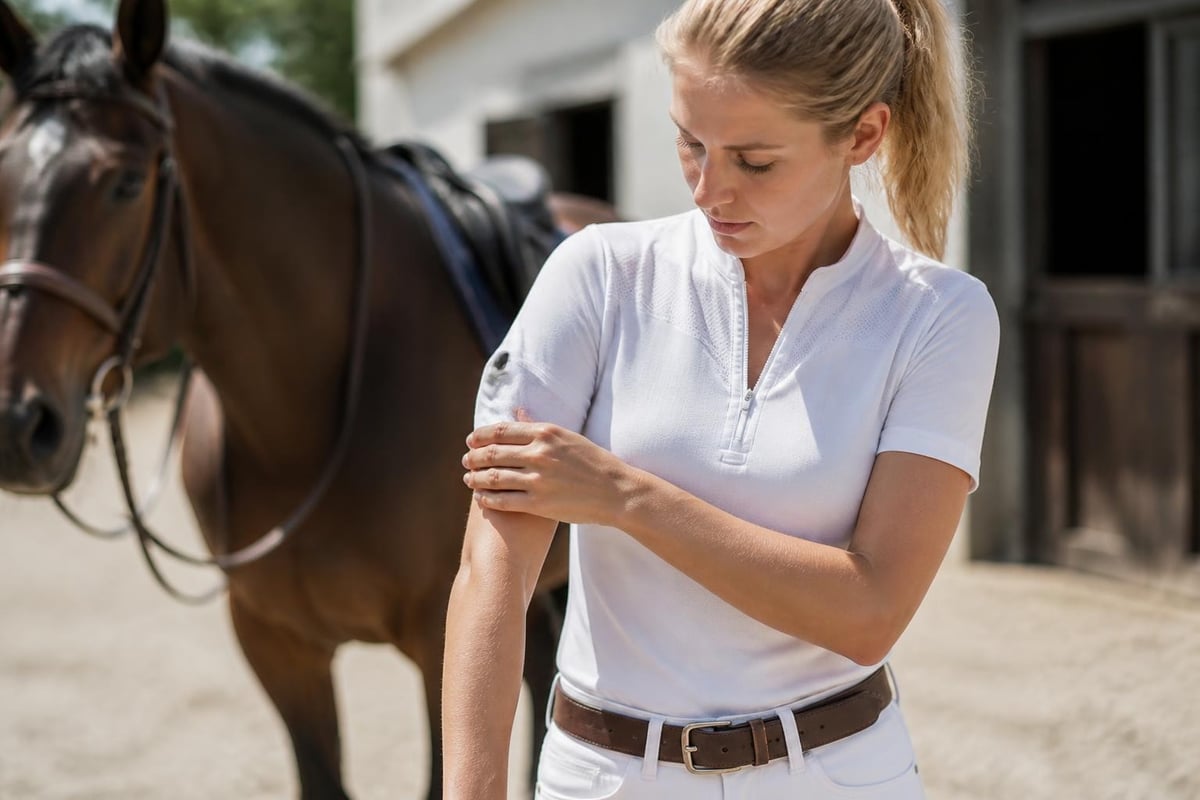
UV protection ratings matter more than many riders realize. Hours in outdoor arenas expose you to cumulative sun damage. Quality equestrian polo shirts incorporate UPF-rated fabrics that block harmful rays without adding bulk or reducing breathability. Look for ratings of UPF 50+ for maximum protection during summer months.
Competition Standards and Collar Considerations
Competition contexts require understanding specific dress code requirements. The US Equestrian rulebook outlines acceptable attire across disciplines, and polo-style shirts have gained acceptance in many contexts where technical performance shirts are permitted, particularly in lower-level competitions and schooling shows.
Traditional dressage competitions maintain stricter standards, though the USDF Visual Guide to Dressage Attire clarifies that clean, conservative polo-style technical shirts may be acceptable in certain training-level classes. Always verify specific show requirements, but the trend moves toward recognizing performance-focused garments that maintain professional appearance.
Table: Equestrian Polo Shirt Features Across Disciplines
| Discipline | Collar Requirements | Fabric Preferences | Color Standards |
|---|---|---|---|
| Show Jumping | Soft collar acceptable | Moisture-wicking essential | Conservative or team colors |
| Eventing | Collar mandatory | Quick-dry, durable | Neutral tones, some patterns allowed |
| Dressage | Traditional collar preferred | Structured technical fabrics | White, cream, very light colors |
| Polo | Collar essential | Maximum breathability | Team colors, bold acceptable |
| Everyday Schooling | Flexible | Comfort-focused | Any color |
The collar itself serves functional purposes beyond tradition. A proper collar frames the face, maintains professional appearance, and-when designed correctly-doesn't chafe or irritate during extended wear. The best equestrian polo shirts feature soft, stay-flat collars that hold shape without stiffening or curling after washing.
Fit Fundamentals for Riders
Fit determines whether an equestrian polo shirt enhances or hinders your riding. A shirt that fits beautifully when standing often reveals problems once you're in the saddle. The riding position-hips back, chest forward, arms extended-creates entirely different fabric tension than walking or standing.
Test fit by adopting riding position. Raise your arms forward as though holding reins. Twist your torso as you would when looking behind during a turn. The shirt should move with you without pulling tight across the shoulders or gaping at the sides. If you feel restriction or bunching, size up or try a different cut.
Length matters more than casual wear demands. A polo that hits right at your belt line when standing will ride up significantly when you're mounted, potentially exposing your lower back and creating discomfort. Look for styles specifically labeled as "riding fit" or "extended back," which typically add 5-8 centimeters to rear hem length whilst maintaining proportion in front.
Sleeve length affects both comfort and appearance. Too short, and they ride up your biceps, creating binding. Too long, and excess fabric bunches under jacket sleeves or catches on equipment. The ideal sleeve ends mid-bicep, sitting securely without elastic or tight bands that restrict circulation during extended sessions.
Sizing Across Body Types
| Build Type | Key Fit Considerations | Common Issues | Solutions |
|---|---|---|---|
| Athletic/Broad | Shoulder room, sleeve width | Tight chest, binding arms | Try "athletic cut" or size up, tailor waist |
| Tall/Lean | Adequate length, sleeve proportion | Short torso, stubby sleeves | Specifically seek "tall" sizing options |
| Standard | Balance across measurements | Generic fit may gap | Look for brands offering multiple fit styles |
| Stockier | Comfort without tightness | Pulling across middle | Relaxed fit with stretch panels |
The tees and polo shirts collection at specialized equestrian outfitters typically offers more precise fit options than general sporting goods retailers because the patterns account for riding-specific movements and positions.
Colour and Style Versatility
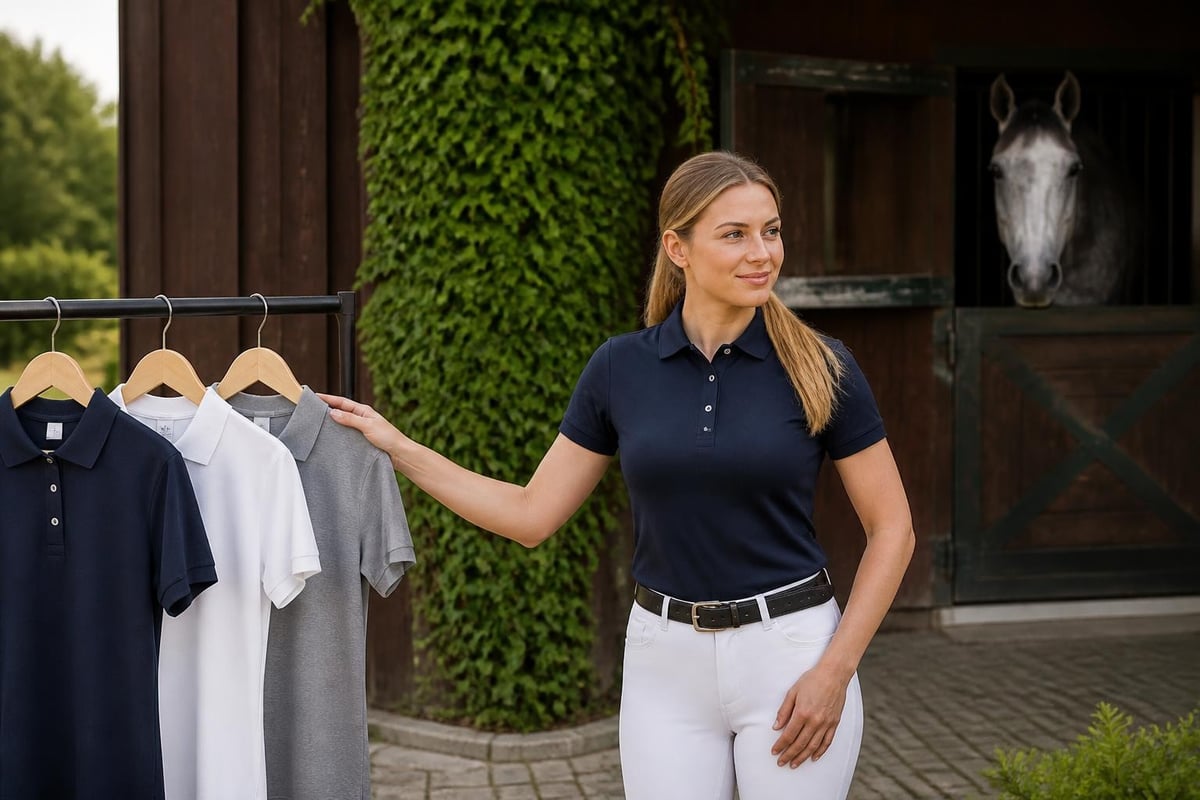
Choosing colours for your equestrian polo shirt wardrobe depends partly on discipline requirements and partly on personal preference, but strategic selection creates maximum versatility. Navy, white, and grey form a foundational trio that works across all contexts-schooling, competing, and casual wear after riding.
Navy proves particularly practical for everyday riding. It doesn't show dirt or sweat marks as readily as lighter colours, maintaining a fresh appearance through demanding sessions. White remains the standard for formal dressage competitions and creates a crisp, professional look for any occasion. Grey splits the difference, offering sophistication whilst proving more forgiving than pure white.
Beyond basics, consider how colours coordinate with your existing gear. If you predominantly ride in navy or beige breeches, most polo colours work well. If you favor competition wear in specific team colors or own jackets in particular shades, select polos that complement rather than clash.
Patterns require careful consideration. Subtle textures, thin stripes, or small geometric designs can add visual interest whilst maintaining professional appearance. Avoid large graphics, prominent logos, or busy patterns that overwhelm your silhouette or distract from riding form during competitions.
Care and Maintenance for Longevity
Quality equestrian polo shirts represent meaningful investment, and proper care extends their functional life considerably. Technical fabrics require different treatment than casual cotton polos to maintain performance properties and structural integrity.
Always wash technical riding polos in cool water. Hot temperatures can break down moisture-wicking treatments and elastic fibers, reducing effectiveness and causing premature wear. Use mild detergent without fabric softeners-softeners coat fibers and inhibit moisture management, defeating the purpose of technical fabrics.
Turn shirts inside out before washing to protect outer surfaces from abrasion. Close buttons or fastenings to prevent snagging. Wash with similar colors and fabrics rather than mixing with heavy items like towels or denim that create excessive friction.
Air drying preserves fabric integrity better than machine drying. If you must use a dryer, select the lowest heat setting and remove shirts while slightly damp to finish air-drying. High heat degrades elastic fibers, shrinks garments, and can damage specialized treatments applied to performance fabrics.
Storage and Organization
Proper storage between rides prevents unnecessary wear and keeps your wardrobe ready. Hanging polo shirts maintains their shape better than folding, particularly around collars and shoulders. Use proper hangers-thin wire hangers create dimples and stress points, whilst padded or shaped hangers support garment structure.
Store clean, completely dry shirts in well-ventilated spaces. Dampness encourages mildew, which damages fabrics and creates odors that are difficult to remove from technical materials. If you've worn a shirt but it's not ready for washing, hang it separately to air out before returning it to your wardrobe.
Rotate your collection regularly rather than wearing the same one or two favorites repeatedly. This distributes wear across multiple garments, extending the overall life of your entire wardrobe. You'll also maintain fresher appearance and reduce the frequency of laundering individual pieces.
Layering Systems for Variable Conditions
An equestrian polo shirt functions as a foundational layer in smart riding systems that adapt to changing weather and intensity levels. Understanding how to build around your polo creates comfort across seasons and disciplines.
During cooler months, a quality polo serves as an excellent base layer beneath jackets or quarter-zips. The collar provides finished appearance when jacket zippers are partially open, whilst technical fabrics continue managing moisture even under additional layers. This proves particularly valuable during winter training when you start cold but warm up considerably during work.
In warmer conditions, your polo functions as an outer layer, making fabric choice critical. Look for shirts with ventilation panels or mesh sections in high-heat areas-typically back shoulders and underarms. These zones target where heat buildup occurs most during riding, providing escape routes for excess warmth without compromising coverage or appearance.
Consider protection when layering. Whilst polo shirts aren't safety equipment, understanding how they interact with body protectors matters. The ASTM F2681 standard governs protective vests used in racing and eventing. Your polo should fit smoothly underneath without bunching, and ideally wick moisture away from skin even when wearing protective gear during cross-country or training sessions.
Temperature Management Table
| Conditions | Base Layer | Mid Layer | Outer Layer | Polo Role |
|---|---|---|---|---|
| Hot (25°C+) | - | - | Polo only | Primary garment, maximum breathability |
| Mild (15-25°C) | - | Polo | Light jacket optional | Core piece, remove jacket as needed |
| Cool (5-15°C) | Long-sleeve base | Polo | Insulated jacket | Mid-layer, moisture management |
| Cold (below 5°C) | Thermal base | Polo or skip | Winter riding jacket | Optional mid-layer if needed |
Shopping Considerations and Investment Value
Purchasing equestrian polo shirts requires different evaluation than buying casual wear. Quality indicators include fabric weight and density, construction methods, and design details that specifically address riding demands rather than general athletic use.
Examine seam construction carefully. Flat-lock seams lie completely flat against skin, preventing the raised ridges that cause chafing during hours in the saddle. Reinforced stress points at shoulders and underarms indicate quality construction that withstands repeated movement. Poor construction shows up quickly in riding contexts-seams pull apart, hems twist, and collars warp after minimal wear.
Price correlates reasonably with quality in equestrian-specific garments, though not perfectly. A £75 polo from a dedicated riding brand typically outperforms a £40 option from general sporting goods retailers because the design addresses riding-specific needs. However, diminishing returns appear above certain price points-£150 polos rarely offer twice the performance of well-chosen £75 options.
Consider complete wardrobe needs rather than individual purchases. Many brands, including Gallant Equestrian, offer coordinated collections where polos, breeches, and outer layers work together systematically. This approach ensures color coordination, compatible fit across pieces, and cohesive appearance whether you're mixing items or wearing complete outfits.
When evaluating value, calculate cost per wear rather than upfront price. A quality equestrian polo shirt worn twice weekly for two years provides roughly 200 wears. At £70, that's 35 pence per wear-excellent value for a technical garment that maintains appearance and performance throughout its life. Compare this to a £30 polo that deteriorates after six months and requires replacement, costing more over time whilst providing inferior performance.
Transitioning from Stable to Street
One hallmark of excellent equestrian polo shirts is their ability to look appropriate beyond the stable yard. The best designs incorporate subtle riding-specific features that don't announce themselves in non-equestrian contexts, allowing seamless transition from training to lunch or errands.
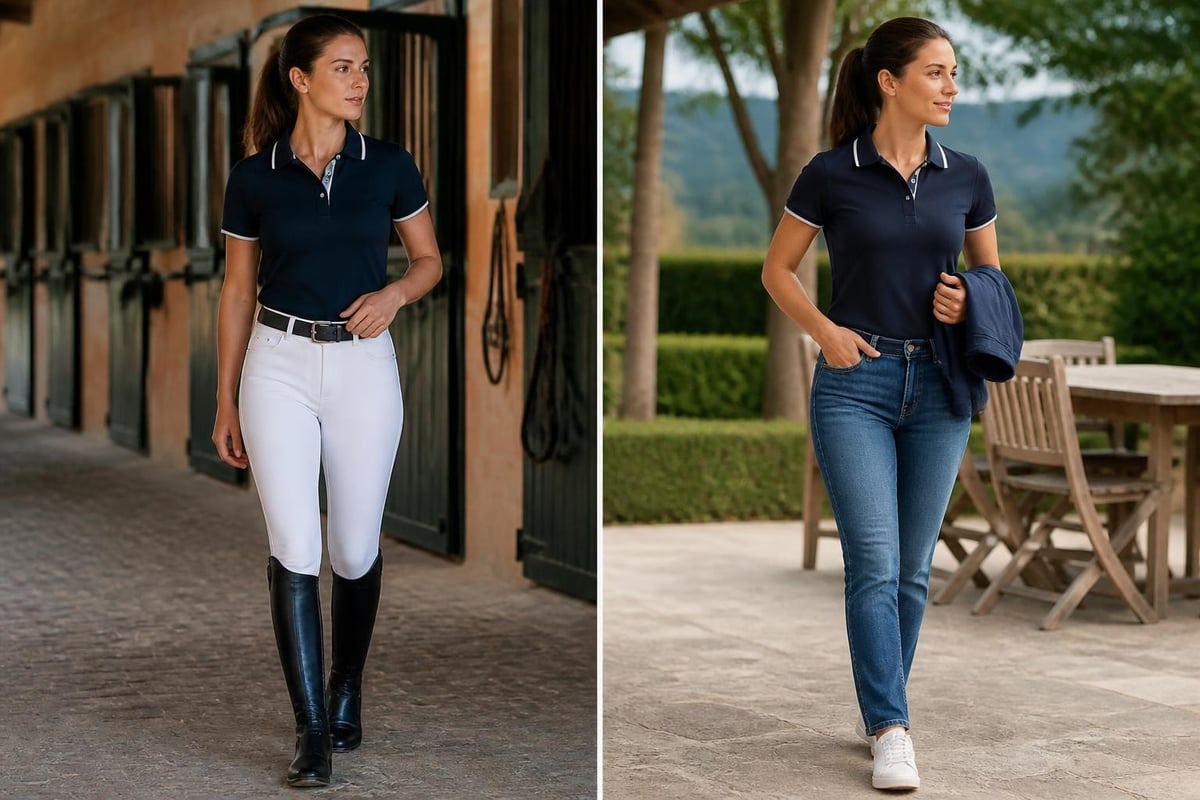
Clean, classic styling works everywhere. Avoid overtly "horsey" graphics or obvious riding motifs if you want maximum versatility. A beautifully cut polo in navy or grey, with subtle branding, reads as sophisticated casual wear whether you've come from the barn or the office.
Keep a fresh polo in your vehicle or locker for post-ride changes. Even technical fabrics benefit from a quick swap after intensive riding sessions. This simple practice ensures you always present well, maintaining professional appearance without fuss. Pair with dark jeans or chinos, and nobody would know you've spent the morning training young horses.
The transition works both directions-appropriate casual wear often functions well for riding. Quality polos purchased for general wear, if they incorporate stretch fabrics and reasonable length, can serve riding duties adequately. However, purpose-built equestrian versions will always outperform in comfort, durability, and technical performance during actual riding.
Building Your Core Collection
A functional equestrian polo shirt wardrobe doesn't require extensive inventory. Strategic selection of colors and styles creates maximum flexibility across riding contexts, competition requirements, and casual wear opportunities.
Start with three foundational pieces: one navy, one white, one neutral grey or similar. This trio handles nearly every situation-navy for everyday schooling, white for formal competitions, grey as versatile alternative that hides wear better than white whilst remaining competition-appropriate in most disciplines.
Add two accent colors based on personal preference and existing wardrobe. If you ride in navy breeches predominantly, lighter polo colors create pleasant contrast. If you favor tan or beige breeches, both dark and light polo options work well. Consider what coordinates with your jacket collection and any team or barn colors you represent.
Quality over quantity proves particularly important with riding wear. Five excellent polos that fit properly, perform reliably, and maintain appearance through years of use serve you far better than ten mediocre shirts that deteriorate quickly or never quite feel right in the saddle.
Essential Wardrobe Framework
| Priority | Color/Type | Primary Use | Quantity |
|---|---|---|---|
| Foundation | Navy technical polo | Everyday schooling, training | 2 |
| Foundation | White technical polo | Competitions, formal occasions | 1-2 |
| Foundation | Grey/neutral polo | Versatile alternative, shows less wear | 1 |
| Accent | Personal preference color | Variety, casual riding | 1-2 |
| Seasonal | Long-sleeve polo | Cooler weather base layer | 1 optional |
Remember that needs vary by riding frequency and discipline. Professionals riding daily require deeper rotation than weekend riders. Competitors need more whites and formal options than those who ride purely for pleasure. Adjust these frameworks to match your actual riding life rather than following rigid formulas.
The Details That Distinguish Quality
Several subtle features separate exceptional equestrian polo shirts from adequate ones. Learning to recognize these details helps you evaluate options effectively and invest in pieces that truly serve your needs.
Button quality matters more than you'd expect. Cheap buttons crack, chip, or pull through fabric after repeated stress. Quality polos use reinforced button plackets and durable fastenings that withstand hundreds of cycles without deterioration. Some premium options employ hidden snap closures beneath button facades, combining classic appearance with practical security.
Collar construction reveals manufacturing quality immediately. Well-made collars incorporate interfacing or structured knit that maintains shape through washing and wearing without stiffening uncomfortably. The collar should lie flat against your neck without gaping, ride smoothly under jacket collars, and retain crisp appearance even after full days of riding.
Hem construction indicates overall garment quality. Look for double-needle stitching or bound hems rather than single-stitch construction. Quality hems lie flat, don't curl or twist after washing, and maintain even length all around the garment. Side vents, if included, should be properly finished with reinforced stitching at stress points.
Branding placement reflects design philosophy. Subtle, tonal logos or small embroidered marks indicate confidence in product quality rather than reliance on obvious branding for perceived value. Overly prominent logos or multiple brand marks often compensate for inferior construction or generic design by emphasizing marketing over substance.
Performance Across Riding Disciplines
Different equestrian disciplines place varying demands on clothing, and the ideal equestrian polo shirt characteristics shift accordingly. Understanding these nuances helps you select appropriate options for your specific riding context.
Show jumping values freedom of movement and weather adaptability above all. Polos for jumpers benefit from maximum stretch, athletic cuts that don't restrict during aggressive riding, and quick-dry properties for unpredictable weather. Colors can be more adventurous than conservative disciplines allow, though traditional tones remain safest for rated competitions.
Dressage emphasizes polish and traditional presentation even in training contexts. Polos for dressage riders should maintain crisp appearance through long sessions, resist wrinkling, and coordinate well with traditional white or light-colored breeches. Structured fabrics that hold shape prove more suitable than very lightweight materials that may appear too casual.
Eventing demands maximum durability and versatility since riders often move between disciplines in single sessions. Eventing polos need to withstand vigorous cross-country work, maintain acceptable appearance for dressage phases, and survive frequent washing without degradation. Darker colors prove practical for stadium and cross-country whilst still looking sharp enough for dressage warm-up.
Recreational riders enjoy maximum flexibility in selection, focusing purely on personal comfort and style preferences without competition constraints. This freedom allows experimentation with colors, patterns, and features that might not suit formal contexts but enhance enjoyment of casual riding.
The right equestrian polo shirt elevates both performance and presentation, combining technical function with timeless style that works in and out of the saddle. Quality matters-in fabrics that manage moisture and move with you, construction that withstands real riding demands, and design that transitions effortlessly from stables to everyday life. Gallant Equestrian creates exactly these pieces: performance-driven shirts designed in New Zealand and built to last, helping men who ride look sharp and feel comfortable whether they're schooling young horses or meeting friends after a morning ride. Look the Part. Enjoy the Ride.

