

Horse Riding Competition Wear: A Complete Guide for Men
Oct 06, 2026
Stepping into the competition arena demands more than just skill in the saddle. Your appearance speaks volumes about your professionalism, respect for the sport, and attention to detail. Horse riding competition wear isn't about vanity or following trends; it's about presenting yourself with the same care you give your horse, while meeting the stringent standards that govern equestrian sport. For men entering the competitive arena, understanding these requirements can feel overwhelming, but once you grasp the fundamentals, building a competition-ready wardrobe becomes straightforward and practical.
Understanding Competition Dress Codes Across Disciplines
Different equestrian disciplines maintain their own standards for horse riding competition wear, and these regulations exist for good reason. They ensure safety, maintain tradition, and create a level playing field where riders are judged on ability rather than distracting attire. The official FEI dressage rules provide comprehensive guidance for international competition, whilst national federations offer detailed specifications for regional events.
Dressage traditionally demands the most formal appearance. Think tailcoat or shadbelly jacket for upper-level tests, combined with white or cream breeches, a white show shirt with stock tie, and tall black boots. Lower-level dressage permits a dark show jacket, offering more flexibility while maintaining a polished presentation.
Show jumping strikes a slightly different balance. Dark jackets remain standard, but you'll typically wear buff, grey, or beige breeches rather than white. The overall impression leans towards practical elegance, acknowledging the athletic demands of the discipline whilst preserving a refined aesthetic.
Eventing's Three-Phase Challenge
Eventing presents unique challenges because you're essentially preparing for three different competitions in one day. Your horse riding competition wear needs to adapt accordingly.
Dressage phase follows traditional dressage standards, though typically at the conservative end rather than requiring a tailcoat unless you're competing at advanced levels. A well-fitted dark jacket, light breeches, and traditional accessories form your foundation.
Cross-country demands an entirely different approach. Safety becomes paramount, with mandatory body protectors and approved helmets required across most governing bodies. You'll wear colours representing your stable or sponsor over your protective gear, paired with breeches designed for grip and comfort during an intense gallop across varied terrain.
Show jumping phase returns to formality, similar to pure show jumping competition requirements, though some events permit you to continue in cross-country colours for convenience.
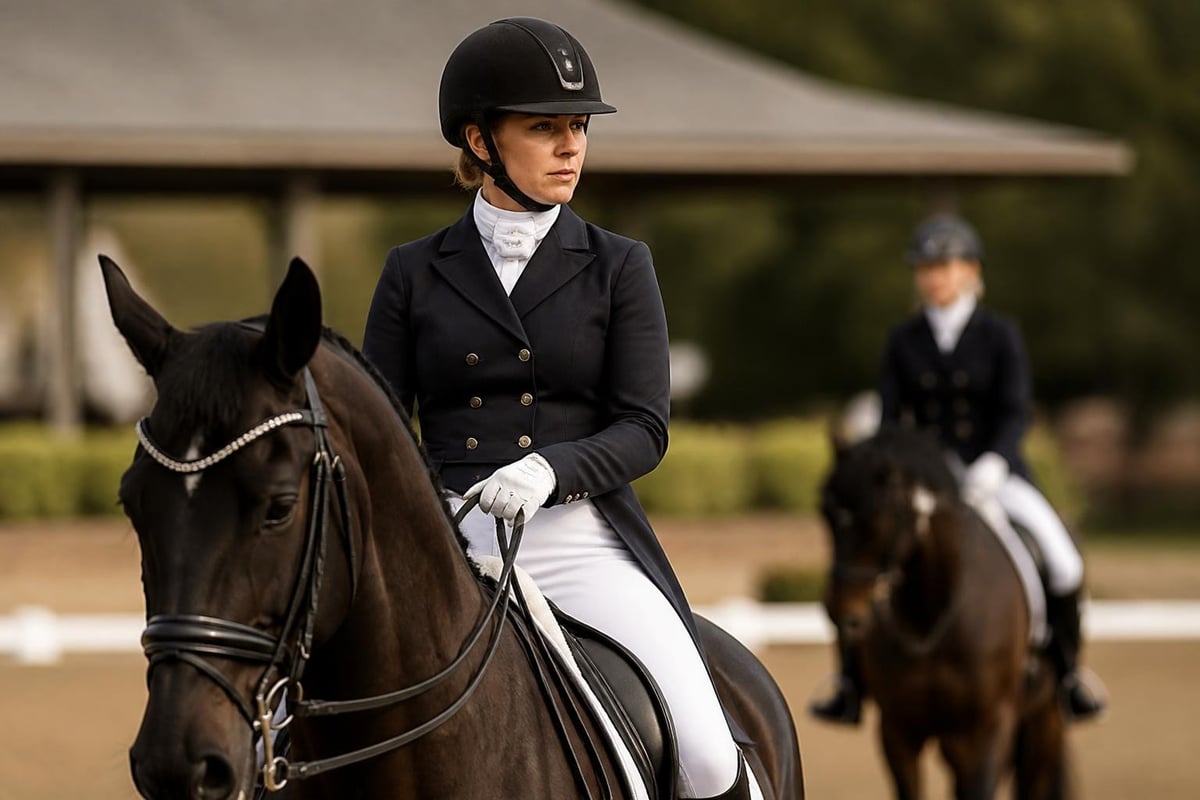
Essential Components of Men's Competition Wardrobe
Building a competition wardrobe requires strategic investment rather than impulsive purchasing. Start with versatile pieces that work across multiple disciplines and levels, then add specialised items as your competitive ambitions grow.
Jackets and Coats
Your competition jacket deserves serious consideration. A well-constructed dark navy or black jacket serves you across multiple disciplines and competition levels. Look for wool blends that hold their shape through long competition days, with technical features like breathable panels under the arms and flexible shoulder construction that moves with your position.
Shadbellies and tailcoats represent significant investments reserved for upper-level dressage. If you're regularly competing at these levels, quality matters even more because judges notice poor fit and cheap materials from metres away across the arena.
For practical guidance on selecting competition jackets that transition beyond the arena, understanding men's equestrian apparel basics provides valuable context about construction quality and fabric performance.
Breeches Built for Performance
Competition breeches differ substantially from schooling pairs. You need fabrics that maintain their appearance through multiple rounds, with seat grips that keep you secure without becoming sticky or uncomfortable. White and cream breeches for dressage require fabrics that don't become transparent when stretched, whilst darker colours for jumping benefit from reinforced knee patches and strategic stretch panels.
The breeches breakdown guide explores how competition-quality construction differs from everyday riding wear, helping you identify features worth paying for versus marketing fluff.
Quality competition breeches should offer compression without restriction, moisture-wicking properties to maintain comfort during long competition days, and construction that survives frequent washing without losing shape or colour intensity.
Shirts, Stocks, and Collar Configuration
Traditional white show shirts form the foundation of formal horse riding competition wear, but modern options offer significant improvements over purely cotton versions. Technical fabrics that wick moisture whilst maintaining a crisp appearance make gruelling competition days far more comfortable without sacrificing presentation.
Stock ties require practice to achieve proper tightness and symmetry. The horizontal stock pin sits precisely in the centre, both functionally securing the tie and serving as decorative accent. Many competitors keep pre-tied stocks for convenience, though purists insist on learning proper tying technique.
Ratcatcher shirts with attached choker collars offer approved alternatives for lower-level competitions, particularly in show jumping where practicality sometimes trumps absolute formality. These save time between classes and reduce the fiddly process of achieving perfect stock symmetry.
Shirt Fit and Function
Competition shirts need to stay tucked throughout vigorous riding without creating bulk under your jacket. Look for longer body lengths, silicone gripper strips at the hem, and stretch fabrics that move with your torso rather than pulling free at the back as you post or jump.
Sleeve length matters more than you'd expect. Shirt cuffs should extend approximately half an inch beyond your jacket sleeves, creating the polished appearance judges expect without excessive fabric bunching at your wrists.
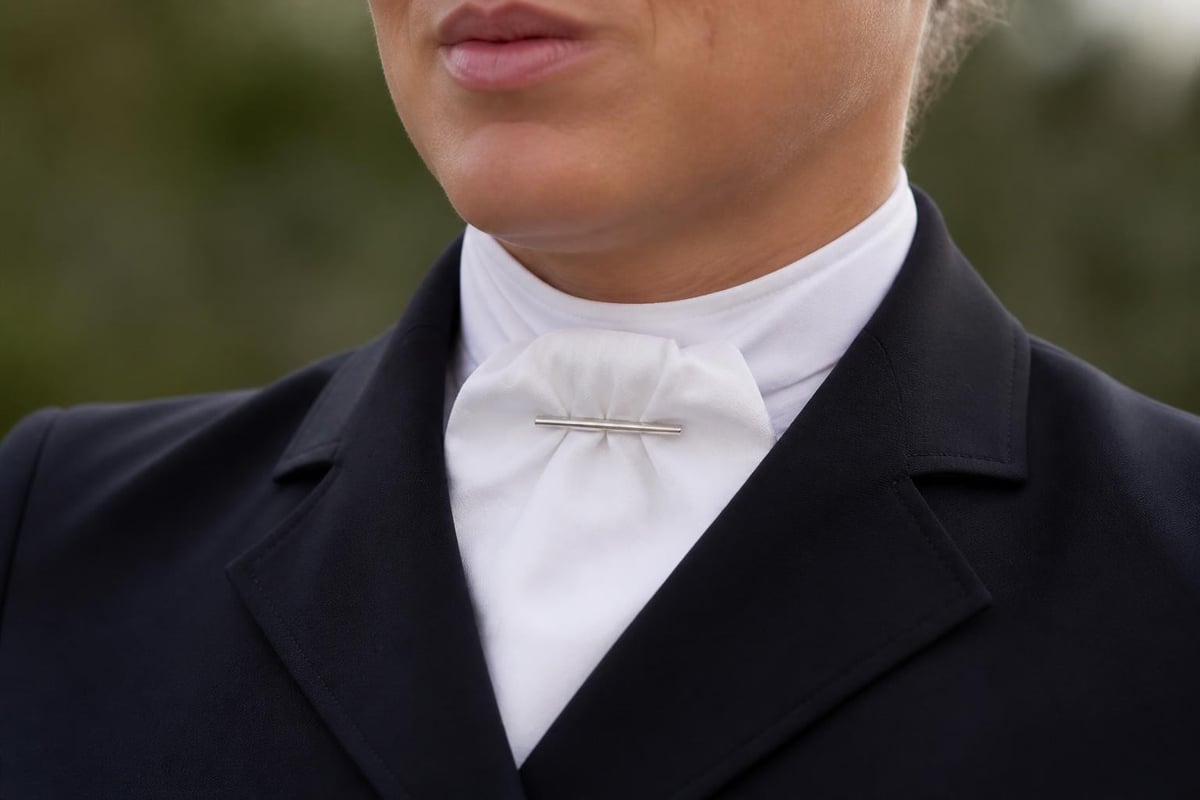
Safety Equipment That Meets Standards
Modern competition regulations increasingly emphasise safety alongside tradition. Understanding current requirements prevents embarrassing last-minute scrambles when stewards check your gear before entering the arena.
Helmets must meet specific safety certifications depending on your location and governing body. The USPC safety policy updates highlight recent changes to approved helmet standards, particularly relevant for younger competitors or those competing under multiple organisations with varying requirements.
Look for ASTM F1163 certification as minimum standard in North America, with SEI certification providing additional assurance. European competitors need helmets meeting PAS015 or VG1 standards. Replace helmets after any impact, even if damage isn't visible, as internal protective structures can fail whilst external appearance seems fine.
Body Protectors for Cross-Country
Cross-country phases mandate body protectors across nearly all competition levels. These aren't optional extras but required safety equipment that can genuinely save your life during a fall at speed. The British Horse Society guidance explains BETA Level 3 standards comprehensively, helping you select appropriate protection.
Modern body protectors achieve impressive flexibility whilst maintaining protective qualities. Look for models designed with male torso proportions rather than unisex designs that may not fit properly across chest and shoulders. Proper fit means the protector doesn't ride up during mounting or shift during riding, staying positioned to protect your spine, ribs, and vital organs.
Competition colours worn over your body protector should fit smoothly without excessive fabric bunching, which can affect judge's perception of your position and create uncomfortable bulk.
Boots, Spurs, and Lower-Leg Presentation
Tall boots represent substantial investment in your competition wardrobe, but they're worth getting right. Field boots with laces suit show jumping and eventing, whilst dress boots without laces belong in the dressage arena. Leather quality, fit precision, and ongoing care determine how long boots maintain their appearance and functionality.
Custom boots offer superior fit but demand patience through the measuring and making process. Off-the-rack options have improved dramatically, with many manufacturers now offering multiple calf widths and height adjustments. Proper fit means boots feel snug initially but not painfully tight, leaving room for leather to mould to your leg shape through breaking in.
Black boots remain standard across all disciplines, though brown boots are gaining acceptance in show jumping at certain competition levels. Check your specific competition's rules before assuming brown is acceptable, as traditional events may still mandate black.
Spurs: When and How to Wear Them
Spurs aren't mandatory at lower competition levels but become required equipment as you advance through dressage levels. The USEF dressage rules specify maximum shank lengths and permitted styles, preventing overly severe designs whilst allowing subtle refinements to your leg aids.
In show jumping and eventing, spurs remain optional across most levels, though many riders choose to wear them for precision. Blunt Prince of Wales spurs offer gentlest options, whilst rowels increase severity and should only be used by experienced riders with steady, independent legs.
Spur fit matters enormously. They should sit on the spur rest of your boot without sliding, pointing slightly downward rather than perfectly horizontal. Too loose and they rotate during riding, creating inconsistent contact. Too tight and they're uncomfortable and potentially damage your boots.
Building Your Competition Kit Systematically
Smart competitors build their competition wardrobe gradually, prioritising pieces that offer maximum versatility across disciplines and levels. This approach prevents wasteful spending whilst ensuring you're properly equipped when opportunities arise.
| Priority Level | Essential Items | Approximate Investment | Used Across Disciplines |
|---|---|---|---|
| First Purchase | Dark jacket, light breeches, show shirt | £400-800 | Dressage, Show Jumping, Eventing Dressage |
| Second Tier | Tall boots, helmet, stock ties | £500-1200 | All disciplines |
| Discipline-Specific | Body protector, cross-country colours | £200-400 | Eventing only |
| Advanced Addition | Shadbelly/tailcoat, white breeches | £600-1500 | Upper-level Dressage |
This staged approach allows you to compete properly equipped at lower levels whilst building toward higher-level requirements as your skills develop. Many riders discover they prefer certain disciplines, making early investment in discipline-specific items premature until competitive direction becomes clear.
The guide to competition arena wear explores building a functional competition wardrobe in greater detail, with practical advice about which compromises work and which create problems.
Colour Choices and Personal Expression
Horse riding competition wear traditionally offers limited colour options, reflecting the sport's conservative aesthetic values. However, subtle personal expression exists within these boundaries, allowing you to develop signature style whilst remaining appropriately dressed.
Dark jackets include navy, black, and very dark grey. Avoid brown or lighter colours unless specifically permitted for your discipline and level. Some show jumping competitions permit tweed jackets, offering texture variation whilst maintaining conservative colour palette.
Breeches provide slightly more flexibility. White and cream for dressage, but consider that bright white can emphasise leg position flaws whilst cream offers slight forgiveness. For jumping disciplines, buff, tan, beige, and grey all work, with darker shades generally more forgiving through long competition days.
Stock Ties and Small Details
Stock ties typically come in white or cream, though hunting-inspired patterns occasionally appear in show jumping. Your stock pin offers genuine opportunity for personality without violating any regulations. Simple, elegant designs suit formal dressage, whilst slightly more distinctive pins work in jumping arenas.
Belt choices matter less than you'd imagine since your jacket covers most of your waistband. However, quality leather belts in dark brown or black show attention to detail during jacket-off moments before or after competing. Small details like matching your belt to your boots demonstrate professionalism that judges and fellow competitors notice.
Care and Maintenance Between Competitions
Proper care extends the lifespan of competition clothing significantly, protecting your investment whilst ensuring you always look sharp in the arena. Horse riding competition wear demands more attention than casual riding gear because presentation standards are so much higher.
White breeches require immediate attention after competing. Pre-treat any stains before washing, use colour-safe bleach sparingly, and avoid fabric softeners that reduce the effectiveness of silicone seat grips. Air-dry rather than tumble-dry to preserve fabric elasticity and prevent shrinkage.
Dark jackets need professional cleaning rather than home washing in most cases. Wool blends suffer from home laundering attempts, losing shape and developing shine in unwanted places. Between professional cleanings, spot-clean minor marks and air jackets thoroughly after sweaty competition days to prevent odour and fabric degradation.
Boot Care Fundamentals
Tall boots represent substantial investment deserving proper maintenance. Clean boots after every use, removing sweat, arena dust, and environmental dirt before they penetrate leather. Condition regularly but not excessively, as over-conditioned leather becomes too soft to provide proper support.
Boot trees maintain shape between wearings, preventing the ankle wrinkles and shaft collapse that develops in neglected boots. Cedar trees offer the additional benefit of moisture absorption and odour control, particularly valuable during busy competition seasons.
Polish boots the evening before competing rather than morning-of, allowing proper drying time and preventing rushed, streaky results. Multiple thin polish layers create deeper shine than single thick application, with buffing between layers developing that mirror-like finish judges appreciate.
Adapting to Weather and Outdoor Venues
Outdoor competitions present challenges indoor arenas don't, requiring additional planning whilst maintaining presentation standards. Understanding how weather impacts horse riding competition wear helps you prepare appropriately without showing up inappropriately dressed.
Rain jackets over competition wear need careful selection. They must fit over your show jacket without excessive bulk, close securely to prevent flapping during riding, and ideally match your competition colours as closely as possible. Many governing bodies now permit clear or navy rainwear, recognising that soaking wet wool jackets benefit neither horse nor rider.
Cold weather competitions allow subtle additions like vest layers under jackets, though bulky jumpers that distort your silhouette remain unacceptable. Winter riding jackets designed with competition in mind offer warmth without compromising the clean lines required in the arena.
Gloves present interesting challenges. Dressage generally requires white or black gloves, whilst jumping permits brown leather. Technical gloves offering grip and weather protection whilst maintaining acceptable appearance have improved dramatically, allowing proper hand feel without frozen fingers.
Final Presentation Details
Those final minutes before entering the arena determine whether months of preparation translate into polished presentation or missed opportunities. Systematic final checks ensure nothing's overlooked in pre-competition nerves.
Check that your helmet sits level and properly secured, with the chin strap tightened enough to prevent movement without causing discomfort. Ensure your stock pin sits horizontal and centred, with stock tie lying flat without twists. Verify your jacket is buttoned correctly and sits smoothly across your shoulders without pulling.
Your number should be attached securely and positioned according to competition requirements. Most events specify placement on your back, though some require numbers on both sides. Crooked or falling numbers create unprofessional impressions easily avoided with proper attachment.
Glance down at your boots for final check. Mud splashes happen between warm-up and competition, and a quick wipe with damp cloth takes seconds whilst maintaining immaculate appearance. Ensure your spurs haven't rotated and sit properly on spur rests.
These small details accumulate into overall impression. Judges notice presentation before you even begin your test or course, and that initial assessment influences their perception throughout your performance. Professional appearance doesn't guarantee high scores, but sloppy presentation can undermine excellent riding before you've demonstrated your abilities.
Understanding Regional and Level-Specific Requirements
Competition rules vary not just by discipline but by region, governing body, and competition level. What's acceptable at local shows might violate regulations at national championships, whilst international competitions maintain the strictest standards of all. The USDF visual guide to dressage attire rules offers clear examples of permitted versus prohibited items, helping you avoid embarrassing misunderstandings.
Before entering any competition, review the specific dress code published in the schedule. Don't assume that what worked at your last competition automatically complies with new venue's requirements. Organisers increasingly publish detailed guidance including photos of acceptable attire, removing ambiguity and helping competitors arrive properly equipped.
Junior competitors face additional considerations, particularly regarding safety equipment. Many organisations now mandate body protectors across all mounted activities for younger riders, whilst helmet standards continue evolving as research reveals better protective technologies.
When competing internationally or traveling to different countries, recognise that acceptable horse riding competition wear varies by local tradition and governing federation. Research thoroughly before packing your competition kit, and consider contacting organisers directly if any uncertainty exists about specific requirements.
Successful competition appearance combines tradition, regulations, and personal preparation into polished presentation that reflects your respect for the sport and commitment to excellence. Understanding these standards and building your wardrobe systematically ensures you're always properly equipped, allowing you to focus on riding rather than worrying about appearance. Whether you're stepping into your first local dressage test or preparing for national championships, Gallant Equestrian offers performance-driven, stylish pieces designed specifically for men who take their riding seriously, ensuring you look the part whilst enjoying every moment in the saddle.

