

Horse Riding Gear Men: Essential Kit for Performance
Sep 13, 2026
Getting your horse riding gear men's wardrobe sorted isn't about accumulating equipment. It's about choosing pieces that work hard, fit properly, and look presentable whether you're schooling at dawn or meeting friends afterwards. The right kit enhances your riding, protects you when things go wrong, and lasts long enough to justify the investment. This guide covers the essentials every male rider needs, how to choose quality over quantity, and why fit matters more than you might think.
Foundation Pieces Every Male Rider Needs
Your core wardrobe starts with three non-negotiables: breeches, boots, and a helmet. These aren't optional extras or things to upgrade later. They're the foundation that makes everything else work.
Breeches designed for men differ significantly from unisex or women's patterns. The rise sits differently, the seat accommodates male anatomy, and the inner leg seam accounts for how men naturally sit in the saddle. Modern men's breeches combine stretch fabrics with reinforced seams and strategically placed grip patches. Full-seat silicone provides maximum security for jumping or working young horses, whilst knee-patch versions offer freedom for dressage work.
Boots need to match your discipline and stirrup setup. Tall field boots suit jumping and eventing, whilst dressage boots offer a stiffer shaft for leg stability. Short paddock boots paired with half chaps work well for daily riding and adapt easily to different conditions. Whichever style you choose, ensure proper ankle support and a defined heel that won't slip through your stirrups.
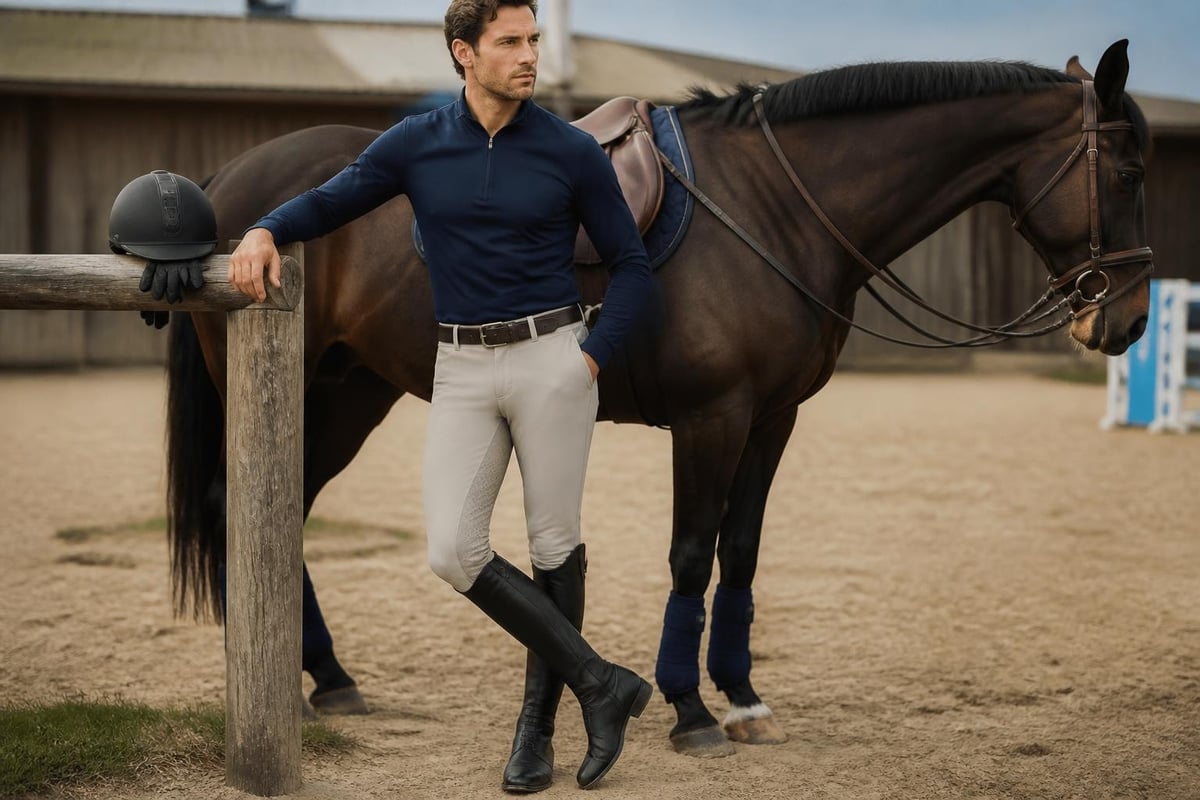
Safety helmets represent your most critical investment. Current standards (PAS 015:2011, VG1 01.040 2014-12) reflect improved impact protection and fit systems. The British Horse Society's guidance on what to wear emphasises proper certification and regular replacement schedules. A helmet designed for men typically accommodates different head shapes and hair lengths, with adjustment systems that don't compromise when you're working hard.
Layering for Performance and Weather
British weather demands adaptable clothing. Temperature swings, sudden rain, and early morning frost mean your horse riding gear men's collection needs smart layering that doesn't restrict movement.
Base layers wick moisture away from your skin during intense work. Technical fabrics outperform cotton dramatically, especially during winter months when damp clothing becomes genuinely uncomfortable. Look for flat seams that won't chafe under breeches, and sleeves long enough to stay put when reaching forward.
Mid-layers trap warmth without bulk. Fleece gilets, technical sweatshirts, and lightweight insulated jackets work under your riding coat when necessary but function independently during milder sessions. The winter layers kit approach lets you adjust insulation based on actual conditions rather than calendar dates.
Outer shells protect against wind and rain whilst allowing vapour to escape. Waterproof jackets designed for riding extend coverage over your seat, include two-way zips that don't bunch when mounted, and offer adjustable cuffs that fit over gloves. Ventilation panels under arms or across shoulders prevent the greenhouse effect during faster work.
Choosing Technical Fabrics That Work
Modern equestrian fabrics blend natural comfort with synthetic performance. Four-way stretch allows proper riding position without resistance. Moisture-wicking finishes prevent sweat accumulation during lessons or competitions. Quick-dry properties mean you can rinse breeches after a muddy hack and have them ready next morning.
Reinforced seat and inner leg panels resist wear from saddle leather and stirrup leathers. Premium horse riding gear men invest in uses double-layer construction or abrasion-resistant weaves in high-stress areas. This extends garment life significantly compared to standard athletic wear adapted for riding.
Safety Equipment Beyond the Basics
Protective gear extends beyond helmets. Body protectors reduce injury risk during falls, particularly for jumping, eventing, or working unpredictable horses. The BETA safety equipment guide explains current standards (BETA 2009 Level 3, EN 13158:2009) and fitting requirements specific to male torsos.
Proper fit matters enormously. Body protectors shouldn't restrict breathing or shoulder movement, yet must stay positioned during impact. Adult male sizing accommodates broader shoulders and longer torsos than unisex junior patterns. Recent research into pelvic and acetabular trauma from horse riding underscores why correctly fitted protective equipment matters, particularly given male anatomical considerations during falls.
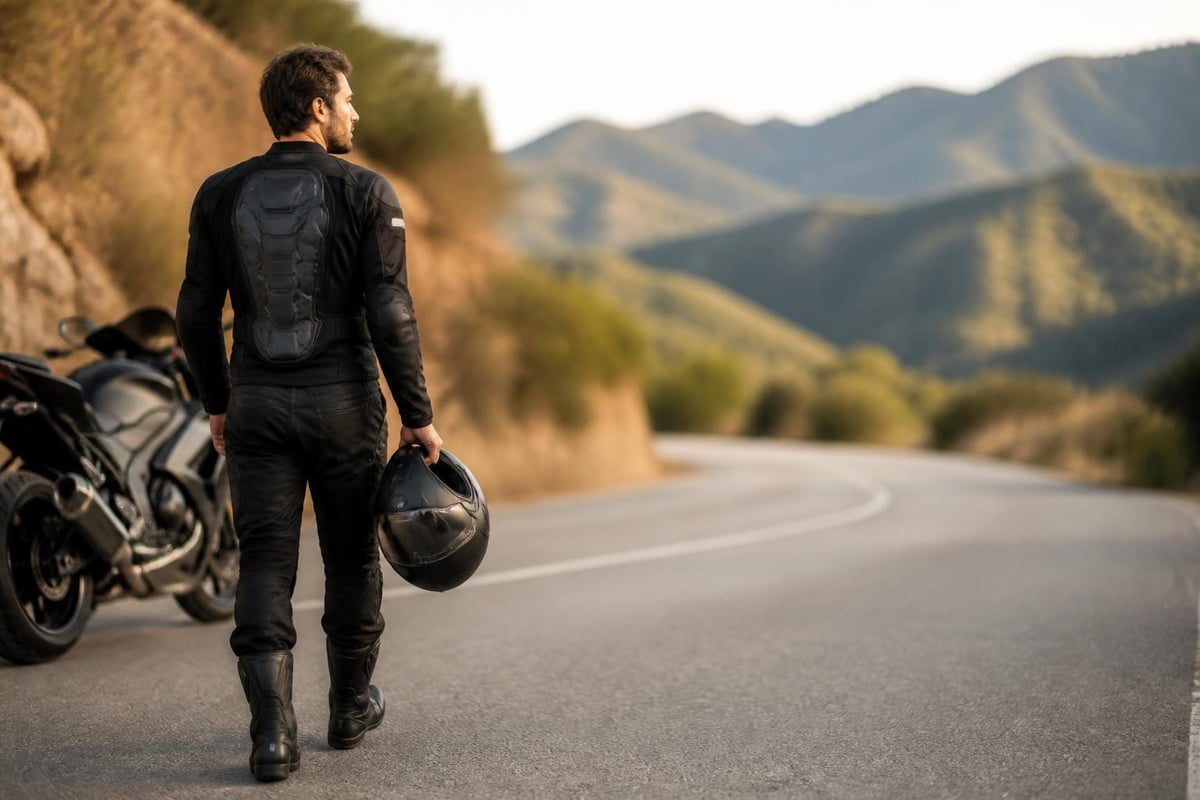
Gloves prevent blisters, improve grip, and protect hands during falls. Summer riding gloves use breathable synthetics with reinforced rein fingers. Winter versions add insulation and waterproofing without sacrificing feel. The British Horseracing Authority's raised safety standards increasingly influence requirements across all disciplines, not just racing.
High-visibility gear becomes essential during roadwork or low-light conditions. The BHS guidance on hi-vis clothing references EN standards and recommends both retroreflective and fluorescent elements. Tabards work over any jacket, whilst integrated hi-vis jackets offer cleaner lines for regular road riders.
Competition and Showing Requirements
Competition horse riding gear men need follows specific regulations that vary by discipline. Dressage demands subtle elegance: white show shirts, stock ties, tall boots, and dark jackets. Jumping allows slightly more flexibility with colour whilst maintaining traditional turnout standards. Eventing combines all three phases, requiring wardrobe versatility.
Stock ties aren't decorative. They provide neck support during falls and demonstrate proper turnout. Practice tying them correctly before your first show. Competition breeches typically use more conservative colours (white, beige, or black) with subtle grip patterns that don't photograph poorly.
Show jackets require proper shoulder fit and sleeve length that accounts for forward arm position. Ventilation becomes critical during summer competitions. Modern technical fabrics now offer traditional appearance with improved breathability and easy care compared to wool.
Building a Competition Wardrobe Strategically
Start with versatile neutrals that work across multiple disciplines. Black or navy breeches, white shirts, and quality boots form your foundation. Add discipline-specific pieces as you specialise. The arena rider kit approach bundles complementary pieces that coordinate naturally.
Competition ties, show shirts with integrated stocks, and washable show jackets reduce prep time and maintenance headaches. Quality horse riding gear men choose for showing withstands frequent washing, travel stress, and repeated wear without losing shape or finish.
Daily Riding and Stable Work
Training sessions and stable management demand different considerations than competition. Durability trumps elegance. Washability matters more than perfect creases. Comfort during repetitive tasks (mucking out, grooming, tacking up) influences what actually gets worn.
Polo shirts bridge the gap between scruffy tees and formal wear. Technical polo shirts with moisture-wicking properties and UV protection work for riding, teaching, or stable chores. They look presentable enough for impromptu meetings yet survive regular washing.
Training breeches prioritise grip and flexibility over show-ring perfection. Knee-patch versions offer excellent value and versatility. Full-seat competition breeches provide maximum security during schooling sessions, particularly when working through challenging movements or riding multiple horses daily.
Hoodies and sweatshirts add warmth during early mornings without restricting arm movement. Quarter-zips allow quick temperature adjustment. Avoid loose drawstrings or excessive pockets that catch on stable fittings or tack.
How Gear Interacts with Saddle and Horse
Your clothing choices directly affect your position and communication with your horse. Bulky seams create pressure points. Slippery fabrics reduce security. Restrictive cuts prevent proper leg position. Understanding these interactions improves both comfort and effectiveness.
Saddle fit guidance from USEA addresses how rider position influences saddle performance. Your breeches' seat design, boot shaft stiffness, and jacket length all affect how you sit. Thick winter layers may require adjusting stirrup length to maintain proper leg position.
Grip placement matters differently for various disciplines. Dressage riders often prefer full-seat grip for stability during collected work. Jumpers might choose knee-patch designs that allow hip movement during release. Eventers frequently own both types, selecting based on the day's focus.
Boot fit influences stirrup safety and leg effectiveness. The USEF safety guidance on stirrups explains clearance requirements and how boot sole design affects release during falls. Properly fitted boots with defined heels prevent feet sliding through irons whilst allowing clean release when necessary.
Care and Maintenance
Quality horse riding gear men invest in deserves proper maintenance. Regular care extends garment life, maintains safety certification compliance, and keeps you looking professional.
Leather boots require conditioning after exposure to water, sweat, or mud. The Horse & Rider guide to leather care recommends appropriate products and techniques for different leather types. Synthetic alternatives simplify maintenance but may sacrifice traditional appearance.
Technical fabrics need specific washing protocols. High temperatures damage elastic fibres and waterproof coatings. Fabric softeners clog moisture-wicking treatments. Read care labels and follow manufacturer guidelines, particularly for safety equipment with specific cleaning requirements.
Storage and Organisation
Proper storage prevents premature wear. Boot trees maintain shape between uses. Hanging breeches by the waistband prevents knee-bag development. Helmets stored in protective bags avoid scratches that compromise shell integrity.
Rotate multiple pairs of breeches and boots to allow thorough drying between uses. Damp gear breeds bacteria, weakens stitching, and develops persistent odours. Having backup pieces isn't luxury-it's practical equipment management.
Building Your Wardrobe Systematically
Assembling comprehensive horse riding gear men require needn't happen overnight. Strategic purchasing based on actual needs prevents costly mistakes and wardrobe clutter.
Priorities for New Riders
| Priority | Item | Rationale |
|---|---|---|
| 1 | Certified helmet | Safety essential, non-negotiable |
| 2 | Proper boots | Protects feet, enables safe stirrup use |
| 3 | Quality breeches | Comfort and position foundation |
| 4 | Base layers | Extends riding in variable weather |
| 5 | Waterproof jacket | Enables year-round riding |
Start with these five categories, choosing the best quality your budget allows. Adding gloves, additional breeches, and discipline-specific items comes next.
Advancing Your Kit
| Stage | Addition | Purpose |
|---|---|---|
| Established rider | Body protector | Enhanced safety for jumping/young horses |
| Regular competitor | Show-specific clothing | Meets competition requirements |
| Multi-discipline | Specialist breeches/boots | Optimises performance per discipline |
| Year-round rider | Seasonal layers | Maintains comfort across conditions |
The every day rider kit bundles complementary pieces that work together from the start. Coordinated pieces ensure everything fits properly and looks intentional rather than assembled randomly.
Fit, Function, and Personal Style
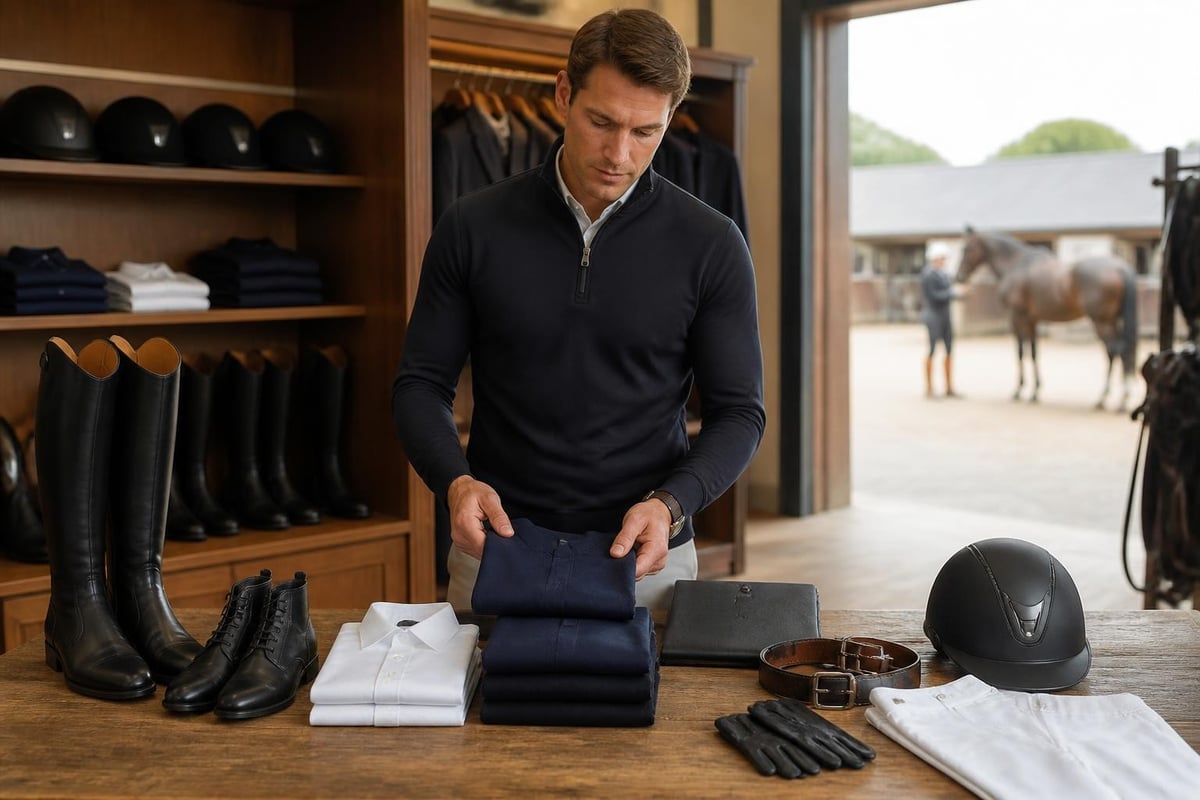
Horse riding gear men choose should reflect individual riding goals and personal aesthetic. Traditional doesn't mean outdated. Modern doesn't require sacrificing functionality. The sweet spot combines proven design with contemporary fabrics and cuts that actually fit male riders.
Pay attention to rise (front and back), inseam proportion, and shoulder fit. Men's riding clothing designed specifically for male proportions eliminates the constant adjustments and compromises inherent in adapted women's wear or poorly scaled unisex designs.
Colour choices affect versatility and practicality. Navy, black, and neutral tones coordinate easily and show less stable dirt than pale alternatives. Olive options add subtle variety whilst maintaining understated professionalism.
Transitional pieces that work both mounted and unmounted add value beyond the saddle. Well-cut polo shirts, quality sweatshirts, and tailored rain jackets suit stable work, lessons, and casual occasions. This versatility justifies premium pricing for genuinely well-designed pieces.
Assessing Quality Before Purchase
Examine stitching at stress points: inner leg seams, seat panels, and pocket attachments. Quality construction uses reinforced seams, bar tacks at stress points, and appropriate thread weight for fabric type. Zips should run smoothly with substantial pulls that work whilst wearing gloves.
Fabric hand (how it feels) indicates quality and performance. Premium breeches feel substantial without stiffness, recover quickly from stretching, and resist pilling. Technical shirts should wick moisture noticeably compared to standard cotton.
Try everything on before purchasing when possible. Sizes vary dramatically between manufacturers. What fits in one brand's medium may require large elsewhere. Online purchases should come with clear return policies and accurate size charts including rise and inseam measurements, not just waist sizes.
Weather-Specific Considerations
British riding means adapting to conditions that change multiple times daily. Your horse riding gear men's wardrobe needs pieces that handle morning frost, afternoon sun, and evening downpours-sometimes in the same ride.
Summer demands UV protection, ventilation, and moisture management. Lightweight breeches with mesh panels, technical polos with UPF ratings, and breathable helmets with adjustable ventilation prevent overheating during intense work. Light colours reflect heat but show dirt more readily than darker alternatives.
Winter requires insulation that doesn't restrict movement. Thermal base layers, insulated gilets, and waterproof shells with fleece linings maintain core temperature without creating the marshmallow effect that ruins position. The wet weather riding kit addresses the specific challenge of staying dry without overheating.
Transition Seasons
Spring and autumn variability demands maximum layering flexibility. Morning sessions in single-digit temperatures give way to midday warmth. Having removable layers that pack small-lightweight fleeces, packable rain shells, arm warmers-lets you adjust without carrying excessive gear.
Glove selection spans from summer synthetic to winter insulated options. Owning multiple weights ensures you always have appropriate hand protection without sacrificing rein feel. Wet gloves are miserable and potentially dangerous-having backup pairs in your kit prevents riding with numb fingers.
Making Smart Investments
Premium horse riding gear men purchase represents genuine value when it delivers superior performance, longevity, and versatility. Understanding what justifies higher pricing helps allocate budget effectively.
Construction quality affects lifespan dramatically. Reinforced seams, quality fasteners, and appropriate fabrics for their application mean garments survive years of regular use. Cheap breeches might cost half the price but rarely last half as long, making cost-per-wear actually higher.
Technical performance justifies premium pricing when it delivers measurable benefits. Genuinely waterproof-breathable fabrics outperform water-resistant coatings. Four-way stretch moves with you whilst two-way stretch restricts certain movements. These differences matter during actual riding, not just on spec sheets.
Getting your horse riding gear men's essentials right transforms daily riding from adequate to genuinely enjoyable. Proper fit improves position, appropriate fabrics enhance comfort, and quality construction means kit that lasts. Build your wardrobe systematically, prioritise pieces that serve multiple purposes, and invest in items you'll use regularly. Gallant Equestrian designs performance-driven clothing specifically for male riders, combining New Zealand craftsmanship with functional style that works from stable to street. Look the Part. Enjoy the Ride.

