

Horse Riding Jumpers: What Every Rider Should Know
Apr 12, 2026
Show jumping demands precision, confidence, and the right mindset. Whether you're navigating your first cross rail or eyeing a Grand Prix course, understanding horse riding jumpers transforms how you approach every fence. The sport combines athleticism with strategy, testing both horse and rider through technical courses that reward skill over speed alone. From your position in the saddle to your choice of riding gear, every detail matters when you're committed to clearing fences cleanly.
Understanding the Fundamentals of Horse Riding Jumpers
The world of show jumping extends far beyond simply pointing your horse at a fence. This Olympic discipline requires riders to navigate a series of obstacles within an arena, where each knocked rail or refusal adds penalties to your score. The objective is straightforward: complete the course with the fewest faults in the fastest time.
Horse riding jumpers compete across different levels, from starter classes at 60cm to Olympic heights exceeding 1.60m. Each level tests different aspects of your riding ability, from basic position and timing at lower heights to advanced course management and quick decision-making at upper levels. The beauty of jumping lies in its accessibility – riders of varying experience can enjoy the thrill while progressively building their skills.
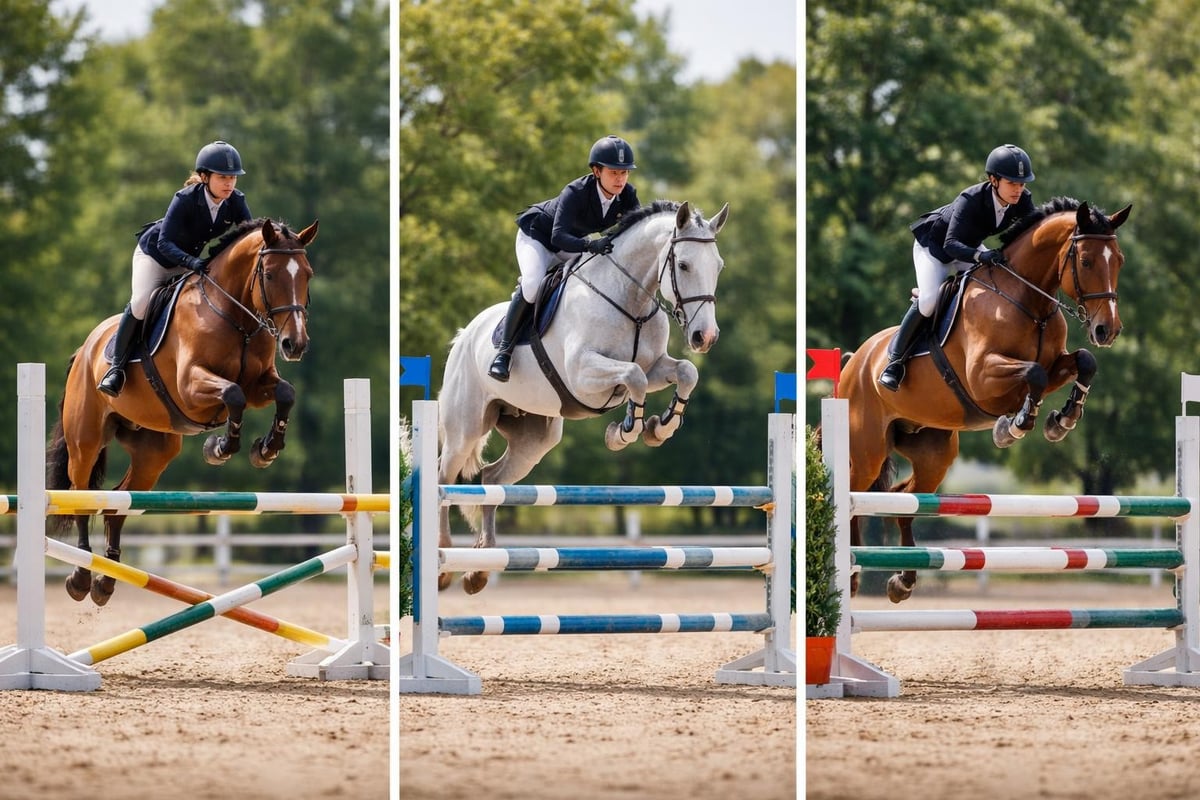
Understanding stadium jumping classifications helps you set realistic goals. Jumper classes typically divide into height categories, speed classes, and power and speed combinations. Some focus purely on clearing fences regardless of time, while others demand both accuracy and pace. Knowing which type suits your horse's strengths lets you compete strategically.
Essential Gear and Clothing for Jumping Riders
Your clothing choices directly impact performance when riding jumpers. Traditional show attire includes fitted breeches, tall boots, and a show jacket, but modern riders increasingly prioritize technical fabrics that move with you. Performance men's equestrian breeches with strategic grip placement and four-way stretch allow the subtle leg aids crucial for adjusting stride length between fences.
Quality breeches should offer full-seat silicone or leather for security without restricting hip flexibility. Look for reinforced knee patches that withstand daily schooling while maintaining a sharp appearance in the show ring. The right pair becomes invisible during your round, letting you focus entirely on the course ahead rather than adjusting uncomfortable fabric.
Layering options matter throughout long competition days. A moisture-wicking base layer beneath your show shirt regulates temperature whether you're warming up in morning fog or competing under midday sun. Technical polo shirts work well for schooling sessions, combining professional appearance with breathability that synthetic competition wear often provides.
Rain jackets designed for riding need specific features beyond standard waterproofing. Extended back panels prevent riding up in jumping position, while articulated shoulders allow full range of motion for release over fences. Ventilation panels under arms and across the back prevent overheating during intense schooling sessions. These details separate purpose-built equestrian outerwear from street clothing that simply won't perform in the saddle.
Developing Your Jumping Position and Technique
Mastering horse riding jumpers starts with solid flatwork. Your position on the flat directly translates to effectiveness over fences. A balanced, following seat at walk, trot, and canter establishes the foundation for maintaining that balance when your horse leaves the ground. Riders who rush to jumping before establishing quality basics often develop position faults that limit their upper-level potential.
The two-point position forms the cornerstone of jumping technique. This athletic stance lifts your seat slightly from the saddle while maintaining weight through your heels and a closed hip angle. Practicing two-point at trot and canter builds the leg strength and core stability essential for maintaining position throughout a jumping effort. Start with short intervals and gradually increase duration as your strength improves.
Your release over the fence determines whether you support or hinder your horse's jumping effort. An automatic release follows the horse's mouth forward while maintaining light contact through the reins. This allows your horse full use of neck and back muscles for optimal bascule over the fence. Practicing your release over ground poles and small cross rails builds muscle memory before tackling larger obstacles.
Eye control separates confident riders from hesitant ones. Looking down pulls your shoulders forward and collapses your position, while looking ahead through the turn to your next fence keeps your body aligned and your horse balanced. Professional riders plan their tracks several fences ahead, using their eyes to set up each approach long before reaching the turn.
Training Progressions for Horse and Rider
Building confidence in horse riding jumpers requires systematic progression. Starting with ground poles teaches both horse and rider about rhythm and distance without the pressure of actual height. Trotting poles set at specific distances encourage your horse to adjust stride length while you focus purely on maintaining position and balance.
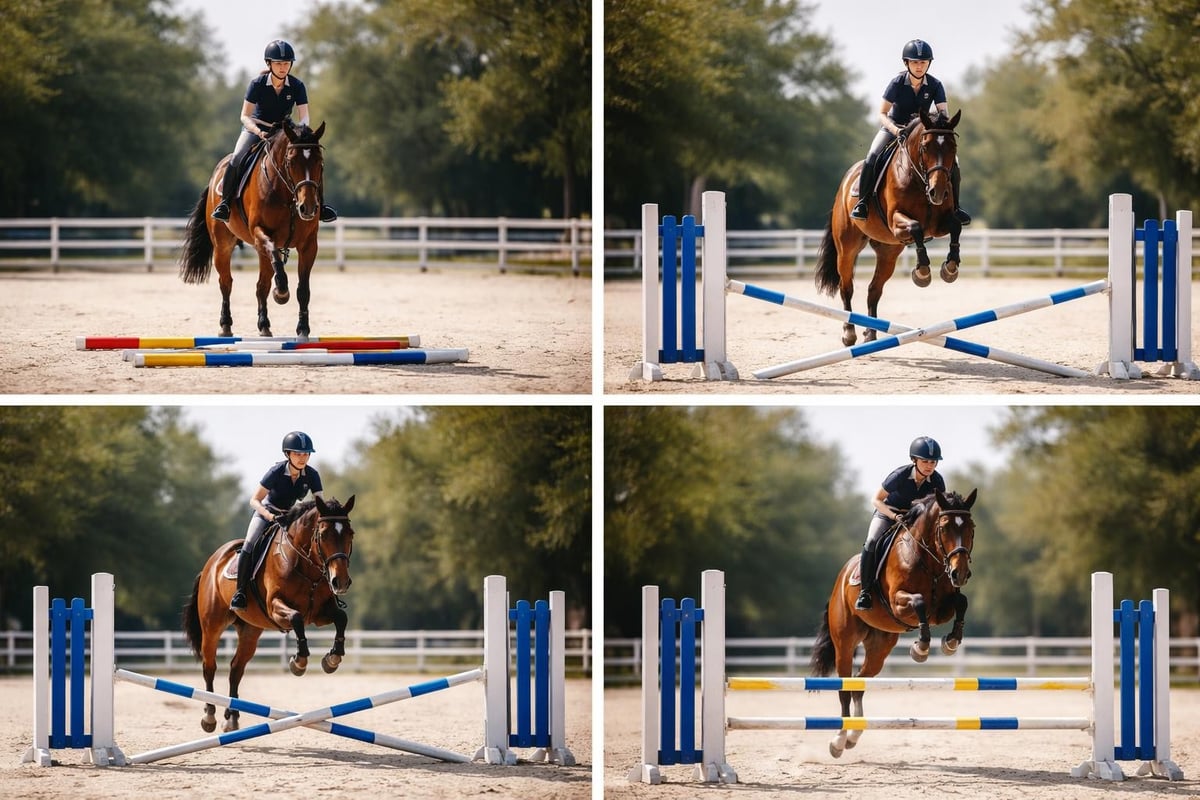
Cross rails represent the next logical step, creating a natural center point that encourages straightness. These inviting fences let you practice your release and two-point position at minimal height. Vary the approach by trotting some and cantering others, teaching your horse to adjust pace based on your aids rather than anticipation.
Single verticals and oxers introduce different jumping efforts. Verticals require more precise distance riding since horses must elevate quickly from their takeoff point. Oxers with width encourage horses to stretch over the fence, developing their scope and bascule. Alternating between fence types in your schooling sessions develops versatility rather than pattern-dependent responses.
Gymnastic exercises – combinations of fences set at specific distances – are invaluable for improving technique. These controlled environments let you work on specific skills like adjustability, straightness, or jumping form without the variables of longer courses. A simple gymnastic might include trot poles to a cross rail, one stride to a small vertical, building to more complex sequences as skills develop.
Understanding the technical aspects of show jumping helps you design effective training sessions. Course designers use related distances (multiples of a 12-foot canter stride) to create flowing tracks that reward rhythm and balance. Studying how professionals ride these distances informs your own approach to course management.
Course Walking and Strategy
The course walk separates recreational jumpers from competitive ones. Walking each track on foot before riding it reveals crucial information about distances, turn angles, and potential trouble spots. Experienced riders visualize their entire ride during this walk, planning where to steady, where to move up, and which lines offer the smoothest flow.
Counting strides between fences determines your pace strategy. A tight five-stride line might require collection, while a forward six strides needs forward momentum. Understanding your horse's natural stride length lets you plan realistic tracks rather than forcing incompatible distances. Some horses prefer shorter, bouncier strides; others cover ground more efficiently with longer, flowing strides.
Turn planning often determines whether you clear fences cleanly. Sharp turns can unbalance horses, causing awkward takeoff spots and knocked rails. Planning wider approaches to difficult fences sometimes costs a second but saves the four faults from a rail. In jumper classes where time matters, you balance efficiency against risk based on your horse's experience and your own skill level.
Identifying rollback opportunities – tight turns that save significant time – rewards riders who've developed adjustability in their horses. These moves require quick rebalancing after landing, immediate half-halts, and precise steering through tight spaces. They're high-risk, high-reward options best attempted once you've built substantial experience.
Physical Fitness and Mental Preparation
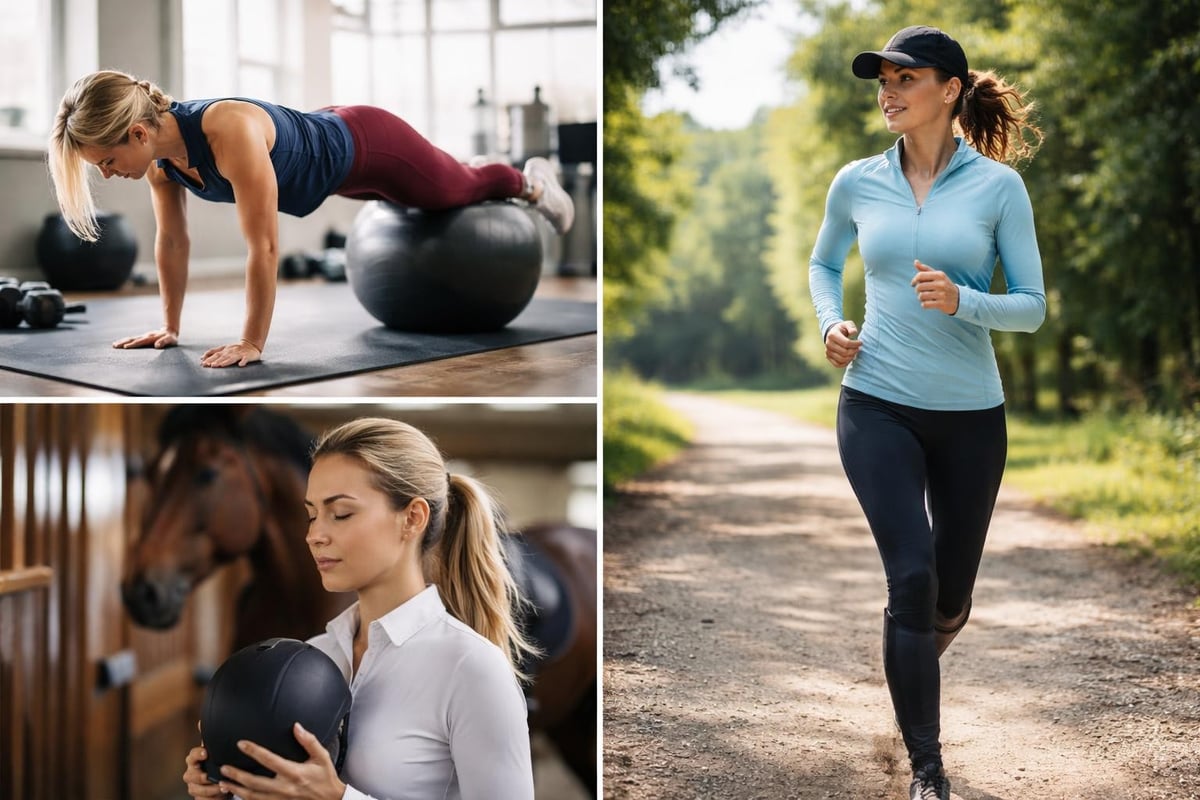
Riding horse riding jumpers demands athletic conditioning beyond many people's expectations. Core strength stabilizes your position through jumping efforts, while leg strength maintains your base of support without gripping. Regular fitness training – whether gym work, running, or cross-training activities – directly improves your riding performance and reduces injury risk.
Cardiovascular endurance matters during long competition days with multiple rounds. Warming up, competing, and cooling down taxes your body similarly to moderate exercise. Riders who neglect general fitness often find themselves fatigued by afternoon classes, leading to position deterioration and poor riding decisions.
Mental preparation separates good rounds from great ones. Visualization techniques used by Olympic athletes apply equally to show jumping. Mentally riding your course before entering the arena builds confidence and helps identify potential challenges. Many riders develop pre-competition routines that trigger focused mental states, from specific warm-up exercises to breathing patterns.
Managing competition nerves improves with experience but benefits from conscious practice. Deep breathing exercises calm your nervous system, while positive self-talk replaces doubt with confidence. Remember that some nervousness indicates you care about performing well – channeling that energy productively rather than letting it overwhelm you makes the difference.
Choosing the Right Events and Venues
Selecting appropriate competitions accelerates your development in horse riding jumpers. Starting at small, local shows provides valuable mileage without the pressure of highly competitive environments. These venues let you focus on executing basics correctly rather than comparing yourself to seasoned professionals.
Hunter jumper shows typically offer both hunter and jumper divisions, letting you experience different judging criteria. Hunter classes reward style and consistency, while jumper classes focus solely on clearing fences within the time allowed. Trying both helps you understand which discipline suits your strengths and preferences.
Studying Olympic-level competition provides inspiration even for amateur riders. Watching how top professionals ride courses reveals subtle techniques in pace management, turn execution, and position maintenance. While their athletic ability may exceed yours, the principles they demonstrate apply at every level.
Understanding how course designers approach their craft helps you anticipate what you'll face in competition. Designers balance challenge with safety, creating courses that test skills without exceeding reasonable difficulty for the level. Recognizing these patterns helps you ride more strategically.
Advanced Considerations for Serious Competitors
As you progress in horse riding jumpers, equipment choices become increasingly refined. Bit selection affects how clearly your horse receives your half-halts and steering aids. Working with an experienced trainer helps identify whether your current tack supports or hinders your partnership.
Saddle fit matters enormously for both horse and rider performance. A jumping saddle should position you slightly forward compared to dressage saddles, with knee rolls that support your leg without restricting movement. Poorly fitted saddles create position faults that no amount of practice can overcome, while proper fit allows natural balance.
Managing your horse's conditioning program requires understanding between fitness, freshness, and fatigue. Horses need adequate recovery between intense schooling sessions, yet maintaining fitness requires consistent work. Top competitors often employ interval training principles, varying intensity throughout the week to peak for important competitions.
Tack maintenance reflects professionalism and ensures safety. Regular cleaning prevents leather deterioration, while checking stitching on girths, stirrup leathers, and reins before each ride catches potential equipment failures. These habits become automatic for serious competitors who understand that equipment failure at the wrong moment can end competitions or cause injuries.
The Role of Quality Riding Apparel
Performance textiles have transformed equestrian clothing over the past decade. Modern fabrics engineered for riding offer benefits traditional materials can't match. Four-way stretch moves with you through every phase of jumping, while moisture-wicking properties maintain comfort during long competition days. These technical advantages let you focus entirely on your riding rather than adjusting uncomfortable clothing.
Quality construction shows in durability and fit retention. Reinforced seams withstand the constant movement of riding without separating, while properly designed waistbands stay in place without pinching. Investing in well-made pieces actually saves money over time compared to replacing cheaper options that wear out after minimal use.
The transition from stable to other activities becomes seamless with versatile riding apparel. Technical polo shirts and performance hoodies work equally well for riding, running errands, or casual social occasions. This versatility matters for riders whose entire day revolves around horses, eliminating the need for complete wardrobe changes between activities.
Contemporary equestrian fashion balances traditional aesthetics with modern performance demands. Structured jackets maintain classic styling while incorporating stretch panels and breathable linings. This evolution respects the sport's heritage while acknowledging that today's riders need clothing that performs as hard as they do.
Building Long-Term Success in Jumping
Consistency matters more than isolated brilliant performances. Riders who steadily develop skills through regular practice and thoughtful training typically surpass those who attempt shortcuts or rush their progression. Building a strong foundation takes time, but it creates the platform for sustained improvement rather than plateaus or regression.
Partnership with your horse develops through countless hours together both on and off the course. Understanding your horse's personality, strengths, and challenges lets you ride to their abilities rather than forcing them into a mold. Some horses excel at technical, tight courses, while others shine on flowing tracks that let them open up.
Continuing education separates riders who plateau from those who keep improving. Clinics with experienced trainers introduce new perspectives and techniques. Watching other riders, whether in person or through training videos, exposes you to different approaches that might unlock breakthroughs in your own riding.
The jumping community offers tremendous support and camaraderie. While competition creates pressure, most riders genuinely celebrate others' successes and offer help when needed. This culture of shared passion for horses and jumping creates friendships that often outlast competitive careers.
Horse riding jumpers combines technical skill, athletic ability, and strategic thinking in a discipline that rewards dedication and systematic training. From choosing the right gear to developing your position and building course-riding strategies, every element contributes to your success in the show ring. Gallant Equestrian creates performance-driven clothing designed specifically for male riders who demand both functionality and style, from the schooling ring to competition venues. Our New Zealand-designed collection supports your riding ambitions with pieces built to last through countless rounds and training sessions.

