

Horse Riding Outfit Male: Essential Guide for 2026
Apr 14, 2026
Getting your horse riding outfit male sorted isn't about following every tradition blindly or obsessing over appearances. It's about selecting pieces that work together, keep you comfortable in the saddle, and let you focus on riding rather than adjusting your clothing. Whether you're starting out or refining your wardrobe, understanding what actually matters makes all the difference. The right gear supports your position, moves with you, and stands up to daily wear without compromising on style.
Understanding the Foundations of Men's Riding Attire
The horse riding outfit male has evolved considerably over the past decade, moving beyond rigid formality towards performance-driven design that respects tradition whilst embracing modern materials and cuts. What hasn't changed is the fundamental requirement: your clothing should enhance your connection with the horse, not hinder it.
Why Proper Riding Clothing Matters
Riding places unique demands on clothing. You need freedom of movement through the hips and thighs whilst maintaining a close contact with your horse. Seams that work fine for walking can create pressure points during hours in the saddle. Fabrics that seem perfectly serviceable for general wear might bunch, chafe, or restrict your position.
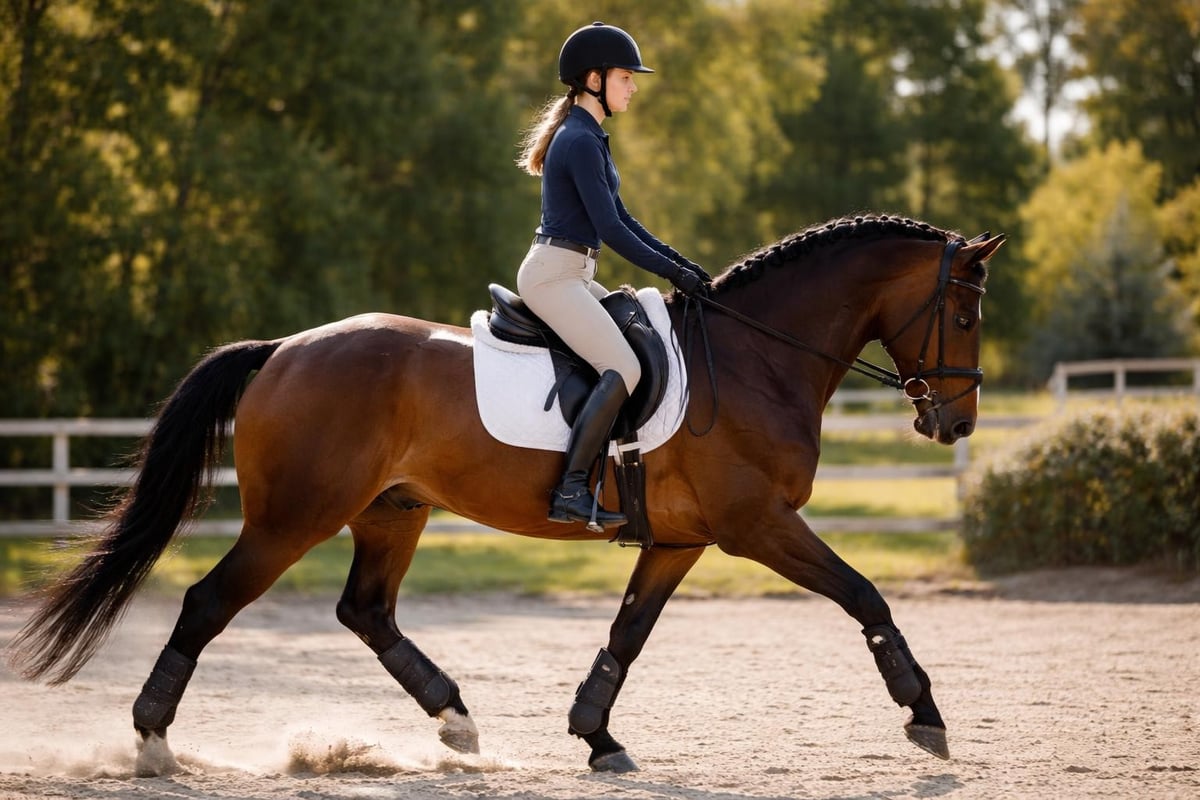
The essential components of English riding attire have been refined through generations of riders solving practical problems. Breeches prevent rubbing from saddle leather. Tall boots protect your calves and provide grip. Helmets absorb impact. But these pieces only work when they fit properly and suit your specific riding discipline.
Modern innovations have transformed what's possible. Technical fabrics now offer four-way stretch, moisture wicking, and UV protection whilst maintaining a refined appearance. Flatlock seams eliminate bulk. Silicone grip keeps your leg stable without adding weight. The best horse riding outfit male options available in 2026 combine these advances with classic styling.
Building Your Core Riding Wardrobe
Start with pieces you'll wear every ride, then expand based on your specific needs. Quality matters more than quantity, particularly for items in direct contact with the saddle.
Breeches: The Foundation Layer
Men's equestrian breeches form the cornerstone of any horse riding outfit male. The fit through the seat and thigh determines whether you'll ride comfortably or spend the day fighting your clothing.
Look for a mid-rise waist that sits securely without requiring a tight belt. The seat should be contoured to accommodate riding position, with extra depth through the crotch compared to regular trousers. Through the thigh, you want a close fit without restriction, tapering smoothly to the ankle.
Full-seat breeches feature grip material across the entire seat and inner thigh, offering maximum stability for dressage or showjumping. Knee-patch designs place grip strategically for slightly less bulk, working well for general riding. Both styles serve different purposes, and many riders keep both in rotation.
Technical considerations include fabric weight (heavier for winter, lighter for summer), stretch recovery (the fabric should return to shape after stretching), and reinforcement at stress points. Quality breeches maintain their shape and colour through hundreds of washes, making them a worthwhile investment.
Shirts and Polo Tops
Your upper body needs similar attention to movement and temperature regulation. Modern riding shirts balance breathability with a refined appearance, using moisture-wicking fabrics that prevent overheating during intense work.
Competition shirts typically feature long sleeves with stretch panels and collar structures that maintain shape under a jacket. For everyday riding, polo shirts or technical tees offer more versatility, working equally well in the saddle and around the yard.
Sleeve length matters more than you might expect. Too short and your jacket or body protector rides up uncomfortably. Too long and excess fabric bunches at the wrist. Look for raglan or set-in sleeves designed to articulate with your arms as you hold the reins.
Jackets and Outer Layers
A proper riding jacket does more than keep you warm. It protects against wind and weather whilst allowing full shoulder movement, and in competition settings, it completes your turnout with structured elegance.
Technical riding jackets combine weather resistance with breathability, often featuring articulated elbows and stretch panels across the shoulders. Performance jackets designed for riders should feel comfortable in riding position, not just when standing still.
For competition, your jacket needs to align with your discipline's requirements whilst fitting properly over a body protector if required. The shoulders should sit flat, the length should cover your waistband, and the sleeves should show just a hint of shirt cuff.
Layering becomes crucial in variable weather. A lightweight base layer, mid-layer fleece or sweatshirt, and weather-resistant outer jacket give you flexibility without bulk. Each layer should work independently and together, maintaining freedom of movement throughout.
Footwear and Protection
Boots complete your horse riding outfit male and directly affect your riding effectiveness. Cheap or ill-fitting footwear compromises your security and comfort every ride.
Riding Boots Explained
Tall boots remain the gold standard for English riding disciplines. They protect your leg, provide grip against the saddle, and support your ankle during the various movements required in riding. The shaft should reach just below your knee when your leg is slightly bent, and the calf measurement must match your leg without gaps or pinching.
Field boots include lacing at the ankle for flexibility, suiting riders who need extra ankle articulation, particularly for jumping. Dress boots feature a seamless front, creating cleaner lines for dressage or showing. Both styles require proper fitting, which often means working with a specialist or trying multiple sizes to find your match.
Breaking in leather boots takes patience. Start with short sessions, use boot stretchers if needed, and apply leather conditioner to soften the material gradually. Modern synthetic alternatives reduce break-in time considerably whilst offering easier care, though many riders still prefer the feel and longevity of quality leather.
Paddock boots paired with half chaps provide an accessible entry point and versatile everyday option. This combination delivers similar protection and appearance to tall boots with easier fitting and lower cost. Look for paddock boots with a small heel to prevent your foot sliding through the stirrup, and ensure your half chaps close securely without gaps.
Safety Equipment
Your helmet represents the single most important piece of safety equipment. Modern riding helmets meet strict impact standards whilst weighing less and ventilating better than ever before. Replace your helmet after any significant impact or every five years, whichever comes first.
Fit is critical. Your helmet should sit level on your head, low enough to protect your forehead but not so low it obstructs vision. The harness should hold it securely without pressure points, and there should be minimal movement when you shake your head.
Body protectors add crucial protection for your torso, particularly relevant if you're jumping or riding young horses. They should fit snugly without restricting breathing or movement, covering from your shoulders to your hips. Choose a level of protection appropriate to your riding activities, and ensure it meets current safety standards.
Seasonal Adaptations
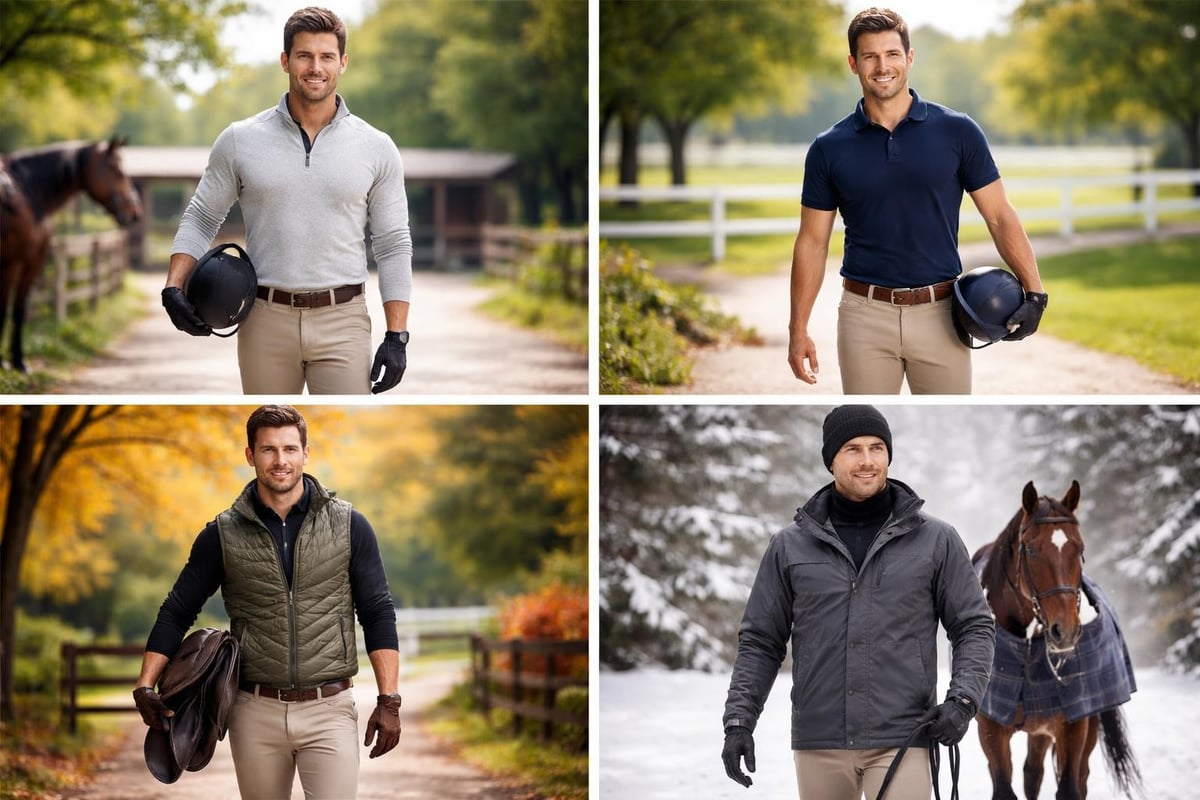
Your horse riding outfit male needs to adapt across seasons without compromising function or requiring a completely different wardrobe each quarter.
Summer Riding Considerations
Hot weather demands breathable fabrics and smart layering choices. Lightweight breeches in technical materials pull moisture away from your skin, reducing discomfort during long rides. Light colours reflect heat, though they require more frequent washing to maintain appearance.
Short-sleeve technical shirts or polo tops provide core cooling whilst maintaining UV protection for your arms. Consider sun sleeves or lightweight long-sleeve options in very bright conditions to prevent sunburn during extended outdoor sessions.
Ventilated helmets make a noticeable difference in summer heat, using larger vents and moisture-wicking liners to improve airflow. Gloves might seem counterintuitive in heat, but lightweight mesh-backed options protect your hands whilst improving rein grip as your palms warm.
Winter Warmth Without Bulk
Cold weather riding requires strategic layering that maintains warmth without restricting movement. Thermal base layers form your foundation, trapping heat close to your skin whilst wicking moisture away. Choose close-fitting options in merino wool or technical synthetics that won't bunch under breeches or shirts.
Mid-layers add insulation without bulk. Fitted fleeces or lightweight down gilets keep your core warm whilst preserving shoulder mobility. These pieces should be long enough to stay tucked in but not so thick they prevent your jacket closing properly.
Waterproof outer layers protect against rain and wind, which present greater challenges than simple cold. Look for jackets with sealed seams, adjustable cuffs, and adequate length to cover your lower back when mounted. The best options balance complete weather protection with breathability to prevent overheating during active riding.
Winter breeches often include fleece lining or thermal construction. Alternatively, thermal base layer tights worn under regular breeches provide warmth you can remove as needed. Avoid excessive thickness that changes your leg position or feel on the horse.
Discipline-Specific Requirements
Different riding disciplines have developed distinct clothing requirements based on their unique demands and competitive traditions. Understanding these helps you build a horse riding outfit male that works for your specific riding style.
Dressage Presentation
Dressage emphasizes classical elegance and precise turnout. Competition attire typically includes white or light-coloured breeches, a white shirt with stock tie, black or navy jacket with tails for higher levels, and tall black dress boots. The overall effect should be understated refinement that doesn't distract from the horse's movement.
Training wear allows more flexibility whilst maintaining the same principles. Dark breeches, plain shirts, and simpler jackets work perfectly for daily schooling. The focus remains on clean lines and proper fit that complements correct riding position.
Showjumping and Eventing
Jumping disciplines prioritize freedom of movement whilst maintaining smart appearance. Navy or neutral breeches, polo shirts or technical tops, and shorter hacking jackets form the standard template. Many riders choose full-seat breeches for additional security over fences.
Cross-country phases require additional safety equipment including body protectors and medical armbands. Your clothing needs to accommodate these extras whilst maintaining freedom through the shoulders and arms for effective riding over varied terrain.
General Riding and Hacking
Everyday riding allows the most flexibility in your horse riding outfit male. Focus on comfort, practicality, and pieces that transition easily from stable to saddle to social settings. Quality breeches or jodhpurs paired with simple shirts or polos work for most situations.
This is where versatile riding clothing really proves its worth. Look for pieces designed to perform in the saddle but styled to work in everyday contexts. That level of versatility means you're properly equipped for riding without maintaining a completely separate wardrobe.
Fit, Function, and Fabric Technology
The gap between adequate and excellent riding clothing often comes down to seemingly small details in construction and materials. Understanding what to look for helps you make better choices.
The Science of Riding Fabrics
Modern technical fabrics have transformed what's possible in equestrian clothing. Four-way stretch materials move with you in every direction, crucial for maintaining position without restriction. These fabrics typically combine synthetic fibres like elastane with natural or technical base fibres for optimal performance.
Moisture management matters more than many riders realize. Fabrics that pull sweat away from your skin keep you comfortable and prevent chafing during long rides. Look for materials described as "moisture-wicking" or "quick-drying" in your base and mid-layers.
Durability considerations include abrasion resistance in high-wear areas like the inner thigh and seat. Quality breeches often feature reinforced panels or denser weaves in these zones. Check seam construction as well – flatlock or bonded seams reduce bulk and friction compared to traditional sewn seams.
Getting the Fit Right
Proper fit transforms how your horse riding outfit male performs. Breeches should allow you to mount and dismount easily whilst maintaining close contact when seated. Your jacket should button comfortably over the thickest layers you'll wear beneath it. Boots should feel snug but not tight, supporting without restricting.
Size guides provide starting points, but individual proportions vary significantly. Don't assume your regular clothing size translates directly to riding wear. Many riders find they need different sizes in different brands based on cut and intended fit.
Try clothing in riding position, not just standing. Sit in a chair with your legs bent at riding angles, raise your arms to rein position, and move through the motions you'll use mounted. This reveals whether shoulder seams restrict, waistbands dig, or leg openings bunch.
Care and Maintenance
Your investment in quality riding clothing pays dividends only if you maintain it properly. Most pieces last for years with appropriate care, making cost-per-wear remarkably reasonable.
Washing and Storage
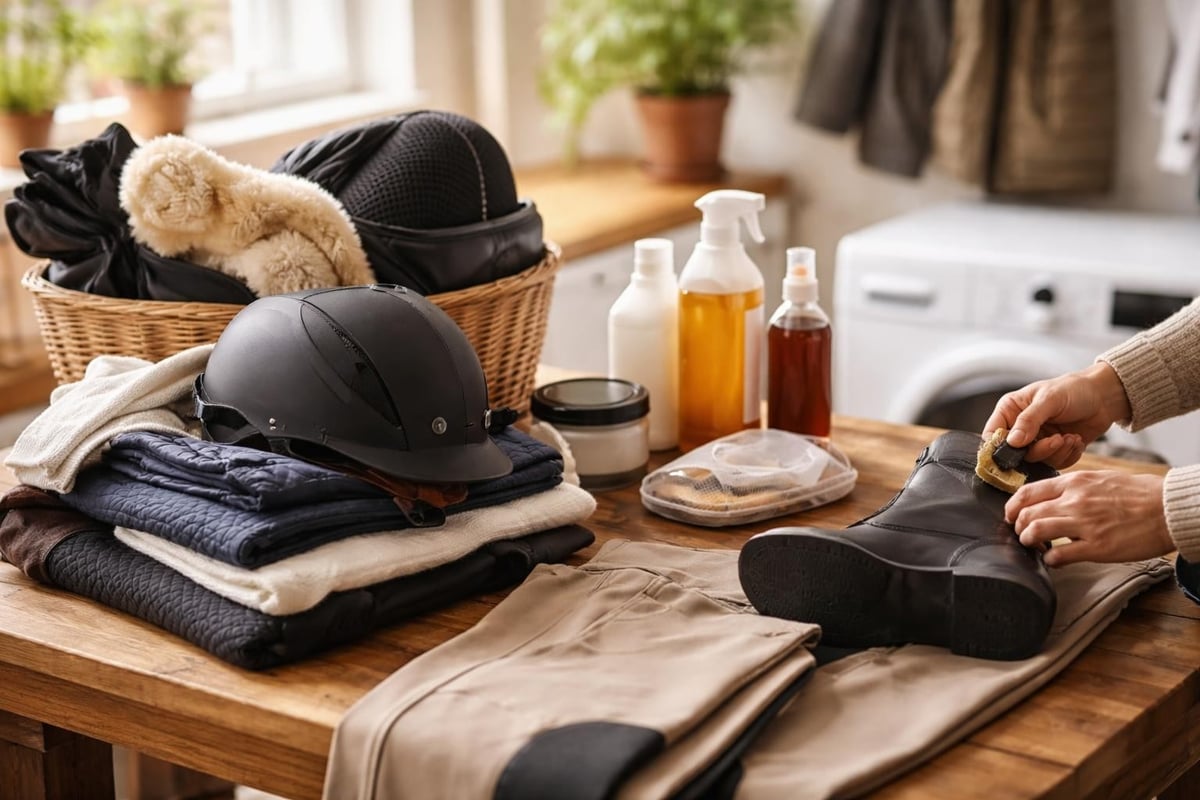
Most technical riding clothing tolerates machine washing, but check labels for specific requirements. Use gentle cycles with mild detergent, avoiding fabric softeners that can reduce moisture-wicking properties. Turn breeches inside out to protect grip surfaces and outer fabric from unnecessary wear.
Air drying preserves elastic properties and prevents shrinkage better than tumble drying. Hang breeches by the waistband, smooth wrinkles, and ensure they dry in shape. Jackets benefit from proper hangers that support the shoulders without stretching the fabric.
Leather boots require regular cleaning and conditioning to maintain suppleness and appearance. Remove dirt after each ride, apply leather cleaner periodically, and condition the leather to prevent cracking. Store boots with boot trees to maintain their shape and prevent creasing.
When to Replace Key Pieces
Even quality riding clothing eventually needs replacement. Breeches showing thin patches in the seat or inner thigh, losing their stretch recovery, or developing persistent odours despite proper washing have reached the end of their useful life. Jackets with failed waterproofing, torn seams, or stretched-out shoulders similarly need replacing.
Safety equipment follows stricter replacement schedules. Helmets should be replaced every five years regardless of condition, or immediately after any significant impact. Body protectors showing compressed foam, damaged shells, or no longer fitting properly must be replaced without delay.
Boots that no longer support your ankle, show cracked leather, or have separated soles compromise both safety and effectiveness. While resoling quality boots can extend their life, extensive cracking or structural damage means it's time for new footwear.
Modern Style Meets Traditional Function
The best horse riding outfit male available in 2026 proves you don't have to choose between looking good and riding well. Contemporary equestrian fashion has evolved to deliver both seamlessly.
Versatility Beyond the Stable
Quality riding clothing now transitions effortlessly from stable to social settings. Well-cut breeches in neutral colours pair with casual shirts or jumpers for a refined country aesthetic. Technical jackets designed for riding often feature understated styling that works perfectly for general outdoor activities.
This versatility matters practically and economically. Clothing that serves multiple purposes reduces the total pieces you need whilst ensuring you're always appropriately dressed. Look for designs that balance equestrian functionality with broader appeal.
Personal Style Within Discipline Standards
While competition requirements set certain parameters, everyday riding allows personal expression through colour choices, fit preferences, and styling details. Some riders prefer traditional navy and white palettes, others incorporate earth tones or subtle patterns.
Your horse riding outfit male should reflect your preferences whilst respecting the practical demands of riding. Choose pieces that make you feel confident and comfortable, understanding that both elements contribute to better riding.
Making Informed Purchases
Building a proper riding wardrobe represents a significant investment. Approaching it strategically ensures you get maximum value and performance from every piece.
Investment Priorities
Start with items that directly affect your riding and safety. A quality helmet, proper boots, and well-fitted breeches form your foundation. These pieces see the most use and have the greatest impact on your comfort and effectiveness.
Add layers and specialist items based on your specific needs. Riders in cold climates need robust winter gear. Those competing regularly require discipline-appropriate competition wear. Casual riders might prioritize versatile pieces that work across multiple contexts.
Understanding what to wear horseback riding helps you distinguish essential purchases from nice-to-have additions. Build your wardrobe thoughtfully rather than accumulating pieces you rarely use.
Quality Indicators
Look for reinforced stitching in high-stress areas, quality hardware like YKK zippers, and thoughtful design details like phone pockets or stirrup loops. These elements indicate attention to function beyond basic construction.
Fabric hand tells you much about quality. Technical materials should feel substantial without being heavy or stiff. Stretch should feel supportive rather than loose. Colours should appear saturated and even across the garment.
Brand reputation matters, particularly for specialized men's riding clothing designed specifically for male riders rather than adapted from women's designs. Companies focused on men's equestrian wear understand the different fit requirements and styling preferences that make riding clothing work for male bodies.
Practical Considerations
Beyond clothing selection, several practical aspects affect how well your horse riding outfit male serves you day to day.
Multi-Purpose Pieces
Some items work harder than others. A quality rain jacket protects you riding, working around the yard, and in everyday situations. Technical base layers regulate temperature for riding and other outdoor activities. Versatile pieces justify higher investment through broader utility.
Look for designs that incorporate practical features without sacrificing style. Zip pockets keep essentials secure. Adjustable hems and cuffs accommodate different conditions. Removable hoods or linings extend seasonal usefulness.
Building Outfit Combinations
Create coherent combinations that work together aesthetically and functionally. Navy breeches pair with virtually any top. Neutral tones mix easily. Having several combinations means less decision-making when you're rushing to ride.
Consider how pieces layer together. Your base layer should fit under your shirt without bunching. Your shirt should fit under your jacket without pulling. Your jacket should close over your thickest mid-layer. Planning these combinations prevents frustrating discoveries when you're already dressed.
Travel and Storage
Riding clothing travels better when packed properly. Roll breeches and soft layers to minimize wrinkles. Transport jackets on hangers when possible. Pack boots with boot trees or stuffed with paper to maintain shape.
At home, store riding clothing where you'll actually use it. Keeping frequently worn pieces accessible encourages proper outfit selection rather than defaulting to whatever's closest. Rotate seasonal items to prevent your everyday storage becoming cluttered with out-of-season gear.
Building a proper horse riding outfit male combines practical necessity with personal style, creating a wardrobe that supports your riding whilst reflecting your standards. The right pieces enhance your time in the saddle, transition seamlessly beyond the stable, and last through years of regular use. Gallant Equestrian designs performance-driven men's riding clothing in New Zealand that delivers exactly this balance. Built to last and styled to transition from stables to everyday life, their collection provides the essential pieces you need. Look the Part. Enjoy the Ride.

