

Horse Riding Show Shirt: The Complete Guide for Men
Mar 24, 2026
A well-chosen horse riding show shirt does more than tick boxes on a competition checklist. It becomes part of your presence in the ring, working with you through every transition and turn. For male riders, finding show shirts that balance technical performance with traditional presentation standards can feel like navigating a minefield of outdated fits and women's sizing charts. The right shirt sits properly at the collar, moves with your shoulders, and maintains its crisp appearance from the first trot to the final salute.
Understanding Show Shirt Requirements
Competition regulations vary across disciplines, but certain standards remain consistent. Most affiliated shows require a shirt with a collar, typically in white or subtle colours approved by your discipline's governing body. The proper fitting of show attire ensures you meet these standards whilst maintaining comfort throughout your class.
Showjumping, dressage, and hunter events each carry specific expectations. A horse riding show shirt for showjumping competitions tends toward more conservative styling, whilst dressage sometimes permits subtle patterns or textures within traditional colour palettes. Understanding these distinctions before purchasing saves disappointment at the show gates.
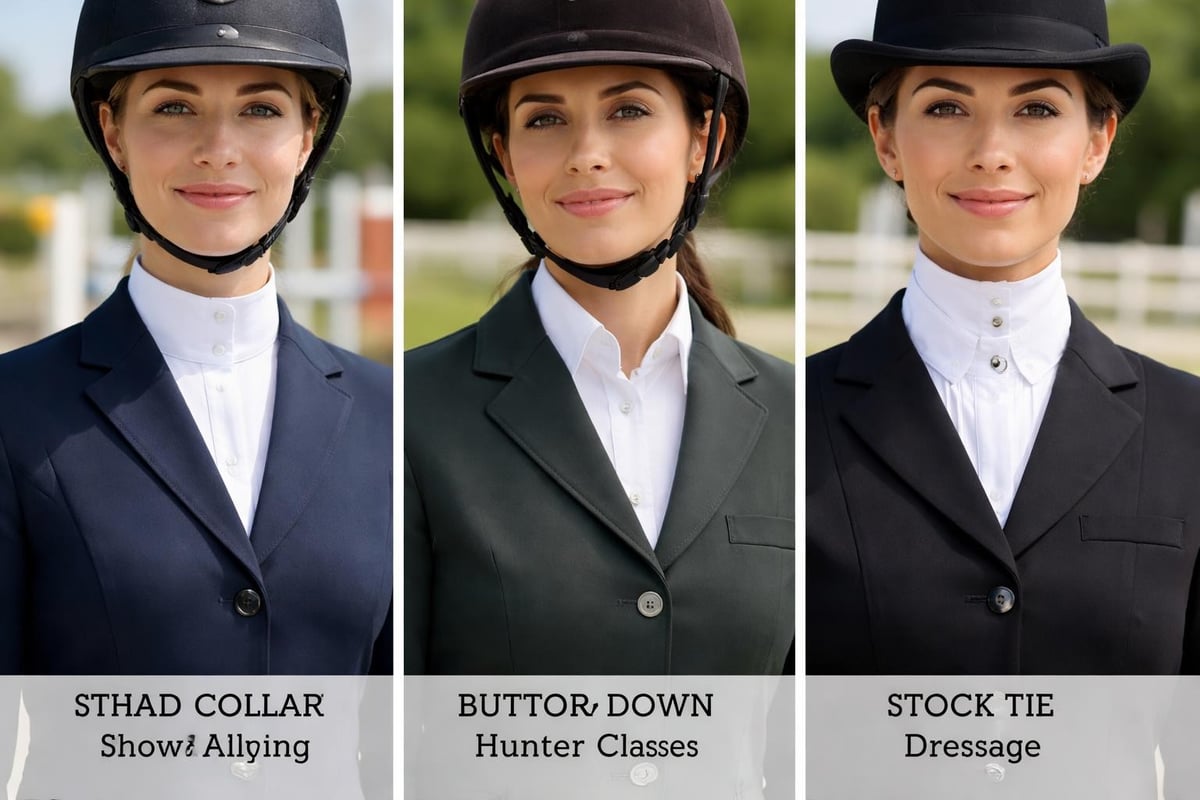
Collar styles matter more than many riders initially realize. Stand collars, traditional button-down collars, and stock tie collars each serve different purposes across disciplines. The collar must sit comfortably against your neck without gaping or restricting movement when you lean forward into jumping position or sit deep for collection.
Fabric Technology and Performance
Modern technical fabrics have transformed what's possible in competition wear. Moisture-wicking materials draw sweat away from your skin, preventing that clammy feeling during summer competitions or intense indoor arenas. These fabrics typically blend synthetic fibres with natural materials, creating shirts that breathe whilst maintaining their structure.
Stretch properties determine how well your shirt moves with you. Four-way stretch allows freedom in all directions, essential when you're adjusting position or reaching forward. Two-way stretch usually runs vertically, providing some give without compromising the shirt's shape. Neither option outranks the other; your choice depends on personal preference and riding style.
Temperature regulation separates adequate shirts from exceptional ones. Quality horse riding show shirt designs incorporate mesh panels or strategically placed ventilation zones, typically under the arms or along the back. These features remain invisible under your jacket but make substantial differences in comfort during long competition days.
Wrinkle resistance keeps you looking sharp without constant ironing. Technical fabrics engineered with wrinkle-resistant properties maintain their crisp appearance even after being packed in kit bags or worn under body protectors. This practical consideration proves particularly valuable during multi-day shows.
Sizing and Fit Considerations
Men's show shirts should fit through the shoulders without pulling or bunching when you raise your arms. The comprehensive sizing guide helps determine your correct measurements, but trying shirts whilst mimicking riding positions reveals fit issues that standing measurements might miss.
Sleeve length becomes critical under a show jacket. Cuffs should extend just beyond your jacket sleeves, creating a polished line without excessive fabric bunching at your wrists. Too short, and your sleeves disappear completely under your jacket. Too long, and you're fighting fabric whilst trying to maintain contact with your horse.
Torso length affects how your shirt sits throughout your ride. A horse riding show shirt that's too short rides up, creating an untidy appearance and uncomfortable bunching. Excessive length creates bulk around your waist, visible under close-fitting jackets. The ideal length sits comfortably at your hip, staying put during mounting and dismounting.
Consider how your shirt will layer with other required garments. Body protectors, stock ties, and show jackets all influence the fit you need. Some riders size up slightly to accommodate protective equipment, whilst others prefer a closer fit that layers more smoothly. Testing your complete outfit before competition day eliminates surprises.
Check our detailed size guides to ensure your measurements translate accurately across different manufacturers and styles.
Style Elements That Matter
Button configurations range from full plackets to hidden closures. Traditional button fronts remain standard in many disciplines, whilst some modern designs feature concealed zippers or magnetic closures that create cleaner lines. Each option carries advantages; buttons allow micro-adjustments to ventilation, whilst hidden closures eliminate visual interruption.
Collar height and structure impact both comfort and presentation. Higher collars provide more formal appearance, particularly under stock ties, but may feel restrictive for riders unused to traditional neckwear. Medium-height collars balance tradition with comfort, suiting most disciplines and personal preferences.
Cuff styles deserve attention beyond aesthetics. Button cuffs allow adjustability throughout the day, whilst elasticated cuffs provide consistent fit without fussing. Some competition shirts incorporate both features, combining button closure with subtle elastic that maintains position during riding.
Subtle details elevate standard designs. Contrasting stitching, tonal patterns, or textured fabrics add visual interest whilst remaining competition-appropriate. These elements distinguish your appearance without crossing into flashy territory that draws negative attention from judges.
Exploring different options within competition wear collections reveals how small design variations create significantly different looks and feels.
Care and Maintenance
Proper washing preserves technical fabrics and extends your shirt's lifespan. Most performance horse riding show shirt designs tolerate machine washing on gentle cycles, but always check care labels before assuming. Cold water protects colours and prevents shrinkage, whilst avoiding fabric softener maintains moisture-wicking properties.
Stain treatment requires immediate attention. Sweat, dirt, and arena dust settle into fibres quickly, becoming harder to remove with time. Pre-treating collars and cuffs before washing prevents yellowing and maintains that crisp white appearance judges expect.
| Fabric Type | Wash Temperature | Drying Method | Ironing Setting |
|---|---|---|---|
| Cotton blend | Cold to warm | Low tumble or hang | Medium heat |
| Technical synthetic | Cold | Hang dry | Low heat or steam |
| Performance stretch | Cold | Flat or hang | No iron needed |
Proper storage prevents unnecessary wear. Hanging shirts on shaped hangers maintains shoulder structure and prevents creases. Garment bags protect white shirts from dust and discolouration, particularly important during off-season storage.

Investing in Quality Pieces
Price ranges for show shirts span from budget-friendly basics to premium technical designs. Understanding what drives these differences helps determine appropriate investment levels for your needs. Entry-level shirts typically use simpler fabrics with fewer technical features, suitable for occasional competitors or those starting out.
Mid-range options balance performance and price, incorporating moisture-wicking fabrics and better construction whilst remaining accessible. These shirts suit regular competitors who show monthly and need reliable performance without premium pricing.
Premium horse riding show shirt designs justify higher costs through superior fabrics, construction quality, and longevity. Flatlock seams prevent chafing, reinforced stress points resist wear, and advanced technical fabrics perform across varying conditions. For serious competitors riding multiple times weekly, these investments pay dividends through durability and consistent performance.
Versatility extends value beyond competition days. Shirts that transition from show ring to training sessions or casual riding maximize your investment. Designs that look appropriate in the ring but don't scream "show shirt" during everyday riding prove most practical for riders balancing limited budgets with multiple needs.
Building a rotation of shirts prevents excessive wear on individual pieces. Three quality shirts outlast six cheap alternatives, maintaining better appearance throughout their lifespan. This approach also ensures you always have clean, pressed options ready regardless of competition schedules.
Matching Your Discipline
Dressage shows often permit more variety in shirt styling, with subtle patterns and textures gaining acceptance in recent years. However, classical white remains safest for important competitions or when uncertain about specific show rules. The formality of dressage demands particular attention to collar construction and overall presentation.
Showjumping competitions, as detailed in showjumping attire rules, typically favour conservative styling. Clean lines and traditional colours keep you within regulations whilst allowing subtle quality differences to distinguish your appearance. Functionality matters equally here; shirts must accommodate the forward position without restricting shoulder movement.
Hunter classes emphasize traditional presentation above all else. Conservative colours, classic styling, and impeccable turnout separate successful competitors from also-rans. Your horse riding show shirt should appear elegant yet understated, directing judges' attention toward your riding rather than your attire.
Eventing across phases requires versatility. Your shirt must work under show jackets during dressage, beneath cross-country colours, and under arena lights during showjumping. This demands fabrics that handle varied conditions whilst maintaining professional appearance throughout long competition days.
Western disciplines follow different conventions entirely, though the principles of professional presentation remain constant. Understanding your specific discipline's expectations prevents costly mistakes when building your competition wardrobe.
Seasonal Adaptations
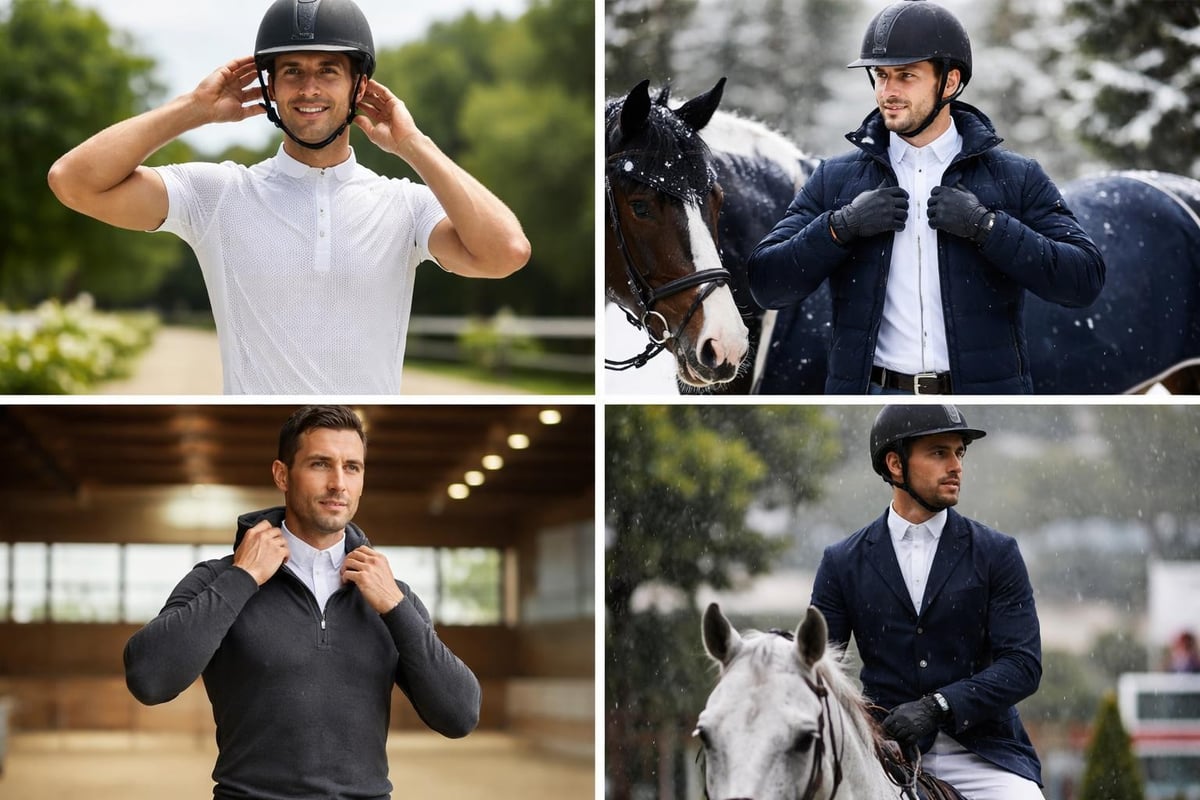
Summer shows demand maximum breathability. Lightweight technical fabrics, mesh inserts, and short-sleeve options (where permitted) help maintain comfort during hot weather competitions. However, ensure any modifications still meet your discipline's regulations; not all shows accept short sleeves even in extreme heat.
Winter competitions require layering strategies. Base layers under your horse riding show shirt provide warmth without bulk, whilst maintaining the clean lines judges expect. Choose base layers that don't create visible lines or bunching under your show shirt.
Indoor arenas create unique challenges. Temperatures fluctuate dramatically between warm-up areas and competition spaces, demanding shirts that adapt quickly. Technical fabrics excel here, managing temperature variations better than natural fibres alone.
Rain and moisture present additional complications. Water-resistant treatments on show shirts help shed light rain during outdoor events, though most riders carry waterproof jackets for serious weather. The key is choosing fabrics that dry quickly if dampened, maintaining appearance rather than becoming transparent or clingy.
Building Your Show Wardrobe
Start with two quality white shirts as your foundation. White works across all disciplines and competitions, providing reliable options whilst you determine your specific preferences. Once you've established competition frequency and discipline focus, add specialized pieces accordingly.
Develop a color strategy that complements your complexion and show jackets. Pale blue suits most riders whilst remaining competition-appropriate for many disciplines. Subtle patterns or textures add variety without requiring extensive wardrobe expansion.
Creating a complete competition outfit requires coordination beyond shirts alone. Reviewing guidance on what to wear in the competition arena ensures all elements work together cohesively.
Consider maintenance requirements when expanding your wardrobe. Multiple shirts in rotation mean less frequent washing per piece, extending overall lifespan. This approach also ensures you're never caught without clean options before important competitions.
Budget thoughtfully across your entire show wardrobe rather than overspending on shirts whilst skimping elsewhere. Balanced investment in quality breeches, jackets, and accessories creates better overall presentation than one expensive shirt paired with substandard other pieces.
Common Fitting Mistakes
Collar gaps ruin otherwise perfect outfits. Your collar should sit flush against your neck without choking or standing away. This issue often stems from incorrect neck measurements or collar styles unsuited to your build. Trying multiple collar configurations solves most gap problems.
Shoulder seams sitting too far down your arms create rumpled, unprofessional appearances. Proper shoulder fit places seams at the natural shoulder point, allowing sleeves to hang correctly and enabling full range of motion without fabric pulling across your back.
Excessive fabric through the torso creates bulk under show jackets, whilst overly tight shirts restrict breathing and movement. Modern tailored fits balance these extremes, providing shaped silhouettes without compression. The style and fit guidance from established brands helps navigate these considerations.
Sleeve length miscalculations appear obvious once you're wearing your complete outfit. Always check sleeve length whilst wearing your show jacket, adjusting as needed. Remember that some shrinkage may occur even with careful washing, so slight additional length provides insurance.
Ignoring rise and fall during riding movements leads to shirts that look fine standing still but ride up or pull uncomfortably when mounted. Test your horse riding show shirt in riding position, reaching forward and sitting back to ensure adequate length and movement.
Choosing the right show shirt combines understanding competition requirements with honest assessment of your needs and preferences. Quality pieces that fit properly, perform reliably, and maintain their appearance through repeated competitions form the foundation of successful show wardrobes. Whether you're preparing for your first affiliated class or your hundredth championship, the principles remain consistent: proper fit, appropriate styling, and technical performance that supports your riding. Gallant Equestrian creates competition wear designed specifically for male riders, combining New Zealand craftsmanship with performance fabrics that transition seamlessly from competition ring to everyday riding. Look the Part. Enjoy the Ride.

