

Horse Riding Suit: The Complete Guide for Men in 2026
Oct 03, 2026
The horse riding suit has evolved considerably from its traditional roots. For men who ride today, it's less about adhering to rigid formality and more about selecting pieces that perform brilliantly across disciplines, weather conditions, and settings. Whether you're schooling at home, competing at the weekend, or simply enjoying a hack through the countryside, understanding how to build a functional, stylish riding wardrobe makes all the difference. The modern approach centres on versatility, technical performance, and pieces that transition seamlessly from stable yard to everyday life.
What Defines a Modern Horse Riding Suit
A horse riding suit isn't a single outfit you pull from the wardrobe. It's a coordinated system of garments designed to work together across varying conditions and activities.
At its core, the suit comprises several essential layers. Base layers manage moisture and regulate temperature against your skin. Mid-layers provide insulation when needed. Outer layers protect from wind and rain whilst allowing freedom of movement. Breeches form the foundation, offering grip, stretch, and durability where you need it most.
The beauty of the contemporary horse riding suit lies in its modularity. You're not locked into wearing every piece simultaneously. Instead, you select components based on what you're doing and the conditions you're facing.
Consider the difference between a summer training session and a winter competition. The former might require only lightweight breeches and a technical polo shirt. The latter demands thermal base layers, a show shirt, a tailored jacket, and possibly waterproof outerwear for the journey.
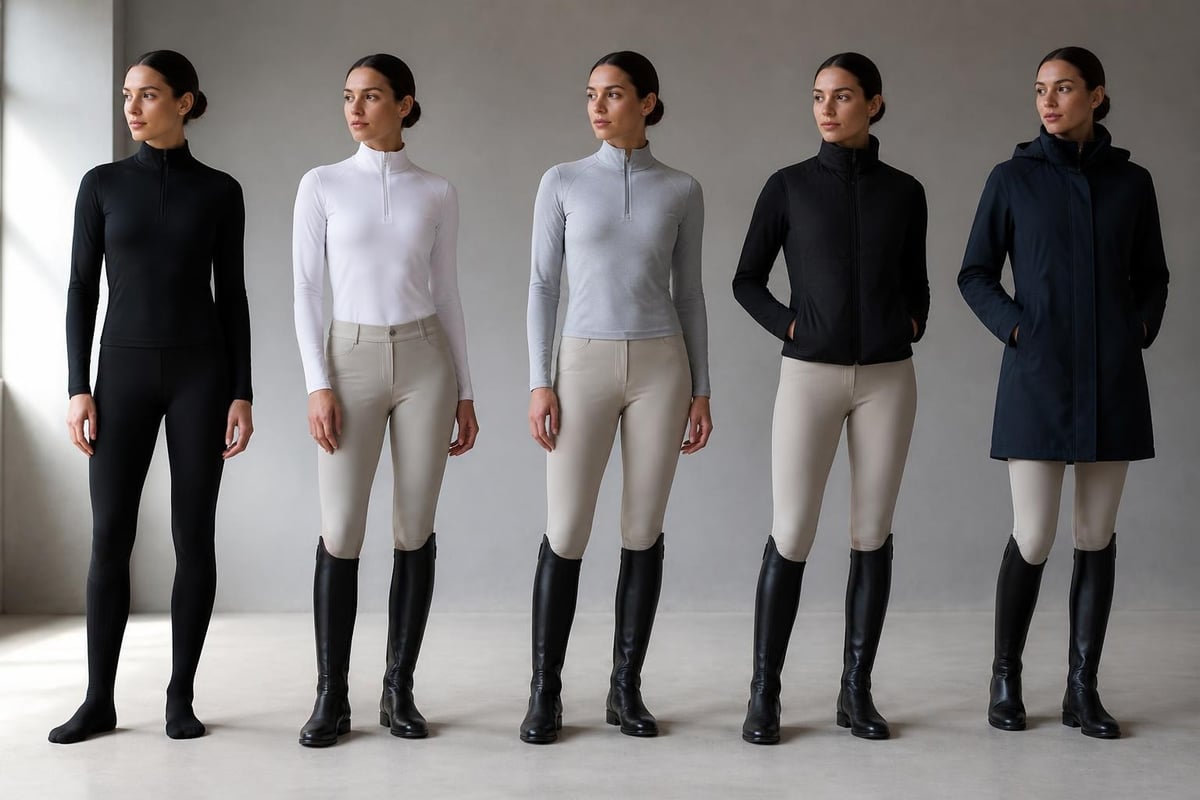
This flexibility extends beyond weather adaptability. Your horse riding suit should perform equally well during everyday riding and in more formal settings. Quality pieces designed with both function and style achieve this balance naturally.
Technical Performance That Actually Matters
Performance in riding clothing isn't marketing speak. It's the difference between comfort and distraction, between moving freely and feeling restricted.
Modern technical fabrics deliver specific benefits. Four-way stretch allows your body to move naturally through posting, jumping, and seat adjustments. Moisture-wicking properties pull sweat away from skin, preventing chafing and maintaining comfort during longer rides. Breathability ensures you don't overheat during intensive work.
| Feature | Benefit | When It Matters Most |
|---|---|---|
| Four-way stretch | Natural movement, no restriction | Jumping, schooling, extended rides |
| Moisture wicking | Dry skin, reduced chafing | Intensive training, warm weather |
| Breathability | Temperature regulation | All conditions, particularly summer |
| Reinforced grip | Security in saddle | All disciplines, especially jumping |
| Quick-dry fabric | Faster recovery, less odour | Multiple daily rides, competition days |
These technical elements work together in a properly designed horse riding suit. The fabrics complement each other rather than working against one another. Your base layer wicks moisture, which then passes through your shirt and jacket rather than becoming trapped.
The International Society for Equitation Science has explored how rider comfort and biomechanics affect performance, demonstrating that restrictive clothing genuinely impacts your riding quality. When you're thinking about your position rather than an uncomfortable seam or restricted shoulder, your horse receives clearer aids.
Building Your Essential Wardrobe
Start with the fundamentals. Quality breeches in versatile colours form the cornerstone of any horse riding suit. Navy, black, and neutral tones offer maximum flexibility across casual riding and competition settings.
Two pairs of everyday breeches and one competition pair provide adequate rotation for most riders. This allows time for washing and ensures you're never caught short. Look for reinforced knee patches or full seat grip depending on your discipline and preference.
Shirts deserve equal consideration. Technical polo shirts work brilliantly for everyday riding, offering breathability and a smart appearance that translates beyond the yard. For competition, a proper show shirt becomes essential. The white show shirt remains the standard across most disciplines.
Layering Strategy for Year-Round Riding
New Zealand weather teaches you quickly about proper layering. The principle applies globally though. Your horse riding suit needs to adapt to morning chill, midday sun, and evening cold within a single ride.
Base layers in merino or technical synthetic provide the foundation. They sit close to skin without restricting movement. During colder months, these become essential components of your horse riding suit rather than optional extras.
Mid-layers bridge the gap between base and outer garments. A quality sweatshirt or lightweight fleece adds warmth without bulk. The key lies in selecting pieces with adequate stretch and freedom through the shoulders and arms.
Winter riding demands specific attention to outer layers. A proper riding jacket protects from wind and rain whilst maintaining the mobility you need in the saddle. Cut matters enormously here. Jackets designed for riding feature longer backs, articulated elbows, and appropriate waist length to prevent riding up.
The transition between seasons often proves trickiest. Spring and autumn require adaptable combinations within your horse riding suit. Layering lightweight pieces provides more flexibility than single heavier garments.
Safety Elements Within Your Riding Kit
Safety equipment integrates into your horse riding suit rather than sitting separate from it. Modern body protectors and air vests have become increasingly sophisticated, offering protection without the restrictive bulk of earlier designs.
The British Horse Society provides comprehensive guidance on selecting appropriate protection. Standards have evolved significantly, with ASTM F1937 and BETA levels providing clear benchmarks for protective equipment performance.
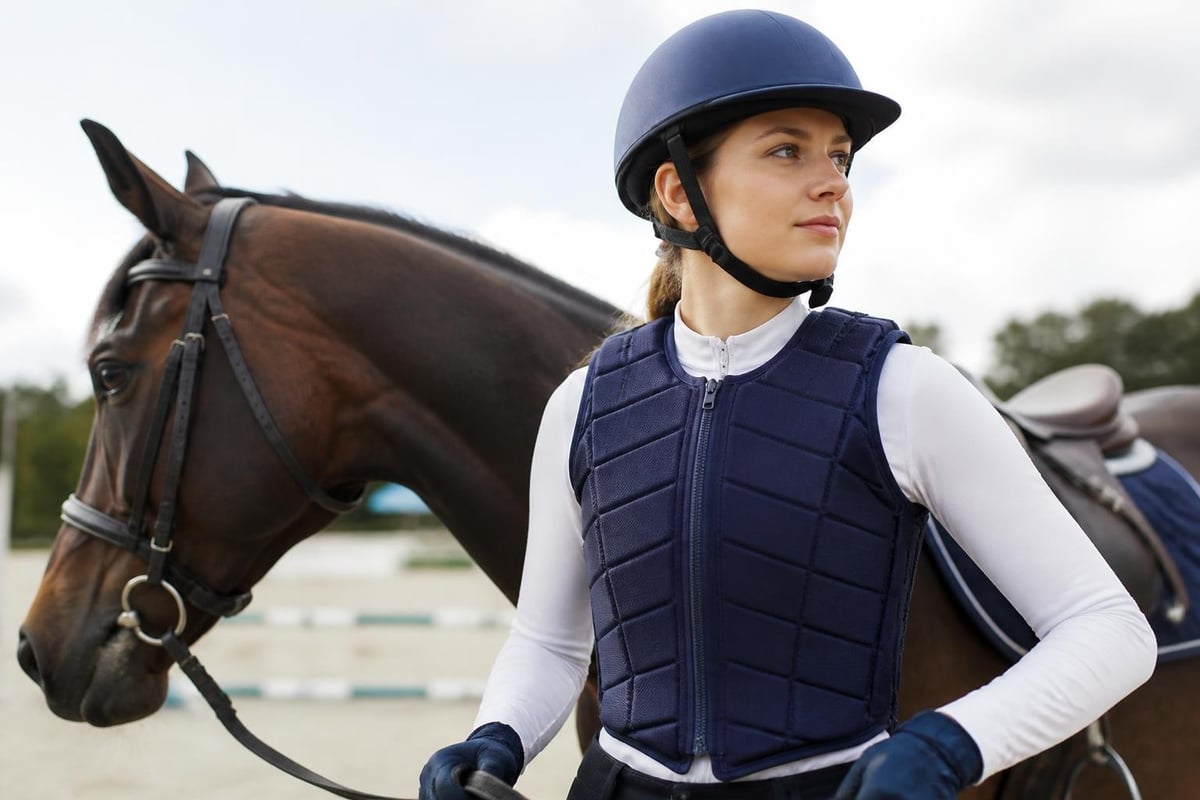
Body protectors now integrate more naturally under jackets and mid-layers. The fit remains crucial though. Protection only works when sized and positioned correctly. The BETA guide explains certification levels and fitting considerations in detail.
Recent regulatory changes demonstrate the evolving standards. The British Horseracing Authority raised minimum safety requirements in late 2024, reflecting improved technology and heightened safety awareness across the sport.
For younger riders and those in club settings, requirements often exceed personal choice. The Pony Club mandates specific protection for cross-country activities, setting clear standards that many adult riders now follow voluntarily.
Your horse riding suit must accommodate these protective elements comfortably. Jackets should fit over body protectors without pulling or restricting. Shirts need adequate length to prevent riding up when protective equipment is worn underneath.
Competition-Specific Considerations
Competition elevates the formality of your horse riding suit whilst maintaining all functional requirements. Discipline dictates specific elements, but certain principles remain constant.
Dressage demands the most formal approach. Dark jackets, white or light-coloured breeches, and proper show shirts create the traditional silhouette. Details matter significantly at this level. Collar styles, button configurations, and proper tie presentation all contribute to the complete picture.
Show jumping and eventing allow slightly more flexibility depending on level. Lower-level competitions often permit dark-coloured jackets and more casual styling. As you progress, expectations increase accordingly.
International competition brings additional considerations. The FEI maintains specific dress code requirements across disciplines, and these standards filter down through national federations. Understanding these regulations prevents unfortunate surprises before entering the competition arena.
The Equestrian Research Atlas examines how clothing choices affect performance beyond pure aesthetics. Comfort and confidence in your appearance translate directly into better riding. When you're secure in how you look, you ride with greater focus and authority.
Practical Care and Longevity
Quality pieces within your horse riding suit represent genuine investment. Proper care extends their functional life considerably whilst maintaining appearance and performance.
Technical fabrics require specific attention. High temperatures damage elastic fibres and moisture-wicking properties. Wash breeches and technical shirts in cool water, avoiding fabric softeners that coat fibres and reduce performance characteristics.
Air drying preserves shape and elasticity better than tumble drying. Breeches particularly benefit from this approach. Hang them by the waistband rather than the legs to maintain proper shape through the seat and thigh.
| Garment Type | Washing Temperature | Drying Method | Special Care |
|---|---|---|---|
| Breeches | 30°C cold | Air dry, hang by waist | Turn inside out, no softener |
| Technical shirts | 30°C cold | Air dry flat or hung | Zip fasteners, no softener |
| Show shirts | 40°C warm | Air dry or low tumble | Button up, collar shapers |
| Jackets | Professional clean or 30°C | Air dry only | Remove liners, follow labels |
| Base layers | 30°C cold | Air dry | Inside out, no softener |
Rotation between pieces reduces wear on individual items. Three pairs of breeches serving daily riding will outlast two pairs worked harder with less recovery time. The same principle applies throughout your horse riding suit.
Storage matters more than many riders realise. Proper hanging prevents creasing and maintains shape. Jackets need adequate space on hangers that support shoulders properly. Folding technical fabrics creates permanent creases that compromise both appearance and performance.
Building Quality Over Time
Few riders assemble a complete horse riding suit immediately. Building gradually around core pieces makes more sense both financially and practically.
Start with excellent breeches. These take the most punishment and directly affect your riding comfort. Two pairs of quality everyday breeches prove more valuable than four cheaper alternatives that deteriorate quickly.
Add versatile shirts next. A couple of technical polo shirts handle most casual riding situations brilliantly. They work equally well for hacking, lessons, and informal competition.
Layer pieces and outerwear come third. You can manage with borrowed or basic options initially whilst you establish which styles and weights suit your riding patterns and local climate.
Competition wear enters last unless you're competing regularly from the start. These pieces see less frequent use, making them lower priority until needed.
The complete riding kit approach offers another path, providing coordinated pieces that work together from the beginning whilst maintaining quality standards throughout.
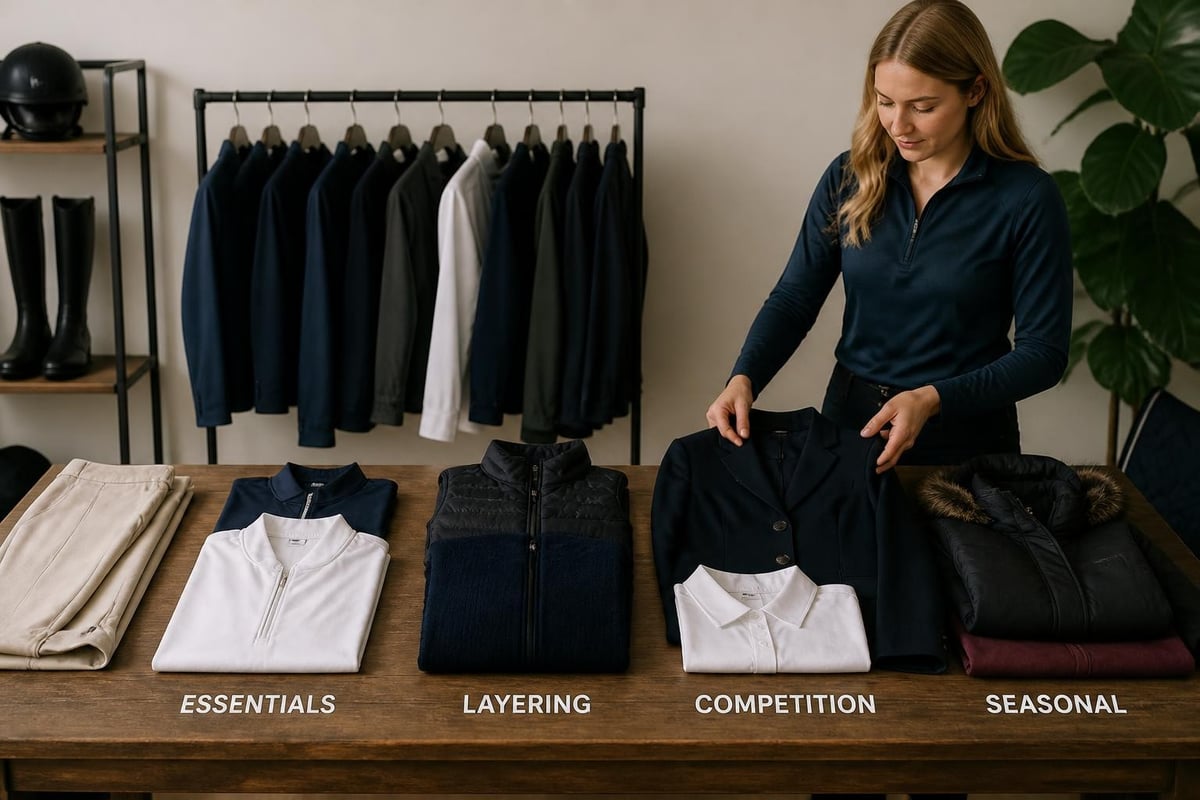
Quality pieces often cost more initially but deliver better value long-term. Fabric performance, construction quality, and thoughtful design details separate garments that last seasons from those requiring replacement after months.
Style That Translates Beyond the Yard
The modern horse riding suit shouldn't confine itself to equestrian settings. Quality pieces transition naturally into everyday wear, extending their utility and value.
Well-designed breeches in neutral colours work surprisingly well beyond riding. Paired with boots and a casual jacket, they function as smart-casual trousers for various situations. The key lies in selecting styles without excessive equestrian detailing.
Technical shirts definitely cross over. Polo shirts and quarter-zips designed for riding often perform better than standard casual alternatives. The moisture-wicking and stretch properties that benefit riding make them exceptionally comfortable for general wear.
Jackets prove most versatile. A quality riding jacket in classic styling works for country walks, casual social occasions, and general outdoor activities. The weather protection and mobility built into proper riding jackets serves well across contexts.
This versatility matters for practical and financial reasons. When components of your horse riding suit serve multiple purposes, the investment becomes significantly more justifiable. You're not maintaining separate wardrobes for riding and life beyond it.
The challenge lies in selecting pieces that balance equestrian function with broader appeal. Avoid excessive branding, overly technical styling, or colours that announce "riding gear" too obviously. Classic cuts in versatile colours integrate seamlessly.
Regional and Seasonal Adaptations
Climate and local riding culture influence your horse riding suit considerably. What works brilliantly in temperate New Zealand requires adjustment for Scottish winters or Mediterranean summers.
Hot climates demand maximum breathability and sun protection. Lightweight technical fabrics become essential rather than optional. Colours matter too. Lighter shades reflect heat whilst darker options absorb it.
Cold weather pushes layering to the forefront. Your horse riding suit expands to include proper base layers, insulated mid-layers, and weather-resistant outer shells. The challenge lies in maintaining mobility whilst adding necessary warmth.
Wet climates require waterproof options that actually work. Many "water-resistant" garments fail under sustained rain. Proper waterproof-breathable fabrics keep you dry without creating internal condensation that defeats the purpose.
Local riding culture also shapes expectations. Some regions maintain more formal traditions whilst others embrace relaxed approaches. Understanding these norms helps you select appropriate pieces for your specific context.
Competition culture varies similarly. Continental European showing maintains different styling expectations than British equivalents. American hunter/jumper tradition differs from both. Research your specific discipline and region to avoid missteps.
Making Informed Purchasing Decisions
Evaluating quality in riding clothing requires looking beyond surface appearance. Several factors indicate whether a piece will perform as needed.
Fabric weight and hand feel provide immediate clues. Quality technical fabrics have substantial body without stiffness. They recover quickly when stretched and feel smooth rather than rough or papery.
Stitching reveals construction quality. Examine stress points particularly closely. Reinforced stitching at inseams, pocket corners, and waistbands indicates thoughtful construction. Loose threads or irregular stitching suggest rushed manufacturing.
Hardware matters more than it might seem. Quality zippers, buttons, and fastenings withstand repeated use without failing. YKK zippers set the standard. Reinforced button attachment prevents premature loss.
Sizing consistency becomes crucial when building your horse riding suit from a single brand. Reliable sizing means future purchases fit predictably without constant returning and exchanging.
Investment Versus Budget Pieces
Not every component of your horse riding suit demands premium investment. Strategic allocation makes sense financially whilst maintaining overall quality.
Invest heavily in breeches. These endure the most stress and directly affect riding comfort. Quality construction and technical fabric justify higher prices through extended functional life and better performance.
Shirts occupy middle ground. Quality matters, but extreme premium pricing doesn't necessarily deliver proportional benefits. Focus on fabric performance and construction rather than brand names.
Outerwear deserves careful investment, particularly waterproof pieces. Cheap rain jackets fail quickly and leave you soaked. Quality waterproof-breathable garments last seasons and actually keep you dry.
Base layers and accessories can lean toward budget options initially. These hide under other garments and face less scrutiny. Upgrade as budget allows rather than delaying riding for perfect kit.
The complete selection of riding products available today can feel overwhelming. Focus on immediate needs rather than attempting completeness. Your horse riding suit evolves with your riding journey.
The Performance-Style Balance
Function and appearance needn't conflict in your horse riding suit. The best pieces deliver both seamlessly.
Performance requirements remain non-negotiable. Your clothing must allow proper riding position, accommodate necessary safety equipment, and withstand the physical demands of equestrian sport. Compromise here undermines everything.
Style matters though. Confidence in your appearance translates into better riding. When you feel properly turned out, you carry yourself differently. This isn't vanity. It's psychology that affects performance.
The intersection of these priorities defines quality equestrian clothing. Technical fabrics cut with style awareness. Classic silhouettes incorporating modern performance features. Colours and details that respect tradition whilst embracing contemporary design.
Recent research through studies examining rider biomechanics demonstrates how clothing affects movement patterns and shock attenuation. Restrictive or poorly designed garments genuinely impact your riding quality. Your horse riding suit isn't purely aesthetic. It's functional equipment that enables better performance.
This understanding should guide every purchase decision. Ask whether each piece enhances your riding rather than merely looking appropriate. The best components of your horse riding suit accomplish both naturally.
A thoughtful horse riding suit balances technical performance, safety, style, and versatility across all riding contexts. Building quality pieces gradually creates a wardrobe that serves you reliably for years whilst looking sharp in any setting. Gallant Equestrian designs precisely these kinds of pieces for men who ride with purpose and style. Our New Zealand-designed collection delivers the performance you need with the refined appearance you want, transitioning seamlessly from stable yard to everyday life. Look the Part. Enjoy the Ride.

