

Men's Waterproof Horse Riding Jacket Guide 2026
Sep 25, 2026
Riding in British weather means accepting that rain isn't just a possibility-it's a regular riding companion. A quality mens waterproof horse riding jacket transforms wet days from miserable endurance tests into perfectly manageable sessions. The right jacket keeps you dry without turning you into a mobile sauna, moves with you in the saddle, and looks presentable whether you're schooling at home or hacking across open countryside. Getting it right matters, because nothing undermines your focus faster than water trickling down your neck or fabric bunching under your arms mid-canter.
Understanding Waterproof Technology in Riding Jackets
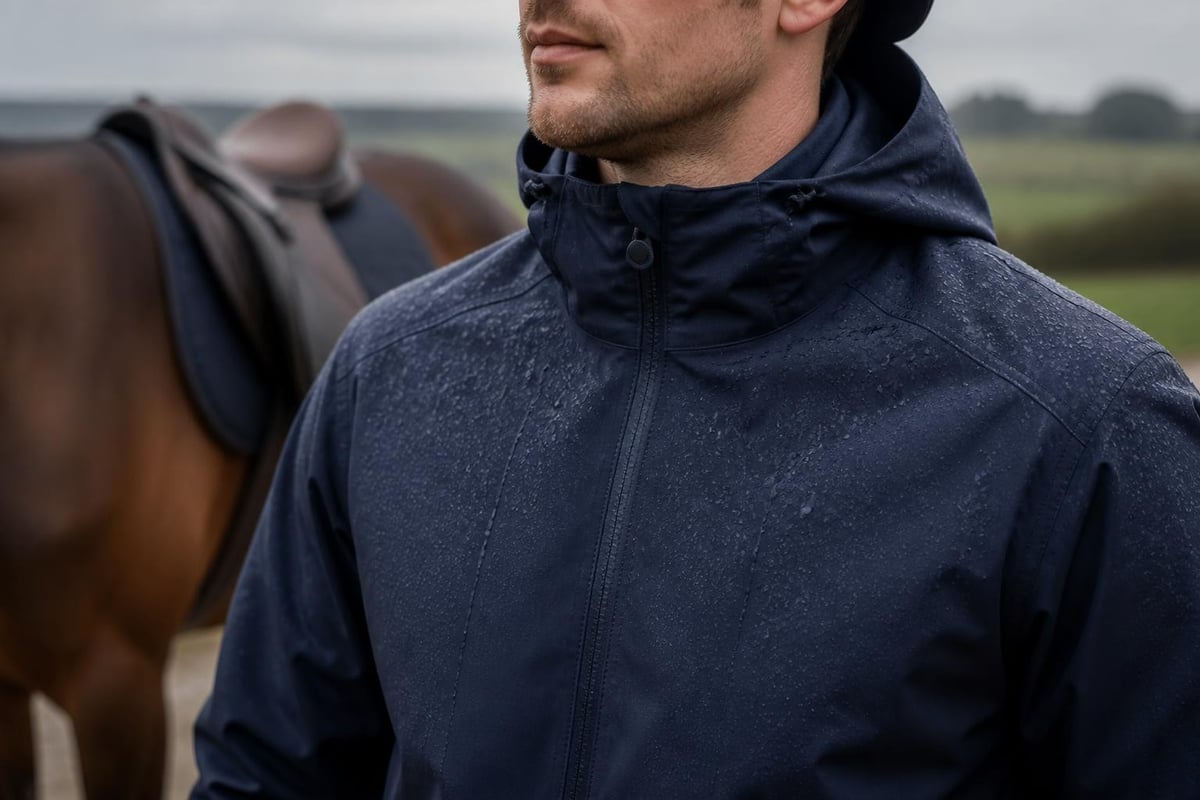
Modern waterproof jackets rely on sophisticated fabric technology that balances two opposing needs: keeping rain out whilst letting moisture vapour escape. Most quality riding jackets use either laminated membranes or tightly-woven fabrics treated with durable water repellent (DWR) coatings.
The membrane approach, popularized by GORE-TEX and similar systems, works by incorporating a microporous layer that's bonded to the outer fabric. These microscopic pores are large enough for water vapour molecules (from your sweat) to escape, but too small for liquid water droplets to penetrate. It's elegant engineering that actually works in the saddle.
How waterproof fabrics function involves three key components working together: the outer face fabric (often nylon or polyester), the waterproof/breathable membrane or coating, and the DWR treatment on the surface. That DWR finish is what makes water bead up and roll off rather than soaking into the fabric. When DWR wears off, your jacket feels "wet" even though water isn't getting through-the fabric just holds moisture on its surface, which kills breathability.
Breathability Metrics That Actually Matter
When you're riding, you generate heat and moisture. A jacket that doesn't breathe turns into a portable steam room within twenty minutes. Manufacturers measure breathability using MVTR (Moisture Vapour Transmission Rate), typically expressed in grams per square metre over 24 hours. A decent riding jacket should hit at least 10,000g/m²/24hr, with premium options reaching 20,000g or higher.
Understanding these specifications helps you compare options intelligently. Hydrostatic head measurements (usually 10,000mm minimum for reliable waterproofing) tell you how much water pressure the fabric withstands before leaking. For riding, where you're not typically fighting gale-force horizontal rain, 10,000-20,000mm handles most conditions brilliantly.
The reality? Numbers only tell part of the story. Jacket design, ventilation placement, and fit matter enormously. A jacket with mediocre breathability specs but excellent pit zips and back vents often outperforms a technically superior jacket with poor airflow design.
Riding-Specific Design Features
A mens waterproof horse riding jacket isn't just a hiking shell with horse motifs. Proper riding jackets incorporate specific design elements that acknowledge what actually happens in the saddle.
Longer Back Panel
Standard outdoor jackets ride up when you're seated in riding position, exposing your lower back to rain and creating uncomfortable bunching. Quality riding jackets feature extended rear panels that stay put when you're mounted, maintaining coverage without excess fabric pooling.
Articulated Sleeves and Shoulders
Your arms move constantly when riding-holding reins, adjusting position, reaching forward over jumps. Appropriate riding wear guidance emphasizes freedom of movement alongside weather protection. Pre-curved sleeves and gusseted underarms let you move naturally without the jacket binding or restricting your range of motion.
Two-Way Zips and Secure Pockets
A two-way front zip allows you to open the bottom section whilst staying protected up top, reducing bunching across your lap when mounted. Secure, water-resistant pockets matter too-your phone, keys, and treats need protection without creating bulky protrusions that dig into you or your horse.
Visibility and Safety Considerations
Riding often means sharing roads with traffic or navigating bridleways in poor light. Hi-vis guidance for riders recommends reflective elements or fluorescent colors when riding in low visibility conditions. Many quality riding jackets incorporate reflective strips or piping without sacrificing style-subtle enough for everyday wear but visible when headlights catch them.
For serious road work or winter evening rides, consider jackets with removable hi-vis panels or those designed in lighter colors with strategic reflective placement. You can always layer a proper hi-vis tabard over a darker jacket when conditions demand it.
Sizing and Fit for Mounted Work
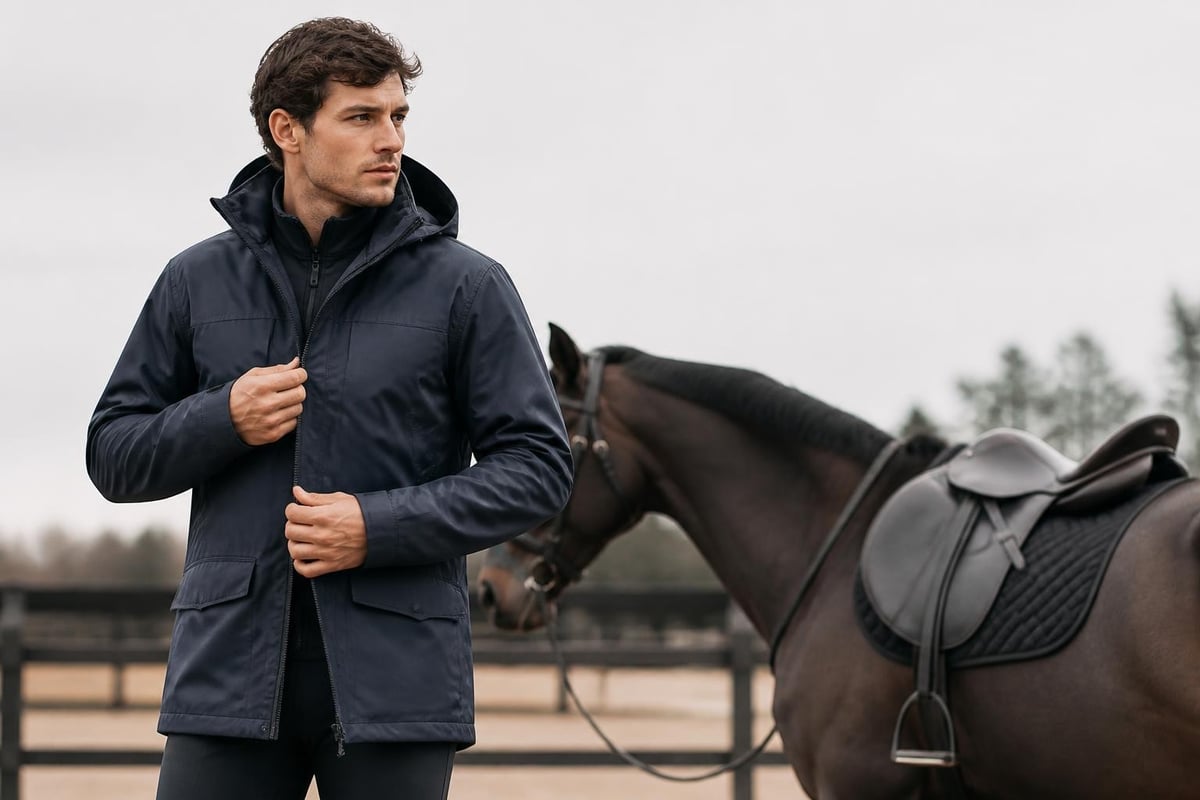
Getting the fit right on a mens waterproof horse riding jacket requires thinking beyond standing measurements. You need a jacket that fits comfortably when you're in riding position-slightly forward-leaning, arms extended, shoulders mobile.
Layering Considerations
British weather demands layering flexibility. Your jacket needs to accommodate a base layer on mild days and a fleece or hoodie underneath when temperatures drop. Too tight, and you can't add insulation; too loose, and the jacket flaps uselessly in the wind.
Try jackets on whilst wearing your typical riding layers. Raise your arms forward as if holding reins, then overhead. The jacket should move with you without pulling across the shoulders or exposing your wrists. Check that the hem sits where it should when you're seated-ideally just covering your belt line at the back.
| Fit Checkpoint | What to Look For | Why It Matters |
|---|---|---|
| Shoulder seams | Sit at natural shoulder point | Prevents restriction and binding |
| Sleeve length | Covers wrists when arms extended | Stops rain running into gloves |
| Back length | Covers lower back when seated | Maintains protection in saddle |
| Chest/underarm | Room to layer without tightness | Allows breathability and movement |
| Waist adjustment | Drawcord or elastic tabs | Prevents wind and rain entry |
Sleeve Cuff Design
Adjustable cuffs with Velcro or snap closures let you seal out rain whilst accommodating different glove thicknesses. Some riders prefer elasticated inner cuffs that sit under gloves, creating a proper seal. The right choice depends on whether you typically ride with thin summer gloves or insulated winter versions.
Performance Fabrics and Construction Quality
Not all waterproof jackets age equally. A proper mens waterproof horse riding jacket needs to withstand regular use in challenging conditions-mud, sweat, fence rubbing, and repeated washing.
Seam Sealing and Weak Points
Every seam in a waterproof jacket creates a potential leak point. Quality jackets use fully taped seams, with waterproof tape applied to every stitched join on the inside. Critical stress points-shoulders, underarms, and pockets-deserve particular attention. Check that seam tape is smooth and properly bonded, without bubbles or gaps.
Zips represent another vulnerability. Water-resistant zips with internal storm flaps provide the best protection. The main front zip should have a substantial flap that snaps or Velcros over it, creating an overlapping barrier that sheds water away from the teeth.
Durability and Face Fabric Choices
Face fabric weight matters for longevity. Ultra-lightweight packable jackets (often 2-2.5 layer construction around 100-150g) work brilliantly for emergency use but won't survive daily riding. For regular use, look for heavier-duty fabrics (200-300g) with 3-layer construction, where the membrane is permanently bonded between outer and inner layers.
Ripstop weaves add tear resistance without much weight penalty. Reinforced panels at high-wear areas-elbows, shoulders, lower back where you lean against fences-extend jacket life considerably. These don't need to be obvious patches; many quality jackets integrate reinforcement subtly.
Maintaining Waterproof Performance
Even the finest mens waterproof horse riding jacket loses effectiveness without proper care. The good news? Maintenance isn't complicated, just consistent.
Washing and Reproofing
Dirt, sweat, and stable dust gradually clog the fabric's pores and degrade the DWR finish. Regular washing actually improves performance by removing these contaminants. Proper washing techniques involve technical cleaners rather than standard detergent, which can leave residues that block breathability.
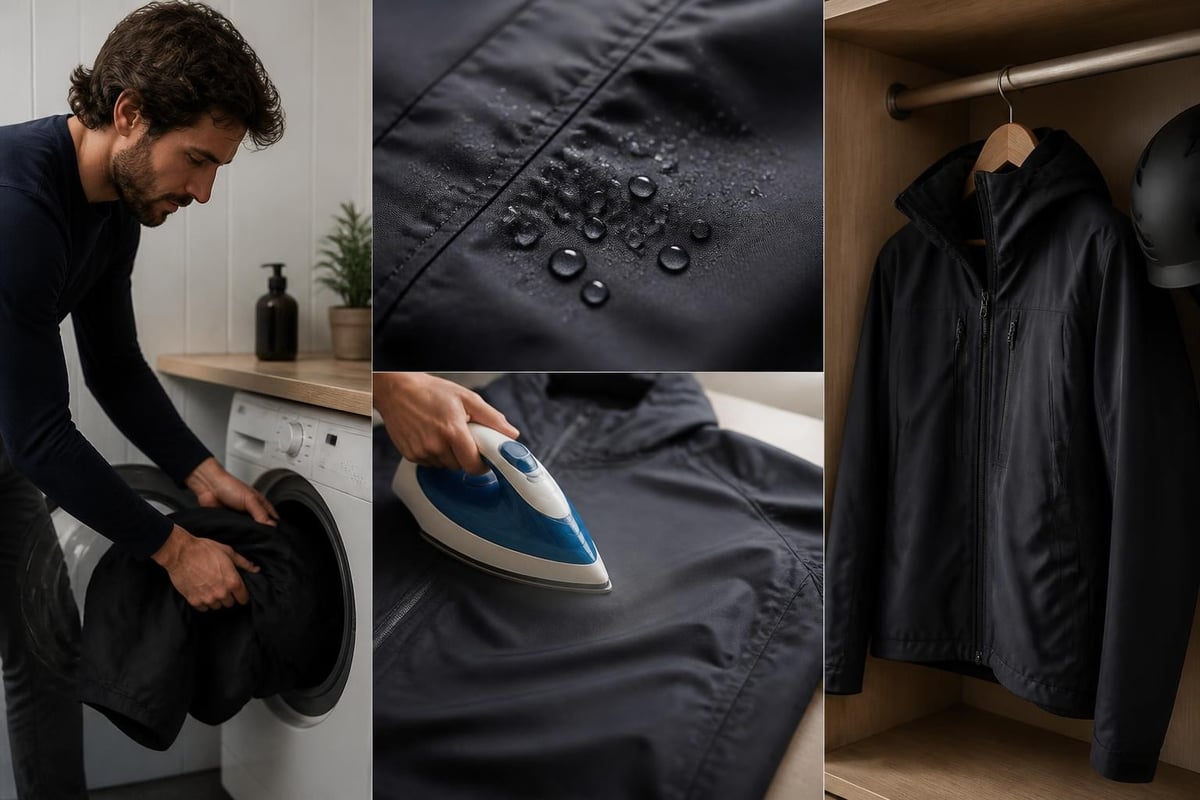
Wash your jacket when it stops beading water effectively-usually every 10-15 rides in muddy conditions, less often if you're primarily arena riding. Use a technical wash designed for waterproof garments, follow the temperature recommendations on the care label, and skip the fabric softener entirely.
After washing, tumble drying on low heat or ironing on a cool setting can reactivate the DWR treatment. The heat causes the water-repellent polymers to reform their protective structure. If water still doesn't bead after this, it's time to apply a spray-on or wash-in DWR reproofing treatment.
Storage and Longevity
Store your jacket properly when not in use-hung on a proper hanger in a dry, well-ventilated space. Don't leave it crumpled in your car boot or stuffed into a too-small bag, which degrades both the fabric and the waterproof coating over time. Before long-term storage, ensure the jacket is completely clean and dry.
Balancing Performance and Practicality
The ideal mens waterproof horse riding jacket balances multiple requirements-weather protection, breathability, durability, and versatility. A jacket that only works for riding limits its value; one that transitions easily to everyday wear delivers better return on investment.
Versatility Beyond the Stables
Quality riding jackets shouldn't scream "equestrian" unless you want them to. Subtle design, neutral colors, and clean lines mean your jacket works equally well for walking the dog, running errands, or weekend countryside outings. Gallant Equestrian's approach focuses on this seamless transition-riding gear that fits naturally into your broader wardrobe.
Look for jackets in classic navy, black, olive, or neutral tones that coordinate with both riding breeches and casual jeans. Avoid excessive branding or overly technical styling if you value versatility. The best riding jackets are the ones you actually wear, not the ones that stay folded in your tack room because they're too specialized.
Climate-Specific Choices
British weather varies considerably from the relatively mild South West to the harsher Scottish Highlands. Your local climate should influence your choice. If you ride primarily in steady drizzle with mild temperatures, prioritize breathability over extreme waterproofing. In areas with heavy downpours and cold winds, lean toward more robust weather protection even if breathability takes a slight hit.
Some riders maintain two jackets-a lighter, highly breathable option for spring and autumn, and a heavier, more protective choice for deep winter. This approach works brilliantly if you ride year-round in varied conditions, though a single well-chosen mid-weight jacket handles most situations competently.
Understanding Standards and Certifications
Professional waterproof clothing often carries certifications that indicate tested performance levels. The EN 343 standard, for instance, defines requirements for protective clothing against rain. Understanding these markings helps you make informed choices.
EN 343 specifications rate garments on both water resistance (Classes 1-3) and breathability (Classes 1-3). Class 3 in both categories represents the highest performance. Whilst most riding jackets aren't marketed with EN 343 ratings-they're not required for non-industrial use-the same principles apply. Higher hydrostatic head numbers and better breathability metrics indicate superior performance.
PFAS and Environmental Considerations
Recent years have brought increased scrutiny to PFAS (per- and polyfluoroalkyl substances) used in traditional DWR treatments. These "forever chemicals" persist in the environment and bodies. Understanding PFAS concerns helps contextualize the industry's shift toward PFAS-free alternatives.
Many manufacturers now offer PFAS-free DWR treatments that perform nearly as well as traditional versions whilst carrying less environmental burden. When choosing between otherwise similar jackets, PFAS-free DWR represents a worthwhile consideration-you sacrifice minimal performance for notably reduced environmental impact.
Investment and Value Considerations
A proper mens waterproof horse riding jacket represents a significant investment-quality options typically range from £150-400. That's considerable, but spread across years of regular use, the per-ride cost becomes quite reasonable.
Price vs. Performance Sweet Spot
Entry-level jackets (£100-150) often use 2 or 2.5 layer constructions with basic waterproofing. They'll keep you dry in light rain but struggle with sustained downpours or extended wear. Mid-range options (£200-300) typically offer 3-layer construction, better breathability, and more durable fabrics-the sweet spot for most regular riders. Premium jackets (£350+) bring marginal performance improvements and often emphasize brand prestige over practical benefits.
For riders who work at the yard several times weekly regardless of weather, the mid-to-upper price range makes sense. Occasional riders who primarily school indoors might find an entry-level jacket perfectly adequate. Your riding frequency and weather exposure should guide your budget allocation.
| Price Range | Typical Features | Best For |
|---|---|---|
| £100-150 | 2-2.5 layer, basic DWR, lighter fabrics | Occasional riders, emergency backup |
| £200-300 | 3-layer construction, quality membranes, riding-specific design | Regular riders, year-round use |
| £350+ | Premium fabrics, extensive features, brand prestige | Daily riders, professionals, style-conscious riders |
When to Replace Your Jacket
Even quality jackets eventually wear out. Common failure modes include delaminating membranes (the coating peels away from fabric), permanently degraded DWR that won't respond to reproofing, failed seam tape, or damaged zips. Physical damage-tears, burns from stable equipment, persistent stains-also signals replacement time.
If your jacket is fundamentally sound but showing age, professional reproofing services can extend its life significantly. For jackets with sentimental value or discontinued designs you love, this represents a worthwhile option.
Practical Jacket Selection Process
Choosing your mens waterproof horse riding jacket benefits from a methodical approach rather than impulse buying based on appearance alone.
Step One: Define Your Requirements
Consider your typical riding conditions, frequency, and secondary uses. Riders who primarily hack across open countryside in changeable weather need different features than those doing mostly arena work with occasional outdoor sessions. Think about layering needs, storage requirements, and visibility preferences.
Step Two: Research and Shortlist
Read reviews from actual riders rather than generic outdoor gear assessments. Riding-specific stresses differ from hiking or cycling. Look for feedback on how jackets perform in the saddle over time, not just initial impressions. Check return policies before ordering-you need to test fit whilst wearing riding layers and moving through riding positions.
Step Three: Test Properly
When jackets arrive, test them systematically. Wear your normal riding layers underneath. Move through mounting motions, reach forward and back, rotate your shoulders. Sit in a chair in riding position and check for bunching or exposure. Ensure you can access pockets comfortably whilst mounted.
Check all features actually work-zips run smoothly, adjusters grip properly, storm flaps overlap adequately. These details matter more than you'd expect when you're fumbling with cold, wet hands at the yard.
Step Four: Initial Break-In
New waterproof jackets often feel slightly stiff. Wear yours for a few short sessions before relying on it for a long hack in foul weather. This helps you identify any fit issues whilst they're still returnable and lets the fabric relax slightly. Some riders find that breathability improves after the first wash removes manufacturing residues.
Color and Style Considerations
Whilst performance trumps appearance, there's no reason you can't have both. The right mens waterproof horse riding jacket enhances your overall presentation whilst delivering proper weather protection.
Timeless Versus Trendy
Classic colors-navy, black, dark green-never look dated and coordinate effortlessly with most riding wardrobes. Brighter colors or current trend shades risk looking tired within a season or two. Given the investment involved and expected jacket lifespan (five-plus years with good care), timeless choices make practical sense.
That said, if a specific color genuinely appeals to you and you'll wear the jacket more enthusiastically because you like how it looks, that matters too. A jacket you're excited to put on gets used more often, justifying its cost more thoroughly than one that's theoretically optimal but practically uninspiring.
Coordinating with Your Riding Wardrobe
Consider what you typically wear-both riding breeches and casual trousers if you want versatility. A jacket that works with navy breeches, olive chinos, and black jeans offers more utility than one that only pairs well with specific items. Neutral outerwear expands your options considerably.
Small details matter for overall appearance. Contrasting zips, subtle piping, or minimal reflective accents can elevate a jacket from purely functional to genuinely attractive without sacrificing performance or adding visual clutter.
Selecting the right mens waterproof horse riding jacket comes down to understanding how modern waterproof technology works, identifying riding-specific design features that matter, and choosing construction quality that matches your use patterns. Proper care extends your investment considerably, turning a quality jacket into a dependable riding companion for years.
Gallant Equestrian offers performance-driven riding gear that transitions naturally from stables to everyday life-designed in New Zealand to withstand serious weather whilst maintaining the refined style you expect. Our collection focuses on essentials that actually work, built to last through seasons of proper riding. Look the Part. Enjoy the Ride.

