

Long Horse Riding Coats: The Complete Guide for Men
Sep 09, 2026
Long horse riding coats represent one of equestrian clothing's most enduring and practical traditions. Whether you're preparing for a dressage test, heading out on a cold morning hack, or simply want a coat that transitions seamlessly from stable to street, understanding the nuances of long riding coats helps you make a choice that serves you well for years. These garments combine protection from the elements with the specific movement requirements of riding, all while maintaining the polished appearance expected in the saddle. For men seeking performance and style in equal measure, the right long coat becomes an essential part of your riding wardrobe.
Heritage and Purpose of Long Riding Coats
The tradition of long horse riding coats stretches back centuries, when riders needed protection during hours in the saddle across varied terrain and weather. The term "redingote" itself derives from the English "riding coat," reflecting the cross-cultural evolution of equestrian fashion through European courts and countryside alike. These early coats featured specific construction details-deep vents, action backs, and strategic length-that allowed freedom of movement whilst mounted.
Modern long horse riding coats maintain these fundamental principles whilst incorporating contemporary materials and construction methods. Waterproofing technologies have evolved significantly from the oilskin and waxed cotton of previous generations, as detailed in the V&A Museum's history of staying dry, giving today's riders far superior weather protection without sacrificing breathability or movement.
The functional requirements haven't changed: a coat must allow you to sit deep in the saddle, move your arms freely for rein contact, and provide genuine protection from wind and rain. What has changed is the sophistication of fabrics and cuts that deliver these outcomes without compromise.
Disciplines and Coat Selection
Dressage and Show Coats
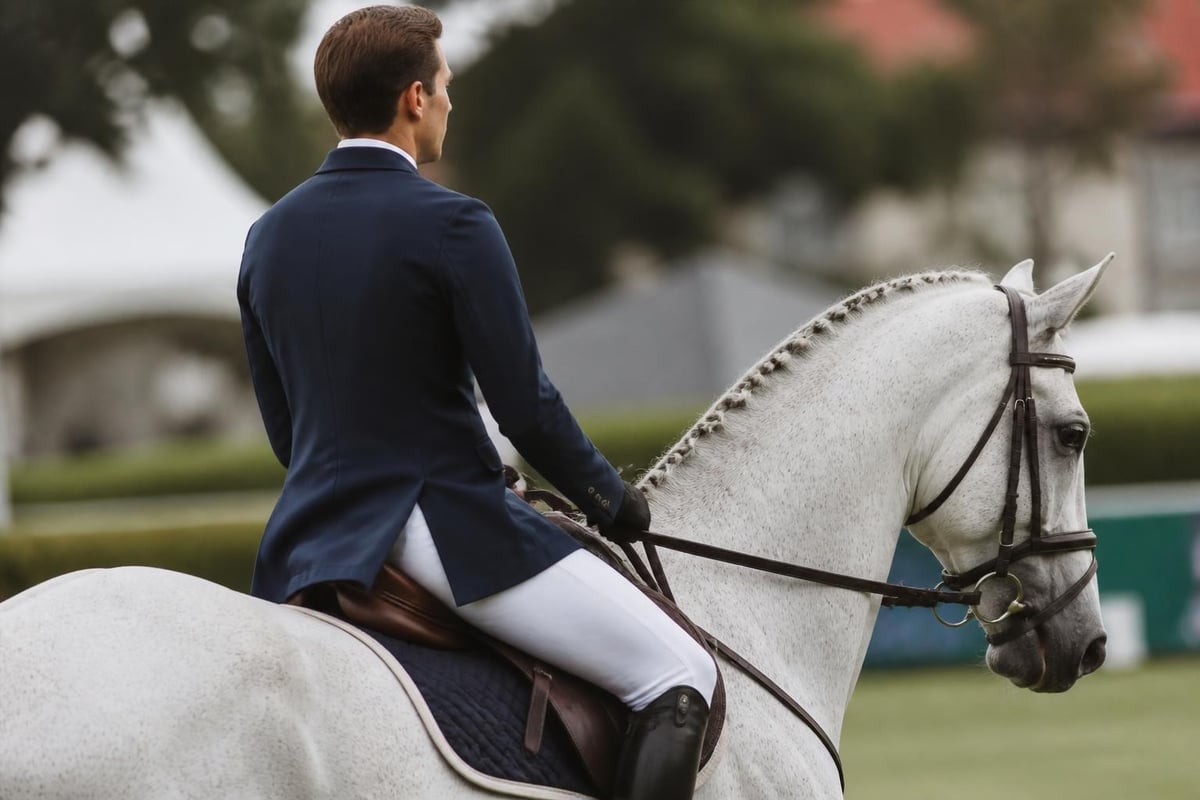
Dressage demands formality, and long horse riding coats in this discipline follow strict guidelines. A shadbelly or tailcoat sits at the pinnacle of dressage attire, typically required at upper levels. These coats feature distinctive cutaway fronts and long tails that drape elegantly over the saddle and horse's quarters. The FEI dress code regulations specify requirements for these formal coats, including color, button arrangement, and acceptable decoration.
For schooling or lower-level competition, a well-cut show coat in black or navy serves perfectly. The key is ensuring the coat allows shoulder rotation without pulling across the back when you're in riding position. Many modern show coats incorporate stretch panels or carefully placed vents to achieve this freedom whilst maintaining clean lines.
Competition wear from specialized makers understands these requirements intimately. Gallant Equestrian's competition wear balances traditional standards with contemporary fit and performance, recognizing that men's equestrian clothing must deliver both regulation compliance and practical function.
Hunting and Country Pursuits
The hunting field has its own codes for long riding coats. A traditional hunt coat-often called a "pink" regardless of its actual scarlet color-features specific details like hunt buttons, particular collar styles, and construction that withstands hours of cross-country riding through challenging terrain. These coats typically run longer than show coats, providing additional coverage and warmth during winter meets.
For those who hack out regularly or participate in less formal country riding, a practical long riding coat becomes invaluable. Look for robust materials, effective waterproofing, and details like bellowed pockets that remain accessible whilst mounted. The coat should sit comfortably over layers without restricting your position or contact.
Technical Considerations for Long Riding Coats
Fabric and Weather Protection
Modern long horse riding coats employ advanced technical fabrics that would astonish riders of previous generations. Three-layer membranes provide waterproofing whilst allowing perspiration to escape, keeping you dry from both external rain and internal exertion. Breathability becomes crucial during active riding-nobody wants to dismount feeling like they've been in a sauna.
Weight matters significantly. A heavy, stiff coat restricts movement and fatigues you during long rides. Contemporary fabrics deliver weather protection in remarkably light packages, often with additional features like taped seams and water-resistant zippers. Gallant Equestrian's jackets collection demonstrates how performance fabrics can meet equestrian demands without excess bulk.
Consider these fabric priorities when selecting a long riding coat:
Temperature regulation through breathable membranes and ventilation systems keeps you comfortable across varied activity levels. Strategic ventilation often appears as concealed vents under arms or across the back, placed to avoid compromising waterproofing whilst allowing airflow during strenuous riding.
Durability in high-wear areas-shoulders, elbows, and lower back where you contact the saddle-requires reinforcement or more robust fabric weights. Quality construction addresses these stress points before they become weak spots.
Cut and Fit for Mounted Movement
The difference between a long coat designed for riding and one intended for walking becomes immediately apparent the moment you mount. Riding-specific cuts feature deeper vents, often extending well up the back, that open when you settle into the saddle. This prevents the coat from bunching uncomfortably beneath you or restricting your hip movement.
Sleeve construction deserves particular attention. When you hold the reins, your arms extend forward and slightly down. A riding coat's sleeves must allow this position without pulling across the shoulders or riding up your forearms. Articulated sleeves or action pleats at the shoulder blade provide this freedom whilst maintaining clean lines when you're standing.
Length presents a balance: sufficient coverage for warmth and weather protection, but not so long that fabric piles up or interferes with your leg position. For most men, a coat that falls to mid-thigh when standing will sit correctly when mounted. Horse & Hound's practical guide to long riding coats provides useful perspective on finding this balance across different riding styles and preferences.
Style and Versatility Beyond the Stable
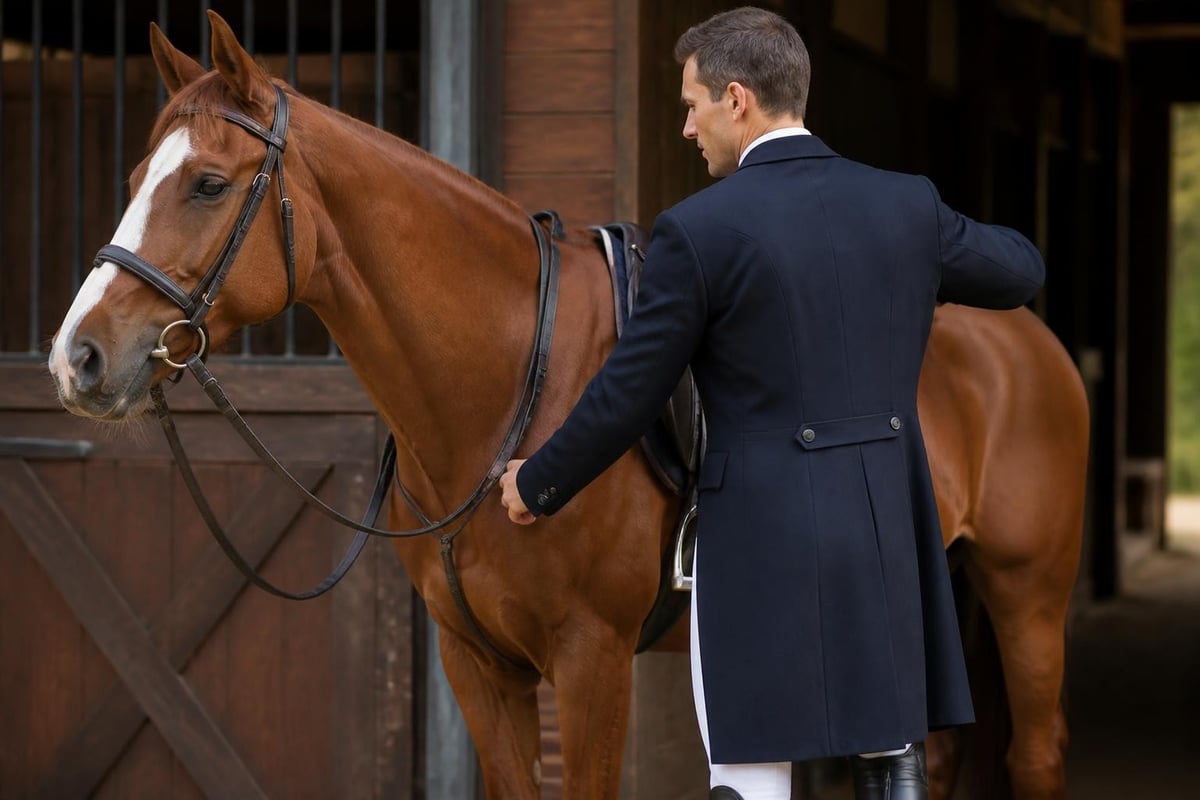
One significant advantage of well-chosen long horse riding coats is their versatility beyond purely equestrian settings. A quality riding coat in a classic color transitions naturally to everyday wear, particularly in rural or country settings where practicality and style intersect comfortably. This dual-purpose functionality makes the investment more justifiable and ensures the coat sees regular use.
Color and Detailing
Classic colors-navy, black, dark green, or tan-serve you well both in the stable yard and beyond. Subtle details like leather trim, quality buttons, or discreet brand marks add refinement without appearing ostentatious. The goal is understated quality that speaks for itself rather than shouting for attention.
Avoid excessive branding or overly technical styling if you want the coat to work in non-riding contexts. A clean, classic design ages gracefully and adapts to various situations. The best riding coats possess a timeless quality that outlasts short-term fashion trends.
Transitional Dressing
The concept of clothing that transitions from stables to everyday life underpins thoughtful equestrian wardrobe building. Gallant Equestrian's approach recognizes that most riders don't maintain entirely separate wardrobes for mounted and ground activities. Your long riding coat can serve morning chores, afternoon rides, and evening pub visits equally well if chosen wisely.
Practical details support this versatility: pockets positioned for access whether walking or riding, cuffs that adjust to accommodate gloves or bare hands, and collars that protect against wind without looking stiff or overly formal. These seemingly minor considerations accumulate into genuinely versatile garments.
Care and Maintenance of Long Riding Coats
A quality long riding coat represents significant investment and deserves proper care to maintain performance and appearance. Different fabrics require different approaches, but some principles apply universally.
Cleaning and Storage
Regular maintenance prevents major problems. After riding, brush off loose dirt and hair before it sets into the fabric. Most technical riding coats benefit from periodic washing according to manufacturer instructions, which typically involves low-temperature machine washing with specialized technical fabric detergents. Avoid standard detergents, which can damage waterproof membranes or breathable treatments.
Storage matters more than many riders realize. Hang coats properly on broad-shouldered hangers that support the garment's shape. Avoid cramming coats into overstuffed cupboards where creasing and crushing damage both fabric and structure. A coat cover protects against dust and stable grime during off-seasons whilst allowing air circulation to prevent mustiness.
Reproofing and Technical Refresh
Even quality waterproofing gradually diminishes through use and washing. Most technical fabrics benefit from periodic reproofing treatments that restore water-repellent finish. These treatments come in spray or wash-in forms, each with advantages depending on your coat's construction and your preferences.
Signs your coat needs reproofing include water soaking into the outer fabric rather than beading and rolling off, or you feeling damp during rides despite the coat appearing intact. Reproofing typically takes minimal effort and substantially extends your coat's effective life, making it worthwhile maintenance rather than optional luxury.
Competition Regulations and Formality
Understanding when specific long horse riding coats are required, permitted, or inappropriate helps you prepare properly for various riding contexts. Formal competition has clear rules, whilst schooling and recreational riding allow more flexibility.
Show Requirements
Different disciplines maintain different standards. USEF competition rules outline specific requirements for coats at various levels and competitions. Generally, recognized shows require traditional show coats or tailcoats in prescribed colors, whilst unrecognized schooling shows may allow more flexibility.
Judges notice details: properly fitting coats, appropriate lengths, clean lines, and correct formality for the class. A coat that's too long, too short, or ill-fitting detracts from your overall presentation regardless of your riding quality. Guidance from USHJA regarding coat requirements acknowledges both tradition and practical welfare considerations, particularly in extreme weather when coats may be waived.
Everyday Riding Standards
Outside formal competition, long horse riding coats serve purely practical purposes. Choose based on weather protection, comfort, and personal preference rather than regulation compliance. This freedom allows you to prioritize technical performance and versatility, selecting coats that genuinely serve your riding style and conditions.
Many riders maintain multiple coats: a formal show coat for competition, a practical waterproof coat for wet weather riding, and perhaps a lighter jacket for moderate conditions. This approach ensures you're properly equipped regardless of circumstances whilst avoiding forcing any single coat to serve conflicting purposes.
Investment and Value
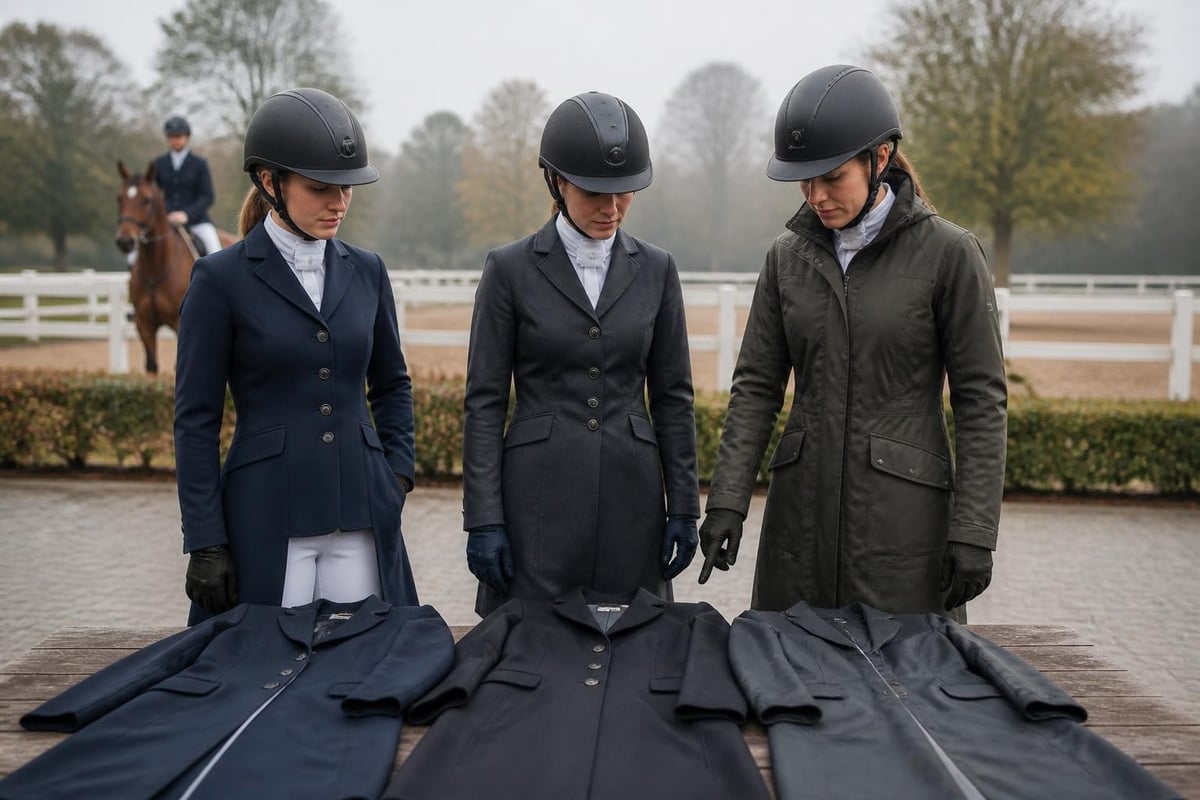
Quality long horse riding coats command premium prices, but this investment delivers value through longevity, performance, and versatility. A well-made coat easily provides a decade or more of service with proper care, making the cost-per-wear remarkably reasonable despite the initial outlay.
Comparing Options
When evaluating coats, consider total value rather than just purchase price. A cheaper coat that needs replacing within two seasons costs more long-term than a quality garment that serves you for years. Similarly, a coat that performs multiple roles-show, everyday riding, casual wear-justifies higher expenditure through greater utility.
| Consideration | Budget Coat | Mid-Range Coat | Premium Coat |
|---|---|---|---|
| Typical Lifespan | 1-2 seasons | 3-5 seasons | 10+ seasons |
| Fabric Technology | Basic waterproofing | Good breathability | Advanced membranes |
| Construction Quality | Standard seaming | Reinforced stress points | Full articulation |
| Versatility | Single purpose | Dual purpose | Multi-purpose |
| Resale Value | Minimal | Moderate | Strong |
Recognizing Quality
Quality reveals itself through specific details. Examine stitching: even, secure, and reinforced at stress points. Check how fabric drapes and recovers from creasing-premium materials resist permanent wrinkles and maintain shape. Test zippers and closures for smooth operation and robust construction.
The coat's cut matters enormously. Premium makers understand equestrian movement and build it into their patterns. When you try a quality riding coat, you should be able to adopt riding position comfortably, reach forward for reins without restriction, and feel the coat move with you rather than against you.
Practical Fitting Advice
Finding the right long riding coat involves more than checking your usual size. Riding-specific considerations affect fit differently than standard clothing, and taking time to assess properly ensures satisfaction with your choice.
Key Measurement Points
Shoulder width determines whether the coat will allow proper movement. The shoulder seam should sit at your natural shoulder point-neither falling down your arm nor pulling across your back. When you extend your arms forward in riding position, the coat shouldn't bind or restrict.
Sleeve length matters particularly for riders. With arms extended forward, sleeves should cover your wrists without excessive bunching at the forearm. Many riding coats feature adjustable cuffs that accommodate gloves and allow fine-tuning of effective sleeve length.
Body length depends partly on your height and partly on your riding style. Mount your horse or sit in riding position whilst trying the coat if possible. The coat should drape cleanly without bunching uncomfortably beneath you or riding up your back. Size guides from specialized makers account for these equestrian-specific considerations rather than just standard clothing measurements.
Trying On Properly
Static standing provides limited information about riding coat fit. Move through the motions you'll actually perform: adopt riding position, turn your torso, reach forward, raise your arms. Any restriction, pulling, or bunching indicates fit issues that will irritate during actual riding.
Consider layering when trying coats. A coat that fits perfectly over a light shirt may be uncomfortably tight over winter base layers and a jumper. If you'll wear the coat year-round, ensure it accommodates seasonal layering variations without appearing baggy when worn over lighter clothing.
Modern Innovations in Riding Coat Design
Contemporary long horse riding coats benefit from material science and construction innovations that dramatically improve performance without sacrificing traditional styling. These advances make modern riding coats genuinely superior to even recent predecessors.
Advanced Fabrics
Four-way stretch fabrics combine with waterproof membranes to create coats that move with you whilst maintaining complete weather protection. This combination was nearly impossible a generation ago-riders chose between movement or protection, rarely getting both adequately.
Thermal regulation has advanced significantly. Phase-change materials, strategic insulation placement, and improved breathability create coats that maintain comfortable temperature across varied activity levels and conditions. You can ride hard without overheating, yet stay warm during slower work or waiting around.
Construction Techniques
Laser-cut ventilation creates airflow without compromising waterproofing. These nearly invisible perforations, often placed strategically across shoulders and back, allow heat and moisture to escape whilst preventing rain entry. The result is dramatically improved comfort during strenuous riding.
Bonded seams eliminate the bulk and potential weak points of traditional stitched and taped seams. This construction method creates cleaner lines, reduces weight, and often improves waterproofing by eliminating needle holes entirely from critical areas.
These innovations appear across price points, though premium coats typically employ the most advanced options. Even mid-range modern coats often outperform premium coats from just ten years ago, reflecting how quickly technical equestrian clothing has evolved.
Building Your Coat Wardrobe
Most serious riders eventually accumulate several coats, each serving specific purposes. Rather than viewing this as unnecessary excess, consider it practical preparation for varied riding contexts and conditions.
A formal show coat remains essential for competition. This typically lives in your show kit, seeing use primarily at events rather than daily riding. Choose classic styling that won't date quickly and quality construction that withstands the transport and storage associated with competing.
Your everyday riding coat sees the hardest use and deserves selection for durability and weather protection first, styling second. This coat will endure stable grime, regular washing, variable conditions, and constant wear. Prioritize technical performance and practical features over fashion-forward details that may not survive the stable yard's rigors.
A transitional jacket-perhaps from Gallant Equestrian's essentials collection-bridges the gap between full long coat and lighter options. For spring and autumn riding, or milder conditions generally, a shorter but still riding-specific jacket often proves more practical than forcing a heavy long coat or managing with insufficient coverage.
Choosing long horse riding coats that genuinely serve you combines understanding traditional standards with embracing modern performance innovations. The right coat protects you from the elements, supports proper riding position, and maintains the polished appearance expected in the saddle whilst potentially serving beyond purely equestrian contexts. Whether you're preparing for formal competition or simply want reliable protection during countryside hacks, quality matters more than fashion trends. Gallant Equestrian creates performance-driven men's equestrian clothing that delivers both style and function, designed to transition seamlessly from stables to everyday life whilst maintaining the quality that lasts seasons, not just months. Look the Part. Enjoy the Ride.

