

Men's Show Jacket: Your Complete Guide to Competition Style
Oct 09, 2026
The mens show jacket represents more than just competition attire. It's a statement of tradition, professionalism, and respect for the sport. Whether you're preparing for your first local show or refining your competition wardrobe for international arenas, understanding the nuances of show jackets will help you make confident choices that align with both regulations and your personal riding style. The right jacket balances technical performance with classic tailoring, ensuring you look polished whilst maintaining comfort through demanding rounds.
The Evolution of Competition Attire
The mens show jacket traces its lineage directly to traditional riding coats worn in the early 19th century, when hunting attire defined equestrian fashion. Those early riding coats featured long tails, structured shoulders, and robust fabrics designed for countryside pursuits. As equestrian sport formalised into distinct disciplines, the jacket evolved to meet specific competitive requirements whilst maintaining its elegant silhouette.
Today's show jackets blend that heritage with modern performance demands. Technical fabrics now offer four-way stretch, moisture wicking, and breathability whilst preserving the crisp, tailored appearance judges expect. This evolution reflects broader changes in how technical fabrics enhance riding clothing across all garment categories, from breeches to base layers.
The transformation hasn't abandoned tradition. International competition still requires adherence to strict dress codes, with FEI Jumping Rules specifying when jackets must be worn and what constitutes acceptable attire. Understanding these roots helps you appreciate why certain details matter and how modern iterations honour sporting heritage.
Discipline-Specific Requirements
Show Jumping and Hunters
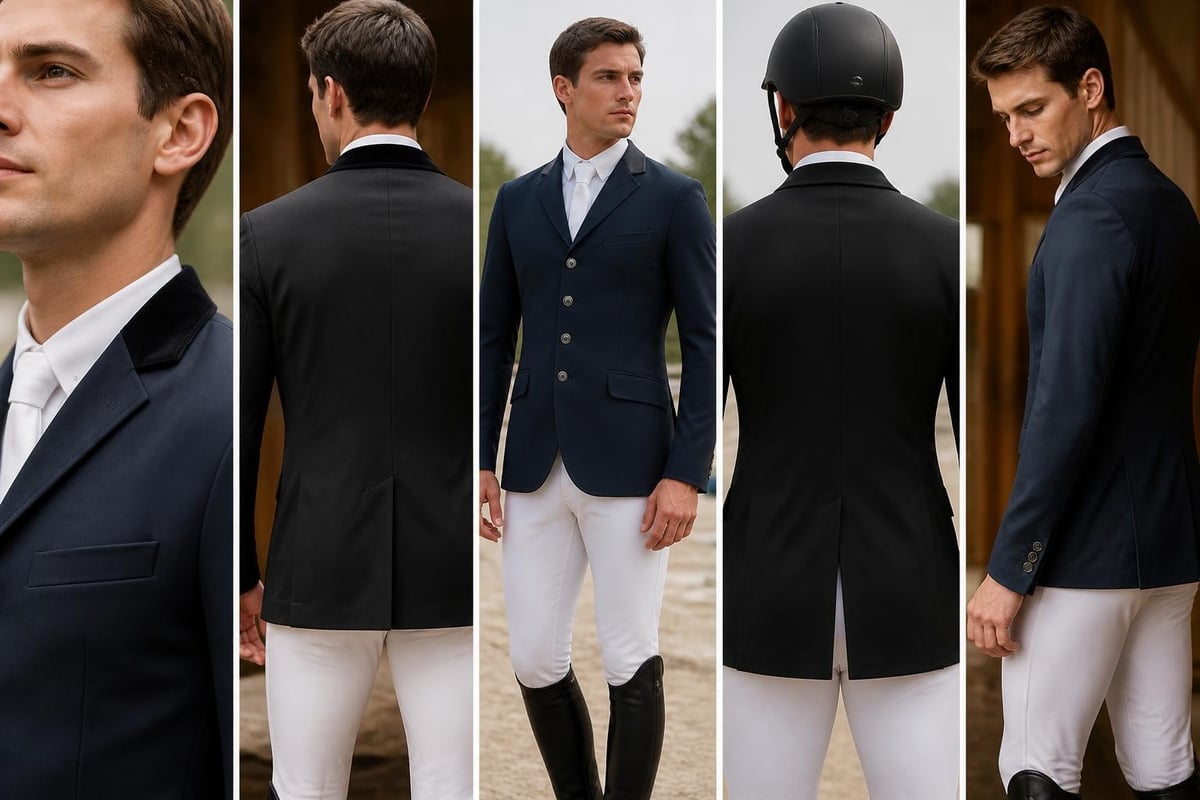
Show jumping demands a conservative, polished presentation. The classic mens show jacket for jumpers typically features a single-breasted design with two or three buttons, notched lapels, and a defined waist. Navy, black, and charcoal remain the standard colours, though some regional shows permit subtle pinstripes or herringbone patterns.
Hunter classes traditionally favour even more conservative styling. Darker colours predominate, and four-button configurations with centre vents prove popular. The jacket should fit close to the body without restricting shoulder movement during two-point position. Many competitors prefer slightly longer sleeves that extend just beyond the wrist bone when arms hang naturally, accounting for upward movement when riding.
USHJA guidelines provide specific direction for American competitions, noting recent rule modifications that affect jacket requirements at different levels. Staying current with these changes ensures you're properly attired for each class you enter.
Dressage Distinctions
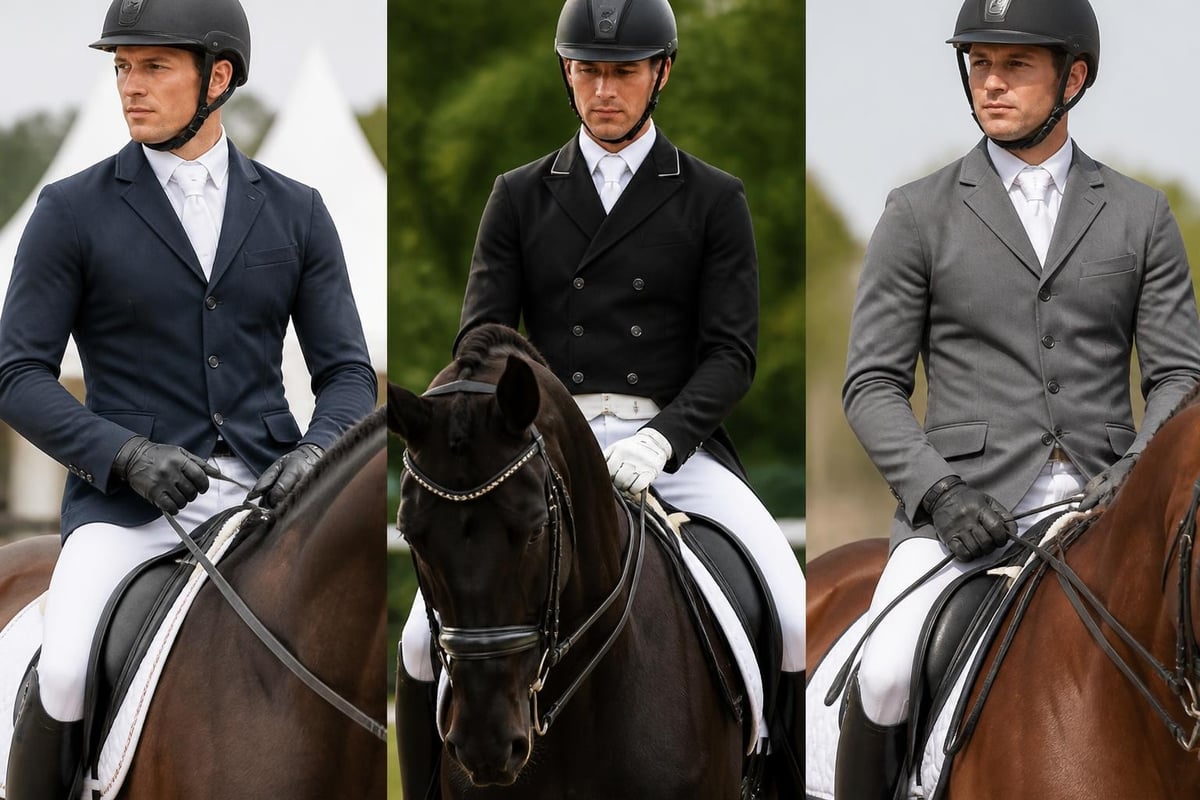
Dressage introduces additional formality at upper levels. While lower-level tests permit standard show jackets, Prix St. Georges and above traditionally require tailcoats or shadbellies for men. These garments feature elongated tails, waist-length fronts, and often incorporate subtle satin lapels.
USEF dressage-specific regulations detail exactly when tailcoats become mandatory versus optional. For many riders, investing in a quality shadbelly represents a significant step in their competitive progression. The mens show jacket you choose for preliminary through second level should be conservative, well-fitted, and suitable for potential future modification or pairing with a shadbelly vest.
Black remains standard for dressage, though navy gains acceptance at lower levels in some regions. The jacket must allow complete freedom through shoulders and back whilst maintaining an elegant drape when mounted. Consider how the garment looks from all angles, as dressage tests require movements that display your position from every direction.
Fabric Technology and Performance
Modern mens show jacket construction incorporates fabrics that previous generations couldn't imagine. Traditional wool blends offered durability and a sharp appearance but limited breathability and required extensive care. Today's technical alternatives deliver performance without sacrificing aesthetics.
Four-way stretch fabrics move with your body, eliminating the restriction common in older jacket designs. This elasticity proves particularly valuable during physically demanding rounds or long days at multi-class shows. Quality stretch fabrics maintain their shape and resist bagging at elbows and lower back, areas that typically show wear first in traditional materials.
Moisture-wicking properties help regulate temperature during warm-weather competitions. Strategic mesh panels at underarms or across the back enhance ventilation whilst remaining invisible when properly tailored. These technical considerations complement rather than compromise the traditional silhouette you need in the competition arena.
Water resistance represents another modern advancement. Whilst you wouldn't wear your primary show jacket in heavy rain, a degree of water resistance protects against unexpected weather during outdoor warm-up or brief showers between classes. Some technical show jackets incorporate DWR (durable water repellent) finishes that shed light moisture without affecting breathability, similar to technologies found in winter riding jackets.
| Fabric Type | Stretch | Breathability | Water Resistance | Care Requirements | Ideal Use |
|---|---|---|---|---|---|
| Wool Blend | Minimal | Moderate | Low | Dry clean | Traditional shows, cooler weather |
| Technical Poly-Blend | Four-way | Excellent | Moderate | Machine wash | Year-round competition |
| Cotton-Stretch | Two-way | Good | Low | Machine wash | Schooling shows, warm climates |
| Softshell Technical | Four-way | Excellent | High | Machine wash | Outdoor shows, variable weather |
Fit Fundamentals That Matter
A properly fitted mens show jacket should feel like a natural extension of your riding position. When mounted, the jacket should sit smoothly across shoulders without bunching or pulling. Stand in your normal riding posture when trying jackets, not at attention as you might for a business suit.
Sleeve length requires particular attention. When your arms hang naturally at your sides, sleeves should extend to the base of your thumb, covering your wrist bone. This allows proper coverage when hands are positioned on the reins without excess fabric bunching at wrists or restricting forearm movement.
The jacket body should be long enough to cover your trouser waistband when seated but not so long that it creates bulk beneath you in the saddle. Side vents or a centre vent allow the jacket to drape properly over your seat without riding up. Test this by sitting on a tall stool or mounting block during fitting.
Shoulder construction deserves close examination. The seam should sit precisely at the edge of your shoulder, neither dropping down your arm nor pulling across your back. When you raise your arms forward to riding position, the jacket should move with you, not restrict or pull uncomfortably across your shoulder blades.
Tailoring Considerations
Off-the-rack show jackets rarely fit perfectly without alterations. Budget for professional tailoring when purchasing your mens show jacket, as minor adjustments dramatically improve both appearance and comfort. Common alterations include sleeve shortening, waist suppression, and shoulder adjustments.
A skilled tailor familiar with equestrian garments understands how the jacket functions during riding. They'll account for mounted position when adjusting length and ensure alterations don't compromise the garment's balance or drape. This specialised knowledge proves particularly valuable when working with technical fabrics that behave differently than traditional suiting materials.
Consider having alterations done whilst wearing your competition shirt and any base layers you typically use. This ensures the final fit accommodates your actual show-day configuration rather than just street clothes underneath.
Style Details and Personal Choices
Within competition guidelines, subtle personal preferences emerge. Button selection, vent style, and fabric patterns allow individual expression whilst maintaining appropriate formality. Understanding these options helps you choose a jacket that reflects your style without crossing into inappropriately casual territory.
Three-button jackets create a slightly more traditional appearance compared to two-button configurations. The top button typically remains unfastened, creating clean vertical lines that complement most body types. Two-button designs offer a more contemporary silhouette whilst remaining entirely acceptable in most disciplines and levels.
Lapel width and shape influence overall proportion. Notched lapels suit most mens show jacket applications, whilst peaked lapels appear occasionally in dressage tailcoats. Conservative widths that align with classic menswear proportions serve you better than trendy extremes that may date quickly or appear out of place in traditional competition settings.
Vent configuration affects both aesthetics and function. Centre vents provide symmetrical drape and work well for most riders. Side vents can accommodate broader hips or provide additional movement freedom but require precise tailoring to avoid gapping or flaring when mounted. No vent creates the sleekest appearance but may restrict movement or ride up more readily.
Fabric patterns introduce personality within acceptable bounds. Whilst solid colours dominate formal competition, subtle pinstripes, herringbone weaves, or micro-check patterns appear at many shows. These choices work best when understated, maintaining overall formality whilst adding visual interest. Modern technical show jackets increasingly incorporate textural interest through weave rather than bold pattern.
Building Your Competition Wardrobe
Most competitive riders eventually own multiple show jackets suited to different occasions and seasons. Starting with a versatile, conservative option in navy or black provides maximum flexibility across disciplines and levels. This foundation piece handles everything from local schooling shows to rated competitions.
A second jacket in a complementary colour or with enhanced technical features expands your options without requiring significant additional investment. Consider climate demands, your primary discipline, and competition frequency when planning additions. Riders in warm climates benefit from lightweight technical fabrics, whilst those facing variable weather might prioritise water-resistant options.
Schooling shows and training days don't require your best competition jacket. A well-fitted but less expensive alternative protects your primary jacket from excessive wear whilst maintaining appropriate standards. This approach extends the life of your investment pieces, similar to how a thoughtful approach to competition wear overall creates a sustainable, functional wardrobe.
Your mens show jacket coordinates with other wardrobe elements to create a cohesive presentation. Navy jackets pair naturally with tan, grey, or white breeches, whilst black offers slightly more formality and works across all breech colours. Consider how your jacket choices complement your existing breeches collection to maximise versatility.
Care and Maintenance Essentials
Technical fabrics simplify show jacket maintenance compared to traditional materials. Many modern mens show jacket options tolerate machine washing on gentle cycles, eliminating expensive dry cleaning after every show. Always follow manufacturer guidelines, as specific fabric blends may have particular requirements.
Proper storage preserves shape and appearance between uses. Hang your jacket on a sturdy, shaped hanger that supports the shoulders without stretching them. Avoid wire hangers that create permanent creases or damage shoulder construction. Breathable garment bags protect from dust whilst allowing air circulation that prevents mustiness.
Between shows, allow your jacket to air out completely before storing. Brush off any arena dust or debris with a soft clothes brush, working in the direction of the fabric weave. Spot clean small marks promptly to prevent setting, using gentle methods appropriate to your fabric type.
Technical fabrics resist wrinkles better than traditional materials, but steaming before competition ensures the crispest presentation. A handheld garment steamer works efficiently and proves gentler on fabrics than pressing with an iron. Pay particular attention to lapels, sleeves, and the back panel where creases most commonly appear.
Extending Jacket Longevity
Rotation between multiple jackets significantly extends the life of each piece. Allowing jackets to rest between wears lets fabrics recover their shape and reduces overall wear. This approach proves especially valuable with technical materials that benefit from periodic recovery time.
Address minor repairs promptly before they become major issues. Loose buttons, small seam separations, or beginning-to-fray buttonholes all merit quick attention. Most tailors handle these minor repairs quickly and inexpensively, preventing problems that might eventually require jacket replacement.
Consider seasonal cleaning even if the jacket appears clean. Professional cleaning or thorough home laundering removes accumulated body oils, perspiration, and environmental contaminants that can degrade fabrics over time. This maintenance parallels good practices for all your riding gear, protecting your investment through consistent care.

Navigating Competition Regulations
Each sanctioning body maintains specific requirements for show attire, and staying current with these guidelines prevents embarrassing situations or potential elimination. The USEF rulebook provides comprehensive guidance for American competitions, covering everything from acceptable colours to required elements at different competition levels.
International competitors must familiarise themselves with FEI standards, which govern major championships and international events. These regulations typically prove more conservative than national guidelines, emphasising traditional colours and classic styling. Understanding both sets of standards ensures appropriate preparation regardless of where your competitive ambitions lead.
Rules evolve periodically, introducing new allowances or clarifying existing requirements. Following updates from governing bodies helps you stay compliant and potentially benefit from relaxed restrictions. Some recent modifications have expanded acceptable colour ranges or permitted additional technical features, reflecting the sport's gradual modernisation whilst respecting tradition.
Regional variations sometimes exist within national guidelines, with certain shows or series maintaining more conservative standards. Research specific show requirements when entering new venues or prestigious competitions. Show secretaries typically clarify dress code questions, helping you avoid uncertainty about what constitutes appropriate attire.
Level-Specific Considerations
Introductory and training level competitions generally permit more relaxed interpretations of show attire requirements. Whilst maintaining appropriate formality, these levels may allow darker grey or subtle patterns that wouldn't suit upper-level competition. This flexibility helps new competitors build their wardrobes gradually without immediate investment in multiple specialised garments.
Upper-level competition demands strict adherence to traditional standards. Championship shows, rated competitions, and any FEI-sanctioned events require conservative choices that align precisely with published guidelines. The mens show jacket you select for these occasions should prioritise regulation compliance over personal style preferences.
Junior and amateur divisions may have specific requirements beyond general competition standards. Some associations mandate particular colours or styles for certain age groups or amateur categories. Verify division-specific requirements in addition to overall competition guidelines to ensure complete compliance.
Investment Strategy and Value
Quality show jackets represent significant investment, with prices ranging from modest to substantial depending on fabric, construction, and brand. Approaching this purchase strategically ensures you acquire the right jacket for your needs without overspending or compromising essential features.
Entry-level technical jackets offer excellent value for riders starting competitive careers or showing occasionally. These garments provide proper presentation and basic performance features at accessible price points. As your competitive involvement increases, you can supplement rather than replace this foundation piece, building a wardrobe that serves multiple purposes.
Mid-range options balance enhanced fabric technology, superior tailoring, and improved durability. These jackets justify higher investment through better fit, longer wear, and often more flattering silhouettes. Riders competing regularly find this category offers the best value proposition, delivering professional appearance without luxury pricing.
Premium show jackets feature exceptional fabrics, custom tailoring options, and often include additional design refinements. These garments suit serious competitors, professionals, or riders who simply prefer best-available quality. The incremental improvement over mid-range options may prove worthwhile depending on your priorities and budget.
| Price Range | Typical Features | Best For | Expected Longevity |
|---|---|---|---|
| Entry (£150-300) | Basic technical fabric, standard sizing, limited colours | Beginner competitors, occasional showing | 2-3 seasons regular use |
| Mid-Range (£300-600) | Advanced fabrics, better tailoring, colour options | Regular competitors, serious amateurs | 4-6 seasons regular use |
| Premium (£600-1200+) | Exceptional fabrics, custom options, superior construction | Professionals, championship competitors | 6-10+ seasons regular use |
Seasonal and Climate Adaptations
Climate significantly influences appropriate mens show jacket selection. Riders in warm regions benefit from lightweight technical fabrics that maximise breathability and moisture management. These jackets often incorporate mesh panels and use thinner materials that maintain structure without excessive weight.
Cold-weather competitors face different challenges. Whilst show jackets themselves don't provide significant insulation, choosing slightly heavier fabrics and ensuring proper layering underneath creates comfort without bulk. Base layers that wick moisture whilst retaining warmth, similar to those discussed in guidance on winter riding jackets, prove valuable for outdoor winter shows.
Indoor arena showing reduces weather concerns but introduces different considerations. Climate-controlled facilities may maintain moderate temperatures year-round, allowing focus on classic fabrics without extreme technical requirements. However, even indoor venues can vary significantly, making versatile fabric choices sensible.
Outdoor summer shows demand maximum breathability and sun protection. Lighter colours might offer comfort advantages but remember competition requirements typically restrict colour choices. Focus instead on fabric technology and fit that allows air circulation whilst maintaining appropriate appearance throughout long, hot show days.
Practical Shopping Guidance
Finding your ideal mens show jacket requires balancing multiple factors: fit, fabric, regulations, budget, and personal preferences. Start by identifying your primary discipline and typical competition level, as these determine fundamental requirements. Browse options that meet baseline specifications before considering additional features or style preferences.
Try jackets whilst wearing your typical show shirt and base layers. Stand, sit, and move through exaggerated arm positions that simulate riding. A jacket that feels perfect whilst standing may restrict movement when mounted or create uncomfortable pulling across shoulders.
Pay attention to return policies when purchasing online. The ability to try jackets at home, ideally whilst mounted, helps ensure proper fit before committing to a purchase. Many retailers now offer generous return windows specifically because proper equestrian fit assessment requires more than shop mirror evaluation.
Read detailed reviews from other male competitors when available. Fellow riders often identify fit quirks, durability issues, or standout features that product descriptions miss. Look for reviews from riders with similar builds or competitive disciplines for most relevant feedback.
Consider timing purchases strategically. End-of-season sales or Black Friday events often reduce prices significantly on quality jackets. Planning ahead allows you to capitalise on these opportunities rather than paying premium prices for rush purchases before unexpected show entries.
The right mens show jacket elevates your entire competition presentation, providing confidence that comes from knowing you look appropriate and polished. Whether you're building your first competition wardrobe or refining an established collection, these garments deserve thoughtful selection and proper care. Your jacket serves as both functional garment and symbol of respect for the sport, the horse, and the tradition of competitive riding.
Choosing the right mens show jacket represents an important step in your competitive journey, balancing tradition with modern performance demands. From understanding discipline-specific requirements to selecting fabrics that work with your climate and competition schedule, the right jacket enhances both your confidence and presentation in the arena. Gallant Equestrian combines New Zealand design heritage with technical innovation to create men's riding apparel that performs under pressure whilst maintaining refined style. Whether you're preparing for your first show or updating your competition wardrobe, explore how performance-driven garments that transition seamlessly from stables to competition can elevate your entire equestrian experience. Look the Part. Enjoy the Ride.

