

Show Shirts: The Essential Guide for Men Who Compete
Mar 22, 2026
When you're preparing for a competition, every detail counts. The way you present yourself in the arena reflects not just tradition but also your commitment to the sport. Show shirts sit at the centre of that presentation, combining technical requirements with personal style. They're not just about looking the part. These shirts need to perform under pressure, maintain their appearance through long days, and meet specific competition standards. Understanding what makes a quality show shirt helps you choose pieces that elevate both your comfort and your confidence when it matters most.
What Defines a Proper Show Shirt
A show shirt serves a specific purpose within equestrian competition. Unlike casual riding shirts, these pieces must meet regulatory standards whilst providing the technical performance modern riders expect.
The core requirements remain consistent across disciplines. Hunt seat competitions traditionally call for conservative, well-fitted shirts that complement formal attire. The collar must sit properly beneath a jacket or with a stock tie, depending on your discipline. Sleeves should allow full range of motion without excess fabric bunching at the elbow or shoulder.
Fabric selection separates adequate show shirts from exceptional ones. Modern technical materials provide moisture management and stretch whilst maintaining a crisp, traditional appearance. Cotton blends offer breathability for summer shows, whilst performance synthetics regulate temperature across varying conditions.
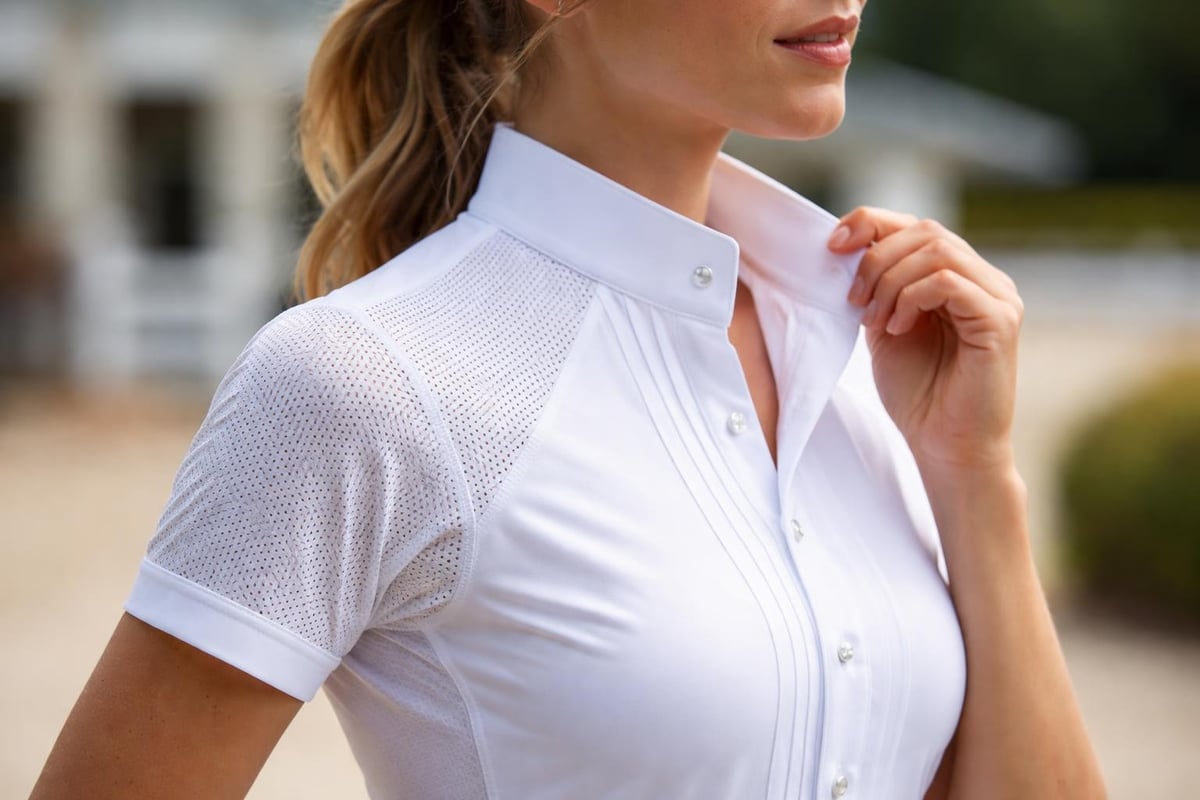
Fit matters more than many riders realise. A properly fitted show shirt should allow you to raise your arms fully overhead without pulling the hem from your breeches. The collar should sit comfortably against your neck without gaping or choking. Shoulder seams align with your natural shoulder line, creating clean lines under a jacket.
Competition Standards and Regulations
Different disciplines impose specific requirements on show shirts and overall presentation. Knowing these standards saves time and potential elimination at the gate.
Dressage typically requires white or light-coloured show shirts with subtle details. Stock ties often accompany these shirts in upper-level competitions, though current trends show some relaxation in lower-level events. The emphasis remains on classical presentation.
Show jumping and eventing allow slightly more flexibility. Coloured shirts appear in some classes, though white remains the safest choice for rated competitions. Check your specific organisation's rulebook before investing in coloured options.
Hunter classes maintain the most conservative standards. White show shirts paired with a ratcatcher-style collar dominate this discipline. The simplicity trend in show clothing has actually strengthened in recent years, with judges favouring understated elegance over embellishment.
Western disciplines follow entirely different conventions, though the principle remains the same: clean, well-fitted shirts that complement your overall presentation. Understanding your discipline's specific requirements prevents costly mistakes.
Key Features That Matter
Beyond basic compliance, certain features separate functional show shirts from those that merely meet minimum standards. These details impact your performance and comfort throughout competition day.
Collar construction determines how your shirt works with your chosen neckwear. Traditional collars suit stock ties and require precise points that lie flat beneath the tie. Ratcatcher collars offer a more casual option for appropriate classes. The collar should maintain its shape throughout the day without wilting or curling.
Sleeve design affects your range of motion and overall comfort. Raglan sleeves provide maximum mobility for active disciplines. Set-in sleeves create a more traditional silhouette under formal jackets. Consider how you'll be riding when selecting sleeve style.
Closure systems have evolved significantly. Traditional buttons remain standard, but modern alternatives offer practical benefits. Hidden plackets create clean lines, whilst snap closures speed up changes between classes. Some riders prefer the security of buttons for all-day wear.
Ventilation panels placed strategically under arms or along the back enhance comfort without compromising appearance. These mesh inserts remain hidden under jackets whilst providing crucial airflow during warm-weather competitions.
The cut through the torso influences how your shirt performs during riding. A longer back hem stays tucked into breeches, whilst shaped side seams prevent excess fabric from bunching. Athletic cuts accommodate muscular builds without looking oversized.
Fabric Technology and Performance
Modern show shirts incorporate technical advances that weren't available even a decade ago. These improvements enhance comfort without sacrificing traditional aesthetics.
Moisture-wicking fabrics draw perspiration away from your skin, keeping you comfortable during nervous moments or warm conditions. This technology proves especially valuable during multi-day events or competitions in challenging climates.
Four-way stretch materials move with your body, maintaining their shape throughout the day. Unlike traditional cotton that can bag or wrinkle, technical stretch fabrics return to their original form. This resilience means you look as sharp in your final class as you did in your first.
UV protection built into fabric construction shields your skin during outdoor events. This feature matters more than many riders consider, particularly for all-day shows in summer months.
Anti-microbial treatments reduce odour development, extending wear between washes. This proves practical for multi-day events or when travelling with limited luggage space.
Recent equestrian apparel trends emphasise sustainable materials that maintain performance standards. Recycled polyester and organic cotton blends appear increasingly in quality show shirts, reflecting broader shifts in athletic wear.
Selecting the Right Show Shirt
Choosing a show shirt requires balancing multiple factors. Your discipline, climate, budget, and personal preferences all influence the decision.
Start with competition requirements. Review your discipline's rulebook or consult experienced competitors in your area. Regional variations sometimes exist, and what's acceptable at local schooling shows may not pass at rated events.
Consider your climate and typical competition schedule. If you compete primarily in summer, prioritise ventilation and moisture management. Year-round competitors benefit from owning multiple show shirts in different weights.
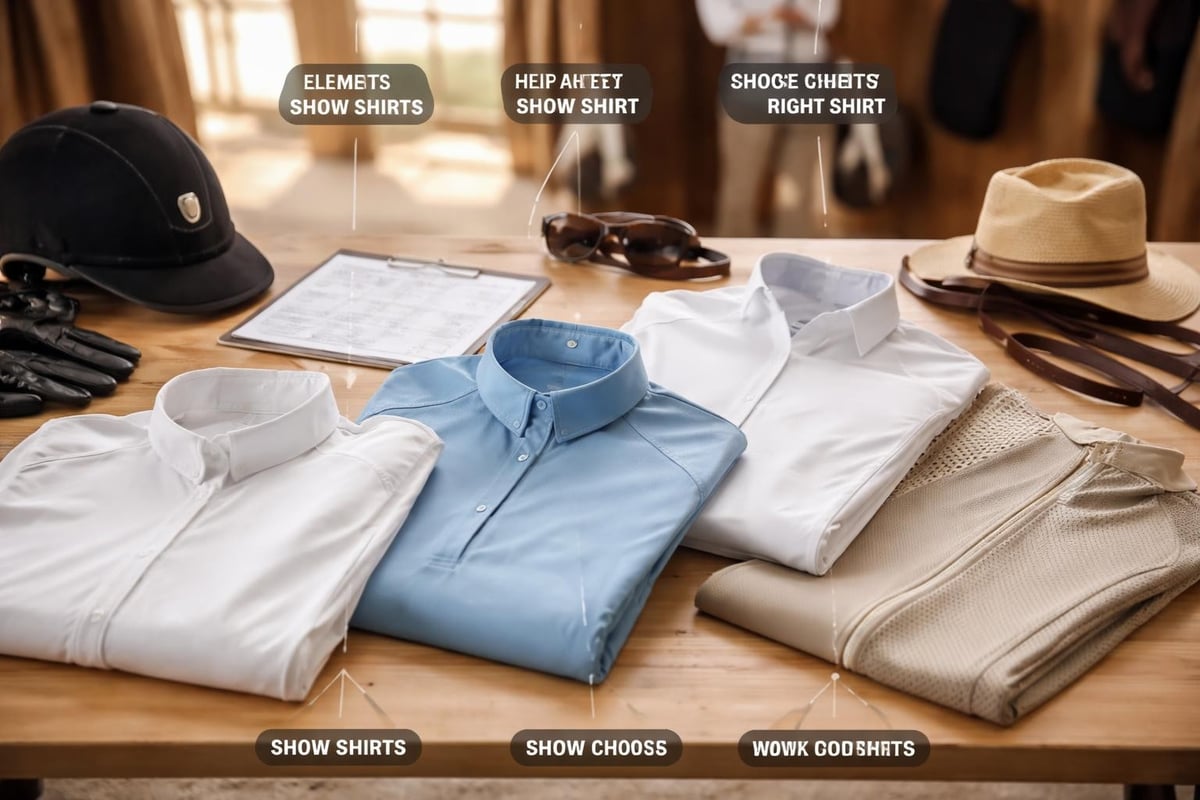
Fit deserves your careful attention. Show shirts should allow full mobility whilst maintaining a tailored appearance. Try on shirts whilst mimicking riding positions, raising your arms and rotating your shoulders. Check that the hem stays tucked and the collar sits properly.
Quality construction shows in the details. Examine seams for even stitching and reinforcement at stress points. Check that buttons attach securely and buttonholes finish cleanly. These elements indicate whether a shirt will withstand regular competition use.
Price reflects quality to a point, but expensive doesn't automatically mean better. Mid-range show shirts from reputable manufacturers often provide excellent value, combining quality construction with reasonable pricing. Invest more in shirts you'll wear frequently, particularly for rated competitions.
Colour and Style Considerations
Whilst white dominates most disciplines, understanding when and how to incorporate other options adds versatility to your competition wardrobe.
Traditional white remains the safest choice for any discipline. It works under any jacket colour, meets all regulatory requirements, and never looks out of place. Own at least two quality white show shirts as your foundation.
Light blue appears in some disciplines and regions, offering subtle variation whilst maintaining formal presentation. Check local customs before purchasing coloured show shirts for rated events. What works at schooling shows may not suit championship competitions.
Patterns and prints require careful consideration. Thin pinstripes occasionally appear in acceptable show shirts, but bold patterns rarely suit competitive settings. When in doubt, choose solid colours.
The current equestrian fashion trends for 2025 show increasing acceptance of subtle details like contrasting collar trim or discrete logo placement. These elements personalise your look without crossing into flashy territory.
Care and Maintenance
Proper care extends the life of your show shirts and ensures they maintain their appearance through multiple competitions. Quality pieces deserve quality maintenance.
Washing requires attention to detail. Turn shirts inside out before washing to protect outer surfaces and any embellishments. Use cold water and gentle cycles to preserve fabric integrity. Avoid overcrowding the washing machine, as this increases wrinkling and prevents thorough cleaning.
Skip fabric softener entirely. It coats technical fabrics, reducing their moisture-wicking capabilities and breathability. If static bothers you, add white vinegar to the rinse cycle instead.
Drying methods impact longevity. Air drying preserves fabric elasticity and prevents shrinkage. If you must use a dryer, select low heat and remove shirts whilst slightly damp. This prevents over-drying that can damage technical fibres.
Hang shirts on proper hangers immediately after drying. This minimises wrinkles and maintains shape between wears. Avoid wire hangers that create shoulder dimples.
Staining demands quick action. Treat sweat stains promptly with enzyme-based cleaners designed for athletic wear. Blood stains (they happen) respond to cold water and hydrogen peroxide applied before washing. Never use hot water on protein-based stains, as heat sets them permanently.
For shows, transport show shirts on hangers in a garment bag. This prevents the crushing and wrinkling that occurs when shirts sit folded in luggage. A small portable steamer handles any travel wrinkles more effectively than attempting to iron in hotel rooms.
Building Your Competition Wardrobe
Most serious competitors benefit from owning multiple show shirts. This approach ensures you always have clean, pressed options ready regardless of competition schedule or laundry mishaps.
A minimum wardrobe includes three show shirts: two for competition rotation and one backup for emergencies. This allows you to compete on consecutive days whilst maintaining impeccable presentation.
Serious competitors often own five or more show shirts, mixing styles and weights for different seasons and disciplines. This investment pays off through improved presentation and reduced stress around major events.
Consider owning both long and short-sleeve options if your competition calendar spans multiple seasons. Long sleeves suit spring and autumn events, whilst short sleeves work for summer competitions where jackets aren't required.
Match your show shirt collection to your competition schedule. Weekend warriors who compete monthly have different needs than professionals riding multiple horses daily. Scale your wardrobe accordingly.
Quality show shirts from brands like Gallant Equestrian prove worth the investment. Pieces designed specifically for men's builds fit better and last longer than adapted women's styles.
Style Integration Beyond Competition
Modern show shirts increasingly blur the line between competition wear and everyday riding attire. This versatility maximises value and encourages better overall presentation.
Many current designs work perfectly for training sessions, particularly when paired with quality breeches and casual outerwear. This approach maintains professional standards whilst building habits that translate to competition settings.
The transition from stable to everyday life requires clothing that performs in both contexts. Show shirts designed with this dual purpose offer practical benefits beyond the arena.
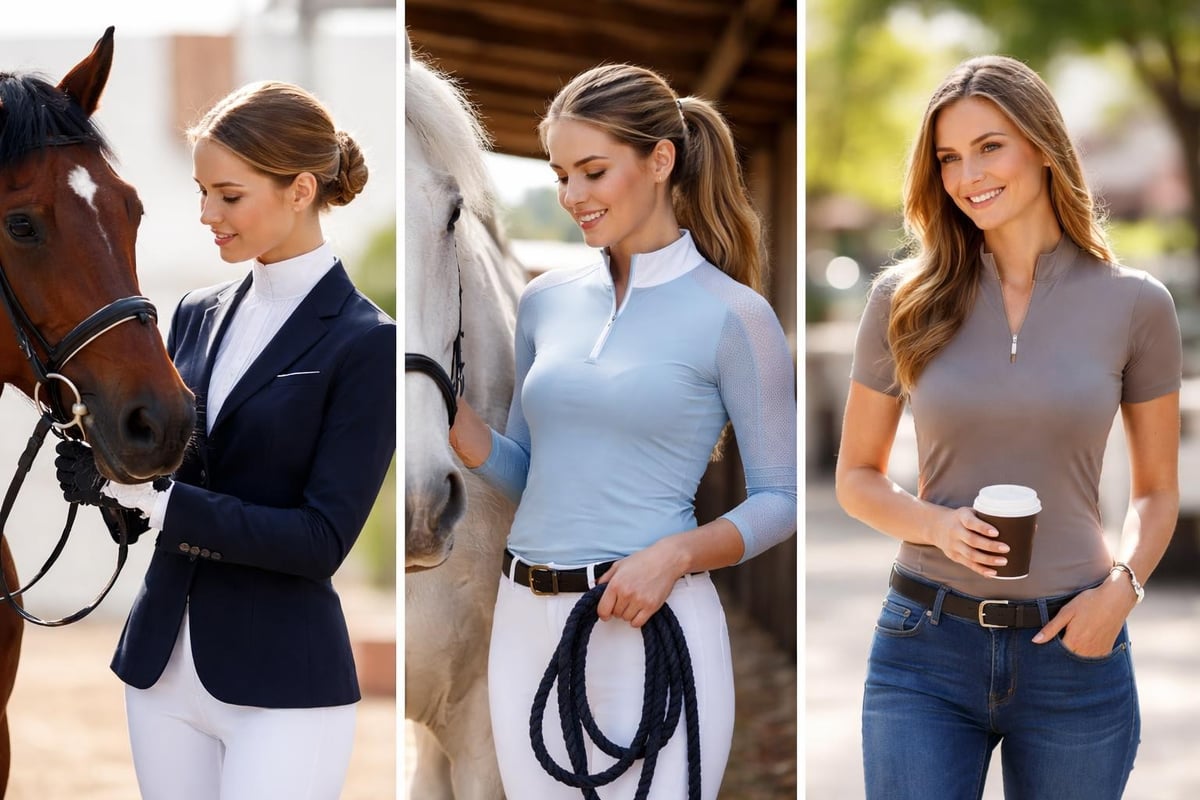
Consider how your show shirts complement your broader riding wardrobe. Coordinating colours and styles creates a cohesive look that requires less mental energy when dressing for various riding situations.
Recent developments in equestrian show shirt trends emphasise this multi-purpose approach. Riders increasingly demand pieces that justify their cost through versatile application rather than single-use competition wear.
Fit and Sizing Specifics
Getting the fit right makes the difference between a show shirt that enhances your presentation and one that fights you all day. Men's equestrian clothing requires different cut and proportion than adapted women's wear.
Measure yourself properly before ordering online. You'll need chest circumference, shoulder width, sleeve length from centre back neck, and torso length. Many riders discover their show shirt size differs from their casual shirt size due to the athletic cut required for riding.
Sleeve length particularly matters in show shirts. Too short looks unprofessional and restricts movement. Too long creates bulk under jacket sleeves or requires constant pushing up. The sleeve should end at your wrist bone when arms hang naturally.
The collar should close comfortably without gaping or choking. You should fit two fingers between the collar and your neck when buttoned. This allows room for stock ties or competition nerves that might make tight collars feel restrictive.
Check sizing guides from your chosen manufacturer, as cuts vary between brands. European sizing differs from American standards, adding another variable when ordering from international brands.
Athletic builds require special attention. Riders with developed shoulders and chest may need to size up and have torsos taken in. Quality tailoring costs less than poorly fitting shirts that undermine your presentation.
Making the Investment Count
Show shirts represent a significant investment in your competition wardrobe. Making informed choices ensures this investment serves you well over time.
Priority goes to quality over quantity. Two excellent show shirts outperform five mediocre ones. Better fabrics, construction, and fit provide superior performance and longer service life.
Consider cost per wear. An expensive show shirt worn fifty times costs less per outing than a cheap shirt that requires replacement after ten competitions. Quality pieces justify higher initial costs through extended usability.
Buy for your current discipline first. If you compete primarily in dressage, prioritise show shirts that excel in that context. Branching into other disciplines later can guide future purchases.
Plan for body changes. Riders building fitness or muscle may find their measurements shift. Consider this when investing heavily in show shirts. Sometimes buying fewer premium shirts and replacing as needed proves more economical than stocking an extensive wardrobe that may not fit long-term.
Timing purchases strategically saves money. End-of-season sales offer opportunities to acquire quality show shirts at reduced prices. This requires planning ahead and knowing your size, but the savings can be substantial.
Understanding what separates adequate from exceptional helps you allocate budget effectively. Focus investment on features that impact your specific needs rather than paying for unnecessary details.
The right show shirt combines technical performance with traditional presentation, supporting both your comfort and your confidence in the arena. Whether you're preparing for your first competition or refining an established wardrobe, choosing pieces that meet your discipline's standards whilst fitting your body properly sets you up for success. Gallant Equestrian designs performance-driven clothing specifically for men who ride, offering show shirts and complete riding wardrobes that transition seamlessly from competition to everyday riding. Look the Part. Enjoy the Ride.

