

Dressage Riding Apparel: The Modern Rider's Guide
Feb 22, 2026
Dressage has always been a discipline of precision, elegance, and tradition. The clothing you wear in the arena reflects not just the sport's heritage but your commitment to riding well. Whether you're preparing for your first affiliated competition or you've been riding tests for years, understanding what constitutes proper dressage riding apparel helps you perform with confidence and meet the standards that make this discipline unique. For men especially, the options have evolved beyond dusty hand-me-downs and ill-fitting jackets. Modern dressage clothing combines technical performance with classic style, giving you freedom to ride at your best while looking the part.
The Foundation of Dressage Apparel
Traditional dressage riding apparel follows clear guidelines established by national federations and competition organizers. These rules aren't arbitrary. They maintain the sport's formal aesthetic whilst ensuring riders present themselves consistently across all levels.
At the core, you'll need breeches, a show shirt, a jacket, boots, gloves, and a helmet or top hat depending on your level. Each piece serves both functional and aesthetic purposes. The United States Equestrian Federation outlines detailed dressage attire requirements that apply to most competitive environments, though regional variations exist.
Understanding these fundamentals allows you to build a competition wardrobe that works across multiple events without constant guesswork.
Choosing the Right Breeches
Breeches form the foundation of any dressage outfit. Unlike casual riding tights or show jumper styles, dressage breeches traditionally come in white or light beige for competition. This creates the clean, formal line that defines the sport's aesthetic.
Modern performance fabrics have transformed how breeches function. Technical materials wick moisture, provide four-way stretch, and maintain their colour through countless washes. Look for full seat or knee patch designs depending on your saddle and preference. Full seats offer more grip, particularly valuable in the deep dressage saddle.
Fit matters enormously. Too tight and you'll restrict your movement. Too loose and fabric bunches, creating distracting lines and discomfort during extended sitting trot. The waistband should sit comfortably at your natural waist, not your hips. Quality construction includes flatlock seams that won't chafe during long training sessions.
Gallant Equestrian's breeches collection demonstrates how men's specific cuts accommodate different body types whilst maintaining the sleek silhouette dressage demands. Investing in two or three quality pairs means you always have clean breeches ready, especially important during competition weekends when you might ride multiple tests across consecutive days.
Jackets That Perform Under Pressure
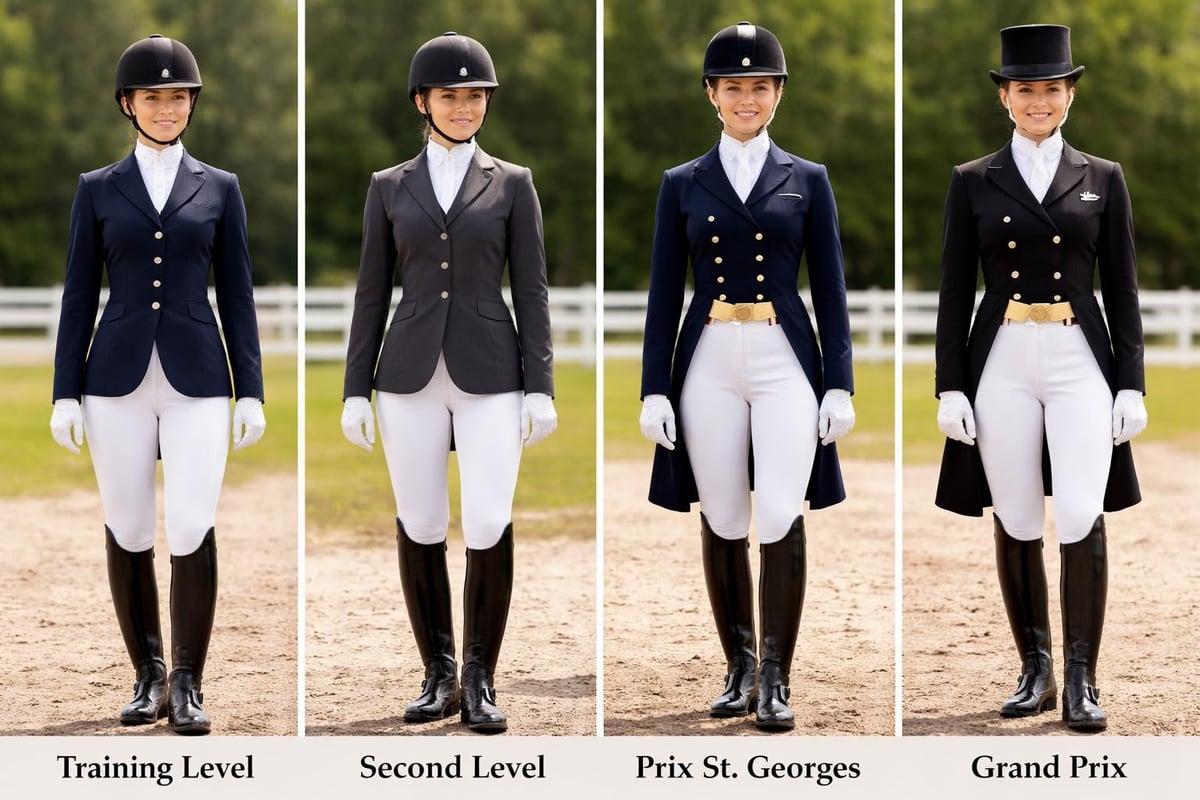
The competition jacket remains the most visible element of dressage riding apparel. Black dominates at lower levels, though navy blue is also acceptable. As you progress through the levels, shadbelly coats become permissible at Prix St Georges and above, adding that distinctive formal touch.
Weight and breathability matter more than many riders realize. Standing in the warm-up arena on a summer day, you need fabric that doesn't trap heat. Modern performance jackets incorporate mesh panels, lightweight technical fabrics, and strategic ventilation. They should allow full shoulder rotation without pulling across your back during extended movements.
Tailoring makes or breaks a jacket's appearance. Sleeves should end at your wrist bone, allowing a slight show shirt cuff to appear. The body should be fitted but not restrictive, skimming your torso without excess fabric ballooning behind you. Traditional single or double breasting depends on personal preference and level, though many riders find single-breasted jackets more comfortable in warmer climates.
Modern Updates to Traditional Styles
Competition rules have evolved to recognize performance needs. Certain levels now permit discreet stock ties or regular neckties. Collar styles have expanded. These changes reflect how dressage attire blends tradition with modern trends without losing the discipline's formal character.
Fabric technology continues advancing. Water-resistant finishes protect against unexpected weather. Four-way stretch materials move with you rather than against you. Washable jackets eliminate expensive dry-cleaning bills, practical for riders who compete regularly. These innovations don't compromise appearance but enhance functionality.
Colour options remain conservative, deliberately so. Dressage emphasizes the horse's movement, not the rider's wardrobe. Subtle details like quality buttons, proper vent construction, and clean finishing distinguish well-made jackets from basic options.
Show Shirts and Stock Ties
Beneath your jacket, the show shirt provides the formal foundation. White remains standard, though subtle patterns or textures add personality within acceptable boundaries. Long sleeves are traditional, offering a complete look when your jacket comes off between rides.
Stock ties create the classic dressage neckline. Learning to tie one properly takes practice but becomes second nature. The horizontal line frames your position, emphasizing correct carriage and alignment. Some riders prefer ready-tied options for convenience, particularly helpful during early morning competition preparations.
Technical show shirts incorporate moisture-wicking fabrics and strategic mesh panels. You'll appreciate this during warm-ups when nerves and exertion raise your temperature. Antibacterial treatments keep shirts fresh through long competition days. Stretch fabrics accommodate movement without pulling or bunching.
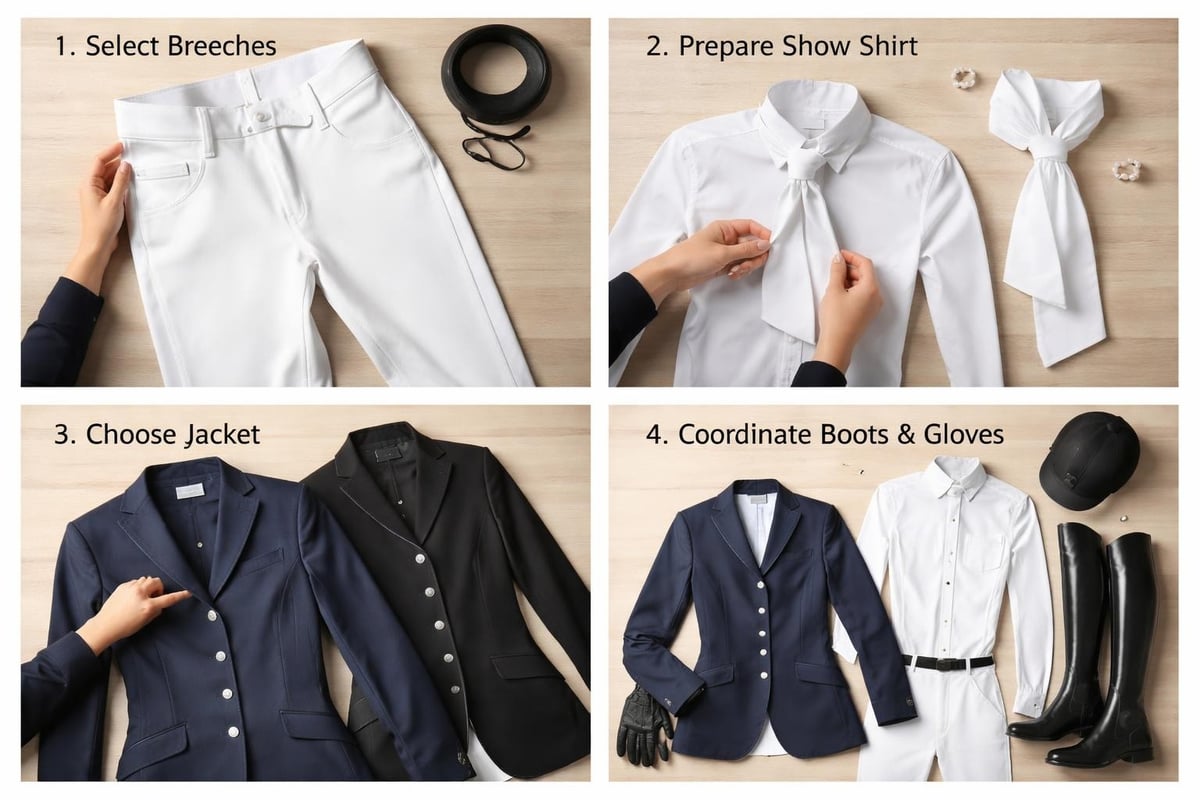
Fit should allow comfortable breathing and full arm movement whilst maintaining a tailored appearance. Collars need to sit properly beneath stock ties without gaping. Quality construction includes reinforced stress points and durable buttonholes. Gallant Equestrian's competition wear addresses these practical concerns whilst maintaining the refined aesthetic dressage requires.
Gloves, Boots, and Finishing Details
White or cream gloves complete the traditional look at most levels. They should fit snugly without restricting finger movement or grip. Leather offers durability and professional appearance. Synthetic options provide excellent grip in wet conditions and wash easily.
Tall black boots remain the standard footwear. Dress boots for competition, field boots for everyday riding. Quality leather boots mold to your leg over time, providing custom fit and support. Break them in before competition day. Nothing undermines a confident ride like boots that pinch or restrict your ankle flexion.
Boot care extends their lifespan significantly. Regular cleaning and conditioning prevents cracking. Cedar trees maintain shape between wears. Well-maintained boots project attention to detail that judges notice subconsciously.
Spurs and spur straps should be polished and properly fitted. Helmets must meet current safety standards whilst coordinating with your overall appearance. At FEI levels, top hats become permissible, though many riders prioritize safety with modern protective helmets regardless of level.
Building a Practical Wardrobe
Creating a functional dressage riding apparel wardrobe doesn't require purchasing everything simultaneously. Start with essentials that meet competition requirements, then expand as your needs and budget allow.
Two pairs of quality breeches provide rotation for regular training. One competition jacket covers most needs initially. Three show shirts ensure clean options throughout multi-day events. Basic accessories like gloves, belts, and stock ties round out the foundation.
| Essential Item | Minimum Quantity | Priority Level |
|---|---|---|
| Competition Breeches | 2 pairs | High |
| Show Jacket | 1 | High |
| Show Shirts | 3 | Medium |
| Tall Boots | 1 pair | High |
| Gloves | 2 pairs | Medium |
| Stock Ties | 3 | Medium |
| Helmet | 1 | High |
Consider versatility when selecting pieces. Neutral colours work across multiple combinations. Classic styles remain appropriate as trends shift. Quality construction withstands frequent use better than fast fashion alternatives.
Understanding how to build a capsule wardrobe helps maximize your investment. Pieces that transition from competition to training to casual wear offer better value than single-purpose items. Modern technical fabrics make this crossover increasingly practical.
Training Versus Competition Standards
Daily training doesn't require the same formality as competition dressage riding apparel. Understanding this distinction prevents unnecessary expense whilst maintaining appropriate presentation.
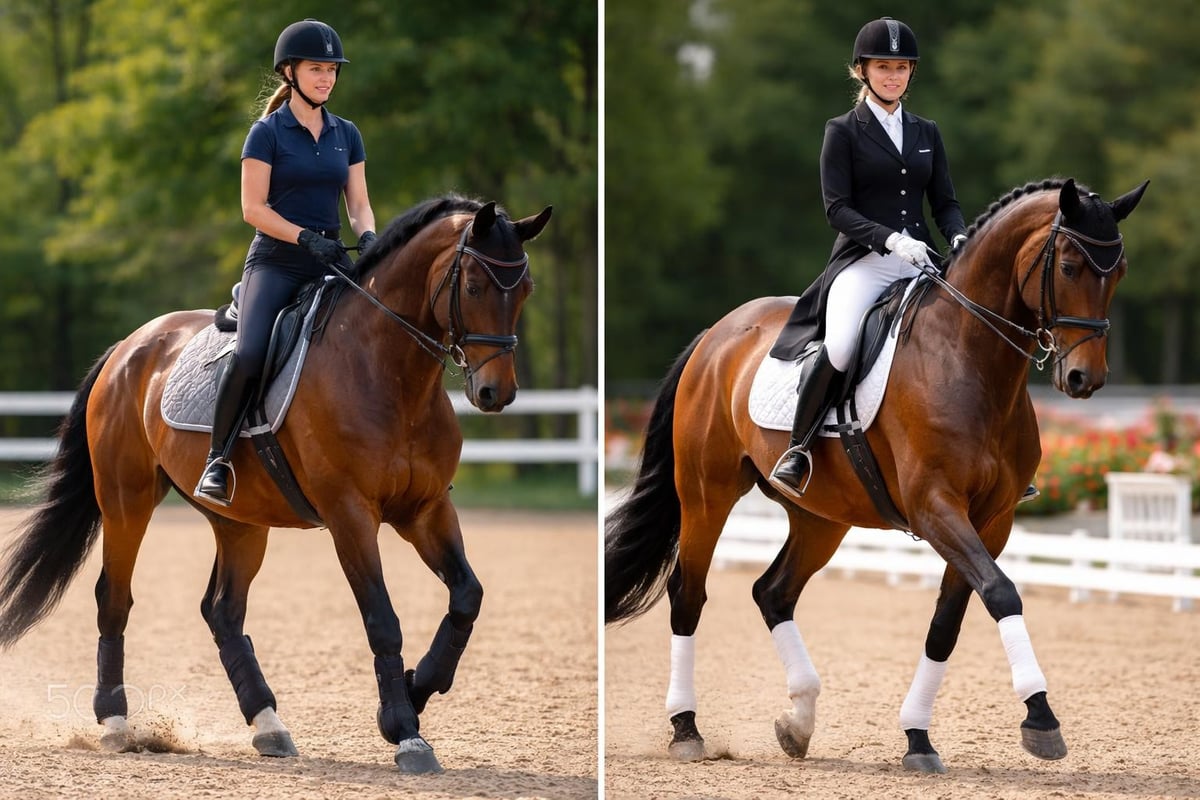
Training sessions call for comfortable, functional clothing that protects you and allows full range of movement. Schooling breeches in darker colours hide stable dirt better than competition whites. Quarter-zip shirts provide temperature flexibility. Lightweight jackets or vests add warmth without bulk.
That said, occasionally training in competition attire helps you and your horse acclimate to the different feel and restrictions. Horses can react to the crackling of a stiff jacket or the unfamiliar pressure of formal boots. Practicing in full kit eliminates surprises on competition day.
Adapting to Different Levels
Dressage riding apparel requirements evolve as you progress through the levels. Training through Fourth Level guidelines differ from FEI expectations. Understanding these progressions helps you plan purchases strategically.
Lower levels permit more flexibility in jacket colour and style. As you advance, formality increases. Shadbellies, top hats, and white breeches become expected at upper levels. Regional and national differences exist, making it worthwhile to review specific competition rules before purchasing new kit.
Unaffiliated competitions often allow more latitude than affiliated events. This provides opportunity to test new pieces or prioritize comfort over strict tradition. However, developing good habits early means less adjustment when entering more formal competitions.
Material Technology and Performance
Modern fabric development has revolutionized dressage riding apparel without compromising traditional appearance. Understanding these advances helps you select pieces that perform better and last longer.
Technical stretch fabrics provide compression and support. Four-way stretch accommodates the deep seat and long leg dressage requires. Moisture-wicking properties keep you dry during warm-ups and tests. Antibacterial treatments reduce odor buildup between washes.
Breathable, lightweight materials have transformed jacket comfort. No longer do you choose between appearance and functionality. Contemporary competition jackets look traditional whilst incorporating mesh panels, ventilation systems, and climate-adaptive fabrics.
Durability improvements mean quality pieces withstand years of regular use. Reinforced seams, industrial-grade zippers, and fade-resistant dyes maintain appearance through countless wash cycles. This longevity justifies higher initial investment, reducing long-term replacement costs.
Care and Maintenance
Proper care extends the life of dressage riding apparel significantly. Follow manufacturer washing instructions carefully. Most technical fabrics require cold water and gentle cycles. Avoid fabric softeners which can damage moisture-wicking properties.
Air drying prevents heat damage and shrinkage. Hang breeches by the waistband, allowing the legs to hang straight. Store jackets on proper hangers that support shoulder structure. Clean boots after each use, applying conditioner regularly to prevent cracking.
Stock ties benefit from light starching to maintain crisp appearance. Iron show shirts on appropriate settings, paying attention to collar and cuffs. These details contribute to an overall polished presentation that reflects well on you and your horse.
Regular maintenance prevents minor issues from becoming major problems. Replace buttons before they fall off mid-competition. Repair small tears promptly. Keep spare stock tie pins, gloves, and hairnets in your competition kit for emergencies.
Seasonal Considerations
Climate impacts dressage riding apparel choices significantly. Summer competitions in warmer regions demand different solutions than winter events in cold climates.
Lightweight show jackets in technical fabrics prevent overheating during summer tests. Some competitions permit jacket removal during lower-level tests in extreme heat, though this varies by organizer. Base layers under show shirts wick sweat whilst maintaining formal appearance.
Winter riding requires layering strategies that work beneath competition attire. Technical base layers provide warmth without bulk. Thermal breeches maintain the required appearance whilst offering cold-weather protection. Hand and foot warmers tucked discreetly help during long wait times between rides.
Rain presents particular challenges. Water-resistant jackets protect without appearing obviously technical. Boot covers prevent water damage. Having backup gloves ensures dry grip regardless of weather. Waterproof options designed for equestrian use combine protection with appropriate styling.
Regional Variations
Different regions interpret dressage riding apparel standards with slight variations. European competitions may emphasize certain traditional elements more strongly than Australian or New Zealand events. American shows follow USEF guidelines closely whilst recognizing climatic necessities.
Understanding local expectations prevents awkward situations. Research competition-specific requirements when traveling to new regions or countries. Many organizers publish dress codes on their websites or competition schedules. When uncertain, conservative choices rarely cause issues.
Cultural differences also influence acceptable variations. Some regions embrace modern technical fabrics more readily. Others maintain strict traditional standards. Observing what experienced local competitors wear provides valuable guidance.
Investment and Value
Quality dressage riding apparel represents significant investment. Understanding where to prioritize spending helps maximize your budget whilst meeting competition requirements.
Boots and breeches merit higher investment. You'll wear these most frequently, both in competition and training. Proper fit and quality materials directly impact riding effectiveness and longevity. A well-fitted jacket that performs reliably across multiple seasons justifies its cost through repeated use.
Accessories like gloves, stock ties, and belts cost less individually but add up quickly. Mid-range options often provide excellent value. Reserve premium spending for items that affect safety, comfort, and performance directly.
Men's equestrian apparel specifically designed for male riders fits better and performs better than adapted unisex or women's pieces. Proper shoulder width, torso length, and leg cut make noticeable difference in both appearance and comfort. This fit advantage justifies selecting brands that understand male riders' needs.
When to Upgrade
Recognizing when to replace worn dressage riding apparel maintains your professional appearance. Faded breeches, stretched-out fabric, and damaged seams detract from your overall presentation. Jackets with pulled seams, missing buttons, or visible wear should be retired from competition rotation.
Technology improvements might warrant upgrading functional items even before they wear out. Newer fabrics often perform significantly better than pieces from five or ten years ago. If you find yourself uncomfortable or restricted in older kit, newer options might enhance your riding experience considerably.
Budget considerations matter. Replacing entire wardrobes unnecessarily wastes resources. Strategic upgrades based on actual need, fit changes, or performance improvements make more sense than chasing every new release.
Presentation Standards That Matter
Dressage judges notice overall presentation. Clean, well-fitted dressage riding apparel that follows current standards creates positive first impressions. This doesn't guarantee higher scores, but it demonstrates respect for the discipline and attention to detail that extends throughout your riding.
Coordination matters more than expense. Properly fitted mid-range pieces worn with care appear more professional than ill-fitting premium items. Cleanliness, proper tailoring, and appropriate accessories combine to create polished appearance.
Small details distinguish adequate from excellent presentation. Polished boots, clean breeches without wrinkles, properly tied stock tie, and coordinated gloves complete the picture. These elements require minimal additional effort but significantly enhance overall impression.
Personal grooming complements your apparel. Neat hair, trimmed facial hair, and clean hands reflect the same attention to detail your clothing demonstrates. This holistic approach to presentation shows judges you take the sport seriously.
Dressage riding apparel balances tradition with modern performance needs, giving you the tools to ride confidently in any arena. Understanding the standards, selecting quality pieces that fit properly, and maintaining your kit carefully ensures you're always prepared to perform your best. Gallant Equestrian creates performance-driven clothing specifically designed for men who ride, combining functionality with refined style that works from competition to everyday riding. Look the Part. Enjoy the Ride.

