

Dressage Shirt Guide for Men: Competition & Training
Sep 16, 2026
The right dressage shirt bridges the gap between competition elegance and everyday practicality. For men in the discipline, it's not just about ticking boxes on a rulebook; it's about finding garments that perform under pressure, move with your body, and maintain their shape through countless hours of training and showing. Whether you're preparing for your first affiliated test or refining your aids at Grand Prix level, understanding what makes a proper dressage shirt matters more than you might think.
Understanding Dressage Shirt Requirements
The formal dressage arena demands attention to detail, and your shirt choice sits at the heart of that presentation. According to FEI's official Dressage Rules, riders must wear shirts that complement the traditional turnout expected at affiliated competitions. This typically means a white or light-coloured shirt with a stock tie for formal tests, though specific requirements vary by level and national federation.
What many riders overlook is how these rules translate into practical choices. A competition-legal dressage shirt needs a proper collar designed to sit beneath a stock tie without bunching or gaping. The fit should allow full range of motion through your shoulders and arms while maintaining a tailored appearance. Most importantly, it should disappear under your tailcoat or show jacket, creating clean lines without visible bunching or excess fabric.
Competition vs Training Shirts
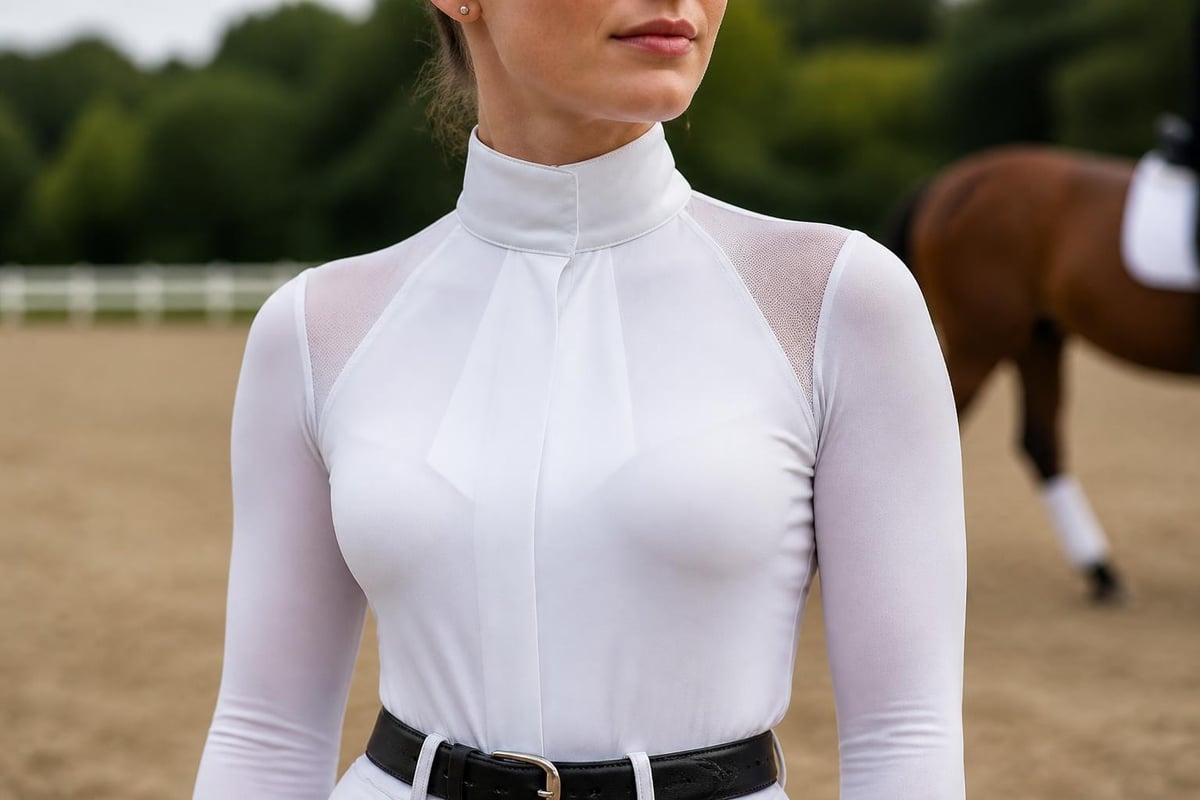
The distinction between show and schooling shirts matters more than aesthetic preference. Your competition dressage shirt serves a singular purpose: meeting dress code while you focus on your test. These garments prioritise a crisp, traditional appearance, typically featuring stiffer collars, button fronts, and materials that hold their shape under scrutiny. They're designed to look immaculate for the 5-7 minutes you're in the arena, paired with your men's competition tie and formal jacket.
Training shirts, by contrast, need to work harder and longer. You'll spend hours in them, sweating through flatwork sessions, navigating collection and extension, and generally putting fabric through its paces. The best training alternatives take inspiration from competition styling but prioritise performance fabrics, easier care, and durability. Many riders find that a quality polo shirt offers the right balance for schooling, whilst saving their formal dressage shirt for show days.
The USDF Visual Guide to the Dressage Attire Rules provides clear examples of what stewards look for during inspection, helping you understand exactly where the line sits between acceptable training wear and required competition turnout.
Fabric Technology and Performance
Modern dressage shirts bear little resemblance to the stiff, uncomfortable formal wear of decades past. Technical fabrics have revolutionised what riders can expect from competition attire, bringing sports science to traditional turnout. The best performance materials now manage moisture, regulate temperature, and resist wrinkles whilst maintaining the crisp appearance judges expect.
Moisture Management and Thermoregulation
Riding generates heat, particularly during the collection and lateral work that defines dressage training. Research published in the PMC review on sports clothing and thermoregulation demonstrates how advanced textiles can significantly improve comfort and performance by managing body temperature and moving perspiration away from skin. For riders, this translates directly to maintaining focus and effectiveness in the saddle, rather than being distracted by discomfort.
Quality dressage shirts now incorporate engineered mesh panels in strategic zones, typically along the back and under the arms where heat builds most readily. These aren't visible under your show jacket but make a measurable difference during warm-up and in warmer climates. The fabric itself often blends natural and synthetic fibres, combining cotton's breathability with polyester's moisture-wicking properties and shape retention.
Sustainable Fabric Choices
The equestrian industry increasingly recognises its environmental footprint, with fabric selection playing a significant role. According to Textile Exchange's Materials Market Report 2024, recycled polyester and organic cotton production continues to grow, offering riders genuine alternatives without compromising performance. For dressage shirts, this means you can now find options that perform brilliantly whilst aligning with sustainable values.
Look for certifications and transparent supply chains when evaluating brands. Better manufacturers clearly state their fabric sources and production methods. Durability itself represents sustainability: a well-made dressage shirt that lasts five seasons creates far less impact than cheaper alternatives requiring annual replacement.
Fit, Cut, and Movement
A dressage shirt that restricts your position or pulls across your shoulders undermines everything you've worked to develop with your trainer. Proper fit starts with understanding how equestrian-specific cuts differ from standard business shirts or casual wear. The athletic cut required for riding accommodates movement patterns unique to the saddle, particularly through the shoulder, across the back, and around the biceps.
| Fit Element | Why It Matters | What to Check |
|---|---|---|
| Shoulder seam | Allows free arm movement for rein aids | Should sit precisely at shoulder point, not droop down arm |
| Back width | Prevents pulling when reaching forward or maintaining contact | Adequate fabric across shoulder blades without excess |
| Sleeve length | Maintains professional appearance in all positions | Cuffs should reach wrist bone when arms are extended |
| Torso length | Stays tucked through posting and sitting movements | Sufficient length to remain tucked without constant adjustment |
| Collar stand | Supports stock tie whilst allowing neck movement | Firm enough to hold shape, comfortable when turning head |
The distinction between European and American cuts occasionally trips up buyers. European manufacturers typically favour a closer, more tailored fit throughout, whilst American brands often provide slightly more room through the body. Neither approach is inherently superior; it depends on your build and preference. Order samples when possible, and always test movement whilst seated in riding position before committing to competition wear.
Tailoring and Alterations
Off-the-rack dressage shirts rarely fit perfectly, particularly for riders with athletic builds or non-standard proportions. A skilled tailor can transform an almost-right shirt into competition-ready attire for modest cost. Common alterations include taking in the sides for a cleaner line under your jacket, shortening sleeves to proper length, and adjusting collar stands to accommodate different neck shapes.
When selecting a dressage shirt with alterations in mind, ensure adequate seam allowances and quality construction that will hold up to modification. Cheaper garments often lack the internal structure needed for successful tailoring. Conversely, investing in alterations for a premium shirt extends its useful life and improves presentation dramatically.
Styling Beyond the Arena
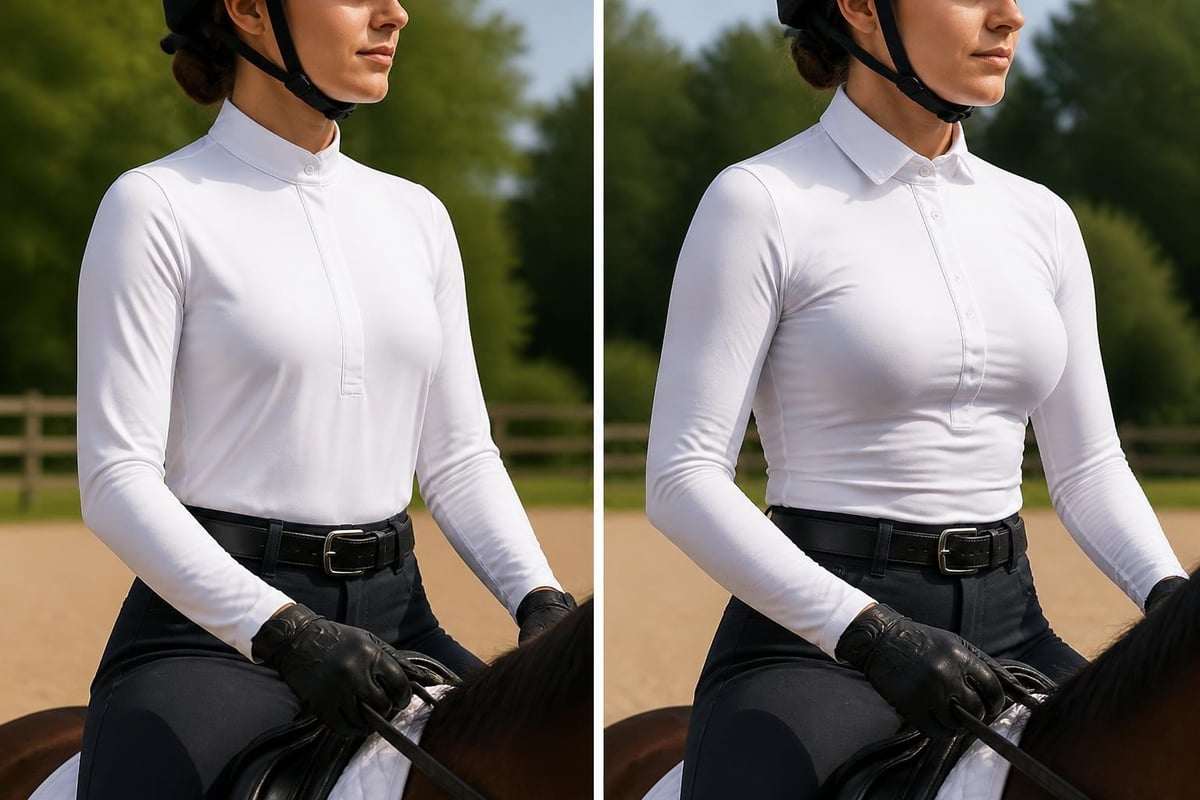
The best men's equestrian wear earns its place beyond competition days. A quality dressage shirt designed with thoughtful details transitions smoothly from stable to everyday contexts, making it a genuinely useful piece rather than single-purpose formalwear. This versatility matters particularly for riders balancing training schedules with professional and social commitments.
Modern interpretations of the dressage shirt often incorporate subtle design elements that maintain traditional roots whilst feeling current. Concealed button plackets create clean lines, performance collars look sharp with or without a tie, and carefully chosen colours work in multiple settings. The white and navy show shirt exemplifies this approach, offering competition compliance with enough style nuance for casual wear.
Consider how pieces coordinate across your riding wardrobe. Your dressage shirt should work seamlessly with riding breeches, obviously, but also with more casual bottoms for barn days. Similarly, layering options matter: a well-cut shirt fits comfortably under a rain jacket without excess bulk, yet looks intentional worn open over a short-sleeve tee during warmer months.
Care and Maintenance Essentials
Competition wear demands care routines that preserve appearance and extend garment life. Dressage shirts, particularly white ones, face unique challenges: they must look pristine under close scrutiny yet withstand the realities of stable environments and athletic use. Establishing proper maintenance habits from your first wear prevents the gradual degradation that leaves shirts looking tired before their time.
Pre-treat any marks immediately after riding, before they set. Sweat, particularly around collars and underarms, requires prompt attention to prevent yellowing and fabric breakdown. Cold water and gentle enzymatic cleaners work far better than hot washes or harsh detergents, which can damage technical fabrics and set protein-based stains permanently. Many riders keep a small stain treatment kit in their grooming box specifically for addressing issues before the journey home.
Washing and Storage Protocol
Washing best practice: Turn shirts inside out before washing to protect outer surfaces and visible details. Use mesh laundry bags for delicate items, particularly those with special collar structures or subtle pleating. Wash whites separately, and never mix with items that might transfer colour. Temperature matters: lukewarm water cleans effectively whilst preserving fabric integrity and preventing shrinkage that can ruin carefully achieved fits.
Drying considerations: Air drying preserves shape and extends garment life significantly compared to machine drying. Hang shirts on proper hangers whilst still slightly damp, allowing gravity to ease out minor wrinkles naturally. For competition dressage shirts, this step often eliminates the need for extensive ironing. If machine drying proves necessary, use low heat and remove garments whilst marginally damp to finish air drying.
Storage strategy: Invest in quality hangers that support shirt shoulders properly, preventing the dimples and stretching caused by cheap wire or narrow plastic versions. Store competition shirts in breathable garment bags to protect from dust whilst allowing air circulation. Cedar accessories help deter moths without the chemical concerns of traditional mothballs, particularly important for natural fibre content.
Matching Shirts to Discipline Levels
Your dressage journey typically progresses through levels, each with evolving presentation expectations. Whilst basic requirements remain consistent, the unwritten standards of turnout shift as you advance. Understanding these nuances helps you invest appropriately in shirts that suit your current needs without overcommitting to requirements that may not yet apply.
At preliminary and novice levels, the emphasis sits squarely on correct basics: clean, appropriate attire that meets minimum standards. A simple white dressage shirt with a neat stock tie fulfils requirements perfectly, and overdressing can appear as trying too hard. Many affiliated competitors at lower levels ride in straightforward, well-fitted shirts that prioritise function and proper presentation over premium details.
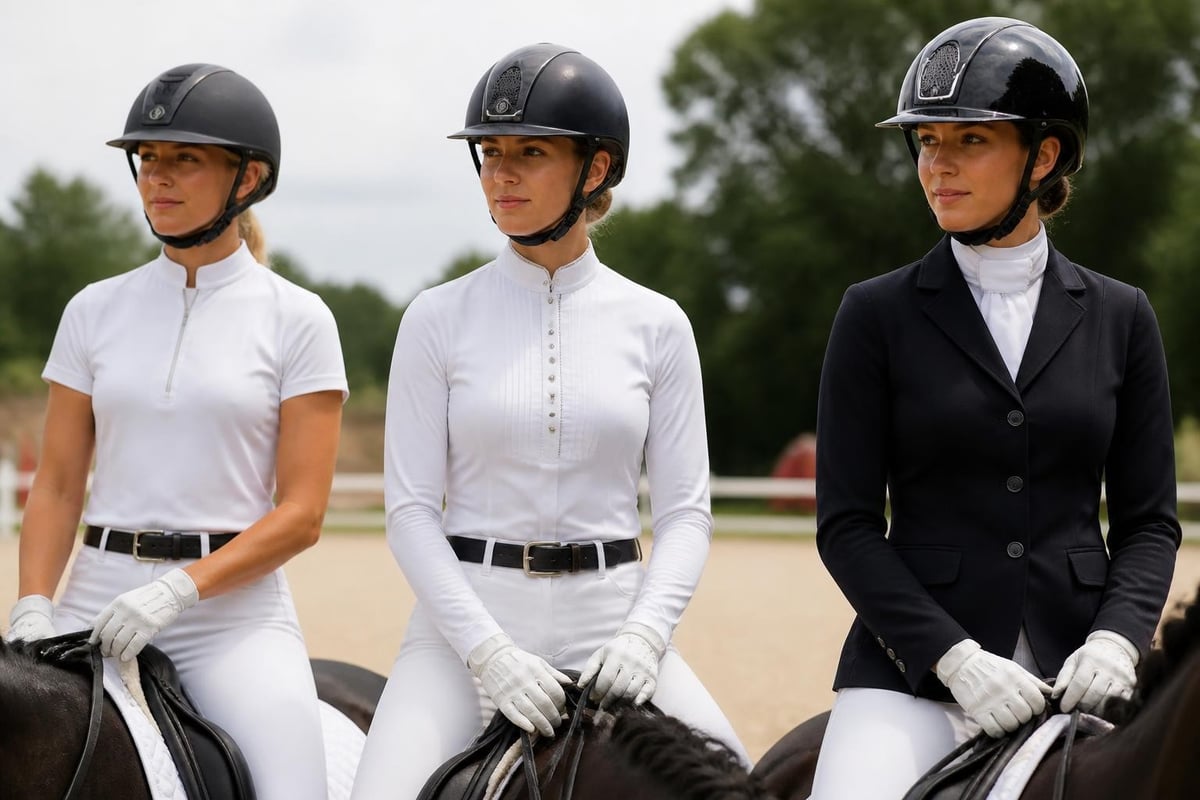
Medium and advanced levels invite slightly more refinement in fabric quality and cut precision. Judges at these levels notice details: how your collar sits, whether your shirt creates clean lines under your jacket, and how the overall ensemble appears as a cohesive presentation. This is where investing in a superior dressage shirt with excellent construction and better fabrics pays dividends, both in comfort during longer, more demanding tests and in overall impression.
FEI and international competition raises the bar again. Turnout becomes part of your competitive offering, and every element receives scrutiny. At this level, riders typically maintain multiple competition shirts, allowing rotation that preserves each garment's pristine condition. The investment reflects the significance of presentation when competing at the sport's highest echelons, where margins between placings can be measured in fractions of percentage points.
Building a Complete Shirt Rotation
Serious dressage riders need more than a single shirt, regardless of their competitive level. A properly planned rotation serves multiple purposes: it extends the life of each individual garment, ensures you always have appropriate attire ready, and provides backup options when the unexpected occurs. The specific composition of your rotation depends on training intensity, competition frequency, and how you balance dressage with other riding disciplines.
Most active competitors find that three competition-quality dressage shirts form a functional foundation. This allows one in current use, one freshly laundered and ready, and one as backup or in the washing cycle. Add two or three training alternatives, whether styled polo shirts or more casual options, and you've covered regular schooling needs without wearing your show shirts unnecessarily.
Consider seasonal requirements as well. Summer competition often means showing early morning or evening, but warming up during the day's heat. A lightweight dressage shirt with superior moisture management becomes essential equipment, not luxury. Conversely, spring and autumn events may see you layering strategically, where your shirt needs to work beneath a sweatshirt during early preparation, then stand alone as the day warms.
Regional Rule Variations and Compliance
Whilst international guidelines provide overall direction, national federations and regional organisations often interpret requirements differently. If you compete across borders or at various sanctioning bodies' events, understanding these variations prevents the frustration of discovering your perfectly good dressage shirt doesn't meet a specific venue's requirements.
US Equestrian's Dressage Rules and Equipment hub details American-specific requirements, which occasionally differ from FEI standards in permitted colours, marking restrictions, and formality expectations at various levels. British Dressage, Equestrian Australia, and other national bodies maintain their own rulebooks with similar variations. The practical solution involves checking specific requirements well before your scheduled competition, particularly if you're trying a new venue or level.
Some riders maintain separate competition shirts for different contexts: one strictly traditional white for formal FEI-style events, another in a permitted pastel or subtle pattern for national shows where rules allow more flexibility. This approach prevents the awkward position of arriving at an event and learning your preferred shirt doesn't comply with that organisation's interpretation of acceptable attire.
Investment vs Value Proposition
Dressage shirts span remarkable price ranges, from budget options under fifty pounds to premium pieces commanding several hundred. Understanding what drives these differences helps you invest wisely rather than simply chasing the highest or lowest price point. The correlation between cost and quality isn't always linear, and the "best" choice depends heavily on your specific circumstances.
Budget dressage shirts typically compromise on fabric quality, construction details, and longevity. They may look adequate initially but often lose shape quickly, develop pilling or fading after minimal use, and require replacement within a season or two. For absolute beginners still determining whether dressage suits them long-term, this calculated compromise makes sense. For everyone else, it generally proves false economy.
Mid-range options, typically £100-200, often represent the sweet spot for active amateur competitors. These shirts incorporate decent technical fabrics, thoughtful cuts based on actual riding requirements, and construction quality that survives regular use across multiple seasons. They won't necessarily feature the absolute finest materials or hand-finished details of premium pieces, but they perform their role reliably and present well in competition contexts.
Premium dressage shirts justify their cost through exceptional fabrics, superior construction, perfect fits, and genuine longevity. A £300 shirt that lasts five seasons whilst maintaining its appearance and performance represents better value than three £100 shirts across the same period, particularly when you factor in the subtle confidence that comes from knowing you look properly turned out. For professionals and serious amateurs competing regularly at higher levels, this investment makes complete sense.
Practical Selection Checklist
When evaluating any potential dressage shirt purchase, whether for competition or training, certain considerations consistently separate excellent choices from disappointing ones. Start with intended use: be honest about how often you'll wear this garment and in what contexts. A shirt for weekly training receives far different demands than one reserved for monthly competitions.
Fabric assessment: Feel the material carefully. It should have body without stiffness, recover quickly from creasing, and feel comfortable against skin. Check care labels: if maintenance requirements seem impractical for your lifestyle, the shirt will languish unworn regardless of its other merits. Look for fabric content that balances performance properties with natural comfort.
Construction examination: Inspect seams for straight, even stitching without loose threads or puckering. Button quality matters more than many riders realise; cheap buttons crack or lose finish quickly, creating shabby appearance. Collar construction deserves particular attention: it should hold shape firmly whilst remaining comfortable, with interfacing that doesn't create hard edges or visible lines.
Fit verification: Never buy a dressage shirt without trying it on, preferably whilst mimicking riding positions. Raise your arms as if holding reins, rotate your shoulders, and check that nothing pulls, gaps, or restricts movement. If purchasing online, verify return policies before ordering, and plan to try multiple sizes initially to identify the correct fit.
Choosing the right dressage shirt involves balancing tradition with performance, formal requirements with daily practicality, and investment against genuine value. The best approach builds a considered rotation that covers competition needs whilst supporting regular training, all whilst reflecting your personal standards for quality and presentation. Gallant Equestrian brings together performance-driven design and refined style in men's equestrian wear built to last, from competition-ready show shirts to versatile training pieces that move seamlessly between stable and everyday life. Look the Part. Enjoy the Ride.

