

Dressage Show Attire: Essential Guide for Men (2026)
Oct 28, 2026
Walking into the show arena requires more than skill and hours of training. Your appearance matters. The rules around dressage show attire exist for good reason: safety, tradition, and fair play. But navigating those rules needn't be overwhelming. Whether you're preparing for your first affiliated competition or stepping up to FEI level, understanding what's required and what works best for you makes all the difference. This guide breaks down everything you need to know about dressing correctly and confidently for the dressage arena.
Understanding the Formal Requirements
Dressage competitions operate under strict regulations that govern every aspect of your turnout. The official USEF Dressage rules provide the foundation for most North American shows, while international competitions follow FEI standards. These aren't arbitrary dress codes. They ensure safety, maintain the sport's traditional presentation, and create a level playing field.
The baseline requirements remain consistent across levels, though some flexibility exists for lower-level competitions. You'll need an approved helmet, appropriate jacket or coat, breeches, tall boots or jodhpur boots with gaiters, gloves, and a stock tie or choker. Each element has specific requirements, and knowing these details prevents last-minute scrambles or, worse, elimination.
Safety Equipment That Cannot Be Compromised
Your helmet represents the single most important piece of dressage show attire. Modern safety standards require ASTM F1163 certification, and stewards check this carefully. Don't attempt to enter the arena with vintage headwear or uncertified alternatives, regardless of how traditional they appear.
Current regulations mandate specific helmet certifications depending on your governing body. Always verify your helmet displays the proper safety seal and remains within its recommended lifespan. Most manufacturers suggest replacement every five years, or immediately following any impact.
For men, the classic hunt cap or helmet with a traditional profile suits most dressage competitions. Black or dark navy remains standard. Ensure proper fit by trying helmets with your hair at typical riding length, and remember you'll likely wear it over a hairnet for shows.
The Jacket and Coat Essentials
Your show jacket makes the strongest visual statement and significantly affects your score presentation. Traditional dressage attire requires a conservative approach. Black, navy, or dark grey jackets dominate the sport, with shadbelly coats reserved for upper-level riders and those competing at Prix St. Georges or above.
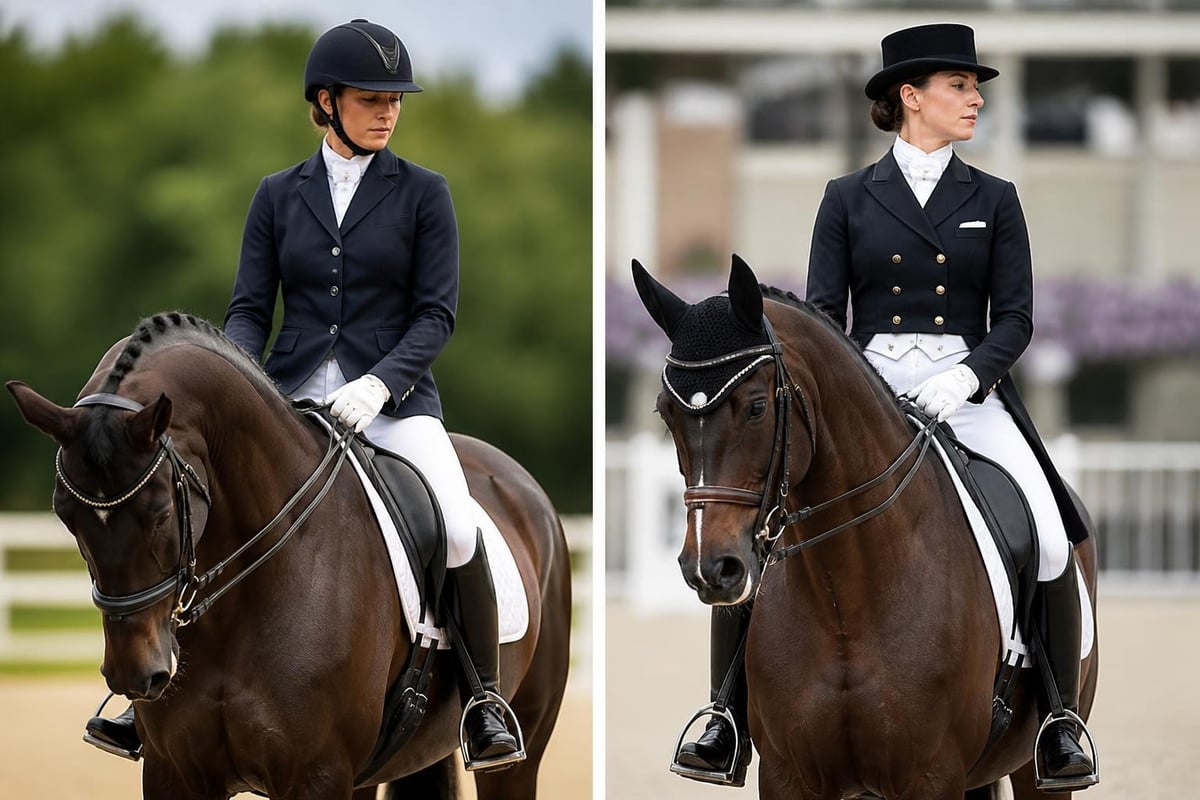
A well-fitted jacket should allow full range of motion whilst maintaining clean lines. Your shoulders need freedom to move, yet the jacket shouldn't bunch or ride up when you're in the saddle. Off-the-rack jackets rarely fit perfectly. Budget for alterations if needed, particularly sleeve length and shoulder width.
Construction and Fabric Considerations
Modern performance fabrics have transformed men's equestrian clothing significantly. Technical materials offer breathability, four-way stretch, and weather resistance whilst maintaining traditional appearance. This matters enormously during summer shows or when warming up in humid conditions.
Traditional wool jackets look sharp but become uncomfortable quickly in warm weather. Lightweight technical alternatives allow you to maintain formal appearance without overheating. Several manufacturers now produce show jackets with moisture-wicking properties and ventilation zones that remain completely invisible.
Quality construction shows in details like reinforced seams, functional buttonholes, and properly set sleeves. Your jacket endures considerable stress during competition. Invest in quality that lasts rather than replacing cheap alternatives every season.
Breeches That Perform and Present Well
White or light-coloured breeches remain standard for most dressage competitions, though lower levels sometimes permit beige or tan. The USDF Visual Guide provides clear illustrations of acceptable colours and styles. Choose full-seat or euro-seat breeches over knee-patch designs for dressage. The additional grip material supports your position without looking out of place.
Fit matters enormously here. Breeches that are too tight restrict movement and create unflattering lines. Too loose, and they bunch or sag. When choosing the right pair, consider rise, inseam length, and how they sit at your natural waist.
Technical Features Worth Considering
| Feature | Benefit | Competition Suitability |
|---|---|---|
| Four-way stretch | Full range of motion, better comfort | Excellent for all levels |
| Silicone seat | Superior grip, secure position | Standard for dressage |
| Flatlock seams | Reduced rubbing, sleeker appearance | Professional presentation |
| Compression fabric | Muscle support, moisture management | Ideal for longer classes |
| Hidden pockets | Practical for credentials/necessities | Check rule compliance |
Modern dressage riding breeches incorporate compression technology that supports muscles during lengthy tests whilst wicking moisture effectively. This becomes particularly valuable during multi-class days or championship competitions where you're riding multiple horses.
The waistband should sit comfortably without requiring a belt for support. Many competition breeches feature wide, elasticated waistbands that remain invisible under your jacket whilst preventing any shifting or riding down during your test.
Shirts, Stocks, and Neckwear
A white or light-coloured competition shirt forms the foundation layer beneath your jacket. Long sleeves are mandatory, and the collar should accommodate either a stock tie or choker. Traditional stock ties require careful pinning and practice to achieve a neat, symmetrical appearance. Chokers offer a simpler alternative whilst maintaining formal presentation.
Stock ties serve both aesthetic and historical safety purposes. Originally, they could be used as emergency bandages or slings. Today, they're purely traditional, but learning to tie one properly remains an essential skill. Practice at home until you can achieve a neat, flat knot every time.
Your stock tie pin should be plain and conservative. Avoid novelty designs or anything overly ornate. A simple horizontal pin in gold or silver tone suits all levels of competition. Position it horizontally through the knot, ensuring both ends are secured and nothing protrudes dangerously.
Boots and Footwear Standards
Black tall boots represent the traditional choice for dressage show attire. Leather remains standard, though modern synthetic alternatives now offer impressive quality at accessible price points. Your boots should fit precisely with minimal break at the ankle and sufficient calf room to avoid cutting into your leg during long rides.
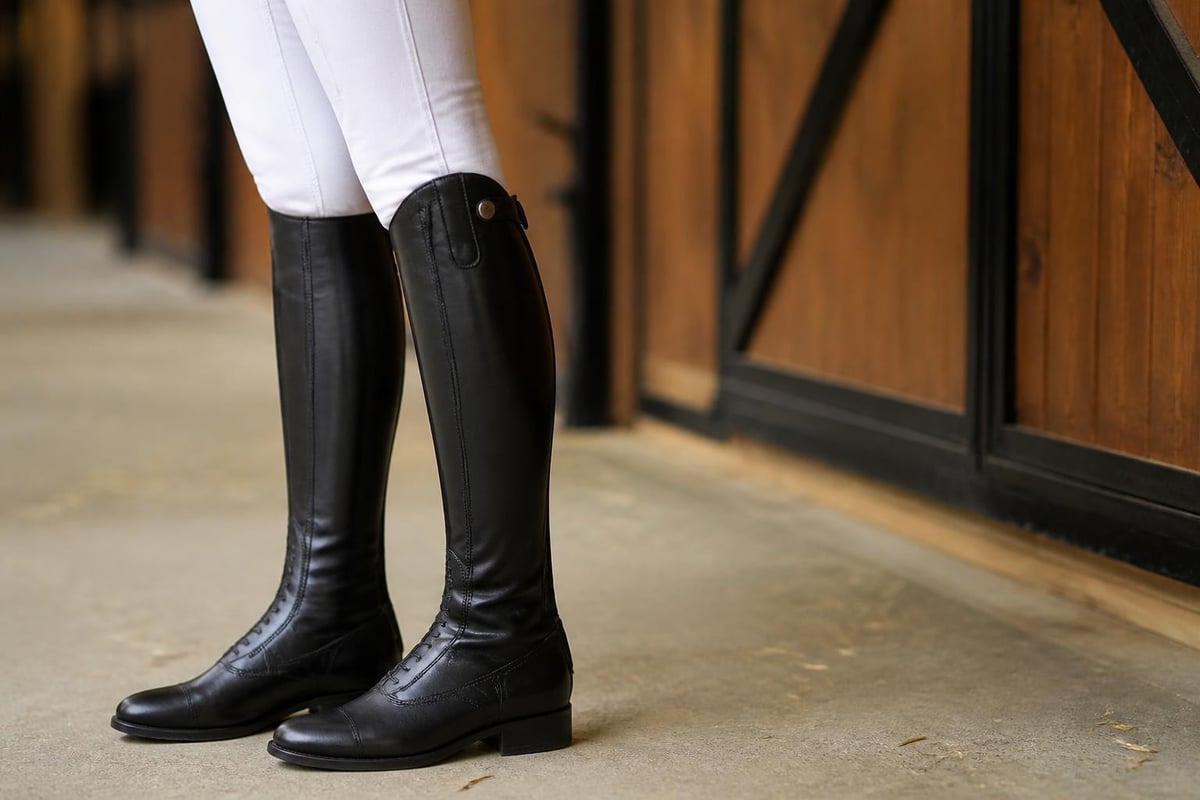
Field boots, with their lacing at the ankle, are not appropriate for dressage. Dress boots with a smooth front create the correct formal line. If you're still developing your riding physique or prefer greater flexibility, jodhpur boots worn with matching gaiters provide an acceptable alternative at lower levels.
Break in new boots thoroughly before competition day. Stiff leather can cause discomfort and affect your position during a test. Many riders maintain separate boots for schooling and showing, preserving their show boots' pristine condition whilst ensuring comfort.
Gloves and Final Details
White or light-coloured gloves complete your dressage show attire. Leather gloves offer superior feel and grip but require more maintenance. Synthetic alternatives provide excellent grip through reins, wash easily, and dry quickly between classes. Keep a spare pair in your show kit. Gloves tear, get dropped in puddles, or simply go missing at the worst possible moment.
Spurs may be required or optional depending on your level and governing body. FEI Dressage Rules specify exact measurements and permitted styles. If wearing spurs, ensure they're clean, properly oriented, and appropriate for your level. Overly long or sharp spurs can result in elimination.
Whips are permitted in most classes with length restrictions. Check your specific level and test requirements before entering the arena. A standard dressage whip should not exceed 120cm in length. Keep it discreet and professional in appearance.
Personal Grooming Standards
Your personal turnout matters as much as your clothing. Hair should be neat and contained, typically under a hairnet for men with longer hair. Beards and moustaches should be well-groomed. Remove visible jewellery except wedding bands. Some competitions permit discrete medical alert bracelets, but check local rules.
Judges notice these details. A polished overall presentation demonstrates respect for the sport, the judge, and your fellow competitors. It also shows you take your performance seriously, which can positively influence perception of your riding.
Level-Specific Variations and Exceptions
Lower-level competitions often permit more flexibility in dressage show attire. Unaffiliated shows may allow dark-coloured breeches, short boots with half chaps, or sports jackets instead of formal show coats. British Dressage provides clear guidance on UK-specific variations, whilst affiliated shows maintain stricter standards.
Training through Second Level competitions typically allow standard show jackets in conservative colours. As you progress to Third Level and above, expectations become more formal. Prix St. Georges and higher levels traditionally require shadbelly coats, though some modern interpretations permit high-quality show jackets in specific circumstances.
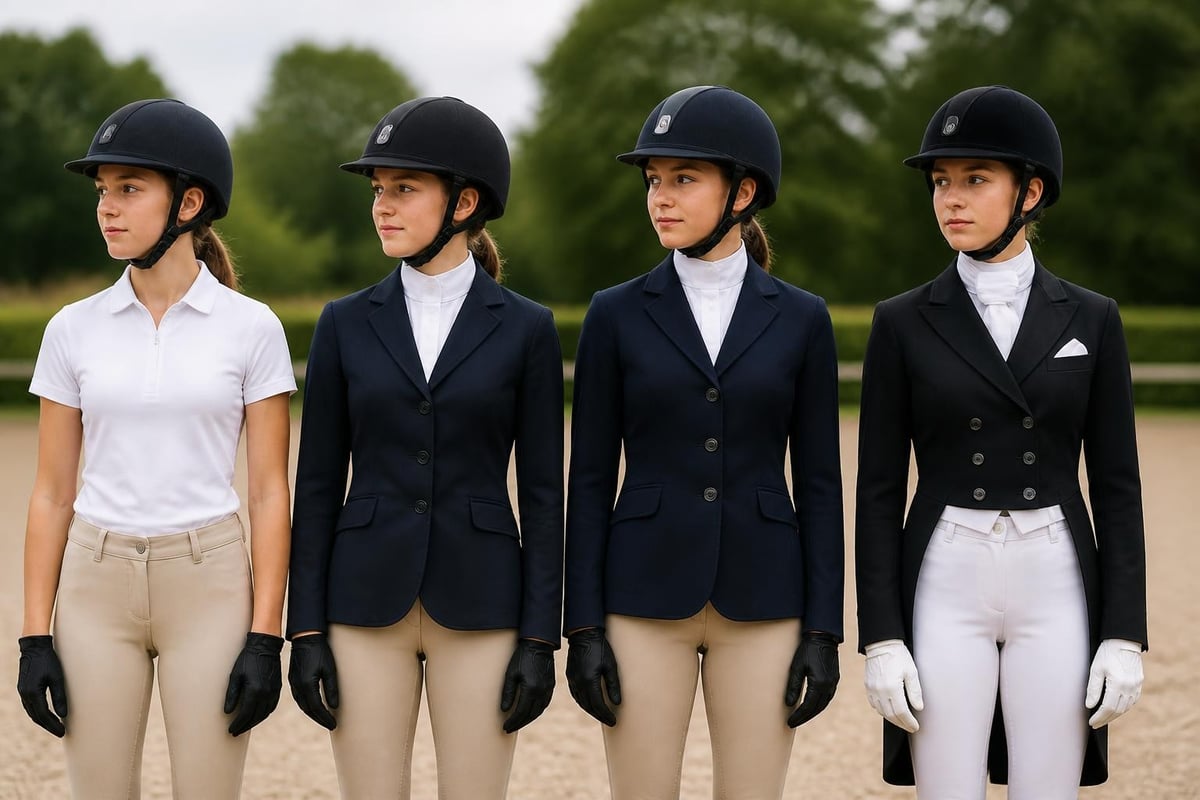
Different countries maintain distinct preferences and requirements. European competitions often embrace slightly different traditions than North American shows. If competing internationally, research local expectations thoroughly. Equestrian Canada offers Canadian perspectives that sometimes bridge American and European approaches.
Building a Practical Competition Wardrobe
Start with quality basics that work across multiple competitions. A well-fitted black show jacket, white breeches, tall boots, white shirt, and approved helmet form your core competition wardrobe. This foundation works for most affiliated competitions through Second Level.
Consider climate and typical show conditions when expanding your collection. A lightweight summer jacket prevents overheating during July competitions. Rain gear that meets competition standards ensures you're prepared when weather turns. Many riders maintain both traditional wool jackets for cooler shows and technical fabric alternatives for summer circuits.
Building a capsule wardrobe approach works particularly well for competitive riders. Select pieces that coordinate seamlessly, fit properly, and serve multiple purposes. Quality men's riding breeches in neutral colours work across disciplines and schooling environments whilst meeting show standards.
Investment Priorities
| Priority Level | Item | Reasoning |
|---|---|---|
| Essential | Safety-certified helmet | Non-negotiable legal requirement |
| Essential | Quality breeches | Daily use, affects comfort and performance |
| High | Show jacket | Major visual impact, used regularly |
| High | Tall boots | Durability and fit crucial for performance |
| Medium | Multiple shirts | Hygiene and backup options matter |
| Medium | Quality gloves | Regular replacement item, moderate cost |
| Lower | Shadbelly coat | Only needed at upper levels |
Don't compromise on safety equipment or items affecting daily comfort. A helmet and well-fitted breeches deserve your primary investment. Show jackets can start modestly and improve as your competitive career progresses. Save the shadbelly coat until you're consistently competing at levels requiring it.
Practical Care and Maintenance
Your dressage show attire represents significant investment. Proper care extends its lifespan considerably. White breeches require careful laundering. Wash in cold water with colour-safe bleach alternatives, and air dry when possible. High heat damages technical fabrics and elastic components.
Leather boots need regular cleaning and conditioning. After each show, wipe down with damp cloth, allow to dry naturally, then apply appropriate conditioner. Store boots with boot trees to maintain shape and prevent creasing. Quality leather boots can last decades with proper maintenance.
Show jackets benefit from professional cleaning between seasons rather than frequent washing. Spot-clean minor marks and air out thoroughly after use. Hang properly on shaped hangers to maintain structure. Technical fabric jackets often machine wash successfully, but always check manufacturer guidelines first.
What Works in the Real World
Theory meets practice in the warm-up arena and during actual competition. What works in the competition arena combines rule compliance with personal comfort and performance needs. Some riders prefer traditional materials and classic cuts. Others embrace modern technical fabrics and contemporary tailoring.
Your dressage show attire should allow you to ride at your best whilst meeting all requirements. Ill-fitting jackets restrict shoulder movement. Uncomfortable breeches create distractions during your test. Boots that pinch affect your leg position. Don't sacrifice function for appearance or vice versa.
Temperature regulation matters more than many riders anticipate. Summer shows in humid climates demand different considerations than autumn competitions in cooler regions. Layer strategically and choose fabrics that breathe. You're performing athletic work in formal clothing. Select attire that supports that reality.
Common Mistakes to Avoid
First-time competitors often purchase clothing too far in advance. Bodies change with increased riding fitness. Buy show clothing close to your competition date when possible. Allow time for alterations but avoid months-early purchases that may not fit when needed.
Overlooking the importance of proper undergarments creates unnecessary discomfort. Quality base layers prevent chafing, manage moisture, and remain invisible under show clothing. Don't neglect this foundation because it's unseen.
Failing to test your complete outfit before competition day leads to preventable disasters. Wear your full dressage show attire during lessons at home. Ride in your show boots. Practice putting on stock tie and pin. Ensure everything works together comfortably before stakes are high.
Making Informed Choices
Understanding regulations doesn't mean sacrificing personal style or comfort. Modern men's equestrian attire balances tradition with innovation successfully. You can meet every requirement whilst selecting cuts, fabrics, and details that suit your preferences and riding needs.
Research before purchasing. Read reviews from competitive riders, not just casual enthusiasts. Consider how garments perform under stress, in varying weather, and after multiple washes. Quality matters more in competition clothing than almost anywhere else in your riding wardrobe.
Seek advice from experienced competitors and professionals. What works varies by body type, riding style, and personal preferences. Horse & Hound's practical guidance offers useful insights, but your needs remain individual. Try before buying whenever possible. Many tack shops offer fitting services specifically for competition clothing.
Getting your dressage show attire right comes down to understanding the rules, investing in quality where it matters, and choosing pieces that genuinely work for your riding. When your clothing fits properly, meets all requirements, and lets you focus entirely on your test, you've got it sorted. Gallant Equestrian creates performance-driven competition clothing designed specifically for men who take their riding seriously, with pieces that work in the arena and beyond. Look the Part. Enjoy the Ride.

