

Horse Riding Polo: The Complete Guide for 2026
Aug 12, 2026
Horse riding polo stands as one of the most demanding and exhilarating equestrian disciplines. It requires exceptional horsemanship, tactical awareness, and physical fitness. For men entering this sport in 2026, understanding its foundations and what makes it unique helps you approach the game with confidence. Whether you're curious about the sport or ready to take your first swing, knowing what horse riding polo demands from both rider and mount sets you apart.
The Heritage and Evolution of Polo
Horse riding polo traces its roots back over two thousand years to ancient Persia, where it began as a training exercise for cavalry units. The game travelled through Central Asia, gaining popularity among nobility and warriors alike. British military officers discovered the sport in India during the 19th century and brought it back to England, establishing formal rules that shaped the modern game.
Today's polo follows internationally recognised standards that govern everything from field dimensions to player handicaps. The sport has evolved significantly, with organisations like the Hurlingham Polo Association working to enhance equine welfare and accessibility whilst maintaining its competitive edge.
The game's transition from military training to organised sport illustrates its adaptability. Modern horse riding polo balances tradition with innovation, incorporating new training methods, equipment standards, and safety protocols that make it accessible to riders at various skill levels.
Understanding the Modern Game
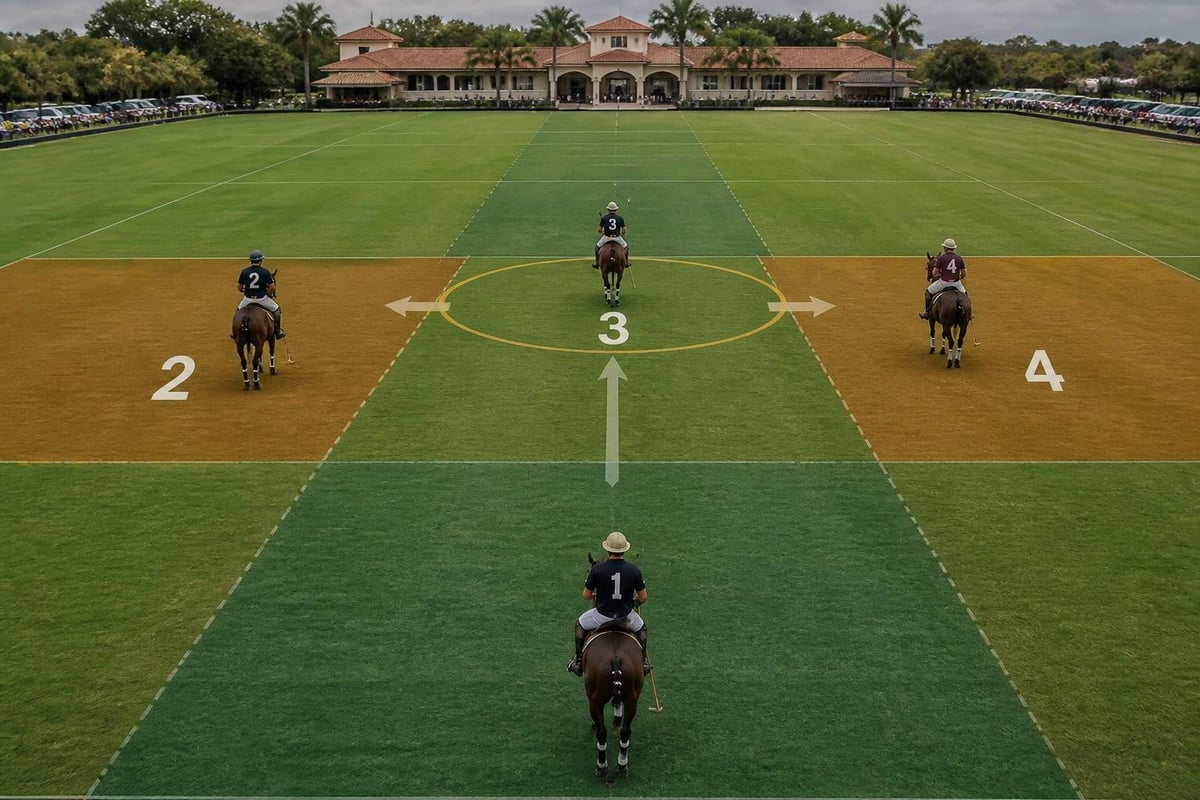
Horse riding polo is played between two teams of four mounted players. Each team aims to score goals by driving a small white ball through the opposing team's goal posts using a long-handled mallet. Matches are divided into periods called chukkas, typically lasting seven minutes each, with four to six chukkas per game depending on the level of play.
The field measures approximately 300 yards by 160 yards, making it one of the largest playing surfaces in organised sport. This vast area demands stamina from both horse and rider, with constant acceleration, sudden stops, and rapid directional changes throughout each chukka.
What Makes a Polo Pony
Despite being called ponies, polo mounts are typically full-sized horses ranging from 15 to 16 hands high. The term 'pony' remains from the sport's early days when smaller mounts were standard. These horses require specific qualities: agility, speed, courage, and the ability to anticipate play.
Thoroughbreds and Thoroughbred crosses dominate the sport, valued for their athleticism and responsiveness. Argentine bloodlines have become particularly prized, with many top-level players preferring horses bred specifically for polo. These animals undergo rigorous training from a young age, learning to respond to subtle cues whilst navigating the chaos of a match.
The relationship between rider and mount in horse riding polo differs from most equestrian disciplines. Players typically use multiple horses during a single match, changing mounts between chukkas to prevent fatigue. This practice requires riders to adapt quickly to different horses' temperaments and movement patterns.
Training a polo pony takes patience and expertise. Young horses learn to accept the mallet, tolerate close contact with other horses, and respond to neck reining whilst the rider's focus remains on the ball. The best polo ponies combine natural athleticism with a calm temperament under pressure.
Essential Skills for Polo Players
Horsemanship forms the foundation of horse riding polo, but the sport demands additional competencies. Players must develop excellent hand-eye coordination, spatial awareness, and the ability to execute precise shots whilst controlling a horse at speed.
Riding Technique
Polo requires a shorter stirrup length than most riding disciplines, positioning the rider's weight over the balls of the feet. This stance provides stability during aggressive play whilst allowing quick weight shifts for turns and stops. Your position must remain balanced despite swinging the mallet and leaning from the saddle.
Communication with your mount happens primarily through weight distribution and leg pressure. Spurs play a crucial role in achieving precise communication between rider and horse, particularly when your hands are occupied with mallet and reins. Understanding proper spur use prevents confusion or discomfort for your mount whilst maintaining clear signals.
The right equipment matters, particularly when you're spending hours in the saddle. Quality breeches designed for performance provide the grip and flexibility polo demands, allowing unrestricted movement whilst maintaining proper leg position.
Shot Execution and Strategy
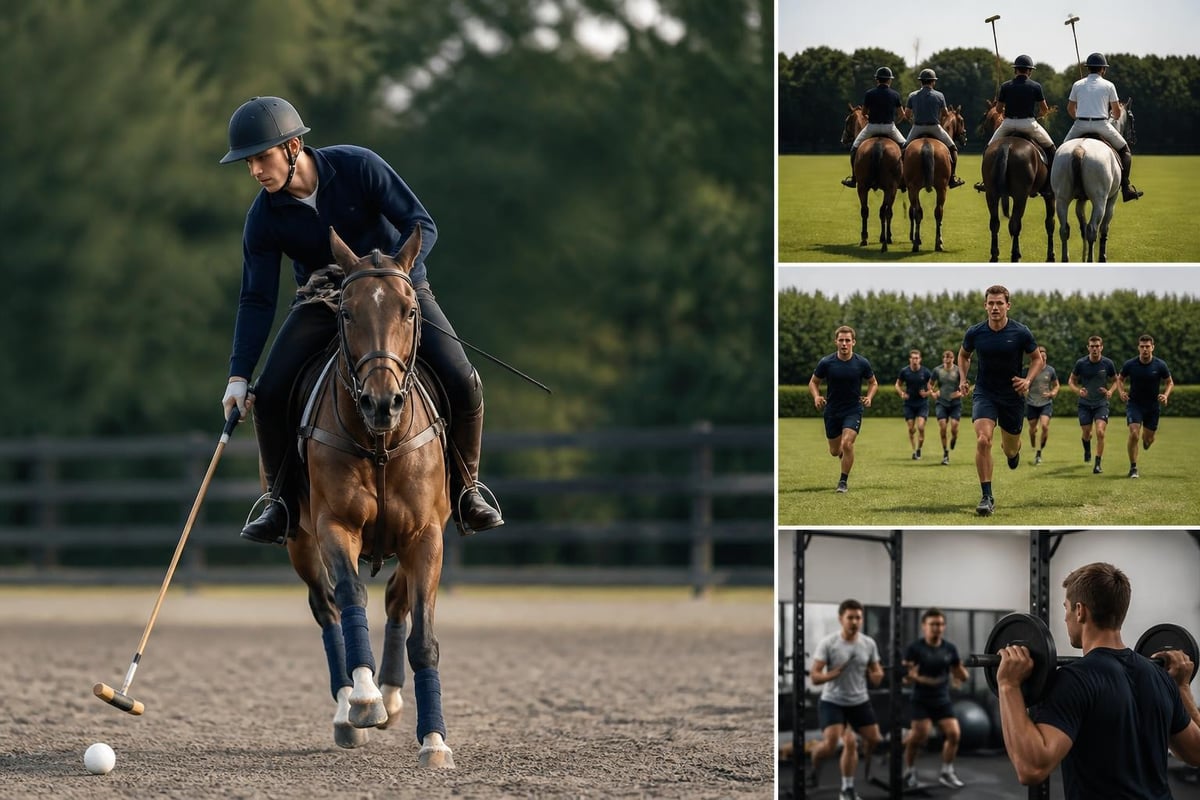
Four basic shots form the core of polo: the nearside forehand, nearside backhand, offside forehand, and offside backhand. Mastering these strokes takes hundreds of hours on horseback, developing the timing and accuracy needed for effective play.
Strategic thinking separates competent players from exceptional ones. Understanding when to pass, when to shoot, and how to position yourself relative to teammates creates scoring opportunities. Each numbered position carries specific responsibilities, with number one playing the most offensive role and number four anchoring defence.
Physical and Mental Preparation
Horse riding polo pushes physical limits. A typical match requires sustained cardiovascular output, core strength to maintain position, and arm strength for mallet work. Off-horse training complements riding time, with many players incorporating gym work, running, and stick-and-ball practice.
Mental preparation proves equally important. Reading the game as it unfolds, anticipating opponents' movements, and maintaining composure under pressure all contribute to effective play. The speed of horse riding polo leaves little time for deliberation, making instinctive decision-making crucial.
| Skill Area | Beginner Focus | Intermediate Development | Advanced Refinement |
|---|---|---|---|
| Horsemanship | Basic control at speed | Multiple horse adaptation | Subtle communication |
| Mallet Work | Contact with ball | Accurate directional shots | Power and precision |
| Strategy | Position awareness | Team coordination | Game reading |
| Fitness | Basic endurance | Sport-specific conditioning | Peak performance |
Equipment and Attire Essentials
Proper gear protects you whilst allowing full range of motion. Helmets meeting current safety standards are mandatory, along with knee guards that shield against mallet strikes and collisions. Many players also wear gloves for better grip and elbow protection.
Your clothing needs to withstand intense physical activity whilst looking appropriate for the sport's refined setting. Competition wear that performs under pressure keeps you focused on the game rather than discomfort. Moisture-wicking fabrics, reinforced seams, and strategic stretch panels make the difference between distraction and confidence.
Boots must provide ankle support and feature a defined heel to prevent the foot slipping through the stirrup. Brown leather remains traditional for most levels of play, though specific tournaments may have dress code requirements.
The mallet represents your most personal piece of equipment. Lengths typically range from 50 to 53 inches, with individual preference based on height, reach, and playing style. Beginners often start with slightly shorter mallets before adjusting as their technique develops.
Starting Your Polo Journey
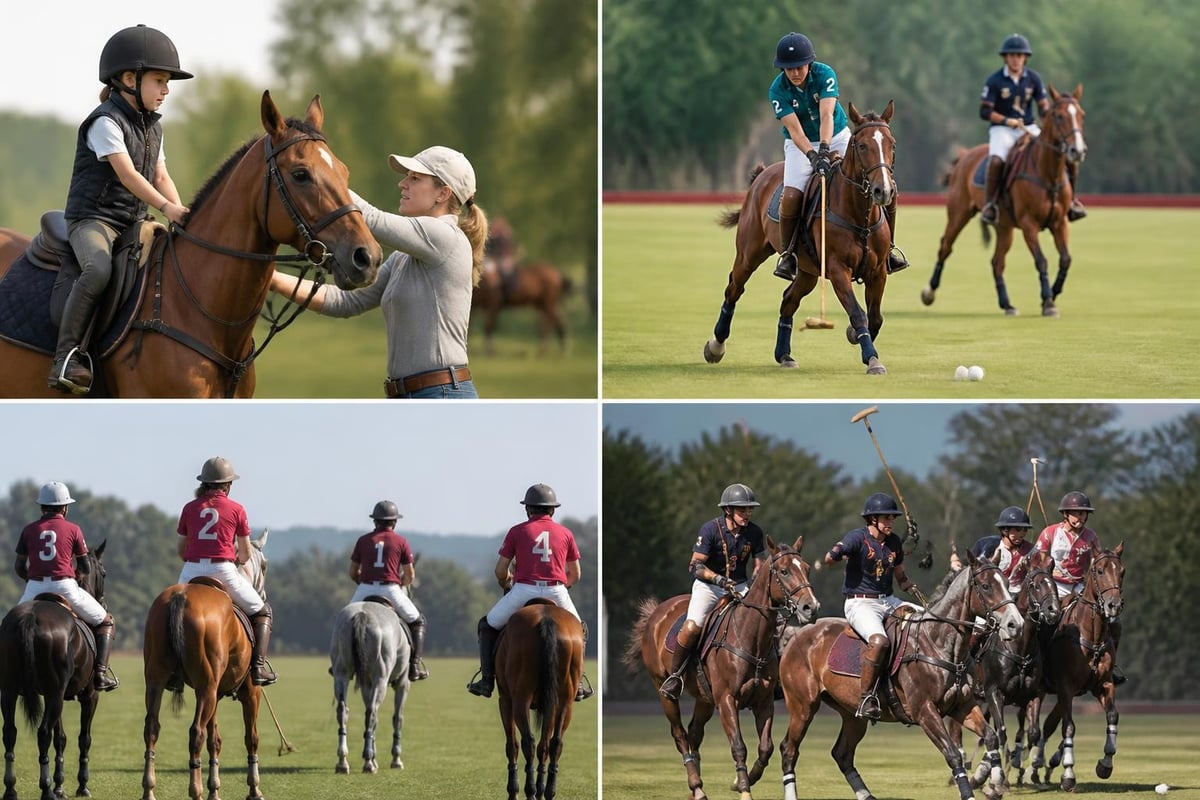
Most riders begin horse riding polo through lessons at established clubs. These facilities provide horses trained for beginners, allowing you to focus on fundamental skills without the complexity of managing an unfamiliar mount. Introductory programmes typically start with stick-and-ball practice, developing mallet control before adding the pressure of competitive play.
Finding the right club matters. Look for facilities with qualified instructors, well-maintained horses, and a welcoming atmosphere for newcomers. Many clubs offer trial sessions or beginner packages that include equipment hire and instruction.
Investment Considerations
Horse riding polo carries reputation as an expensive sport, though entry-level participation remains more accessible than many assume. Initial costs centre on lessons, club membership, and personal protective equipment. As you progress, considerations include horse ownership or leasing, tournament fees, and ongoing training.
Budget conscious players can participate through club programmes that provide horses, reducing the substantial costs of maintaining polo ponies. This approach allows you to develop skills and determine your commitment level before making significant financial investment.
Quality riding apparel represents a worthwhile investment. Performance-driven pieces that handle the demands of polo training last through countless sessions, making them more economical than frequent replacements of inferior alternatives.
The Social Dimension
Horse riding polo creates unique social connections. The sport's team nature fosters camaraderie, whilst the traditional post-match gatherings provide networking opportunities across diverse backgrounds. Many business relationships and friendships form through shared passion for the game.
The polo community values sportsmanship and mutual respect. Despite competitive intensity during matches, players typically demonstrate courtesy toward opponents and officials. This culture of respect extends to horse welfare, with responsible players prioritising their mounts' wellbeing above winning.
Club environments vary from highly competitive to more social, allowing you to find settings that match your goals. Some riders pursue polo purely for enjoyment and exercise, whilst others work toward higher handicaps and tournament play.
Advancing Your Game
Improving at horse riding polo requires consistent practice, quality instruction, and honest self-assessment. Many players supplement formal lessons with independent stick-and-ball sessions, developing muscle memory and shot consistency away from match pressure.
Video analysis helps identify technical issues and strategic mistakes. Watching your own play reveals positioning errors, timing problems, and opportunities for improvement that aren't apparent in the moment. Studying high-level matches demonstrates advanced tactics and shot selection.
Physical conditioning directly impacts performance. Riders who maintain fitness through off-season training return to play with advantages in stamina, strength, and injury resistance. Core stability work particularly benefits polo players, supporting the rotational movements required for effective mallet work.
Tournament Participation
Competitive play tests skills under pressure whilst providing motivation for improvement. Handicap systems allow players of different abilities to compete fairly, with tournament categories accommodating various skill levels. Starting in lower-level competitions builds experience before progressing to more challenging events.
Preparation for tournaments extends beyond individual practice. Team chemistry develops through shared training sessions and discussing strategy. Understanding teammates' tendencies and communication styles improves coordination during matches.
Proper attire becomes more important in competitive settings. Tournament organisers often specify dress codes, and looking polished demonstrates respect for the sport and fellow competitors. Technical performance remains paramount, but presentation shows professionalism.
Safety Considerations
The combination of speed, close proximity to other horses, and swinging mallets creates inherent risks in horse riding polo. Proper safety equipment reduces but doesn't eliminate these dangers. Helmets must fit correctly and be replaced after impacts, even if no visible damage appears.
Understanding right-of-way rules prevents dangerous collisions. The player following the ball's line has priority, with penalties assessed for crossing this line unsafely. Learning these regulations protects everyone on the field whilst keeping play flowing smoothly.
Horse welfare and rider safety intersect significantly. Tired or unsound horses increase accident risk, making responsible mount management essential. Proper conditioning, veterinary care, and adequate rest between chukkas keep horses performing safely throughout matches.
The Modern Polo Landscape
Horse riding polo continues evolving in 2026, with increased focus on accessibility and sustainability. Clubs are developing programmes to introduce the sport to broader audiences, whilst technological advances in training tools provide new learning methods.
Arena polo offers an alternative to field polo, played on smaller surfaces with three-player teams. This format requires less space and fewer horses, making it more accessible whilst maintaining the sport's excitement. Many riders enjoy both versions, appreciating the different tactical challenges each presents.
The sport's international nature creates opportunities for travel and cultural exchange. Major polo nations including Argentina, England, and the United States host prestigious tournaments that attract competitors worldwide. Participation at any level connects you to this global community.
Horse riding polo demands commitment, skill, and passion, rewarding those willing to invest time and effort with an unmatched equestrian experience. The sport's combination of athleticism, strategy, and horsemanship creates challenges that keep even experienced players constantly learning. Whether you're drawn to the competitive aspects or simply enjoy the thrill of the game, starting your polo journey begins with quality preparation and the right gear. Gallant Equestrian provides the performance-driven apparel that helps you ride with confidence, combining New Zealand design with durability that matches your ambition. Look the Part. Enjoy the Ride.

