

Horse Shirts for Men: Style Meets Performance
Feb 24, 2026
The right shirt changes everything. Whether you're training a young horse at dawn or meeting friends for lunch after a morning ride, horse shirts for men have evolved far beyond basic stable wear. Today's equestrian shirts combine technical performance with refined style, designed specifically for men who ride with purpose. These aren't generic athletic shirts or repurposed outdoor gear. They're purpose-built pieces that understand what riders actually need: freedom of movement, moisture management, durability, and the ability to look sharp wherever the day takes you.
What Sets Horse Shirts for Men Apart
Horse shirts for men differ fundamentally from regular casual or athletic wear. The demands of riding create specific requirements that standard shirts simply can't meet. When you're in the saddle, your shirt needs to move with you through every transition, every canter stride, every moment of contact with your horse.
The cut matters more than most riders realise. Standard men's shirts are designed for standing, walking, or sitting at a desk. Horse shirts account for the forward-leaning position of riding, the constant arm movement for rein contact, and the way fabric interacts with saddle and horse. A well-designed riding shirt prevents bunching at the waist, pulling across the shoulders, or riding up your back.
Fabric selection separates purpose-built equestrian shirts from everything else. Technical materials wick moisture away from your skin during intense work sessions. Four-way stretch fabrics move with you rather than against you. The best horse shirts for men use materials that resist odours, dry quickly, and maintain their shape through countless wash cycles.
Technical Features That Matter
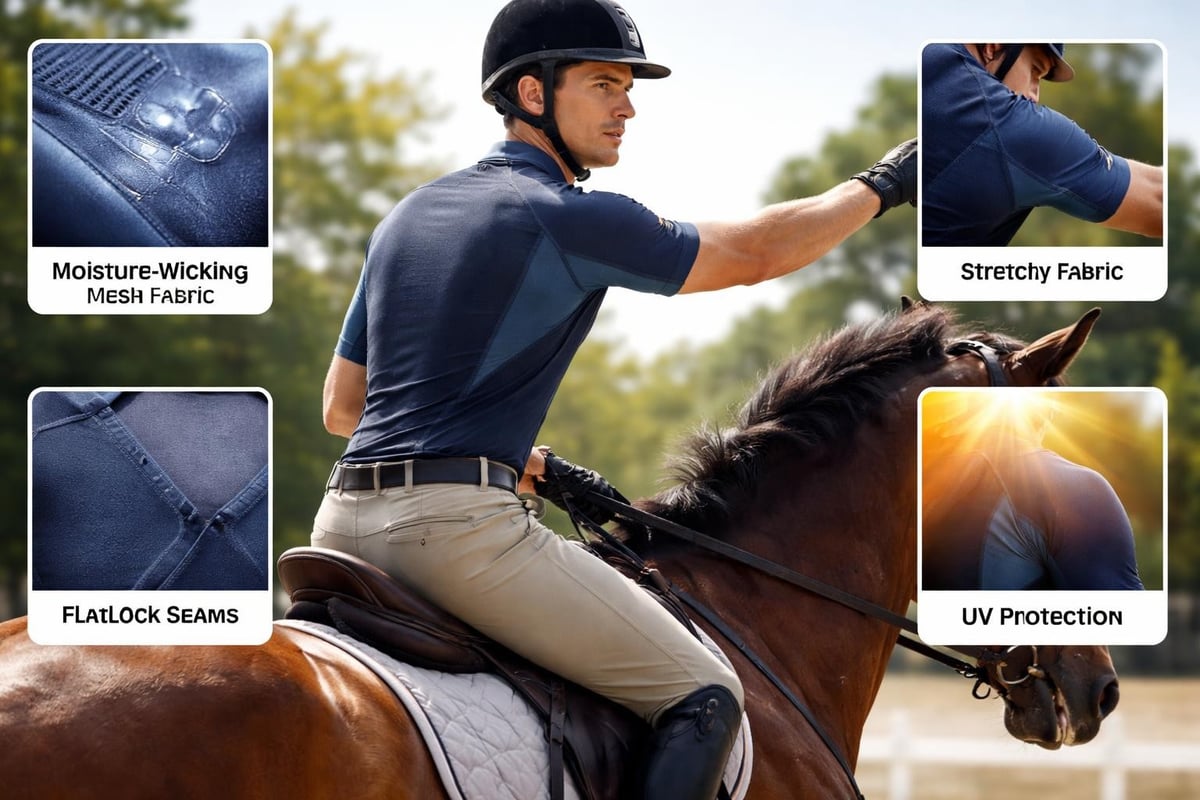
Performance features in modern horse shirts reflect genuine riding needs rather than marketing buzzwords. Temperature regulation keeps you comfortable whether you're working in a heated indoor arena or facing winter wind outdoors. Advanced fabrics achieve this through strategic ventilation zones and moisture-wicking technology that pulls sweat away from your skin.
Flatlock seams prevent chafing during hours in the saddle. Traditional seams create friction points that become painful over long rides. Quality equestrian shirts use flat construction techniques that eliminate bulk and irritation. This detail matters more as ride time increases.
UV protection has become standard in premium horse shirts for men, particularly for riders spending significant time outdoors. Fifty-plus UPF ratings shield your skin during summer training sessions or competition days. This protection works better than constantly reapplying sunscreen to your neck and arms.
Style Categories for Every Riding Discipline
Different riding styles demand different approaches to shirt design. Show shirts maintain traditional standards while incorporating modern comfort features. Competition shirts from Gallant Equestrian demonstrate how classic aesthetics can coexist with technical performance.
Polo shirts bridge the gap between casual and formal riding wear. These versatile pieces work equally well for schooling sessions, casual competitions, or post-ride socialising. The key lies in finding polo designs that maintain their shape and don't look sloppy after washing. Quality construction and fabric choice separate premium options from basic alternatives.
Technical riding tees have gained significant ground in recent years. These shirts prioritise function for training rides and hot weather conditions. The evolution of men's equestrian fashion reflects broader changes in how riders approach performance clothing.
Training Versus Competition Shirts
Your training wardrobe needs different characteristics than competition wear. Training shirts should withstand daily abuse: mud, sweat, horse hair, and frequent washing. Durability trumps delicate details. Dark colours hide stains better than light options, though quality fabrics resist permanent marking regardless of colour.
Competition shirts elevate your presentation while maintaining comfort under pressure. Show environments often demand specific colour choices and style guidelines. White or light-coloured shirts remain standard for many disciplines, requiring fabrics that resist transparency and maintain crispness throughout competition days. Understanding trends in equestrian fashion helps riders balance tradition with contemporary updates.
The investment in quality competition shirts pays dividends through longevity and performance. A well-made show shirt maintains its professional appearance through dozens of competitions and countless washes. Cheap alternatives lose shape, yellow, or develop pilling that undermines your presentation.
Fabric Technology and Performance
Modern horse shirts for men utilise fabric innovations that didn't exist a decade ago. Merino wool blends offer natural temperature regulation and odour resistance without the bulk of traditional wool. These blends work remarkably well for year-round riding, keeping you cool in summer and warm in winter through wool's inherent properties.
Synthetic performance fabrics excel at moisture management and quick drying. Polyester and nylon blends with spandex deliver stretch and recovery that natural fibres can't match. The best synthetic shirts avoid the clammy feeling associated with basic athletic wear through advanced weave structures and finishing treatments.
Hybrid fabrics combine natural and synthetic fibres for balanced performance. Cotton-polyester blends in specific ratios maintain breathability while adding durability and moisture management. These fabrics feel more natural against skin than pure synthetics while outperforming pure cotton in riding applications.
| Fabric Type | Best For | Key Benefits | Considerations |
|---|---|---|---|
| Merino Blends | Year-round riding | Temperature regulation, odour control | Higher cost, requires care |
| Technical Synthetics | Intense training | Maximum moisture wicking, quick dry | Can feel less natural |
| Cotton Blends | Casual riding | Soft feel, breathable | Less technical performance |
| Advanced Hybrid | All conditions | Balanced performance | Quality varies by construction |
Seasonal Considerations
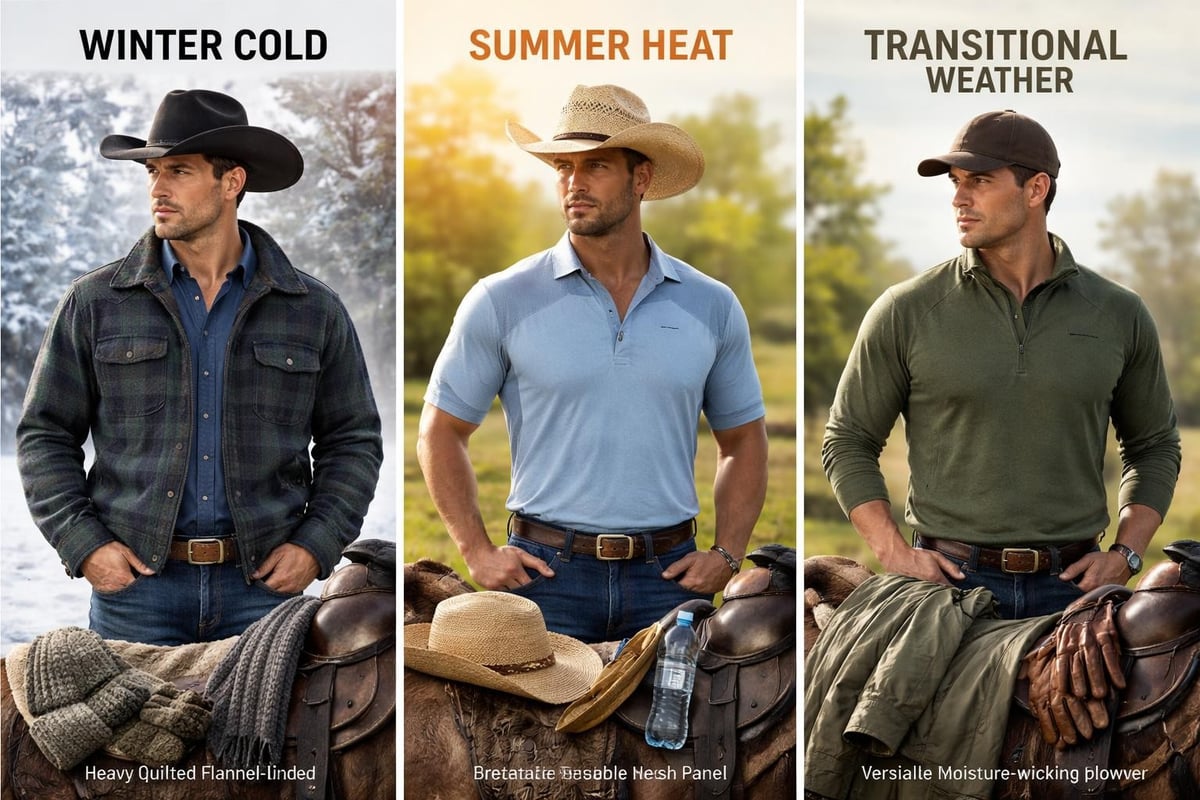
Winter riding demands different shirt strategies than summer training. Base layers become crucial for cold weather riding, with horse shirts for men designed to work as part of a layering system. These pieces need to trap warmth without adding bulk that restricts movement.
Summer shirts prioritise airflow and sun protection. Lightweight technical fabrics with mesh panels provide ventilation where you need it most. Light colours reflect heat better than dark options, though quality moisture-wicking matters more than colour choice for actual comfort.
Transitional seasons require versatile pieces that adapt to changing conditions throughout the day. Long-sleeve options with roll-up sleeves or layering-friendly cuts handle temperature swings between early morning and midday riding sessions.
Finding the Right Fit
Fit determines whether a technically superior shirt actually performs as designed. Too tight restricts movement and creates uncomfortable pressure points. Too loose allows fabric to bunch and flap, creating friction and looking sloppy. The ideal fit for horse shirts for men differs from standard casual wear.
Shoulder fit matters most. Your shirt should allow full range of motion with arms extended forward in riding position. Test this by reaching forward as if holding reins at working length. The fabric shouldn't pull tight across your shoulders or restrict the movement. Quality riding shirts include raglan sleeves or gusseted underarms to facilitate this freedom.
Torso length prevents the frustrating ride-up that plagues standard shirts during riding. Horse shirts designed for men account for the forward lean of riding position with slightly longer backs and curved hems that stay tucked. This detail separates purpose-built riding wear from adapted athletic clothing.
Size Guide Essentials
Understanding sizing prevents frustration with online purchases. Chest measurements provide the foundation for most sizing systems, but different brands interpret these measurements differently. Always check specific size guides rather than assuming your usual size translates across brands.
Sleeve length becomes critical for long-sleeve shirts and competition wear. Proper sleeve length reaches your wrist bone when arms hang naturally at your sides. Too short looks awkward and restricts movement. Too long creates bulk when rolled and looks unprofessional in competition settings.
Remember that technical fabrics often fit differently than cotton. Stretch materials may size smaller while maintaining comfort through fabric give. Read customer reviews for insights on whether specific shirts run large or small compared to stated sizing.
Versatility Beyond the Stable
The best horse shirts for men transition seamlessly from barn to everyday life. This versatility maximises value and simplifies your wardrobe. Modern equestrian shirt design has moved decisively toward pieces that don't scream "riding clothes" when you're off the horse.
Refined details make this transition possible. Subtle branding, classic cuts, and quality fabric choices allow riding shirts to function as casual wear. A well-designed polo or technical tee works for running errands, meeting friends, or casual Friday at the office without signalling you've just left the barn.
The crossover appeal of equestrian fashion into mainstream menswear validates this approach. Traditional equestrian elements like structured collars and tailored fits appeal beyond riding communities. Your riding wardrobe shouldn't be a separate category from the rest of your clothes.
Care and Maintenance
Proper care extends the life of quality horse shirts significantly. Technical fabrics require specific washing approaches that differ from standard cotton care. Always close zippers and fasteners before washing to prevent damage to fabric. Turn shirts inside out to reduce pilling and protect exterior finish.
Avoid fabric softener with technical materials. Softeners coat fibres and reduce moisture-wicking performance. They can also break down stretch properties over time. Use detergents designed for technical sportswear or gentle, fragrance-free options instead.
Air drying preserves fabric properties better than machine drying. Heat breaks down elastic fibres and can set stains permanently. If you must use a dryer, select low heat settings. Many riders find that technical shirts dry so quickly on a line that machine drying becomes unnecessary.
Style Elements and Personal Expression
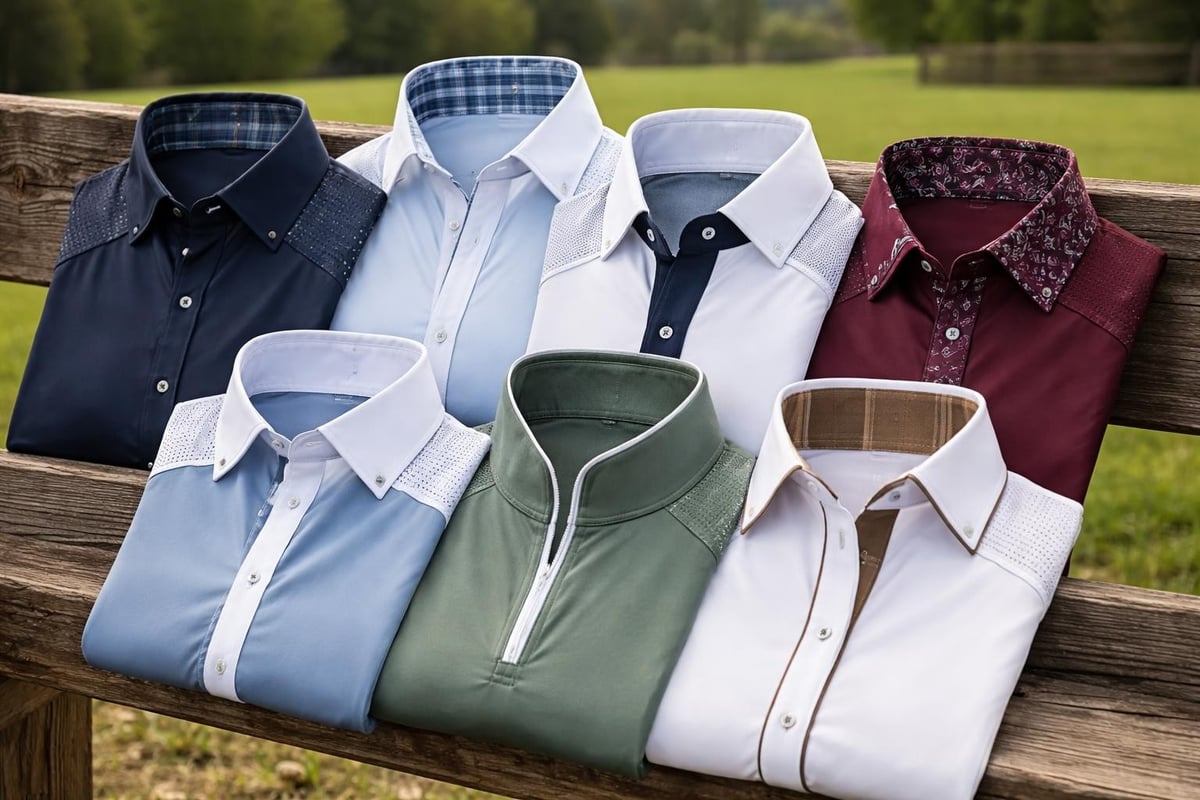
While function drives design in horse shirts for men, style choices reflect personal preference and riding culture. Colour selection goes beyond aesthetics to practical considerations. Navy, black, and olive hide dirt better than lighter options for training wear. White and light colours remain essential for many competition environments.
Collar styles range from traditional button-downs to modern stand collars and classic polo designs. Your choice depends on riding discipline requirements and personal preference. Button-down collars provide the most formal presentation for competition. Polo collars offer versatility for both riding and casual wear. Stand collars deliver modern aesthetics with excellent ventilation.
The reimagining of traditional equestrian elements shows how classic designs adapt to contemporary preferences. Structured shirts with clean lines work across riding disciplines while maintaining individual style. This approach resonates with riders who value both tradition and modernity.
Branding and Identity
Logo placement and branding intensity vary dramatically across horse shirts for men. Some riders prefer minimal branding that keeps attention on horsemanship rather than clothing. Others appreciate visible brand identity that signals membership in specific riding communities or support for favoured manufacturers.
Quality brands typically use subtle approaches: small embroidered logos, tonal branding, or interior labels. Obvious branding can appear less refined and limits versatility for wearing shirts outside riding contexts. Consider where and how you'll wear each shirt when evaluating branding levels.
Customisation options allow personalisation for team riding, training programmes, or personal preference. Embroidered names, stable logos, or national flags add individual identity while maintaining professional appearance. Quality customisation doesn't compromise fabric performance or durability.
Investment Versus Value
Price ranges for horse shirts for men span from budget basics to premium investment pieces. Understanding what drives cost helps make informed purchasing decisions. Fabric quality accounts for significant price differences. Premium technical materials cost more but deliver superior performance and longevity.
Construction quality separates lasting shirts from disposable ones. Flatlock seams, reinforced stress points, and quality finishing details add manufacturing cost but extend usable life dramatically. A more expensive shirt that lasts five years costs less per wear than cheap alternatives requiring replacement every season.
Brand reputation reflects consistent quality and design refinement over time. Established riding clothes brands command premium pricing based on proven performance and customer satisfaction. Lesser-known brands may offer value but require more research to verify quality claims.
Building a Functional Wardrobe
Strategic purchases create a versatile riding wardrobe without excessive spending. Start with essential pieces: quality training shirts in dark colours, at least one competition-appropriate option, and versatile polos that work across contexts. Expand from this foundation based on riding frequency and specific needs.
Seasonal rotation prevents excessive wear on individual pieces. Owning enough shirts to rotate through a week of riding allows proper care between uses. This approach extends garment life significantly compared to wearing the same one or two shirts constantly.
Sales and end-of-season discounts provide opportunities to acquire premium horse shirts for men at reduced prices. Quality equestrian wear doesn't follow fast fashion cycles, making last season's stock equally functional as current releases. Stockpile core colours and styles when pricing favours buyers.
Sustainable Choices and Longevity
Environmental consciousness increasingly influences purchasing decisions for riding wear. Quality construction inherently supports sustainability through extended product life. A well-made shirt worn for years has far less environmental impact than disposable alternatives requiring frequent replacement.
Material choices affect environmental footprint. Natural fibres like merino wool and organic cotton offer renewable sources with biodegradable end-of-life. Recycled synthetic fabrics repurpose existing materials into new technical riding shirts. The demand for sustainable materials reflects broader awareness among equestrian consumers.
Repair extends shirt life beyond typical usage patterns. Quality manufacturers often offer repair services for damaged items. Simple fixes like reattaching buttons or mending small tears prevent premature disposal. This approach aligns with riding culture's traditional appreciation for well-maintained gear.
| Sustainability Factor | What to Look For | Impact Level |
|---|---|---|
| Material Source | Organic, recycled, or renewable fibres | High |
| Manufacturing | Ethical labour practices, reduced water use | Medium |
| Durability | Quality construction, reinforced stress points | High |
| End of Life | Recyclable materials, repair programmes | Medium |
The Future of Men's Riding Shirts
Innovation continues reshaping what's possible in horse shirts for men. Smart textiles integrate technology directly into fabric, monitoring body temperature or heart rate during training. While not yet mainstream, these developments hint at future possibilities for performance tracking through clothing.
Customisation technology allows increasingly personalised fit and design choices. Made-to-measure options previously reserved for bespoke tailoring become accessible through digital measurement tools and flexible manufacturing. This trend enables optimal fit for riders whose proportions don't match standard sizing.
The integration of high-tech custom gear represents the leading edge of equestrian fashion innovation. As these technologies mature and costs decrease, custom performance features become available to more riders. The distinction between training wear and competition shirts may blur as technical capabilities improve across all categories.
Finding the right horse shirts transforms your riding experience from acceptable to exceptional. The difference between generic athletic wear and purpose-built equestrian shirts becomes obvious the moment you're in the saddle, moving through your work with unrestricted comfort and confidence. Whether you're building your first riding wardrobe or upgrading existing pieces, prioritise fit, fabric quality, and versatile design that works across every aspect of your riding life. Gallant Equestrian creates performance-driven shirts designed specifically for men who ride, combining New Zealand craftsmanship with technical innovation that lasts. Look the Part. Enjoy the Ride.

