

White Show Shirt: The Essential Guide for Men Riders
Oct 08, 2026
The white show shirt stands as one of equestrian sport's most enduring traditions. Clean, crisp, and professional, it represents the standard of presentation expected in the competition arena. For men entering the show ring in 2026, understanding what makes a quality white show shirt - and how to wear it correctly - remains fundamental to both performance and presentation. Whether you're competing in dressage, hunter-jumper classes, or eventing, the right shirt combines technical performance with traditional elegance.
Understanding Competition Requirements
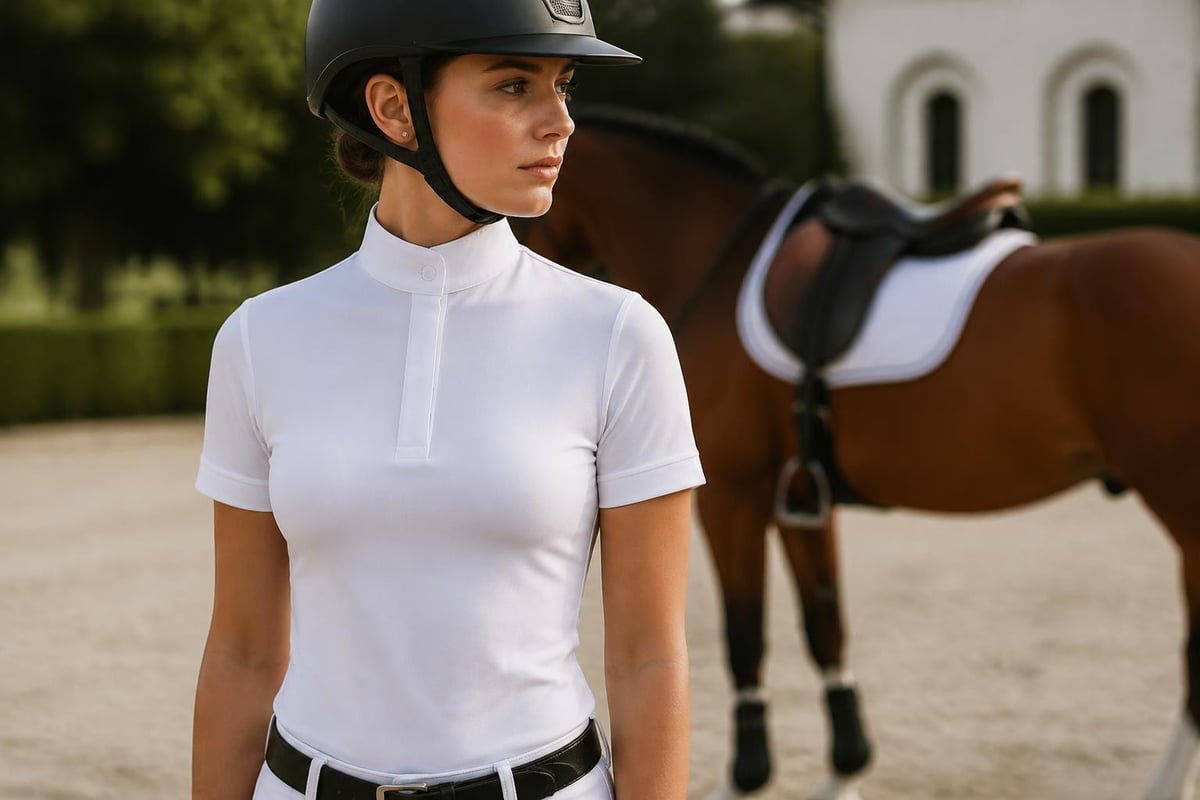
Competition rules vary by discipline, but most recognized organizations maintain specific standards for show attire. The USEF rulebook outlines when light-colored or white shirts are required, particularly in hunter and equitation classes. In many divisions, a white or light-colored shirt paired with a stock tie and show jacket forms the expected standard.
Dressage competitors face particularly precise requirements. The USDF Visual Guide to the Dressage Attire Rules provides illustrated examples of acceptable attire, showing how a white show shirt should fit beneath a show coat and how the stock tie should be secured. Lower-level dressage allows more flexibility, but FEI-level competition demands traditional white.
Heat rules have evolved significantly. Most organizations now permit riders to remove jackets when temperatures exceed certain thresholds. When you compete jacket-free, your white show shirt becomes your primary presentation piece. This shift has driven demand for shirts that look polished enough to stand alone while delivering genuine performance benefits.
Understanding these requirements before you purchase saves frustration at the show gates. Competition attire continues to evolve, but the white show shirt remains central to proper turnout across most English disciplines.
Fabric Technology and Performance
Modern white show shirts bear little resemblance to the stiff cotton options of previous decades. Today's performance fabrics combine moisture management, stretch, and breathability with the crisp appearance competition demands.
Technical fabrics typically blend polyester or nylon with spandex or elastane. These blends wick sweat away from your skin, dry quickly between classes, and maintain their shape through long competition days. Unlike pure cotton, which absorbs moisture and becomes heavy and uncomfortable, technical blends keep you dry and focused.
Moisture Management Systems
Quality shirts feature moisture-wicking technology built into the fiber structure. These fabrics pull perspiration away from your skin and spread it across the fabric's outer surface where it can evaporate quickly. During intense summer competitions or demanding courses, this performance difference becomes immediately apparent.
Breathability matters equally. Look for shirts with mesh panels along the sides, back, or underarms. These ventilation zones increase airflow without compromising the clean lines expected in the show ring. Strategic placement ensures they remain hidden beneath your show jacket while providing cooling when you need it most.
UV protection has become standard in premium white show shirts. White fabric naturally reflects some UV radiation, but technical treatments can boost protection significantly. The EPA recommends sun safety measures for outdoor activities, and UPF-rated fabrics provide measurable protection during long days at outdoor shows.
Stretch and Movement
Four-way stretch fabric moves with you through every position. Posting trot, two-point over fences, or sitting deep in collection - your shirt should never restrict movement or pull across your shoulders. Quality stretch fabric returns to its original shape after each ride, maintaining that crisp appearance through multiple classes.
Weight matters as well. Summer-weight fabrics offer maximum breathability for hot weather shows. Mid-weight options work year-round, while heavier winter weights suit indoor competitions in unheated arenas. Having multiple weights in your competition wardrobe ensures comfort across seasons.
Collar Styles and Fit Considerations
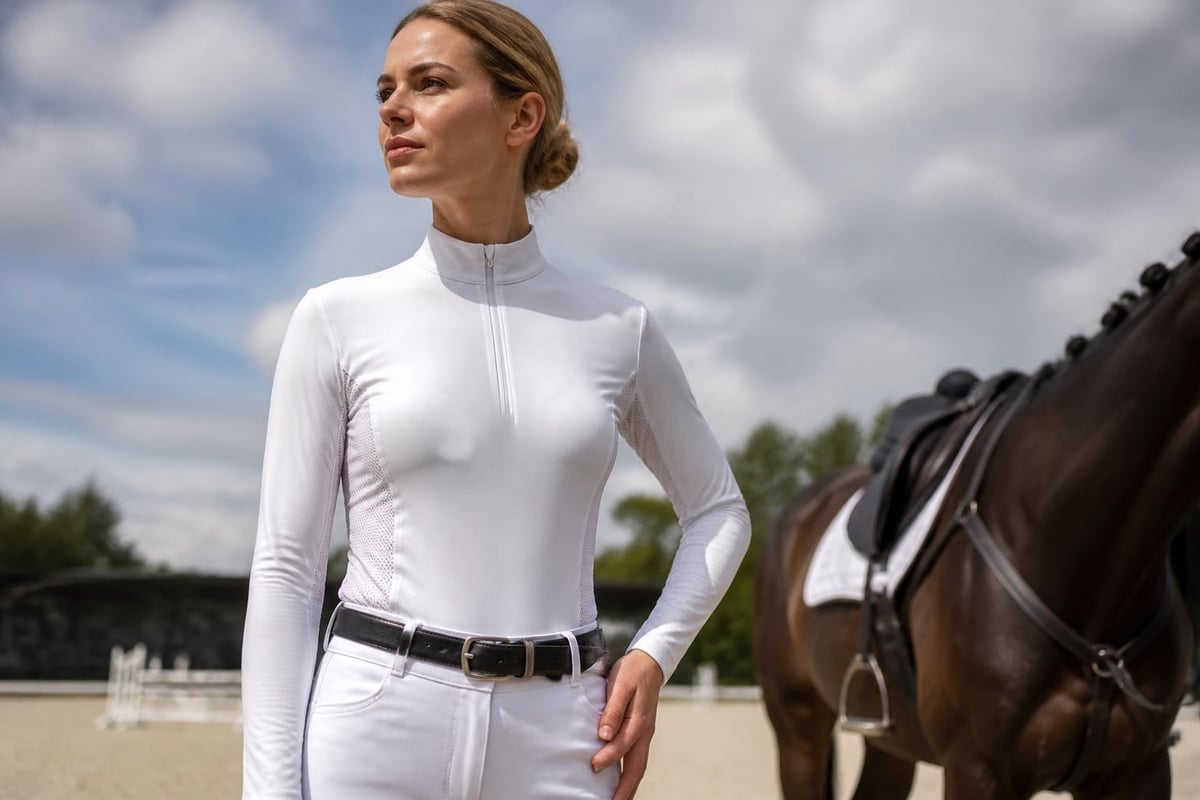
The collar defines your white show shirt's character and determines how it pairs with stock ties or chokers. Traditional competition styles include the standard collar, wing collar, and the increasingly popular ratcatcher collar.
Standard collars work with traditional stock ties and provide a classic, conservative look. They should fit comfortably around your neck without gaping or pulling. The collar height should allow you to fasten a stock tie properly while maintaining comfort during long competition days.
Wing collars feature turned-down points that frame the stock tie elegantly. Popular in upper-level dressage, they create a formal appearance that pairs well with shadbelly coats. These collars require precise fitting - too tight and they'll strangle you, too loose and they'll look sloppy.
Ratcatcher collars combine a collar with an attached stock tie, simplifying your morning routine at multi-day shows. While purists sometimes resist this convenience, many recognized competitions now accept well-made ratcatchers. They're particularly practical for younger riders or those competing in multiple classes throughout the day.
Sizing for Show Perfection
Proper fit in a white show shirt differs from casual wear. The shirt should fit close to your body without restriction, presenting clean lines under your show jacket. Shoulders should align precisely - too wide and the fabric bunches, too narrow and movement becomes restricted.
Sleeve length requires careful attention. Long sleeves should reach your wrist bone, remaining in place when you extend your arms forward. Show jackets often ride up slightly during posting or jumping, so sleeves that are marginally too short become obviously inadequate in the ring.
The torso should fit close without pulling across the chest or back. Extra fabric creates bulk under your jacket, disrupting the smooth silhouette competition demands. However, the shirt must allow full range of motion - test by moving through riding positions before finalizing your purchase.
Many competitive riders invest in made-to-measure options for optimal fit. While ready-to-wear serves most needs adequately, custom tailoring ensures every measurement aligns perfectly with your build. This investment proves worthwhile for riders competing regularly at higher levels.
Care and Maintenance Essentials
Keeping your white show shirt pristine requires consistent care. White fabric shows every speck of dirt, every ring-around-the-collar, every trace of horse sweat. Establishing proper maintenance habits protects your investment and ensures you're always competition-ready.
Pre-treat stains immediately after each use. Horse saliva, arena dust, and your own perspiration can set into fabric if left untreated. Apply stain remover to affected areas before washing, focusing on collars, cuffs, and underarms where oils and sweat concentrate.
Washing Strategy
Wash white show shirts separately from colored items to prevent dye transfer. Use quality detergent formulated for whites, and consider adding oxygen bleach periodically to maintain brightness. Avoid chlorine bleach on technical fabrics - it degrades elastic fibers and yellows synthetic materials over time.
Cold or warm water works best for most technical fabrics. Hot water can set protein-based stains like sweat and may damage stretch fibers. Follow manufacturer care instructions precisely, as some high-performance fabrics require specific treatment.
Turn shirts inside-out before washing to protect the outer surface from abrasion. This simple step extends fabric life and maintains the crisp appearance competition demands. Fasten any closures to prevent snagging during the wash cycle.
Air-drying preserves fabric integrity better than machine drying. High heat can damage elastic fibers, cause shrinkage, and set stains that weren't fully removed in washing. Hang shirts on shaped hangers to maintain proper form. If you must use a dryer, select low heat and remove shirts while slightly damp to minimize damage.
Between-Show Storage
Store clean, dry white show shirts in garment bags to prevent dust accumulation and yellowing from light exposure. Cedar blocks or lavender sachets keep stored garments fresh without the harsh chemicals found in some moth repellents.
Rotate between multiple shirts if you compete regularly. This rotation extends the life of each garment and ensures you always have a backup if one sustains damage or doesn't dry in time. Most serious competitors maintain at least two competition-ready white show shirts at all times.
Press or steam shirts before competition. Wrinkles undermine even the finest shirt's presentation. A garment steamer works particularly well for technical fabrics that may be damaged by direct iron contact. Pack steamed shirts carefully in garment bags for transport to shows, using tissue paper to prevent creasing.
Choosing Quality Over Price
The white show shirt market spans enormous price ranges. Entry-level options start around forty pounds, while premium brands command two hundred pounds or more. Understanding what drives these price differences helps you make informed investments.
| Price Range | Typical Features | Best For |
|---|---|---|
| £40-£70 | Basic polyester blend, standard cut, minimal stretch | Beginning riders, occasional shows |
| £70-£120 | Better moisture-wicking, improved fit, some stretch | Regular competitors, multiple disciplines |
| £120-£200+ | Premium fabrics, excellent stretch, tailored fit, UV protection | Serious competitors, frequent shows |
Fabric quality creates the most significant price variation. Premium technical fabrics cost substantially more to produce but deliver measurably better performance. These materials maintain their appearance after dozens of washes, resist pilling and stretching, and keep you comfortable through demanding competition days.
Construction details separate good shirts from exceptional ones. Flat-lock seams prevent chafing during long rides. Reinforced stress points withstand repeated stretching. Quality buttons stay secure through countless competitions. These details might seem minor until you're adjusting a gaping collar between classes or dealing with a lost button at an away show.
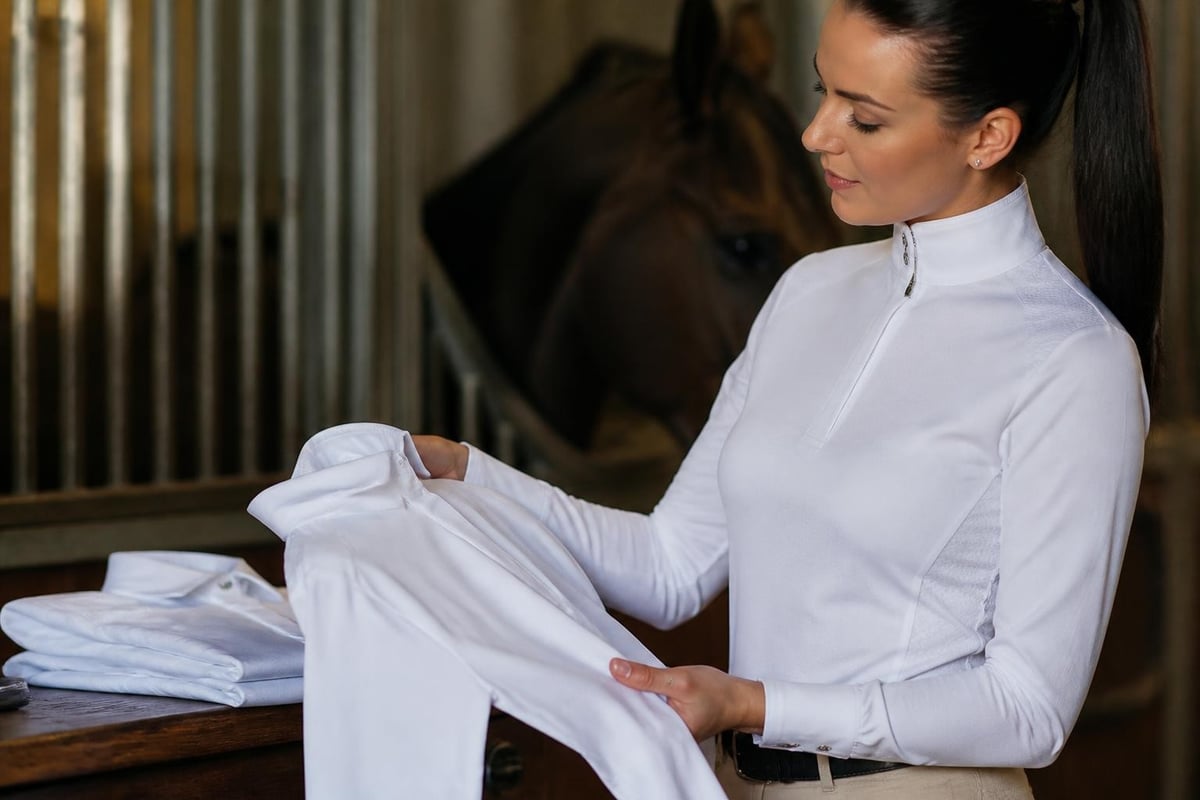
Brand reputation matters in equestrian wear. Established brands understand competition requirements and rider needs. They size garments specifically for equestrian activities and test products with actual competitors. For riders seeking reliable competition attire, investing in proven brands reduces risk.
Building Your Show Wardrobe
The white show shirt forms part of a complete competition wardrobe. Understanding how it coordinates with other essential pieces helps you present a polished, professional appearance in any class.
Your show jacket must accommodate your shirt comfortably. When trying jackets, wear your actual competition shirt to ensure proper fit. The jacket should close smoothly over your shirt and stock tie without pulling or gaping. Different jacket cuts suit different body types - work with knowledgeable staff to find the best match.
Competition breeches complete your lower half. While breeches seem disconnected from your white show shirt, they must work together to create balanced proportions. Light-colored breeches pair naturally with white shirts, while darker breeches create more contrast. Consider the overall picture when assembling your competition outfit.
Stock ties require practice to tie correctly. A poorly tied stock tie undermines even the finest white show shirt. Learn proper technique and practice regularly. Many riders keep a pre-tied backup in their show trunk for emergency situations. Competition pressure makes everyone fumble occasionally - preparation prevents disaster.
Boots should coordinate with your overall turnout. Tall dress boots remain standard for most disciplines, though some classes permit paddock boots with gaiters. Your boots needn't match your shirt directly, but they should contribute to a cohesive, professional appearance. Well-maintained leather always elevates your presentation.
Understanding capsule wardrobe principles helps you build a functional show wardrobe efficiently. Rather than accumulating random pieces, invest in quality essentials that work together seamlessly. Two excellent white show shirts serve you better than five mediocre ones.
Modern Style Evolution
Equestrian tradition runs deep, but competition attire continues to evolve. The white show shirt of 2026 incorporates performance technology that would have seemed impossible a decade ago while maintaining the classic aesthetic the sport demands.
Subtle details distinguish modern shirts from traditional styles. Slightly narrower collars create cleaner lines under contemporary show coats. Slimmer cuts throughout the torso reflect current tailoring trends without sacrificing the conservative appearance competition requires. These updates modernize your look while respecting established standards.
Color accents appear occasionally in modern white show shirts, typically hidden beneath show jackets. A contrasting inner collar or subtle piping might add personality without violating competition rules. These details let you express individual style within traditional constraints, though conservative choices remain safest for important competitions.
The rise of technical fabrics has transformed what riders expect from competition wear. Moisture management, stretch, and quick-drying properties are now standard rather than premium features. Even traditional-looking shirts typically incorporate modern fiber technology. This evolution means comfort and performance no longer require sacrificing classic appearance.
Men's equestrian fashion has grown significantly in recent years. Where once options were limited to a handful of brands producing uninspired basics, 2026 offers diverse choices. Modern equestrian brands now design specifically for male riders, understanding their distinct needs and preferences.
Practical Competition Day Tips
Competition morning brings enough stress without wardrobe concerns. Systematic preparation ensures your white show shirt performs perfectly when it matters most.
Pack your competition shirt last, on top of other show items, to prevent crushing. Use a hanging garment bag if possible, or fold carefully with tissue paper between layers. Bringing a backup shirt provides insurance against unexpected accidents - coffee spills, torn buttons, or last-minute stains happen even to meticulous riders.
Arrive with enough time to dress properly. Rushing leads to mistakes: crooked stock ties, missed buttons, untucked shirt tails. Allow time to check your appearance thoroughly before mounting. Many riders keep a full-length mirror in their trailer specifically for final inspection.
Apply antiperspirant well before dressing to avoid marking your shirt. Similarly, avoid grooming products that might transfer to fabric - hair gel, cologne, or face cream can all stain white fabric. Complete your grooming routine, then put on your white show shirt as the final step.
Keep a stain-removal pen in your show kit for emergency spot treatment. Quick action often prevents permanent marks. A lint roller removes horse hair and dust before you enter the ring. These small tools save appearances when problems arise unexpectedly.
During multi-class days, change shirts between rounds if possible. A fresh shirt for each phase maintains your professional appearance and keeps you comfortable. This practice particularly matters during summer shows when heat and exertion challenge even the best moisture-wicking fabrics.
Seasonal Considerations
Your white show shirt requirements shift with the calendar. Understanding seasonal variations helps you select appropriate options for different competition environments.
Summer competitions demand maximum breathability and moisture management. Lightweight fabrics with mesh ventilation panels keep you coolest. Many riders select short-sleeve white show shirts for summer schooling shows, though most recognized competitions still require long sleeves even under heat rules. UV protection becomes particularly valuable during outdoor summer events.
Winter shows present different challenges. Indoor arenas often lack heating, making warmth essential. Mid-weight or heavyweight technical fabrics provide insulation without bulk. Some riders layer a thin base layer beneath their white show shirt for additional warmth, though this adds bulk that may affect jacket fit.
Spring and autumn weather proves most unpredictable. Having both lightweight and mid-weight options ready ensures comfort regardless of conditions. Check weather forecasts before shows and pack accordingly. Indoor/outdoor venues require particular attention - comfortable in the climate-controlled barn doesn't guarantee comfort in the outdoor warm-up ring.
Layering strategies adapt to changing conditions throughout competition days. Morning rounds might require a warm riding jacket over your white show shirt during warm-up, while afternoon classes allow you to show in just your show coat. Plan your layers thoughtfully to maintain proper presentation while staying comfortable.
The white show shirt remains fundamental to proper competition turnout, combining tradition with modern performance. Selecting quality fabric, ensuring proper fit, and maintaining your shirts carefully keeps you looking polished and feeling confident in the ring. Gallant Equestrian creates performance-driven clothing that meets the demands of serious male riders, combining New Zealand design with fabrics built to last. Our collection helps you present your best from stables to show ring with confidence and style. Look the Part. Enjoy the Ride.

