

Dressage Outfits for Men: A Complete 2026 Guide
Jun 28, 2026
Dressage demands precision, discipline, and an unmistakable sense of presentation. Your appearance in the arena isn't vanity; it's respect for the sport, your horse, and the judges evaluating your performance. Whether you're preparing for your first affiliated competition or refining your wardrobe for advanced level tests, understanding the nuances of proper dressage attire matters. The right outfit combines regulatory compliance with personal comfort, allowing you to focus entirely on your ride rather than adjusting ill-fitting clothing or wondering if you've met the dress code.
Understanding Traditional Dressage Standards
The foundation of dressage outfits remains rooted in classical equestrian tradition. Dark coats, light breeches, and polished boots create the uniform silhouette that defines the discipline. These aren't arbitrary choices. The strict guidelines on dressage attire and equipment exist to maintain consistency, fairness, and the sport's heritage.
For men riding at lower levels, a simple dark jacket paired with breeches and tall boots meets most requirements. The jacket should fit properly across the shoulders without restricting arm movement. Your breeches need to be clean, well-fitted, and free from excessive logos or bright contrasts. Black or brown boots complete the traditional look, though recent rule changes have introduced more flexibility.
What's Changed in 2026
Competition standards evolve. The most significant updates allow greater personalization whilst maintaining dressage's refined aesthetic. Coloured shirts, decorative stock ties, and jackets with subtle piping are now accepted at many levels, reflecting how dressage competition outfit standards have adapted to modern preferences.
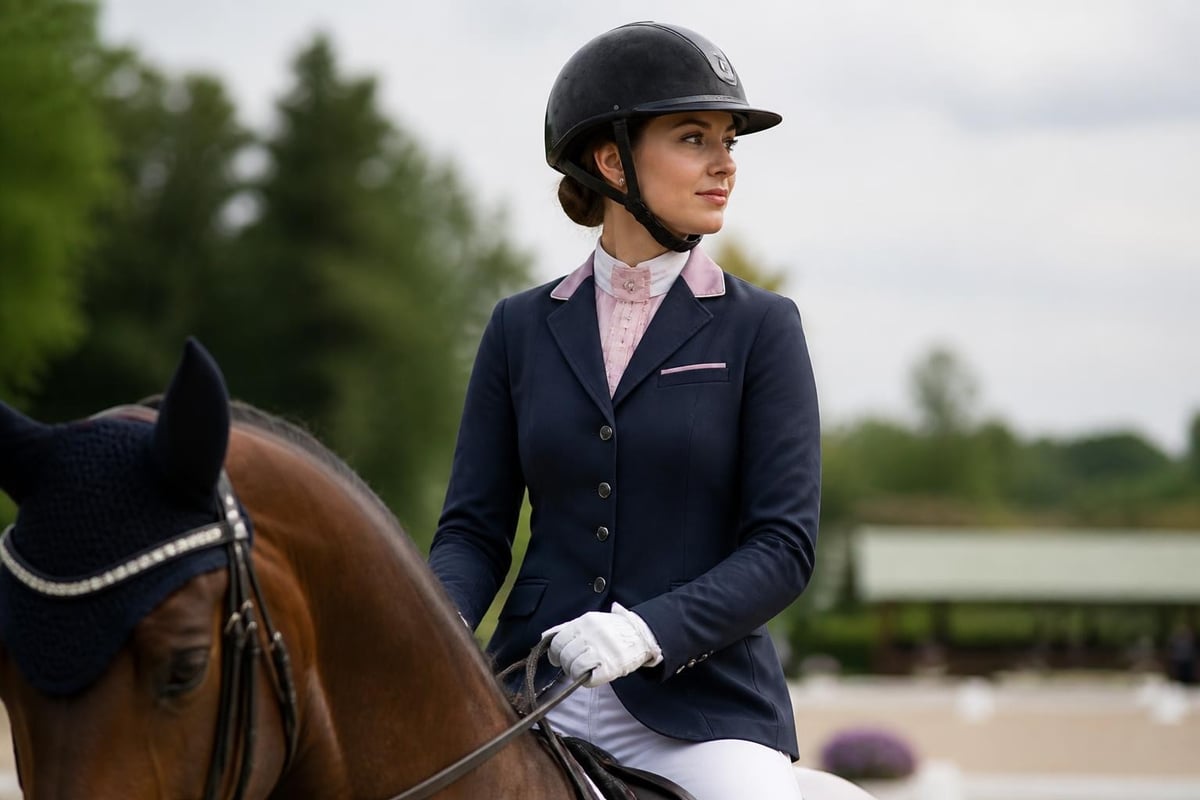
This doesn't mean abandoning tradition. It means you have options. A well-cut navy jacket can replace black without penalty. Your show shirt might feature a discrete collar pattern. These small touches let you express individual style within accepted parameters, particularly useful for men who want quality clothing that works beyond competition days.
The Essential Components
Jackets and Coats
Your jacket makes the first impression. For preliminary through medium level, a conservatively cut dark jacket suffices. Black remains standard, though navy has gained acceptance. The jacket should sit neatly at your waist, with sleeves reaching your wrist bone. Shoulder seams align with your natural shoulder line, avoiding the restrictive feel that comes from poor fitting.
Shadbelly coats appear at higher levels, typically Prix St Georges and above. These tailcoats with their distinctive points and buttons represent the pinnacle of dressage formality. Not every rider needs one immediately, but understanding when they're appropriate saves confusion later.
Breathability matters more than many realize. Standing ringside in summer heat whilst wearing a dark jacket tests anyone's composure. Modern technical fabrics manage moisture and temperature without sacrificing the traditional appearance judges expect. This is where performance-driven breeches and matching jackets prove their worth.
Breeches Selection
White or light-colored breeches remain the standard. Beige works equally well. The key lies in fit and fabric performance. Your breeches need to move with you, not against you, whilst maintaining their shape through hours in the saddle.
Full seat or knee patch? Both work for dressage, though full seat designs offer more grip during extended sitting trot work. The silicone or leather patches shouldn't be overly bulky, creating smooth contact between you and your saddle.
Length requires attention. Breeches that bunch at your ankle create unwanted creases and distract from your overall presentation. They should reach the top of your boot with minimal excess fabric. Checking proper sizing guides before purchasing saves returns and disappointment.
Shirts and Neckwear
Competition shirts follow specific parameters. White dominates, though subtle patterns have gained acceptance. The collar must accommodate either a stock tie or standard tie, depending on competition level. Long sleeves are mandatory during competition, regardless of weather.
Stock ties serve both functional and traditional purposes. Properly tied, they sit flat against your throat without gaps or excessive bulk. White remains standard, though coordinating colors now appear at lower levels. The pin securing your stock should be simple and understated.
For everyday schooling, quality polo shirts offer comfort and breathability whilst maintaining professional appearance. These pieces transition seamlessly from stable to casual settings, maximizing your wardrobe's versatility.
Competition Level Requirements
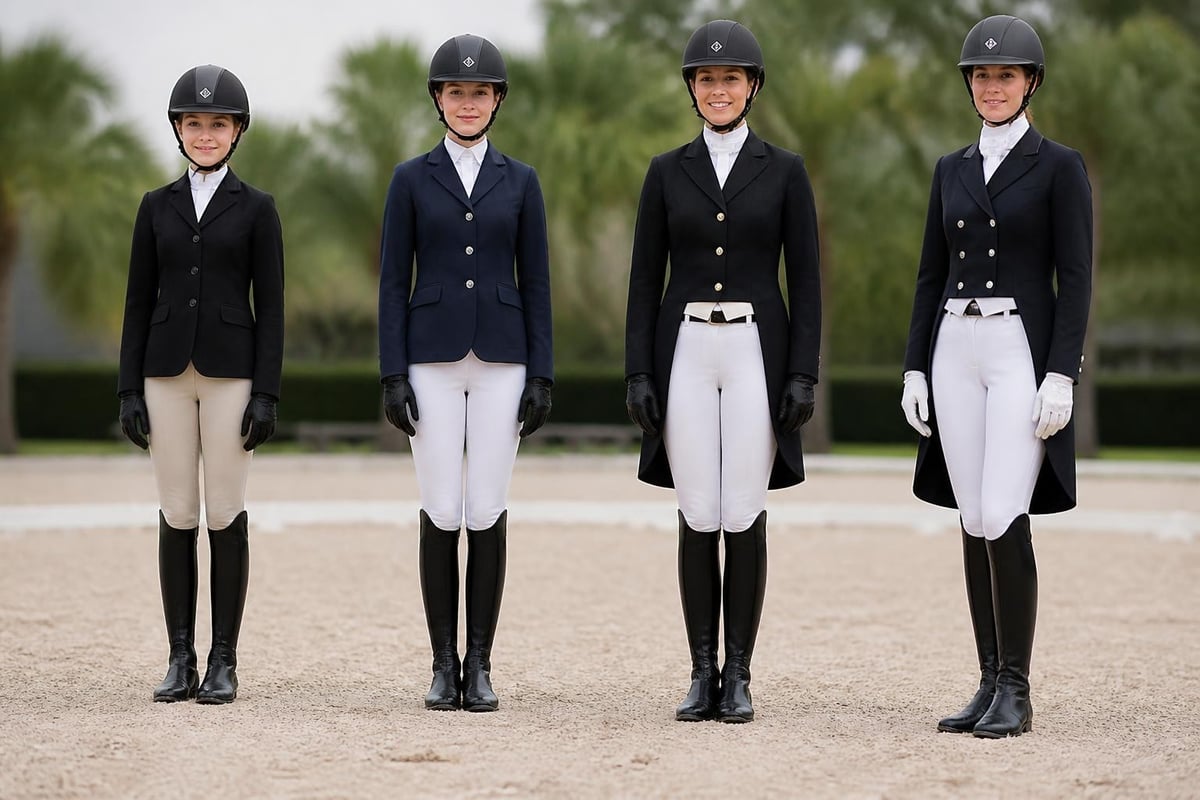
Different levels demand different standards. Understanding these distinctions helps you prepare appropriately without overspending on unnecessary items early in your competitive journey.
| Level | Jacket Type | Breeches | Headwear | Additional Notes |
|---|---|---|---|---|
| Introductory | Dark jacket or blazer | Light colored | Approved helmet | Casual competition wear acceptable |
| Preliminary-Medium | Dark show coat | White/beige | Approved helmet | Traditional standards apply |
| Prix St Georges+ | Shadbelly or coat | White/beige | Top hat or helmet | Strict formal requirements |
Knowing where you compete determines what you need. Starting at lower levels doesn't require immediate investment in a shadbelly and top hat. Build your wardrobe progressively as you advance, focusing on quality pieces that work across multiple contexts.
Helmet and Headwear Choices
Safety helmets are now widely accepted at all levels, replacing the traditional top hat requirement that once dominated advanced dressage. Modern helmets designed specifically for dressage maintain a sleek, refined profile whilst meeting current safety standards. Black velvet covers create a formal appearance indistinguishable from traditional top hats at a distance.
Your helmet must carry current safety certification. Check that tags and labels confirm compliance with recognized standards. Fit matters as much as appearance; a helmet that shifts during your ride compromises both safety and presentation.
Building a Practical Wardrobe
Smart riders invest strategically. Rather than purchasing everything at once, identify what you'll use most frequently. Your everyday training kit differs substantially from competition requirements.
Training Essentials
Daily rides demand durability and comfort. Breeches that withstand frequent washing, shirts that manage sweat, and layers that adapt to changing weather all earn their place in your rotation. Quality everyday riding kit balances performance with longevity.
Consider these training staples:
Base Layer: Technical shirts that wick moisture away from your skin. Long and short sleeve options provide flexibility across seasons.
Midweight Breeches: Versatile enough for year-round use. Choose colors that hide dirt without looking permanently grubby.
Weather Protection: A reliable rain jacket keeps you riding when others retreat indoors. Look for designs that don't restrict shoulder movement.
Competition Additions
Once your training wardrobe functions smoothly, add competition-specific items. A well-fitted show coat becomes your most important purchase. This isn't where you economize. A quality jacket lasts years when properly maintained, justifying the investment.
Show breeches in pristine white require dedicated care. Consider having two pairs in rotation, ensuring you always have clean options available. This redundancy proves invaluable during multi-day competitions.
Your show shirt needs the same attention. White fabric shows every mark, so having backup options prevents panic when your primary shirt picks up an unfortunate stain minutes before your test.
Fit and Function
Ill-fitting clothing creates problems beyond aesthetics. Jackets that pull across your back restrict your arms during extensions. Breeches that slide down require constant adjustment. Boots that pinch distract your focus from your horse's movement.
Getting Measurements Right
Professional fitting makes substantial difference. If visiting a specialist isn't feasible, take accurate measurements at home. Chest, waist, inseam, and arm length all matter for jackets. For breeches, you'll need waist, hip, and inseam measurements.
Many riders size down excessively, believing tighter clothing looks sharper. This backfires. Proper fit means you can move freely without fabric bunching or pulling. Your jacket should button comfortably without strain. Breeches shouldn't create pressure points or dig into your waist after an hour riding.
Fabric Technology Matters
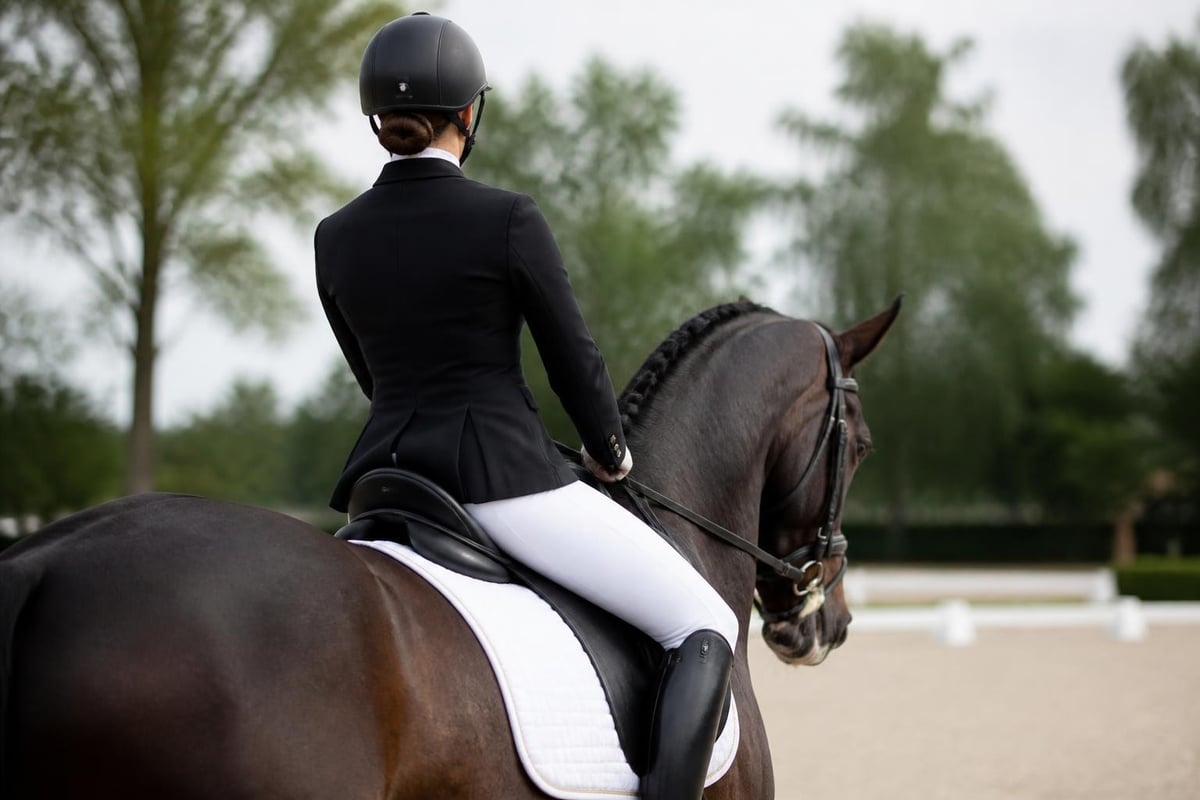
Traditional wool remains common in show coats, but modern alternatives offer advantages. Technical fabrics provide stretch, breathability, and easier care whilst maintaining the structured appearance judges expect. These materials recover from compression better than pure wool, staying crisp through long competition days.
For breeches, four-way stretch fabrics revolutionize comfort. They move with your leg, supporting proper position without creating resistance. Moisture-wicking properties keep you comfortable during intense summer competitions or demanding training sessions.
Maintenance and Care
Quality dressage outfits represent investment. Proper care extends their lifespan significantly, protecting that investment over years of use.
Cleaning Guidelines
Show Coats: Professional cleaning recommended. Home washing risks damaging structure and finish, particularly with traditional wool construction.
Breeches: Follow manufacturer instructions precisely. Many modern breeches tolerate machine washing on gentle cycles with specialized detergent. Air drying preserves elasticity and prevents shrinkage.
Shirts and Ties: White shirts demand prompt stain treatment. Pre-treat collar areas before washing. Stock ties benefit from hand washing to maintain their shape and prevent fraying.
Storage Practices
Hanging jackets properly prevents creases and maintains shape. Use broad-shouldered hangers that support the jacket's weight distribution. Cover stored coats to protect from dust whilst ensuring adequate airflow.
Fold breeches along their natural crease lines rather than hanging them. This preserves the silicone or leather seat patches and prevents unwanted permanent creasing. Store in breathable garment bags during off-season.
Regional and International Variations
Whilst fundamental standards remain consistent globally, subtle differences exist between governing bodies. If competing internationally or at FEI-sanctioned events, verify specific requirements beforehand. The comprehensive competition clothing requirements help clarify these distinctions.
British Dressage, USEF, and FEI each maintain detailed dress codes. Most align closely, but details like allowable boot colors, spur specifications, or acceptable jacket embellishments may vary. Checking current rules for your specific competition level and organizing body prevents unfortunate surprises.
Beyond the Arena
The beauty of well-designed equestrian clothing lies in its versatility. Quality pieces transition beyond competition settings. Your everyday breeches work equally well for lessons, hacking, or stable management. Show shirts function during business casual situations. Even jackets, whilst specifically cut for riding, maintain sophisticated appearance in appropriate contexts.
This dual-purpose functionality makes investing in quality particularly sensible for men. Rather than maintaining separate wardrobes for riding and everyday life, choose pieces that bridge both worlds seamlessly. Performance-driven essentials designed with this philosophy maximize your wardrobe's utility.
Making Informed Purchases
Research before buying prevents costly mistakes. Understanding what you actually need versus what appears appealing saves money and wardrobe space. Start with fundamentals that serve multiple purposes, then add specialized items as requirements dictate.
Reading detailed guides on competition attire provides context for purchase decisions. These resources explain why certain items matter and when you'll actually use them. This knowledge helps prioritize spending effectively.
Consider total cost of ownership. Cheaper options requiring frequent replacement often cost more long-term than quality pieces maintained properly. Balance initial investment against expected lifespan, factoring in cleaning costs and potential alterations.
The Confidence Factor
Proper dressage outfits contribute psychological advantage. Knowing you meet all requirements, that your clothing fits well and looks sharp, frees mental energy for riding. You're not wondering if judges will penalize your turnout or if your jacket will split during your medium trot.
This confidence translates directly to performance. You ride more freely, focusing on partnership with your horse rather than wardrobe concerns. That mental clarity proves valuable whether you're attempting your first affiliated test or competing at championship level.
Quality clothing also earns respect. Judges, fellow competitors, and spectators all notice presentation. Arriving properly turned out demonstrates commitment to the sport and respect for its traditions. This professionalism creates positive impressions that extend beyond individual tests.
Dressage demands attention to detail in everything, including how you present yourself. Understanding current standards, investing in quality pieces that fit properly, and maintaining them carefully ensures you're always prepared to ride your best. Whether you're building your competition wardrobe from scratch or upgrading existing pieces, choosing performance-driven clothing designed specifically for men who ride makes every moment in the saddle more enjoyable. Discover how Gallant Equestrian combines New Zealand design with lasting quality to create riding clothing that works as hard as you do. Look the Part. Enjoy the Ride.

