

Equestrian Essentials: A Modern Rider's Guide (2026)
Oct 25, 2026
Walking into the tack room before dawn, there's a quiet satisfaction in knowing you've got exactly what you need. No more, no less. The equestrian essentials that matter aren't about filling shelves, they're about building a foundation that works every single ride. Whether you're grooming before a morning hack or prepping for competition, the right gear makes everything smoother. And when your clothing moves with you instead of against you, riding stops being a battle with your wardrobe and becomes what it should be: pure focus on the horse.
The Foundation: Safety and Performance Riding Gear
Starting with safety isn't negotiable. Your helmet, boots, and body protector form the first line of defence between you and the ground. Modern helmets have come a long way since the velvet-covered caps of decades past. Look for current British safety standards, proper ventilation, and a fit that doesn't shift when you move. Replace helmets after any impact, even if there's no visible damage. The foam inside compresses on impact and won't protect you properly a second time.
Boots matter more than many riders realise. Paddock boots with half chaps or tall boots aren't just about tradition. The smooth sole prevents your foot catching in the stirrup, while the heel stops it sliding through. Leather breaks in over time, but synthetic options have improved dramatically. Choose based on how often you ride and what feels right when you're actually in the saddle, not just standing in the shop.
Riding Clothing That Actually Works
Your breeches are where comfort meets function. Poorly fitting riding trousers create friction, bunch in the wrong places, and distract you when you should be thinking about your aids. Quality riding breeches use four-way stretch fabrics that move with your body, reinforced knee patches that grip without restricting, and flatlock seams that won't chafe after hours in the saddle.
Full-seat breeches offer maximum grip for dressage or jumping. Knee-patch styles give you more freedom for general riding and hacking. The key is finding breeches that fit your build properly. Many brands still design primarily for women, leaving male riders with ill-fitting options that gap at the waist or pull across the thighs. Purpose-built men's equestrian clothing acknowledges that men's proportions are different, and your riding gear should accommodate that.
Shirts and base layers regulate temperature and wick moisture. Cotton feels nice initially but holds sweat against your skin. Technical fabrics pull moisture away, dry faster, and layer better under jackets. Competition shirts need to look sharp while allowing full range of movement. For everyday riding, polo shirts work brilliantly, transitioning easily from stable to town.
Weather Protection and Versatile Outerwear
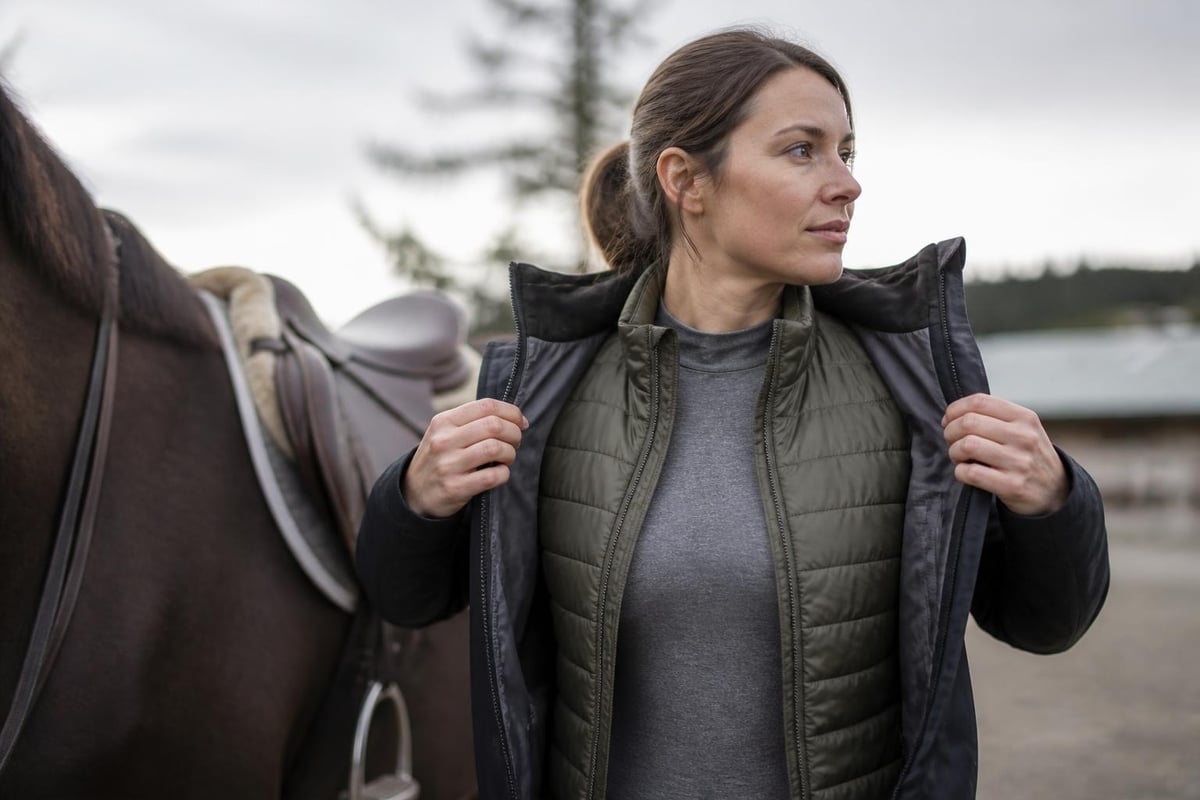
British weather demands versatility. Morning fog burns off into sunshine, then clouds roll in by afternoon. Your jacket needs to handle all of it without turning you into a sweat-soaked mess. Waterproof doesn't mean much if condensation builds up inside. Look for breathable membranes that actually work, not just marketing claims.
A proper riding jacket should be cut longer in the back to cover you in the saddle, have stretch panels where you bend, and feature pockets you can actually access whilst mounted. Zip closures should glide smoothly even with gloves on. Consider jackets with removable linings that adapt to changing seasons rather than owning separate pieces for every temperature.
Gilets fill the gap between too warm and too cold. They keep your core comfortable whilst allowing arm movement and ventilation. Packable options stuff into their own pocket and live in your tack bag until needed. Layering beats a single heavy coat every time. You can adjust on the fly, which matters when you're mucking out stalls one minute and schooling the next.
Essential Tack and Equipment
Your saddle represents your largest investment after the horse itself. Fit matters for both of you. A poorly fitted saddle creates pressure points, causes behavioural issues, and makes riding uncomfortable. Annual saddle checks by a qualified fitter aren't optional extras. Horses change shape with work, age, and season. What fitted perfectly last year might be causing problems today.
Bridles need similar attention. Check leather regularly for wear, especially where the bit attaches and around buckles. Stitching deteriorates before leather does. Clean and condition tack after every ride if possible, weekly at minimum. Proper tack care extends equipment life significantly and prevents unexpected failures.
The Working Tack Box
Every rider needs a core set of grooming and maintenance tools that live in one place. Dandy brush, body brush, curry comb, hoof pick, and mane comb cover daily needs. Add a sweat scraper, sponges, and towels. Quality tools last longer and work better than cheap alternatives that break or become uncomfortable to hold.
Hoof picks with brushes save time. Metal picks last forever but can chip hooves if used carelessly. Plastic versions are gentler but break eventually. Pick out feet before and after riding, checking for stones, thrush, or loose shoes. Basic hoof care prevents most common foot problems before they start.
Health and First Aid Fundamentals
A proper equine first aid kit belongs in your tack room and car. Cuts, scrapes, and minor injuries happen despite our best efforts. Having supplies immediately available means you can address problems before they escalate. Your kit should include sterile gauze, vet wrap, wound spray, thermometer, scissors, and disposable gloves. A comprehensive first aid checklist helps ensure you haven't missed anything critical.
| Essential First Aid Item | Purpose | Notes |
|---|---|---|
| Digital Thermometer | Monitor temperature | Normal: 37.2-38.3°C |
| Vet Wrap | Secure bandages | Self-adhesive, various colours |
| Sterile Gauze Pads | Cover wounds | Multiple sizes needed |
| Antiseptic Wound Spray | Prevent infection | Check expiry dates |
| Scissors (blunt tip) | Cut bandages safely | Keep sharp and clean |
| Disposable Gloves | Hygiene protection | Replace after each use |
Keep your vet's number programmed into your phone and written inside your first aid kit. Know your horse's normal vital signs so you recognise when something's wrong. Temperature, pulse, respiration, and gut sounds establish a baseline. Familiarise yourself with common emergency scenarios before they happen. Panic makes everything harder.
Feed and Nutrition Basics
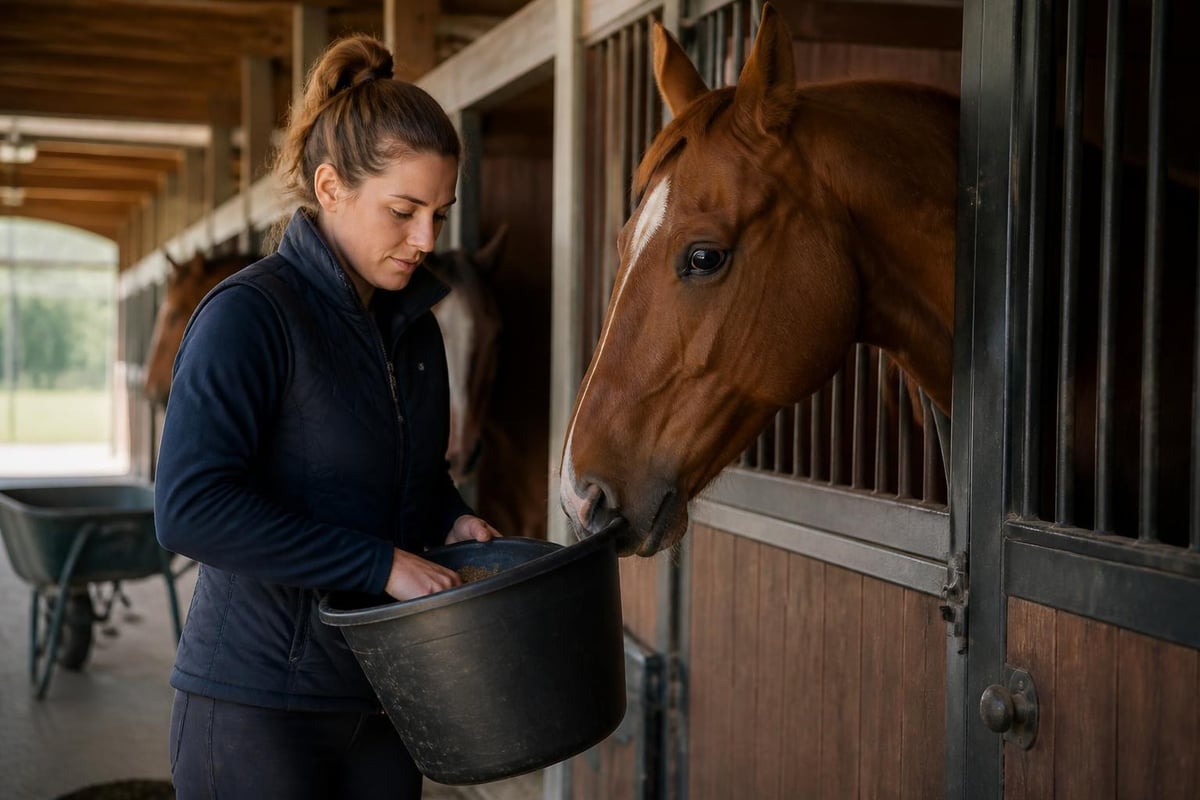
Horses evolved to graze constantly on low-quality forage. Modern management often conflicts with this biology. The foundation of any feeding programme is quality hay or pasture. Most horses thrive on forage alone, especially if they're not in heavy work. Understanding equine nutritional requirements helps you make informed decisions rather than following trends.
Hard feed, or concentrates, supplements forage when horses need extra calories or specific nutrients. Performance horses, growing youngsters, and breeding stock often require concentrates. Weekend pleasure horses generally don't. Overfeeding causes more problems than underfeeding. Obesity, laminitis, and metabolic issues plague horses getting more calories than they burn.
Feed by weight, not volume. A scoop of different feeds can vary wildly in actual weight. Use a luggage scale to weigh your horse's ration. Divide total daily feed into at least two meals, more if possible. Horses have small stomachs and continuous digestive systems. Large infrequent meals stress their system and waste nutrients.
Water access matters as much as feed. Horses drink between twenty to forty litres daily, more in hot weather or heavy work. Clean, fresh water should always be available. Automatic waterers need regular cleaning. Buckets get dumped and refilled at least daily. Winter water freezes, summer water gets hot. Both reduce consumption and create health risks.
Stable Management and Daily Care
Mucking out isn't glamorous, but it's essential. Clean stables prevent respiratory issues, reduce parasite loads, and keep horses comfortable. Remove droppings and wet bedding daily. Deep clean and completely replace bedding weekly or fortnightly depending on your system. Proper ventilation prevents ammonia buildup that damages respiratory tracts.
Different bedding materials suit different situations. Shavings are popular, relatively dust-free, and absorbent. Straw is traditional, warm, and horses often eat it (good or bad depending on your perspective). Rubber mats reduce bedding needed and make mucking easier. Paper and hemp beddings work well for horses with respiratory sensitivity.
Organisation Makes Everything Easier
Stable design impacts daily efficiency. Feed room, tack room, and wash bay placement affects how much time you spend walking between tasks. Store hay protected from weather. Keep grain in sealed rodent-proof containers. Label everything clearly. You won't always be the one feeding.
Create systems that work even when you're tired or rushed. Checklists prevent forgotten tasks. Healthy horsekeeping practices become habits that protect your horse's wellbeing. Consistent routines reduce stress for both of you. Horses appreciate predictability.
Transport and Travel Preparation
Loading and hauling horses safely requires specific equipment. Trailer or lorry choice depends on how often you travel and how many horses you move. Either way, maintenance matters critically. Tyres, brakes, lights, and floor integrity need regular inspection. Schedule annual safety checks. Traveling with horses involves more than just showing up with a horse and hoping for the best.
Your vehicle emergency kit should include spare headcollar and lead rope, basic first aid supplies, water buckets, hay net, and tools for minor repairs. Know how to change a trailer tyre before you need to do it roadside. Carry your horse's passport and any required documentation. Competition horses often need health certificates or vaccination records.
Building Your Personal Riding Style
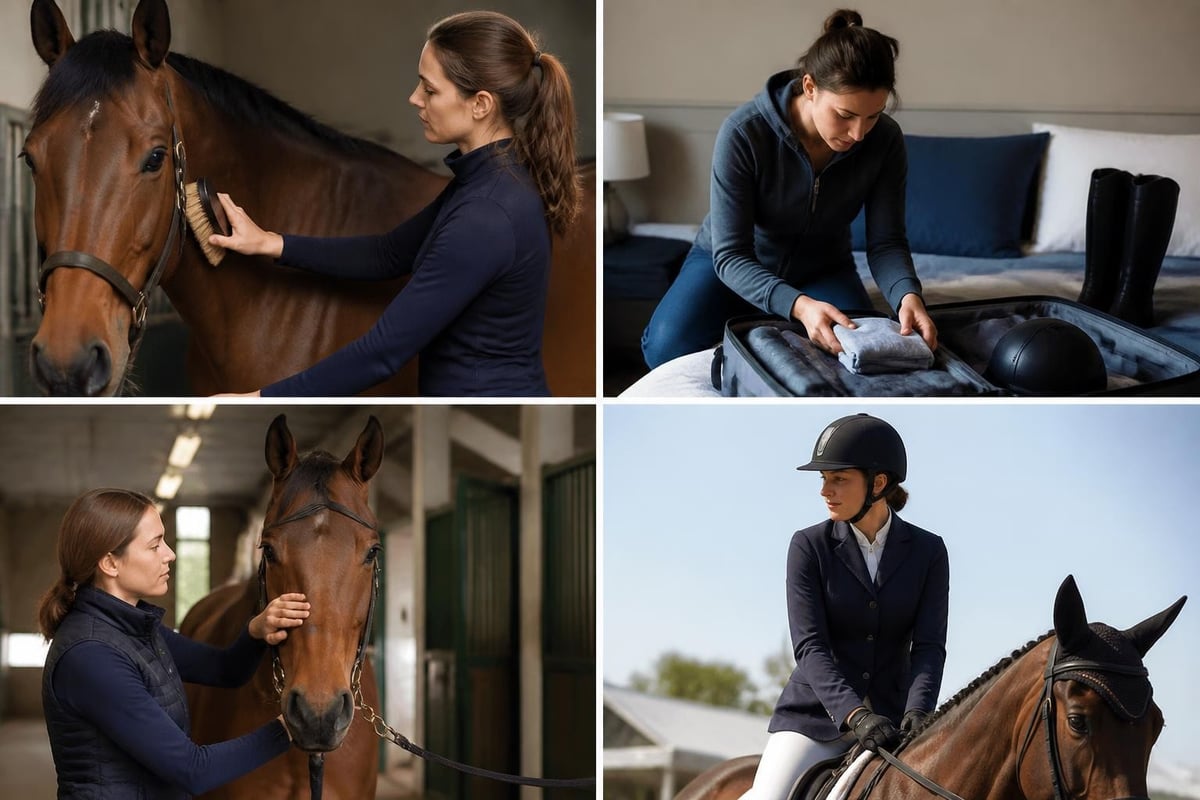
Equestrian essentials extend beyond pure function into personal presentation. How you look matters, not from vanity but from respect for the sport and yourself. Clean, well-fitted clothing projects competence. You ride differently when you feel put together. It's not superficial; it's psychological.
What to wear in the competition arena follows specific rules depending on discipline, but everyday riding offers more freedom. Build a core wardrobe of versatile pieces that work together. Neutral colours mix easily. Quality basics outlast trendy pieces and look better longer.
The best riding clothing disappears whilst you're wearing it. You shouldn't notice your breeches, think about your shirt, or fiddle with your jacket. When everything fits properly and performs its job, you simply ride. That's the goal. Understanding British riding attire expectations helps whether you're hacking out or competing.
Maintenance and Long-Term Care
Equestrian essentials require maintenance to stay essential. Leather dries and cracks without conditioning. Helmets expire regardless of use. Boots need polishing and waterproofing. Set aside time monthly to check, clean, and repair equipment. Prevention costs less than replacement.
Create a maintenance schedule rather than waiting until something breaks. Check girth elastic every month. Condition saddle quarterly. Replace helmet every five years or after any impact. Inspect boots for worn soles or separated seams. Most problems announce themselves early if you're paying attention.
Storage matters too. Tack rooms need controlled temperature and humidity when possible. Extreme heat and cold damage leather and synthetic materials. Keep saddles on proper racks, bridles hung straight, and clothing in breathable garment bags. Organisation isn't just aesthetics; it's preservation.
The equestrian essentials that truly matter combine safety, performance, and style into a cohesive approach to riding. You don't need everything, but what you do need should work properly and last. When your gear supports rather than hinders your riding, everything improves. Gallant Equestrian builds exactly that kind of clothing: performance-driven pieces designed specifically for men who ride seriously, crafted to move from stable to street without compromise. Invest in essentials that work as hard as you do. Look the Part. Enjoy the Ride.

