

Equestrian Riding Gear Near Me: A Local Buyer's Guide
Nov 11, 2026
The best place to find equestrian riding gear near me is a mix of three sources: an independent local tack shop for safety items and boots that need a proper fitting, a specialist online brand for everyday riding clothes, and a second-hand or sale route for extras. Start with the pieces that protect you, then build the wardrobe around them.
This guide walks through where to look, what to try on in person, what to order online, and how to avoid paying twice for the wrong thing.
Where Can I Buy Horse Riding Gear?
You can buy horse riding gear from local tack shops, country stores, large sports retailers, specialist online brands and second-hand sellers, and each suits a different kind of purchase.
Local tack and country stores are the strongest choice for anything fit-critical. Helmets, body protectors and tall boots all benefit from a trained eye and a few minutes of trying on. Large sports retailers tend to carry a narrower equestrian range, so they suit basics such as gloves, base layers and socks.
Online specialists come into their own for clothing. Breeches, shirts and jackets are easier to compare when you can see the full range, the fabrics and the sizing notes in one place. If you ride in a rural area, this may be the only realistic route for men's cuts anyway, since many shops stock far more for women than for men.
Second-hand has a place too, as long as it is the right item. Jackets, rugs and grooming kit are fine. Anything that has taken an impact is not.
What to Try on in Person Before You Buy
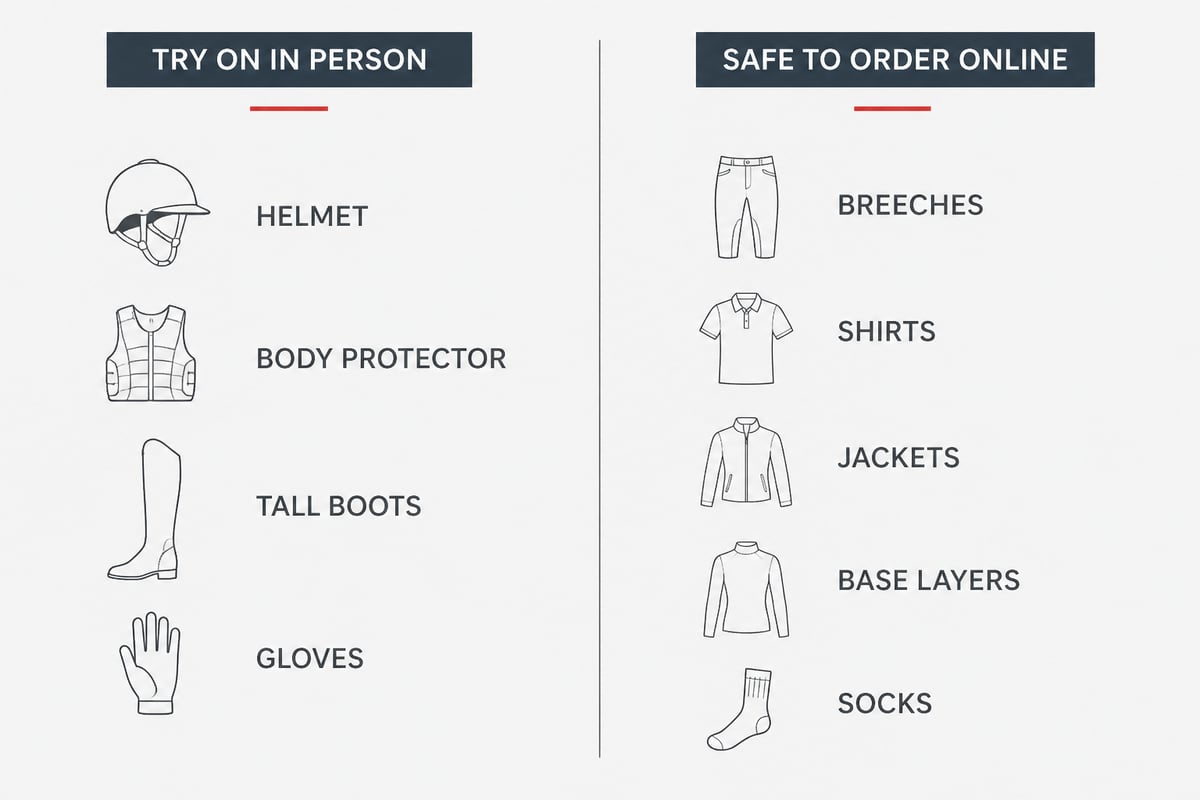
Try on helmets, body protectors, tall boots and gloves in person, because fit decides whether they work and a wrong size cannot be corrected later.
Helmets should sit level, snug and low on the forehead without pressure points. Shake your head gently with the chin strap done up. It should not shift.
Body protectors deserve the most care. The British Equestrian Trade Association (BETA) notes that its trained retailers can provide free, personalised body protector fittings, and that shoppers can look for the BETA Safety Certificate displayed in store. The British Horse Society adds a practical tip: if you plan to wear the protector over a riding jacket, bring that jacket to the fitting.
Tall boots need calf and height checked while seated, not standing. Sit on a stool, bend your knees as you would in the saddle and make sure the top edge does not dig in behind the knee.
Gloves should fit like a second skin with no loose fingertip. Grip matters more than padding.
How to Judge a Local Tack Shop
A good local tack shop will measure you rather than guess, stock current safety-standard items, and let you try things in your riding position.
Look for a few signs before you commit your money:
A certificate or fitting service displayed for helmets and body protectors tells you the staff are trained. A decent men's section, even a small one, suggests the owner understands their customers rather than treating menswear as an afterthought. Brands you recognise on the helmet wall matter less than a clear explanation of which safety standard each one meets.
Ask a direct question: "What would you wear for what I do?" Whether you are hacking out on weekends, schooling twice a week or competing, an honest answer comes quickly from someone who rides. A vague answer or a push towards the most expensive item is worth noting.
Check the returns policy on anything that is not fit-critical, and ask whether they can order in a size they do not hold. Many independent shops can, and it saves a long drive.
Understanding Safety Labels Before You Spend
Safety labels tell you which standard a helmet or body protector has been tested to, and you should always check them before buying.
Body protectors are the clearest example. BETA's standard has three levels: Level 1 is intended for licensed jockeys, Level 2 for very low-risk riding or specified professional use, and Level 3 for general riding, competitions including eventing, and working with horses. For most recreational and training riders, Level 3 is the one to ask for.
In the United States, the relevant benchmark is ASTM F1937, which covers minimum performance criteria and test methods for body protectors, including shock attenuation, penetration and deformation, impact sites, padding separation and closures.
You do not need to memorise any of this. You only need to read the label, ask the shop which standard applies, and walk away from any item that cannot answer the question.
What Is the 20% Rule in Horse Riding?
The 20% rule is a guideline that a horse should carry no more than about 20 percent of its own bodyweight, counting the rider and all the tack together.
It matters to gear buying because every item adds up. A heavy saddle, thick pad and weighty clothing all count towards the total. A lighter, well-fitted wardrobe will not make or break the figure, but it is one more reason to choose breathable, lightweight fabrics over bulky layers. If you are a taller or heavier rider, talk to your instructor about whether your horse is suited to your size, and treat the rule as a starting point rather than a pass mark.
Building a Kit: What to Buy First
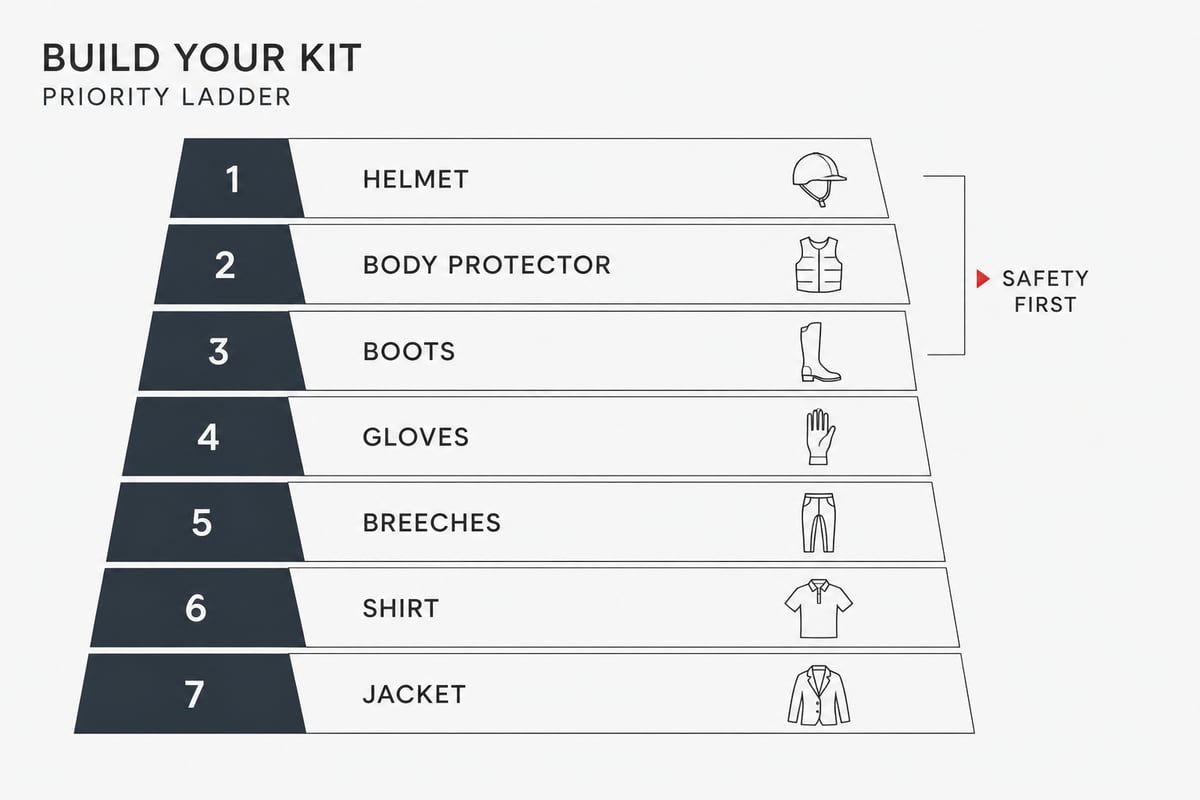
Build your kit in order of importance: head and body protection first, then boots and gloves, then the clothing you ride in every day.
A sensible order looks like this.
- A correctly fitted, certified helmet.
- A Level 3 body protector if you jump, hack on busy roads or ride young or unpredictable horses.
- Boots with a proper heel, either jodhpur boots with half chaps or tall boots.
- Gloves with real grip.
- Breeches that move with you and do not rub.
- A fitted shirt and a jacket for schooling, shows and cooler days.
Spend the largest share of your budget at the top of that list. Clothing can be added gradually, and it is where a small, considered range pays off, because everything works together.
Which Riding Clothes Suit Men Best?
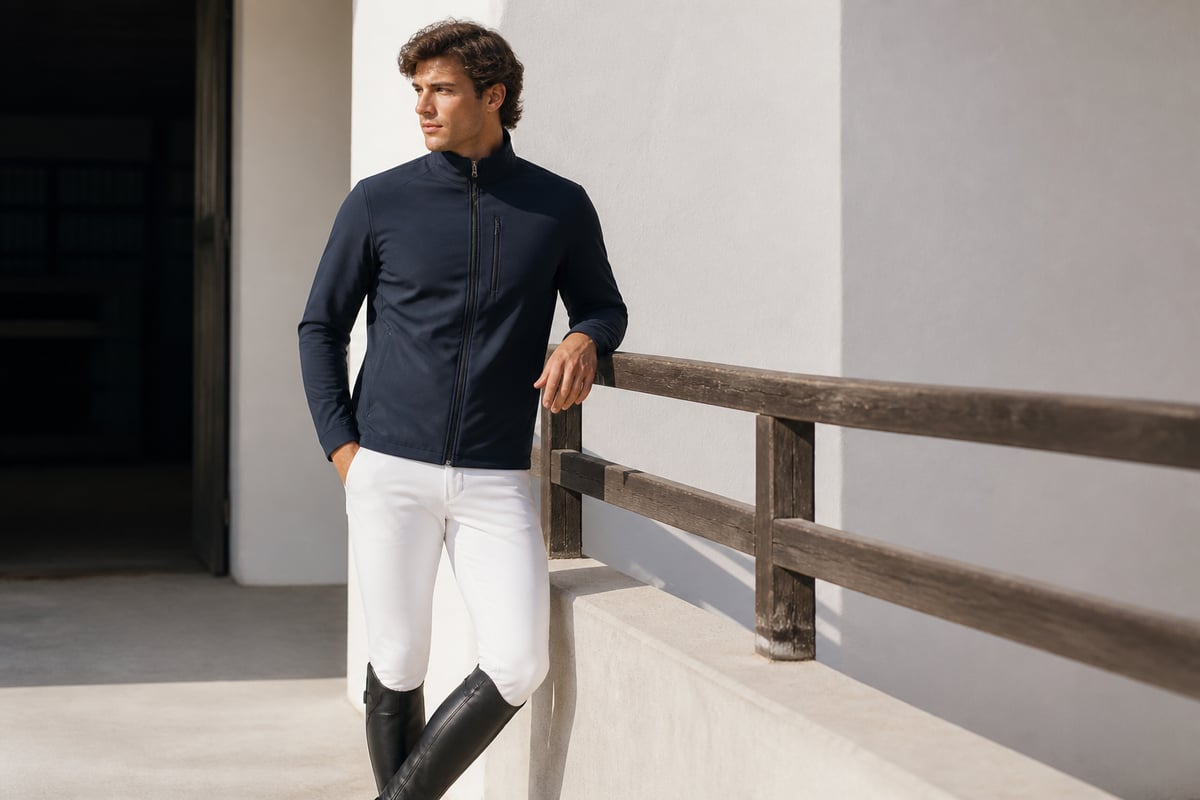
The best riding clothes for men are close-fitting without being restrictive, made from breathable stretch fabric, and cut to move comfortably in and out of the saddle.
Breeches should sit flat at the knee with no bunching behind it, and the waistband should stay put when you rise in the stirrups. Look for a seat that does not feel stiff. A shirt needs enough stretch across the shoulders to reach forward without pulling, and enough length to stay tucked when you are in a two-point position.
Men's riding cuts differ from women's in the shoulder, chest and rise, which is why menswear designed for men tends to fit better than adapted unisex pieces. Gallant Equestrian designs specifically for men, with close-fitting, tailored silhouettes that allow full movement. Its pieces are designed to work together, so you can mix and match across the range. If you want to see how a full men's kit comes together, the guide to horse riding gear for men covers it from helmet to boot.
Dressing for the Show Ring
Show clothing is the one area where details matter as much as function, so choose a clean, classic look in a fabric that stays comfortable across a long day.
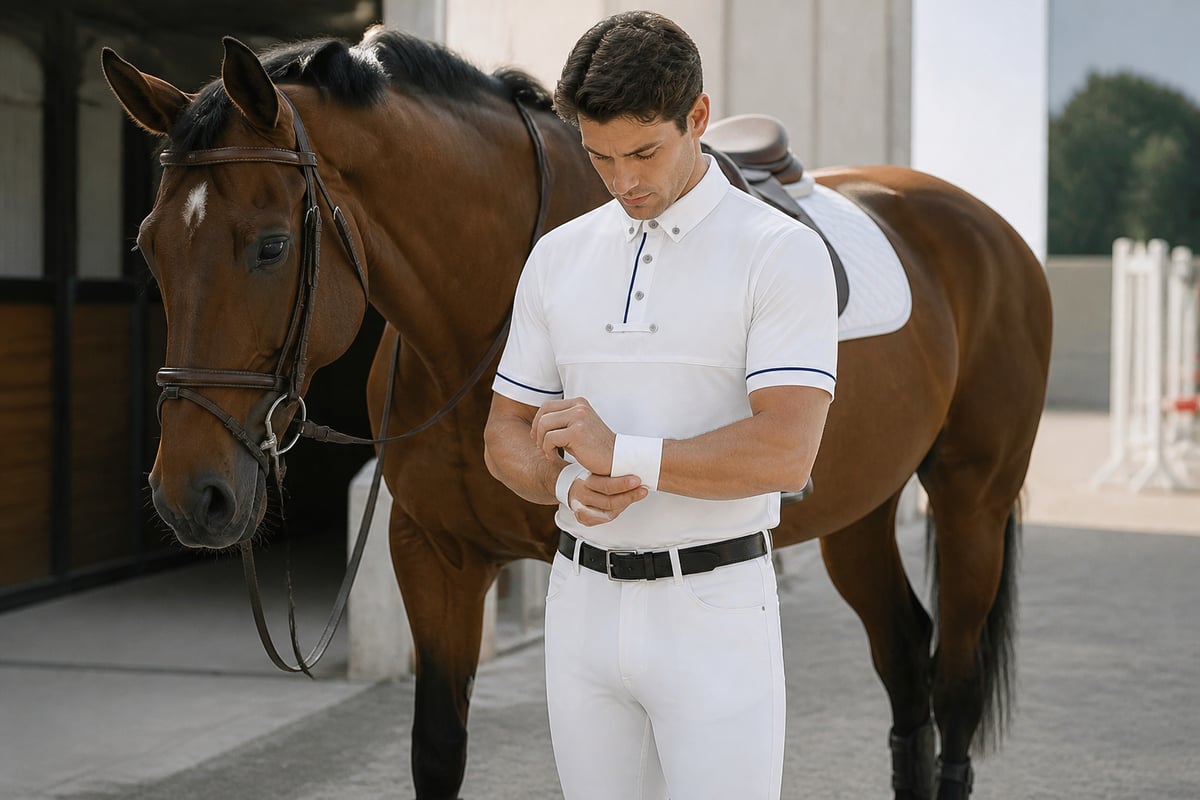
A white competition shirt, a fitted jacket, plain breeches and polished boots will serve you in almost any discipline. Choose fabric that breathes, because warm-up, waiting and the round itself can stretch across several hours.
The Mens Competition Shirt - White is built for exactly this, using a lightweight, breathable fabric blend for comfort and ease of movement across long competition days. The product page has the sizing details.
For more on what to wear and what to pack, the guide to horse riding show gear goes through a full competition checklist.
Shopping Local, Online or Second-Hand
Local shops win on fitting, online brands win on range and convenience, and second-hand wins on price for items that do not carry a safety rating.
| Route | Best for | Watch out for |
|---|---|---|
| Local tack shop | Helmets, body protectors, tall boots | Smaller men's range |
| Specialist online brand | Breeches, shirts, jackets | Check sizing notes and delivery terms |
| Large sports retailer | Basics, socks, base layers | Limited technical choice |
| Second-hand | Jackets, rugs, grooming kit | Never buy a used helmet or protector |
If you order from overseas, check how duties and taxes are handled before you pay. Check Gallant Equestrian's delivery terms on its website to confirm how duties and taxes are handled for international orders. For budget-conscious buying, it is worth reading about used horse riding gear and what is genuinely safe to buy that way.
Why Are Safety Statistics Worth a Glance?
Looking at safety statistics will not change what you buy, but it puts the value of protective gear into perspective.
US Equestrian publishes a page linking to national eventing statistics and FEI risk-management statistics. It is a useful reference if you compete or school over fences. For most riders the practical takeaway is simple: protective equipment is the one category where it never pays to economise.
A Note on Rest, Recovery and Home Comforts
Good riding gear gets you through the day, but recovery at home matters just as much, especially if you ride several times a week.
After a long day in the saddle, a supportive bed makes a noticeable difference to how you feel the next morning. If your mattress is overdue for replacement, a British maker such as The Sleep Co is worth a look. It is a sensible investment for anyone who spends their weekends on horseback.
FAQ
Where can I buy horse riding clothes?
Buy riding clothes from a specialist menswear equestrian brand online, or from a local tack shop with a dedicated men's section. Clothing is easier to order remotely than safety gear, so it makes sense to try boots and protectors locally and shop for breeches, shirts and jackets online.
Where can I buy horse riding things like saddles and tack?
Saddles, bridles and other tack are best bought from a local tack shop or saddler who can check fit on your horse. Online sellers suit small accessories and grooming kit, but anything that touches the horse's back or mouth should be fitted by someone who can see the animal.
How much should I spend on my first full kit?
There is no fixed figure, but a good rule is to spend the most on the helmet, body protector and boots, then add clothing as budget allows. Check the product pages and any current offers on the horse riding gear sale guide before you commit.
Your next step is simple: book a fitting for a helmet and body protector at your nearest BETA-trained retailer, then fill out the rest of the wardrobe around them. Once the safety items are sorted, the Mens Competition Shirt - White is a good place to start on clothing that moves well and looks sharp in the ring. Gallant Equestrian designs breeches, jackets and shirts for men in New Zealand, so shop now and look the part. Enjoy the ride.

