

Equestrian T Shirts: Style & Performance for Riders
Jul 02, 2026
The right shirt changes everything. Whether you're schooling a green horse on a Tuesday morning or meeting mates for a pint after a long ride, what you wear shapes how you move and how you feel. Equestrian t shirts have evolved far beyond basic cotton tees with horse logos. Today's designs merge technical performance with refined style, creating garments that work as hard as you do whilst looking sharp enough for life beyond the yard. For male riders who demand both function and aesthetic, understanding what makes a quality equestrian tee matters more than ever.
What Sets Equestrian T Shirts Apart
Performance fabrics define the modern equestrian tee. Unlike standard casual shirts, proper riding t shirts incorporate moisture-wicking materials that keep you dry during intense schooling sessions. The difference becomes clear when you're working through a hot summer afternoon: cotton absorbs sweat and clings, whilst technical blends pull moisture away from your skin and dry quickly.
Temperature regulation matters just as much. Quality equestrian t shirts use breathable fabrics that allow airflow without sacrificing durability. This becomes essential when you transition from ground work to riding, where body heat increases but you still need freedom of movement. The lightweight technical fabrics trending in spring/summer 2026 reflect this shift toward performance-driven design.
Durability separates proper riding shirts from general athleisure. Equestrian work involves friction from reins, contact with tack, and the occasional brush against stable walls. Well-constructed tees use reinforced stitching and abrasion-resistant materials in high-wear areas. This attention to detail extends garment life significantly, making them worth the investment.
Fabric Technology and Construction
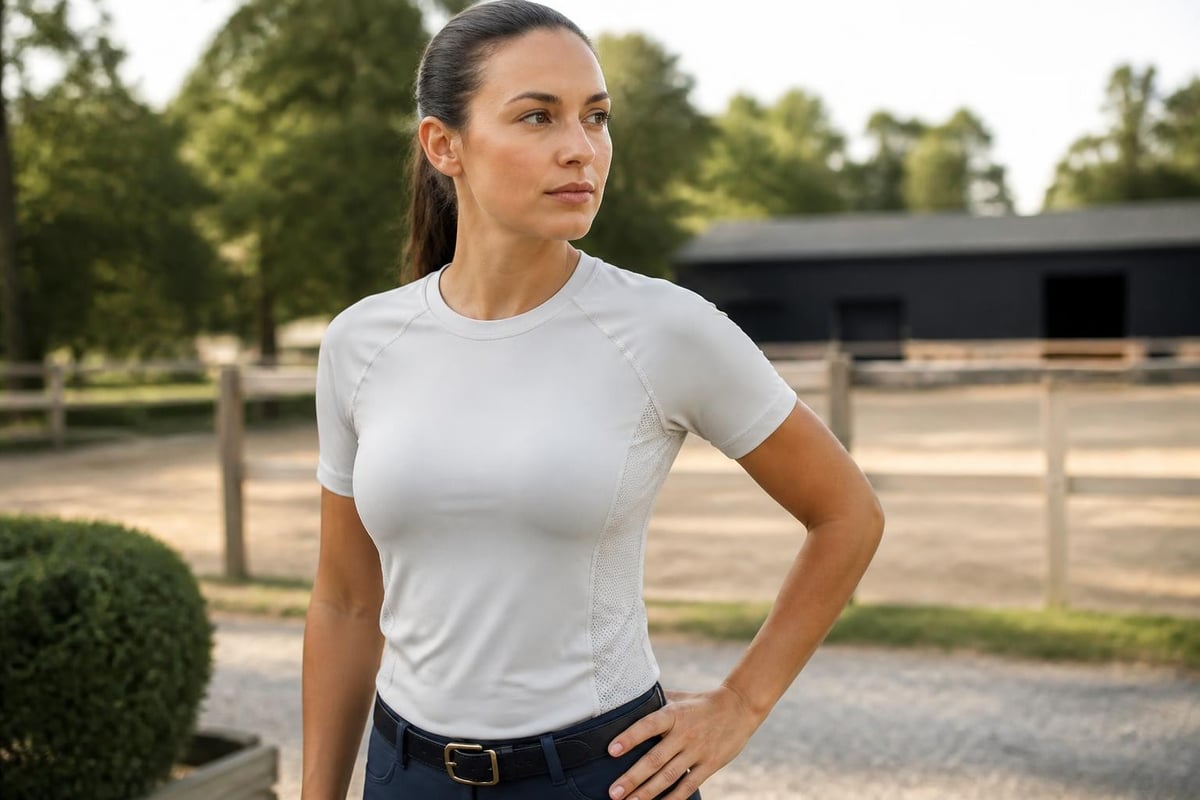
Modern equestrian t shirts typically blend synthetic and natural fibres for optimal performance. Polyester provides durability and quick-drying properties, whilst blends with cotton or bamboo add softness and comfort. Some premium options incorporate merino wool for natural odour resistance and temperature regulation across seasons.
Stretch is non-negotiable. Riding demands shoulder mobility for rein control and core flexibility for balance. Four-way stretch fabrics move with your body rather than restricting it. This becomes particularly important during jumping or dressage movements where rigid fabric creates uncomfortable tension.
Flatlock seams prevent chafing during extended wear. Standard seams create pressure points against saddles and harnesses, but flatlock construction distributes stress evenly. This small detail makes substantial difference during all-day competitions or long training sessions.
Anti-odour treatments keep shirts fresh between washes. Natural antimicrobial properties or chemical treatments inhibit bacterial growth, allowing you to wear the same shirt through morning stable work and afternoon errands without concern. This practical feature aligns with the demands of active equestrian lifestyles.
Design Elements That Work
Subtle branding defines quality equestrian t shirts. Oversized logos and gaudy graphics feel dated and impractical. Refined designs feature small embroidered details or tonal prints that signal equestrian heritage without shouting about it. This approach aligns with effective custom t-shirt design principles that prioritize balance and restraint.
Colour selection impacts versatility significantly. Navy, charcoal, olive, and neutral tones work across contexts, looking equally appropriate at the stable and the pub. These shades hide dirt better than white whilst remaining classic enough to pair with any trousers or jacket. Bold colours have their place, but foundational pieces benefit from restraint.
Fit determines both function and appearance. Equestrian t shirts should sit close enough to avoid excess fabric bunching under jackets, yet loose enough to allow unrestricted movement. Athletic fits work well for most riders, with tapered cuts through the torso and adequate shoulder room. Avoid overly slim fits that restrict breathing or excessively loose styles that create bulk.
Collar and Neckline Choices
Crew necks remain the standard for good reason. They layer well under competition jackets, provide adequate coverage during ground work, and transition seamlessly to casual wear. The classic round neckline suits most face shapes and body types without drawing attention.
V-necks offer slight advantages in warm weather. The deeper opening allows more airflow and can visually elongate the torso. However, they're less practical under formal riding attire and may feel too casual for some competitive environments. Choose based on your primary use case.
Polo collar designs bridge the gap between technical and traditional. These hybrid styles incorporate performance fabrics whilst maintaining the polished appearance expected in certain riding disciplines. They work particularly well for dressage riders and those who prefer a slightly more formal aesthetic during training.
| Neckline Style | Best For | Layering | Formality |
|---|---|---|---|
| Crew Neck | All-purpose riding, competitions | Excellent | Medium |
| V-Neck | Hot weather, casual riding | Good | Low |
| Polo Collar | Dressage, traditional settings | Fair | High |
Versatility Beyond the Stable
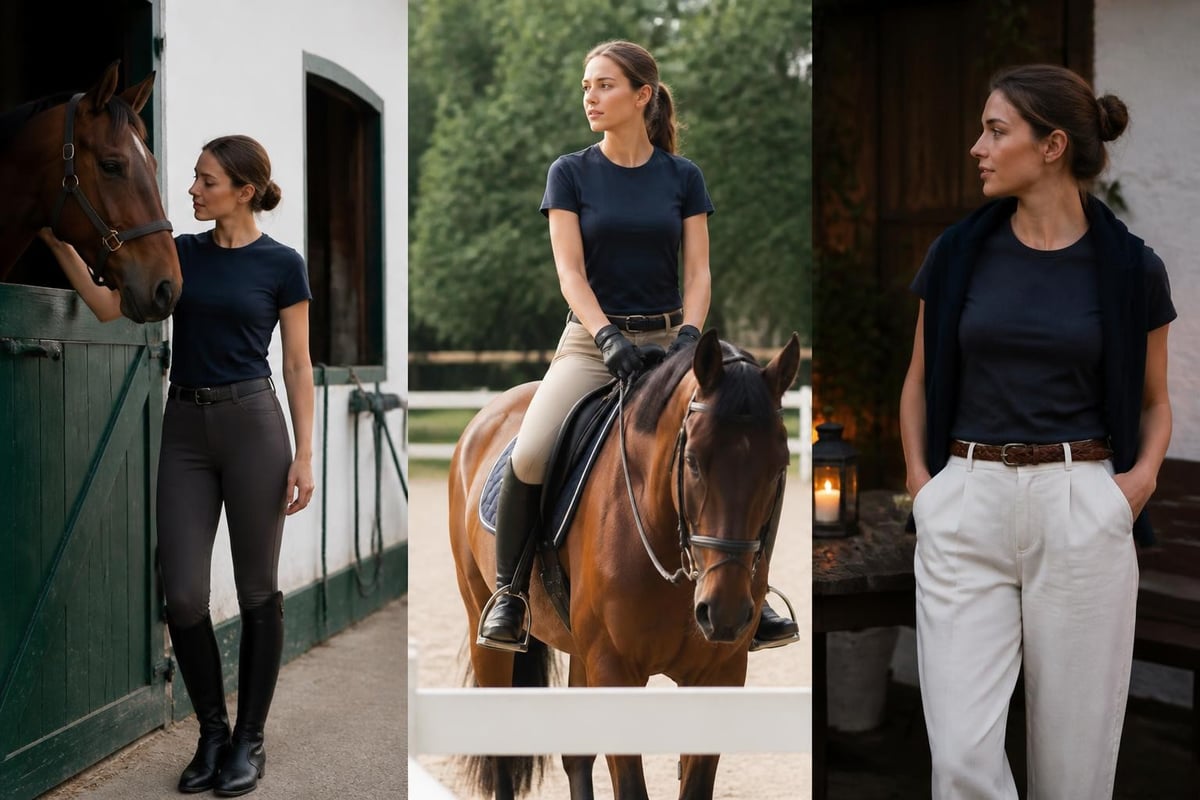
The best equestrian t shirts don't advertise themselves. Whilst clearly built for riding, they function equally well as everyday casualwear. This crossover appeal reflects the broader trend of equestrian athleisure meeting streetwear comfort, where performance meets lifestyle without compromise.
Morning routines benefit from this versatility. Pull on a quality tee for stable work, pair it with proper horse riding pants for schooling, then head directly to errands without changing. The shirt handles sweat and movement during riding, then looks perfectly presentable for coffee or shopping afterwards. This efficiency matters when days are packed.
Weekend versatility extends the value proposition. A well-designed equestrian tee works for Saturday competition prep, Sunday leisure rides, and Monday gym sessions. This multi-context functionality reduces wardrobe complexity whilst maintaining appropriate style for each setting. You're not wearing "riding clothes" everywhere; you're wearing quality garments that happen to excel at riding.
Seasonal Adaptations
Summer demands lightweight, breathable designs with maximum moisture management. Look for mesh panels or laser-cut ventilation zones that increase airflow without compromising structure. Lighter colours reflect heat, though darker neutrals remain popular for their practicality. Short sleeves work best, with athletic cuts that prevent fabric from riding up during mounted work.
Winter transforms equestrian t shirts into layering foundations. Long-sleeve versions in slightly heavier technical fabrics serve as base layers under fleeces or jackets. Merino blends excel here, providing warmth without bulk and regulating temperature as activity levels change. Thermal variants add insulation whilst maintaining the slim profile necessary for layering.
Transitional seasons require adaptable options. Three-quarter sleeves or lightweight long-sleeve designs bridge spring and autumn gaps effectively. These pieces work alone on mild days or under vests when temperatures drop. The ability to adjust coverage without changing your entire outfit adds practical value to your rotation.
Understanding Market Quality Tiers
Budget equestrian t shirts typically use basic polyester blends with standard construction. They serve occasional riders adequately but show wear quickly with regular use. Expect simpler cuts, less attention to seam placement, and minimal technical features. These suffice for yard work if riding isn't your primary activity.
Mid-range options balance performance and affordability effectively. Quality fabrics, proper fit engineering, and thoughtful details like flatlock seams appear at this level. Most serious amateur riders find excellent value here, with shirts that withstand frequent use whilst incorporating genuine technical benefits. This tier represents the sweet spot for dedicated equestrians.
Premium equestrian t shirts justify their cost through superior materials and construction. Advanced fabric blends, reinforced stress points, antimicrobial treatments, and refined fit development characterize this category. For professional riders or those who demand maximum performance and longevity, premium options deliver measurable advantages. The market research shows growing demand for premium performance apparel in equestrian contexts.
Evaluating Construction Quality
Stitch density indicates overall quality quickly. Count stitches per centimetre along key seams: higher density means stronger construction that resists pulling and unravelling. Quality equestrian t shirts feature tight, even stitching throughout, not just at visible seams.
Fabric weight affects both durability and comfort. Too light feels flimsy and shows through; too heavy restricts movement and retains heat. Most performance tees range between 140-180 GSM (grams per square metre), balancing structure with breathability. Feel samples when possible to assess this balance yourself.
Hem and cuff finishing reveal manufacturer attention to detail. Rolled hems or bound edges outlast simple folded seams significantly. Clean, flat construction at these points prevents curling after washing and maintains shape through repeated wear. These small details compound over garment lifespan.
| Quality Indicator | Budget | Mid-Range | Premium |
|---|---|---|---|
| Stitch Density | 8-10/cm | 12-14/cm | 16+/cm |
| Fabric Weight | 120-140 GSM | 150-170 GSM | 180-200 GSM |
| Seam Type | Standard | Flatlock | Reinforced Flatlock |
| Expected Lifespan | 6-12 months | 18-24 months | 3+ years |
Care and Maintenance Practices
Washing frequency balances hygiene and garment preservation. After genuine riding sessions involving sweat, wash promptly to prevent bacterial growth and fabric degradation. For lighter wear like stable checks or short rides, you can extend intervals between washes. Trust your judgement rather than washing automatically after every wear.
Cold water washing protects technical fabrics better than hot cycles. High temperatures can break down moisture-wicking treatments and elastic fibres over time. Use gentle cycles and sport-specific detergents that preserve performance features rather than stripping them away. Avoid fabric softeners entirely as they coat fibres and reduce breathability.
Air drying extends garment life significantly. Tumble dryers stress fabrics through heat and mechanical action, accelerating wear on seams and elastic components. Hang equestrian t shirts in well-ventilated areas away from direct sunlight, which can fade colours and weaken fibres. This gentler approach maintains shape and technical properties longer.
Storage matters more than most realize. Fold rather than hang to prevent shoulder stretching. Keep in cool, dry locations away from moisture that encourages mildew. Separate clean and worn items to prevent odour transfer. These simple practices preserve your investment between uses.
Building a Practical Rotation
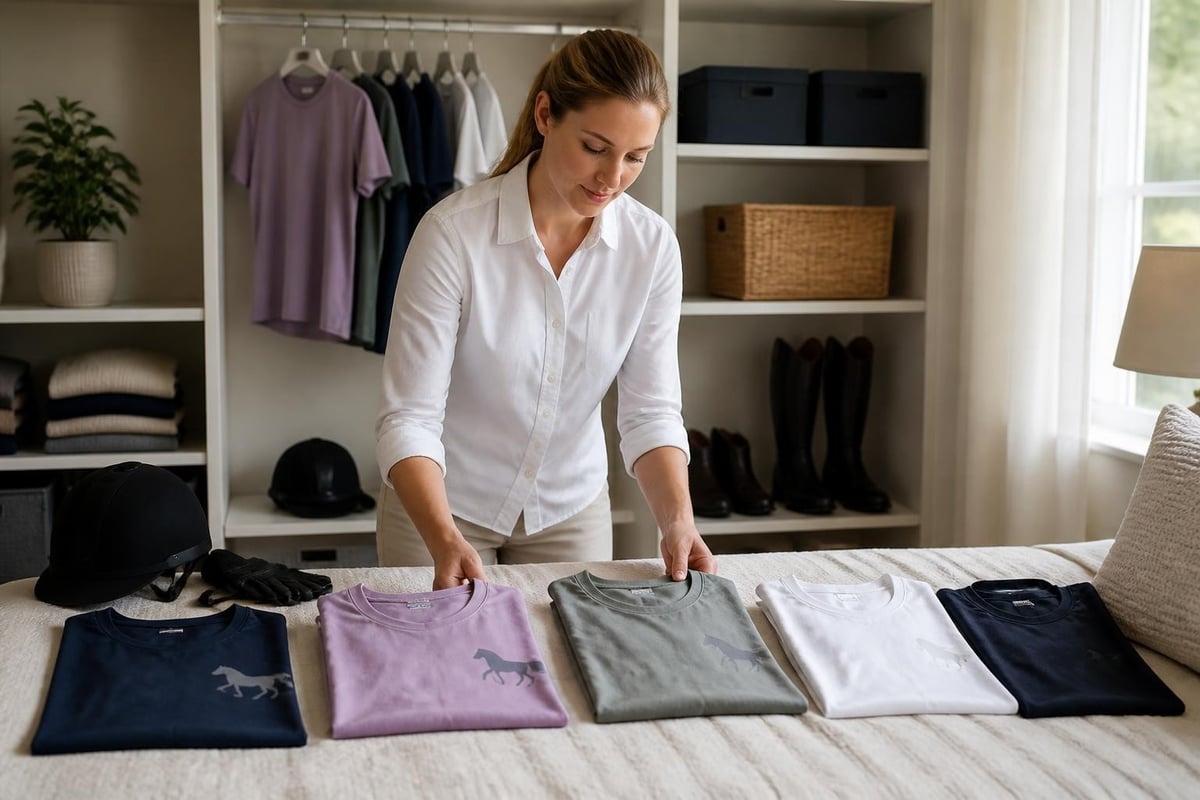
Three to five quality equestrian t shirts cover most riders' needs effectively. This rotation allows regular use without excessive washing whilst ensuring clean options remain available. Calculate based on your riding frequency: daily riders need more; weekend riders need fewer.
Colour variety adds practical value beyond aesthetics. Dark shirts hide stable dirt better for early-morning work. Lighter neutrals look fresher for competitions or social rides. This strategic approach to colour selection means appropriate options for different contexts without excessive wardrobe bulk.
Coordinating with existing mens horse riding clothes streamlines outfit assembly. Choose tee colours that complement your breeches, jackets, and casual trousers. This cohesion creates more outfit combinations from fewer pieces, maximizing versatility whilst maintaining consistent style.
Seasonal adjustment keeps rotation relevant year-round. Rotate short-sleeve options forward during summer whilst storing long-sleeve versions. Reverse this as temperatures drop. This simple practice ensures appropriate garments stay accessible whilst protecting off-season pieces from unnecessary wear.
When to Replace Rather Than Repair
Fabric thinning signals approaching end-of-life. Hold shirts to light: if you see through the fabric easily or notice threadbare patches, replacement time approaches. Thin fabric loses its performance properties and risks tearing during use. Don't wait for actual holes to appear.
Persistent odours despite proper washing indicate fabric degradation. When antimicrobial treatments fail and bacteria embed in fibres, even thorough cleaning won't restore freshness. This typically occurs after extended heavy use and signals the garment has served its purpose.
Shape loss compromises both appearance and function. Stretched necklines, sagging hems, or loose fits that no longer layer properly under jackets mean the garment no longer serves effectively. Proper equestrian t shirts should maintain their silhouette through many washes; when they don't, consider replacement.
Style Considerations for Male Riders
Masculine equestrian aesthetics blend traditional riding heritage with contemporary minimalism. Avoid overly decorative elements or feminine silhouettes. Clean lines, structured fits, and understated details create appropriate style for male riders. This approach aligns with broader equestrian fashion trends whilst maintaining masculine sensibility.
Proportions matter significantly in equestrian wear. Tops should balance with bottoms appropriately: fitted tees pair well with traditional breeches, whilst slightly looser cuts complement modern riding jeans. Understanding these relationships prevents awkward styling that looks disconnected or impractical.
Personal style expression works within equestrian context. Some riders prefer traditional colours and conservative cuts; others embrace modern fits and current trends. Both approaches work provided the garments function properly for riding. Your equestrian t shirts should reflect your personal aesthetic whilst meeting performance requirements.
Matching Formality to Context
Training sessions allow maximum casualness. Any quality equestrian tee works here, regardless of colour or subtle style variations. Focus entirely on comfort and performance rather than appearance. This is where well-worn favourites earn their keep through reliable function.
Casual rides with friends warrant slightly more attention. Clean, well-maintained shirts in classic colours project competence without formality. Think navy crews or neutral tones that look purposeful without seeming competitive. This level suits most weekend riding contexts.
Competitions demand precision in presentation. Choose newer shirts without visible wear, in colours appropriate to your discipline. Ensure perfect fit under competition jackets. Some events specify colour requirements; verify these beforehand. Professional appearance supports confident performance.
Equestrian t shirts represent the foundation of a functional riding wardrobe, balancing technical performance with everyday versatility. Choosing quality fabrics, appropriate fits, and timeless designs ensures your investment serves you well across seasons and contexts. Gallant Equestrian creates performance-driven clothing designed specifically for men who ride, offering pieces that transition seamlessly from stable to street whilst maintaining the durability and style serious riders demand. Look the Part. Enjoy the Ride.

