

Equestrian Uniforms: A Modern Guide for Men Who Ride
Feb 28, 2026
Equestrian uniforms represent far more than tradition. They're purpose-built clothing that evolved over centuries to meet specific demands: safety, freedom of movement, and discipline-specific requirements. For men in the saddle, understanding these uniforms means knowing when to honour tradition and when to prioritise performance. Whether you're preparing for your first dressage test or refining your everyday stable attire, the right approach to equestrian clothing makes a tangible difference.
Understanding the Foundation of Equestrian Dress Codes
Every riding discipline carries its own expectations. Dressage demands formality, showjumping balances tradition with athleticism, and eventing requires versatility across multiple phases. These aren't arbitrary rules. They developed from practical needs, refined over generations of riders who discovered what works.
The basic framework remains consistent across disciplines. You need well-fitted breeches that allow proper leg contact with your horse. A shirt or jacket appropriate to the formality level. Boots designed for safety and stability in the stirrup. Gloves that provide grip without bulk. Headwear that meets safety standards whilst respecting tradition.
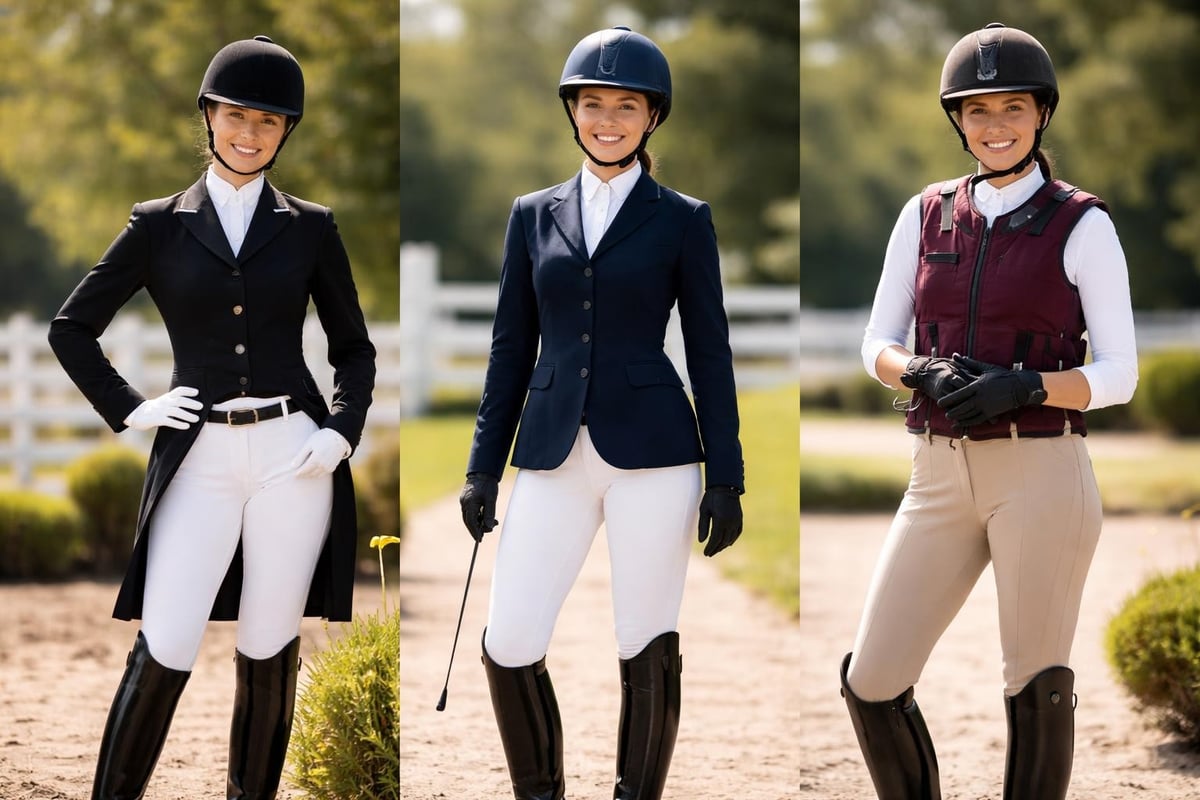
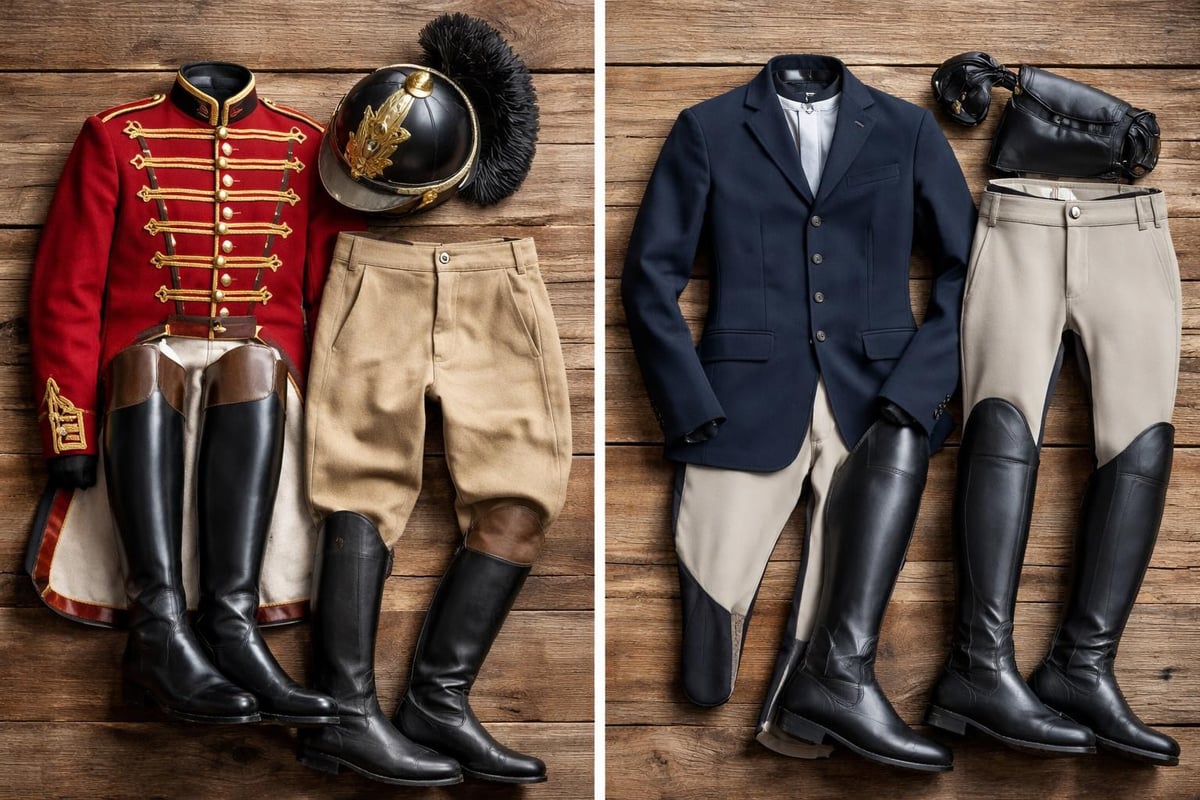
Modern equestrian uniforms blend historical elements with contemporary fabric technology. Traditional materials like wool and cotton still appear in formal contexts, but performance fabrics now dominate everyday riding. This shift reflects changing priorities. We still respect the sport's heritage whilst demanding clothing that actually performs under pressure.
The Elements That Define Competition Attire
Competition environments demand precision. Your attire communicates respect for judges, competitors, and the discipline itself. Understanding what's required versus what's optional saves embarrassment and potential elimination.
Dressage Specifications
Dressage represents equestrian sport at its most formal. Your jacket traditionally comes in black, navy, or dark grey. White, cream, or pale yellow breeches remain standard. A stock tie with a plain pin adds the finishing touch. Recent rule changes now permit subtle colour in some competitions, though conservative choices still dominate at higher levels.
The current dressage attire rules have evolved to accommodate modern preferences whilst maintaining traditional elegance. Shadbelly coats appear at advanced levels, their distinctive cut dating back to military cavalry traditions. Tall boots in black leather complete the silhouette, creating the clean lines judges expect.
Showjumping Standards
Showjumping allows slightly more flexibility. Navy, black, grey, brown, or even subtle patterns appear in jackets. Breeches can match or contrast. The overall effect should look polished and professional without dressage's rigid formality.
Safety equipment receives particular attention. Helmets must meet current standards. Body protectors, whilst not always mandatory, appear increasingly common. The sport's physical demands justify this protection. Speed, tight turns, and substantial fences create genuine risk.
Cross-Country Practicality
Cross-country phases strip away formality in favour of function. Brightly coloured jerseys over body protectors serve dual purposes: visibility and sponsor recognition. These equestrian uniforms prioritise safety and practicality above all else. Your clothing must withstand weather, mud, and the physical demands of galloping across varied terrain.
Everyday Riding: Where Performance Meets Style
Most riding happens outside competition rings. Your everyday equestrian uniforms need different qualities: durability, weather resistance, and versatility between stable and saddle.
Quality breeches form the foundation. Look for reinforced knee patches or full seats that provide grip without restricting movement. Stretch fabrics that retain their shape after multiple rides. Construction that withstands regular washing without deteriorating.
Shirts and polos need similar resilience. Natural fibres feel pleasant but synthetic blends often perform better under sustained activity. Moisture-wicking properties matter during summer sessions. Layering capability becomes essential through winter months.
Jackets serve multiple roles. A good riding jacket transitions from arena to stable to casual settings. Waterproof options handle unpredictable weather. Insulated versions maintain core warmth without restricting movement. The best designs incorporate equestrian-specific features like longer backs, shaped shoulders, and secure pockets.
Regional and Organisational Variations
Different organisations and regions maintain specific requirements. Understanding these variations prevents surprises when competing in new contexts.
The United States Pony Clubs' safety policies demonstrate how organisations continuously update standards. Helmet specifications change as technology improves. Body protector recommendations evolve based on injury data and research. Staying current with these changes shows professionalism.
State regulations sometimes impose additional requirements. Washington's safety equipment standards and Kentucky's jockey attire mandates illustrate how local authorities approach rider safety. These regulations typically establish minimum standards for protective equipment.
British systems maintain distinct traditions. The BUCS equestrian regulations governing university competitions reflect longstanding preferences for traditional attire. Similarly, showing dress codes across various classes preserve specific historical standards.
Selecting Quality Over Quantity
Building a functional wardrobe means investing in pieces that last. Cheap equestrian uniforms rarely prove economical. They wear quickly, fit poorly, and often compromise on essential features.
Examine construction details. Flat-lock seams prevent chafing during extended rides. Reinforced stress points resist tearing. Quality zippers withstand repeated use. Proper hem finishes prevent fraying. These details separate garments that endure from those that disappoint.
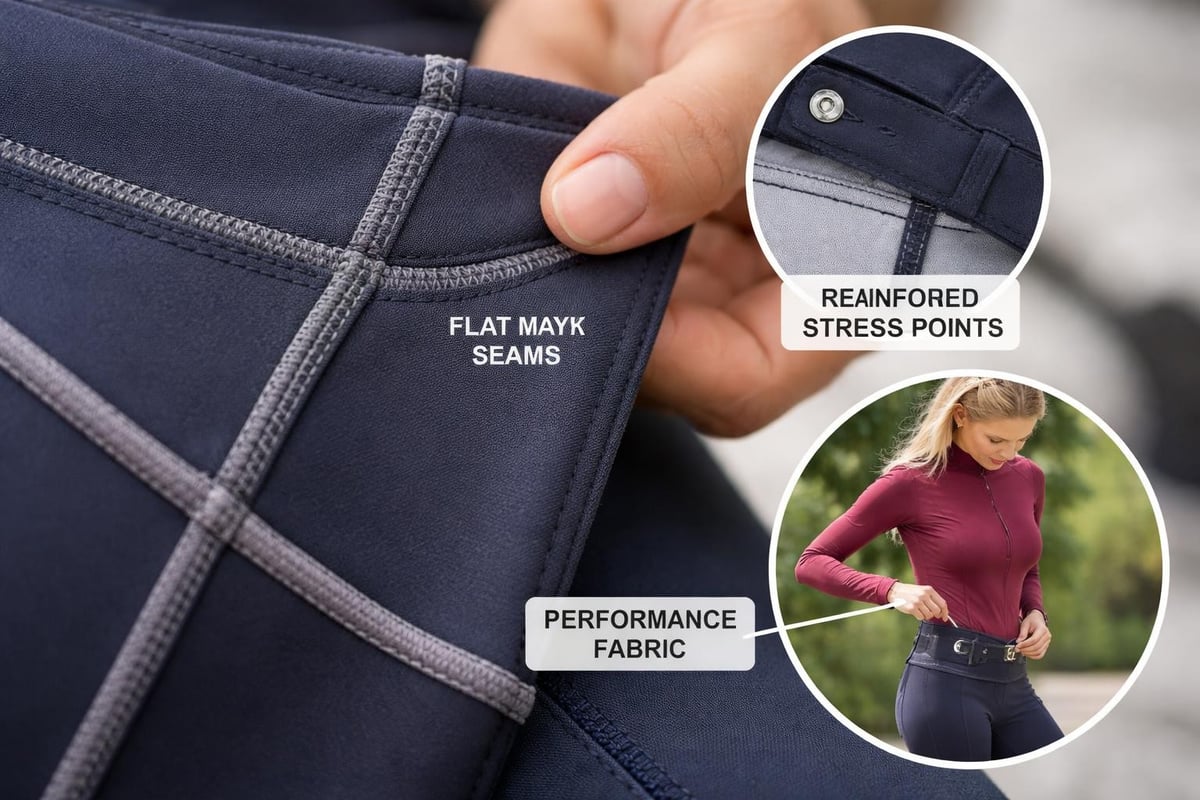
Fabric selection impacts both performance and longevity. Four-way stretch materials move with your body rather than restricting it. Quick-dry properties maintain comfort during active sessions. UV protection matters for summer riding. Breathability prevents overheating without sacrificing warmth when needed.
Fit deserves particular attention in men's equestrian clothing. Garments designed specifically for male proportions perform better than adapted women's designs. Proper shoulder width, torso length, and rise measurements make tangible differences. The essentials collection demonstrates how purpose-built men's pieces should fit.
Adapting Tradition for Modern Requirements
Equestrian sport continually balances tradition with progress. Recent years have seen significant shifts in acceptable competition attire. Evolving dressage clothing rules now permit navy and grey jackets at some levels. Coloured breeches occasionally appear. These changes don't diminish tradition. They acknowledge that rigidity sometimes serves no practical purpose.
Safety improvements drive many updates. Modern helmets provide far superior protection than traditional options, even as they maintain classical silhouettes. Lightweight body protectors offer serious impact absorption without the bulk of earlier designs. Air vests deploy automatically during falls, potentially preventing severe injuries.
Performance fabrics transformed everyday riding without altering competition aesthetics. Technical materials wick moisture, regulate temperature, and dry rapidly. They maintain traditional appearances whilst delivering contemporary functionality. This represents progress done properly.
Building a Versatile Competition Wardrobe
| Garment Type | Essential Features | Investment Priority |
|---|---|---|
| Competition Breeches | Full seat grip, four-way stretch, reinforced knees | High - foundation piece |
| Show Jacket | Traditional cut, quality fabric, proper shoulder fit | High - creates impression |
| Everyday Breeches | Durable fabric, practical colour, good construction | Medium - regular use |
| Technical Shirt | Moisture-wicking, breathable, collar retention | Medium - comfort matters |
| Riding Jacket | Weather-resistant, versatile styling, functional pockets | Medium - year-round utility |
| Casual Polo | Stable-to-street versatility, quality fabric, lasting shape | Low - optional addition |
Competitions require specific pieces. Your show jacket needs impeccable fit and traditional styling. Competition breeches in neutral colours work across multiple disciplines. Quality boots appropriate to your chosen sport. A collection of competition wear should cover various scenarios without excessive redundancy.
Training days demand different priorities. Multiple pairs of everyday breeches allow rotation between rides and washing. Technical shirts that handle sweat and weather. A waterproof layer for unpredictable conditions. Comfortable sweatshirts for early mornings and late evenings at the stable.
Transitional pieces earn their place by functioning across contexts. A well-designed polo shirt works equally for lessons, stable management, and casual wear. Quality jackets that don't scream "riding attire" extend utility beyond equestrian contexts. This versatility maximises value from each purchase.
The Role of Tradition in Modern Riding
Equestrian uniforms carry significant heritage. The origins of jodhpurs, for instance, trace back to Indian cavalry, later adapted by British colonial riders. Stock ties evolved from practical cravats that could serve as emergency bandages. Tall boots protected legs whilst providing stability in stirrups.
Understanding this history helps appreciate why certain traditions persist. They aren't arbitrary rules imposed by stuffy officials. They're practical solutions that proved effective over generations. Respecting these traditions whilst embracing sensible modernisation demonstrates maturity as a rider.
Some traditional elements have genuinely outlived their purpose. Others remain entirely relevant. The skill lies in distinguishing between the two. Safety improvements always merit adoption. Comfort enhancements that don't compromise appearance deserve consideration. Changes purely for fashion's sake warrant skepticism.
Practical Considerations for Men's Equestrian Attire
Men's proportions demand specific design considerations. Shoulder width, longer torsos, and different hip-to-waist ratios all affect fit. Generic equestrian uniforms designed without these factors compromise both appearance and function.
Proper breeches should sit at your natural waist without creating excess fabric at the front rise. The leg length should reach just below your ankle bone when standing. Knee patches or full seats should align precisely with your actual knee position when mounted. Inadequate attention to these details creates bunching, riding up, or restricted movement.
Shirts and jackets need adequate shoulder room without appearing oversized through the body. Sleeve length should allow full arm extension without pulling across the back. The riding clothes brands focused on men understand these requirements implicitly.
Temperature regulation matters more than many riders acknowledge. Layering systems work better than single heavy garments. Base layers manage moisture. Mid-layers provide insulation. Outer layers block wind and rain. This approach adapts to changing conditions throughout a riding day.
Maintaining Your Equestrian Wardrobe
Quality equestrian uniforms require proper care to deliver full value. Washing instructions aren't suggestions. They're guidance for preserving fabric properties and construction integrity.
Performance fabrics often require specific treatment. Avoid fabric softeners that coat fibres and reduce moisture-wicking capability. Use gentle cycles for stretch materials. Air-dry items with elastic components to prevent degradation. Turn garments inside out to protect exterior finishes.
Proper storage extends garment life. Hang jackets on shaped hangers that support shoulders properly. Fold breeches along natural seams to prevent creasing. Store boots with proper trees or supports. Keep items in breathable garment bags rather than plastic that traps moisture.
Regular inspection catches problems early. Check stress points for developing wear. Address loose buttons or minor repairs promptly before they worsen. Clean items after each use, even if they don't appear obviously dirty. Sweat and dirt degrade fabrics progressively.
Investment Pieces Versus Expendable Items
Not every garment deserves premium investment. Strategic spending focuses resources where they matter most whilst economising on pieces with shorter lifecycles or lower impact.
Competition jackets justify significant investment. You wear them during crucial moments. Quality construction and fabric create appropriate impressions. Proper fit projects confidence. These pieces often last years with appropriate care.
Everyday training breeches fall into middle ground. Quality matters for comfort and durability, but you'll replace them more frequently than competition attire. Buy good examples without pursuing the absolute premium tier. Rotate multiple pairs to extend collective lifespan.
Base layers and everyday shirts can come from more affordable sources. Functionality matters more than brand prestige. Technical performance justifies spending, but you needn't pay for labels on items worn under other garments.
Safety equipment always demands uncompromising quality. Helmets must meet current standards. Replace them after any significant impact or every five years regardless of visible condition. Body protectors should fit properly and carry appropriate certifications. Never compromise safety for aesthetics or economy.
The Intersection of Style and Function
Modern equestrian fashion increasingly recognises that style and performance needn't conflict. Well-designed garments deliver both simultaneously. The challenge lies in identifying which brands understand this balance.
Contemporary cuts flatter without restricting movement. Colour options extend beyond basic black and navy whilst maintaining appropriateness. Subtle details add visual interest without crossing into gaudy territory. This approach respects tradition whilst acknowledging that riders exist in 2026, not 1926.
Versatility matters for men building functional wardrobes. Pieces that transition between riding and daily life deliver greater value. A quality jacket worn both in the saddle and around town justifies higher investment than one limited to arena use. Similarly, polo shirts and casual pieces that bridge contexts extend utility.
Detail work separates adequate clothing from excellent pieces. Thoughtful pocket placement keeps essentials secure without creating bulk. Quality hardware resists corrosion and maintains smooth function. Hem lengths appropriate to riding positions prevent awkward exposure when mounted. These refinements distinguish garments designed by riders for riders.
Understanding equestrian uniforms means recognising they're tools as much as clothing. The right pieces support your riding whilst projecting appropriate professionalism across different contexts. When you're ready to build or refine your wardrobe with performance-driven pieces designed specifically for men, Gallant Equestrian offers essentials that transition seamlessly from stables to everyday life. Look the Part. Enjoy the Ride.

