

Horse Show Attire: A Men's Guide to Competition Ready Style
Mar 04, 2026
Stepping into the competition arena demands more than skill and preparation. Your appearance matters, and knowing what constitutes proper horse show attire gives you confidence before you even enter the ring. For men, competition clothing has evolved beyond stuffy formality into performance-driven pieces that respect tradition whilst offering modern comfort. Whether you're preparing for your first local show or refining your competition wardrobe, understanding the essentials makes all the difference.
Understanding Competition Standards
Every discipline has specific requirements, and getting it right shows respect for the sport and the judges. Most governing bodies maintain clear guidelines about acceptable colours, styles, and fabrics for competition wear.
Traditional horse show attire centres on conservative colours and tailored fits. Navy, black, grey, and hunter green dominate the palette, with white or light-coloured shirts providing contrast. These choices aren't arbitrary. They create a clean, professional silhouette that doesn't distract from the horse or the rider's performance.
Regulations typically cover everything from helmet specifications to boot height. Understanding what's acceptable in affiliated and unaffiliated competitions prevents last-minute wardrobe panics. Different levels of competition may permit slightly different options, particularly regarding jacket colours and shirt styles.
The rules exist for good reason. They maintain the sport's professional standards and ensure fair evaluation across competitors. When everyone adheres to similar guidelines, judges can focus on riding ability rather than being distracted by inappropriate attire.
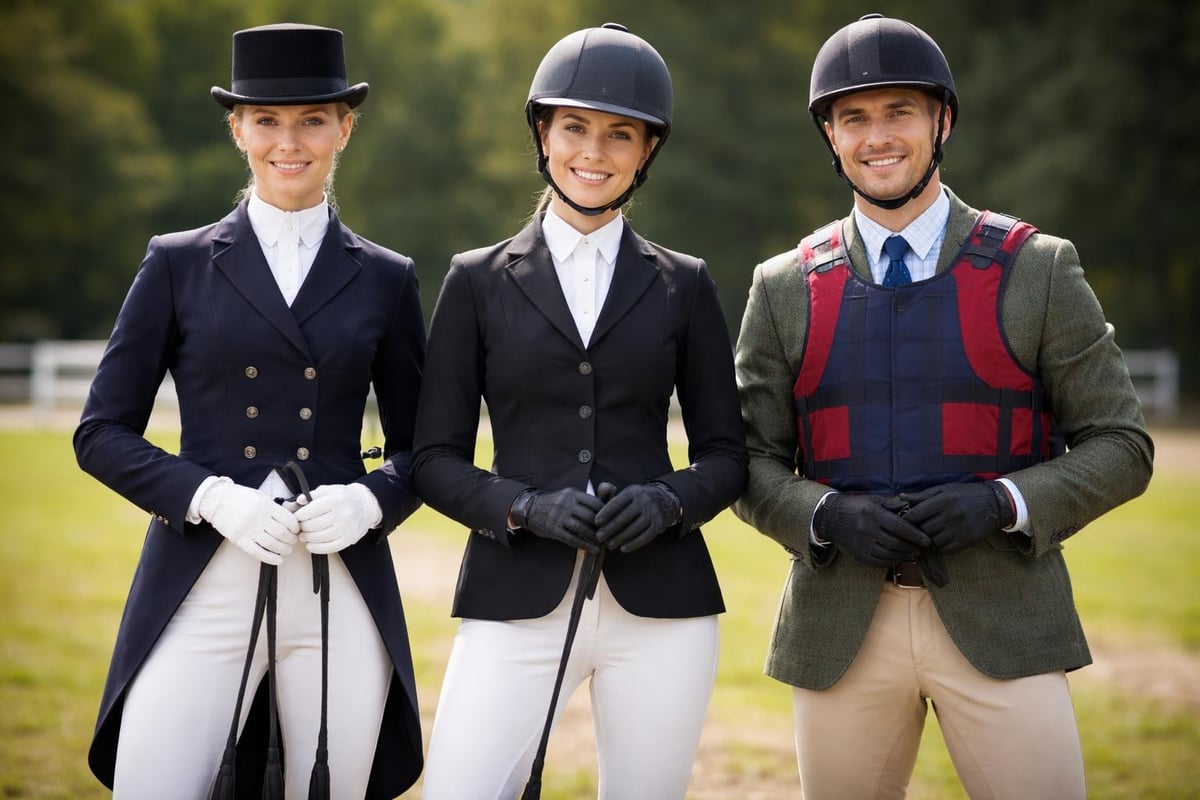
Essential Pieces for the Show Ring
Building a functional competition wardrobe starts with quality foundations. Each piece serves a purpose beyond aesthetics, contributing to your comfort and performance throughout the day.
Breeches That Perform
Your breeches are the cornerstone of any show outfit. They need to fit impeccably, allowing full range of motion whilst maintaining a sharp appearance. Look for fabrics with four-way stretch that won't bag at the knees after hours in the saddle.
Competition breeches typically feature a mid-rise waist, belt loops, and either full-seat or knee-patch grip. Full-seat options provide maximum stability in the saddle, particularly valuable for dressage or show jumping. Knee patches suit hunters and equitation classes where a slightly sleeker line is preferred. The competition wear collection demonstrates how modern breeches balance technical performance with refined styling.
Colour matters here too. Beige, tan, grey, and white remain the standard choices. White breeches show every speck of dust but create an undeniably crisp impression. Beige and tan offer more forgiveness whilst maintaining formality. Choose based on your discipline's norms and your personal maintenance preferences.
Show Jackets Worth Investing In
A proper show jacket transforms your entire appearance. It should fit through the shoulders without restricting movement, with sleeves that hit just past your wrist bone when your arms hang naturally. The length should cover your seat when mounted, creating a balanced line from shoulder to thigh.
Traditional wool or wool-blend jackets remain popular for their structure and professional finish. Modern technical fabrics offer breathability and stretch whilst maintaining that tailored look. Contemporary jackets now incorporate features like moisture-wicking linings and two-way stretch without compromising on style.
Navy and black lead the way for most disciplines. Some hunters and jumpers permit grey or pinstripe variations. Dressage riders often opt for shadbelly coats at upper levels, though these aren't mandatory until you reach advanced competition. The key is choosing a jacket that photographs well and keeps you comfortable under pressure.
Shirts and Stock Ties
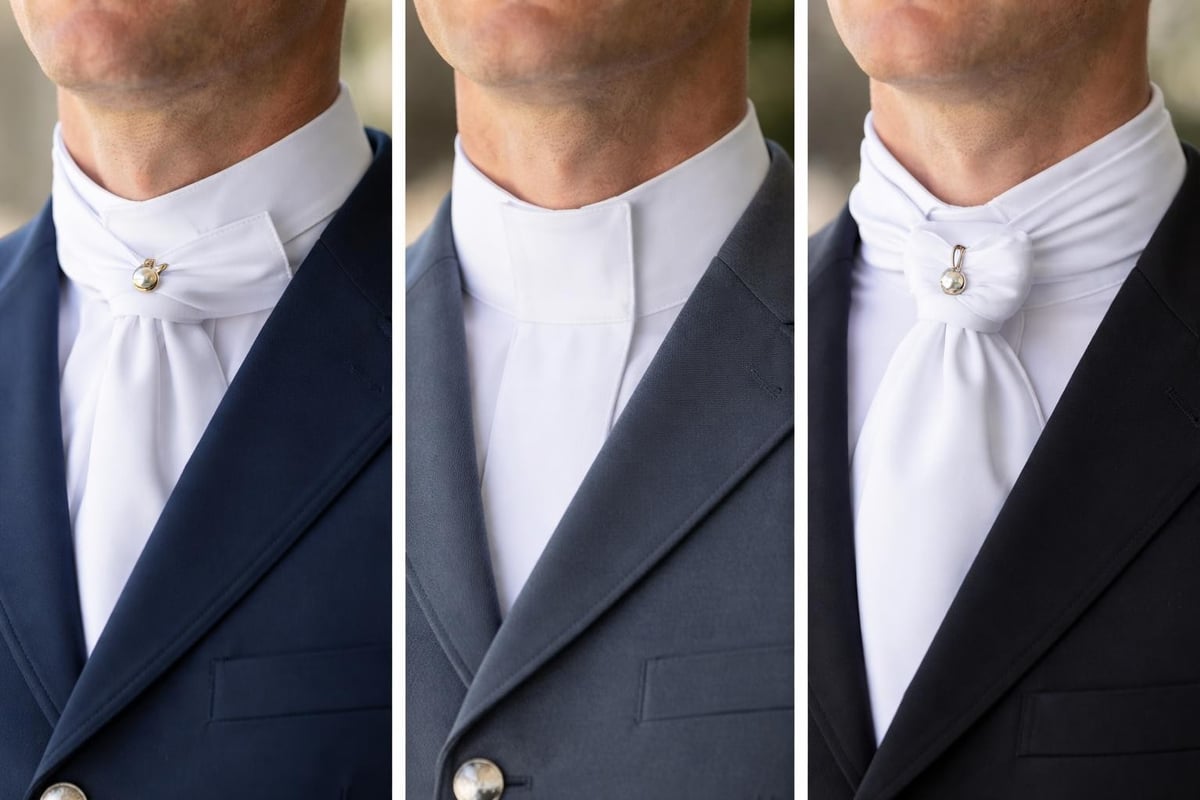
What you wear beneath your jacket deserves equal attention. Show shirts should be crisp, well-fitted, and appropriate for your discipline. Long sleeves with a collar remain standard, whether you're wearing a traditional ratcatcher with a stock tie or a modern show shirt with integrated collar.
White dominates, though pale blue occasionally appears in less formal settings. The collar should sit neatly without gaping or bunching when you add your stock tie or choker. Modern performance fabrics excel here, wicking moisture whilst maintaining that freshly pressed appearance throughout the day.
Stock ties require practice to tie correctly. They add formality and tradition to your turnout, particularly in dressage and hunters. A properly tied stock creates clean lines and frames your face, giving judges an unobstructed view of your position and expression. Recent updates to dressage regulations have expanded acceptable styles whilst maintaining the sport's traditional aesthetic.
Footwear That Meets Standards
Boots complete your competition look and directly impact your riding effectiveness. Tall boots remain the gold standard for most English disciplines, providing the clean line judges expect whilst offering necessary support and grip.
Field boots with lacing suit jumping disciplines, allowing ankle flexibility. Dress boots without lacing create the sleek profile dressage riders prefer. Both should fit snugly through the calf without cutting circulation, with a low heel that prevents your foot from sliding through the stirrup.
Leather quality matters more than you might think. Full-grain leather moulds to your leg over time, creating a custom fit that off-the-rack synthetics can't match. That said, modern synthetic options have improved dramatically, offering reasonable alternatives at lower price points. They require less maintenance and stand up better to weather, though they may not photograph quite as elegantly.
Polish your boots the night before, never the morning of. This gives the polish time to set and shine properly. Scuffed or dusty boots suggest lack of attention to detail, something judges notice even if they don't consciously register it.
Accessories and Final Details
Small touches separate adequate turnout from exceptional presentation. Start with an approved riding helmet that meets current safety standards. Black or navy velvet covers suit most disciplines, though dressage sometimes permits matching fabric to your jacket colour.
Gloves provide better rein contact whilst protecting your hands. Leather or synthetic options in black, brown, or white complete your look without drawing undue attention. Match them to your boots and belt for a cohesive appearance.
Speaking of belts, choose leather in brown or black to complement your boots. The buckle should be subtle, nothing flashy or oversized. Some riders opt for elastic belts that adjust as you move, preventing that pinched feeling during long classes.
Hair should be neat and controlled. If you have longer hair, tie it back smoothly so it doesn't interfere with your helmet or distract from your overall appearance. Short hair should be freshly trimmed and tidy.
Discipline-Specific Considerations
Each riding discipline carries its own expectations regarding horse show attire. Understanding these nuances ensures you're appropriately dressed for your specific competition.
Dressage Specifications
Dressage maintains some of the strictest dress codes in equestrian sport. Lower levels typically require a dark jacket, light breeches, tall boots, helmet, gloves, and a stock tie. As you advance, shadbelly coats and top hats replace hunt coats and helmets, adding ceremonial formality that reflects the discipline's classical roots.
Colour restrictions have loosened slightly in recent years, though conservative tones still dominate. Navy blue remains most popular, with black and dark grey as acceptable alternatives. White gloves traditionally pair with shadbellies, whilst dark gloves suit hunt coats. Understanding these requirements prevents embarrassing mistakes and potential elimination.
Show Jumping and Hunters
Show jumping permits slightly more flexibility than dressage, though professional standards still apply. Navy, black, green, and grey jackets all appear regularly, sometimes with subtle patterns or piping. Breeches in tan or beige predominate, with white reserved for upper-level competitions.
Hunter classes lean traditional, favouring conservative colours and classic tailoring. The goal is understated elegance that doesn't overshadow the horse's movement and form. Show attire guidelines often specify acceptable variations for different hunter divisions.
Jumper riders enjoy more latitude with colour choices and modern styling, though tasteful restraint still serves you better than bold statements. The focus should remain on your riding, not your wardrobe.
Eventing Variations
Eventing's three phases each carry different attire requirements. Dressage follows standard dressage dress codes. Cross-country permits protective vests over coloured shirts, with breeches and boots designed for security rather than style. Show jumping returns to traditional hunter/jumper standards.
This multi-faceted approach means eventers need versatile wardrobes that adapt to changing requirements throughout a single competition. Planning ahead ensures you're properly equipped for each phase without last-minute scrambling.
Modern Trends in Competition Wear
Horse show attire evolves gradually, respecting tradition whilst incorporating contemporary improvements. Technical fabrics now offer stretch, breathability, and moisture management that natural fibres can't match. This means you can look traditional whilst enjoying modern comfort.
Tailoring has improved significantly for men's riding wear. Rather than adapting women's patterns, manufacturers now design specifically for male riders' proportions and movement patterns. This creates better fits that enhance rather than restrict your riding. Emerging trends demonstrate how performance and style increasingly work together rather than competing for priority.
Subtle details like contrasting piping, tonal stitching, or modern collar styles allow personal expression within competition parameters. The key is choosing updates that enhance rather than overwhelm your overall appearance. Equestrian fashion continues evolving to meet riders' demands for both performance and style.
Preparing Your Competition Wardrobe
Success in the show ring starts long before you arrive at the venue. Proper preparation ensures everything fits correctly, functions as needed, and presents the professional image you're aiming for.
Fitting and Alterations
Never assume clothing will fit perfectly off the rack. Schedule fittings well before your competition date, allowing time for any necessary alterations. Breeches should fit snugly through the seat and thigh without binding, with enough length to prevent bunching in your boots. Jackets need room through the shoulders for full arm movement whilst maintaining a trim silhouette.
Professional alterations transform adequate clothing into exceptional pieces. A tailor familiar with riding wear understands the specific requirements, from reinforced stress points to strategic stretch placement. This investment pays dividends in comfort and confidence.
Maintenance Matters
Competition clothing requires consistent care to maintain its appearance. Breeches and shirts need regular washing using products designed for technical fabrics. Avoid fabric softeners that can break down stretch fibres and reduce moisture-wicking capabilities.
Jackets typically require professional cleaning to maintain their structure and finish. Leather boots need regular conditioning to prevent cracking and maintain flexibility. Polish preserves the leather whilst creating that mirror shine judges expect.
Store everything properly between shows. Hang jackets on shaped hangers to maintain their form. Keep boots in boot trees to prevent creasing. Fold breeches carefully or hang them to avoid permanent creases that detract from your appearance.
What Spectators Should Know
If you're attending shows to support riders or simply enjoy watching excellent horsemanship, understanding basic spectator etiquette enhances everyone's experience. Whilst you're not bound by competition dress codes, appropriate spectator attire shows respect for the sport and its participants.
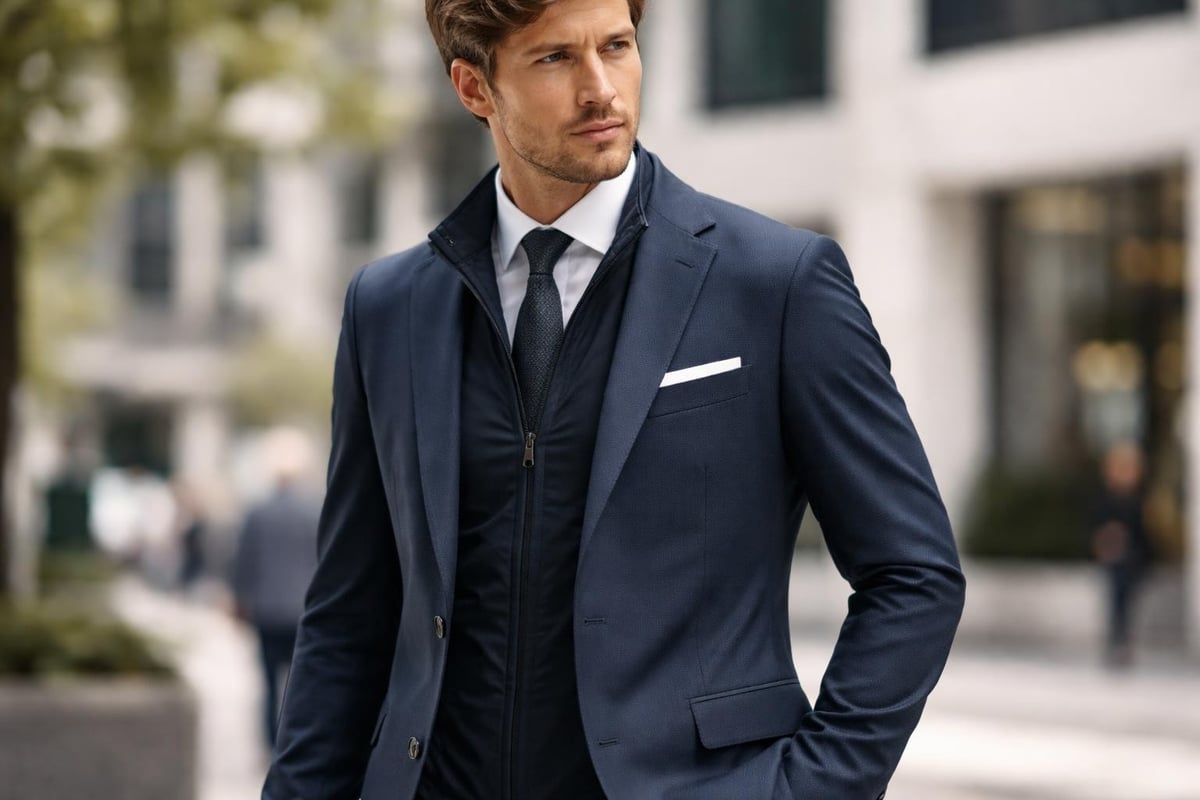
Business casual suits most venues. Avoid flip-flops, tank tops, or anything too casual. Remember you'll likely be walking on uneven ground and standing for extended periods, so choose comfortable footwear with proper support. A smart jacket or blazer works well for changeable weather whilst maintaining a polished appearance.
Building Your Show Wardrobe Strategically
You don't need everything at once. Start with quality basics that work across multiple situations, then add specialized pieces as your competition schedule demands. This approach prevents overwhelming initial investment whilst ensuring you're properly equipped when it matters.
Begin with well-fitted breeches in a neutral colour, a versatile show jacket, appropriate boots, and essential accessories. These pieces form the foundation for any competition appearance. Choosing the right breeches represents one of your most important early decisions.
As you compete more regularly, add variation through multiple breeches colours, backup shirts, and weather-appropriate layers. Having duplicates of essential pieces prevents panic when something needs cleaning or repair right before a show.
Quality over quantity always wins in competition settings. One excellent jacket serves you better than three mediocre options. Invest in pieces that fit perfectly, feel comfortable, and maintain their appearance through repeated wear and cleaning. Building a capsule wardrobe around versatile staples streamlines your preparation whilst ensuring consistent presentation.
Weather Adaptations
British weather demands flexibility in your competition wardrobe. Rain, wind, and unexpected temperature changes test both your clothing and your preparation.
Layering becomes essential for managing varying conditions throughout the day. Technical base layers wick moisture and regulate temperature beneath your show shirt. Waterproof jackets protect your show clothing during warm-up in wet conditions, though you'll remove them before entering the ring.
Some competitions permit quarter-zip sweaters or vests between classes. These additions provide warmth without bulk, maintaining your professional appearance whilst keeping you comfortable. Choose colours that coordinate with your competition jacket for a polished look even when you're not actively showing.
Always bring backup clothing to multi-day shows. Weather changes, unexpected spills, or equipment failures happen. Having spare breeches, shirts, and accessories prevents minor mishaps from becoming major problems.
Confidence Through Preparation
Knowing you're properly attired eliminates one significant source of competition stress. When your clothing fits correctly, meets all regulations, and projects professionalism, you can focus entirely on your riding.
This confidence shows in your performance. You sit taller, ride more assertively, and present yourself better to judges. These subtle improvements often make the difference in closely contested classes. Understanding what to wear in the competition arena removes uncertainty and allows your skills to shine.
The best horse show attire becomes invisible. It looks sharp without demanding attention, functions flawlessly without conscious thought, and supports your performance without restriction. Achieving this balance requires thoughtful selection, proper fitting, and consistent maintenance.
Remember that judges notice turnout even if they don't explicitly score it. A rider who takes pride in their appearance suggests someone who takes equal pride in their riding and horse care. These impressions matter, particularly in subjective disciplines or when multiple riders demonstrate similar skill levels.
Mastering horse show attire means understanding tradition whilst embracing modern performance features that enhance your riding. When you combine proper fit with quality construction and appropriate styling, you create the professional image that belongs in any competition arena. Gallant Equestrian designs performance-driven clothing specifically for men who ride, offering breeches, jackets, and shirts that transition seamlessly from daily training to competition day. Built to last and refined in style, these pieces ensure you always look the part and enjoy the ride.

