

Horseback Breeches: The Essential Guide for Male Riders
Jul 14, 2026
The right pair of horseback breeches transforms your time in the saddle. They're not just trousers with a fancy name. Proper riding breeches offer grip where you need it, flexibility where it counts, and durability that outlasts ordinary trousers by years. For men who take riding seriously, understanding what makes quality breeches worth the investment changes everything from schooling sessions to competition days.
What Makes Horseback Breeches Different
Traditional trousers weren't designed for the saddle. Horseback breeches solve problems that ordinary clothing creates when you're riding. The differences start with construction and extend through every design choice.
Purpose-Built Construction
Breeches feature reinforced seams positioned to avoid pressure points. The inseam sits flatter than standard trousers, eliminating the bulk that causes discomfort during extended rides. Flatlock stitching prevents chafing whilst maintaining strength through repeated stress. These aren't cosmetic touches. They're engineering decisions that separate adequate from exceptional.
The seat area receives particular attention. Four-way stretch panels accommodate movement without binding. Gusseted crotches allow full range of motion during posting and two-point positions. Some designs incorporate articulated knees that mirror natural leg position when bent around a horse's barrel.
Grip Technology
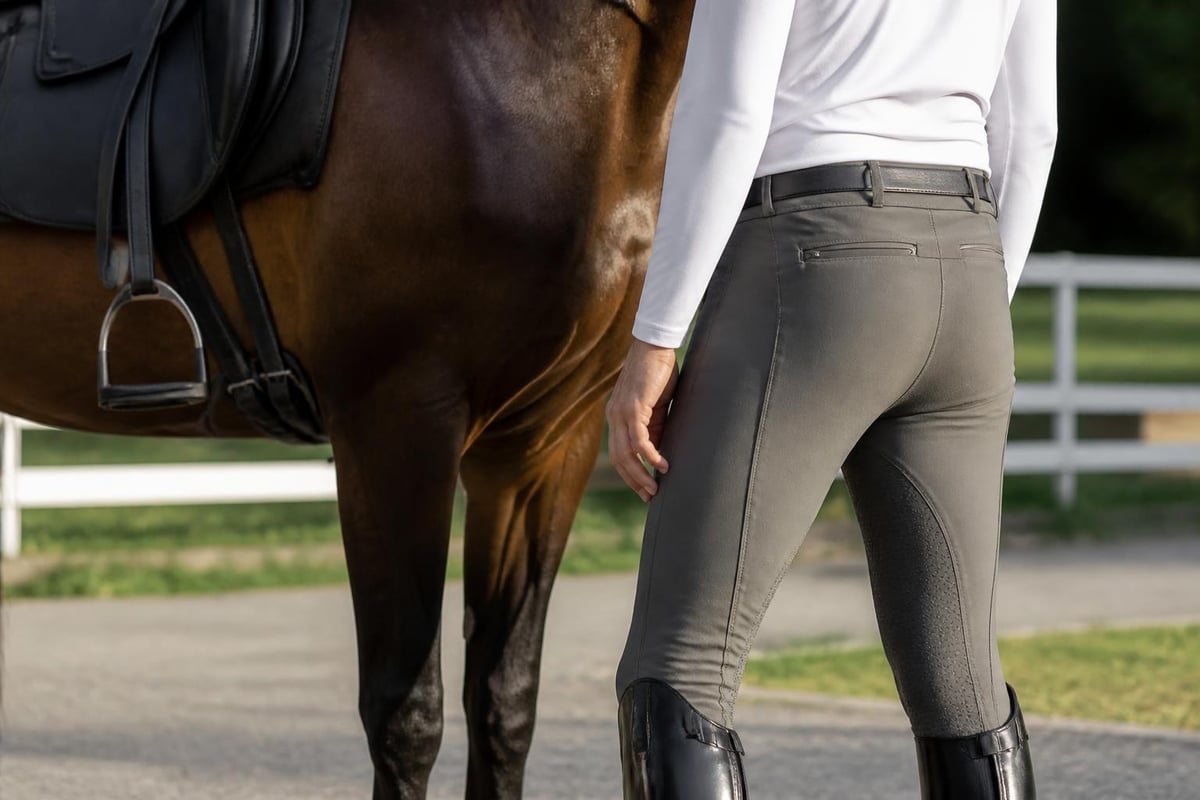
Modern breeches use different grip systems. Full-seat breeches feature material across the entire seat and inner thigh area. Knee-patch versions place grip only where your leg contacts the saddle around the knee area. The choice depends on discipline and personal preference.
Silicone prints, suede patches, and synthetic leather each offer distinct advantages. Silicone provides excellent stick without excessive bulk. Suede offers traditional aesthetics with solid grip. Synthetic leather strikes a balance between durability and feel. Understanding how different grip materials perform helps you choose what works for your riding style.
Fabric Choices That Matter
Material selection affects comfort, longevity, and performance. Not all fabrics suit every rider or climate. The right choice depends on your priorities.
Performance Fabrics
Technical fabrics dominate modern breeches. Blends combining polyester, elastane, and nylon deliver stretch, recovery, and moisture management. These materials wick sweat away from skin whilst maintaining shape through countless rides. Quality fabrics return to their original form after washing, preventing the baggy knees that plague cheaper alternatives.
Cotton blends offer natural breathability but typically provide less stretch and slower drying times. They work well for cooler climates where moisture management matters less. Pure synthetic fabrics excel in hot weather and humid conditions where sweat becomes a genuine concern.
Compression fabrics support muscles during extended sessions. They improve circulation and reduce fatigue. Some riders notice less stiffness after long training days. Others prefer traditional fits. Neither approach is wrong. It's about what feels right for your body and riding demands.
| Fabric Type | Stretch | Breathability | Durability | Best For |
|---|---|---|---|---|
| Polyester/Elastane | Excellent | Very Good | Excellent | All-weather riding |
| Cotton Blend | Good | Excellent | Good | Cool weather, casual |
| Compression Tech | Exceptional | Good | Very Good | Competition, training |
| Nylon Blend | Very Good | Good | Exceptional | Daily wear, value |
Climate Considerations
Summer riding demands lightweight, breathable fabrics. Mesh panels increase airflow without compromising structure. UPF protection prevents sun damage during outdoor sessions. Light colours reflect heat better than dark shades, though they show dirt more readily.
Winter breeches incorporate fleece linings or thermal fabrics. They maintain stretch whilst providing insulation. Some designs use windproof panels on the front of thighs where cold air hits hardest during outdoor riding. Pairing quality breeches with a proper waterproof riding jacket creates a complete system for challenging conditions.
Fit Fundamentals for Men
Poor fit undermines even the finest fabric. Horseback breeches should feel like a second skin without restriction. Achieving this requires understanding how men's and women's cuts differ.
Cut Differences That Count
Men's breeches account for different hip-to-waist ratios. The rise sits differently, preventing the saggy seat common when men wear women's designs. Thigh proportions match male leg shapes. These seemingly minor details dramatically affect comfort and appearance.
The waistband should sit at your natural waist, not your hips. This might feel higher than casual trousers. That's intentional. It prevents the waistband from digging in when you're in riding position. Proper placement also prevents the dreaded gap at the back that lets in cold air and looks sloppy.
Measuring for Success
Start with accurate measurements. Waist measurement at natural waist. Inseam from crotch to ankle bone. Thigh circumference at the widest point. Rise from waist front, through crotch, to waist back. These numbers guide initial selection, though trying breeches on remains essential.
When trying horseback breeches, mimic riding position. Bend your knees. Squat slightly. Twist your torso. The fabric should move with you without pulling or bunching. Ankle cuffs should end just above your ankle bone when standing. They'll ride up slightly when mounted.
Checking detailed size guides before ordering prevents costly returns. Every brand cuts slightly differently. What fits in one manufacturer might run small or large in another.
Style Options for Different Disciplines
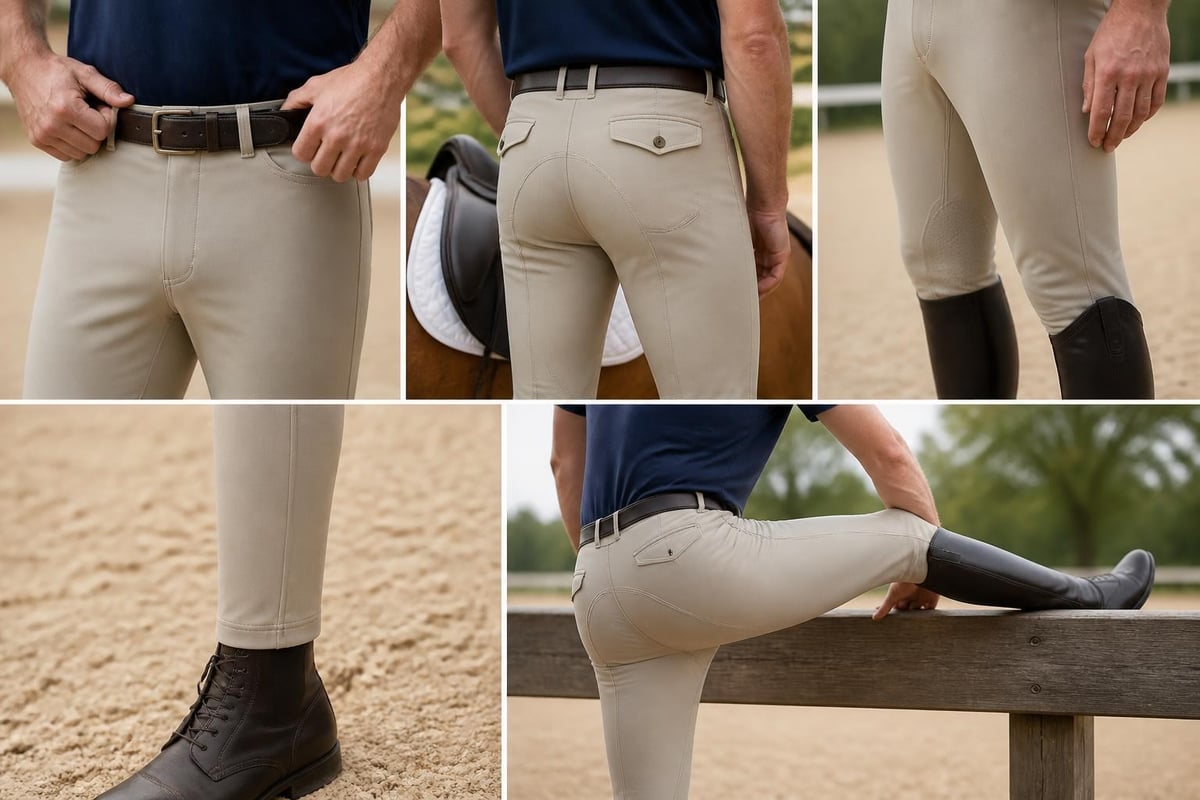
Not all horseback breeches serve the same purpose. Discipline dictates certain requirements whilst leaving room for personal preference.
Dressage and Show Jumping
Full-seat breeches dominate dressage arenas. The extended grip area maintains position during collected work and advanced movements. Clean lines and subtle detailing suit the sport's formal aesthetic. White, beige, and grey remain standard colour choices for competition.
Show jumping allows more flexibility. Knee-patch breeches provide targeted grip without full coverage. This gives riders slightly more freedom of movement during courses. Navy and black prove popular for their practicality. They hide dirt better than light colours whilst maintaining professional appearance.
Eventing and Cross-Country
Cross-country phases demand durability above all. Breeches need reinforced seat areas and robust fabrics that withstand brush, water, and rough conditions. Water-resistant treatments help during wet events. Darker colours prove practical for outdoor work.
Many eventers keep separate breeches for different phases. Dressage tests merit pristine white or beige. Stadium jumping and cross-country suit technical fabrics in practical colours. This approach extends garment life whilst ensuring you always look appropriate.
Everyday Riding and Training
Daily schooling doesn't require show-ring formality. Comfortable, durable breeches in navy, black, or brown work perfectly. These colours transition easily from stable to everyday life, especially when paired with appropriate tops and boots.
Technical features matter more than aesthetics during training. Prioritise fabrics that wash well and recover their shape. Look for reinforced knees if you work with young horses or do ground work. Phone pockets prove surprisingly useful for modern riders who need devices accessible.
Historical Context Worth Knowing
Understanding where horseback breeches originated adds appreciation for modern designs. The evolution reflects changing needs and improving technology.
The history of breeches traces back centuries to military uniforms. Cavalry officers needed trousers that allowed mounted combat whilst protecting legs from saddle friction. Early versions used leather or heavy wool. They buttoned or laced below the knee, worn with tall boots.
Equestrian sports adopted and refined these military designs. As riding became recreational and competitive, breeches evolved to prioritise comfort and performance over protection from combat. Fabrics became lighter. Cuts became more tailored. Grip materials replaced simple reinforcement.
The transition from traditional breeches to modern technical designs accelerated in recent decades. Synthetic fabrics enabled stretch previously impossible with natural materials. This revolutionised comfort and fit. Contemporary breeches barely resemble their military ancestors, yet they serve the same fundamental purpose: enabling effective riding.
Care and Maintenance
Quality horseback breeches represent an investment. Proper care extends their lifespan significantly. Most damage comes from incorrect washing rather than wear.
Washing Guidelines
Always follow manufacturer instructions. Most technical fabrics tolerate machine washing on gentle cycles with cold water. Hot water damages elastane fibres, reducing stretch and recovery. Turn breeches inside out to protect grip materials and exterior finish.
Skip fabric softener entirely. It coats fibres, reducing moisture-wicking properties and compromising grip materials. Use sport-specific detergents designed for technical fabrics when possible. They clean effectively without leaving residue.
Air drying preserves fabric integrity better than tumble drying. Heat breaks down elastic fibres and can damage synthetic materials. Hang breeches by the waistband, allowing gravity to help maintain their shape. They'll dry overnight in most conditions.
Storage and Repair
Fold breeches rather than hanging them long-term. Hanging stretches waistbands and can create permanent creases. Store them in a cool, dry place away from direct sunlight, which fades colours and weakens fabrics.
Address minor damage immediately. Small tears become large rips. Loose stitching spreads. Many repairs take minutes when caught early but become impossible if ignored. Learn basic hand stitching or develop a relationship with a good tailor. Proper care guidance ensures your breeches last years rather than months.
Building Your Breeches Collection
Few riders need just one pair of horseback breeches. Building a practical collection ensures you're always properly equipped.
Essential Pairs
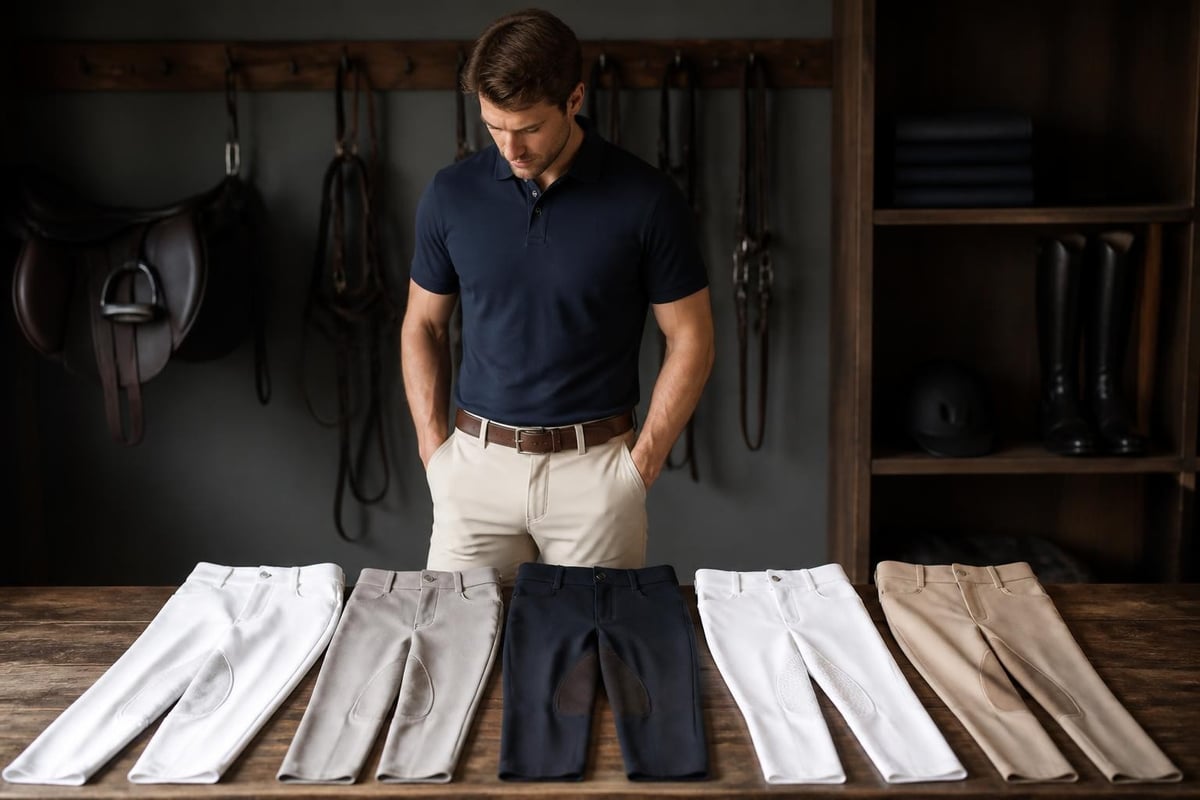
Start with two training pairs in practical colours. This allows one to be washed whilst the other's in use. Navy or black works everywhere and hides dirt well. Quality training breeches handle daily riding without showing excessive wear.
Add competition breeches appropriate for your discipline. White or beige for dressage and formal events. These get less frequent use, so a single pair often suffices initially. Choose the best quality you can afford here. Competition matters, and you want to look sharp.
Expanding Strategically
Seasonal variations improve comfort year-round. Lightweight summer breeches with mesh panels for hot months. Thermal or fleece-lined options for winter riding. The temperature difference between summer and winter riding in many regions justifies this investment.
Discipline-specific options make sense as your riding develops. If you event, having breeches optimised for dressage, stadium jumping, and cross-country improves performance in each phase. Specialisation helps once you're competing regularly.
Common Mistakes to Avoid
Even experienced riders make predictable errors when selecting horseback breeches. Awareness helps you sidestep these problems.
Sizing Issues
Buying too small ranks as the most common mistake. Tight breeches restrict movement and prove uncomfortable during extended rides. They also wear out faster because the fabric stays under constant stress. If you're between sizes, choose the larger option. You can always take them in slightly, but you cannot make tight breeches bigger.
Conversely, loose breeches bunch and chafe. Excess fabric creates pressure points and looks sloppy. Proper fit means snug without tight, close without restrictive. This balance takes practice to recognise if you're new to riding-specific clothing.
Material Compromises
Cheap fabrics cost more long-term. They lose shape quickly, requiring replacement within months. Poor-quality elastane breaks down, creating baggy knees and sagging seats. Inferior grip materials peel or wear smooth, eliminating their function. Investing in quality fabric pays dividends through years of reliable service.
Ignoring climate needs causes discomfort. Summer-weight breeches in winter mean cold legs. Winter breeches in summer mean overheating and excessive sweat. Match your breeches to your riding environment. It seems obvious but gets overlooked surprisingly often.
Care Negligence
Skipping proper care shortens breaches lifespan dramatically. Hot water washing destroys stretch. Tumble drying damages fibres. Fabric softener ruins technical properties. These mistakes seem minor individually but compound quickly. Follow care instructions precisely. Your breeches will thank you with years of service.
Value Versus Price
Horseback breeches range from budget-friendly to premium pricing. Understanding what drives cost helps you spend wisely.
What You're Paying For
Fabric quality accounts for significant price differences. Technical fabrics from reputable mills cost more but perform better and last longer. Premium materials maintain stretch, recover shape after washing, and resist pilling and fading.
Construction quality separates good from great. Reinforced seams, flatlock stitching, and proper finishing require skilled labour. Quality control ensures consistent sizing and durability. These factors increase production costs but deliver superior products.
Brand reputation includes design expertise and rider feedback integration. Established manufacturers understand what works because they've refined designs through generations of riders. You're paying for proven performance, not just marketing.
Performance features like compression zones, strategic ventilation, and advanced grip systems add cost. Decide which features matter for your riding. If you compete regularly, these details justify their expense. If you're a recreational rider, simpler designs might serve perfectly well.
| Price Range | Fabric Quality | Construction | Features | Best For |
|---|---|---|---|---|
| Budget | Basic | Adequate | Minimal | Beginners, occasional riders |
| Mid-Range | Good | Solid | Standard | Regular riders, training |
| Premium | Excellent | Superior | Advanced | Competitors, daily riders |
| Elite | Exceptional | Impeccable | Cutting-edge | Professionals, serious amateurs |
Smart Shopping
Buy the best you can reasonably afford. Quality breeches outlast cheap alternatives by years. Three pairs of premium breeches serving five years cost less than replacing budget pairs annually. The mathematics favour quality once you account for replacement cycles.
Watch for end-of-season sales. Last season's colours at reduced prices perform identically to current offerings. Unless you need the latest colour specifically for competition, previous season stock represents excellent value.
Consider trying different brands. What fits one rider perfectly might not suit another. Various types of breeches exist because riders have different needs. Experimentation helps you discover what works best for your body and riding style.
Modern Innovations
Recent years brought significant advances in horseback breeches design. These innovations improve comfort and performance measurably.
Smart Fabrics
Moisture-wicking technology keeps skin dry during intensive sessions. Fabrics actively move sweat away from your body to the exterior surface where it evaporates. This prevents the clammy feeling that develops during hard work. The difference becomes obvious during summer riding or indoor arena sessions.
Antimicrobial treatments reduce odour between washings. They inhibit bacterial growth that causes unpleasant smells. This extends wearing time between washes, practical when travelling to competitions or riding multiple horses daily.
Four-way stretch surpasses traditional two-way stretch significantly. Fabric moves in all directions, following body movement precisely. This eliminates the pulling sensation when you shift position. The technology particularly benefits disciplines requiring extreme flexibility.
Design Refinements
Phone pockets with secure closures solve modern riders' needs. Smartphones live in our pockets now. Having secure storage that doesn't interfere with riding proves invaluable. Some designs include hidden pockets that maintain clean lines whilst providing functionality.
Seamless waistbands eliminate pressure points. Traditional waistbands can dig in during sitting trot or collected work. Bonded or seamless construction distributes pressure evenly, increasing comfort during long sessions.
Reflective details improve safety for riders hacking out in low light. Subtle reflective elements maintain aesthetic appeal whilst increasing visibility to vehicles. This matters increasingly as more riders incorporate road work into training.
Transitioning Beyond the Arena
Quality horseback breeches work beyond riding contexts. Their technical properties and refined appearance suit various situations.
Men increasingly wear riding-style breeches for country pursuits, outdoor activities, and casual settings. The slim fit and quality fabrics look sharp paired with boots and appropriate tops. Performance features like stretch and durability prove useful regardless of activity.
This versatility matters when building a functional wardrobe. Pieces that work multiple ways deliver better value. Investing in breeches that transition seamlessly from stable to everyday situations makes practical sense. The key lies in choosing colours and styles that suit both contexts.
Understanding how riding clothes fit into broader wardrobes helps you select pieces that work harder. Navy breeches paired with a quality shirt look appropriate almost anywhere. They're riding trousers that don't scream "equestrian" to casual observers.
Horseback breeches represent more than specialised clothing. They're tools that enhance your riding whilst reflecting your commitment to the sport. Quality matters because proper fit, durable fabrics, and thoughtful design directly impact your comfort and performance in the saddle. Whether you're schooling daily or competing at advanced levels, the right breeches make every ride better. Gallant Equestrian designs performance-driven breeches specifically for men who demand both function and style, built in New Zealand to handle everything from training sessions to competition days. Look the Part. Enjoy the Ride.

