

Men's Riding Clothes: A Complete Guide for 2026
Mar 27, 2026
Choosing the right mens riding clothes has evolved significantly in 2026. What was once a limited selection of borrowed styles or purely functional pieces has transformed into a proper category of performance wear designed specifically for male riders. Whether you're mucking out stables at dawn, schooling your horse through flatwork, or competing at regional shows, your clothing needs to support every aspect of your riding life. The best mens riding clothes balance technical performance with understated style, moving effortlessly from yard work to coffee afterwards without looking out of place in either setting.
Understanding the Fundamentals of Mens Riding Clothes
The foundation of any riding wardrobe starts with understanding what you actually need versus what marketing tells you to buy. Mens riding clothes serve distinct purposes that differ from general athletic wear or traditional menswear. Your clothing faces unique stresses in the saddle: friction from constant movement, exposure to horses and weather, and the need for unrestricted range of motion during mounting, posting, and lateral work.
Temperature regulation matters more than riders often realize. You might start your morning feeding in near-freezing temperatures, then find yourself working through exercises in full sun an hour later. Quality mens riding clothes account for these rapid changes through layering systems and moisture management fabrics that adapt to your activity level.
The relationship between fit and function cannot be overstated. Baggy clothing catches on tack and bunches uncomfortably. Overly tight pieces restrict movement and create pressure points during long rides. Proper riding clothes fit close enough to avoid interference but with enough stretch and strategic paneling to move with you through every phase of your ride.
Essential Pieces Every Rider Needs
Your riding wardrobe builds from core pieces that work across multiple scenarios. Starting with breeches, these specialized trousers represent perhaps the single most important investment in mens riding clothes. Unlike regular trousers, breeches feature reinforced inner legs, stretch panels for flexibility, and a fit designed specifically for the mounted position. Look for full-seat or knee-patch options depending on your discipline and personal preference.
Riding shirts form your next layer. Technical polo shirts and quarter-zips provide temperature control while maintaining a clean appearance. These shirts need longer backs to stay tucked during movement, breathable fabrics to manage sweat, and enough structure to look presentable without feeling stiff. The best riding shirts transition seamlessly from arena to afternoon errands.
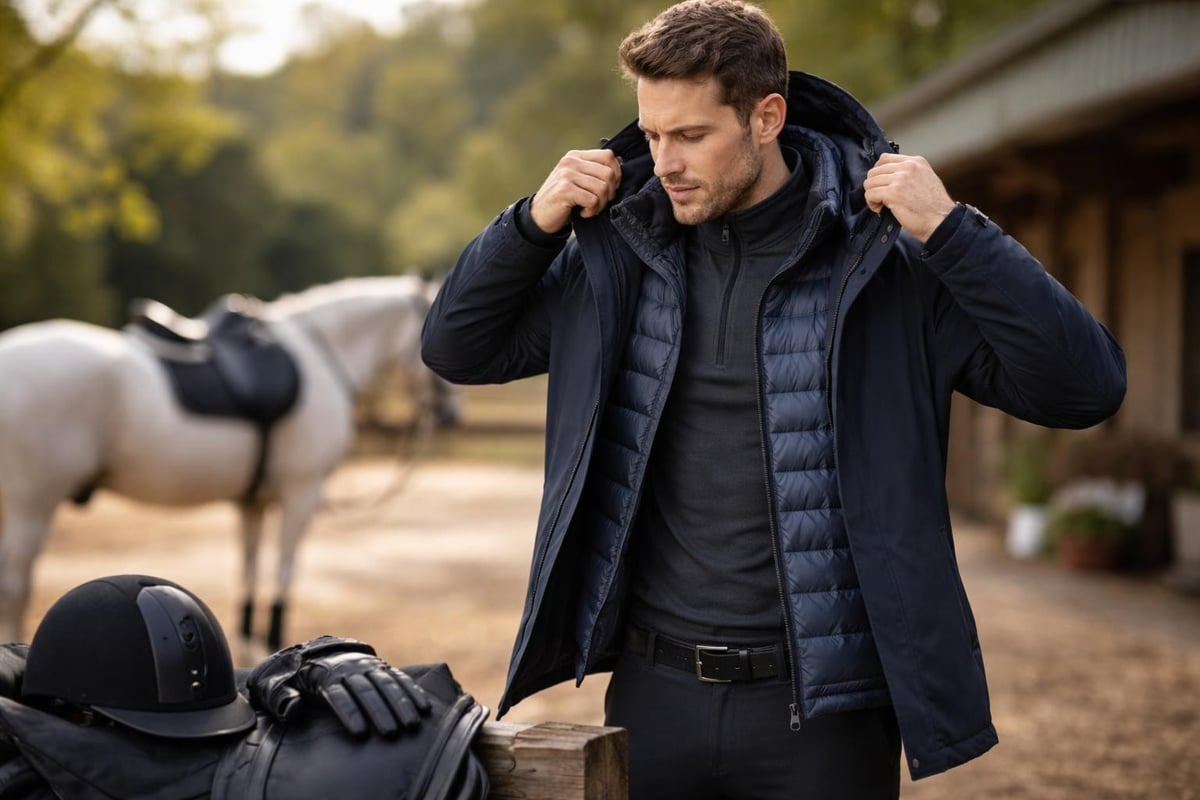
Jackets deserve careful consideration beyond just keeping you warm. A quality riding jacket accommodates your mounted position with articulated elbows and enough room across the shoulders for rein work. Softshell options provide weather resistance without bulk. Insulated versions handle cold morning rides. Competition jackets bring polish when presentation matters.
Footwear anchors your stability and safety. Proper riding boots with a defined heel prevent your foot from slipping through the stirrup. Whether you choose tall boots for dressage work or paddock boots with half chaps for everyday riding, ensure they fit well and provide ankle support. Breaking in new boots takes time, so plan accordingly before important rides or shows.
Selecting Materials That Perform
Fabric technology has revolutionized mens riding clothes over the past decade. Natural materials like cotton feel comfortable initially but absorb moisture, take forever to dry, and lose shape through repeated wear. Modern technical fabrics combine polyester blends with elastane for stretch, incorporating features that natural fibers simply cannot match.
Four-way stretch fabrics move with you in all directions rather than just vertically or horizontally. This matters when you're posting trot or working through sitting adjustments. The fabric returns to its original shape rather than bagging out at the knees or seat after an hour in the saddle.
Moisture-wicking technology pulls sweat away from your skin to the fabric surface where it evaporates quickly. This keeps you drier and helps regulate body temperature during intense work. Combined with antimicrobial treatments that prevent odor buildup, these features mean your mens riding clothes stay fresher between washes even after hard rides.
Weather resistance varies by garment type and intended use. Water-repellent finishes on outer layers shed light rain and morning dew. Windproof membranes block cutting breezes without completely eliminating breathability. Understanding these differences helps you choose the right piece for your typical riding conditions. For comprehensive guidance on selecting appropriate riding attire, consider this complete guide to casual riding clothing.
Fitting Mens Riding Clothes Properly
Achieving the right fit requires trying pieces on and actually moving through riding motions, not just standing in front of a mirror. Breeches should sit comfortably at your natural waist without requiring a belt to stay up. The leg length needs to reach your ankle bone when you're standing, which provides proper coverage when your leg drops in the stirrup.
When evaluating tops, raise your arms overhead and twist from side to side. The shirt should stay in place rather than riding up or pulling across your chest. Sleeve length matters more than you might expect. Too short and they'll expose your wrists during cold rides. Too long and excess fabric bunches under jacket sleeves.
For jackets and outer layers, sit down and reach forward as if holding reins. The back shouldn't pull tight across your shoulders or gap at the hem. Many riding-specific jackets feature longer backs and shorter fronts to accommodate the forward lean of riding position.
Sizing charts provide starting points, but brands vary significantly in their cuts. What fits perfectly in one brand might run large or small in another. Always check the specific sizing information for each brand before ordering, and read return policies carefully when buying online.
Building a Versatile Riding Wardrobe
Creating a functional collection of mens riding clothes doesn't require buying everything at once. Start with quality basics that work across multiple situations, then add specialized pieces as your riding demands evolve. A versatile wardrobe approach saves money while ensuring you're properly equipped.
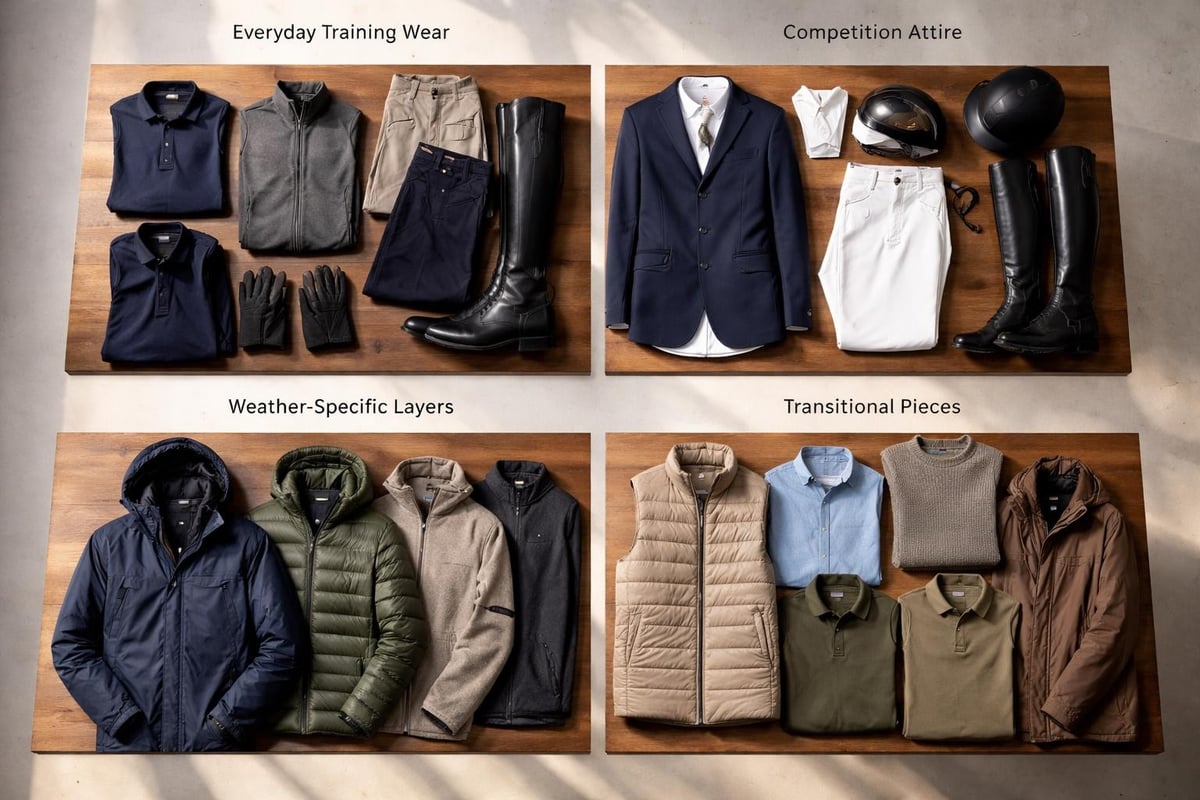
Your foundation should include two pairs of quality breeches in neutral colors, three technical shirts for rotation, one softshell jacket, and proper boots. This combination handles most riding scenarios from lessons to light competition. As you ride more frequently, you'll identify specific needs based on your discipline, climate, and schedule.
Seasonal considerations shape your wardrobe expansion. Winter riders need base layers, insulated jackets, and thermal breeches. Summer demands lightweight, UV-protective pieces with maximum breathability. Transition seasons benefit from mid-weight layers that adapt to temperature swings throughout the day.
Competition requirements introduce additional wardrobe needs. Show jackets, white shirts, light-colored breeches, and sometimes specific accessories like ties or stocks become necessary. Understanding your discipline's dress code prevents awkward situations at your first few shows. You can review a comprehensive list of equestrian clothing items to ensure you have everything covered.
Caring for Your Investment
Quality mens riding clothes represent a significant investment that proper care extends considerably. Understanding how to clean and maintain different pieces prevents premature wear and keeps your kit looking presentable. Most technical fabrics prefer cold water washing on gentle cycles, which preserves their stretch and performance features.
Avoid fabric softeners and dryer sheets on technical riding wear. These products coat fibers and reduce moisture-wicking capabilities. Air drying extends garment life compared to machine drying, though low heat settings work for most pieces when time is limited. Always check care labels before washing new items.
Removing mud and hair before washing prevents these materials from embedding in fabric weave. A quick brush-down after rides, especially in wet conditions, keeps your clothes cleaner longer. For leather components on boots or belts, regular conditioning prevents cracking and maintains suppleness.
Storage matters more than most riders realize. Folding breeches along their natural seams rather than random creases maintains their shape. Hanging jackets on proper hangers prevents shoulder dimples. Keeping your riding clothes separate from general athletic wear helps you quickly locate what you need for early morning rides.
Transitioning From Stable to Street
Modern mens riding clothes excel at dual-purpose functionality. You shouldn't need a complete wardrobe change between morning stables and afternoon meetings. The best pieces maintain their technical performance while looking appropriate in casual settings beyond the barn.
Neutral color choices facilitate this versatility. Navy, charcoal, olive, and tan breeches pair easily with various tops and blend into non-equestrian environments. While bright colors might appeal initially, they limit your options for wearing pieces outside strictly riding contexts.
Design details make the difference between obviously equestrian and subtly functional. Breeches with minimal external branding, clean lines, and strategic paneling look like well-made technical trousers rather than costume pieces. Polo shirts without excessive logos work equally well at the barn and pub afterwards.
Layering allows quick transitions. Keep a clean shirt and casual jacket in your vehicle. After riding, swap your barn shirt for the fresh one, add the jacket over your breeches, and you're presentable for errands or coffee without completely changing outfits. This practical approach saves time while maintaining appropriate presentation wherever you go.
Understanding Quality and Value
Not all mens riding clothes deliver equal performance despite similar price points. Learning to assess quality helps you invest wisely rather than repeatedly replacing substandard pieces. Construction details reveal manufacturing priorities and likely longevity.
Examine seam quality first. Double or triple stitching in high-stress areas like the seat and inner leg indicates durability. Reinforced bartacks at pocket corners and fly closures prevent tearing. Flat-locked seams reduce bulk and friction compared to standard overlocked edges.
Hardware quality often separates premium from budget options. YKK or similar reputable zippers operate smoothly through countless cycles. Cheap zippers stick, separate, or break within months. Button quality, snap strength, and velcro durability all contribute to overall garment longevity.
Fabric weight and composition affect both performance and lifespan. Very thin fabrics might feel initially comfortable but show wear quickly and provide minimal durability. Excessively heavy fabrics restrict movement and take too long to dry. The sweet spot varies by garment type, but quality pieces balance all these factors thoughtfully.
Price alone doesn't guarantee quality, but extremely cheap mens riding clothes rarely perform well long-term. Investing in fewer, better pieces outperforms buying multiple cheap alternatives that need frequent replacement. Calculate cost per wear rather than just purchase price when evaluating value. For more on finding the right balance, explore how aesthetics and protection combine in riding apparel.
Addressing Common Fit Challenges
Male riders face specific fit issues that general athletic wear doesn't address. Understanding these challenges and their solutions helps you find mens riding clothes that actually work rather than settling for "close enough" fits that compromise comfort and performance.
Longer torso lengths require shirts designed specifically for riding rather than standard athletic cuts. Look for pieces with extended back hems that stay tucked during movement. Some brands offer tall sizes that provide extra length without increasing overall width, solving the riding-up problem without excess fabric.
Muscular leg development from regular riding creates fit challenges in standard breeches. Thighs need room without the waist gapping. Brands catering specifically to male riders understand these proportions better than unisex or adapted women's designs. Athletic cuts with strategic stretch panels accommodate developed quadriceps and calves.
Arm mobility matters particularly in jackets. If you find sleeves restricting your shoulder movement, seek styles with gusseted underarms or raglan sleeve construction. These design features provide necessary reach without sizing up the entire jacket, which creates bulk elsewhere.
Navigating Style Without Sacrificing Function
Mens riding clothes have evolved beyond purely functional pieces into items that express personal style while maintaining performance. This evolution means you can choose pieces that reflect your preferences without compromising what you need from your riding kit.
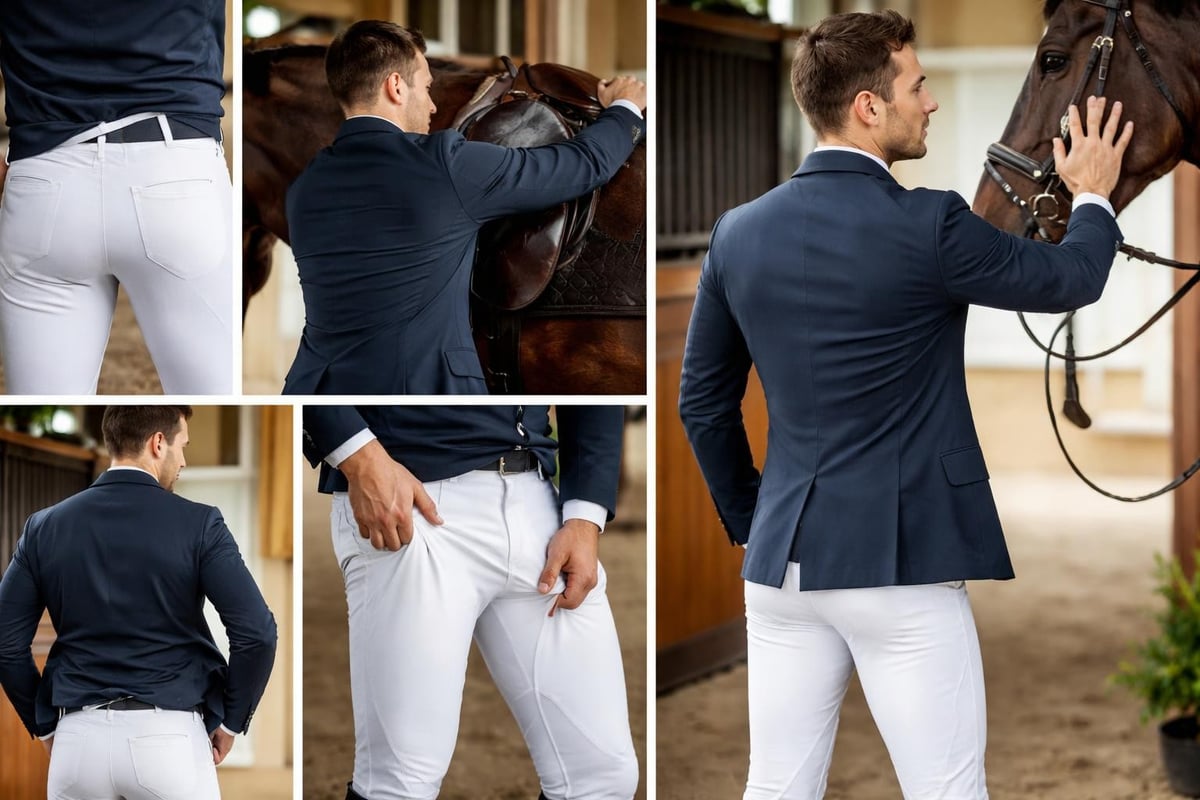
Classic styles in quality fabrics never look dated. Well-fitted breeches in traditional colors, clean polo shirts, and structured jackets maintain their appeal across seasons and trends. These pieces form the backbone of a wardrobe that looks current without chasing fashions that might not suit you or your riding.
Contemporary details update traditional silhouettes without venturing into trend territory. Contrast stitching, subtle color blocking, or modern collar styles on otherwise classic pieces add interest. These touches keep your kit looking fresh while maintaining the timeless quality that characterizes serious riding wear.
Personal expression comes through in your choice of colors, combinations, and accessories rather than dramatic style statements. Your riding clothing needs to function first. Style follows naturally when you select well-designed pieces that fit properly and suit your coloring and build. The best competition wear demonstrates how subtle style elevates functional design.
Planning for Different Riding Disciplines
Your specific riding discipline influences which mens riding clothes serve you best. While core pieces like breeches and boots apply across disciplines, different equestrian sports emphasize particular aspects of performance and presentation.
Dressage riders prioritize clean lines and freedom of movement through the upper body. Breeches fit precisely without bulk. Show jackets feature tailored cuts that enhance posture. Even training wear tends toward more structured pieces that maintain body awareness and position.
Jumping disciplines need mens riding clothes with exceptional durability and flexibility. Breeches face more stress from the jumping position. Tops require enough stretch for the forward seat without riding up or restricting. Many show jumpers prefer technical fabrics over traditional wool for better moisture management during intense competition.
Eventing combines demands from multiple disciplines. You need versatile pieces that perform across dressage, cross-country, and show jumping phases. Durability matters enormously given the varied terrain and weather conditions eventers face. Layering becomes particularly important for managing temperature changes throughout competition day.
Western disciplines have different requirements entirely, though the principles of fit, comfort, and durability remain constant. Understanding your primary discipline helps prioritize which features matter most in your mens riding clothes selection.
Making Smart Purchasing Decisions
Investing in mens riding clothes requires balancing immediate needs against long-term value. Strategic purchasing builds a functional wardrobe without overspending or accumulating pieces you rarely use. Start by honestly assessing your riding frequency and situations.
Riders who ride daily need more pieces for rotation than weekend riders. Calculate how many days between laundry cycles and ensure you have enough clean kit. Two to three breeches suits most recreational riders. Daily riders might need four or five to avoid constant washing.
Sales and end-of-season clearances offer value opportunities, but only for pieces you actually need. A discounted item you don't wear provides zero value regardless of the savings. Focus clearance shopping on classic pieces in neutral colors rather than trendy items that might not suit you.
Bundle offerings sometimes provide genuine value when you need multiple complementary pieces. Evaluate whether you would purchase each item individually at full price. If yes, bundles save money. If you're only buying for the deal, you're still overspending on things you don't need.
Quality always trumps quantity in riding wear. One pair of excellent breeches outperforms three cheap pairs that need replacement within a season. Calculate cost per wear over realistic timeframes rather than just initial purchase price. This perspective often makes premium options more economical long-term.
Recognizing When to Replace Riding Clothes
Even quality mens riding clothes eventually wear out from regular use. Knowing when pieces need replacement prevents you from riding in compromised kit that affects your performance or presents poorly. Regular inspection helps you identify wear before items fail completely.
Breeches show wear in predictable locations. Check the seat and inner leg for thinning fabric or small holes developing. Examine seams for separation or stress. Test stretch recovery by pulling fabric and seeing if it returns to shape. Once breeches lose significant elasticity, they no longer provide the support and fit you need.
Tops typically wear at friction points under the arms and across the shoulders. Fabric pilling indicates fibers breaking down, though some surface pilling can be removed with a fabric shaver. Check collar and cuff integrity, as these areas face repeated stress from movement and washing.
Jackets might show wear through zipper failure, lining deterioration, or weather-resistance breakdown. If your jacket no longer sheds water as it should, reproofing treatments can restore performance. However, once fabric integrity fails or insulation clumps, replacement becomes necessary.
Safety equipment including helmets and body protectors require replacement after impacts or according to manufacturer guidelines regardless of visible condition. Never compromise on protective gear regardless of cost considerations.
Building a proper collection of mens riding clothes requires understanding the unique demands riding places on your kit. Quality pieces designed specifically for male riders provide the performance, durability, and style you need whether you're schooling at home or competing regionally. When you're ready to upgrade your riding wardrobe with performance-driven essentials that work as hard as you do, explore the complete collection at Gallant Equestrian, where every piece is designed to help you look the part and enjoy the ride.

