

Riding Coat Long: Heritage, Style & Modern Performance
Apr 16, 2026
The riding coat long has shaped equestrian menswear for centuries, evolving from a practical necessity to a statement of refined style. Whether you're navigating muddy paddocks, competing in formal disciplines, or simply want outerwear that transitions effortlessly between the stables and daily life, understanding what makes a quality long riding coat matters. This isn't about chasing trends but investing in garments that serve a purpose whilst looking the part.
Heritage and Evolution of the Long Riding Coat
The riding coat emerged as essential protective wear for horsemen who spent hours exposed to the elements. Early designs prioritised coverage and durability over everything else, with tailored cuts that allowed freedom of movement in the saddle whilst shielding the rider from wind, rain, and road dust.
Historical examples, such as the 18th-century British riding coat held by the Metropolitan Museum of Art, reveal meticulous construction techniques and luxurious materials that reflected both function and status. These coats featured longer lengths to protect the legs whilst mounted, reinforced seams, and strategic vents for comfort during extended rides.
The frock coat and duster styles influenced riding coat design throughout the 19th century, with horsemen adopting longer silhouettes that offered superior protection on horseback. The riding coat long became synonymous with gentlemen riders, blending practicality with tailored elegance that distinguished equestrian attire from ordinary outerwear.
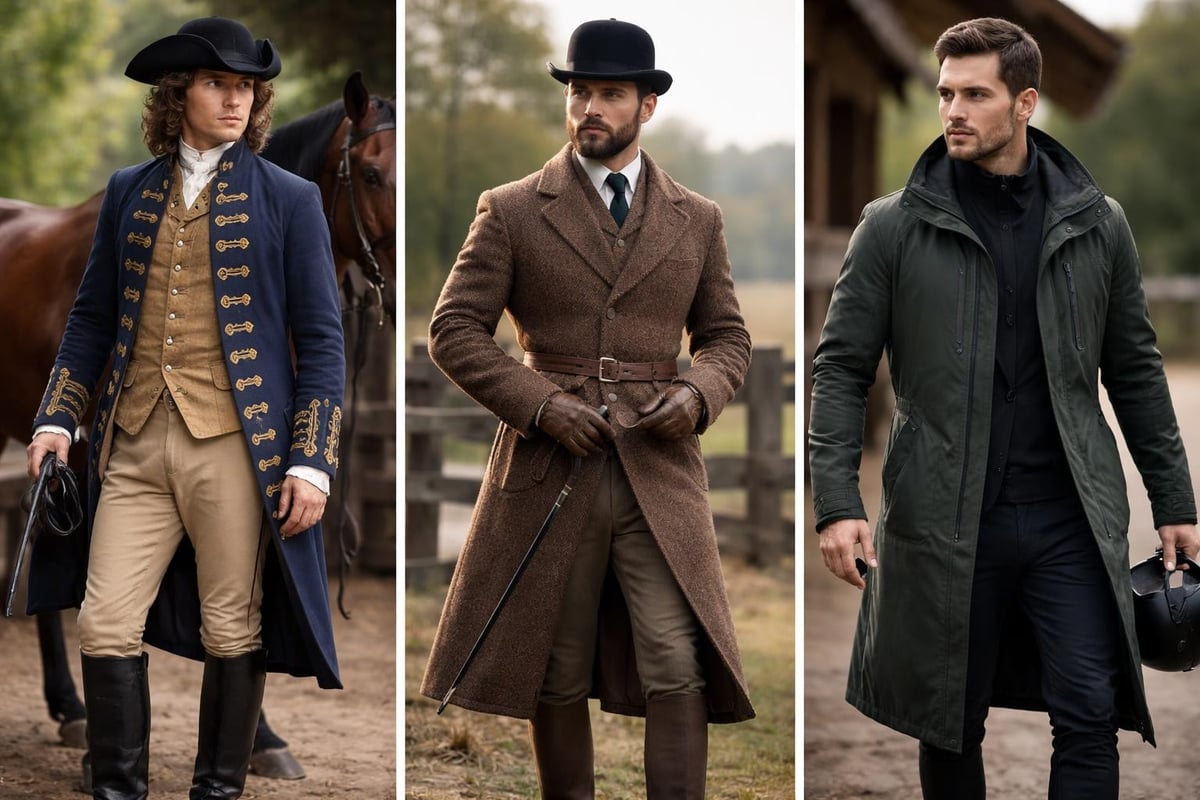
Modern iterations respect this heritage whilst incorporating technical fabrics, ergonomic cuts, and performance features that today's riders demand. The silhouette remains deliberately longer, but the materials and construction methods have advanced considerably.
Why Length Matters in Riding Coats
Length isn't merely aesthetic when it comes to riding coats. A proper riding coat long extends coverage where you need it most, protecting your thighs and seat from weather, arena dust, and general wear.
When mounted, shorter jackets ride up, exposing your lower back and creating gaps in protection. A longer cut maintains coverage throughout your range of motion, whether you're posting at the trot or leaning forward over fences. This extended length also shields your riding breeches from mud splatter and light rain during outdoor work.
| Coat Length | Coverage | Best For | Mobility |
|---|---|---|---|
| Short (hip-length) | Minimal leg protection | Warm weather, arena only | Maximum freedom |
| Mid (mid-thigh) | Balanced coverage | All-round riding | Good balance |
| Long (knee-length) | Maximum protection | Weather, hacking, formal | Requires proper vents |
The riding coat long also influences how you present yourself in formal disciplines. The shadbelly, with its distinctive long tails, remains the standard for upper-level dressage precisely because of how it frames the rider's position and creates clean, elegant lines.
Beyond mounted work, a well-designed long coat transitions naturally to everyday wear. The extended length offers warmth and weather protection whilst maintaining a refined silhouette that works equally well at country events or casual gatherings.
Fabric Selection and Performance Features
Choosing the right fabric for your riding coat long determines how well it performs across different conditions and how long it lasts. Traditional wool remains popular for its natural water resistance, breathability, and elegant drape, particularly in formal show coats.
Modern technical fabrics, however, bring significant advantages. Four-way stretch materials move with you rather than against you, eliminating the restricted feeling that plagues traditional tailored coats. These fabrics typically blend synthetic fibres engineered for durability, moisture management, and ease of care.
Weather-resistant coats incorporate DWR (durable water repellent) treatments or membrane technologies that block wind and rain whilst allowing perspiration to escape. For riders who hack out in variable conditions or manage yard work regardless of weather, a waterproof riding jacket becomes essential kit.
Breathability matters more than many riders realise. A riding coat long that traps heat and moisture creates discomfort during active riding and loses effectiveness in cold weather as dampness accumulates. Quality fabrics balance protection with ventilation, often using mesh-lined vents or breathable membranes to regulate temperature.
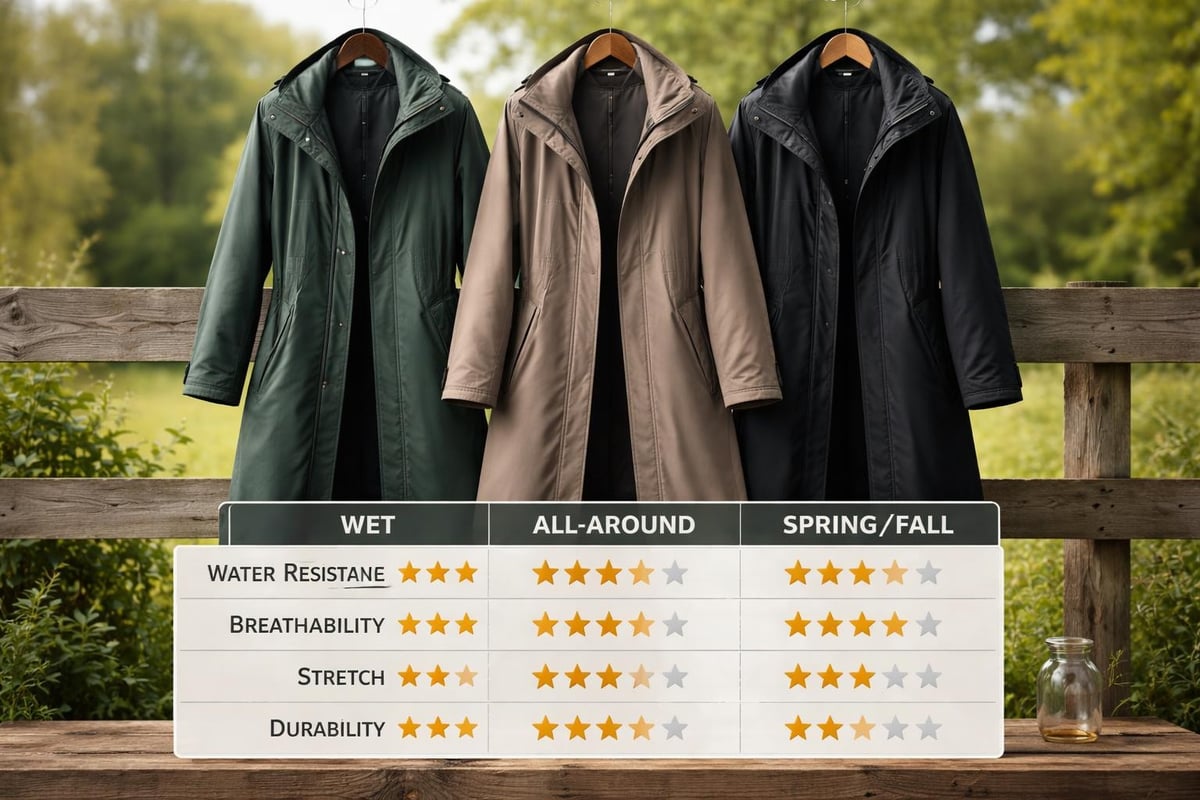
Weight considerations vary by season and intended use. Lightweight shells work brilliantly for three-season wear, particularly when layered over technical base layers and mid-layers. Heavier coats with insulated linings suit winter riding but can feel cumbersome during intensive schooling sessions.
Fit and Construction Details That Matter
A riding coat long should fit your shoulders precisely, allowing arm movement without excess fabric bunching across the back. When you extend your arms forward into riding position, the coat should move with you rather than pulling tight across the shoulder blades or restricting your reach.
Sleeve length requires careful attention. Too short, and your wrists remain exposed when holding the reins. Too long, and excess fabric interferes with rein contact and creates a sloppy appearance. Quality construction includes vented cuffs or adjustable closures that accommodate different layering beneath.
The body length of your riding coat long should extend to just above or at the knee when standing, providing adequate coverage when mounted without overwhelming your frame. Taller riders often struggle with off-the-rack options that appear too short, whilst shorter riders may need tailoring to avoid an unbalanced silhouette.
| Fit Element | Proper Fit Indicator | Common Issues | Solution |
|---|---|---|---|
| Shoulders | Seam sits on shoulder point | Pulling, restricted movement | Professional fitting |
| Sleeve | Reaches wrist bone | Too short or bunching | Adjustable cuffs |
| Body length | Just above/at knee | Rides up or drags | Tailoring |
| Waist | Comfortable when mounted | Gaping or too tight | Adjustable side tabs |
Side vents or a rear vent are non-negotiable for mounted comfort. These design features allow the coat to drape naturally around your legs whilst in the saddle, preventing fabric from bunching uncomfortably beneath you. Without proper vents, even an expensive riding coat long becomes restrictive and awkward.
Interior construction reveals quality. Fully lined coats offer superior comfort and durability, whilst half-lined or unlined options reduce weight and cost. Reinforced stress points at pockets, vents, and closures indicate attention to detail that translates into longevity.
Versatility Beyond the Saddle
The best riding coat long earns its place in your wardrobe by transitioning seamlessly from equestrian settings to everyday occasions. This versatility stems from thoughtful design that balances technical performance with refined aesthetics.
Neutral colours, particularly navy, charcoal, olive, and black, integrate easily with both riding kit and casual wear. These shades complement men's breeches whilst working equally well with jeans or chinos when you're off the yard.
Minimalist styling without excessive branding or overtly equestrian details allows your long coat to function across contexts. Clean lines, quality hardware, and classic cuts never appear out of place, whether you're at the stables, running errands, or meeting friends.
Practical pockets enhance everyday functionality. Interior pockets secure valuables during riding, whilst exterior pockets remain accessible for phones, gloves, or other essentials. Well-designed pocket placement doesn't interfere with saddle fit or create uncomfortable pressure points when mounted.
The riding coat long works particularly well as a layering piece over performance shirts, polo shirts, or lightweight sweaters. This adaptability means you purchase one quality coat that serves multiple roles rather than maintaining separate wardrobes for riding and general wear.
Care and Maintenance for Longevity
Proper care extends the life of your riding coat long and maintains its performance characteristics. Most technical fabrics tolerate machine washing on gentle cycles with mild detergent, but always check manufacturer guidelines before laundering.
Regular cleaning prevents dirt and sweat from degrading fabrics and breaking down water-resistant treatments. However, excessive washing strips protective coatings and wears fibres prematurely. Strike a balance by spot-cleaning minor marks and laundering only when genuinely necessary.
DWR treatments require periodic renewal. When water no longer beads on the fabric surface but instead soaks in, reapply water-repellent spray following the product instructions. This simple maintenance step restores weather protection without requiring professional services.
Storage matters more than many riders realise. Hang your riding coat long on a proper hanger that supports the shoulders without creating stress points. Avoid cramming coats into overcrowded storage where compression damages fabrics and creases become permanent. Allow coats to air dry completely before storing to prevent mildew and odour development.
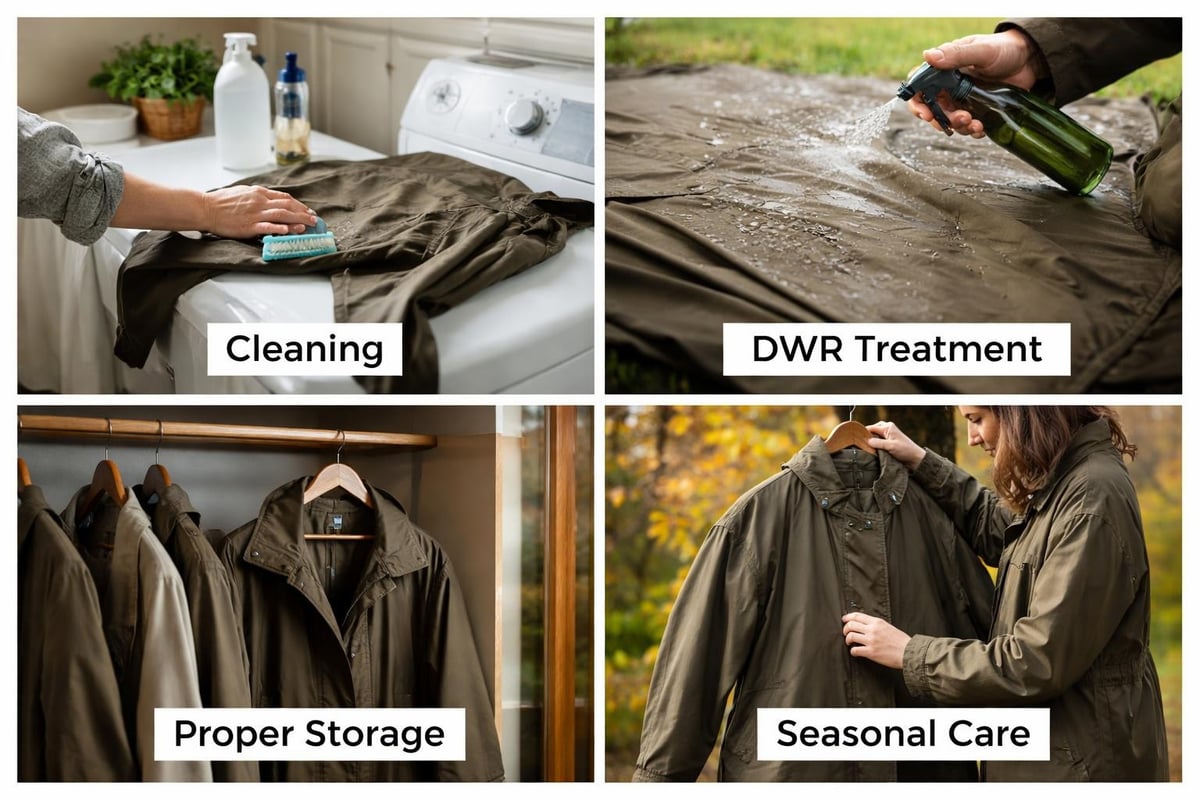
Inspect stress points regularly for signs of wear. Small tears or loose seams repaired promptly prevent major damage that might render the coat unusable. Quality coats justify professional repairs when needed, extending their useful life considerably beyond cheap alternatives that become disposable after a season.
Selecting Your Ideal Long Riding Coat
Begin by honestly assessing your primary riding activities and climate conditions. A rider who competes primarily in indoor arenas during temperate months needs different features than someone who hacks out year-round in variable weather.
Consider your existing wardrobe, particularly your breeches collection. Your riding coat long should coordinate with the colours and styles you wear most frequently, creating cohesive outfits without requiring constant thought.
Budget realistically for quality. A well-constructed riding coat long represents a significant investment, but one that pays dividends through years of reliable service. Cheaper alternatives often fail within a season or two, ultimately costing more through replacement cycles.
Try before you buy whenever possible. Online shopping offers convenience, but nothing replaces actually wearing a coat to assess fit, comfort, and functionality. Move through riding positions, raise your arms, and ensure full range of motion before committing.
Read reviews from other male riders, paying attention to comments about sizing accuracy, durability, and real-world performance. The riding coat selection guide offers practical advice on evaluating different options based on your specific requirements.
Contemporary Designs and Innovations
Modern riding coat long designs incorporate innovations that enhance performance without sacrificing the elegant silhouettes that define equestrian style. Laser-cut ventilation creates strategic airflow whilst maintaining clean aesthetics and weather protection.
Articulated sleeves, pre-curved to match natural arm position when riding, reduce fabric stress and improve comfort during extended sessions. This ergonomic approach borrows from technical outdoor apparel but applies it specifically to equestrian needs.
Hybrid construction combines different fabrics within a single coat, placing stretchy panels where mobility matters most and weather-resistant materials where protection takes priority. This targeted approach optimises performance without the bulk or restriction of single-fabric designs.
Magnetic closures and concealed zips create streamlined fronts that eliminate snagging hazards and maintain sophisticated appearances. These details matter both practically and aesthetically, reflecting the evolution of riding wear beyond purely functional garments.
Sustainability considerations increasingly influence design choices. Brands committed to longevity through quality construction, responsible material sourcing, and repairable designs align with riders who value investment pieces over disposable fashion.
Formal Riding Coats and Competition Standards
Certain disciplines demand specific long coat styles that conform to established traditions and competition rules. The riding habit tradition continues in modified forms across multiple equestrian sports.
Dressage competitors require tail coats or shadbellies at upper levels, with precise specifications governing cut, colour, and details. These formal riding coats long emphasise the rider's position and create the classical silhouette judges expect.
Show jumping and eventing traditionally favour shorter cuts for freedom of movement, but formal phases may require longer coats that meet specific standards. Understanding your discipline's requirements prevents costly mistakes when purchasing competition wear.
Quality formal coats feature woven rather than knitted fabrics, ensuring they hold their shape through repeated wear and cleaning. Traditional colours remain black or navy, though some disciplines permit subtle variations in specific contexts.
Tailoring makes the difference between acceptable and exceptional in formal contexts. Even the finest off-the-rack coat benefits from minor adjustments that perfect the fit and create the clean lines that distinguish competent turnout.
The Modern Rider's Wardrobe Essentials
Building a practical riding wardrobe means selecting pieces that work together seamlessly. Your riding coat long anchors outerwear choices, but it functions best within a considered collection of compatible garments.
Start with quality base layers that manage moisture and regulate temperature, allowing your coat to focus on weather protection rather than thermal performance. Mid-layers add warmth without bulk, creating adaptable systems for varying conditions.
Your outerwear should complement rather than compete with your other kit. Coordination doesn't mean matching everything precisely, but ensuring colours and styles work harmoniously creates polished appearances that reflect attention to detail.
Consider your complete needs before purchasing. A single high-quality riding coat long that performs across multiple contexts often serves better than several specialised garments that only work in narrow circumstances. Versatility delivers value beyond initial cost savings.
The riding coat long represents where heritage meets modern performance, offering protection, style, and versatility that genuine riders appreciate. Whether you're selecting your first quality coat or upgrading worn kit, focusing on fit, fabric, and construction ensures you invest wisely. Gallant Equestrian brings this philosophy to life with performance-driven menswear designed in New Zealand for riders who demand clothing that transitions effortlessly from stables to everyday life. Look the Part. Enjoy the Ride.

