

Equestrian Riding Jacket: A Men's Guide to Style & Function
May 16, 2026
The right equestrian riding jacket does more than complete your kit. It shapes how you move in the saddle, how you handle unpredictable weather, and how confidently you carry yourself from morning schooling to afternoon pub lunch. For men who take their riding seriously, choosing a jacket means balancing technical performance with lasting style, finding that rare piece that earns its place both at the yard and beyond.
Understanding the Core Purpose
An equestrian riding jacket serves multiple masters. First, it must allow unrestricted movement through your shoulders and arms while maintaining contact with your horse. Second, it needs to handle the British climate's notorious mood swings without adding bulk. Third, it should look sharp enough that you don't feel compelled to change before running errands after your ride.
The modern equestrian riding jacket has evolved considerably from the stiff, restrictive garments of decades past. Contemporary designs incorporate technical fabrics that stretch with your body, breathable membranes that regulate temperature, and cuts that actually acknowledge how riders sit and move. This evolution matters because comfort directly affects performance. When your jacket moves with you rather than against you, you can focus entirely on your horse.
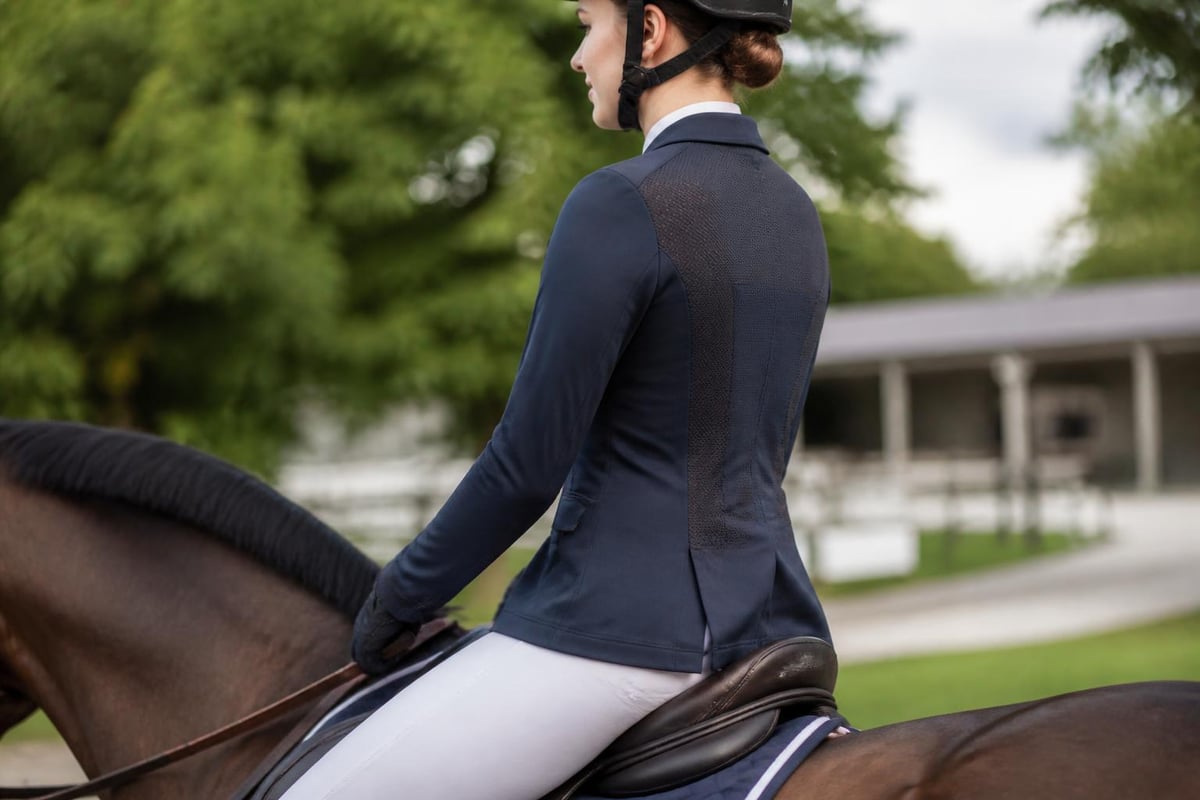
Weather Protection Without Compromise
British weather demands respect. A proper equestrian riding jacket handles rain, wind, and cold without turning you into a walking sauna when the sun breaks through. This requires thoughtful fabric selection and construction techniques that balance protection with breathability.
Look for jackets with water-resistant or waterproof outer layers that still allow moisture vapor to escape from inside. This prevents the clammy feeling that comes from trapping your own perspiration. Many waterproof riding jackets for men now incorporate DWR (Durable Water Repellent) treatments that cause water to bead and roll off rather than soaking through.
Wind protection matters equally. A jacket that stops wind chill keeps your core temperature stable, which helps maintain the relaxed posture essential for effective riding. Articulated sleeves and longer backs prevent gaps that let cold air rush in when you lean forward or reach for your reins.
Competition Versus Everyday Riding
The distinction between competition jackets and daily riding wear shapes your wardrobe decisions. Competition jackets follow strict regulations depending on your discipline. Show jumping, dressage, and eventing each have specific requirements regarding color, style, and fit. These garments prioritize traditional aesthetics and formal presentation.
Daily riding jackets offer more freedom. You can prioritize comfort, practicality, and personal style without worrying about rule books. This flexibility lets you choose colors beyond black and navy, experiment with different cuts, and select features like extra pockets or adjustable cuffs that might not suit the show ring.
Many riders maintain both types. A well-fitted competition jacket handles formal occasions, while a comfortable everyday equestrian riding jacket becomes your go-to for training sessions, hacking out, and general yard work. The everyday jacket typically sees harder use and benefits from more durable construction and easier care requirements.
Material Selection and Performance Fabrics
| Fabric Type | Key Benefits | Best For | Care Level |
|---|---|---|---|
| Softshell | Stretch, breathability, light weather protection | Daily riding, mild conditions | Easy |
| Hardshell | Maximum waterproofing, wind protection | Wet weather, winter riding | Moderate |
| Technical Cotton | Traditional look, natural feel, moderate breathability | Competition, dry conditions | Higher |
| Hybrid Construction | Combines fabric types for targeted performance | All-round use, varied conditions | Moderate |
Softshell fabrics dominate the modern riding jacket market for good reason. They stretch in four directions, allowing natural movement without restriction. The fabric surface typically resists light rain while letting perspiration escape. This makes softshell ideal for most British riding conditions, where you need protection from drizzle and wind without full waterproofing.
Hardshell jackets employ fully waterproof membranes with sealed seams. They excel during heavy rain but require careful ventilation design to prevent overheating. Many hardshells incorporate pit zips or back vents that you can open when working hard or close when standing still.
Understanding protective standards helps when considering safety elements. The EN 13158:2018 standard specifies requirements for protective jackets that incorporate body protector elements, though most casual riding jackets focus on weather protection rather than impact protection.
Fit, Cut, and Comfort Considerations
A properly fitted equestrian riding jacket should feel slightly tailored when standing but provide complete freedom when mounted. This requires specific design elements that standard casual jackets lack. The shoulder seams sit slightly forward, matching your arms' natural position when holding reins. The back extends lower to cover your waist when leaning forward. The front rises higher to prevent bunching against your saddle.
Sleeve length matters more than you might expect. Too short, and your wrists expose themselves to cold and wet when reaching forward. Too long, and excess fabric bunches uncomfortably inside your gloves. The ideal sleeve reaches your wrist bone when your arms hang naturally, providing proper coverage when extended.
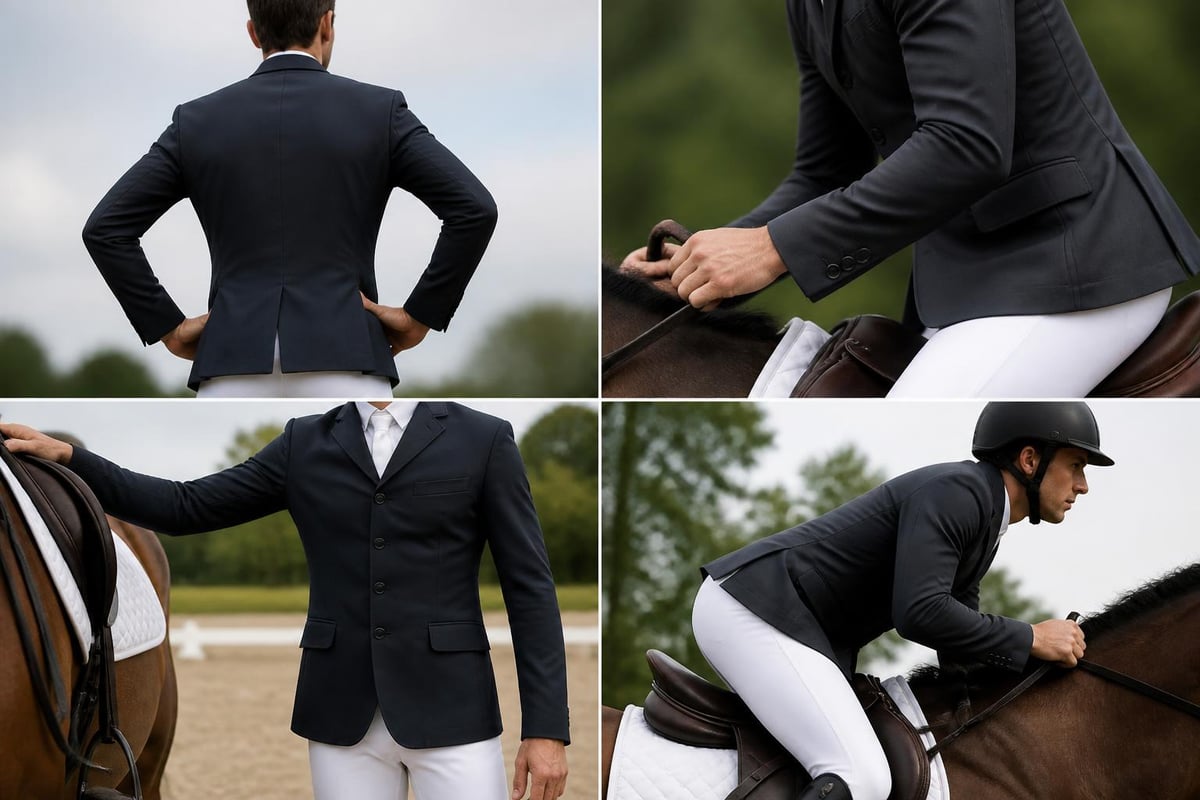
Most quality riding jackets offer some adjustability through hem drawcords, cuff tabs, or collar closures. These features let you fine-tune fit and adapt the jacket to changing conditions or layering requirements. A jacket that fits perfectly over a thin base layer should still accommodate a fleece when temperatures drop.
Versatility Beyond the Stable
The truly exceptional equestrian riding jacket transitions seamlessly from stable to street. This versatility depends on thoughtful design that avoids overtly horsey styling while maintaining essential riding features. Subtle details matter here. A jacket with concealed technical features looks refined enough for casual wear but performs when you need it.
Consider how the jacket pairs with your broader wardrobe. Does it work with jeans and boots for weekend errands? Can you wear it over business casual clothing without looking out of place? The best riding jackets achieve this balance through clean lines, neutral colors, and quality construction that speaks for itself.
This crossover appeal extends the jacket's value considerably. Rather than hanging unused between rides, a versatile equestrian riding jacket becomes a regular rotation piece. You amortize the investment across more wear occasions, and the jacket develops that lived-in character that only comes from genuine use. After a long ride, you might find yourself appreciating the same qualities that serve you well in the saddle when settling into contemporary furniture at home or meeting friends for a glass of organic Pinot Noir.
Care and Maintenance Essentials
Proper care extends your jacket's functional lifespan and maintains its appearance. Technical fabrics require specific attention that differs from standard clothing care. Understanding these requirements protects your investment and ensures consistent performance.
Most riding jackets benefit from regular brushing to remove dried mud, hay, and general stable debris before it becomes embedded in the fabric. A soft brush works better than harsh scrubbing, which can damage water-resistant treatments. For general cleaning, many technical fabrics tolerate machine washing on gentle cycles with specialized technical garment detergents.
Standard detergents often contain additives that clog the microscopic pores in breathable membranes, reducing their effectiveness over time. Technical wash products clean without leaving residue. Following manufacturer guidelines for riding apparel care and maintenance preserves both appearance and performance characteristics.
Restoring Water Resistance
DWR treatments gradually diminish through use and washing. When water stops beading on your jacket's surface and instead soaks into the outer fabric, it's time for re-treatment. Heat reactivation works for some DWR finishes. Simply tumble drying on low heat after washing can restore water-repellent properties.
For more thorough restoration, spray-on or wash-in DWR treatments renew the protective coating. Apply these to clean, damp fabric and follow with heat activation if recommended. This simple maintenance step can dramatically extend a jacket's weather protection capabilities without requiring professional servicing.
Competition jackets demand extra attention to maintain their formal appearance. Maintenance guides for show jackets emphasize gentle cleaning methods, proper storage on shaped hangers, and professional pressing when needed. These garments represent significant investments and merit corresponding care standards.
Safety Integration and Body Protection
While most everyday riding jackets focus on weather protection, safety considerations deserve mention. Some riders choose jackets designed to integrate with or incorporate body protectors. The British Horse Society's guidance on body protectors explains fitting and usage standards that inform jacket selection.
Traditional body protectors wear under your jacket, requiring sufficient room through the torso. If you regularly ride with protection, ensure your equestrian riding jacket accommodates this layering without restricting movement. Some riders prefer slightly larger jacket sizes to prevent the squeezed feeling that comes from tight layering.
Newer air vest technologies offer alternative protection that inflates upon separation from your horse. These vests require specific jacket compatibility considerations. The jacket must allow rapid vest inflation without dangerous restriction. Some manufacturers design jackets specifically for air vest compatibility, incorporating breakaway seams or expansion panels.
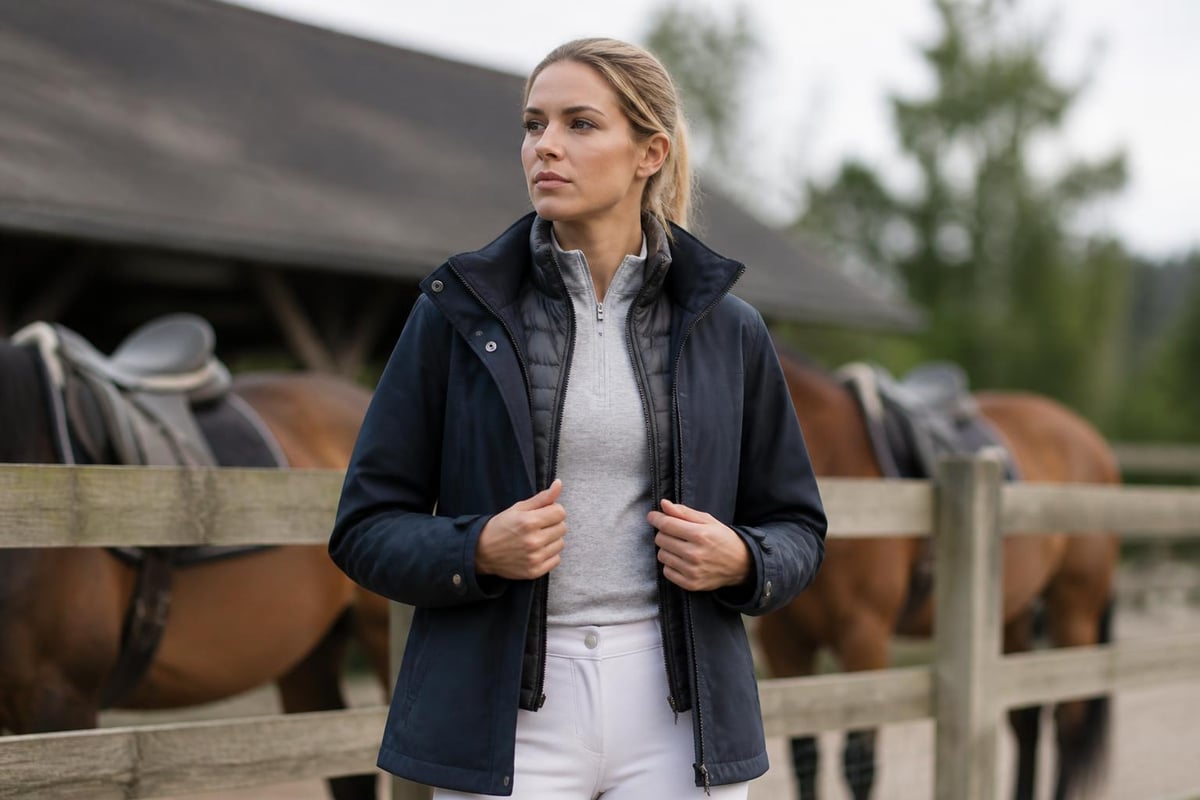
Most recreational riders in moderate disciplines ride without body protection, focusing their safety equipment on proper helmets and footwear. In these cases, the equestrian riding jacket serves purely functional and aesthetic purposes rather than protective ones.
Evaluating Quality and Construction
Quality indicators separate exceptional jackets from mediocre ones. Start by examining seam construction. Double or triple stitching in high-stress areas like shoulders and sleeve attachments suggests durability. Clean, even stitching throughout indicates careful manufacturing.
Zipper quality matters enormously. A smooth, sturdy main zip that glides effortlessly will outlast cheap alternatives by years. YKK zippers represent the gold standard, offering reliable performance across thousands of cycles. Two-way zips add versatility, letting you open from the bottom for better saddle clearance while keeping your chest and shoulders protected.
Hardware details reveal manufacturing priorities. Metal zip pulls resist breakage better than plastic. Reinforced button holes prevent tearing. Adjustable cuffs with secure closures maintain their settings rather than loosening during wear. These small elements compound over time, distinguishing garments built to last from those designed for short-term use.
Examining how different riding clothes brands approach construction helps calibrate your quality expectations. Premium manufacturers invest in better materials, more careful assembly, and thoughtful design refinements that justify higher prices through extended service life and superior performance.
Investment Versus Value
Price alone doesn't determine value. A moderately priced equestrian riding jacket that serves you reliably for five seasons outperforms an expensive jacket that disappoints after one winter. Value emerges from the intersection of quality, performance, versatility, and durability.
Consider cost per wear when evaluating jackets. A £300 jacket worn three times weekly for four years costs roughly £1.44 per wear. A £100 jacket worn occasionally for one season before retiring costs £10 per wear. The mathematics favor buying once and buying well, particularly for core wardrobe pieces that see regular use.
This calculation assumes proper care extends the jacket's usable life. Neglected garments fail prematurely regardless of initial quality. Conversely, well-maintained mid-tier jackets often outlive their expected lifespan. The interaction between quality, care, and value rewards thoughtful purchasing and diligent maintenance.
Color and Style Choices for Men
Men's equestrian fashion traditionally favors conservative colors, but that constraint has loosened considerably. While competition still demands blacks, navies, and dark greys, everyday riding accepts broader palettes. Forest green, burgundy, tan, and charcoal all work well, offering visual interest without sacrificing sophistication.
Consider your existing wardrobe when choosing colors. A jacket should complement your breeches, shirts, and boots rather than clashing. Navy jackets pair universally well with most riding attire. Black offers timeless versatility but shows dust and hair more readily than mid-tone colors. Lighter colors require more frequent cleaning but can look exceptionally sharp when fresh.
Fit preferences vary among riders. Some prefer closely tailored jackets that create clean silhouettes. Others favor slightly relaxed fits that prioritize comfort and ease of movement. Neither approach is inherently superior. Your riding style, body type, and personal preferences should guide these decisions rather than arbitrary fashion rules.
Details like collar styles, pocket configurations, and trim elements add individual character. Stand collars provide better wind protection than fold-down styles. Chest pockets offer convenient storage for phones or yard keys. Contrasting trim can add visual interest or reinforce brand identity. Choose details that enhance functionality rather than simply decorating.
Storage and Seasonal Rotation
Proper storage protects your equestrian riding jacket during off-seasons and maintains its condition between uses. Hanging jackets on proper hangers preserves shoulder shape and prevents creasing. Wire hangers create pressure points that distort fabric and structure. Invest in shaped wooden or padded hangers that support the jacket's natural form.
Clean jackets before long-term storage. Dirt, sweat, and oils attract insects and can set stains during extended periods. Store in breathable garment bags rather than plastic, which traps moisture and encourages mildew. Cedar elements in your wardrobe discourage moths without chemical treatments.
Seasonal rotation makes sense in climates with distinct weather patterns. Heavy winter jackets rest during summer months while lighter shells handle warmer conditions. This rotation distributes wear across multiple garments, extending each jacket's effective lifespan. It also ensures you always have weather-appropriate options readily available.
Regular inspection during storage catches developing issues before they become serious problems. Check for loose buttons, weakening seams, or hardware corrosion. Addressing small repairs promptly prevents them from escalating into major damage that compromises the jacket's function or appearance.
Making Your Selection
Choosing your next equestrian riding jacket requires balancing multiple factors: climate demands, riding discipline, frequency of use, budget constraints, and style preferences. Start by identifying your primary use case. Do you need maximum weather protection for year-round outdoor riding? Competition compliance for show jumping? Versatile styling for stable-to-street wear?
Try jackets on while simulating riding positions. Reach forward as if holding reins. Rotate your shoulders through their full range of motion. Sit if possible, checking how the jacket's back covers your waist. These movements reveal fit issues that might not appear when standing normally.
Don't hesitate to consult sizing guides when shopping online. Reputable manufacturers provide detailed measurements and fitting advice that helps ensure proper fit despite not trying garments on first. Size guides translate your measurements into appropriate jacket sizes, reducing returns and disappointment.
Read reviews from other riders when available. Real-world experiences reveal how jackets perform over time, how they handle washing, whether sizing runs true, and which features prove most valuable in actual use. Look for reviews from riders with similar needs and riding styles to yours for the most relevant insights.
The right equestrian riding jacket becomes a trusted partner through countless rides, adapting to conditions while maintaining the performance and style you expect. When you're ready to invest in riding wear that performs as well as it looks, Gallant Equestrian offers men's equestrian clothing designed in New Zealand and built to last, combining the functionality you need with the refined style you want. Look the Part. Enjoy the Ride.

