

Equestrian Suit: The Modern Rider's Guide to Style
May 23, 2026
The equestrian suit represents something more than mere riding attire. It's the intersection of centuries-old tradition and modern performance demands, tailored specifically for those who understand that how you present yourself matters as much as how you ride. Whether you're competing at regional shows, training daily, or simply moving between stable and social commitments, understanding what defines a proper equestrian suit helps you make smarter choices about your riding wardrobe.
What Defines an Equestrian Suit
An equestrian suit isn't simply adapted business attire. The term refers to a coordinated outfit designed specifically for horseback riding, combining form and function in ways that conventional clothing cannot match. Traditionally, this includes breeches or jodhpurs paired with a riding jacket, shirt, and appropriate footwear. The evolution of equestrian costume shows how these garments developed from practical necessities into refined sporting attire.
Modern interpretations of the equestrian suit maintain those essential elements whilst incorporating technical fabrics and contemporary cuts. The jacket provides structure without restricting movement. Breeches allow proper leg contact whilst protecting skin from friction. Together, they create a complete system that serves the rider's needs.
The Jacket Component
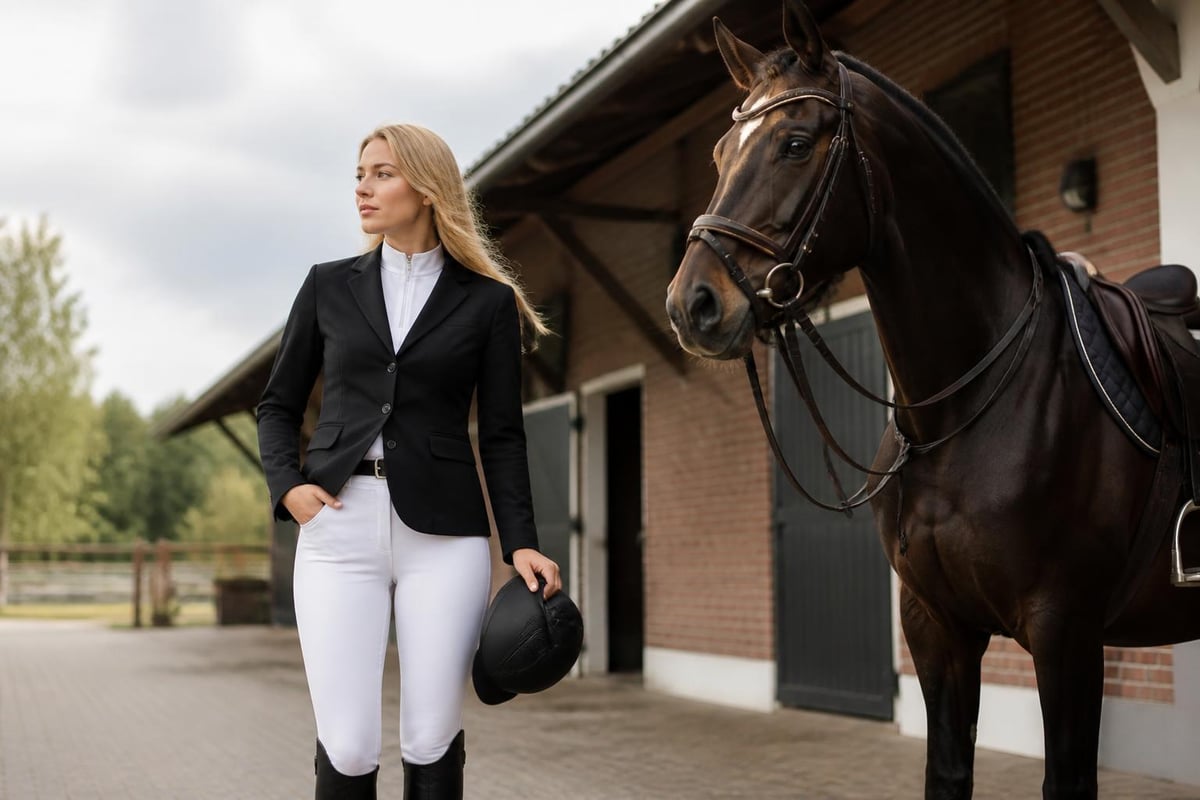
The riding jacket forms the cornerstone of any equestrian suit. Unlike conventional blazers, a proper equestrian riding jacket features vented shoulders for unrestricted arm movement, longer tails for sitting comfortably in the saddle, and fabrics that maintain shape despite repeated compression.
Competition jackets typically use wool blends that provide structure whilst allowing breathability. Training jackets often employ technical synthetics that wick moisture and dry quickly. Both styles should fit close through the body without binding when you reach forward or rotate your torso.
The colour traditionally depends on discipline and level. Show hunters often require navy or black. Dressage allows slightly more freedom. Eventing jackets balance protection with mobility. Understanding these conventions helps you select appropriately whilst expressing personal style within accepted parameters.
Breeches and Their Role
No equestrian suit functions properly without well-fitted breeches. These specialized trousers feature reinforced inner legs, stretch panels for flexibility, and strategic seaming that eliminates bulk where your leg contacts the saddle. The history of breeches reveals how they evolved from loose riding pants to the precision-engineered garments we use today.
Modern breeches come in several configurations. Full-seat designs provide maximum grip through silicone or leather panels covering the entire seat and inner thigh. Knee-patch versions offer targeted grip whilst maintaining cooler temperatures. Those seeking versatility might consider men's breeches in navy that transition easily between training sessions and casual wear.
Fit matters enormously here. Breeches should sit at your natural waist, not your hips. The leg should be snug without cutting circulation. Quality pairs feature four-way stretch that moves with you whilst maintaining their shape after repeated washing.
Fabric Selection for Performance
The materials used in an equestrian suit directly impact your comfort and effectiveness in the saddle. Traditional wool offers natural temperature regulation and maintains appearance despite heavy use. Technical synthetics provide superior moisture management and often cost less. Blends combine the best attributes of both.
Understanding fabrics used in high-performance equestrian gear helps you make informed decisions based on your riding intensity and climate. Jackets might use worsted wool for structure, whilst breeches employ nylon-spandex blends for stretch and durability. Shirts often feature merino wool or technical polyester for moisture control.
Natural Versus Synthetic Materials
Each material category serves specific purposes within the equestrian suit framework. Natural fibres like cotton and wool regulate temperature through their inherent structure, wicking moisture away from skin whilst allowing airflow. Wool particularly excels in cooler conditions, maintaining warmth even when damp.
Synthetics offer advantages in moisture management and durability. Polyester moves sweat to the fabric surface where it evaporates quickly. Nylon provides exceptional abrasion resistance in high-wear areas. Elastane or spandex adds crucial stretch that allows garments to move with your body rather than restricting it.
The choice between materials depends on your specific needs. Competitive riders often prefer natural fibres for their refined appearance and temperature regulation. Training-focused riders might prioritize synthetics for easier care and faster drying. Many modern equestrian suits use strategic combinations, placing each material where it performs best.
| Material | Benefits | Best Use | Care Requirements |
|---|---|---|---|
| Wool | Temperature regulation, structure | Competition jackets, cooler weather | Dry clean or gentle wash |
| Cotton | Breathability, comfort | Shirts, casual wear | Machine washable, prone to shrinkage |
| Polyester | Quick-drying, durable | Training shirts, performance layers | Easy care, may retain odours |
| Nylon | Strength, abrasion resistance | Breeches, outerwear | Machine washable, heat-sensitive |
| Spandex/Elastane | Stretch, shape retention | Breeches, fitted garments | Avoid high heat, gentle wash |
Fitting Your Equestrian Suit Properly
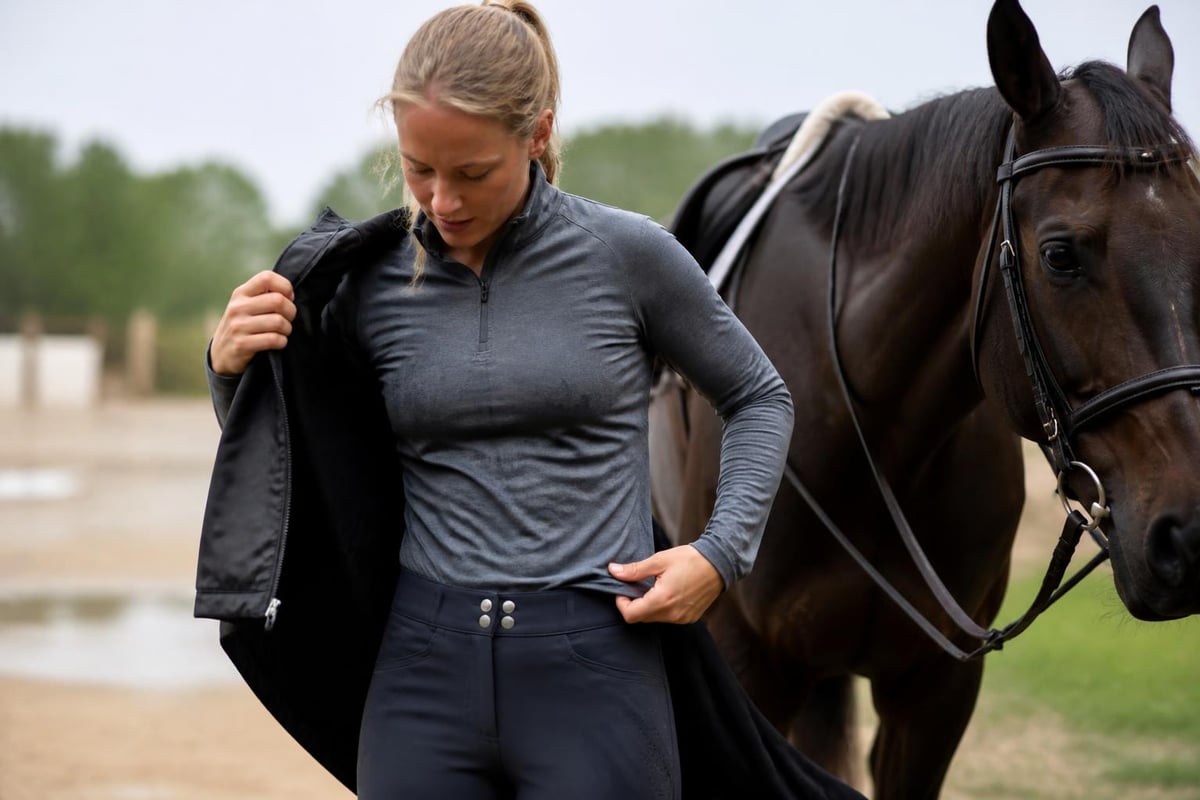
An expensive equestrian suit that fits poorly performs worse than quality basics that fit correctly. Proper fit begins with accurate measurements and understanding how garments should sit during riding positions, not just when standing stationary.
Jackets should allow you to reach forward comfortably whilst maintaining clean lines through the shoulders and chest. When you sit in riding position, the back vents should drape naturally without gaping. Sleeves should end at your wrist bone, showing just enough shirt cuff for polish.
Breeches Fitting Fundamentals
Breeches require particular attention to fit. They should sit at your natural waist, where your body bends when you lean sideways. The waistband shouldn't dig in when you're mounted, yet shouldn't slide down when you walk. Many riders find that competition breeches with full-seat grip provide the best security, though personal preference plays a role.
The leg should follow your natural line without excess fabric bunching behind the knee or at the ankle. Quality breeches use strategically placed seams that avoid pressure points whilst shaping the garment to your leg. The inseam should run straight without twisting, which indicates proper pattern work and construction.
Ankle closures deserve consideration as well. Velcro allows easy adjustment but may wear over time. Elastic provides comfort and flexibility. Zippers create clean lines under tall boots but require careful maintenance. Each system has merits depending on your priorities.
Assembling a Complete Riding Wardrobe
A single equestrian suit rarely suffices for serious riders. Different activities demand different approaches, whilst practical considerations like laundering and weather create need for depth in your wardrobe. Building strategically ensures you're appropriately dressed regardless of circumstance.
Start with foundational pieces that work across multiple scenarios. Quality breeches in neutral colours provide maximum versatility. A well-fitted show shirt serves both competition and training when paired appropriately. Technical base layers extend the usability of your outer garments across temperature ranges.
Training Kit Essentials
Your daily training wardrobe forms the backbone of practical riding life. These pieces take the hardest use and require durability alongside performance. Men's polo shirts offer collar formality with easy-care practicality. Technical tees provide maximum moisture management during intensive sessions.
Layering becomes crucial here. A performance sweatshirt bridges the gap between shirt and jacket, offering warmth without bulk. When weather turns, a rain jacket protects both you and your other garments from degradation.
Consider building around colour families that mix easily. Navy, black, and neutral tones create numerous combinations from fewer pieces. This approach maximizes utility whilst maintaining the polished appearance that characterizes serious equestrians.
Competition Considerations
Show attire demands precision that training clothing doesn't require. Your competition equestrian suit represents your respect for the sport and competitors. Details matter here in ways they might not during regular riding.
Jackets must conform to discipline-specific regulations whilst fitting impeccably. Show shirts require crisp appearance and often specific collar styles. Competition breeches should provide security without distraction, maintaining clean lines that complement your position.
Accessories complete the picture. A competition tie adds formality where required. Gloves protect hands whilst presenting finished appearance. Boots should be immaculate, as they're among the most scrutinized elements of your turnout.
| Kit Type | Core Pieces | Key Features | Investment Level |
|---|---|---|---|
| Daily Training | Technical breeches, polo shirts, base layers | Durability, easy care, moisture management | Medium |
| Competition | Show jacket, competition breeches, show shirt | Precise fit, regulation compliance, refined appearance | High |
| Weather-Specific | Rain jacket, thermal layers, wind-resistant pieces | Protection, breathability, packability | Medium-High |
| Casual Riding | Standard breeches, comfortable shirts, sweatshirts | Versatility, comfort, stable-to-street transition | Medium |
Care and Maintenance Practices
Even the finest equestrian suit deteriorates quickly without proper care. Strategic maintenance extends garment life whilst preserving performance characteristics. Understanding what each material requires prevents costly mistakes and keeps your investment performing at its best.
Technical fabrics often require less intensive care than natural fibres, but they're not indestructible. Reading care labels isn't optional. Following those instructions preserves the engineered properties that make technical gear functional.
Washing and Storage Methods
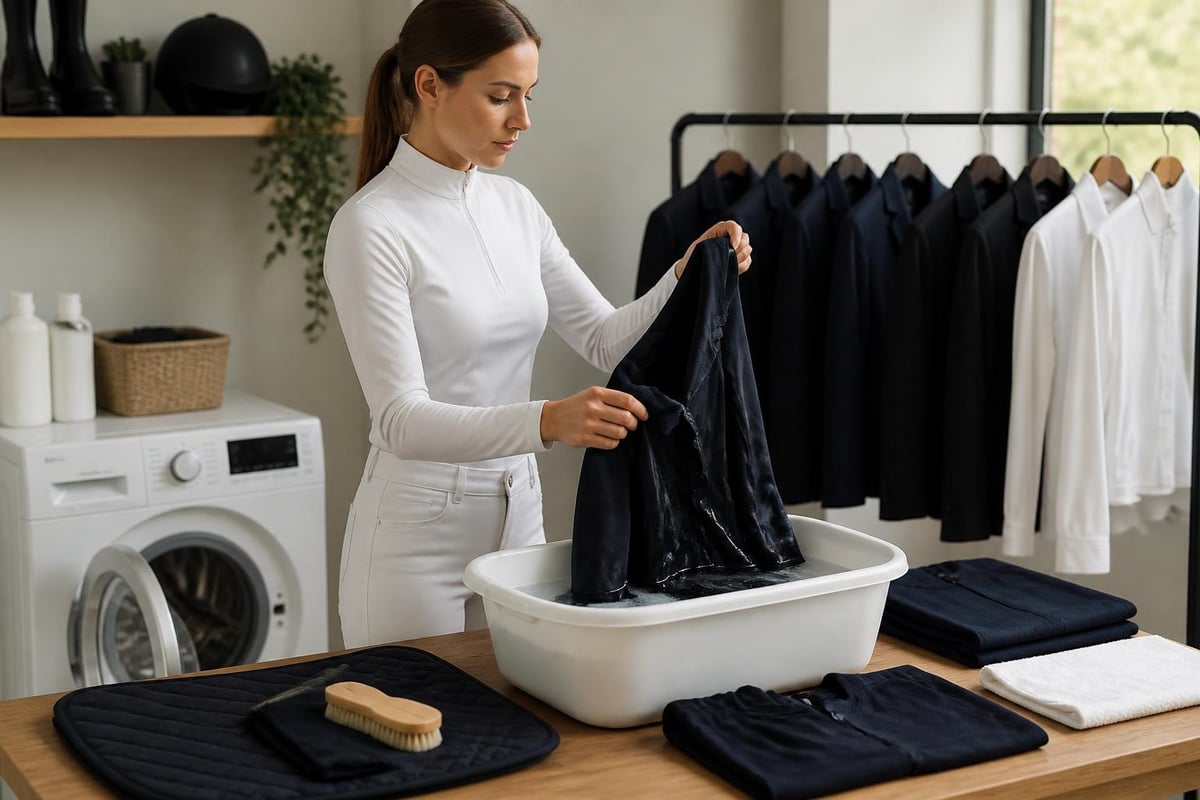
Separate your riding clothes by material and colour. Wash breeches inside out to protect grip materials and reduce pilling. Use mesh bags for items with velcro to prevent snagging. Cold water preserves elasticity in stretch fabrics. Avoid fabric softener, which degrades moisture-wicking properties and can affect breathability.
Jackets typically require professional cleaning to maintain structure. Between cleanings, spot-treat stains promptly and air garments thoroughly after use. Proper hanging prevents creasing and allows fabrics to recover their shape.
Store seasonal items clean and dry. Wool garments appreciate breathable garment bags that prevent moth damage whilst allowing air circulation. Avoid plastic bags, which trap moisture and promote mildew. Cedar blocks naturally deter insects without chemical treatments that might affect fabrics.
Modern Interpretations and Style Evolution
The equestrian suit continues evolving as new materials emerge and rider preferences shift. Contemporary versions balance traditional aesthetics with modern performance needs, creating garments that honour heritage whilst embracing innovation. The development of suits for sporting purposes shows this evolution across various disciplines.
Today's riders expect their equestrian suit to perform beyond the stable. Garments that transition seamlessly from ring to restaurant answer real lifestyle needs. This versatility doesn't compromise riding-specific features but rather expands the utility of quality pieces.
Bridging Traditional and Technical
The best modern equestrian suits incorporate technical advances within classic silhouettes. A jacket might use traditional worsted wool externally whilst featuring stretch panels under the arms. Breeches maintain conventional appearance whilst employing compression technology and strategic ventilation.
This approach respects equestrian tradition whilst acknowledging that riders live active, multifaceted lives. You needn't choose between looking the part and feeling comfortable. Well-designed pieces deliver both.
Colour palettes have expanded beyond strict black and navy, though those foundations remain essential. Olive, charcoal, and subtle earth tones provide variety whilst maintaining the refined aesthetic that characterizes serious riding attire. Bold colours typically remain relegated to training wear, where they express personality without challenging convention.
Regional Variations and Discipline Specifics
Different equestrian disciplines approach the suit concept with varying requirements. Understanding these distinctions helps you select appropriately for your riding focus whilst recognizing that quality basics transcend many boundaries.
Dressage traditionally favours tailcoats for upper levels, with shadbelly jackets at the pinnacle. Lower levels typically use conventional jackets in dark colours. The formality reflects dressage's origins in military cavalry and courtly demonstration.
Show Jumping and Eventing Approaches
Show jumping allows slightly more freedom in jacket colour and cut, though conservative choices remain safest. Red jackets appear at international levels, signifying specific achievements. Navy and black dominate elsewhere. Fit tends toward slightly less restrictive than dressage, acknowledging the physical demands of the discipline.
Eventing's dressage phase follows dressage conventions. Show jumping mirrors that discipline's standards. Cross-country requires entirely different kit focused on safety and weather protection, though some riders maintain coordinated aesthetics across all three phases.
Western disciplines use entirely different approaches to formal attire, favouring fitted shirts, jeans or show pants, and western jackets. Whilst technically an equestrian suit, these combinations follow their own traditions and conventions.
Investment Strategies for Quality Pieces
Building a proper equestrian wardrobe represents significant investment. Strategic purchasing maximizes value whilst ensuring you're appropriately equipped. Start with versatile foundational pieces, then add specialized items as needs become clear.
Quality breeches in neutral colours form your foundation. Navy breeches work for most situations. Add a second pair in black or another neutral for rotation. Competition riders should consider knee-grip versions for shows alongside full-seat options for training security.
Building Gradually and Purposefully
Jackets represent substantial investment, so choose carefully. Consider your primary discipline and showing frequency. A well-fitted jacket in appropriate fabric lasts years with proper care. Don't compromise on fit to save money. Alterations cost less than replacing an expensive jacket that never quite works.
Shirts and base layers allow more experimentation. Technical tees provide excellent value, performing well across multiple scenarios. Polo shirts bridge casual and formal needs effectively. White show shirts remain essential for competition despite their impracticality for training.
Consider curated collections like the Arena Rider Kit that bundle complementary pieces at better value than purchasing individually. These sets ensure colour coordination whilst providing tested combinations that work together.
Performance Under Pressure
An equestrian suit must perform during moments that matter. Competition creates physical and mental demands that expose any weakness in your kit. Garments that shift, bind, or distract undermine both performance and confidence.
Quality construction prevents these failures. Properly placed seams avoid pressure points. Reinforced stress areas resist tearing. Secure closures stay fastened despite movement. These details separate actual riding gear from fashion that merely mimics it.
Confidence Through Proper Preparation
Knowing your equestrian suit fits correctly and functions reliably frees your mind for riding. You're not adjusting uncomfortable breeches or worrying whether your jacket will stay closed. This mental space allows full focus on your horse and your performance.
Test new pieces during practice before debuting them at shows. Even quality garments require breaking in. Wear breeches several times to ensure the grip settles properly. Ride in your jacket to verify shoulder movement. This preparation prevents surprises when stakes are highest.
The psychological benefit of looking polished shouldn't be underestimated. Presenting yourself well affects how judges, competitors, and even your horse perceive you. Professional appearance suggests professional approach. It signals that you take the sport seriously and respect those involved.
Seasonal Adaptations and Weather Considerations
Your equestrian suit must function across varying conditions. Summer heat demands different solutions than winter cold. Strategic layering and weather-specific pieces ensure comfort regardless of temperature.
Lightweight technical fabrics excel in heat. Competition breeches with knee-only grip provide cooler options than full-seat versions. Mesh-paneled jackets allow airflow whilst maintaining formal appearance. Moisture-wicking base layers prevent sweat accumulation.
Cold weather requires thoughtful layering that maintains mobility. Base layers trap heat close to skin. Mid-layers like hoodies or sweatshirts add insulation. Outer layers block wind and precipitation. The system works together, allowing you to adjust as conditions change throughout the day.
Rain challenges both comfort and appearance. Quality rain gear protects your equestrian suit whilst maintaining professional presentation. Look for breathable waterproof fabrics that prevent internal condensation. Articulated cuts ensure mobility isn't sacrificed for protection.
The modern equestrian suit represents the culmination of centuries of refinement, combining tradition with technical innovation to serve today's demanding riders. Understanding what makes these garments functional helps you build a wardrobe that performs across every riding scenario whilst maintaining the polished appearance the sport deserves. Whether you're assembling your first complete kit or refining an established collection, Gallant Equestrian offers performance-driven pieces designed specifically for men who take their riding seriously. Look the Part. Enjoy the Ride.

