

Building an Equestrian Website That Actually Works
Oct 05, 2026
Whether you're launching a riding school, selling tack, or building an equestrian clothing brand, your website needs to work as hard as you do. An equestrian website is more than a digital brochure - it's your primary connection to riders, your showcase of expertise, and increasingly, your most reliable source of business. Yet too many sites in our industry still feel like they were built in 2005, buried under slow load times, confusing navigation, and messaging that speaks to everyone and no one at the same time. The good news? Getting it right isn't complicated when you understand what actually matters to riders browsing on their phones between lessons or researching gear after a long day at the yard.
Understanding Your Audience Before Anything Else
Building an effective equestrian website starts with knowing exactly who you're speaking to. Male riders have different needs and priorities compared to the broader market - we want practical information, clear sizing, performance details, and no nonsense. According to the American Horse Council's 2024 economic analysis, the equestrian industry generates billions in economic impact annually, yet male-focused businesses remain underserved in the digital space.
Your homepage messaging should speak directly to this audience within seconds. Clear messaging guidance from extension professionals suggests you have roughly eight seconds to communicate value before visitors leave. Skip the flowery introductions. Lead with what you do, who you serve, and why it matters. "Performance-driven riding gear for men" works infinitely better than "Equestrian excellence for passionate riders worldwide."
Demographics Shape Design Decisions
Male riders typically prioritize function over decoration, performance over aesthetics alone, and straightforward information over elaborate storytelling. This doesn't mean your equestrian website should be sterile - it means every element should earn its place. High-quality product photography showing actual riders, detailed technical specifications, and honest reviews matter more than stock imagery of sunset rides.

Age ranges matter too. Younger riders expect mobile-first experiences, integrated social proof, and quick checkout processes. Established riders often value comprehensive product details, durability information, and customer service accessibility. Your equestrian website needs to serve both without favouring one at the expense of the other.
Core Technical Foundation That Search Engines Reward
Google's algorithms have evolved significantly, and your equestrian website must meet modern technical standards to rank competitively. Core Web Vitals and page experience signals now directly influence search rankings, meaning slow sites simply don't appear in front of potential customers.
Performance Metrics That Matter
First, measure your current baseline. Tools like Google PageSpeed Insights show exactly where you stand on Largest Contentful Paint, First Input Delay, and Cumulative Layout Shift - the three metrics Google uses to evaluate user experience. For equestrian businesses selling clothing like performance breeches or competition wear, every second of delay costs conversions.
| Metric | Target | Impact on Riders |
|---|---|---|
| Page Load Time | Under 2 seconds | Reduces bounce rate significantly |
| Mobile Responsiveness | 100% | Most browsing happens on phones |
| Image Optimization | WebP format, compressed | Faster loads without quality loss |
| Server Response | Under 200ms | Immediate feedback builds trust |
Second, optimize images ruthlessly. High-resolution product photos are essential for clothing sales, but a 5MB image file will destroy your load times. Convert to modern formats like WebP, compress without visible quality loss, and implement lazy loading so images only download as visitors scroll.
Mobile-First Is No Longer Optional
More than 70% of equestrian website traffic now comes from mobile devices. Riders browse between lessons, check sizing while at the barn, and make purchases from their phones. If your site requires pinching and zooming, you're losing business to competitors who've adapted.
Test your mobile experience personally. Pull out your phone right now and navigate your own site. Can you read text without zooming? Are buttons large enough to tap accurately? Does the checkout flow work smoothly with one hand? These practical considerations matter far more than theoretical design principles.
Content Strategy That Serves Riders and Search Engines
An equestrian website succeeds or fails based on content quality and relevance. Search engines reward sites that answer real questions thoroughly, while riders reward sites that respect their time and intelligence.
Product Content That Converts
Generic descriptions don't cut it in 2026. When selling men's riding jackets, riders want to know fabric weight, water resistance ratings, temperature ranges, and how it fits compared to other brands. They want to see it on someone who looks like them, in conditions they'll actually ride in.
Write product descriptions that address specific concerns. For winter riding jackets, mention wind resistance, layering compatibility, and whether it restricts movement during mounting. Include measurements, care instructions, and honest guidance on sizing. This level of detail builds trust and reduces returns.
Educational Content That Builds Authority
Beyond product pages, your equestrian website should demonstrate expertise through genuinely useful content. Articles about essential horse riding products, gear maintenance, or seasonal riding tips establish you as a knowledgeable resource, not just another shop.
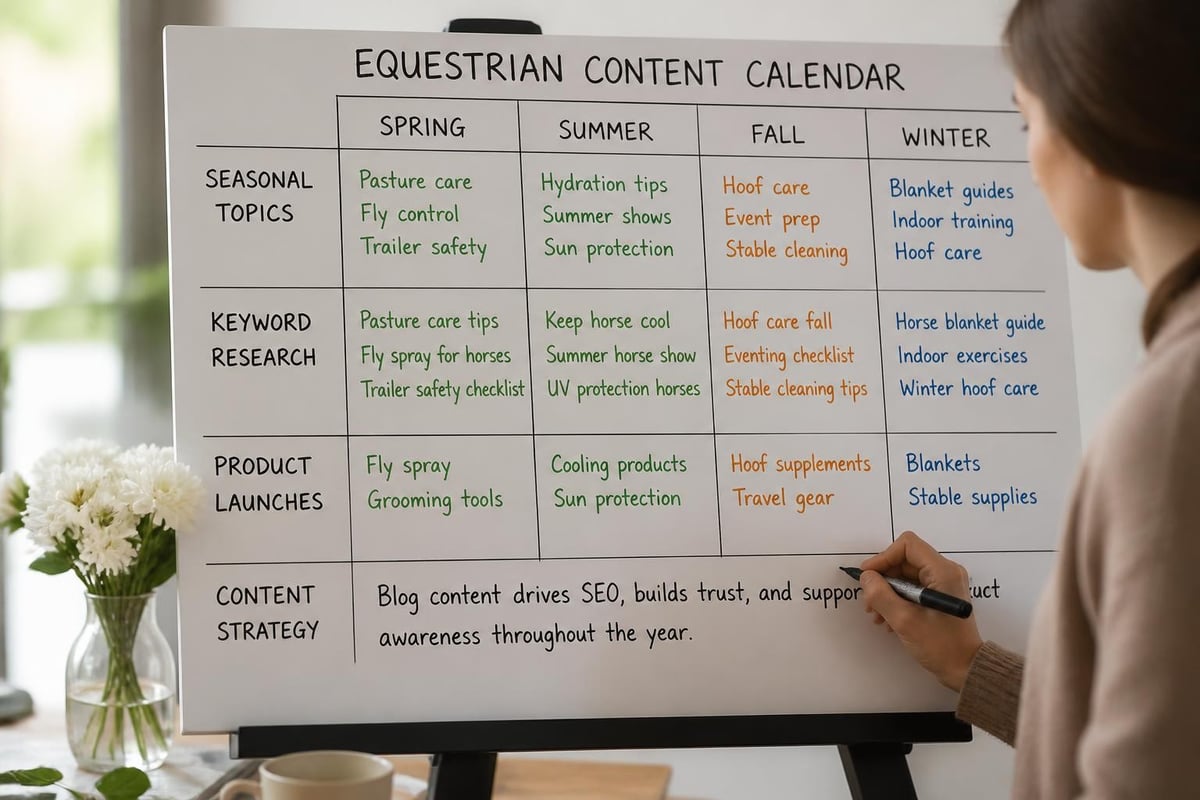
Focus on questions your customers actually ask. Search data reveals common concerns: how breeches should fit, what to wear for different disciplines, or how to care for technical fabrics. Answer these thoroughly, and search engines will send qualified traffic your way.
Navigation and User Experience Principles
Website navigation might seem mundane, but it directly affects whether visitors find what they need or leave frustrated. Nielsen Norman Group's research on homepage design shows that visitors form opinions about credibility within milliseconds, largely based on visual design and navigation clarity.
Information Architecture for Equestrian Businesses
Your main navigation should reflect how riders think, not how you've organized your inventory internally. Categories like "Breeches," "Jackets," "Competition Wear," and "Training Gear" make immediate sense. Avoid clever marketing terms that require explanation.
Secondary navigation serves different purposes. Quick links to size guides, shipping information, and customer service should be readily accessible from every page. Riders researching competition-ready clothing need sizing confidence before purchasing, so make that information prominent.
Search Functionality That Actually Works
Internal site search is criminally underutilized on most equestrian websites. When someone uses your search box, they're telling you exactly what they want. Capture these queries to understand customer needs, and ensure results actually match intent. A search for "waterproof jacket" should show jackets, not blog posts about waterproofing spray.
Consider implementing filters that matter to your audience. For riding apparel, filtering by size, color, and discipline makes sense. Filtering by "vibe" or "mood" does not. Keep it practical.
Accessibility and Compliance Considerations
Building an accessible equestrian website isn't just ethically sound - it's legally required in many jurisdictions and benefits everyone. The Web Content Accessibility Guidelines (WCAG) provide comprehensive standards that ensure your site works for riders with various disabilities.
Practical Accessibility Improvements
Start with color contrast. Text must be readable against backgrounds, especially for riders with vision impairments or those viewing screens in bright sunlight at shows. Tools like WebAIM's contrast checker verify compliance instantly.
Add alt text to every image, describing what's shown for screen readers. Instead of "IMG_5847," write "Rider in navy competition jacket performing dressage test." This helps visually impaired visitors and improves SEO simultaneously.
Ensure keyboard navigation works throughout your site. Some riders can't use a mouse, so every function - browsing products, filling forms, completing checkout - must be accessible via keyboard alone. Tab through your equestrian website yourself to identify gaps.
E-Commerce and Payment Security
If your equestrian website accepts payments for products, lessons, or services, security isn't optional. Compliance with PCI DSS standards protects customer data and your reputation. Riders trust you with sensitive financial information - betray that trust once and you'll never recover it.
Checkout Experience That Doesn't Lose Sales
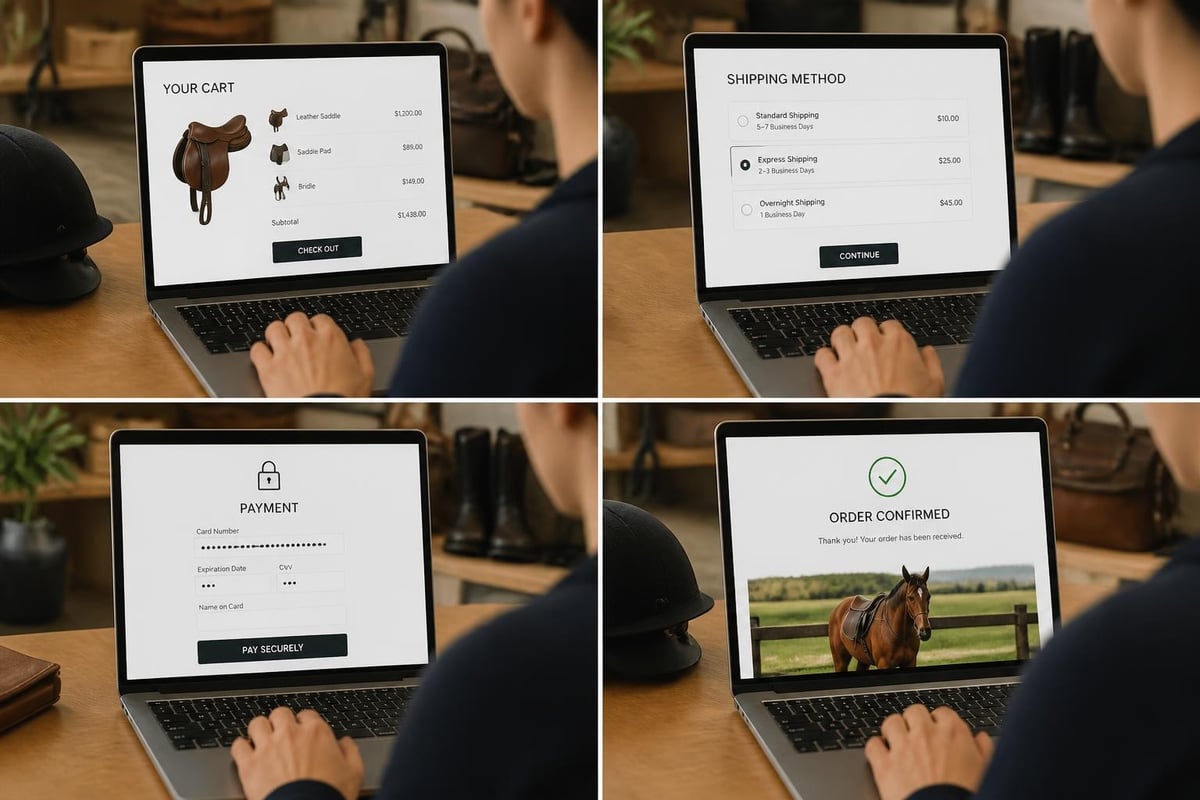
Cart abandonment in equestrian e-commerce often exceeds 70%, frequently due to complicated checkout processes. Reduce friction at every step. Offer guest checkout alongside account creation. Accept multiple payment methods. Display shipping costs early, not as a surprise at final confirmation.
| Checkout Element | Best Practice | Why It Matters |
|---|---|---|
| Form Fields | Minimum required only | Reduces friction and time |
| Progress Indicator | Show steps remaining | Manages expectations |
| Save Cart | Allow return later | Accommodates browsing behavior |
| Error Messages | Clear, specific guidance | Prevents frustration |
Trust signals matter enormously during checkout. Display security badges, customer reviews, and clear return policies. For expensive items like premium riding jackets, riders need reassurance before committing.
Post-Purchase Communication
The relationship doesn't end at checkout. Confirmation emails, shipping updates, and follow-up communication should maintain your brand voice while providing practical information. Include tracking details, care instructions, and easy paths to customer service if issues arise.
Marketing Integration and Social Proof
Your equestrian website should connect seamlessly with broader marketing efforts. Social media feeds, email campaigns, and paid advertising all drive traffic to your site - ensure consistency in messaging and visual identity across channels.
Leveraging Customer Reviews and Testimonials
Male riders trust other riders more than marketing copy. Display authentic reviews prominently on product pages, including photos from customers when available. Negative reviews handled professionally actually build credibility - perfect scores look suspicious.
Encourage reviews by making the process simple. Send follow-up emails after purchase with direct links to review pages. Offer incentives when appropriate, but never pay for positive reviews or delete honest criticism.
Content That Riders Share
Educational resources gain natural backlinks and social shares when they're genuinely useful. Guides to competition preparation, gear maintenance, or discipline-specific advice get shared within riding communities. This organic promotion is worth far more than paid advertising.
Partner with riders and trainers your target audience respects. Guest articles, interviews, or product collaborations from recognized equestrian organizations lend authority your equestrian website might not have on its own yet.
Ongoing Maintenance and Evolution
Launching your equestrian website is the beginning, not the end. Regular updates keep content fresh, security patches protect against vulnerabilities, and performance monitoring ensures technical issues get addressed before they cost conversions.
Analytics That Drive Decisions
Install comprehensive analytics from day one. Track which pages attract traffic, where visitors exit, and which products generate interest but not sales. This data reveals opportunities you'd never spot through intuition alone.
Pay particular attention to search queries that bring traffic. If riders consistently find you searching "breathable summer breeches," ensure your product descriptions emphasize breathability and seasonal appropriateness. Match content to demonstrated demand.
Regular Content Updates
Search engines favor fresh, updated content. Review your product descriptions quarterly, update blog posts with current information, and retire outdated material. An article about "2023 riding trends" looks neglected in 2026 - update it or remove it.
Seasonal content serves equestrian businesses particularly well. Articles about winter riding preparation can be updated annually with current product recommendations while maintaining their core value.
Local and Industry-Specific Considerations
Equestrian businesses often serve both local and global audiences. Your website architecture should accommodate this complexity without overwhelming visitors who just want to browse essential riding gear.
For businesses with physical locations, local SEO becomes crucial. Claim and optimize your Google Business Profile, ensure consistent NAP (name, address, phone) information across directories, and create location-specific content when relevant. Guidance for agritourism operators applies surprisingly well to equestrian venues and riding schools.
Federation and Competition Resources
If you serve competitive riders, consider how USEF resources and competition schedules might integrate with your content strategy. Articles that help riders prepare for specific events, understand rule changes, or select appropriate competition attire demonstrate understanding of your audience's needs beyond just selling products.
This doesn't mean copying federation materials - it means creating complementary content that serves riders navigating the competitive landscape. How should breeches fit for dressage versus show jumping? What jacket styles meet competition requirements while still looking sharp? Answer these questions thoroughly.
Platform Selection and Technical Setup
Choosing the right platform for your equestrian website affects everything downstream. Popular options like Shopify, WordPress with WooCommerce, or Squarespace each offer different strengths. Evaluate based on your specific needs, technical comfort, and budget.
For clothing brands selling direct to consumers, platforms with robust e-commerce features, inventory management, and integrated payment processing save enormous time. For content-heavy sites focused on education and community, flexibility in publishing and organization matters more than checkout optimization.
Whatever platform you choose, ensure it supports proper URL structure, metadata control, and technical SEO fundamentals. Your equestrian website's foundation affects everything built upon it.
An effective equestrian website balances technical excellence with authentic connection to riders, serving both search engines and the people who matter most - your customers. When you need riding gear that performs as well as your digital presence should, Gallant Equestrian delivers performance-driven, stylish clothing designed specifically for men who ride. From breeches that move with you to jackets that transition seamlessly from stable to street, we've built our collection with the same attention to detail you should demand from your online presence. Look the Part. Enjoy the Ride.

