

Horse Jodhpurs: Heritage, Style & Performance Guide
Sep 21, 2026
Horse jodhpurs occupy a unique place in equestrian wardrobe. More than just riding trousers, they represent a fascinating blend of cultural heritage, practical design, and enduring style. Originally adapted from Indian court dress, these distinctive garments have evolved into a staple for riders who value both tradition and performance. Understanding what makes jodhpurs different from standard breeches, how they fit into modern riding disciplines, and why their design has remained largely unchanged for over a century helps you make informed choices about your kit. Whether you're preparing for the show ring, schooling at home, or exploring how these trousers fit into your broader equestrian wardrobe, knowing the story and function behind horse jodhpurs gives you confidence in the saddle and beyond.
The Surprising Origins of Jodhpurs
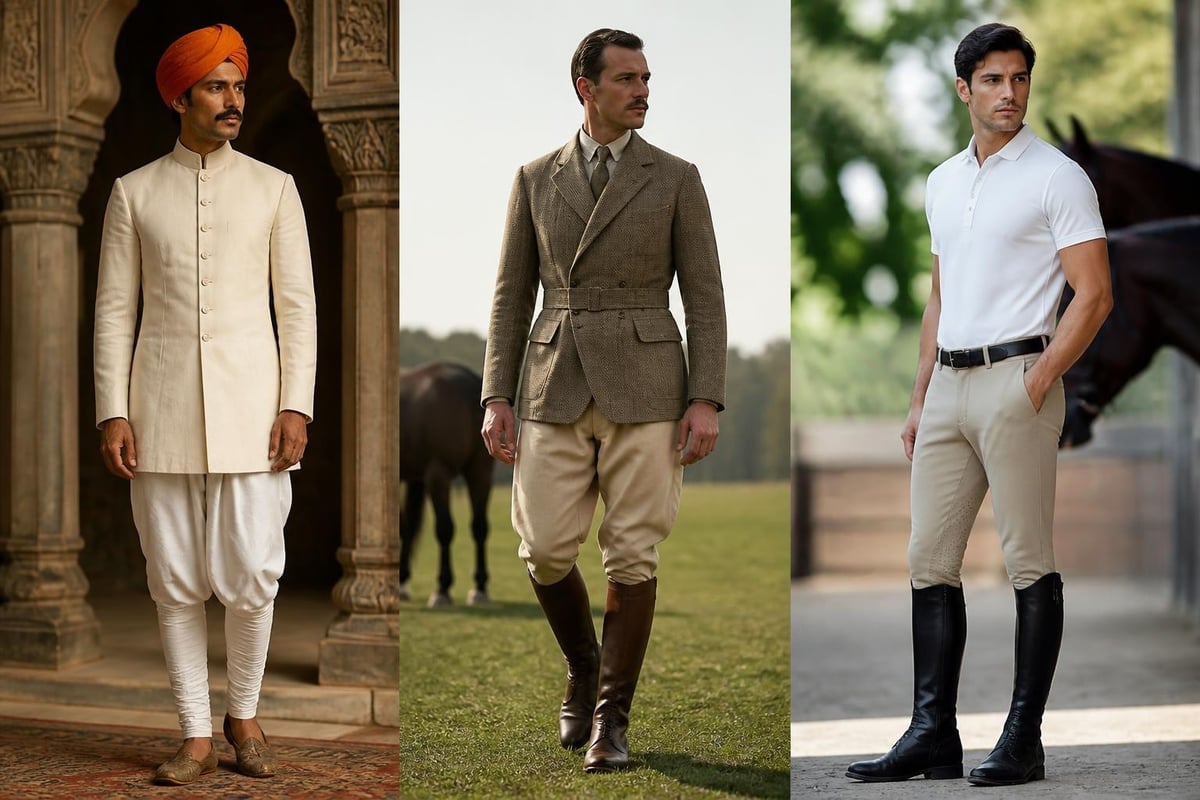
The story begins in Jodhpur, a princely state in Rajasthan, India, during the late 19th century. Sir Pratap Singh, regent of Jodhpur and an accomplished polo player, popularised riding attire that combined the traditional churidar trousers worn at court with practical modifications for mounted sport. These garments featured a distinctive cut: tight from knee to ankle, looser through the hip and thigh, allowing freedom of movement whilst maintaining close contact with the saddle.
When British officers and polo enthusiasts encountered this design in India during the colonial period, they recognised its superiority over the loose breeches and tall boots commonly worn in Britain. The fit eliminated bulk under tall boots, reduced chafing, and allowed riders to feel their horse's movements more clearly. The cultural exchange documented in academic research shows how jodhpurs became a marker of equestrian sophistication across the British Empire and beyond.
By the early 20th century, jodhpurs had entered mainstream riding culture in Britain, America, and throughout the Commonwealth. The evolution of equestrian apparel demonstrates how this single garment influenced riding fashion for decades, spawning variations that persist today.
Understanding the Jodhpur Design
The Defining Features
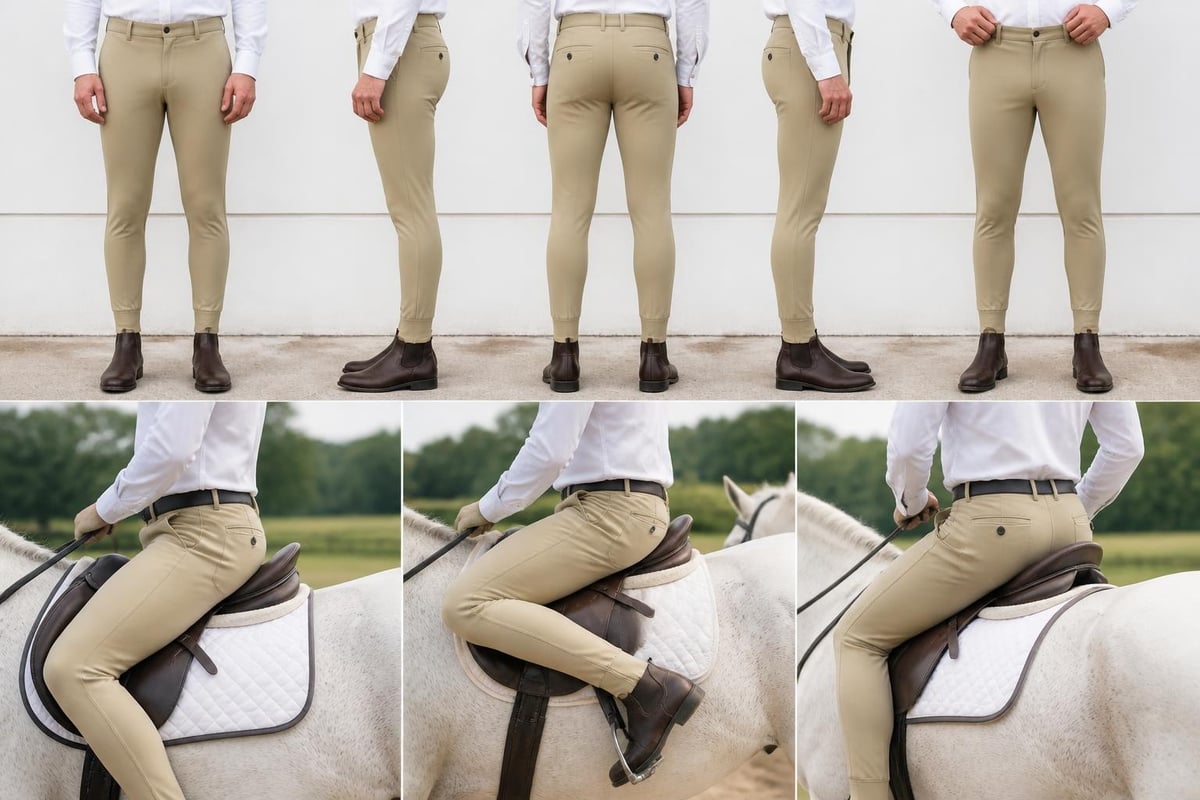
Horse jodhpurs differ fundamentally from modern breeches in their lower leg design and footwear pairing. Traditional jodhpurs extend to the ankle with a stirrup strap or elastic cuff that passes under the foot, designed to be worn with short paddock boots rather than tall field boots. This construction keeps the trouser leg smooth and prevents it from riding up during mounting or riding.
The upper portion typically features a fuller cut through the hip and thigh compared to contemporary breeches, though modern interpretations have become progressively more tailored. Reinforcement appears on the inner leg and seat, traditionally in suede or leather, providing grip and durability where contact matters most.
Modern Adaptations
Contemporary horse jodhpurs retain the spirit of the original design whilst incorporating performance fabrics and ergonomic tailoring. Four-way stretch materials replace rigid cotton twill, moisture-wicking properties keep riders comfortable during long sessions, and flatlock seams reduce irritation. These innovations maintain the silhouette whilst dramatically improving function.
The ankle closure has evolved as well. Whilst purists prefer the traditional stirrup strap, many modern designs feature elasticated ankles, zip closures, or hook-and-loop adjustments that provide the same smooth fit without additional fuss. Some riders appreciate this simplified approach, especially when considering how riding clothing transitions beyond the stable.
Jodhpurs Versus Breeches
| Feature | Horse Jodhpurs | Breeches |
|---|---|---|
| Lower leg | Full length to ankle | End below knee |
| Footwear | Paddock boots | Tall field boots |
| Fit | Traditionally fuller hip | Generally closer fit throughout |
| Cuff | Stirrup strap or elastic ankle | Elastic or Velcro at calf |
| Use context | Polo, showing (specific disciplines), casual riding | Dressage, jumping, eventing, most competition |
| Origin | Indian court/military dress | European hunting attire |
Understanding these distinctions helps you select appropriate attire for different riding situations. Jodhpurs paired with paddock boots offer a practical, versatile option for daily riding, lessons, and certain competition contexts. Breeches with tall boots provide the traditional look required in many disciplines and add leg protection for cross-country or jumping work.
The choice often comes down to discipline requirements, personal preference, and practical considerations. Many riders own both styles, selecting based on activity and formality level. When building your equestrian wardrobe, consider how each piece serves different purposes, much like choosing between competition wear and everyday riding clothes.
Choosing the Right Fit
Fit separates adequate horse jodhpurs from exceptional ones. The garment should sit comfortably at your natural waist without gapping or digging in. Through the seat and thigh, you want enough room to move freely without excess fabric bunching when mounted. Too tight restricts movement and causes discomfort; too loose creates bulk and diminishes contact with your saddle.
Pay particular attention to the rise (the distance from waistband to crotch seam). A proper rise ensures the seat panel sits correctly when you're in riding position. Stand in stirrups if possible during fitting, as this reveals how the trouser behaves under actual riding stress. The inseam should allow the ankle closure to rest just above your boot without riding up when your leg extends.
Fabric Considerations
Traditional jodhpurs used heavyweight cotton twill or wool, offering durability but limited stretch. Modern technical fabrics transform performance. Look for materials that combine cotton's breathability with synthetic fibres' stretch and recovery. A blend with at least 5% elastane provides freedom of movement whilst maintaining shape over time.
Consider the climate where you ride most frequently. Lightweight fabrics with moisture-wicking properties excel in warm conditions, whilst brushed-back or fleece-lined options add warmth for winter riding. Some riders prefer year-round fabrics with mid-weight construction, adding or removing layers as needed rather than maintaining multiple pairs of horse jodhpurs for different seasons.
The British Horse Society's guidance on riding attire emphasises comfort and safety across varying conditions, reinforcing the importance of selecting appropriate fabrics for your circumstances.
Discipline-Specific Considerations
Polo and Mounted Games
Horse jodhpurs remain the traditional choice for polo, where their close-fitting lower leg and freedom through the hip suit the sport's demands perfectly. The original purpose, after all, centred on polo fields in India and Britain. Modern polo jodhpurs typically feature heavy-duty knee patches, reinforced seams, and robust fabrics capable of withstanding the rigours of competitive play.
Mounted games and gymkhana events similarly favour jodhpurs paired with paddock boots, offering junior riders and adults alike a practical, safe option that provides protection without the expense of tall boots.
Show Ring Regulations
Competition rules vary by discipline and governing body. Some classes specify breeches and tall boots, whilst others permit jodhpurs with paddock boots, particularly in lower-level classes or certain breed shows. The USEF rulebook provides specific guidance for various disciplines, though interpretation can vary by judge and venue.
Before investing in horse jodhpurs for competition, verify your discipline's current requirements. Dressage and upper-level hunter/jumper classes typically require breeches and tall boots, whilst working hunter and many western disciplines accept jodhpurs. Polo, polocrosse, and some driving classes maintain jodhpurs as traditional attire.
Everyday Riding and Training
For daily riding, schooling, and lessons, horse jodhpurs excel. They're easier to get on and off than tall boots, require less maintenance, and often cost less as a complete outfit (jodhpurs plus paddock boots versus breeches plus tall boots). This makes them popular with amateur riders, working students, and professionals who spend long days in the saddle.
The ankle closure keeps your lower leg protected from stirrup leather chafing whilst allowing your boot to move naturally at the ankle. This can improve feel and communication with your horse compared to the rigidity of tall boots, though this remains a matter of personal preference.
Care and Maintenance
Proper care extends the life of your horse jodhpurs significantly. Most modern technical fabrics tolerate machine washing on gentle cycles with cold water. Turn garments inside out to protect the outer surface and any embellishments. Avoid fabric softeners, which can compromise moisture-wicking properties and reduce the grip provided by silicone or suede seat patches.
Air drying preserves elasticity better than tumble drying. Hang jodhpurs by the waistband or lay flat, avoiding clothespins on the fabric itself which can create permanent marks. If you must use a dryer, select low heat and remove whilst still slightly damp to prevent over-drying and shrinkage.
Storage and Organisation
Store horse jodhpurs folded or hung by the waistband in a cool, dry location. Avoid leaving them in hot cars or damp tack rooms where mildew can develop or elastic can degrade. If you rotate between multiple pairs, this extends wear time for each garment and allows thorough drying between uses.
Inspect reinforcement patches and seams regularly. Catching minor wear early allows for simple repairs before they become major issues. Quality construction should provide years of service, but even the best jodhpurs benefit from occasional attention.
Styling Beyond the Stable
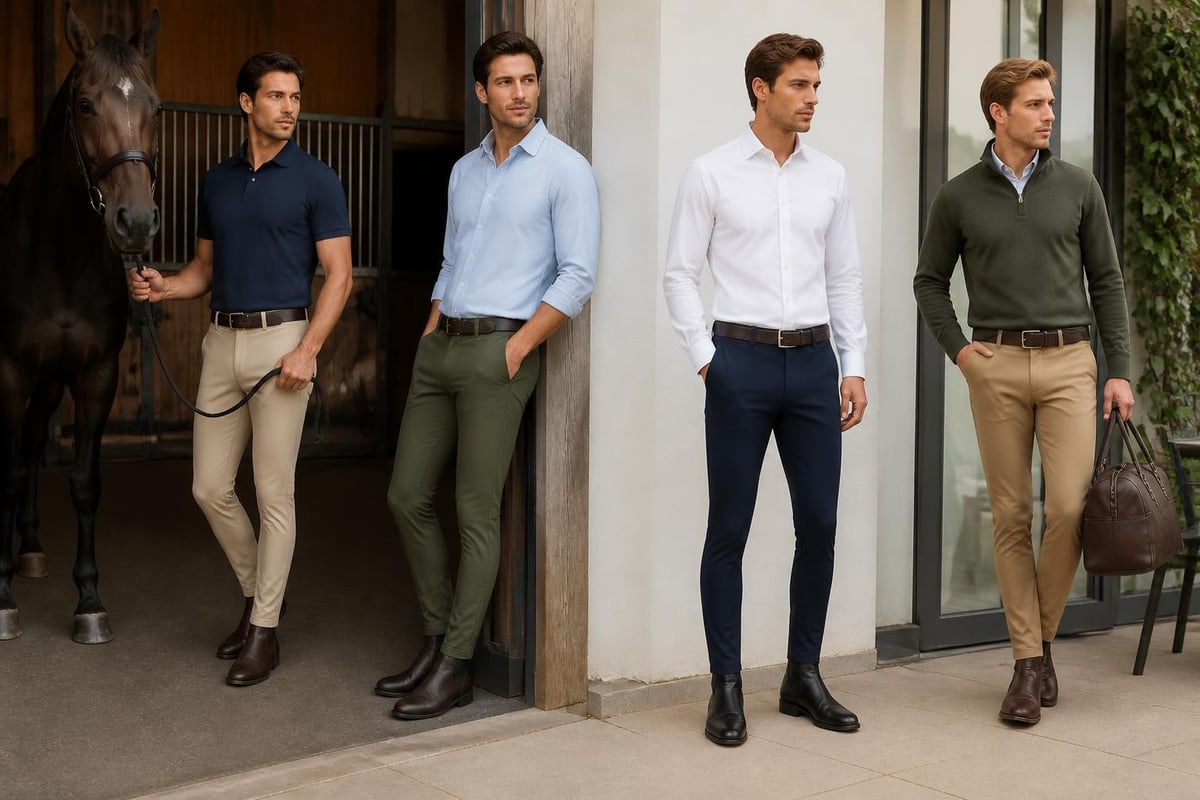
One advantage of horse jodhpurs lies in their versatility. The classic silhouette transitions surprisingly well from arena to everyday activities when paired thoughtfully. Neutral colours (tan, navy, olive, charcoal) work with casual shirts, sweaters, and jackets for a countryside aesthetic that doesn't advertise "rider" to non-equestrians.
This crossover appeal makes jodhpurs practical for those who want clothing that serves multiple purposes. A quality pair in a versatile colour becomes part of your broader casual wardrobe, not just specialist kit gathering dust between rides. Consider how pieces work together when building your collection, an approach detailed in discussions about capsule wardrobes for riders.
Pair with paddock boots, a collared shirt, and a quilted gilet for running errands in rural areas. Swap to desert boots or leather trainers (outside riding contexts) with a merino jumper for weekend casual wear that nods to heritage style without costume.
Selecting Your First Pair
Prioritising Quality Over Quantity
Your first pair of horse jodhpurs deserves careful consideration. Rather than purchasing multiple cheap pairs, invest in one or two quality garments that fit properly and serve your needs. Well-constructed jodhpurs from reputable manufacturers outlast budget alternatives by years, making them more economical long-term.
Examine construction details: flat-felled or reinforced seams, quality zips with durable pulls, secure button closures, and properly finished edges. These elements indicate attention to detail and predict longevity. Test the stretch and recovery of the fabric by pulling gently, then releasing to see how quickly it returns to shape.
Colour and Practicality
Traditional colours (tan, beige, white) dominate competition contexts and maintain classic appeal. For everyday riding, darker shades (navy, charcoal, forest green) hide dirt better and require less frequent washing. Many riders start with one neutral pair for showing and one darker pair for daily use.
White or light-coloured horse jodhpurs demand more maintenance but remain the standard for certain disciplines. If your riding focuses on dressage or formal showing, pristine white jodhpurs paired with tall black boots creates the expected aesthetic. For mixed disciplines or casual riding, darker tones prove more forgiving.
Common Misconceptions
"Jodhpurs Are Only for Children"
This persistent myth frustrates many riders. Whilst jodhpurs do offer an economical option for growing children (paddock boots cost less than tall boots and require less frequent replacement), adult riders in numerous disciplines choose jodhpurs for their comfort, practicality, and traditional appeal. Polo players worldwide wear jodhpurs by preference, not necessity.
The association with junior riders stems partly from pony club traditions and partly from parents seeking value when outfitting young equestrians. Adult riders shouldn't feel constrained by this perception, particularly given jodhpurs' rich heritage and ongoing relevance.
"Breeches Are Always Better"
Better remains subjective. Breeches suit certain disciplines and situations, whilst jodhpurs excel in others. Neither is categorically superior. Your choice should reflect your riding activities, comfort preferences, and practical needs. Many accomplished riders maintain both in their wardrobes, selecting based on context.
The detailed breakdown of choosing riding trousers applies equally to jodhpurs, emphasising fit, function, and personal preference over arbitrary hierarchies.
Technical Innovations
Modern horse jodhpurs incorporate technologies that would astonish riders from previous generations. Fabrics engineered for compression support muscles during long rides and speed recovery afterwards. UV protection helps riders in sunny climates avoid sun damage during outdoor sessions. Anti-microbial treatments reduce odour and extend time between washes.
Some manufacturers integrate smartphone pockets into waistbands or thighs, recognising that even when riding, phones need secure storage. Reflective piping or patches increase visibility during early morning or evening rides on roads or shared paths.
These innovations don't compromise the fundamental design that makes jodhpurs effective. Rather, they enhance performance whilst maintaining the silhouette and function that have proven themselves over more than a century of use.
Investment and Value
Quality horse jodhpurs represent a genuine investment in your riding comfort and capability. Expect to pay more for garments featuring technical fabrics, precise tailoring, and durable construction. This cost reflects materials, craftsmanship, and performance that justify the price through longevity and function.
Budget options exist and can serve riders adequately for occasional use or while determining preferences. However, if you ride regularly, spending more initially saves money over time by reducing replacement frequency. Calculate cost per wear rather than purchase price when evaluating value.
Consider horse jodhpurs as foundational pieces similar to quality boots or a well-fitted helmet. These items directly impact your riding experience and deserve appropriate investment. Complement them with versatile tops and layers that maximise outfit combinations, extending the utility of each piece across various riding contexts.
The Cultural Significance
Beyond practicality, horse jodhpurs carry cultural weight that enriches their appeal. They represent a tangible connection to riding heritage across continents and centuries. When you pull on jodhpurs, you participate in a sartorial tradition shaped by Indian court dress, British military custom, and international sport.
This heritage doesn't demand reverence or rigidity. Rather, it provides context that deepens appreciation for thoughtful design and proven function. Understanding why jodhpurs look and work as they do informs your choices and enhances your connection to riding culture.
The museum documentation of equestrian garments reveals how clothing tells stories of cultural exchange, technological advancement, and evolving aesthetics. Horse jodhpurs embody all three elements in a single, deceptively simple garment.
Practical Recommendations
Start with one pair in a neutral, versatile colour. Tan or navy works across most contexts and pairs easily with existing shirts and jackets. Ensure proper fit through the waist, seat, and thigh, with particular attention to the ankle closure which should sit smoothly over your paddock boot without bunching or gapping.
Wear them several times before deciding if adjustments are needed. Fabrics settle slightly with use, and you'll discover pressure points or fit issues that aren't apparent during a brief fitting room trial. Many retailers accommodate exchanges if sizing proves incorrect after initial use, though policies vary.
Build your collection gradually based on actual needs rather than perceived requirements. If you ride primarily for pleasure several times weekly, two or three pairs provide adequate rotation. Competitive riders might need more to ensure clean options for shows whilst maintaining training pairs.
Match your horse jodhpurs with appropriate footwear. Paddock boots in brown or black leather offer durability and protection, with options ranging from plain to field-style lacing. Ensure boots fit properly over the jodhpur ankle closure without binding or creating pressure points.
Looking Forward
The enduring appeal of horse jodhpurs suggests they'll remain relevant for generations to come. As fabrics and construction methods advance, expect continued improvements in performance without abandonment of the fundamental design that makes these garments effective. The balance between tradition and innovation defines quality equestrian clothing.
Riders who appreciate heritage whilst demanding modern performance find this balance particularly satisfying. You're not choosing between old and new, but rather enjoying the best of both: time-tested design enhanced by contemporary materials and methods.
Whether you're exploring your first pair or adding to an established collection, approach horse jodhpurs with the same care you'd apply to any essential riding kit. The right pair enhances your riding experience, provides years of reliable service, and connects you to a rich tradition of mounted sport and style.
Horse jodhpurs combine heritage, function, and versatility in a single garment that serves riders across disciplines and contexts. Understanding their origins, appreciating their design, and selecting pairs that fit your needs creates a foundation for confident riding and effortless style. Gallant Equestrian offers performance-driven equestrian clothing for men who value both tradition and innovation, with pieces designed to transition seamlessly from arena to everyday life. Look the Part. Enjoy the Ride.

