

Horse Riding Show Outfits: Men's Guide to Competition Style
Apr 19, 2026
Stepping into the show ring demands more than skill in the saddle. Your appearance speaks before you even enter at A. Horse riding show outfits combine tradition, discipline requirements, and personal presentation into a refined package that judges notice immediately. For men in equestrian sport, getting this right means understanding the rules whilst maintaining comfort and confidence throughout your rounds. The difference between looking competent and looking exceptional often comes down to fit, fabric choice, and knowing exactly what your discipline demands. Whether you're preparing for your first affiliated competition or refining your presentation for championship level, the right outfit forms the foundation of your performance.
Understanding Discipline-Specific Requirements
Show jumping, dressage, and eventing each carry distinct expectations for competitor attire. These aren't arbitrary traditions but evolved standards that reflect each discipline's character and judging criteria.
Dressage Presentation Standards
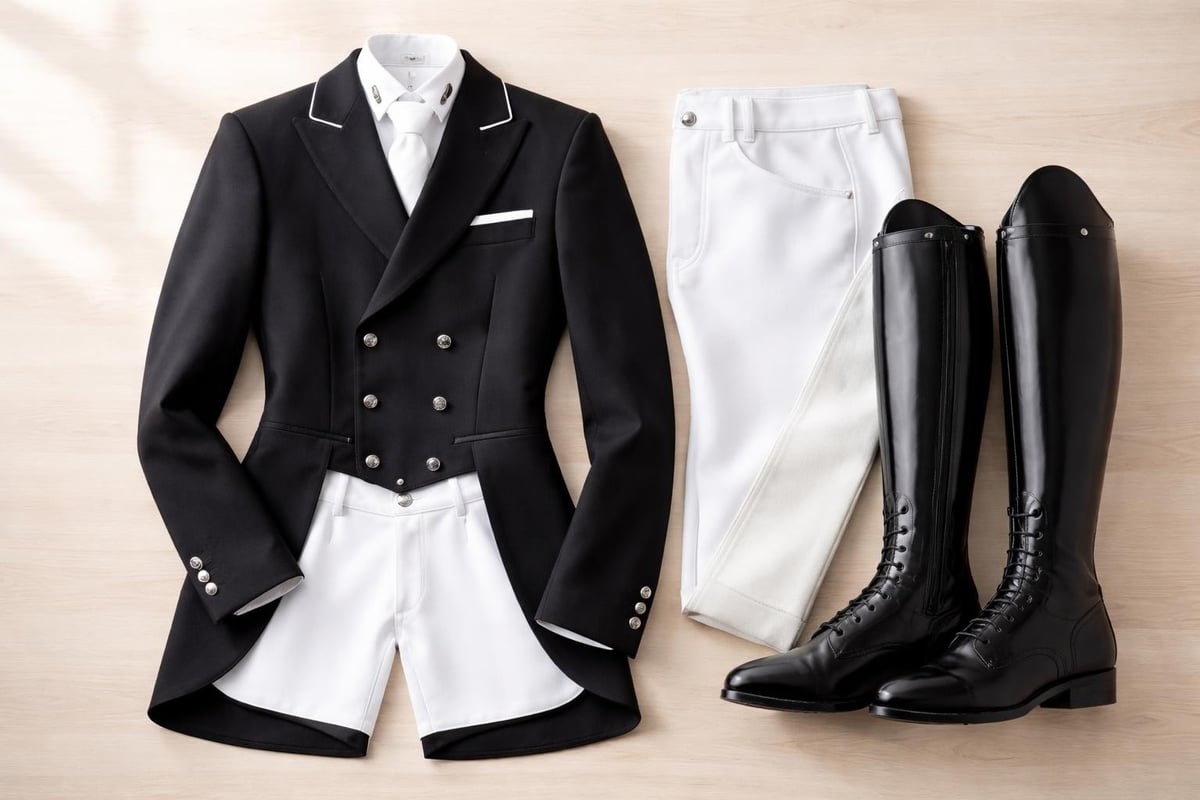
Dressage demands the most formal presentation in equestrian sport. Your coat must be black or navy, tailored to sit properly in the saddle without bunching at the waist or pulling across the shoulders. White or cream breeches create the classic dressage silhouette, though understanding proper fit in men's breeches makes the difference between looking polished and feeling restricted.
The top hat remains standard for higher levels, whilst bowler hats suit lower-level competitions. Your shirt needs to be white with a stock tie, pinned correctly and sitting flat against your chest. Gloves must be white, and boots should be tall black dress boots with minimal decoration. Every element contributes to the formal, classical picture dressage judging demands.
Show Jumping Attire Elements
Show jumping offers slightly more flexibility whilst maintaining professional standards. Your coat can be navy, black, or even tweed in some competitions, though checking your specific discipline's dress codes prevents surprises at the gate.
Breeches typically come in lighter colours, though darker options work equally well. The key difference lies in freedom of movement. Show jumping's dynamic nature means your jacket needs room through the shoulders and arms without looking oversized when standing still. Boots can be field boots with laces, offering more ankle flexibility than the rigid dress boots dressage requires.
Your shirt should have a collar suitable for a tie or stock, though ratcatcher-style shirts with integrated chokers are increasingly popular. They eliminate tie adjustments between rounds whilst maintaining the required formal neckline. Gloves protect your hands and improve grip, typically in darker colours that won't show dirt from the reins.
Eventing Across All Phases
Eventing presents unique challenges because you're dressing for three distinct phases within one competition. Dressage phase follows traditional dressage standards. Show jumping mirrors standard jumping attire. Cross country transforms completely into performance gear designed for speed, safety, and weather resistance.
Cross country requires an approved safety vest worn over your shirt, paired with your helmet meeting current safety standards. Breeches should be darker colours that won't show mud and grass stains. Many riders choose technical fabrics that handle moisture and movement better than traditional materials during this demanding phase.
Your jacket stays in the lorry for cross country. Focus on a well-fitted technical shirt that layers properly under your vest without creating bulk or restricting your position. This phase prioritizes function over formality, though professional presentation still matters.
Building Your Competition Wardrobe
Creating a functional competition wardrobe doesn't require purchasing everything simultaneously. Strategic choices let you build gradually whilst ensuring you're properly turned out for each show.
Essential Foundation Pieces
Start with one excellent pair of properly fitted breeches in a neutral colour. Tan or beige works across most disciplines and won't show dust during warm-up. Quality matters more than quantity here. Well-constructed breeches with proper stitching, reinforced seams, and appropriate grip material will last seasons whilst cheaper alternatives need replacing quickly.
Your show coat deserves equal investment. Navy remains the most versatile choice, appropriate across dressage, show jumping, and some eventing contexts. The fit through your shoulders and the length of the sleeves determine whether you look polished or uncomfortable. The coat should allow your arms to extend fully without pulling across your back, whilst the length should cover your seat when mounted without looking too long when standing.
| Foundation Item | Priority Level | Versatility | Expected Lifespan |
|---|---|---|---|
| Show Coat | High | Multiple disciplines | 5-7 years with care |
| Quality Breeches | High | All riding contexts | 2-3 years regular use |
| Tall Boots | High | Daily and competition | 3-5 years |
| Show Shirt | Medium | Competition only | 2-4 years |
| Technical Shirt | Medium | Training and XC | 1-2 years |
Boots represent another significant investment. Tall boots for showing need proper fit from the start because breaking them in takes time. Field boots offer versatility between disciplines whilst dress boots suit dressage specifically. Consider your primary discipline when choosing, and remember that quality riding gear proves more economical long-term than replacing inadequate equipment repeatedly.
Expanding Your Options
Once foundation pieces are sorted, strategic additions increase your flexibility without unnecessary spending. A second pair of breeches in white opens dressage options whilst providing a backup when your primary pair needs washing. Different weather conditions might require a lightweight summer show coat versus a heavier winter option.
Technical shirts designed for cross country or training deserve attention beyond basic cotton options. Modern fabrics wick moisture, resist odours, and maintain their shape better than traditional materials. Having two or three means you're always show-ready without frantic laundry sessions between competitions.
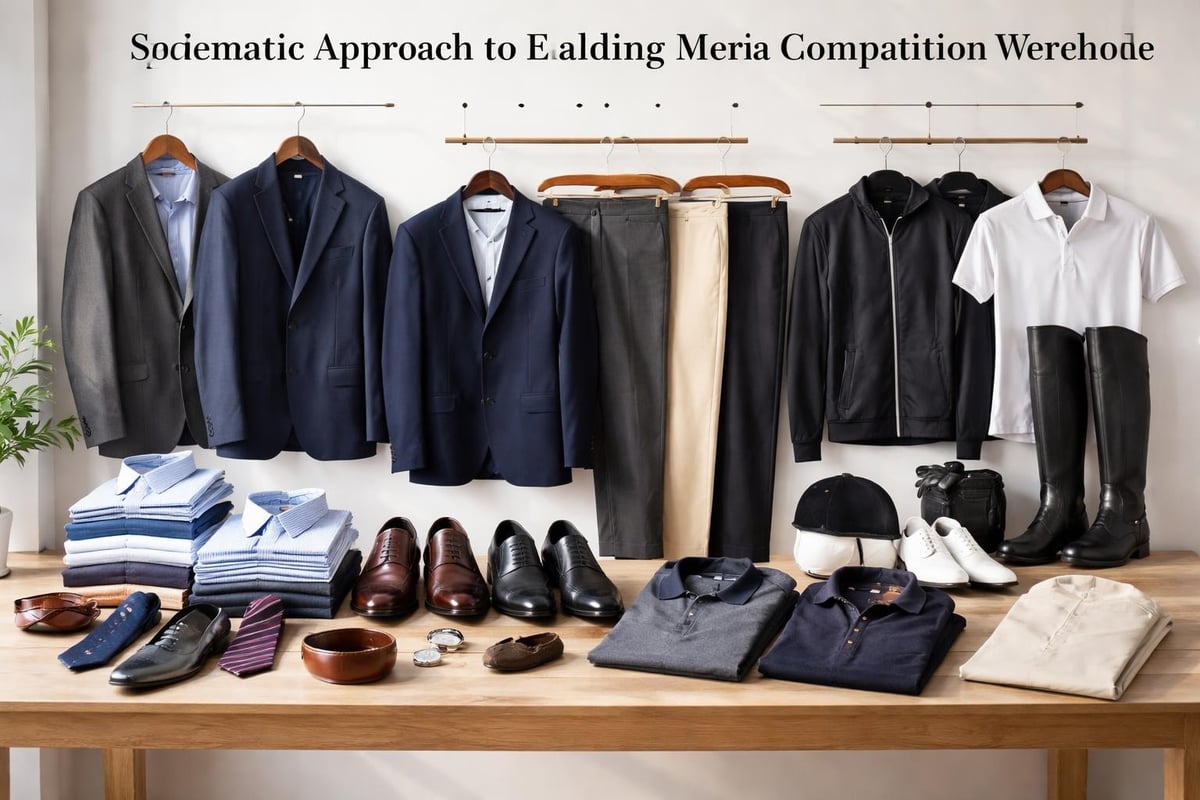
Consider accessories that elevate your presentation. Quality gloves, a proper stock tie with a well-chosen pin, and a helmet that fits correctly whilst looking sharp all contribute to your overall impression. These smaller items often get overlooked but judges notice every detail when assessing turnout.
Fit and Fabric Considerations
Horse riding show outfits only work when they fit properly and use appropriate materials. The wrong fabric or poor fit undermines even the most expensive ensemble.
Achieving Proper Fit in Motion
Static fit means nothing if your clothes restrict movement in the saddle. Your breeches should sit comfortably at your waist without requiring a belt to stay up, though many riders prefer belts for the finished look. The seat shouldn't pull tight when you're in riding position, and the lower leg should follow your calf without bunching or gaping.
Show coats present the greatest fitting challenge for men. Your shoulders need freedom to move with your upper body, particularly in show jumping where you'll fold forward repeatedly. The sleeves should end at your wrist bone, showing a small amount of shirt cuff without excess fabric bunching around your hands. When mounted, the coat should sit smoothly across your back without riding up or creating horizontal wrinkles across your shoulders.
Many riders discover that off-the-rack options require tailoring to achieve proper fit. A skilled tailor familiar with riding clothes can adjust sleeve length, take in the waist, or modify shoulder width. These alterations transform an acceptable coat into one that looks custom-made, significantly improving your overall presentation.
Modern Fabric Technology
Traditional materials like wool and cotton still dominate formal showing, but technical fabrics have revolutionized comfort without sacrificing appearance. Breeches now incorporate four-way stretch materials that move with you whilst maintaining their shape. These fabrics typically include moisture-wicking properties that keep you comfortable during long competition days.
Show coats increasingly blend natural fibres with synthetic materials to create fabrics that breathe better whilst resisting wrinkles. This matters particularly when you're traveling to shows and need to arrive with your coat looking fresh. Understanding what makes quality equestrian clothing helps you recognize superior construction and materials when shopping.
Seasonal Adjustments and Practicalities
Competition calendars run year-round, meaning your horse riding show outfits need seasonal flexibility without compromising regulation compliance.
Summer Showing Strategies
Hot weather creates genuine challenges for formal attire. Lightweight show coats in breathable fabrics help, though some competitions allow coat removal in extreme heat. Check your schedule's specific rules before assuming this option exists. Your shirt becomes crucial in summer, with moisture-wicking materials preventing the soaked appearance that destroys professional presentation.
Breeches in lighter-weight fabrics provide relief whilst maintaining appropriate appearance. Some modern options use mesh panels in strategic locations for ventilation without visible modification. These details matter when you're competing in multiple classes throughout a hot day.
Winter Competition Preparation
Cold weather demands layering strategies that don't create bulk under your show coat. Thin thermal base layers under your show shirt provide warmth without restricting movement or creating visible lines. Your breeches might need a thermal underlayer in extremely cold conditions, though this requires careful size consideration to prevent the final fit becoming too tight.
Weather-resistant options for warm-up become essential. A quality waterproof riding jacket keeps you dry and warm before your class without needing to wear your show coat in poor conditions. This protects your formal wear whilst ensuring you're properly prepared when called to the arena.
Presentation Details That Matter
Small details separate adequate turnout from exceptional presentation. Judges notice these elements even when they're not explicitly judging turnout as a scored component.
Grooming and Polish Standards
Your boots need proper care beyond basic cleaning. Well-polished leather shows attention to detail that extends judges' positive impression of your overall presentation. Synthetic boots require different care but should show the same level of attention. Scuffed, dirty, or poorly maintained boots undermine even the finest coat and breeches combination.
Helmet appearance matters equally. Clean, well-fitted, and appropriately styled for your discipline shows you understand and respect traditional standards. The helmet should sit level on your head, not tilted back or pulled too far forward. Ensure your helmet meets current safety standards whilst looking appropriate for competition.
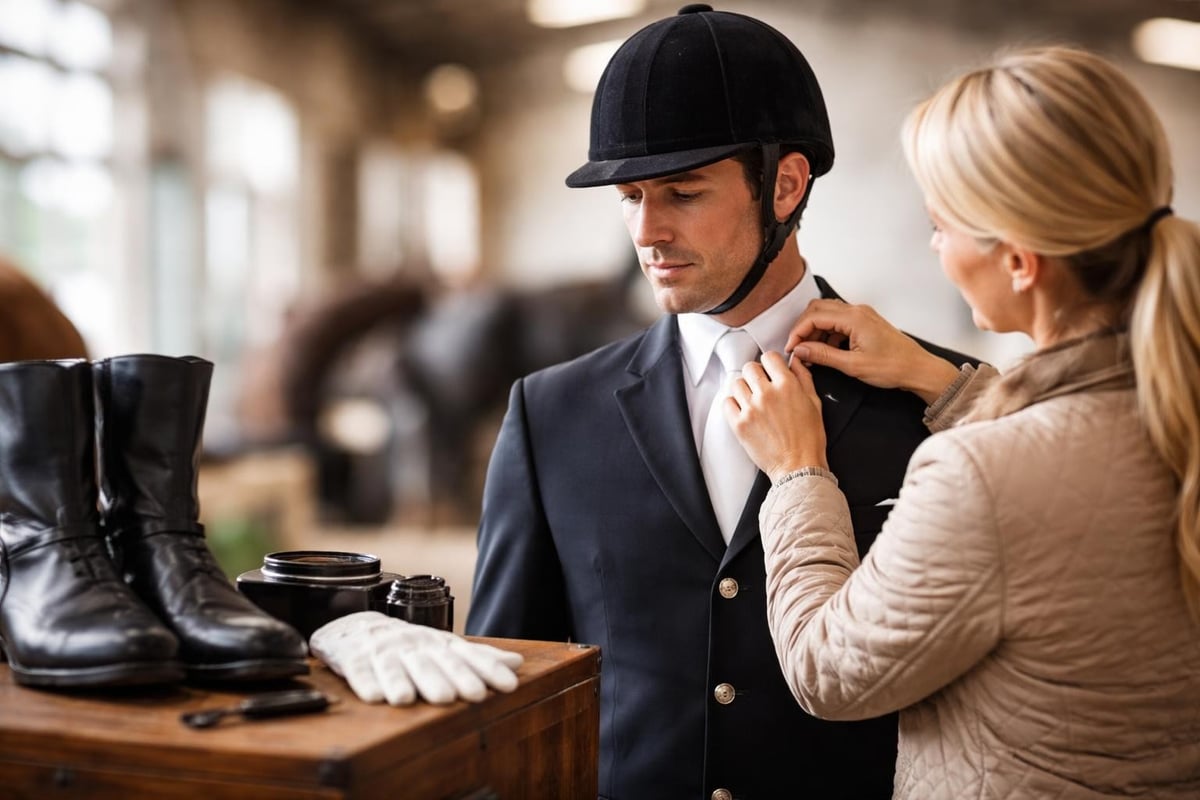
Your stock tie or regular tie must sit properly without twisting or showing gaps. Practice tying it correctly before competition day. The pin should be positioned correctly and securely fastened. These small elements demonstrate professional attention to detail that judges appreciate.
Maintaining Equipment Between Shows
Proper storage extends the life of your horse riding show outfits significantly. Coats should hang properly, never folded or crushed in kit bags. Breeches need washing according to fabric requirements, often requiring gentler cycles than regular clothing to preserve elastic and specialized materials. Understanding how to care for performance riding clothes prevents premature wear and maintains their professional appearance.
Boots benefit from regular conditioning to prevent leather from drying and cracking. Even when not wearing them, proper boot trees maintain their shape and prevent creasing that becomes permanent with time. These maintenance habits prove cheaper than replacing equipment prematurely.
Current Trends Influencing Traditional Attire
Horse riding show outfits evolve gradually, with subtle shifts in equestrian fashion appearing season by season whilst respecting long-established traditions.
Technical Innovation Within Classic Frameworks
The most significant changes in recent years involve fabric technology rather than style modifications. Coats now incorporate stretch materials that weren't available a decade ago, improving comfort without altering traditional appearance. Breeches use advanced grip materials that provide better security in the saddle compared to leather or suede patches.
These innovations let you compete more comfortably whilst maintaining absolutely traditional presentation. Judges can't tell the difference between a modern technical fabric coat and a traditional wool version from the ground, but you'll feel the performance difference throughout your round.
Color and Personal Expression
Whilst formal disciplines maintain strict colour requirements, subtle personal expression appears in acceptable ways. Stock pin selection, belt choices, and even boot styling offer opportunities for individuality within regulation boundaries. Some riders incorporate meaningful symbols or designs in these small elements without violating dress codes.
Show jumping has seen the most flexibility, with colored coats occasionally appearing in certain competitions. However, traditional navy, black, or dark colors remain safest for serious competition. Before experimenting with emerging equestrian style trends, verify they're appropriate for your specific competition level and sanctioning organization.
Preparing for Your First Affiliated Show
New competitors often feel overwhelmed by presentation requirements. Systematic preparation eliminates surprises and builds confidence.
Research Your Specific Requirements
Different governing bodies maintain slightly different standards. British Dressage, British Showjumping, and British Eventing each publish detailed dress codes. Reviewing these documents before purchasing anything prevents expensive mistakes. Some novice-level competitions offer flexibility that disappears at higher levels, whilst others maintain strict standards regardless of competitor level.
Contact the show organizer if specific requirements seem unclear. Most are helpful and appreciate competitors who care enough to ask rather than appearing incorrectly turned out. This research phase also helps you understand what experienced competitors wear to shows within your discipline.
Budget-Conscious Starting Points
Quality matters, but starting competitors needn't purchase top-tier everything immediately. Prioritize items that affect safety and basic presentation, then upgrade gradually as your competition involvement increases. A mid-range coat that fits properly outperforms an expensive one that doesn't.
Consider second-hand options for foundation pieces whilst you're establishing your size preferences and discipline focus. Well-maintained used equipment often provides excellent value, particularly for items like show coats that riders sometimes barely wear before moving to different sizes or styles.
Competition Day Logistics
Owning the right horse riding show outfits means nothing if they're not ready when you need them. Practical preparation prevents stressful mornings and missed classes.
Packing and Transport
Create a checklist for competition clothing separate from your horse's equipment. This prevents forgetting crucial items like gloves or your stock pin. Pack your show coat on a hanger inside a garment bag to prevent wrinkles. Some competitors keep a complete spare outfit in their lorry for emergencies like spills or equipment failures.
Your boots should travel in boot bags to prevent scuffing during transport. If you're wearing them to the venue, bring shoe polish for quick touch-ups before your class. Small details like this separate riders who look professionally prepared from those who appear rushed and disorganized.
Pre-Class Preparation Timing
Allow sufficient time for changing and final appearance checks. Rushing into your show coat as they call your number creates unnecessary stress and often results in crooked ties or forgotten elements. Many riders change into their full outfit earlier in the day, then protect it with coveralls or an outer jacket until just before their class.
Having a trusted friend or groom who can check your appearance from all angles before you enter the arena provides valuable reassurance. They can spot issues you can't see, like a twisted boot strap or stock tie that's shifted position.
Beyond the Show Ring
The skills you develop in presenting yourself properly for competition extend beyond affiliated showing. Understanding equestrian attire more broadly helps you dress appropriately for clinics, demonstrations, and other riding contexts where professional appearance matters.
Training Ride Presentation
Whilst training doesn't require show-level formality, maintaining good presentation habits reinforces professional standards. Quality breeches and proper boots serve you well in daily riding whilst building the foundation for competition readiness. This approach means less dramatic adjustment when you do enter the show ring.
Many riders discover their riding clothes work beyond the stable as well. Modern equestrian design creates pieces that transition naturally into casual settings, particularly items like well-cut jackets and quality shirts. This versatility increases the value of thoughtful purchases.
Building Your Personal Standard
Developing your own presentation standard that meets or exceeds competition requirements builds confidence and consistency. When proper turnout becomes your normal approach rather than special occasion effort, you eliminate one variable on competition days. This mental advantage complements your riding preparation, creating a comprehensive approach to showing.
Horse riding show outfits represent more than clothing requirements. They embody respect for tradition, attention to detail, and commitment to professional standards that define serious competitive riding. Mastering these elements takes time and investment, but the confidence that comes from knowing you look the part cannot be overstated.
Getting horse riding show outfits right comes down to understanding your discipline, investing in proper fit, and maintaining professional standards throughout your competitive journey. When you're ready to build a wardrobe that works as hard as you do, Gallant Equestrian offers performance-driven men's riding clothing designed in New Zealand and built to last. From the stable yard to the show ring, the right gear makes all the difference. Look the Part. Enjoy the Ride.

