

Horse Show Wear: The Complete Guide for Male Riders
Feb 25, 2026
Stepping into the show ring demands more than just skill and preparation. Your appearance matters, and understanding the nuances of horse show wear can mean the difference between a confident performance and unnecessary distractions. For men in equestrian sport, the clothing requirements have evolved significantly, balancing tradition with modern performance needs. Whether you're preparing for your first dressage test or competing at championship level, knowing what to wear and why it matters sets you up for success before you even enter the arena.
Understanding Horse Show Wear Requirements
Horse show wear varies dramatically depending on discipline, level of competition, and organizational rules. What works perfectly for a casual schooling show might see you eliminated at an affiliated event.
The foundation of any competition wardrobe starts with understanding the specific requirements of your chosen discipline. Dressage show clothing rules have evolved in recent years, allowing more personalization whilst maintaining classical standards. Hunter classes typically demand conservative styling, whilst eventing offers slightly more flexibility depending on the phase.
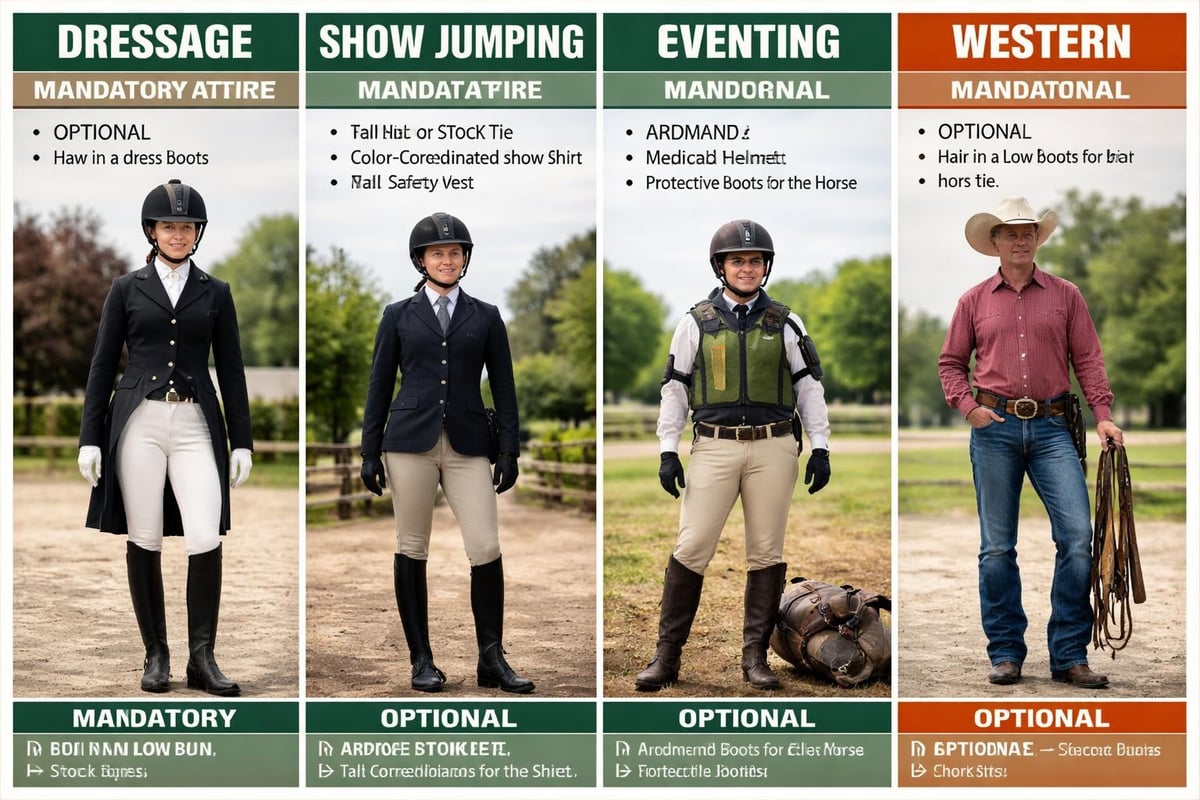
Most governing bodies publish detailed regulations. The Special Olympics Equestrian Sport Rules provide comprehensive standards that apply across various competitive levels, emphasizing both safety and presentation. Regional variations exist, so checking with your specific organization prevents last-minute wardrobe panic.
Judges notice details. A well-fitted jacket, properly tied stock, and polished boots demonstrate respect for the sport and attention to detail that extends beyond your riding. This impression matters when scores are tight.
Essential Components of Men's Show Attire
Building a functional show wardrobe doesn't require emptying your bank account, but strategic investment in quality pieces pays dividends. Start with versatile foundation pieces that work across multiple settings.
Breeches and Jodhpurs
Your breeches represent the most critical clothing decision you'll make. They need to perform under pressure whilst looking sharp throughout a long competition day.
Modern horse show wear has transformed breeches from purely aesthetic garments into technical performance pieces. Look for four-way stretch fabrics that move with you, reinforced knee patches or full seats for grip, and moisture-wicking properties that keep you comfortable.
Navy, black, and tan remain the safest color choices for most disciplines. White or light breeches appear in certain classes, particularly advanced dressage, but check rules carefully. The Cowboy Dressage guidelines demonstrate how even non-traditional disciplines maintain specific standards.
Fit matters enormously. Too tight restricts movement and creates unsightly pulling at seams. Too loose bunches under your boots and creates bulk. Quality breeches from performance-focused brands offer tailored cuts designed specifically for male riders, addressing different body proportions than women's versions adapted for men.
Show Shirts and Stocks
The traditional stock tie remains standard in formal dressage and hunting attire. Modern alternatives include technical show shirts with integrated collars, offering easier preparation and consistent appearance.
When wearing a stock, the shirt underneath should be plain white, long-sleeved, and fitted enough to avoid bunching under your jacket. The stock itself should be tied neatly, secured with a plain gold or silver pin positioned horizontally.
Ratcatcher-style shirts provide a less formal alternative acceptable in many lower-level competitions. These feature a small collar and button front, often worn with a subtle tie. Ensure the fit allows full range of motion without gaping or pulling across the shoulders.
Technical fabrics that wick moisture and resist wrinkles have revolutionized show shirts. You can maintain a crisp appearance even during warm-weather competitions or back-to-back classes.
Jackets and Outerwear for Competition
Your show jacket represents the most visible element of your horse show wear, and selection depends heavily on discipline and season.
Traditional black or navy jackets suit most disciplines and levels. Some dressage competitions now permit subtle colors at lower levels, whilst shadbelly coats appear at upper levels. The Malta Equestrian Federation's code of conduct outlines how attire requirements ensure safety and appropriateness across competitive environments.
| Jacket Type | Disciplines | Key Features | Best For |
|---|---|---|---|
| Single-breasted hunt coat | Hunter, jumper, equitation | Conservative cut, single vent | Most versatile option |
| Shadbelly/tailcoat | Upper-level dressage | Traditional tails, vest | FEI-level competitions |
| Dressage coat | Dressage (training-PSG) | Longer cut, double vents | Classical presentation |
| Technical show jacket | All disciplines | Stretch fabric, breathable | Warm weather, active riding |
Fit deserves careful attention. Jackets should allow full arm movement without pulling across the back or shoulders. Sleeve length should reveal about half an inch of shirt cuff when arms hang naturally. The jacket should sit smoothly across your shoulders without bunching or gaping.
Modern materials have improved dramatically. Technical blends offer four-way stretch whilst maintaining structure and professional appearance. These jackets breathe better than traditional wool, making them practical for summer shows whilst still looking sharp.
Seasonal Considerations
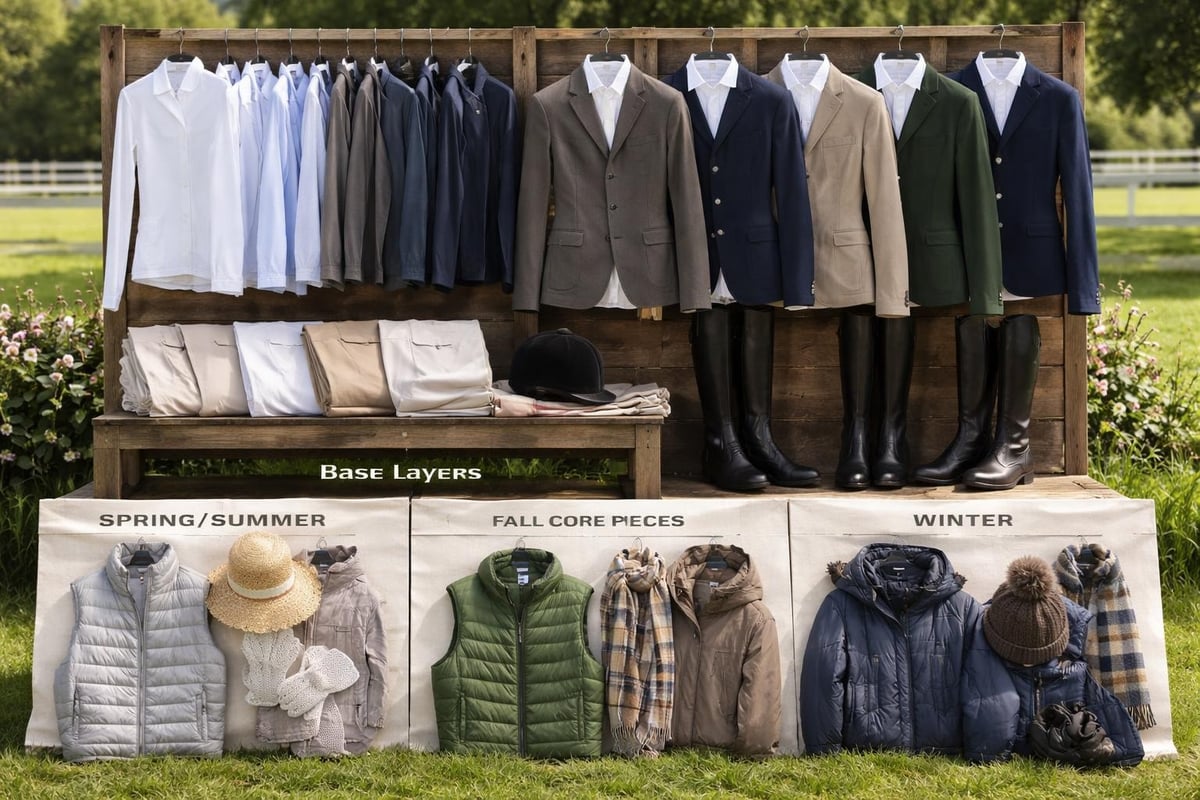
Weather-appropriate layering doesn't mean sacrificing presentation. Base layers worn under show shirts should be invisible and non-bulky. Technical performance fabrics designed for riding maintain warmth without restricting movement.
Rain jackets specifically designed for showing exist, though many competitions allow sensible outerwear during inclement weather. Always verify with show management before entering the ring in non-standard attire.
Footwear and Accessories
Boots complete your turnout and significantly impact both appearance and safety. Tall boots remain the gold standard for most disciplines, though paddock boots with half chaps appear in certain contexts.
Black leather tall dress boots suit virtually every discipline and level. Brown boots appear in some hunter classes and certain informal settings, but black proves more versatile when building an initial competition wardrobe.
Modern boot technology offers both traditional leather and synthetic alternatives. Quality synthetic boots can look remarkably similar to leather whilst requiring less maintenance and costing considerably less. For riders competing frequently, having multiple pairs allows proper drying time between shows.
Spurs and gloves round out the accessories. Rules vary by discipline regarding spur requirements, length limitations, and rowel types. The New York State Fair 4-H Horse Show guidelines provide detailed specifications showing how thoroughly equipment and attire standards are regulated even at youth levels.
Gloves should match or complement your overall color scheme. Black or brown leather gloves look professional and provide good grip. Some riders prefer technical riding gloves offering enhanced feel whilst maintaining acceptable appearance.
Belts, when visible, should be conservative leather in black or brown. Belt buckles should be subtle and professional unless competing in disciplines where decorative buckles form part of traditional attire.
Building a Practical Show Wardrobe
Strategic wardrobe building prevents both overspending and finding yourself unprepared. Start with essentials that work across multiple contexts, then add specialized pieces as needs evolve.
Your first priority should be one well-fitted pair of show breeches in navy or black. These work for most disciplines and levels, giving you maximum flexibility. Add a quality show shirt and stock, then invest in a properly fitted jacket.
| Priority Level | Item | Why It Matters | Budget Tip |
|---|---|---|---|
| Essential | Navy/black breeches | Works across disciplines | Buy quality first time |
| Essential | White show shirt | Required for most competitions | Technical fabric worth the investment |
| Essential | Show jacket | Defines your presentation | Consider previous season styles |
| Important | Tall boots | Safety and appearance | Synthetic alternatives perform well |
| Important | Stock tie/pin | Traditional disciplines require | Simple, classic styles are timeless |
| Nice to have | Second breeches pair | Backup for multi-day shows | Same style in different color |
Once you've established the basics, consider discipline-specific needs. Dressage riders might invest in a shadbelly for upper-level competitions. Show jumpers might add a second jacket in a complementary color. Event riders need attire for each phase.
The Riding Warehouse dressage guide offers comprehensive head-to-toe references demonstrating how detailed competition requirements can be. Understanding these specifics helps you invest wisely rather than purchasing items you'll never actually use.
Care and Maintenance of Show Clothing
Horse show wear represents a significant investment, and proper care extends the life of quality pieces whilst ensuring they look sharp when it matters.
Breeches should be washed after each wear, using cold water and gentle cycle. Skip fabric softener, which can reduce the effectiveness of technical fabrics and grip materials. Air dry when possible, as heat degrades elastic and synthetic fibres over time.
Show shirts generally tolerate normal washing, though stocks require more careful handling. Hand washing stocks prevents damage to delicate fabrics, and proper pressing maintains the crisp appearance needed under a jacket.
Jackets need professional cleaning, but not after every wear. Spot cleaning and proper hanging between uses often suffices. Over-cleaning can damage fabrics and break down waterproof or technical treatments. Steam between shows to refresh appearance and release minor wrinkles.
Boot care depends on material. Leather boots need regular cleaning and conditioning to prevent cracking and maintain suppleness. Synthetic boots simply wipe clean but should still be inspected regularly for wear. Store all boots with boot trees to maintain shape and prevent creasing.
Keep show clothing separate from everyday riding gear. Dedicated storage prevents accidental damage and ensures everything stays clean and ready. A hanging garment bag protects jackets during transport to shows.
Practical Tips for Show Day
Even perfect horse show wear won't help if you're stressed and disorganized on competition day. Preparation prevents problems.
Pack everything the night before, using a checklist to ensure nothing gets forgotten. Include backup items where possible – an extra stock tie, spare gloves, emergency safety pins. These small items have saved many riders from wardrobe disasters.
Arrive with time to dress properly. Rushing creates mistakes and starts your day with unnecessary stress. Your clothing should enhance your confidence, not add to pre-ride nerves.
Check yourself carefully before entering. Stock straight? Collar smooth? Jacket buttoned correctly? Gloves clean? These final checks take seconds but ensure you enter the ring looking polished.
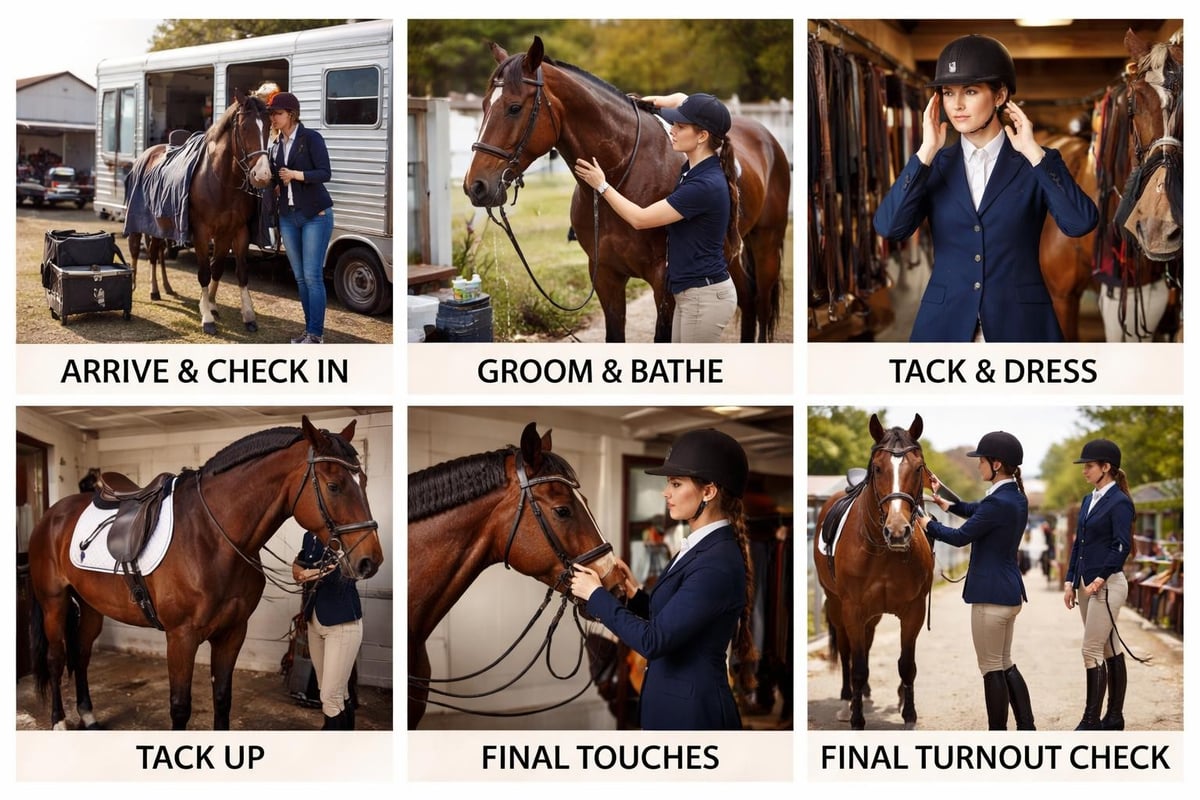
Consider the spectator perspective too. Horse & Hound's guidance on dressage attire for affiliated and unaffiliated events helps riders understand how presentation standards vary, demonstrating that appropriate attire shows respect for the sport at every level.
Modern Innovations in Show Attire
The equestrian industry has embraced technical fabrics and ergonomic design, transforming horse show wear from purely traditional garments into performance equipment.
Four-way stretch materials move naturally with your body, eliminating the restriction older fabrics imposed. This freedom of movement doesn't just feel better – it allows you to ride more effectively, with less interference from your clothing.
Moisture-wicking technologies keep you comfortable during warm-weather competitions or when nerves create additional perspiration. Instead of feeling clammy and distracted, modern fabrics move moisture away from skin, helping you maintain focus.
Temperature-regulating materials adapt to conditions, providing warmth when needed without causing overheating during exertion. These innovations prove particularly valuable for riders competing in variable climates or indoor-outdoor venues where temperatures fluctuate significantly.
Wrinkle-resistant treatments and fabrics maintain professional appearance even after hours of wear or travel. This practicality matters enormously when competing over multiple days or traveling long distances to events.
The balance between tradition and innovation defines modern equestrian sport. Whilst honoring classical presentation standards, contemporary horse show wear incorporates technology that genuinely improves rider comfort and performance. Quality manufacturers understand this balance, creating clothing that meets regulatory requirements whilst delivering genuine functional advantages.
Navigating Discipline-Specific Requirements
Each equestrian discipline maintains unique traditions and specific attire requirements. Understanding these nuances prevents embarrassment and potential elimination.
Dressage tends toward the most formal and strictly regulated attire. As you progress through the levels, requirements become more specific. What's acceptable at Training Level may not meet standards for Fourth Level or FEI competition. The Inter-School Horse Show attire guidelines demonstrate how even youth programs maintain discipline-specific standards, preparing riders for higher-level competition expectations.
Hunter and equitation classes emphasize conservative, traditional presentation. Flashy or trendy elements that might work in jumper classes have no place in the hunter ring. Classic styling, perfect fit, and impeccable turnout define success in these divisions.
Show jumping allows slightly more personality and color, particularly in jumper classes where time and faults matter more than subjective judging. However, professional presentation still matters and sloppy turnout never creates positive impressions.
Eventing requires appropriate attire for each phase. Dressage phase follows dressage rules, cross-country allows more practical clothing prioritizing safety, and show jumping typically permits jumper-style attire. Understanding these transitions and having proper clothing for each phase prevents last-minute scrambling.
Western disciplines maintain their own standards, often incorporating traditional elements like cowboy hats, boots, and specific shirt styles. These requirements differ significantly from English disciplines but are equally specific and meaningful within their tradition.
The Investment Perspective
Quality horse show wear costs more initially but delivers better value over time. Understanding where to invest and where you can economize helps build an effective competition wardrobe without overspending.
Breeches justify premium investment. You'll wear them frequently, they endure significant stress, and proper fit dramatically impacts comfort. Technical fabrics from performance-focused manufacturers like Gallant Equestrian offer durability that cheaper alternatives simply cannot match. A quality pair of breeches lasts multiple seasons with proper care, whilst budget options may need replacement after a single competitive season.
Jackets also warrant careful investment, particularly if you compete regularly. A well-constructed jacket maintains its shape and appearance through years of use, whilst cheaper versions may lose structure, fade, or develop visible wear quickly.
Boots represent another area where quality pays dividends. Proper fit prevents blisters and discomfort, quality construction provides necessary support, and durable materials withstand the demands of regular competition.
Show shirts and stocks offer more flexibility for budget-conscious riders. Whilst quality matters, the difference between mid-range and premium options proves less dramatic than with breeches or jackets. Focus on proper fit and appropriate fabric rather than brand names.
Consider the cost per wear when evaluating purchases. An expensive jacket worn fifty times per year for five years costs far less per use than a cheap jacket replaced annually. This perspective helps justify appropriate investment in quality pieces.
Horse show wear combines tradition, regulation, and modern performance technology. Understanding what's required, investing in quality essentials, and maintaining your competition wardrobe ensures you always enter the ring looking and feeling confident. Gallant Equestrian designs performance-driven clothing specifically for men who ride, combining New Zealand craftsmanship with technical innovation that works from stables to show ring. Look the Part. Enjoy the Ride.

