

Men's Horse Riding Clothes: A Complete Guide
Mar 26, 2026
The right mens horse riding clothes do more than look sharp. They improve how you ride, protect you in the saddle, and hold up to the demands of stables, arenas, and everything in between. Whether you're training daily or competing at the weekend, your clothing choices affect comfort, safety, and confidence. Modern equestrian apparel has evolved beyond traditional tweed and jodhpurs, incorporating technical fabrics and tailored fits that perform under pressure whilst maintaining the refined aesthetic the sport demands. Understanding what to wear, why it matters, and how to choose pieces that work for your riding style is essential for any serious rider in 2026.
The Foundation: Breeches and Riding Trousers
Quality breeches form the cornerstone of any riding wardrobe. These aren't everyday trousers with a fancy name. They're engineered specifically for hours in the saddle, with features that regular clothing simply cannot provide.
The seat and inner leg areas receive reinforcement through patches or full-seat grip panels. These additions prevent wear and improve stability. Silicone or leather grips keep you secure during transitions, jumping, or lateral work. Without them, you're fighting against the saddle rather than working with it.
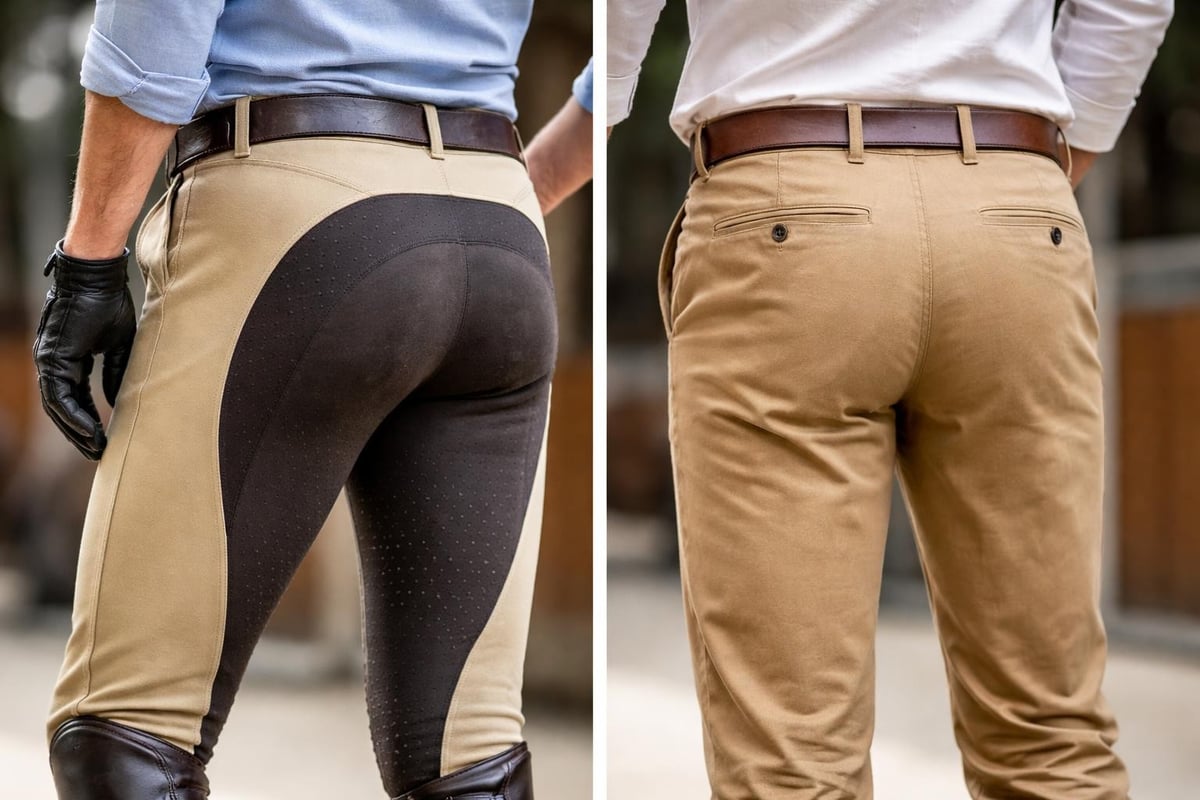
Fit matters enormously. Modern mens horse riding clothes embrace anatomical tailoring that follows the male form without excess fabric bunching at the knee or hip. Look for four-way stretch materials that move with you, not against you. The waistband should sit comfortably without a belt, though many riders prefer the security of one during vigorous work.
Fabric technology has transformed riding trousers. Moisture-wicking materials keep you dry during summer sessions. Thermal options add warmth without bulk in winter. Some fabrics incorporate UV protection for outdoor riding. Performance breeches now rival athletic wear in technical specifications whilst maintaining the classic equestrian aesthetic.
Choosing Between Full-Seat and Knee-Patch
| Feature | Full-Seat Breeches | Knee-Patch Breeches |
|---|---|---|
| Grip Coverage | Entire seat area | Knee area only |
| Best For | Jumping, dressage, intensive training | General riding, hacking, warm weather |
| Security | Maximum stability | Moderate stability |
| Breathability | Reduced in seat area | Better overall ventilation |
| Versatility | Primarily riding-focused | Easier transition to casual wear |
Full-seat designs provide superior grip for disciplines requiring deep seats and precise positioning. Knee-patch versions offer better ventilation and work well for relaxed riding or warmer climates. Many riders maintain both styles, selecting based on the day's activities.
Upper Body Essentials: Shirts and Polo Shirts
Your upper body clothing balances presentation with practicality. Riding shirts and polo shirts form the base layer, directly contacting skin and managing moisture throughout your session.
Traditional show shirts feature structured collars, fitted cuts, and neutral colours. They're designed to slip beneath show jackets without bunching. For training, technical polo shirts offer collar formality with athletic performance. Look for raglan sleeves or gusseted underarms that allow full range of motion when posting or reaching forward.
Modern fabrics handle sweat better than cotton ever could. Synthetic blends or merino wool options dry quickly and resist odour. Some incorporate mesh panels under the arms or along the spine for targeted ventilation. These aren't visible features, but you'll notice them during a long hack or intensive lesson.
Fashion-forward equestrian clothing doesn't sacrifice function for style. Well-designed shirts maintain clean lines whilst incorporating stretch panels at stress points. Flatlock seams prevent chafing. Longer back hems stay tucked during mounted work. These details separate purpose-built riding wear from adapted athletic gear.
Colour and pattern choices have expanded beyond traditional white and pale blue. Navy, charcoal, and burgundy feature prominently in modern wardrobes. Subtle patterns add personality without compromising the polished look expected in equestrian circles. Save bold graphics for after-hours wear.
Jackets: From Schooling to Competition
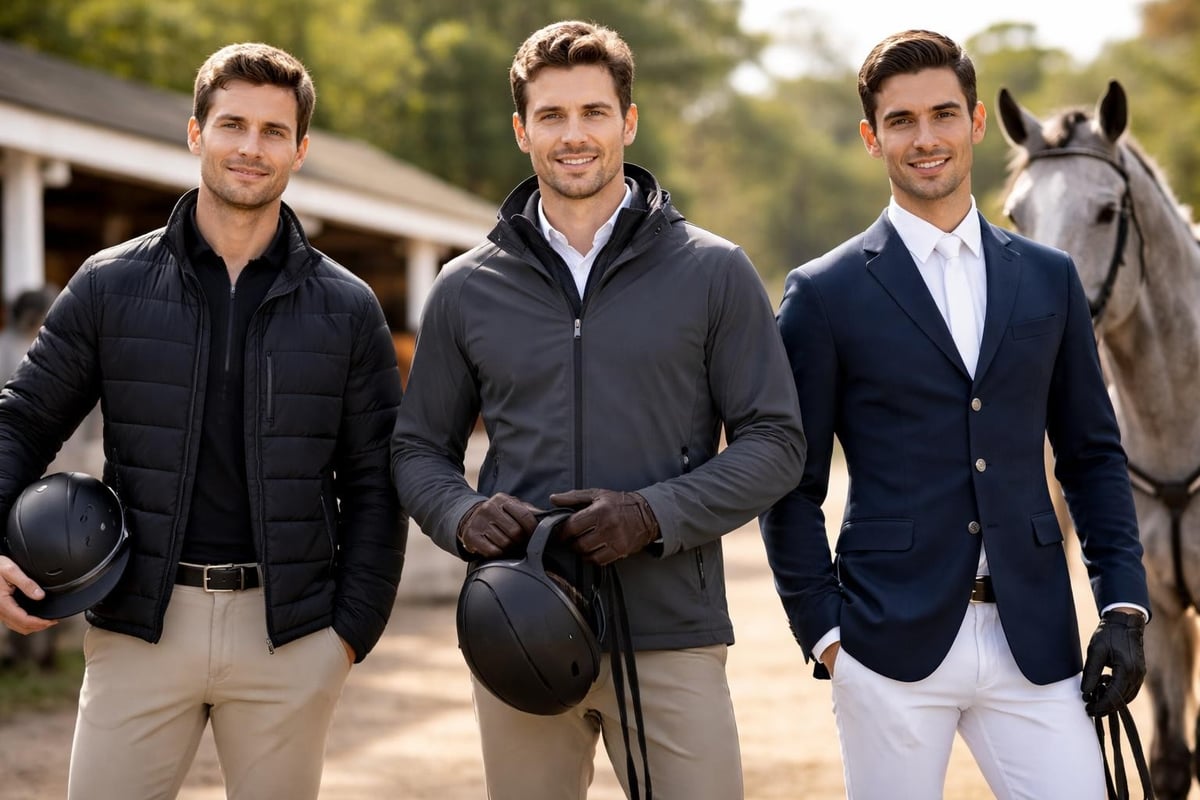
Riding jackets serve multiple purposes across different contexts. Competition jackets adhere to strict discipline requirements. Schooling jackets prioritise comfort and weather protection. Understanding what to wear in the competition arena helps you invest wisely.
Show jackets follow traditional tailoring with structured shoulders, fitted waists, and two or three-button fronts. Navy or black dominate, though some disciplines permit grey or tweed. The cut allows shoulder movement whilst presenting a sharp silhouette. Vent placement (centre vent, side vents, or none) varies by discipline and personal preference.
Softshell jackets have revolutionised everyday riding. These water-resistant, breathable layers stretch with your movements, making them ideal for schooling in changeable weather. They pack down smaller than traditional riding coats, perfect for lorry storage or weekend trips. Many feature removable hoods and adjustable cuffs for versatility.
Gilets extend your wardrobe's range. These sleeveless options add core warmth without restricting arm movement. Layer them over polo shirts during transitional weather or under heavier jackets when temperatures drop. Quality gilets incorporate stretch side panels and dropped hems for saddle compatibility.
Technical competition jackets now integrate performance fabrics previously reserved for base layers. Moisture-wicking linings, four-way stretch panels, and laser-cut ventilation maintain tradition's appearance whilst delivering modern comfort. The best examples feel like tailored athletic wear rather than restrictive formal wear.
Base Layers and Thermal Options
What you wear beneath your riding clothes directly affects comfort across varying conditions. Base layers manage temperature and moisture without adding bulk or restricting movement.
Summer riding demands lightweight, breathable fabrics that pull sweat away from skin. Mesh construction or perforated panels increase airflow. Look for flatlock seams that won't irritate during long sessions. Some riders prefer sleeveless options under fitted riding shirts to minimise layering.
Winter base layers provide insulation without overheating during active riding. Merino wool naturally regulates temperature and resists odour through multiple wears. Synthetic thermal options dry faster but may require more frequent washing. Both work well; personal preference and local climate guide the choice.
Compression base layers have gained popularity among competitive riders. The snug fit supports muscles during intensive work and may aid recovery. However, ensure any compression wear allows full breathing and doesn't restrict circulation. Proper fit is essential, not optional.
Outerwear for All Conditions
British weather demands versatile outerwear that transitions between stable work and riding. Your jacket collection should address rain, wind, and cold without compromising movement or adding dangerous bulk in the saddle.
Waterproof riding coats extend below the saddle, protecting your legs from rain whilst mounted. Look for two-way zips that open from the bottom, allowing better leg contact. Adjustable cuffs seal out wind and rain. The best versions pack into their own pockets for easy storage when the sun emerges.
Quilted jackets offer warmth with refined styling. Modern technical quilting uses lightweight insulation that compresses well without losing loft. Stretch side panels maintain mobility. These jackets transition seamlessly from stable to pub, making them valuable beyond riding-specific use.
Fleece layers provide mid-weight warmth and exceptional versatility. They dry quickly after rain or sweat, resist pilling through repeated washing, and layer easily under waterproofs or show jackets. Choose fitted options rather than bulky designs to maintain clean lines under other layers.
Understanding equestrian clothing specifications helps you evaluate technical features and make informed purchases. Not all waterproofing performs equally. Not all insulation weighs the same. Research fabric specifications before investing in premium outerwear.
Footwear Fundamentals
Boots represent your most critical safety investment. They protect feet and ankles whilst providing the heel security necessary for safe riding. Proper riding boots feature smooth soles that won't catch in stirrups, defined heels (at least 1.3cm) that prevent feet sliding through, and sufficient ankle support.
Tall boots remain the traditional choice, extending to just below the knee. Leather versions require breaking in but mould to your leg over time. Synthetic options offer immediate comfort and easier care. Both styles work well; quality matters more than material.
Paddock boots with half chaps provide similar coverage in a more affordable, versatile package. The boots stop at the ankle, paired with leather or synthetic gaiters that protect the lower leg. This combination works brilliantly for everyday riding and allows easier walking between tasks.
Jodhpur boots suit casual riding and stable work. These ankle-height boots pair with traditional jodhpur trousers (which differ from modern breeches). While less common in 2026, they remain valid for relaxed riding contexts.
Boot fit cannot be compromised. Tight boots restrict circulation and cause pain. Loose boots create safety hazards and fail to provide adequate support. Most quality boot manufacturers offer multiple calf widths and foot shapes. Take time to find your proper fit rather than settling for approximately correct.
Accessories That Matter
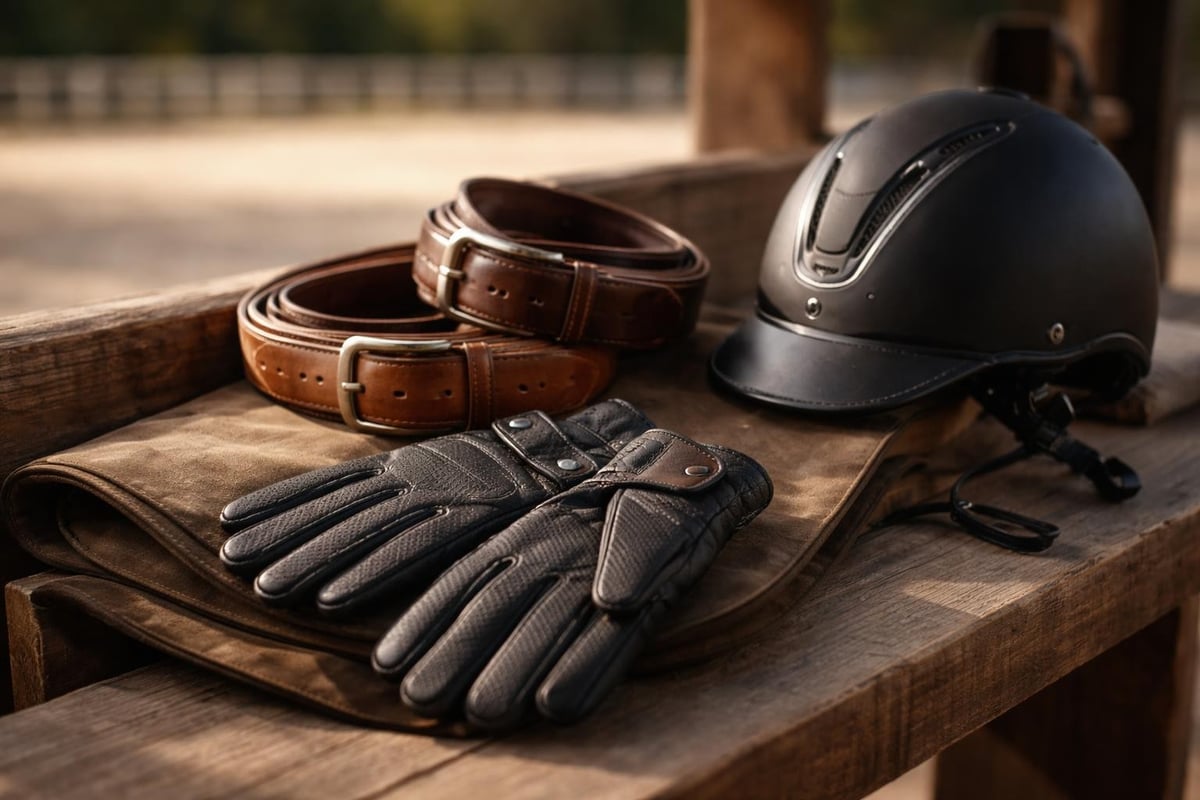
The details complete your riding outfit and address specific functional needs. Quality accessories enhance safety, comfort, and presentation.
Gloves improve grip and protect hands from reins, weather, and stable work. Summer gloves prioritise ventilation and tackiness. Winter versions add insulation whilst maintaining feel. Some riders prefer no gloves in warm weather, accepting calluses as part of riding. Others find gloves essential year-round for grip and protection.
Belts serve both practical and aesthetic purposes. A quality leather belt complements your outfit whilst securing breeches that might otherwise slip during mounting or vigorous riding. Choose subtle colours that coordinate with your boots and tack rather than making statements.
Helmets represent non-negotiable safety equipment. Modern designs balance protection with ventilation and styling. Replace helmets every five years or after any impact. Proper fit requires trying multiple brands and models. Never compromise on helmet quality or fit to save money.
Socks deserve more attention than they typically receive. Riding-specific designs prevent bunching inside boots, manage moisture, and provide targeted cushioning. Tall socks work with tall boots. Shorter versions suit paddock boots. Avoid cotton; choose synthetic or merino wool instead.
Competition Dress Codes
Different disciplines maintain specific equestrian dress code expectations. Understanding these requirements prevents embarrassing mistakes and demonstrates respect for tradition.
Dressage demands formal presentation with black or navy jackets, white or light-coloured breeches, tall boots, and white shirts with tie or stock. Gloves are mandatory. Higher levels may require tailcoats. Turnout should be immaculate, with clean boots and pressed clothing.
Show jumping allows slightly more flexibility, though formality remains important. Dark jackets, light breeches, and conservative shirts form the standard. Some competitions permit team colours or sponsored gear. Always verify specific competition rules before arriving.
Eventing requires different outfits across phases. Dressage follows dressage rules. Show jumping maintains formality. Cross-country permits technical jerseys and body protectors over more casual base layers. Pack accordingly for multi-phase events.
Western disciplines follow entirely different conventions. While beyond the scope of mens horse riding clothes in English disciplines, riders crossing between styles should research Western requirements separately. The two traditions share little in terms of acceptable competition attire.
Building a Practical Wardrobe
Creating a functional riding wardrobe requires strategic thinking rather than random purchases. Start with versatile basics that work across multiple contexts, then add specialised items as needs arise.
Starter Wardrobe Essentials
| Item | Recommended Quantity | Priority Level |
|---|---|---|
| Quality breeches | 2-3 pairs | Essential |
| Technical polo shirts | 3-4 shirts | Essential |
| Riding boots | 1 pair (tall or paddock) | Essential |
| Softshell jacket | 1 | Essential |
| Base layers | 2-3 pieces | High |
| Show jacket | 1 | Medium (if competing) |
| Waterproof coat | 1 | High |
| Gloves | 2 pairs (summer/winter) | Medium |
This foundation supports regular riding without excessive laundry demands. As your involvement deepens, add discipline-specific items, additional breeches for variety, and seasonal pieces that address your local climate.
Investing in essential collections built around cohesive colour palettes simplifies outfit selection. When everything coordinates, getting dressed for the yard becomes effortless. Focus on navy, black, grey, and neutral tones that mix freely.
Care and Maintenance
Quality mens horse riding clothes represent significant investment. Proper care extends their lifespan and maintains appearance through countless rides.
Breeches should be washed inside out in cold water. Avoid fabric softener, which degrades technical fabrics and grip materials. Line dry when possible. Heat damages stretch fibres and can melt synthetic grips. Remove immediately after washing to prevent wrinkles.
Technical shirts tolerate frequent washing better than traditional cotton. Follow care labels, typically cold wash and low heat or line dry. Some antimicrobial fabrics maintain freshness through multiple wears, reducing washing frequency. Evaluate by smell and appearance rather than automatic laundering after each ride.
Jackets require different approaches based on material. Softshells typically wash well at 30°C. Show jackets often need professional cleaning to maintain structure. Check labels before assuming anything is machine washable. Waterproof garments benefit from periodic reproofing treatments to restore water-repellent coatings.
Boots demand regular cleaning and conditioning. Remove mud promptly. Use appropriate cleaners for leather or synthetic materials. Condition leather boots after cleaning to prevent cracking. Store tall boots with boot trees to maintain shape. Replace worn heels immediately for safety.
Proper storage matters as much as cleaning. Hang jackets on shaped hangers. Fold breeches loosely rather than cramming them into drawers. Store boots upright with support. Keep competition wear separate from everyday pieces to minimise unnecessary wear.
Transitioning Riding Clothes to Everyday Wear
Modern equestrian clothing increasingly bridges the gap between stable and street. Well-designed pieces work in both contexts without compromising either role. This versatility adds value to every purchase.
Casual horse riding clothes now incorporate styling that translates beyond the yard. Technical breeches in neutral tones pair with casual shirts for weekend errands. Quilted jackets work over jeans as easily as over riding trousers. Polo shirts function at the stable or the coffee shop.
The key lies in selecting pieces with clean lines and subtle branding. Oversized logos or excessive technical detailing marks clothing as sports-specific. Refined designs in classic colours transition seamlessly. Navy softshell jackets, charcoal fleeces, and well-fitted polos all serve double duty with minimal styling adjustments.
This versatility proves particularly valuable for riders balancing equestrian pursuits with professional lives. Fewer wardrobe changes mean easier travel to the yard before or after work. Quality pieces justify their cost through expanded use beyond strictly riding contexts.
Some items remain yard-specific. Full-seat breeches with extensive grip panels look out of place away from stables. Tall boots read as costume outside equestrian settings. Competition jackets belong in competition contexts. Accept these limitations rather than forcing inappropriate items into civilian rotation.
Seasonal Considerations
British weather demands seasonal adaptation. Your wardrobe should address temperature extremes and changeable conditions without requiring complete replacement between seasons.
Spring and autumn benefit from layering strategies. Base layers, technical shirts, and lightweight jackets combine to address morning chill that gives way to afternoon warmth. Keep waterproofs accessible, as spring showers arrive without warning. Transitional pieces earn their keep during these unpredictable months.
Summer riding prioritises ventilation and sun protection. Lightweight breeches in pale colours reflect heat better than dark fabrics. Mesh-panel shirts increase airflow. Wide-brimmed hats protect faces during outdoor riding, though you'll switch to helmets when mounted. Some riders invest in UV-protective base layers for extended outdoor sessions.
Winter demands serious thermal strategy. Layer base layers beneath shirts beneath jackets for adjustable warmth. Remove layers as work intensity increases. Thermal breeches or tights worn under regular breeches add insulation without changing your silhouette. Hand warmers tucked into gloves help during especially bitter sessions. Understanding complete equestrian clothing options helps you address all seasonal requirements.
Avoid the temptation to skip layers and tough through cold sessions. Hypothermia affects judgement and reaction time, creating safety risks. Properly layered riders maintain body temperature, focus, and performance through challenging conditions.
Fit and Tailoring
Proper fit separates functional mens horse riding clothes from uncomfortable compromises. Unlike casual clothing where approximate fit suffices, riding wear demands precision tailoring for safety and performance.
Breeches should fit snugly through the seat and thigh without restricting movement. Test by sitting deeply and lifting your knees to riding position. Fabric should stretch smoothly without pulling or sagging. The waistband should sit comfortably at your natural waist, not below it. Excess length bunches at the ankle inside boots; insufficient length exposes skin between boot top and breech hem.
Shirts require room through the shoulders and chest for mounting and posting. Sleeve length should allow full arm extension without pulling fabric from the waistband. Too much ease creates excess fabric that bunches under jackets. Too little restricts movement and causes discomfort.
Show jackets demand professional tailoring. Shoulders should align with your natural shoulder line. Sleeves should end at the wrist bone, exposing shirt cuffs slightly. The jacket should button comfortably without pulling across the chest or back. Vent length affects how the jacket drapes when mounted; verify this by sitting in riding position during fittings.
Many riders benefit from professional alterations even on ready-to-wear pieces. Hemming breeches to your exact inseam, adjusting jacket sleeve length, or taking in a waist costs modest amounts but dramatically improves fit. These investments pay dividends in comfort and appearance through years of wear.
Understanding Fabric Technology
Modern fabric development has revolutionised equestrian clothing. Understanding these technologies helps you evaluate products and match features to your riding needs.
Four-way stretch materials extend in both directions, moving with your body rather than restricting it. This matters enormously for breeches and base layers. Previous-generation two-way stretch fabrics extended in only one direction, limiting flexibility. Four-way stretch enhances comfort and freedom of movement.
Moisture-wicking fabrics pull perspiration away from skin to the garment's outer surface where it evaporates. This keeps you drier and more comfortable during intensive riding. Different synthetics wick at varying rates. Merino wool wicks naturally whilst providing temperature regulation and odour resistance.
Water-resistant and waterproof describe different protection levels. Water-resistant fabrics repel light rain but saturate eventually. Waterproof materials feature sealed seams and impermeable membranes that block water completely. Waterproof fabrics require breathable membranes to prevent internal moisture buildup. Technologies like Gore-Tex allow moisture vapour to escape whilst blocking liquid water.
Grip materials include silicone prints, leather patches, and specialised synthetic surfaces. These prevent slipping in the saddle. Silicone grips work well for most riders and prove easier to care for than leather. Full-seat silicone provides maximum security. Leather feels traditional but requires more maintenance.
Comparing equestrian competition apparel technologies reveals significant variation across brands and price points. Higher costs often reflect superior fabric performance, but some expensive items rely more on branding than genuine technical advantages. Research specifications rather than assuming price indicates quality.
Colour and Style Choices
While tradition emphasises neutral colours and conservative styling, modern mens horse riding clothes offer more variety than ever before. Understanding when to embrace options versus when to maintain tradition helps you build an appropriate wardrobe.
Training and everyday riding permits broader colour palettes and personal expression. Navy, charcoal, burgundy, forest green, and similar rich tones work beautifully. Subtle patterns add interest without compromising the refined aesthetic. These choices let personality show whilst maintaining the polished look expected at reputable yards.
Competition contexts demand adherence to discipline-specific rules. Dressage and show jumping typically require conservative colours and minimal embellishment. Some lower-level competitions allow greater freedom, but verify rules before taking liberties. When uncertain, choose navy or black.
Brand visibility varies by context. Subtle logos or tonal branding maintains clean aesthetics. Oversized logos or excessive branding can appear unprofessional in formal settings. Choose pieces with tasteful branding that communicates quality without overwhelming the design.
Style evolution continues within traditional frameworks. Modern cuts incorporate athletic tailoring that flatters without appearing overly fashion-forward. Details like contrast stitching, tonal panelling, or updated collar designs refresh classic items whilst respecting equestrian tradition. Quality brands balance innovation with respect for the sport's heritage.
The right mens horse riding clothes support your performance, protect your safety, and project confidence both mounted and unmounted. Building a wardrobe around quality basics that perform across contexts maximises value whilst ensuring you're properly equipped for any riding situation. From technical breeches engineered for hours in the saddle to jackets that transition seamlessly from arena to everyday life, every piece should earn its place through proven functionality and versatile styling. Gallant Equestrian creates performance-driven equestrian clothing designed specifically for men who demand both style and substance from their riding wardrobe. Look the Part. Enjoy the Ride.

