

Horse Riding Gear for Men: The Complete Guide
Apr 07, 2026
Choosing the right horse riding gear for men isn't about following trends or chasing logos. It's about understanding what actually works when you're in the saddle, whether you're schooling at home, competing at a show, or hacking through open country. Quality gear protects you, supports your position, and gives you the confidence to focus on your riding rather than adjusting uncomfortable clothing. The challenge many male riders face is finding pieces that balance performance with a refined aesthetic, gear that transitions seamlessly from stables to everyday life without compromise. This guide breaks down the essentials you need, how they should fit, and what to prioritize as you build a functional equestrian wardrobe.
Foundation Pieces: Breeches and Riding Trousers
Your choice of breeches defines your comfort in the saddle more than any other single piece. They're the interface between you and your horse, and poorly fitted or low-quality breeches will affect your position, grip, and overall riding experience.
Material and Construction
Modern riding breeches use technical fabrics that stretch in four directions whilst maintaining their shape ride after ride. Look for materials that combine durability with breathability. Cotton blends offer comfort but lack the moisture-wicking properties you need during intense sessions. Synthetic blends with elastane provide the stretch and recovery that keep breeches fitting properly throughout the day.
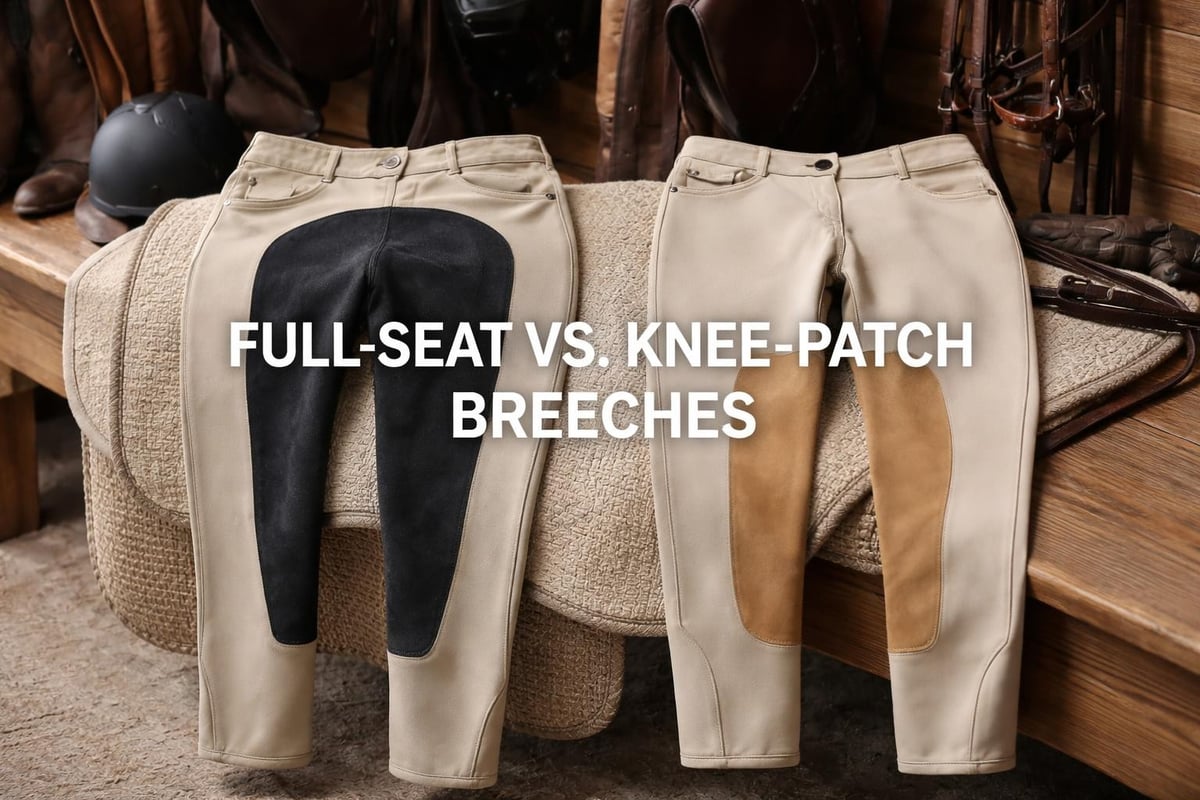
The seat construction matters significantly. Full-seat breeches with silicone or leather grips give you secure contact with the saddle, particularly useful for dressage or show jumping. Knee-patch styles offer grip where you need it whilst maintaining freedom of movement, making them versatile for general riding and hacking.
Fit Considerations
Proper fit means the breeches sit at your natural waist without gaping at the back when you're in riding position. The leg should be close-fitting without restricting circulation, and there shouldn't be excess fabric bunching behind your knee. Mid-rise cuts work well for most riders, offering coverage without the old-fashioned high-waisted look.
Avoid breeches that are too tight in the thigh. Restrictive fabric limits your leg movement and can actually reduce your effectiveness in the saddle. Similarly, waistbands that dig in or require constant adjustment are a distraction you don't need. Quality breeches stay put and move with you throughout your ride.
Footwear: Riding Boots and Paddock Boots
Riding boots serve multiple critical functions, from protecting your feet to providing the correct contact with stirrups and your horse's sides. The traditional tall boot remains the gold standard for many disciplines, offering support, protection, and a classic silhouette.
Leather tall boots mold to your leg over time, creating a custom fit that's hard to beat. They require proper care and break-in time, but the investment pays dividends in comfort and longevity. Modern synthetic alternatives have improved dramatically, offering water resistance and easier maintenance whilst sacrificing some of the traditional aesthetic.
Paddock boots paired with half chaps provide a practical alternative, especially for riders who need versatility. They're easier to get on and off, more affordable, and you can swap different chaps depending on the weather or activity. This combination works particularly well for everyday riding and stable work.
The heel matters more than many riders realize. A defined heel of approximately 2.5cm prevents your foot from slipping through the stirrup, a critical safety feature. The sole should offer enough grip to prevent slipping but not so much tread that it catches in the stirrup.
| Boot Type | Best For | Advantages | Considerations |
|---|---|---|---|
| Leather Tall Boots | Competition, Formal Riding | Classic look, Custom fit over time | Higher cost, Requires break-in |
| Synthetic Tall Boots | All-weather Riding | Water-resistant, Low maintenance | Less traditional appearance |
| Paddock Boots + Chaps | Everyday Riding, Versatility | Easier on/off, Flexible options | Less formal for competition |
| Field Boots | General Riding, Jumping | Lacing allows ankle flex | More casual appearance |
Upper Body: Shirts, Jackets, and Layers
Horse riding gear for men extends well beyond breeches and boots. What you wear on top needs to allow full range of motion whilst looking sharp, whether you're schooling at home or presenting in the show ring.
Riding Shirts and Polo Shirts
Technical riding shirts combine the polished appearance of traditional show wear with modern performance fabrics. Look for materials that wick moisture away from your skin whilst maintaining enough structure to look refined. Collars should stay crisp but not restrict neck movement.
Polo shirts bridge the gap between casual and formal, working equally well for everyday rides and less formal competitions. Choose cuts that fit close to the body without being tight, avoiding excess fabric that can bunch under a jacket or riding vest.
Riding Jackets
Competition jackets require attention to both fit and function. The shoulders should allow unrestricted arm movement, and the length should sit properly when you're in riding position, not when you're standing straight. Vents at the back ensure the jacket drapes correctly in the saddle.
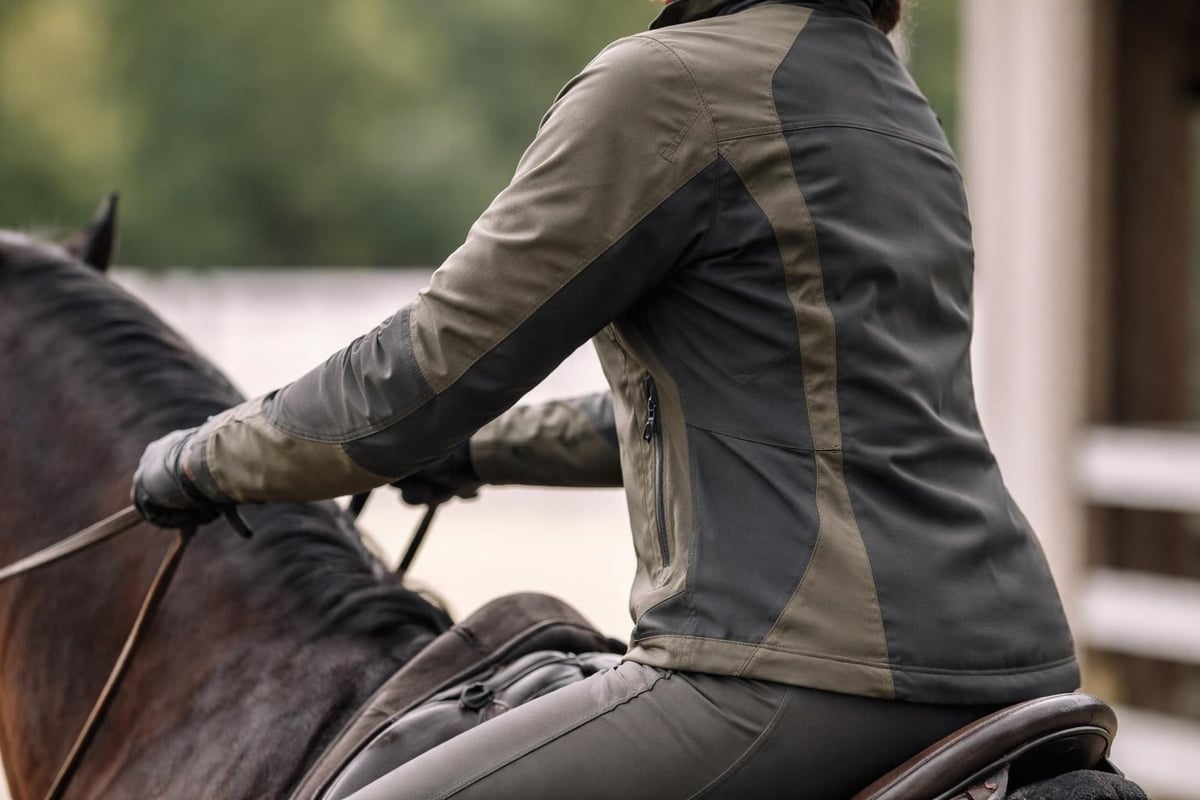
Technical jackets for everyday riding prioritize weather protection and freedom of movement. Water-resistant shells keep you dry during unexpected weather changes, whilst breathable linings prevent overheating during active sessions. Stretch panels in key areas, particularly across the shoulders and back, make all the difference.
Layering Strategies
Weather in 2026 continues to be unpredictable. Building a layering system lets you adapt quickly without sacrificing performance. Base layers should fit close and wick moisture effectively. Mid-layers like sweatshirts and hoodies add warmth without bulk, particularly useful during early morning rides or cool evenings.
Outer layers need to block wind and rain whilst allowing vapor to escape. Stiff, noisy fabrics that restrict movement have no place in quality riding gear. Modern technical materials achieve weather protection without the compromises of older designs.
Safety Equipment: Helmets and Protective Gear
No discussion of horse riding gear for men is complete without addressing safety. Modern helmets have evolved significantly, offering superior protection whilst improving ventilation and comfort.
Helmet Selection
Current safety standards (as of 2026) include PAS 015, VG1, and ASTM certifications. Don't compromise here. Replace helmets after any significant impact or every five years, whichever comes first. Materials degrade over time even without visible damage.
Fit determines effectiveness. The helmet should sit level on your head, approximately two finger-widths above your eyebrows. It shouldn't rock forward or backward, and the retention system should keep it secure without causing pressure points. Try multiple brands as head shapes vary significantly.
Ventilation matters during summer riding. Modern designs incorporate airflow channels that pull heat away without compromising structural integrity. Removable liners allow for washing, essential given the sweat and dust exposure helmets endure.
Body Protectors and Additional Safety Gear
Body protectors offer torso protection during high-risk activities like eventing or breaking young horses. Level 3 protectors provide the highest impact protection available. They should fit snugly without restricting breathing or movement, and length matters: proper coverage extends from shoulders to hips.
Riding gloves protect your hands whilst improving rein contact. Leather palms offer traditional feel and durability, synthetic materials dry faster and often provide better grip in wet conditions. Either way, gloves should fit close enough to maintain sensitivity without being restrictive.
Seasonal Considerations and Weather-Specific Gear
Your riding doesn't stop when weather changes, so your wardrobe shouldn't either. Building seasonal variations of essential pieces ensures comfort year-round.
Summer riding demands moisture management above all else. Lightweight technical shirts with UV protection keep you cool whilst protecting skin from sun exposure. Mesh panels increase airflow in high-sweat zones like the back and underarms.
Winter requires insulation without bulk. Thermal base layers trap heat close to your body, mid-layers provide additional warmth, and outer shells block wind and precipitation. The key is maintaining freedom of movement throughout these layers. Competition wear often incorporates subtle thermal properties, allowing you to compete comfortably even in cooler conditions.
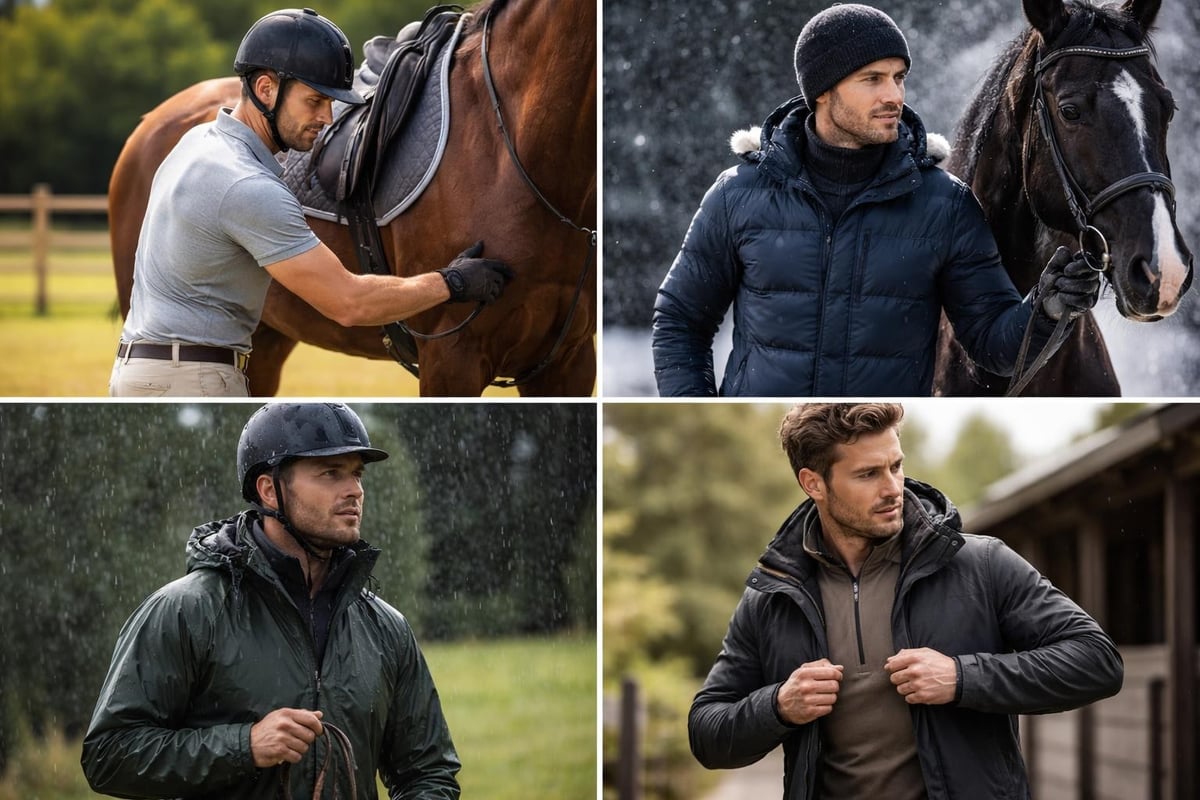
Rain gear needs special attention. Traditional waxed cotton offers classic aesthetics and reliable protection but requires maintenance. Modern waterproof-breathable fabrics provide superior performance with less upkeep. Look for longer cuts that provide coverage in the saddle, and ensure closures won't snag on tack or equipment.
Building Your Wardrobe: Priority and Investment
Starting from scratch with horse riding gear for men can feel overwhelming. Breaking it down by priority helps you build a functional wardrobe without unnecessary expense.
Essential First Purchases:
Safety gear comes first. A properly fitted, certified helmet isn't negotiable. Quality boots follow immediately after, as they directly affect your riding position and safety in stirrups.
Breeches rank next, with at least two pairs allowing you to rotate whilst laundering. One versatile shirt or polo completes your basic kit. This foundation gets you riding safely and comfortably whilst you expand your wardrobe.
Second-Tier Additions:
A riding jacket appropriate for your discipline adds versatility. Weather-specific pieces like a waterproof shell or thermal layers extend your riding season. Additional breeches in different weights or styles give you options for varying conditions and activities.
Gloves and a second helmet (if you ride multiple horses or keep one at different locations) round out this stage. Collections like the Samson Collection often provide coordinated pieces that work together, simplifying wardrobe building.
Long-Term Investment Pieces:
Quality tall boots represent a significant investment but last years with proper care. Specialized competition wear for your specific discipline comes after you've established your foundation. These pieces often incorporate advanced materials and construction techniques that justify their higher cost through durability and performance.
| Priority Level | Items | Investment Range | Replacement Frequency |
|---|---|---|---|
| Essential | Helmet, Paddock Boots, 2 Breeches, Basic Shirt | Moderate to High | Helmet: 5 years, Others: 2-3 years |
| Second-Tier | Riding Jacket, Weather Layers, Additional Breeches | Moderate | 3-5 years |
| Long-Term | Tall Boots, Competition Wear, Specialized Gear | High | 5-10 years with care |
Quality Indicators and What to Look For
Understanding quality helps you make informed purchases that deliver value over time. Fast fashion has infiltrated equestrian wear, but shortcuts in construction show quickly under riding demands.
Examine seam construction carefully. Double-stitched or reinforced seams in high-stress areas like the inseam and seat indicate thoughtful design. Flatlock seams reduce chafing, particularly important in breeches and base layers.
Hardware quality matters significantly. YKK or similar premium zippers resist jamming and breaking. Metal buttons and snap closures outlast plastic alternatives. These details seem minor until a zipper fails mid-ride or a button pops during competition.
Fabric weight and hand-feel reveal construction quality. Flimsy, thin materials won't withstand regular riding. Conversely, overly heavy fabrics restrict movement and comfort. Quality riding gear strikes a balance, using appropriate weight materials in each garment zone.
Check for riding-specific features like articulated knees in breeches, gusseted crotches for movement, and strategically placed stretch panels. These aren't cosmetic additions but functional elements that improve performance and comfort.
Care and Maintenance: Protecting Your Investment
Proper care extends the life of horse riding gear for men significantly. Most technical fabrics require specific treatment to maintain their performance properties.
Wash breeches and technical shirts according to manufacturer instructions, typically cool water with mild detergent. Avoid fabric softeners as they coat fibers and reduce moisture-wicking capabilities. Turn garments inside-out to protect outer surfaces and hardware.
Leather boots need regular cleaning and conditioning. Remove dirt and sweat after each ride, apply conditioner when leather appears dry, and use boot trees to maintain shape. This routine takes minutes but prevents cracking and extends boot life by years.
Store helmets in cool, dry locations away from direct sunlight and extreme temperatures. Don't hang helmets by the retention system, as this can stretch and weaken critical components. Similarly, avoid leaving helmets in hot vehicles where heat degrades materials.
Jackets benefit from professional cleaning when heavily soiled, but spot-cleaning handles most maintenance. Waterproof shells need periodic retreatment with DWR (durable water repellent) coatings to maintain weather resistance. This simple step restores performance without replacing the entire garment.
Fit, Function, and Personal Style
Horse riding gear for men should reflect your personal aesthetic whilst meeting functional demands. The notion that equestrian wear must be boring or overly traditional has faded significantly. Modern designs balance classic elements with contemporary cuts and subtle details.
Fit remains paramount. Clothes that look good standing still but restrict movement in the saddle miss the point entirely. Quality riding gear fits properly in riding position, accounting for the angles and positions your body actually assumes whilst mounted.
Colour choices have expanded beyond traditional navy, black, and tan. Subtle patterns, modern colour blocking, and thoughtful details add personality without compromising the refined aesthetic appropriate for equestrian sport. Equestrian fashion continues evolving, incorporating elements from performance sportswear whilst maintaining the discipline's traditional elegance.
Contemporary fits acknowledge that riders want gear that works beyond the stable yard. Pieces that transition from riding to everyday wear offer better value and versatility. This doesn't mean compromising riding-specific features, rather incorporating them into designs that feel modern and wearable in multiple contexts.
Practical Shopping Advice
Purchasing horse riding gear for men requires more consideration than clicking "buy now" on the first result. Take time to research brands, read reviews from actual riders, and understand return policies before committing to significant purchases.
Try gear on whenever possible, particularly boots and helmets where fit critically affects function and safety. Many riders find that sizing varies between brands, and what fits in regular clothing may not translate directly to riding wear. Resources like comprehensive size guides help when shopping online, but they're supplements to trying items on, not replacements.
Consider purchasing from specialists who understand riding gear rather than general sporting goods retailers. Staff knowledge matters when you're investing in quality pieces, and specialized retailers typically offer better selection in men's equestrian wear. Collections of horseback riding gear from dedicated equestrian suppliers ensure you're getting purpose-built items rather than adapted general sportswear.
Watch for seasonal sales on previous season's stock, but verify that discounted items meet current safety standards if you're purchasing protective equipment. Fashion items can be bargains at season-end, safety gear should always meet current certifications regardless of price.
Building relationships with preferred brands and retailers often yields benefits. Many offer loyalty programmes, early access to new releases, and valuable advice on upcoming products that might suit your needs.
Understanding Different Riding Disciplines
Your discipline influences specific gear requirements beyond the basic essentials. Dressage, show jumping, eventing, and western riding each carry expectations and practical considerations that affect wardrobe choices.
Dressage tradition leans formal, with white or light-colored breeches, tailcoats for upper levels, and tall boots remaining standard. Modern interpretations maintain this elegance whilst incorporating technical fabrics and improved fit. The aesthetic remains conservative, but comfort and performance have improved dramatically.
Show jumping allows more flexibility in competition attire. While formal jackets remain standard at higher levels, colors beyond traditional navy and black appear more frequently. Breeches in various colors and jodhpurs for men offer options depending on specific class requirements.
Eventing demands versatility, as competitors move through dressage, cross-country, and show jumping phases. Gear must transition between formal presentation and high-performance protection. Cross-country requires body protectors, and many riders choose more aggressive boot treads for better footing during ground work between phases.
Understanding your primary discipline's expectations helps prioritize purchases appropriately. Casual riders and those focused on hacking have more flexibility than competitors preparing for formal shows.
The Evolution of Men's Equestrian Wear
Men's riding gear has evolved significantly, moving beyond simply adapting women's designs or maintaining outdated traditional cuts. Brands now recognize male riders as a distinct market with specific fit requirements and aesthetic preferences.
Modern cuts acknowledge different body proportions. Rise, hip room, and thigh measurements in breeches reflect male anatomy rather than forcing riders into ill-fitting alternatives. This seems obvious, yet it's a relatively recent development in mainstream equestrian retail.
Technical innovations benefit all riders, but their application to men's gear specifically has accelerated. Moisture-wicking fabrics, strategic ventilation, and ergonomic construction appear throughout quality men's collections. Collections of men's equestrian equipment demonstrate this expansion, offering pieces designed specifically for male riders rather than generic unisex options.
The aesthetic has shifted from purely traditional toward refined contemporary styling. Clean lines, modern fits, and subtle details create gear that looks at home both in the saddle and beyond the stable yard. This evolution respects equestrian tradition whilst acknowledging that riders live full lives beyond the ring.
Building a functional wardrobe of horse riding gear for men comes down to understanding what works, investing in quality where it matters, and choosing pieces that serve your specific riding needs and style. Whether you're just starting or refining an established kit, focusing on fit, function, and durability ensures you're properly equipped for whatever your riding brings. Gallant Equestrian creates performance-driven equestrian clothing designed specifically for men who take their riding seriously, with pieces that transition seamlessly from stables to daily life without compromise. Look the Part. Enjoy the Ride.

