

Showing Breeches: The Complete Guide for Men's Competition Attire
Jul 04, 2026
When you step into the competition ring, your attire speaks before you do. Showing breeches represent more than just riding trousers; they're a statement of professionalism, discipline mastery, and respect for tradition. For male riders navigating the specific requirements of show environments, understanding what sets competition breeches apart from everyday riding wear makes the difference between looking prepared and looking polished. The right pair balances formal presentation standards with the performance demands of serious riding, ensuring you can focus entirely on your partnership with your horse rather than adjusting uncomfortable clothing mid-round.
Understanding Show Ring Requirements
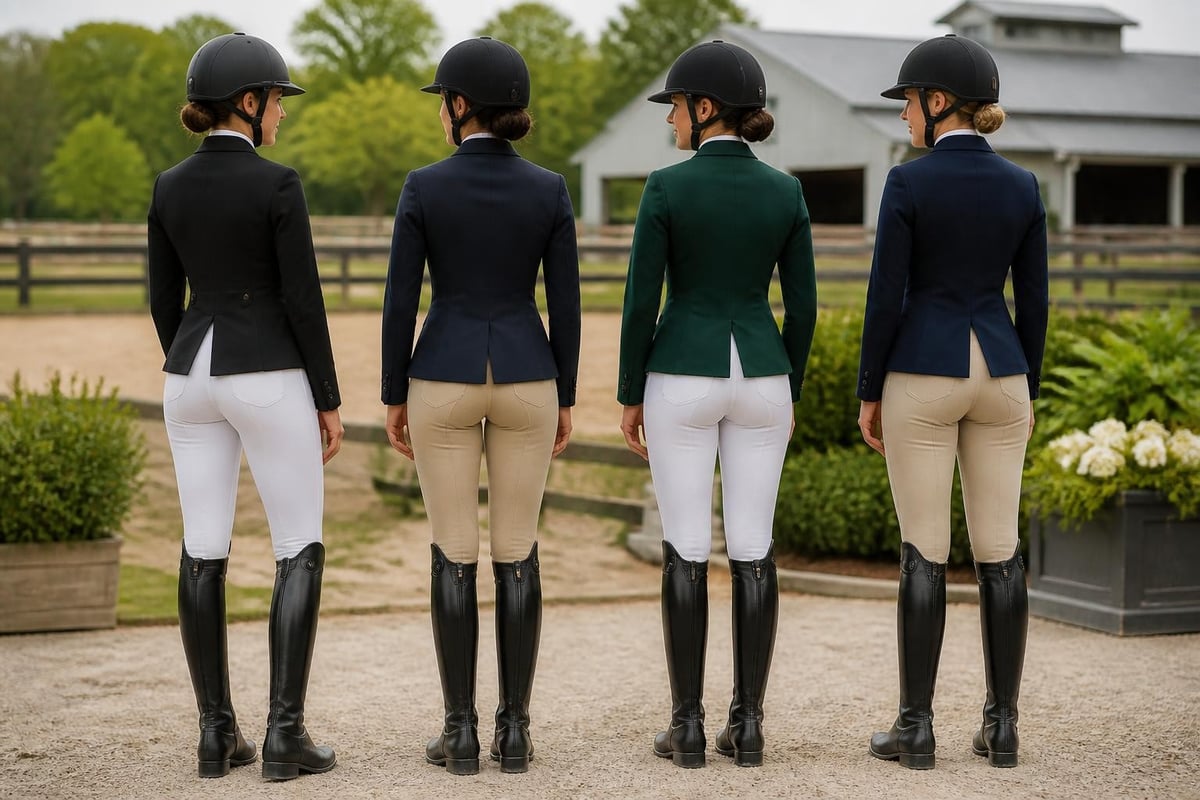
Different disciplines impose different standards, but certain principles remain universal across the competition landscape. Showing breeches for men typically fall within a conservative colour palette, with traditional options including white, beige, tan, and occasionally darker tones depending on the discipline and class level.
The Equine Sports Council outlines formal riding attire requirements that specify acceptable colours and styles for various equitation classes. These standards exist for good reason beyond mere tradition. Neutral tones create a clean silhouette that allows judges to assess your position and leg contact without visual distraction. White breeches, whilst requiring vigilant care, remain the gold standard for dressage and many upper-level competitions because they clearly reveal rider position and movement.
Show breeches must meet technical specifications that casual riding breeches may not address. The fit needs to be precise without restricting movement, the fabric should maintain its shape under sustained activity, and the construction must avoid visible seams or pockets that could create unsightly bulk under show coats. Understanding these requirements before purchasing saves both money and frustration when preparing for your first major competition.
Fabric Technology and Performance
Modern showing breeches incorporate technical fabrics that deliver performance advantages previous generations of riders couldn't access. Four-way stretch materials move with your body rather than against it, maintaining consistent contact with your horse whilst preventing the restrictive feeling that plagued earlier synthetic options.
Moisture-wicking properties become critical during extended competition days. Quality show breeches pull perspiration away from your skin, preventing the discomfort and distraction of damp fabric during crucial moments. This technology proves particularly valuable in warmer climates or during summer competition seasons when maintaining composure under pressure already challenges even experienced riders.
| Fabric Feature | Performance Benefit | Competition Advantage |
|---|---|---|
| Four-way stretch | Unrestricted movement | Better position consistency |
| Moisture-wicking | Dry comfort | Enhanced focus |
| Breathability | Temperature regulation | Sustained performance |
| Compression | Muscle support | Reduced fatigue |
| Shape retention | Professional appearance | All-day polish |
The blend ratio matters significantly. Premium showing breeches typically combine polyamide or polyester base fabrics with elastane for stretch, often incorporating cotton for breathability. A 72% polyamide, 20% cotton, 8% elastane blend, for instance, delivers excellent performance whilst maintaining the structured appearance competition settings demand. Cheaper alternatives may sacrifice one property for another, resulting in breeches that either lose their shape after minimal use or restrict movement when you need fluidity most.
Silicone Grip Configuration
Grip placement represents one of the most significant decisions when selecting showing breeches. Full-seat silicone provides maximum stability across your entire contact area with the saddle, offering confidence during movements requiring deep seating or substantial collection. This configuration suits dressage particularly well, where maintaining consistent position through complex movements determines scoring outcomes.
Knee-patch options provide targeted grip where you need it most whilst allowing slightly more freedom through the seat and thigh. Many jumper riders prefer this arrangement, as it supports position over fences without the fuller coverage that some find restrictive during fast work. The choice depends partly on personal preference and partly on discipline-specific demands.
Pattern design within the silicone itself deserves attention. Subtle, minimal patterns maintain professional appearance whilst delivering sufficient grip. Overly aggressive patterns may not align with traditional show ring aesthetics, potentially drawing unwanted attention during formal classes where conservative presentation matters. Gallant Equestrian's approach to competition breeches demonstrates how technical grip features integrate seamlessly with refined aesthetics.
Fit Precision and Sizing
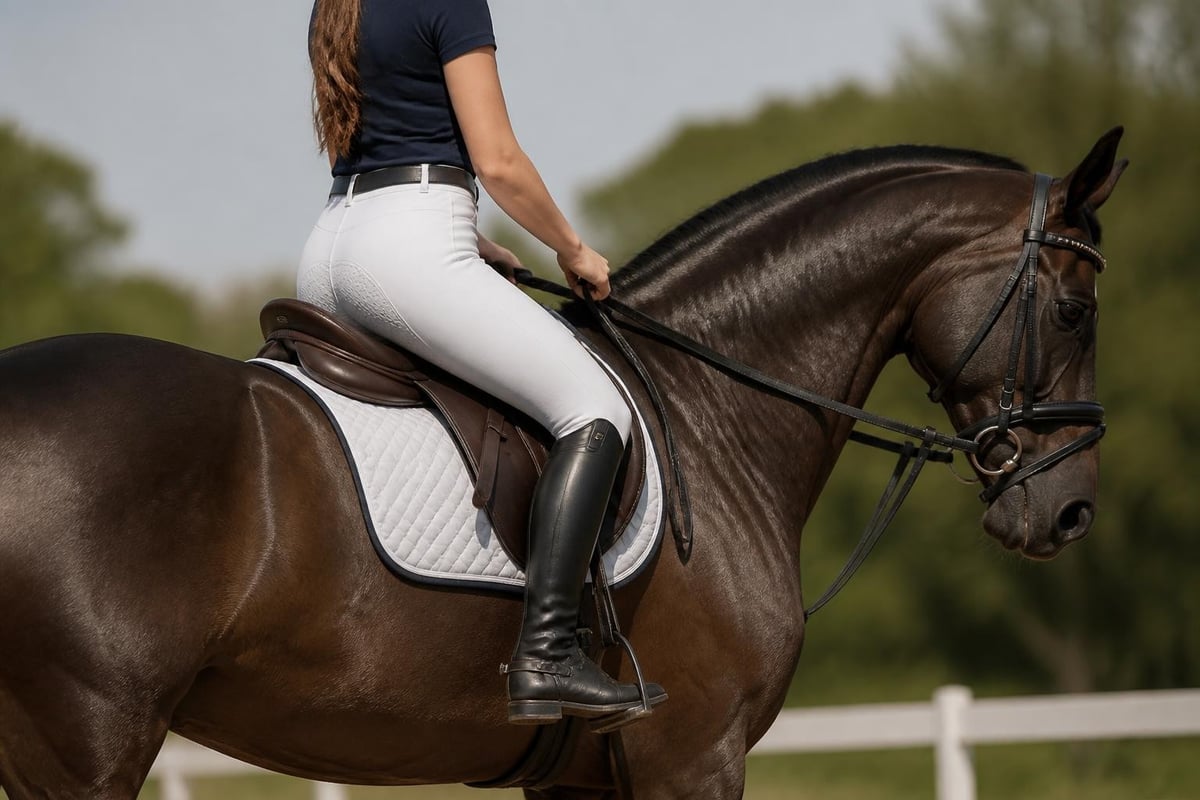
Proper fit transforms adequate showing breeches into exceptional ones. The waistband should sit comfortably at your natural waist without requiring a belt to maintain position, though belt loops accommodate those who prefer additional security. Too loose, and you'll constantly adjust between classes. Too tight, and you'll sacrifice comfort and breathing capacity during sustained riding.
Through the seat and thigh, showing breeches should feel secure without constriction. You're looking for a second-skin sensation that moves with you rather than sliding against your skin or binding when you shift position. Stand in riding position during fitting, not normal standing posture. The difference reveals whether the breeches accommodate actual riding mechanics or simply look acceptable when you're standing still.
Inseam length demands particular attention for male riders. Breeches should extend to just above your ankle bone, creating a clean line when worn with tall boots. Too long, and excess fabric bunches inside your boots, causing discomfort and looking unprofessional. Too short exposes skin between boot top and breech hem, breaking the seamless appearance competition attire requires. Many quality brands offer multiple inseam lengths within each waist size, ensuring proper proportions regardless of your build.
The ankle closure mechanism affects both fit and appearance. Zip closures provide streamlined aesthetics, creating minimal bulk inside boots. Some riders prefer elasticated ankles for easier boot entry, though this can sometimes create slight bunching. Hook-and-loop closures offer adjustability but may not align with formal competition aesthetics in higher-level classes.
Colour Selection Strategy
Whilst white remains the traditional choice for many disciplines, strategic colour selection allows personality expression within competition parameters. Beige and tan showing breeches offer practical advantages for riders concerned about maintaining pristine appearance throughout long competition days. These neutral tones hide minor dust and dirt more effectively than white whilst remaining formal enough for most classes.
What to wear for a horse show varies by discipline, but understanding your specific requirements prevents costly mistakes. Dressage generally requires white or light colours for formal competition, whilst hunters and jumpers permit slightly more flexibility. Always verify your discipline's current regulations before purchasing, as standards occasionally shift.
Darker showing breeches in navy or charcoal suit certain hunter classes and some schooling show environments. These provide a sharp, masculine appearance whilst offering maximum forgiveness regarding visible wear during daily use. However, they're rarely appropriate for formal competition in traditional disciplines, so consider your competition goals before investing heavily in darker options.
Care and Maintenance Protocols
Preserving show breeches requires disciplined care habits that extend well beyond tossing them in the washing machine after each ride. Pre-treating any stains immediately prevents permanent discolouration, particularly critical for white or light-coloured pairs. A soft brush removes surface dirt before it embeds into fabric fibres, reducing the aggressive washing necessary to restore appearance.
Washing showing breeches demands gentle cycles with cold water and specialized detergents designed for technical fabrics. Standard detergents often leave residue that compromises moisture-wicking properties, gradually reducing the performance advantages you purchased these breeches to obtain. Avoid fabric softeners entirely, as they coat fibres and eliminate the very properties that make technical fabrics perform.
Air drying preserves both fabric integrity and silicone grip effectiveness. Tumble drying degrades elastane fibres over time, shortening the lifespan of stretch properties that keep breeches fitting properly. Hang your showing breeches in a well-ventilated area away from direct sunlight, which can fade colours and weaken fabric structure. This patient approach means your investment maintains its appearance and performance across multiple competition seasons rather than degrading after a handful of shows.
Rotating between multiple pairs prevents overuse of any single garment. Competition breeches subjected to daily wear degrade faster than those used exclusively for shows and maintained carefully between outings. Consider maintaining separate schooling breeches for daily training, reserving your showing pairs for actual competition and perhaps final preparation rides the day before an event.
Integration with Overall Show Attire
Showing breeches don't exist in isolation. They form part of a coordinated presentation that includes your show shirt, jacket, boots, and accessories. The relationship between these elements determines whether you achieve polished cohesion or disjointed appearance. Your breeches should complement rather than compete with other garment choices.
| Attire Component | Coordination Consideration | Common Mistakes |
|---|---|---|
| Show shirt | Colour harmony with breech tone | Clashing undertones |
| Show coat | Length covering breech waistband | Ill-fitting coat revealing gaps |
| Tall boots | Clean transition at ankle | Visible gap or excessive bunching |
| Belt | Subtle complement, not statement | Overly decorative choices |
| Gloves | Tonal harmony | Mismatched formality levels |
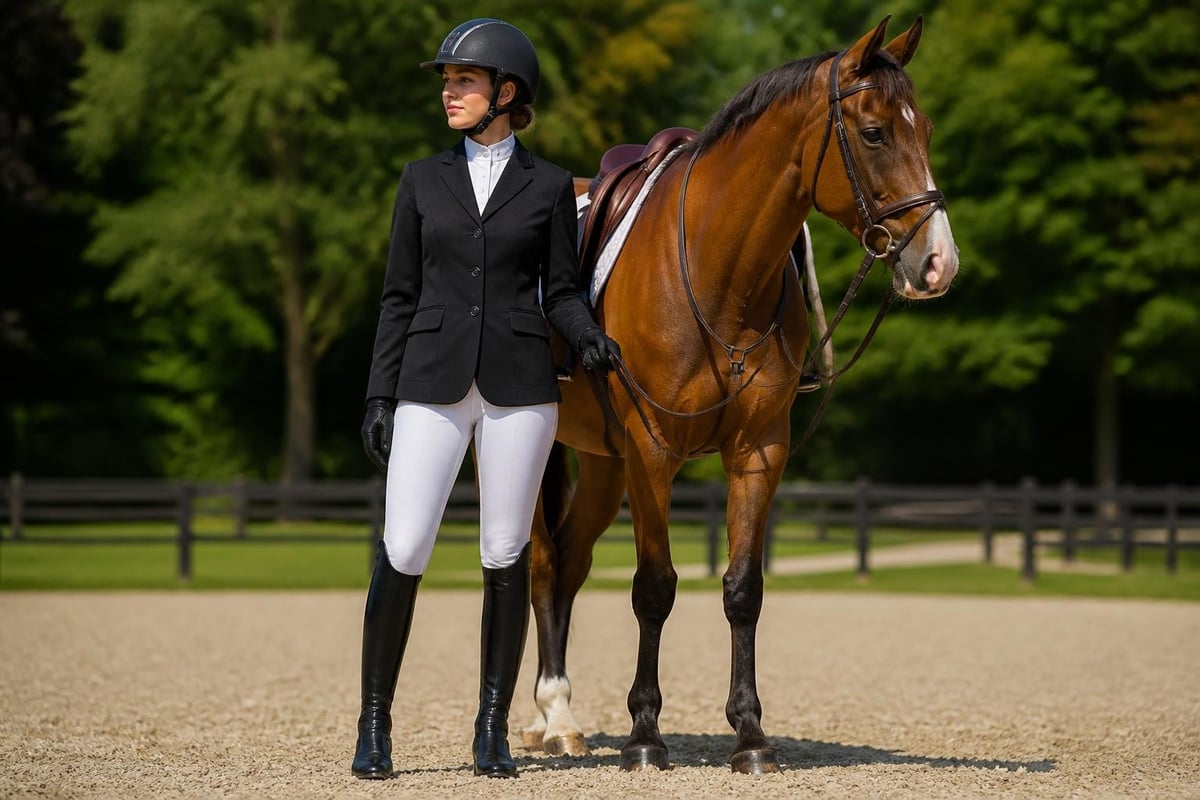
Horse riding show jackets should coordinate seamlessly with your showing breeches, creating continuous visual flow from shoulder to boot. The jacket length should adequately cover the breech waistband in all positions, preventing any exposure of shirt fabric or skin during movement. Testing this coordination whilst mounted, not just standing, reveals potential issues before competition day.
Boot selection directly impacts how your showing breeches appear and perform. The transition between breech ankle and boot shaft should create a smooth, unbroken line. Quality tall boots with proper fit eliminate bunching whilst ensuring comfort during extended wear. This integration between garments separates competitors who look assembled from those who look truly prepared.
Practical Competition Considerations
Beyond appearance, showing breeches must support actual riding performance under competitive pressure. Pockets, whilst useful in everyday riding wear, create unwanted bulk in competition settings. Most dedicated show breeches minimize or eliminate pockets, maintaining clean lines under fitted show coats. Any essential items require alternative storage in coat pockets or ringside bags.
Temperature regulation becomes crucial during multi-day competitions or events spanning different weather conditions. Lightweight showing breeches suit summer competitions and indoor arenas, whilst slightly heavier weights provide comfort during spring or autumn outdoor events. Some riders maintain seasonal wardrobes, though quality mid-weight options often perform acceptably across temperature ranges.
The psychological aspect of proper show attire shouldn't be underestimated. Knowing you're correctly dressed according to competition standards eliminates one potential distraction, allowing complete focus on riding performance. Showing breeches that fit properly and meet all regulatory requirements provide quiet confidence that translates into more composed riding. This mental edge, combined with physical performance benefits, justifies the investment in purpose-specific competition wear rather than attempting to repurpose schooling breeches for show ring use.
Investment and Value Assessment
Quality showing breeches represent significant investment compared to basic riding trousers, but this cost reflects specialized construction, premium fabrics, and rigorous quality control ensuring consistent performance. Entry-level competition breeches typically start around £80 to £120, whilst premium options extend to £200 or beyond. Understanding what justifies different price points helps determine appropriate investment for your competition level and frequency.
Construction quality directly impacts longevity and performance consistency. Flat-lock seaming prevents chafing and reduces bulk, whilst reinforced stress points withstand repeated flexion during mounting, dismounting, and active riding. Lesser-quality breeches may initially appear similar but reveal their limitations through rapid pilling, loss of shape, or grip degradation after minimal use.
For riders competing monthly or more frequently, investing in premium showing breeches delivers superior cost-per-wear value compared to replacing cheaper alternatives repeatedly. Those showing occasionally might prioritize acquiring one excellent pair over multiple mediocre options, ensuring confident presentation whenever competition opportunities arise. Understanding men's riding clothing options helps establish appropriate budget allocation across your entire competition wardrobe.
Contemporary Style Evolution
Traditional showing breeches have evolved considerably from their historical predecessors whilst maintaining the formal presentation competition environments demand. Modern cuts accommodate athletic builds better than past generations, recognizing that contemporary male riders often maintain fitness regimens that create different proportions than traditional tailoring assumed. Tailored fits that acknowledge athletic thighs and defined waists reflect current body diversity amongst competitive riders.
Subtle design details allow personal style expression within competition parameters. Contrast stitching in complementary tones, discrete logo placement, and innovative grip patterns demonstrate how showing breeches continue developing without abandoning traditional principles. These refinements appeal to younger riders entering competition environments whilst respecting the conservative standards that maintain show ring decorum.
The evolution of breeches throughout equestrian history demonstrates how garments adapt whilst maintaining core purposes. Today's showing breeches deliver unprecedented performance advantages compared to woolen breeches riders wore decades ago, yet they preserve the clean, professional appearance that distinguishes competition attire from casual riding wear. This balance between innovation and tradition characterizes the best contemporary options.
Building Your Competition Wardrobe
Most serious competitors eventually maintain multiple pairs of showing breeches addressing different needs and circumstances. A foundational wardrobe might include white or tan breeches for formal competition, a backup pair in the same colour for multi-day events or emergency replacement, and perhaps beige or darker options for schooling shows or less formal classes.
Staggering purchases allows spreading investment across time whilst ensuring you're never caught without appropriate attire. Starting with one excellent pair meeting your primary discipline's requirements establishes your baseline. Adding subsequent pairs as competition frequency increases or as you explore different disciplines prevents overwhelming initial expense whilst building comprehensive options.
Consider maintenance realities when planning purchases. Having multiple pairs allows proper rotation and care rather than rushing breeches from washing to wearing without adequate recovery time. Fabrics last longer and perform better when given time to fully dry and rest between uses, making a two or three breech rotation substantially more sustainable than constant use of a single pair.
Selecting proper showing breeches combines technical understanding with personal preference, ensuring you meet competition standards whilst maintaining comfort and confidence throughout demanding riding. The right pair supports your performance through superior fit, appropriate grip, and professional appearance that allows complete focus on your partnership with your horse. Whether you're preparing for your first recognized show or refining your competition wardrobe, Gallant Equestrian delivers performance-driven breeches designed specifically for male riders who demand both function and style. Look the Part. Enjoy the Ride.

